


Svitlana Karpenko, editor-in-chief of Trudova Slava, on resilience, trust, and the development of local media during the war.
Many local media in border and frontline communities are now working in extremely difficult conditions: destruction, relocation, and constant risks for journalists. And yet they choose not to disappear, but to seek new formats, maintain connections with people, and develop.
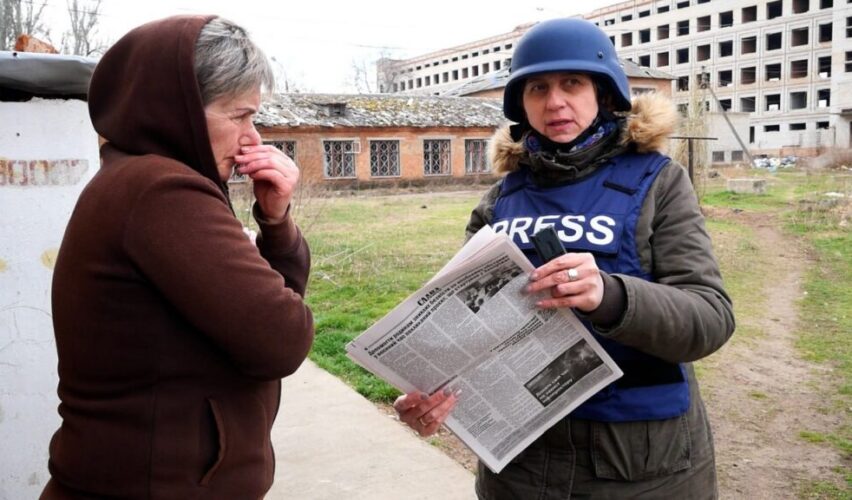
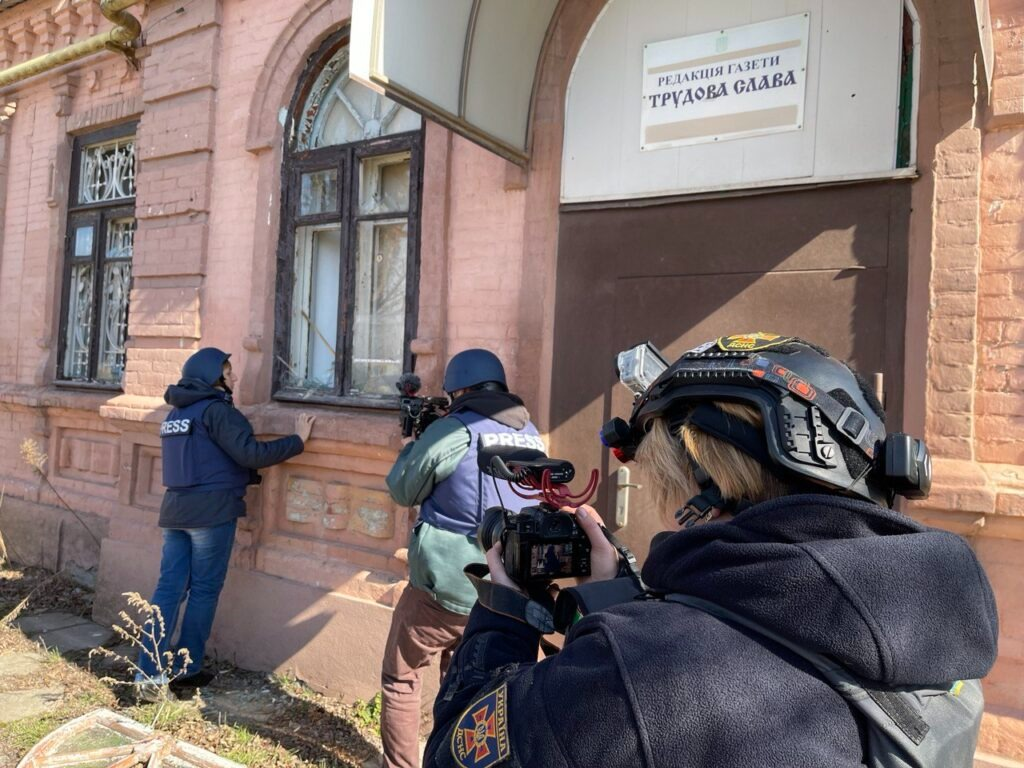
“Trudova Slava: News of Orikhiv” (Zaporizhzhia region) is one such newsroom. “No story is worth a journalist’s life or health,” says the publication’s editor-in-chief Svitlana Karpenko, answering questions about the safety of journalistic work. Nevertheless, the team does not stop in the face of difficulties (such as the destruction of the newsroom), and its experience adds another piece to the picture of how local media outlets work, becoming a point of support for the community during the war.
The media is participating in our “Stronger Together: Financial and Organizational Sustainability” program, and Svitlana considers one of the most valuable benefits of this support to be the opportunity to learn from mentors and exchange experience with colleagues. The results confirm this: in just a few months, the media outlet’s Facebook page reach exceeded 2.5 million people per month, while the number of readers on Telegram nearly tripled. This means that the media outlet’s resilience is already reflected in active growth — in the number of stories, its presence across platforms, and readers’ trust.
We continue our series of stories about newsrooms in border and frontline regions that work under extremely difficult conditions but find opportunities and strength to grow.
Read also: From Survival to Growth: Stories of Three Newsrooms
Team and Safety
The stability of the newsroom’s work, as well as its growth, rests on a team that has learned to work amid constant change.
— We are a small newsroom, so each of us performs more than one function. If necessary, we fill in for one another, adjust our plans, and look for a way out of a situation. Over the years of the war, we have learned to work in conditions where everything is constantly changing, — says Svitlana Karpenko.
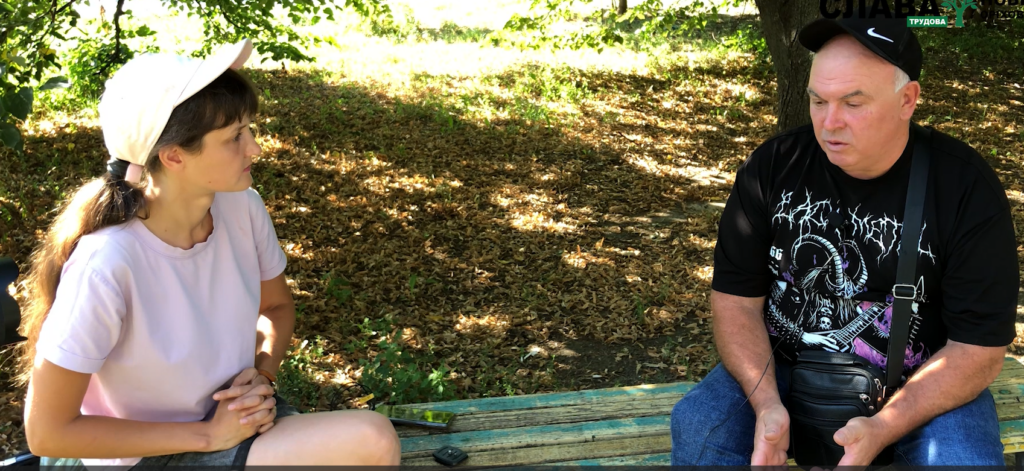
After the relocation, we had to rebuild our workflow from scratch: logistics, the way we collect information, and communication with readers all changed. The newspaper is printed far from Zaporizhzhia, and the print run has to be delivered and distributed. Support from partners and grantmakers plays an important role.
— I wouldn’t say that we already have some kind of guaranteed stability. Rather, we have learned not to stop working when new difficulties arise, but to adapt to them and keep going.
In a small newsroom, there is no strict division of responsibilities: journalists take over their colleagues’ work, consult with one another, and look for solutions together. It is more difficult because a significant part of the territory is inaccessible or dangerous. That is why contacts with fellow residents, community representatives, volunteers, and people leaving frontline settlements are especially valuable.
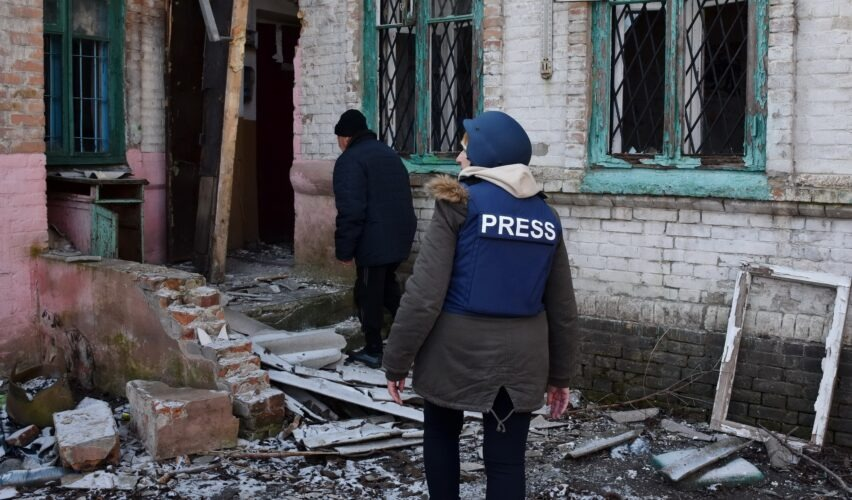
Safety is the main rule. Trips to dangerous areas are limited, and the newsroom looks for other ways to obtain and verify information.
— We do not take risks for the sake of a shot or immediacy: if a trip is dangerous, we look for other ways to obtain and verify information, — says Svitlana.
The team undergoes training in physical and digital safety, first aid, and journalistic work during wartime. Today, these are no longer additional skills but a necessary part of the profession.
Quality of Materials and Work with Topics
The newsroom values the quality of its materials, as it is what determines trust and usefulness for people.
— Information must be verified and clear, without exaggerations or unnecessary emotions. But accuracy alone is not enough. It is important that after reading, a person gets an answer to their question, learns something truly important for them, or better understands what is happening, — says the editor.
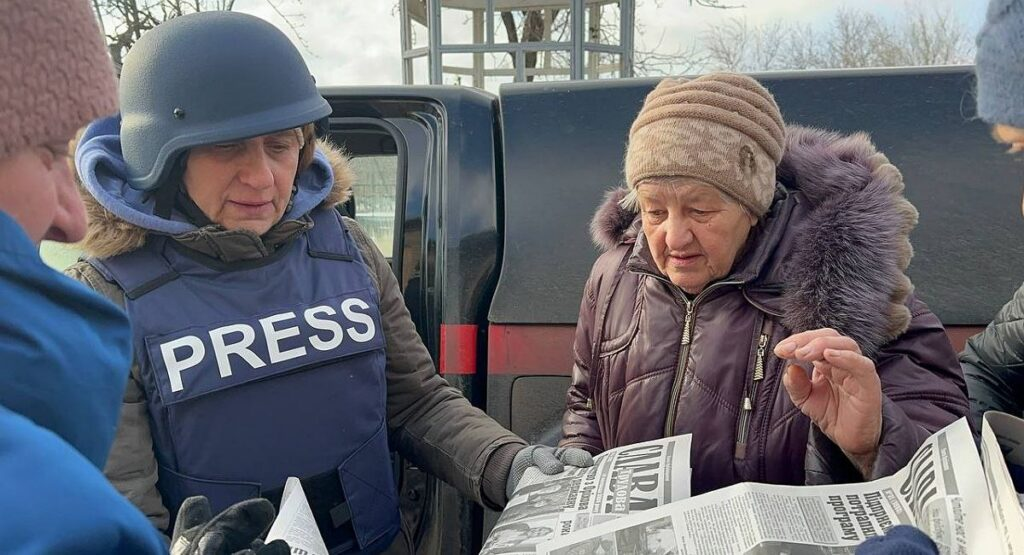
The war has changed the community’s information needs: people are interested in housing compensation, social issues, evacuation, assistance, and the future of communities. At the same time, the audience wants to read about their fellow residents:
— This — the real needs of our readers — is largely what shapes our editorial agenda.
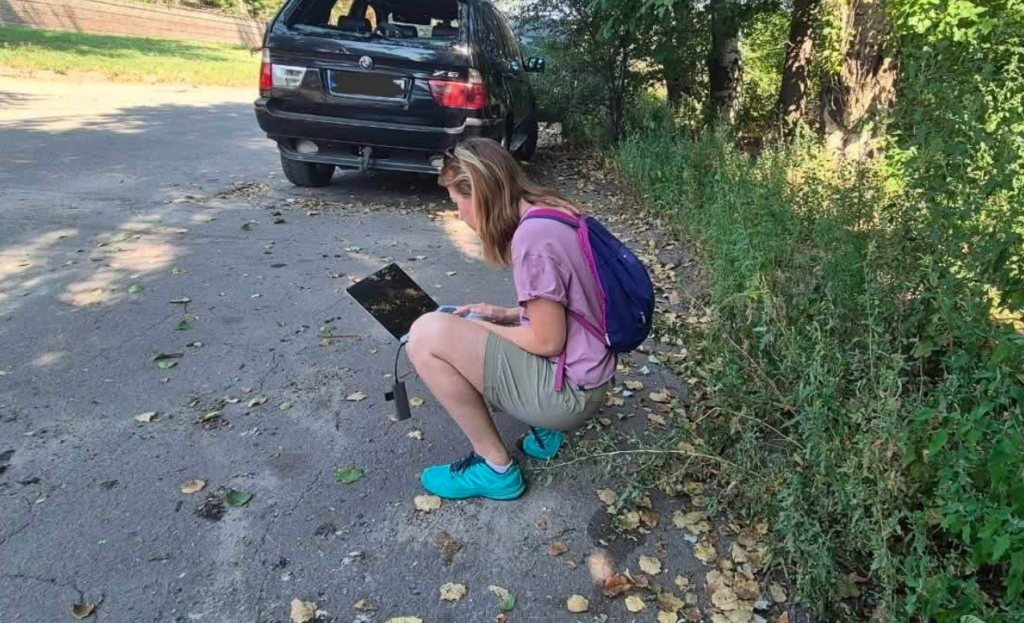
When there is no access to the territories, the newsroom looks for other ways to obtain information: by phone and through messengers, working with official sources, social media, and OSINT tools. People send photos and videos and report events.
— But new ways of gathering information do not change the main principle of our work: gather — verify — publish. Regardless of where we obtained the information, it must undergo journalistic verification, — says Svitlana Karpenko.
Digital Presence and the Future
Trudova Slava combines the print format with digital platforms to stay connected with people who have left.
— Today, Trudova Slava is a print media outlet, a website, social media pages, and video. And each of these formats has its own audience and its own tasks.
The print newspaper remains important for areas without stable connectivity, while digital platforms ensure immediacy and feedback.
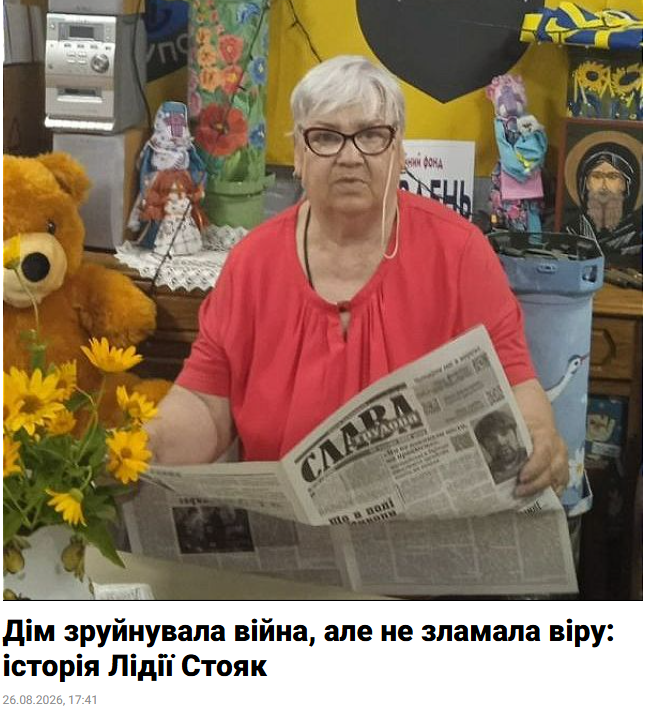
Over the past few months, the newsroom has not only exceeded its planned annual content output but has also significantly expanded its reach. On Facebook, the page reaches more than 2.5 million people each month and has garnered more than 21 million views from the beginning of the year through the end of August. The number of readers on Telegram has nearly tripled, while Instagram has also begun to grow in order to reach a wider audience.
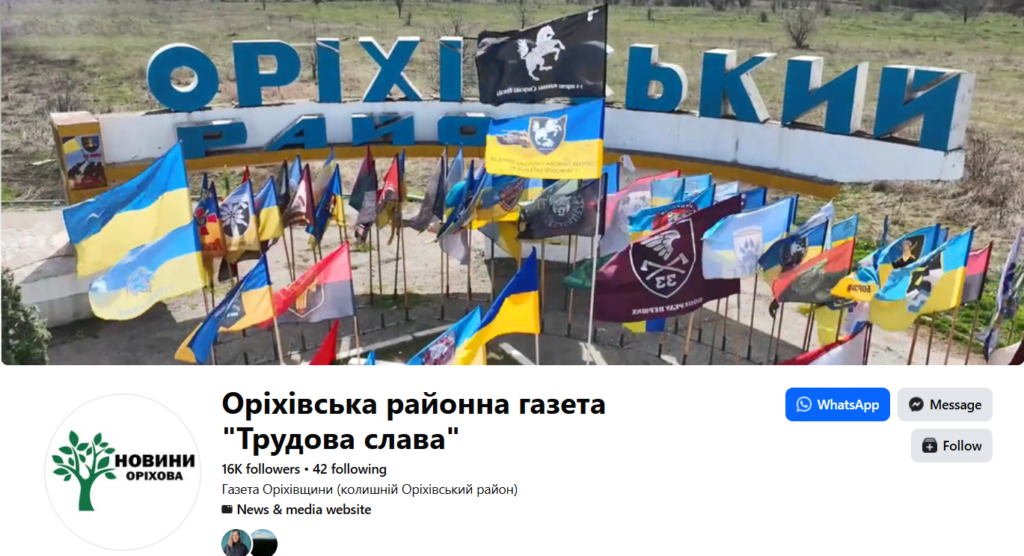
— But for us, these figures are not just statistics. Behind them are people for whom news from the Orikhiv area is much more than information, — says Svitlana.
Social media has become a thread connecting fellow residents scattered around the world with their native region:
— Readers can immediately react to a post, leave a comment, share it, or tell their own story. Even being hundreds or thousands of kilometers from home, they remain connected to the life of their native region.
Digital platforms have also become a tool for documentation. A vivid example is a video of a three-ton Russian aerial bomb striking the center of Orikhiv, which the newsroom found and published.
— Within a few days, the video spread widely across the internet: it was shared not only by our fellow residents, but also by other media outlets and opinion leaders. And a dry report about yet another strike received a concrete visual image, — says Svitlana Karpenko.
Although the war has scattered people from the communities across Ukraine and abroad, readers continue to be interested in what is happening at home. Therefore, the newsroom reports not only on shelling and destruction, but also tells stories about the lives of fellow residents, their work, studies, volunteering, and achievements.
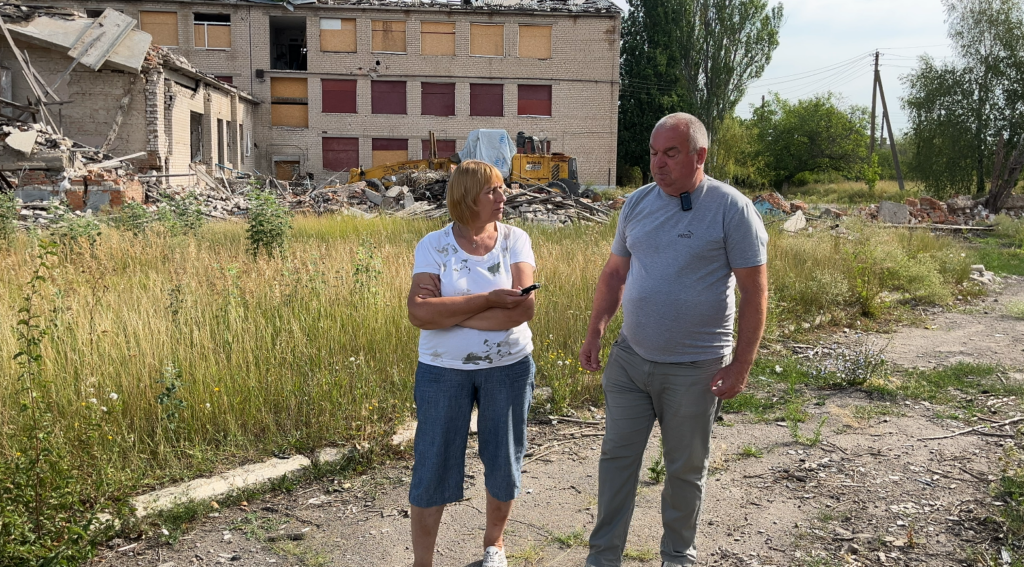
— We strive to ensure that wherever a person currently lives, by reading our print newspaper and visiting our digital resources, they can find out what is happening at home and how their fellow residents are living.
Participation in the “Stronger Together” program has provided important support: training, consultations, meetings with colleagues, and financial assistance.
— First and foremost, the program gave the team an opportunity to learn. Communication with other editors is also very valuable to me. When you see how colleagues work under similarly difficult conditions, you can learn a lot from them, and sometimes simply realize that your problems are not unique and that there are solutions to them, — says Svitlana.
For the coming year, the newsroom’s goals are to preserve the print newspaper, strengthen the website and social media, work more with video, and learn how to use artificial intelligence. But the most difficult challenge now is financial sustainability.
— A sustainable media outlet is a newsroom that does not disappear after the next crisis. It has a team that readers trust, knows how to adapt, finds resources to keep working, and understands why it is needed by its community, — says Svitlana Karpenko.
A reminder: insurance is available
Colleagues, a reminder: journalists working in high-risk regions have the opportunity to obtain free life and health insurance. This is part of the International Insurance Fund for Journalists (IIFJ) initiative, implemented in partnership with Ukrainian and European organisations.
Media professionals working in Kherson, Zaporizhzhia, Sumy, Mykolaiv, Donetsk, Luhansk, Odesa, Kharkiv, and Dnipropetrovsk regions, as well as border areas of Kyiv and Chernihiv regions, can apply. More information about the terms of free insurance is available here.
This article is part of a series of publications on the work of regional media in wartime conditions, safety protocols, and the psychological resilience of journalists. We have already published interviews with Zarina Zabrisky (Parts One and Two), Oleksandr Kachura, Vladyslav Safronov, Natalia Bilokudria, Serhii Horbatenko, Yevhen Khrypun, Anna Kaliuzhna, Polina Kulish, Nadia Sukha, Nadiia Karpova, Oleksandr Solomko (Parts One and Two), Diana Butsko, Oleksii Pasiuha, Oleksandr Chubukin, Aliona Serhiienko, Olha and Serhii Sydorov, Yevheniia Hrytsyna, Nataliia Kryvoruchko (Parts One and Two), Inna Shvydka, Pavlo Kliuchnyk, Larysa Hnatchenko, Diana Deliurman, Viktoriia Hnatiuk, Mariia Shevchenko, Anna Matviienko, Nastya Stanko, Iryna Sytnik, Svitlana Tomash, Olesia Bida, Yevhen Nazarenko, Oleksii Kovalchuk, Ilona Korotitsyna, Iryna Stolbova, Kateryna Tyshchenko, Hanna Khaliman, Kostiantyn Hryhorenko, and Oksana Brovko.
As a reminder, the International Insurance Fund for Journalists, implemented by the Association of Independent Regional Press Publishers of Ukraine, is part of the Voices of Ukraine / SAFE support program, coordinated by the European Centre for Press and Media Freedom. Voices of Ukraine / SAFE is implemented within the Hannah Arendt Initiative and supported by the German Federal Foreign Office