


For Vhoru, social media has become the primary news distribution channel. Stories often break there before they appear on the website, with the newsroom’s content reaching millions of users.
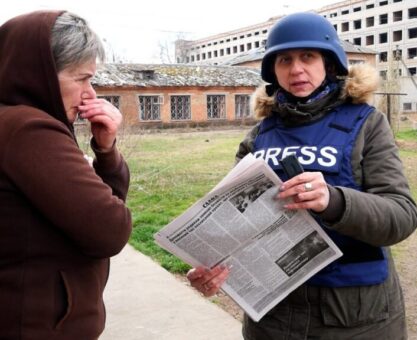
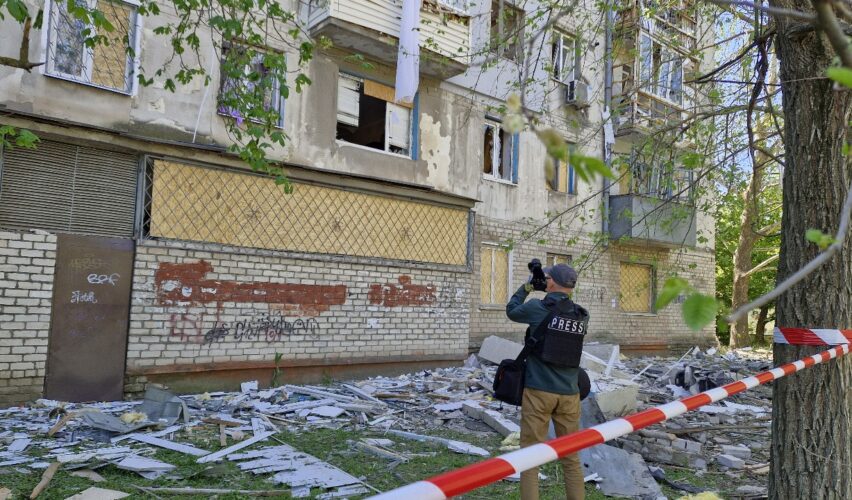
Like many newsrooms operating near the front line, Vhoru works under extraordinary conditions, where danger is a constant presence. Since the start of Russia’s full-scale invasion, the team has continued documenting life in Kherson as the city endures relentless shelling.
Despite the risks, the newsroom has developed its own safety protocols, provides first aid training, and equips its journalists with first aid kits, body armor, and drone detectors. Yet, according to Editor-in-Chief Ilona Korotitsyna, most international safety programs fail to reflect the realities of working in Kherson. Russian positions are only a few kilometers away, and the city comes under daily attacks from artillery, mortars, tanks, guided aerial bombs, and drones. Few journalists anywhere in the world have experience working under such conditions, forcing local reporters to develop their own standards for safety and war reporting.
We spoke with Ilona Korotitsyna about what it takes to keep a newsroom running under these circumstances.
Safety and Team Support
Since the start of Russia’s full-scale invasion, the newsroom has operated entirely remotely.
“We no longer work from an office or gather in one place,” says Ilona Korotitsyna. “At the same time, our reporters are constantly working on the ground. That was true even during the Russian occupation of Kherson, when at least one member of our team always remained in the city.”
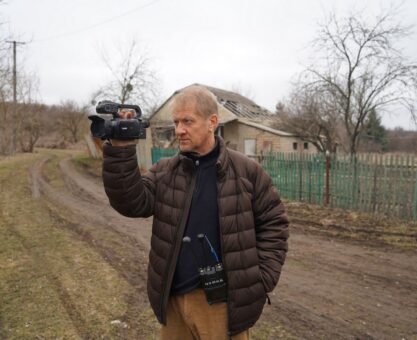
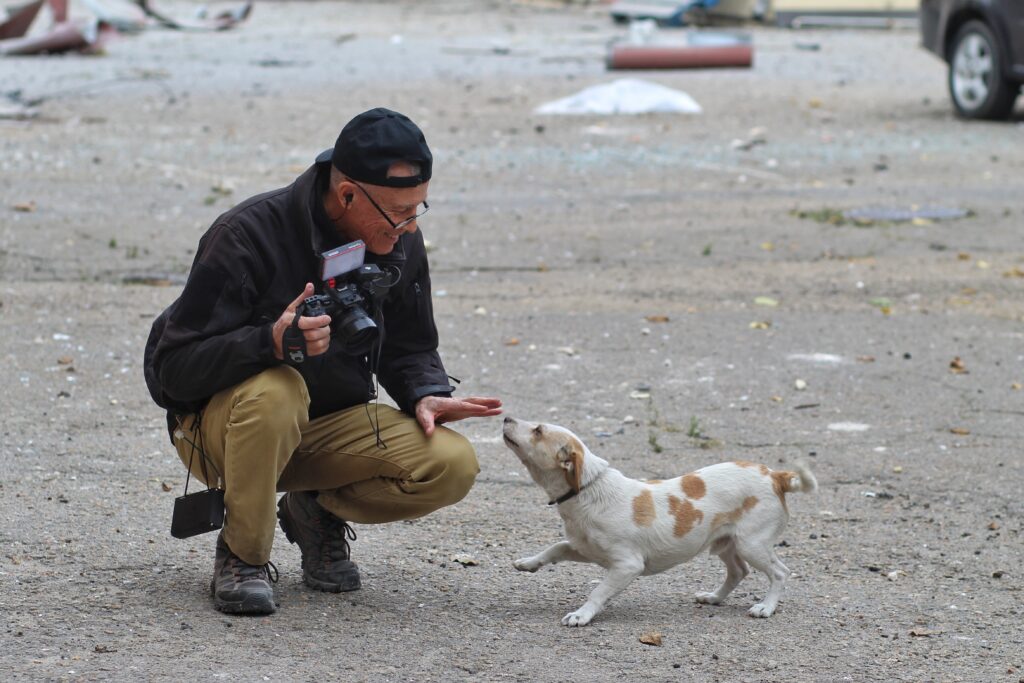
After Kherson was liberated, much of the team returned to the city, and new journalists joined the newsroom. Today, Vhoru has a full-time photojournalist and videographer (the same person), at least three reporters, the head of video production, and other journalists who regularly travel to Kherson on reporting assignments.
“Even though we work remotely, having reporters on the ground is essential for us. It isn’t easy, but during the COVID-19 pandemic we adapted our workflows to operate effectively from a distance.”
Safety in Kherson presents unique challenges. Air raid alerts are not always a reliable indicator of danger, as the city is frequently targeted by artillery fire and drone attacks without any warning.
“That’s why our journalists constantly monitor specialized channels that track the movements of Russian drones.”
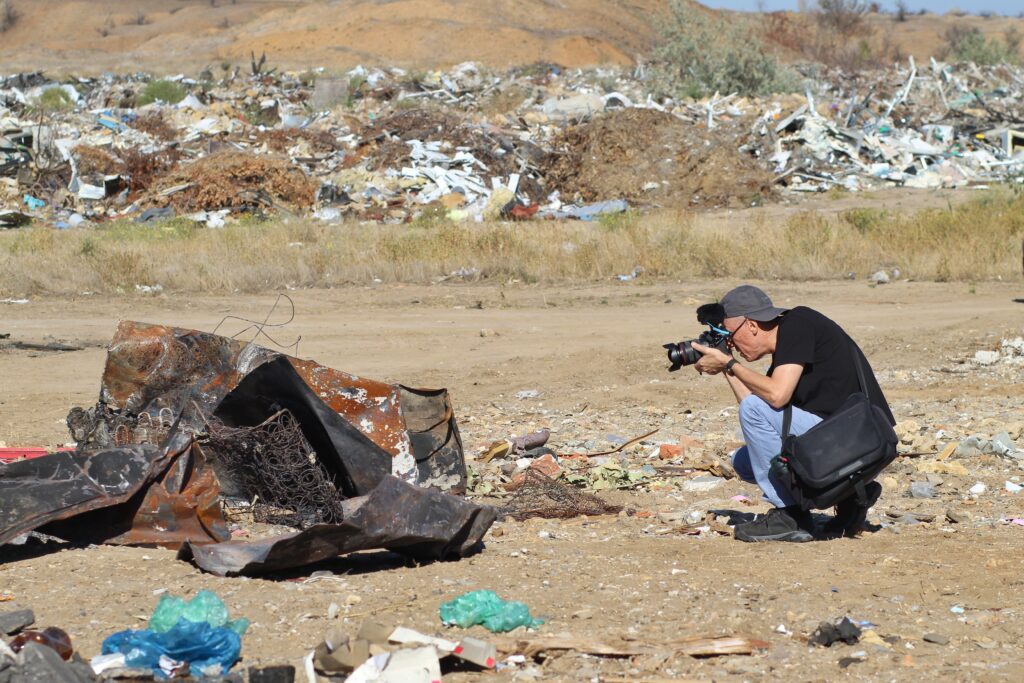
Members of the newsroom have completed first aid training organized by the Red Cross. Journalists are equipped with first aid kits, body armor, and drone detectors. The newsroom also follows a strict check-in protocol: whenever a reporter heads out on assignment or is working in the city, they inform colleagues where they are going and when they expect to return. The photojournalist and videographer covers the most dangerous areas alongside military press officers.
“If a journalist doesn’t want to go—or doesn’t feel ready to go—to a particular location, we never pressure them. We understand that the work matters, but personal safety and individual choice matter even more. It’s completely normal to be afraid.”
Such situations, however, are rare. More often than not, the journalists themselves are eager to report from the ground because they believe it is important.
“We regularly check in with our colleagues about their psychological well-being and whether they feel ready to work on certain topics. For example, if a journalist isn’t prepared to cover traumatic stories, we never ask them to do so.”
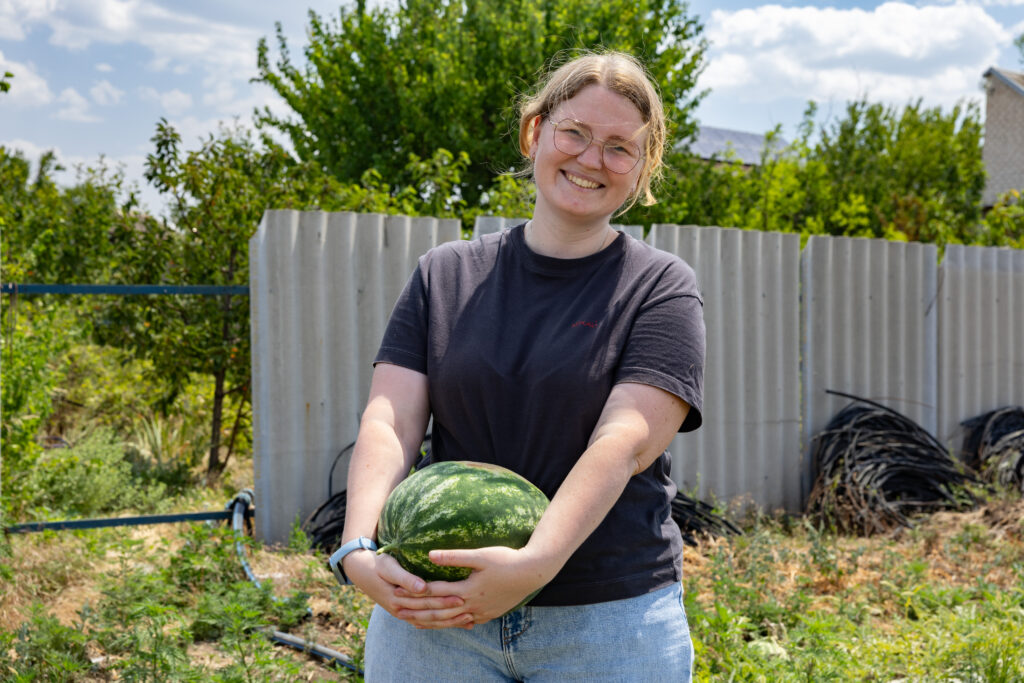
The newsroom has a team of 27 people, though not all work full-time. One of the reporters now lives in Germany and works part-time while also working at a café after being forced to leave her home because of the occupation.
“And she’s not the only one. Our team includes students and people who combine journalism with other jobs. Even so, we do our best to stay connected with everyone and organize our work in a way that is comfortable for both the newsroom and our journalists. After all, people are the most valuable resource we have.”
Maintaining a sense of mutual support is not easy, as part of the team works remotely and some colleagues have never even met in person. To stay connected, the newsroom holds regular online editorial meetings, and during the first years of the full-scale war, it also organized informal virtual gatherings. In 2023, with support from partner organizations, the entire team was able to meet in person for a newsroom retreat in Przemyśl.
“Those of us who live in Kherson see each other regularly. For colleagues who are abroad or living in other cities, maintaining personal connections is more difficult. Even so, our colleagues who now live in Germany have made a point of traveling to visit one another so they could spend time together and get to know each other better.”
The newsroom also covers the cost of psychological counseling for its staff. Whenever needed, team members can work with a mental health professional on a regular basis to support their emotional well-being.
The team also encourages journalists to attend retreats and other recovery-focused programs, although convincing them to take a break is not always easy. After living through years of war, many find it difficult to switch off and allow themselves time to rest.
Content and Distribution
“We try not to show close-up images of people who have been affected unless there is a clear public interest in doing so,” says Ilona.
The newsroom also avoids publishing information that could put people in temporarily occupied territories at risk.
“A person giving a comment is not always able to fully assess all the risks, especially when they are speaking emotionally. That’s why, in some cases, the newsroom decides not to publish certain details in order to protect the source.”
The team believes that content should reach its audience. That is why almost everything the newsroom produces is adapted for different platforms: Vhoru’s content is published on its website, Instagram, Facebook, YouTube, and TikTok. Longer-form pieces are published primarily on the website and YouTube, and are then adapted for other platforms.
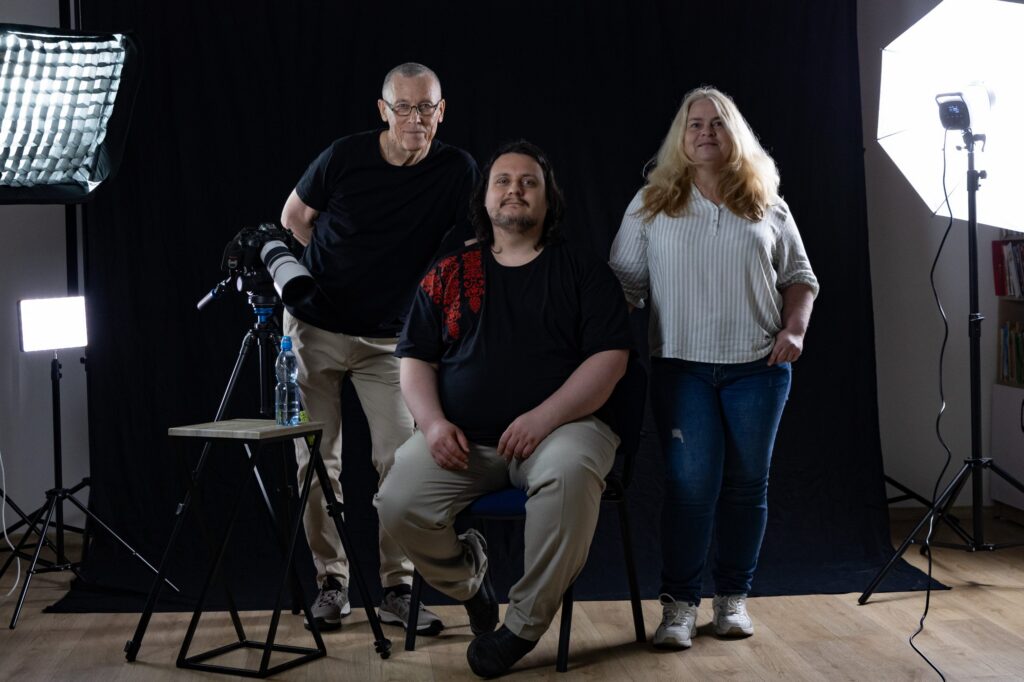
The newsroom has four SMM specialists who work from 8 a.m. to 9 p.m., adapting and repackaging content for different platforms. Sometimes, important news appears on social media even before it is published on the website.
“We understand that each platform has its own characteristics,” says Ilona, “so we try to take the specifics of each one into account.”
YouTube has a stable audience, with around 60,000 subscribers. Shorts generate the most traffic, reaching up to half a million views per month.
Instagram remains one of the newsroom’s strongest platforms, averaging 2 million views per month. The number of followers continues to grow steadily and has now exceeded 22,000.
Facebook delivers the widest reach, with more than 7 million accounts reached in May. Views range from half a million to nearly one million, while the number of followers currently stands at 82,000.
TikTok has shown rapid growth, increasing from 71,000 views in March to 930,000 in May. The platform has nearly 38,000 followers.
Telegram consistently maintains a high number of views — more than 2 million in April and May — with only minor fluctuations in the number of subscribers (around 12,500).
Audience and Topics
“We consider our target audience to be everyone who cares about the future of Kherson and the Kherson region,” says Ilona.
This includes people who remain in the city, residents of temporarily occupied territories, internally displaced Ukrainians, and Ukrainians who have moved abroad.
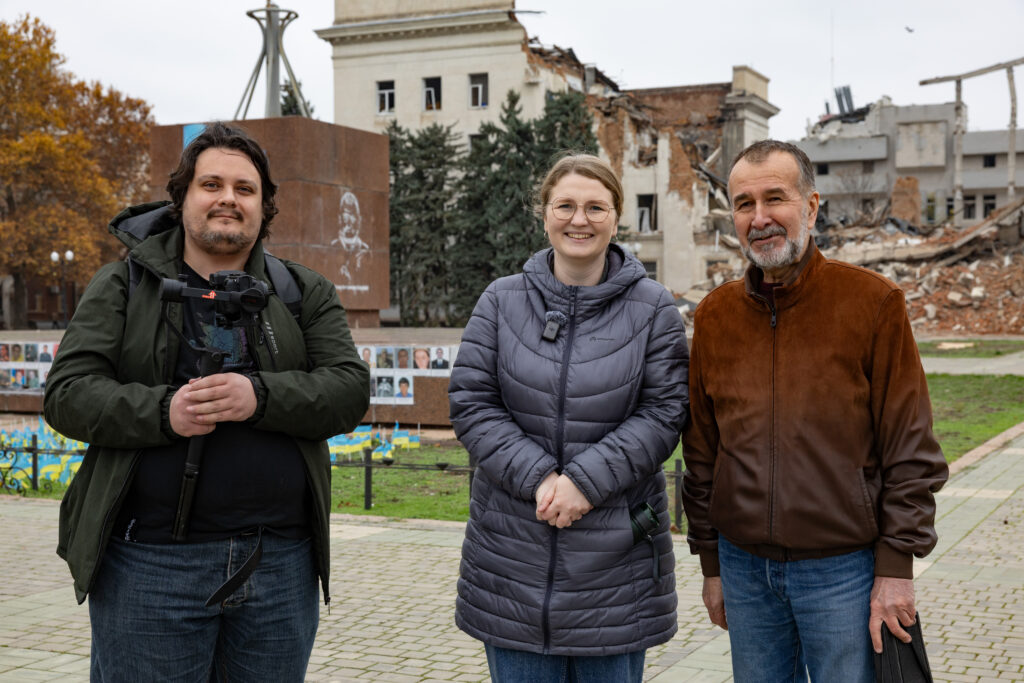
The media outlet also has a community of readers that the team is working to develop:
“For us, this is not only a way to receive additional support from our audience, but also an opportunity to stay connected with people who remain part of the Kherson community, regardless of where they currently live. We often say that we are all in different life circumstances, but we are united by our love for Kherson. Ultimately, for each of us, Kherson is not just a geographical place — it is also a shared identity and a collective memory.”
— Ilona, could you tell us more about the topics you cover most often and which ones are the most popular among your readers?
— Our readers are still very interested in inspiring stories. Even in the fourth year of the full-scale war, demand for this type of content remains high.
People want to see what is happening in Kherson: photographs, videos, and reports from the city. To a large extent, this is what our content is built around. Our audience needs to understand that the journalists covering Kherson know the local context well, understand people’s challenges, and share their experience.
We write extensively about both de-occupied and temporarily occupied territories. Explanatory materials are also very important to our readers: how to get assistance, how to access certain government services, what decisions the authorities are making, and how these decisions affect people’s lives.
— Which topics are the most challenging for you to cover? Are there any off-limits subjects?
— The most difficult stories to report on are those related to the occupation, as we do not have physical access to the occupied territories. We therefore have to rely on open-source information, monitor social media, analyze statements and data from the occupation authorities, consult experts, and cross-check information using multiple sources.
For us, it is critically important to continue reporting on the occupied parts of the Kherson region, as approximately 70% of the region’s territory remains under Russian occupation.
Working in Kherson’s “red zones” is also becoming increasingly difficult, as these areas continue to expand and the risks faced by journalists are growing.
The team is currently participating in the Association for the Development of Investigative Journalism’s project, “Stronger Together: Transparency and Anti-corruption.” This is already the second phase of the partnership.
— This support is extremely important for us, as the project has allowed us to systematically develop our investigative journalism efforts and dedicate two team members exclusively to this work. They take part in training programs, attend workshops, gain new knowledge, and share their expertise with colleagues.
For our team, it is important not only to produce individual investigations but also to incorporate investigative journalism methods into our daily news coverage.
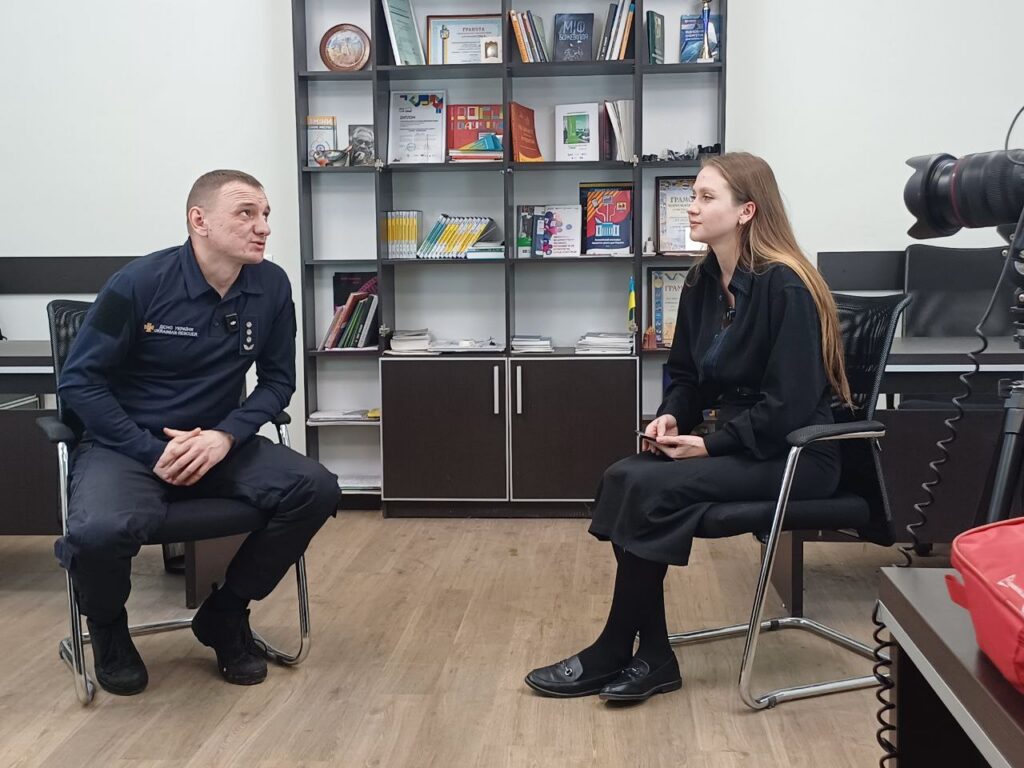
Identity and Dignity
The editorial team sees its role as helping to preserve connections between people who, because of the war, have found themselves in different cities and countries but continue to consider Kherson their home.
— Since the start of the full-scale invasion, our media outlet’s audience has become geographically much broader, while at the same time growing more united around a shared identity.
The media’s audience includes people who remain in Kherson, those living in the temporarily occupied territories, those who have relocated to other regions of Ukraine, and those who have moved abroad.
— We believe it is important to preserve the Kherson region’s voice in both the Ukrainian and international information spaces. That is why we continue to work not only as a news outlet but also as a platform for documenting the experiences of people living through war, occupation, evacuation, and life near the front line.
At the end of the interview, we traditionally asked the team how they understand journalistic dignity.
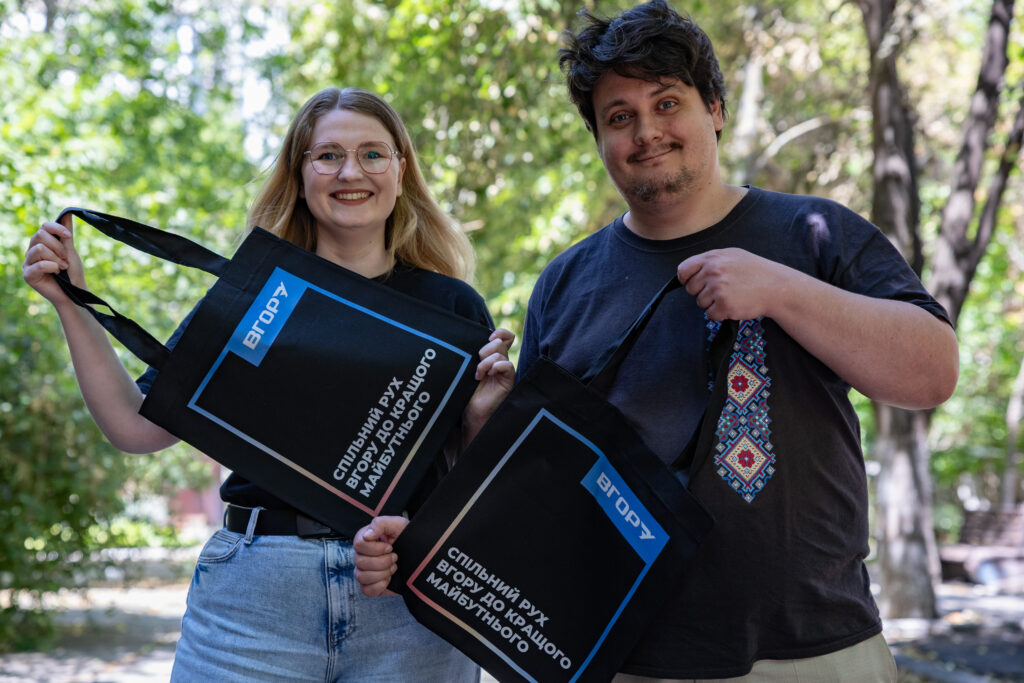
Liza Zharkykh, Deputy Editor-in-Chief of Vgoru:
— I believe that today the dignity of a journalist’s work lies above all in honesty — honesty toward oneself, toward the people featured in our stories, and toward the audience.
It is important not to be afraid to address uncomfortable topics and ask difficult questions. During times of crisis, the risks of abuse and manipulation increase significantly.
For us, it is crucial to monitor not only what is happening in the de-occupied territories but also the situation under occupation, as a significant part of the Kherson region remains under Russian control.
The dignity of a journalist today also means having the courage to show the reality of events, even when that reality is difficult or unpleasant.
We feel a tremendous responsibility toward our audience, which places its trust in us. That is why we strive to uphold professional journalistic standards while working in wartime conditions.
It is important to remember that journalists serve as the fourth estate and therefore have a responsibility to hold authorities accountable and protect the public interest, even in the most challenging circumstances.
A reminder: insurance is available
Colleagues, a reminder: journalists working in high-risk regions have the opportunity to obtain free life and health insurance. This is part of the International Insurance Fund for Journalists (IIFJ) initiative, implemented in partnership with Ukrainian and European organisations.
Media professionals working in Kherson, Zaporizhzhia, Sumy, Mykolaiv, Donetsk, Luhansk, Odesa, Kharkiv, and Dnipropetrovsk regions, as well as border areas of Kyiv and Chernihiv regions, can apply. More information about the terms of free insurance is available here.
This article is part of a series of publications on the work of regional media in wartime conditions, safety protocols, and the psychological resilience of journalists. We have already published interviews with Zarina Zabrisky (Parts One and Two), Oleksandr Kachura, Vladyslav Safronov, Natalia Bilokudria, Serhii Horbatenko, Yevhen Khrypun, Anna Kaliuzhna, Polina Kulish, Nadia Sukha, Nadiia Karpova, Oleksandr Solomko (Parts One and Two), Diana Butsko, Oleksii Pasiuha, Oleksandr Chubukin, Aliona Serhiienko, Olha and Serhii Sydorov, Yevheniia Hrytsyna, Nataliia Kryvoruchko, Inna Shvydka, Pavlo Kliuchnyk, Larysa Hnatchenko, Diana Deliurman, Viktoriia Hnatiuk, Mariia Shevchenko, Anna Matviienko, Nastya Stanko, Iryna Sytnik, Svitlana Tomash, Olesia Bida, Yevhen Nazarenko, and Oleksii Kovalchuk.
As a reminder, the International Insurance Fund for Journalists, implemented by the Association of Independent Regional Press Publishers of Ukraine, is part of the Voices of Ukraine / SAFE support program, coordinated by the European Centre for Press and Media Freedom. Voices of Ukraine / SAFE is implemented within the Hannah Arendt Initiative and supported by the German Federal Foreign Office