


Work stretches for hours for just five minutes of outcome. Diana Deliurman explains how she crafts stories under such conditions.
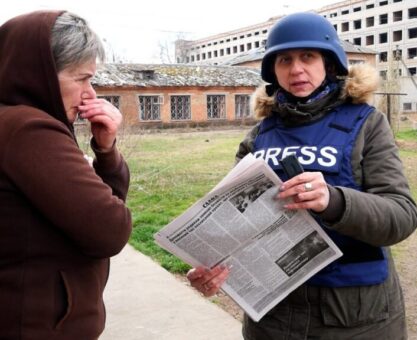
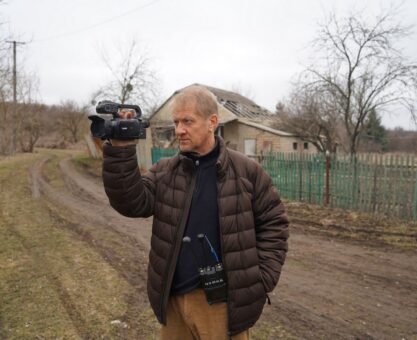
For Frontliner journalist Diana Deliurman, reporting from frontline regions means constant movement, shifting plans, and a state of maximum focus. An assignment is at once filming, logistics, producing, and adapting to the rhythm of the people she writes about.
We continue to share stories about the work of journalists in frontline and border regions. We have already published interviews with Zarina Zabrisky (Parts One and Two), Oleksandr Kachura, Vladyslav Safronov, Natalia Bilokudria, Serhii Horbatenko, Yevhen Khrypun, Anna Kaliuzhna, Polina Kulish, Nadia Sukha, Nadiia Karpova, Oleksandr Solomko (Parts One and Two), Diana Butsko, Oleksii Pasiuha, Oleksandr Chubukin, Aliona Serhiienko, Olha and Serhii Sydorov, Yevheniia Hrytsyna, Nataliia Kryvoruchko, Inna Shvydka, Pavlo Kliuchnyk, and Larysa Hnatchenko.
Reporting on the Road: Tempo, Concentration, and Human Stories
— Diana, you often work in places where danger is a constant backdrop. How does that affect your concentration?
— Concentration is influenced less by the place itself than by the course of the assignment. On trips, I sleep and eat very little, drink a lot of coffee. Multitasking: conducting interviews, noting down reportage moments, taking photos, filming on my phone, and planning logistics. The situation can change from hour to hour, so plans must be adjusted. It’s not only journalistic work, but also producing.
The situation can change from hour to hour, so plans must be adjusted. It’s not only journalistic work, but also producing.
On assignment, the highest level of concentration is activated, while basic needs are minimized. At times, there is no space to think about safety or risks—decisions are made quickly.
— What does a typical day in a risk zone look like for you?
— You might count on a whole day of travel, but in the end, your actual work amounts to five minutes. Or the opposite. Often, nothing goes according to plan, and you have to be ready for that.
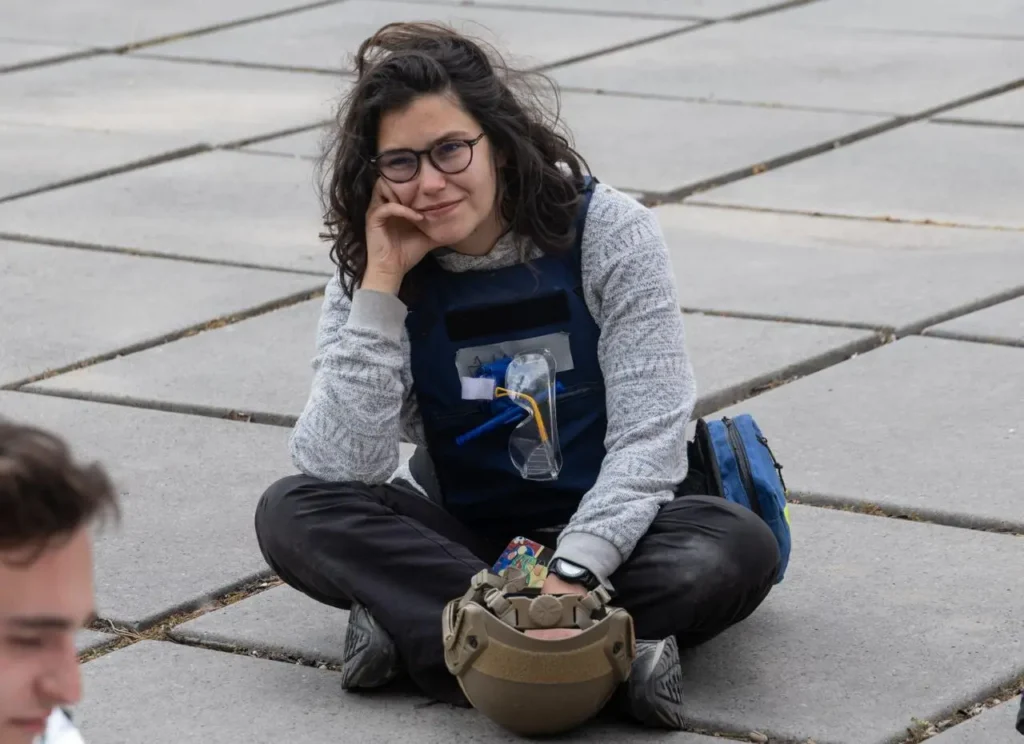
I don’t have a car, so I get to the location by train or bus. From there, it’s all about arrangements and creativity. On site, I adapt to the lifestyle of the people I’m reporting on: waking up even earlier than they do, having lunch nearby, and joining conversations during smoke breaks. These ‘unofficial’ moments often become the most important part of the reportage.
Exhaustion, Limits, and Inner Discipline
— Do you have internal guidelines for when it’s time to stop?
— I don’t think so. Like many of my peers, I struggle with toxic productivity. There’s a constant feeling of not doing enough. For journalists especially, there’s a risk of overlooking fatigue, because we’re obsessed with the profession. I can’t just close my laptop and fully engage in quality leisure time. Stories and people keep running through my mind. I try to fix this with meditation.
— What helps you recover after trips?
— Spending time with family and friends helps me. When fatigue spills over, it’s personal travel that helps—outside of work, of course.
— Which reportage stands out most to you because of the process of working on it?
— It was at a medical stabilization unit. The reportage never came out—there was no story. But the trip stayed with me because it was the first time I traveled in complete darkness somewhere in Donbas. When I stepped out of the press officer’s car, I saw a beautiful starry sky. I had never seen anything like it.
The first person to speak to me at the medical stabilization unit was a chaplain. I felt as if I were inside a video game, where characters say something mysterious that is meant to become a clue at the end of the quest.
When I stepped out of the press officer’s car, I saw a beautiful starry sky. I had never seen anything like it.
— Have there been cases when you consciously chose not to publish a piece?
— All Ukrainian journalists practice a lot of self-censorship. During wartime, that’s okay. It’s better to be upset about a lost detail or story than to regret a serious mistake for the rest of your life.

There are topics that are difficult because of access—repatriation of bodies, evacuation of the fallen. I wasn’t able to get access, though other colleagues managed to.
And there are topics that are emotionally difficult. I can’t film at funerals; I just stand there, frozen.
— What do you do when your tools don’t work?
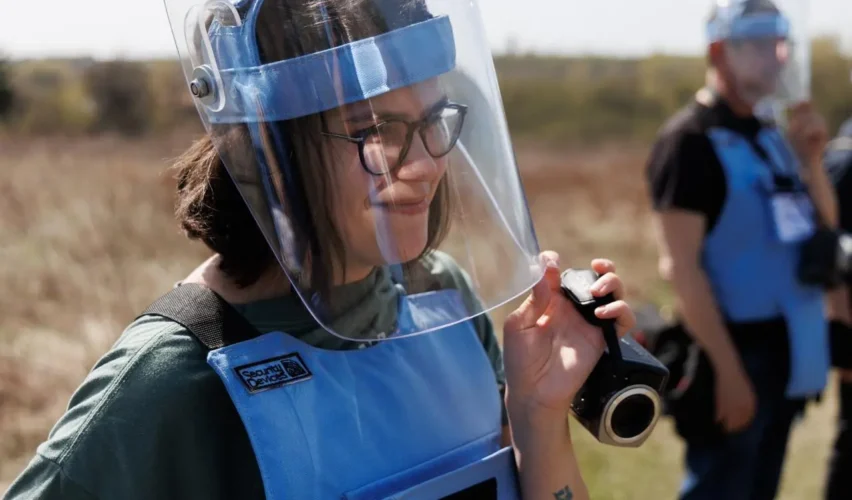
— On assignment covering demining, I couldn’t see my phone screen because of the sun. That’s when I envied a foreign colleague who was old-school, taking notes in a notebook.
Sometimes you’re interviewing someone and they drift completely off-topic or add a lot of unnecessary detail. Or, on the contrary, they answer in single words. That’s where patience and flexibility help.
What helps is patience and flexibility.
Dignity, Respect, and Inner Strength
— How do you understand dignity in the work of a journalist?
— When I think about other journalists, I feel deep respect. But for me personally, the profession doesn’t give a sense of my own dignity, because I always feel I’m doing too little.
Dignity is not about glorifying the profession. It’s about how you treat the people you work with—about not causing harm, not oversimplifying, not devaluing.
— What is most important to you as an author?
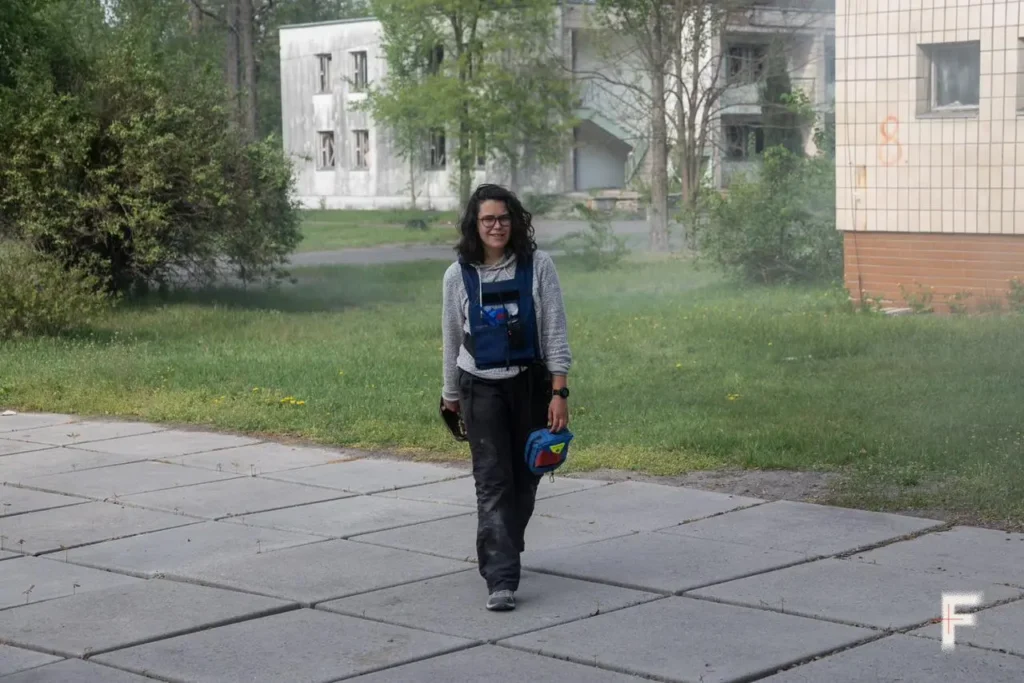
— To capture a unique moment with respect for those I write about and for.
Dignity is not about glorifying the profession. It’s about how you treat the people you work with—about not causing harm, not oversimplifying, not devaluing.
Colleagues, Take Care of Yourselves
In conversations with journalists working during the war, similar themes often emerge—fatigue, fear, self-censorship, exhausting roads, and decisions that are hard to make. At the same time, these stories share something important: the ability to endure, to seek support, to recover, and to continue work that matters.
This series of pieces is about people who choose every day to stand by the truth, even when it’s difficult. About those who are learning to care for themselves so they have the strength to care for the stories of others. And about how self-support is not weakness, but a part of resilience—without which it is impossible to work with difficult topics.
Therefore, The Association of Independent Regional Press Publishers of Ukraine offers the opportunity to take out life and health insurance, as well as to participate in trainings that we periodically organize. This is part of the International Insurance Fund for Journalists (IIFJ) initiative, implemented in partnership with Ukrainian and European organisations.
Media professionals working in Kherson, Zaporizhzhia, Sumy, Mykolaiv, Donetsk, Luhansk, Odesa, Kharkiv, and Dnipropetrovsk regions, as well as border areas of Kyiv and Chernihiv regions, can apply. More information about the terms of free insurance is available here.
It should also be noted that the International Insurance Fund for Journalists project is part of the Voices of Ukraine program, which is included in the SAFE programme coordinated by the European Centre for Press and Media Freedom. Voices of Ukraine is implemented within the Hannah Arendt Initiative