


In the fifth year of the full-scale invasion, journalistic work in frontline regions is evolving along with the war itself. Drones, new risks, ethical dilemmas, and inner compasses — Ukrainian Witness journalist Viktoriia Hnatiuk speaks about these challenges.
We continue to share stories about the work of journalists in frontline and border regions. We have already published interviews with Zarina Zabrisky (Parts One and Two), Oleksandr Kachura, Vladyslav Safronov, Natalia Bilokudria, Serhii Horbatenko, Yevhen Khrypun, Anna Kaliuzhna, Polina Kulish, Nadia Sukha, Nadiia Karpova, Oleksandr Solomko (Parts One and Two), Diana Butsko, Oleksii Pasiuha, Oleksandr Chubukin, Aliona Serhiienko, Olha and Serhii Sydorov, Yevheniia Hrytsyna, Nataliia Kryvoruchko, Inna Shvydka, Pavlo Kliuchnyk, Larysa Hnatchenko, and Diana Deliurman.
— Viktoriia, in the fifth year of the full-scale invasion, the war has clearly changed. How is this felt in journalistic work? What new dangers and challenges are emerging now?
— The most obvious issue to highlight right away is probably drones.
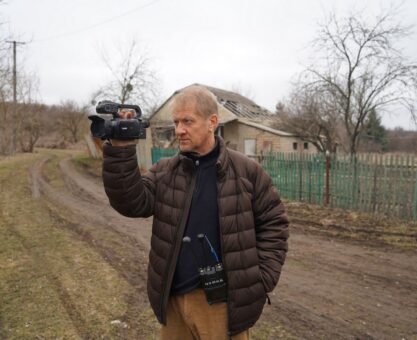
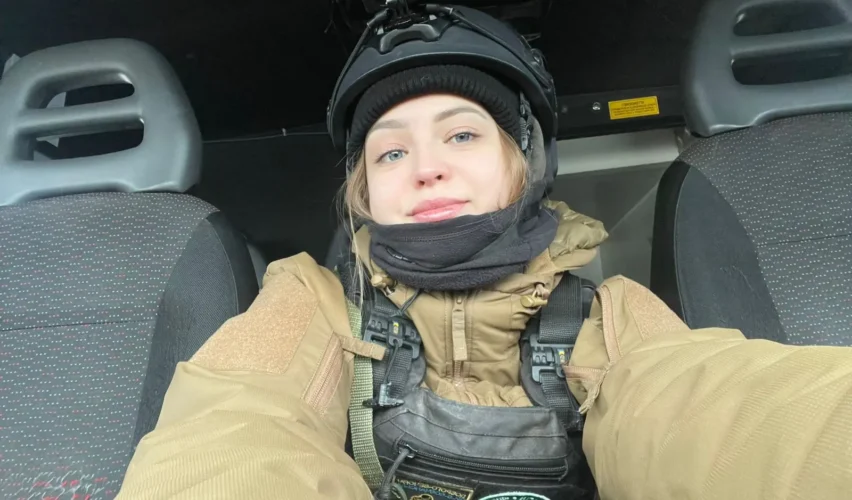
Because of their sheer number, it’s now much harder to reach certain locations. When it comes to positions, we used to be able to drive close and get dropped off about 100 meters away, roughly speaking. Now we have to approach on foot. And that can mean 2 kilometers — or 5, 10, even 15.
And we’ve already taken routes like that, because due to drones no vehicle can get through — not an armored vehicle, because there’s a risk of losing it, and certainly not a regular car. A vehicle immediately attracts attention.
And when you’re on foot, you can hide if necessary in those same tree lines, or, for example, if there’s an abandoned dugout, you can quickly take cover in it.
And it’s difficult even to reach certain meeting points by car. Take Kherson, for example: even approaching the city is dangerous, let alone what’s happening inside it.
— How do you cope with physical risks in your work environment? Have your safety practices changed over time?
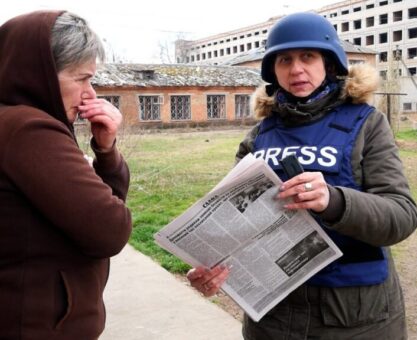
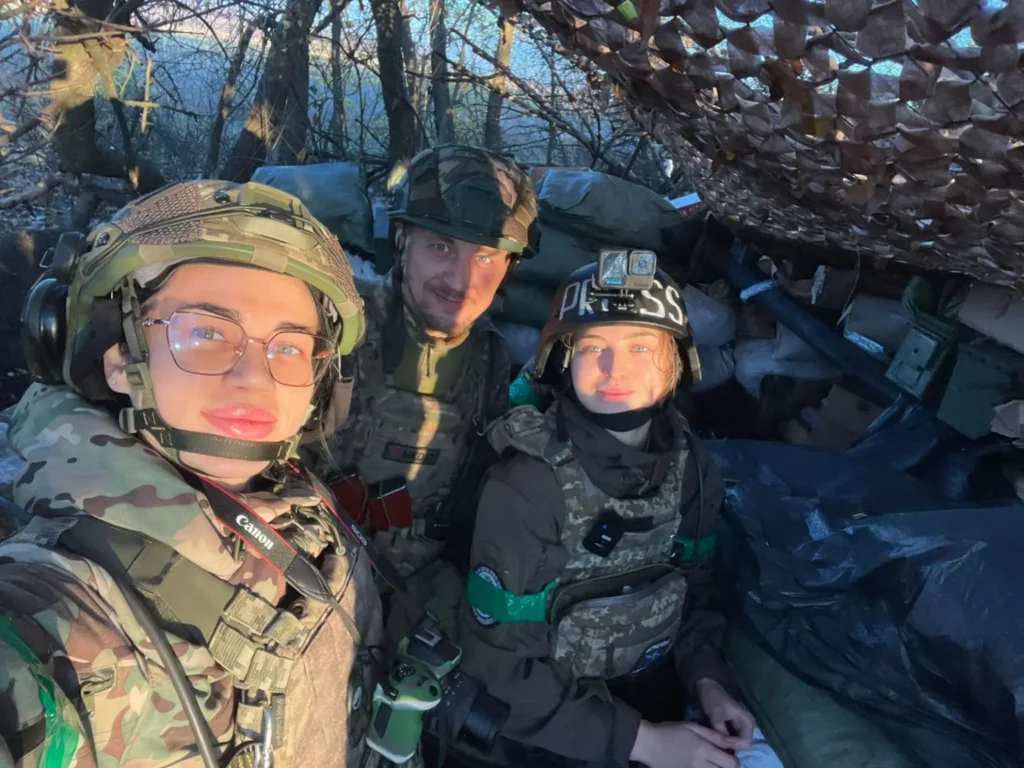
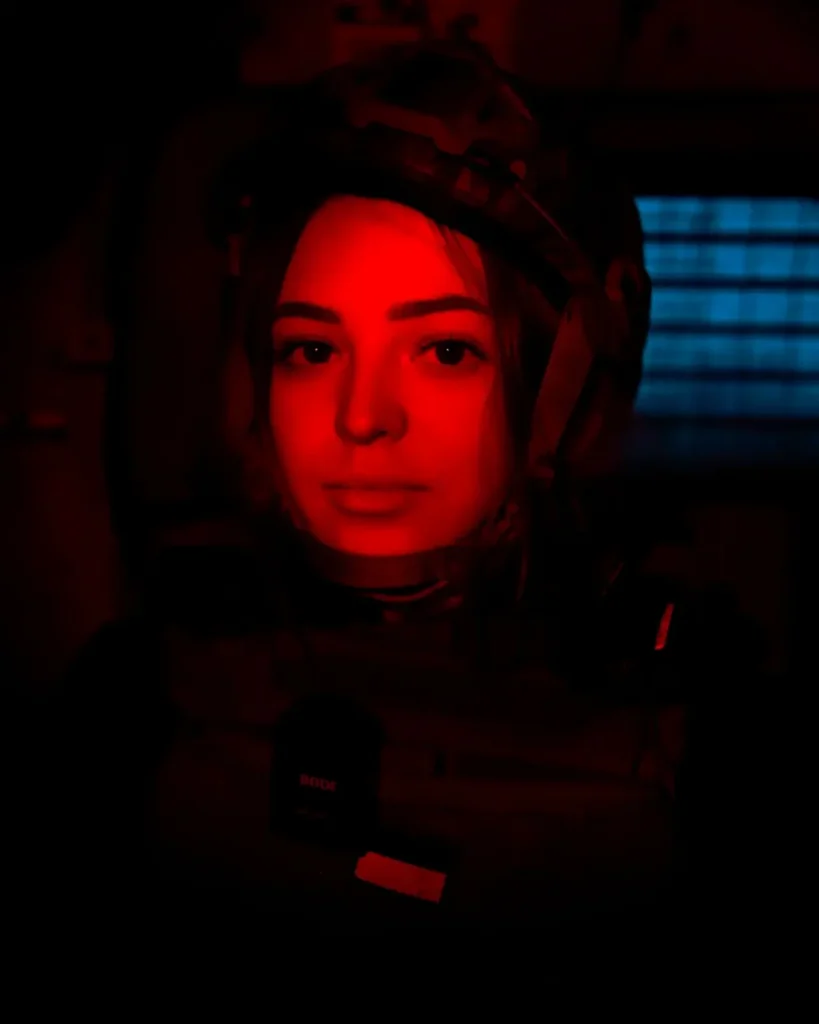
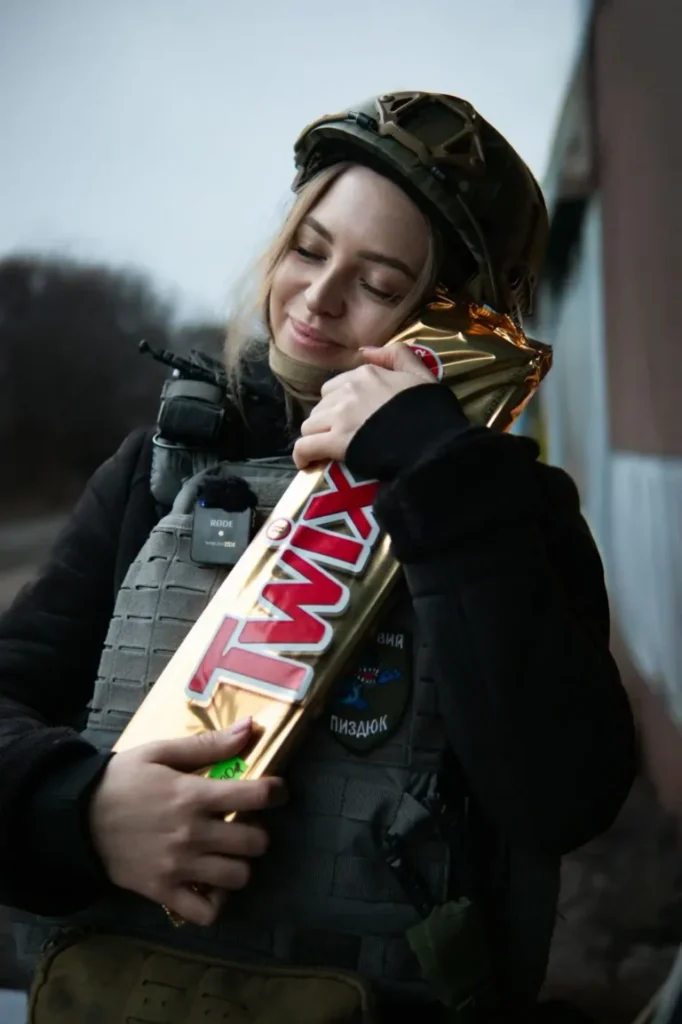
— Personally, I can point out that I’ve stopped using body armor and helmets with “Press” markings. Both the military and journalists themselves have noticed that these labels draw even more attention from enemy drone operators. Journalists are one of their priority targets, so it’s better to adapt to the environment you’re working in.
If I’m working with the military, I use camouflage body armor and a camouflage helmet. If it’s work with civilians, you wear black or other colors — with or without “Press” markings — but overall, you adjust more to the environment you’re operating in.
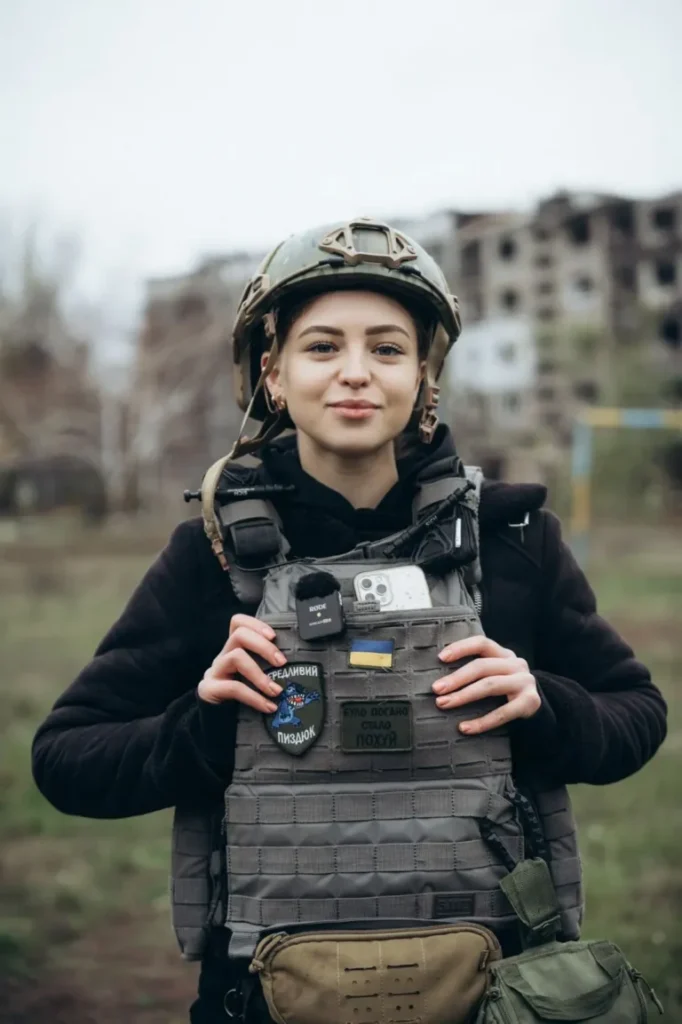
I’ve stopped using body armor and helmets with ‘Press’ markings: these labels draw even more attention from enemy drone operators. Journalists are one of their priority targets.
— Have there been cases when you deliberately decided not to publish material or not to show certain footage for safety or ethical reasons?
— Yes, there have been such cases. Even before I worked at Ukrainian Witness, I had a story that sat in a drawer for six months. I had filmed a piece about artillery soldiers and infantry from a certain brigade, and that night, they had a difficult infantry rotation — they were trying to replace the unit. It happened that two of the guys didn’t make it out — they were killed in action, but in practice, they were considered missing, because their bodies couldn’t be recovered. They tried to retrieve them for a long time. As far as I remember, it took several weeks or even months. Some were recovered, but one body never was. So there was a question of how their families would take it.
We agreed with the military that only after all procedures were completed — after the parents were notified and all processes around the situation were finished — only then could we publish. In the end, we waited for six months.
For security reasons, we may simply remove certain footage — if it shows the horizon, critical infrastructure, or any location that could reveal positions. This is something we always do, because it’s about the lives of people who constantly work in that environment.
— What topics are especially difficult for you to cover?
— The issue of missing persons. And also the issue of the TCR (Editor’s note: Territorial Center of Recruitment and Social Support, TCRSS — a Ukrainian state institution responsible for military recruitment, including mobilization during wartime, maintaining conscription records, and organizing the process of drafting eligible citizens into the Armed Forces). In society, this category is so widely hated — just like the police — that even when you try to show the work of professionals who are genuinely doing their job, to present them from another angle, saying, yes, there are those people people talk about, but there is also another side, there are professionals who work, who also risk their lives — it’s very difficult to work on such stories, because you automatically end up facing massive hate.
— Have there been situations when the usual tools of a journalist — a camera, a voice recorder, questions — stopped working in high-risk conditions? How did you handle that?
— Basically, it depends both on the situation and on the journalist. I had a case when we were heading to positions near Pokrovsk. And when we were already walking on foot, I instinctively pressed the REC button and just kept going. At that moment, an artillery strike or MLRS attack began — I don’t even remember exactly. And the camera recorded everything.
There was no need to ask any questions. The camera’s shotgun microphone was running, capturing the sound. You couldn’t see the impacts, but you could clearly hear and see us hitting the ground, and a soldier shouting: “Get down, get down, get down.”
Or, if it’s an absolutely critical situation and you don’t have time to pull out a camera, you always have a phone at hand, or a GoPro, which is essentially always kept running in combat zones — as long as there’s enough memory on the card. So a phone and a GoPro can save the situation in stories like this.
— Do you have internal guidelines for when to continue working and when to take a break?
— There are moments when you simply feel internally whether you can or cannot go to a certain place. Even when people say it’s too dangerous, don’t go there. There was a situation when I felt internally that I needed to go. I was warned for a long time, repeatedly told how dangerous it was. But I kept insisting, and we went — and it turned out to be a very difficult and deeply emotional story. We reached tank crew members at their position and recorded a very emotional interview. It became the highlight of the piece. And later it turned out that just a month or two afterwards, the man — the tank commander — was killed. In our video, his family saw him alive for the last time.
— If you think back to one of your materials or projects created in a high-risk zone, what was most important for you as an author and as a person?
— As a person, it’s probably the story when we spoke with a tank commander who, unfortunately, was killed later. For me personally, it was important that his relatives could at least see and hear him one last time somewhere — that there was video of what he was talking about, how he spoke, who he was, how he communicated with a stranger, because, as we know, people often open up more easily to strangers.
As an author, it’s important to show reality — not some polished, “cleaned-up” picture, but the reality and the path people go through, what is actually happening at the positions, how people live there, what they eat — so that these facts are not distorted, and so that the picture of what is happening in those sectors is not distorted.
There are many more possible answers to this question. But truly, first and foremost, it is important that your material becomes at least some form of memory for a fallen hero.
Colleagues: Take Care of Yourselves
Colleagues, a reminder: journalists working in high-risk regions have the opportunity to obtain free life and health insurance. This is part of the International Insurance Fund for Journalists (IIFJ) initiative, implemented in partnership with Ukrainian and European organisations.
Media professionals working in Kherson, Zaporizhzhia, Sumy, Mykolaiv, Donetsk, Luhansk, Odesa, Kharkiv, and Dnipropetrovsk regions, as well as border areas of Kyiv and Chernihiv regions, can apply. More information about the terms of free insurance is available here.
The content was produced with the support of the International Insurance Fund for Journalists implemented by the Association of Independent Regional Press Publishers of Ukraine is part of the Voices of Ukraine / SAFE support program, coordinated by the European Centre for Press and Media Freedom. Voices of Ukraine / SAFE is implemented within the Hannah Arendt Initiative and supported by the German Federal Foreign Office