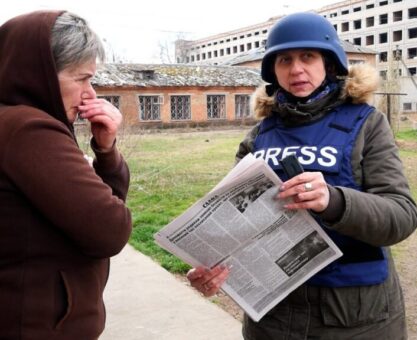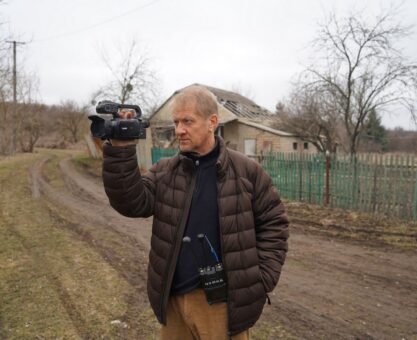



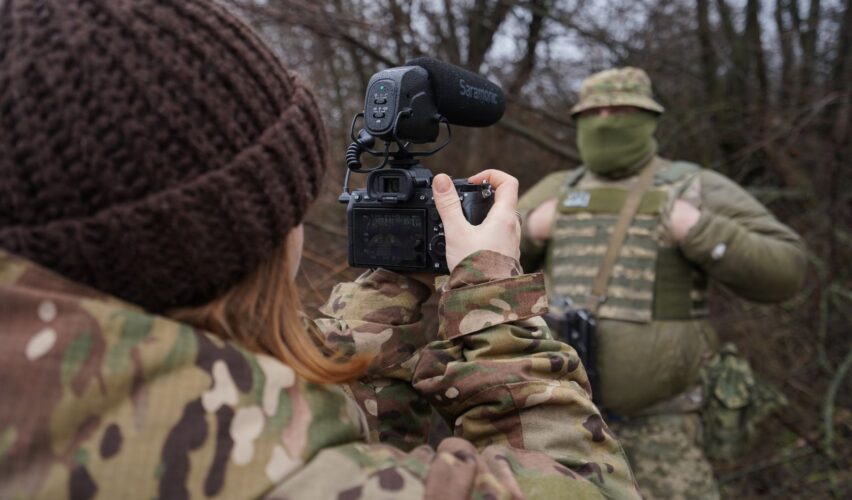
Ukrainian Witness camera operator Mariia Shevchenko speaks about daily risks, recovering after assignments, and the core principle of her work — respect for people.
In this series, we tell the stories of media professionals who risk their lives every day to show the truth. Their experiences are about working with a camera or the written word, as well as navigating dangers that have become routine, maintaining psychological resilience, and recovering after traumatic assignments. We discuss the challenges journalists face in wartime, their inner compasses, and the ethical dilemmas they encounter. We also remind readers that media workers operating in high-risk areas can insure their life and health free of charge through the International Insurance Fund for Journalists initiative.
We continue to share stories about the work of journalists in frontline and border regions. We have already published interviews with Zarina Zabrisky (Parts One and Two), Oleksandr Kachura, Vladyslav Safronov, Natalia Bilokudria, Serhii Horbatenko, Yevhen Khrypun, Anna Kaliuzhna, Polina Kulish, Nadia Sukha, Nadiia Karpova, Oleksandr Solomko (Parts One and Two), Diana Butsko, Oleksii Pasiuha, Oleksandr Chubukin, Aliona Serhiienko, Olha and Serhii Sydorov, Yevheniia Hrytsyna, Nataliia Kryvoruchko, Inna Shvydka, Pavlo Kliuchnyk, Larysa Hnatchenko, Diana Deliurman, and Viktoriia Hnatiuk.
“I focus on the shot, the light, the exposure — but in the face of danger, I choose life and health”
— Mariia, in the fifth year of the full-scale invasion, the war has clearly changed. How is this felt in journalistic work? What new dangers and challenges are emerging now?
— It’s obvious that drone activity and mined areas are now the biggest risks. On our most recent trips, my colleague Viktoriia Hnatiuk and I walked 15 kilometers to reach positions because it was safer than traveling by car.
We often have to move on foot through dangerous terrain to reach the military, record interviews, and film their work. At the moment, the safest option is to travel in small groups accompanied by soldiers, who can shoot down a drone or warn of danger if necessary.
— How do you manage physical risks in your work environment? Have your safety practices changed over time?
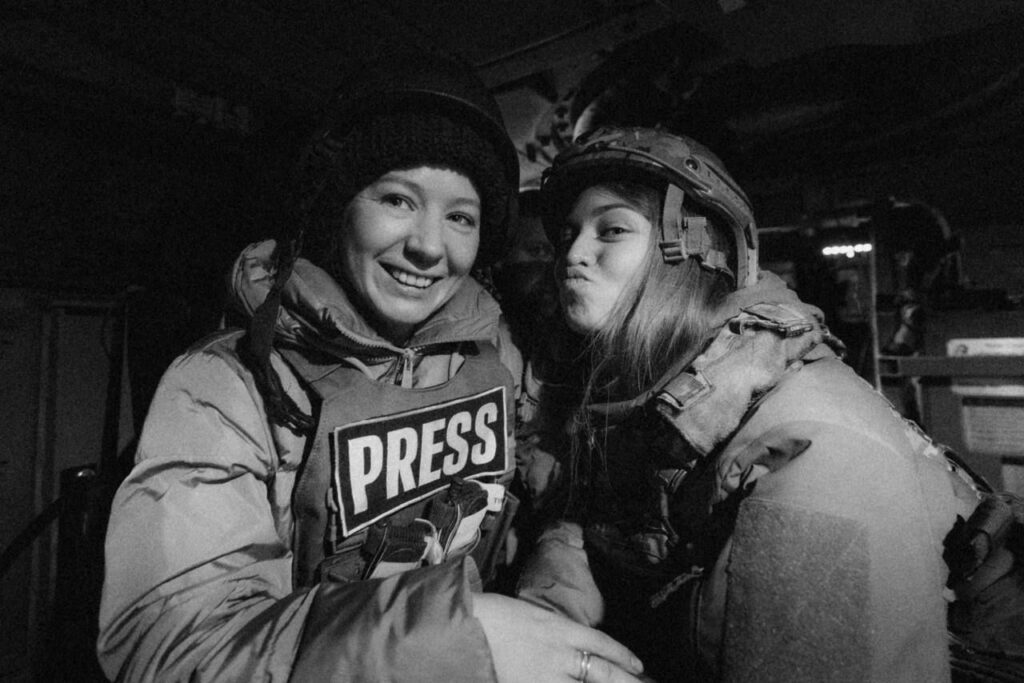
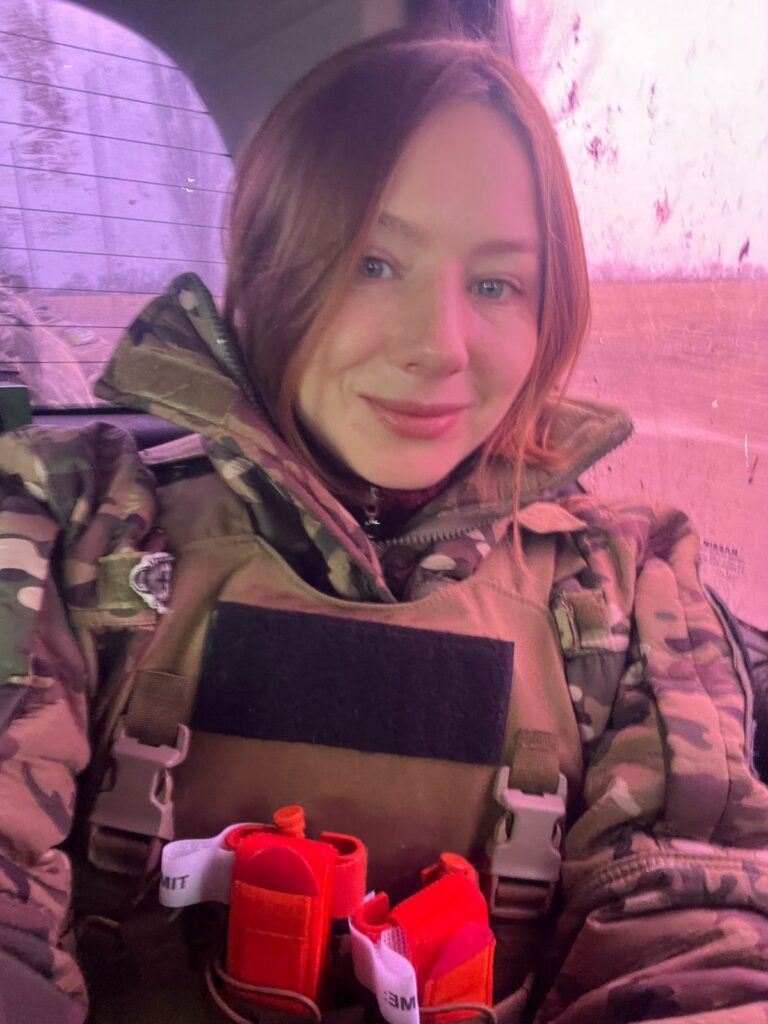
— No, we continue to use all available protective gear: a helmet, a bulletproof vest, a tourniquet, and a first aid kit. We don’t go out or work without them.
— What helps you maintain psychological resilience in an environment of constant danger?
— That’s a good question, because it’s really important to understand what helps sustain psychological resilience.
For me, the only thing that helps is staying focused on my work. At Ukrainian Witness, I work as a camera operator — I film. So all my thoughts are occupied with monitoring the shot, the light, the exposure, and the sound.
In situations of danger, of course, I choose life and health, but I treat my work with the utmost responsibility.
After assignments, it’s very important for me to recover — for example, by seeing a massage therapist who helps relax my muscles. Even if it feels like I can distance myself from difficult stories, they still have an impact. That’s why it’s important to know how to relax and recover in time in order to keep working effectively.
— Have there been cases when you deliberately decided not to publish material or not to show certain footage for safety or ethical reasons?
— All materials are reviewed by press officers and the military before publication to make sure we haven’t missed blurring any frame or sensitive information. So, for safety reasons, we also try to film in a way that leaves less work for the editors. And in post-production, we review everything multiple times to make sure, God forbid, there are no mistakes.
As for ethics — in Kherson, we filmed volunteers retrieving the bodies of civilians from red zones, which are very difficult to access because vehicles are targeted. I frame the shots in a way that minimizes trauma for the audience.
— Which topics are particularly difficult for you to cover?
— All topics are challenging, but the most painful is witnessing the hopelessness and suffering of sincere, kind people who are forced to live in extremely difficult conditions and endure immense grief. Especially the elderly, who hold on to their homes and try to preserve the lives they have built over years and decades.
One man only evacuated after his home was destroyed by drones, leaving him with his dog and a giant rabbit (it had set a regional record for its weight). Stories like this evoke empathy, but they are also deeply saddening.
Given all the horror this man had been through, he remained so kind, sincere, and open, and shared his emotions so honestly, that it’s impossible not to feel empathy. It’s this sense of empathy that allows me to work effectively.
“In stressful situations, I stay calm and ask for help”
— Have there been times when the usual tools of a journalist — a camera, a recorder, questions — stopped working in risky conditions? How did you handle that?
— Of course, it happens very often — even with equipment I’ve been using for a long time. I always monitor the sound in headphones and carry multiple backup options: SD cards, batteries, lights — so I can replace things quickly if needed. But sometimes the camera just stops working. It can overheat, shut down, a lav mic can come loose, or a cable can fail.
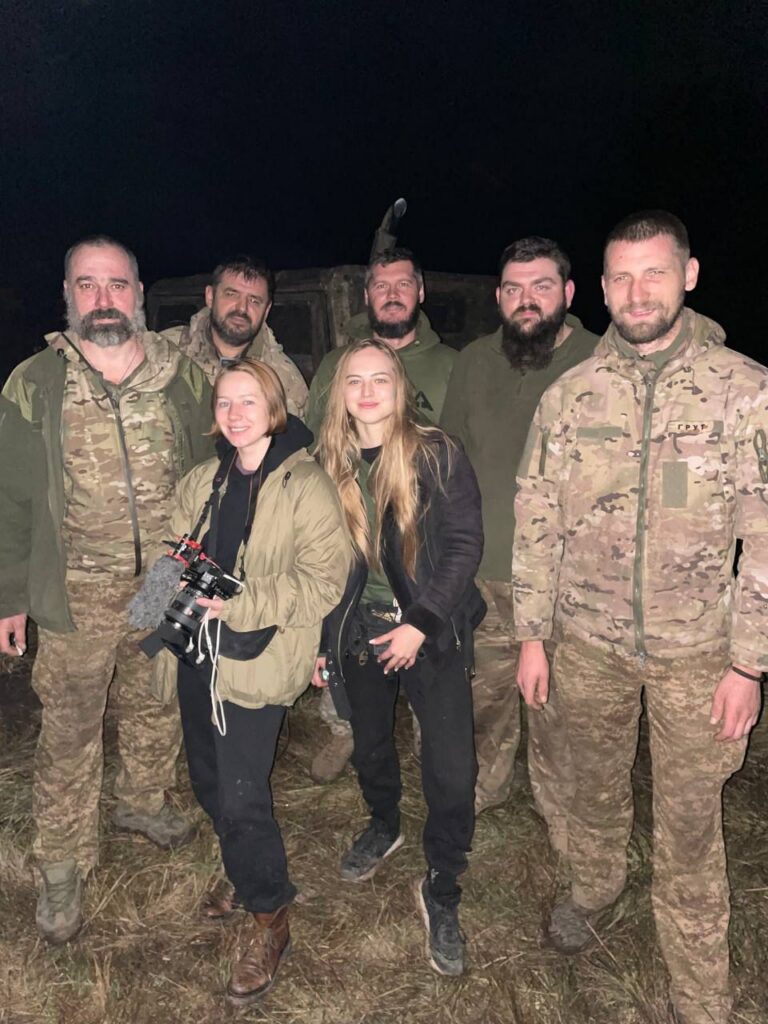
But I have a kind of superpower: in stressful situations, I stay calm and composed. I simply do what I can. I report the problem, tell the journalist we need to wait a bit while I try to fix everything. Viktoriia — the journalist I work with — can also film a little. Sometimes I take her camera if it’s still working and continue.
So it’s about being able to acknowledge your vulnerability: that things won’t always go perfectly, and being honest about it. Viktoriia and I work as a pair — two women — so carrying all this equipment can be quite physically demanding.
I’m not afraid to ask for help, as long as it doesn’t interfere with the military’s work or the overall process. Because of this, I think all our shoots and assignments are successful: we work as a well-coordinated team, we can be honest with each other about problems, address them, and think about how to avoid similar mistakes on future assignments.
— Do you have internal guidelines for when it’s worth continuing work and when you should take a break?
— Yes, I do. I can’t really explain them, sometimes not even to myself, but I always clearly understand when I need to wait before starting a conversation with a person, when it’s not appropriate to film, and how far I can go with my questions.
I’ve been filming for quite a long time. I graduated from the Kyiv-Mohyla Academy, and there, among other things in journalism, we had documentary film classes taught by Kateryna Gornostai. We had this exercise called “Contact”: you had to approach strangers without explaining who you were, and film some dramatic situation lasting one to two minutes. When I learned to do these “contacts” (and it was really difficult — for the first three days I was simply afraid to approach people), it gave me an inner sense of understanding another person without words, based only on feelings, emotions, some kind of energy.
I realize I’m sounding a bit esoteric right now. Anyone who films and has worked in documentary for a long time will understand me. So I always rely on my internal sense of direction — it has never let me down.
— What helps you recover after difficult shoots or conversations?
— Simple rest. After a tough assignment, we have rules: we don’t have to attend office meetings. And honestly, if I didn’t have my massage therapist, I’d probably be feeling much worse by now. Deep tissue massages and swimming help me recover. And — it took me a long time to learn this — doing nothing. Or doing something light, just for my own pleasure. These are simple, but effective things.
— If you think of one of your stories or projects created in a high-risk zone, what was the most important thing for you as a filmmaker and as a person?
— Over the years of my work, I’ve come to a clear principle: no piece of content, no news story, no frame can be more important than a human being. If my work negatively affects the lives of my subjects, then I don’t need that story. Unfortunately, I arrived at this conclusion through experience.
I’ll give an example. I was working in Kherson after its liberation. It was December, Christmas time. There was a very heavy shelling of the city center and the market. I remember there were many people who were killed instantly, and many injured. At that time, I was working as a producer for the news agency Agence France-Presse. And I thought that my most important task was to be a journalist, a producer.
I asked questions and reported the situation, but one image still hasn’t left my mind. Walking between the rows of the market, I came across a woman sitting next to her husband, who was already covered with a sheet — he had been killed. She was in shock. And I think I initially asked her a few questions, and only after I myself came out of the shock of what I had seen did I realize that, from my side, it was probably unethical. I didn’t even think to offer her any help or even a bottle of water before asking standard journalistic questions.
The piece was eventually published by Agence France-Presse, and it turned out well, but after that I stopped working as a producer for news agencies. I also stopped going out with breaking news teams. The only work I agreed to do was with documentary filmmakers, because their focus is more human-centered. And for me, respect for the human being became the main priority.
Now, if a person refuses publication after the work has been done, that is already normal for me. Of course, I always think about the stories and want them to turn out good and engaging. For that purpose, I’m fine with traveling to areas where the risk of death is much higher than, for example, in Kyiv. But in my mind, I now always keep ethics as the highest value.
Colleagues: Take Care of Yourselves
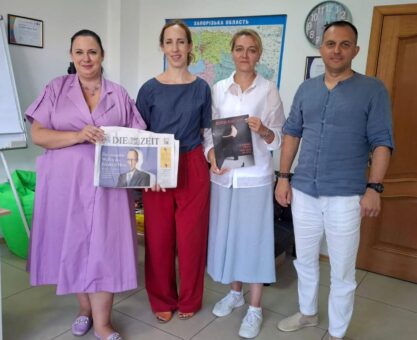
Colleagues, a reminder: journalists working in high-risk regions have the opportunity to obtain free life and health insurance. This is part of the International Insurance Fund for Journalists (IIFJ) initiative, implemented in partnership with Ukrainian and European organisations.
Media professionals working in Kherson, Zaporizhzhia, Sumy, Mykolaiv, Donetsk, Luhansk, Odesa, Kharkiv, and Dnipropetrovsk regions, as well as border areas of Kyiv and Chernihiv regions, can apply. More information about the terms of free insurance is available here.
The content was produced with the support of the International Insurance Fund for Journalists implemented by the Association of Independent Regional Press Publishers of Ukraine is part of the Voices of Ukraine / SAFE support program, coordinated by the European Centre for Press and Media Freedom. Voices of Ukraine / SAFE is implemented within the Hannah Arendt Initiative and supported by the German Federal Foreign Office