


Five women in Novhorod-Siverskyi continue publishing Siverskyi Krai despite shelling, cold, and a decline in readership
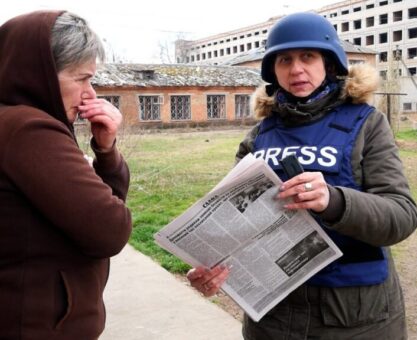
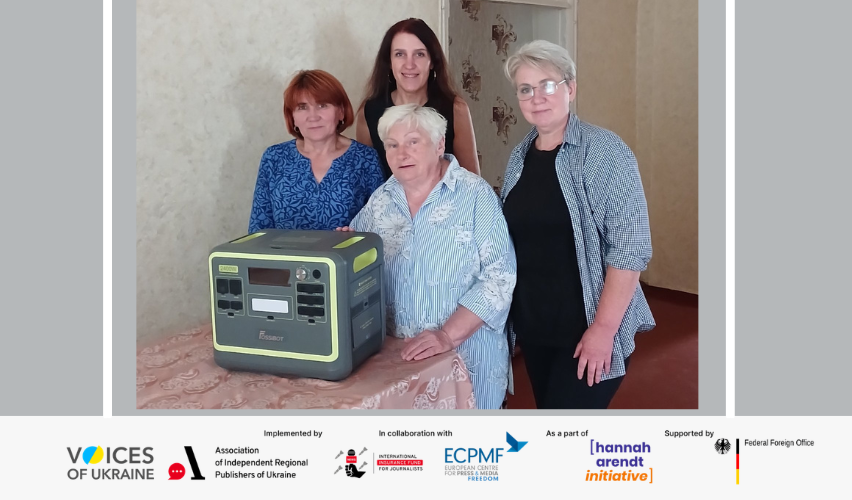
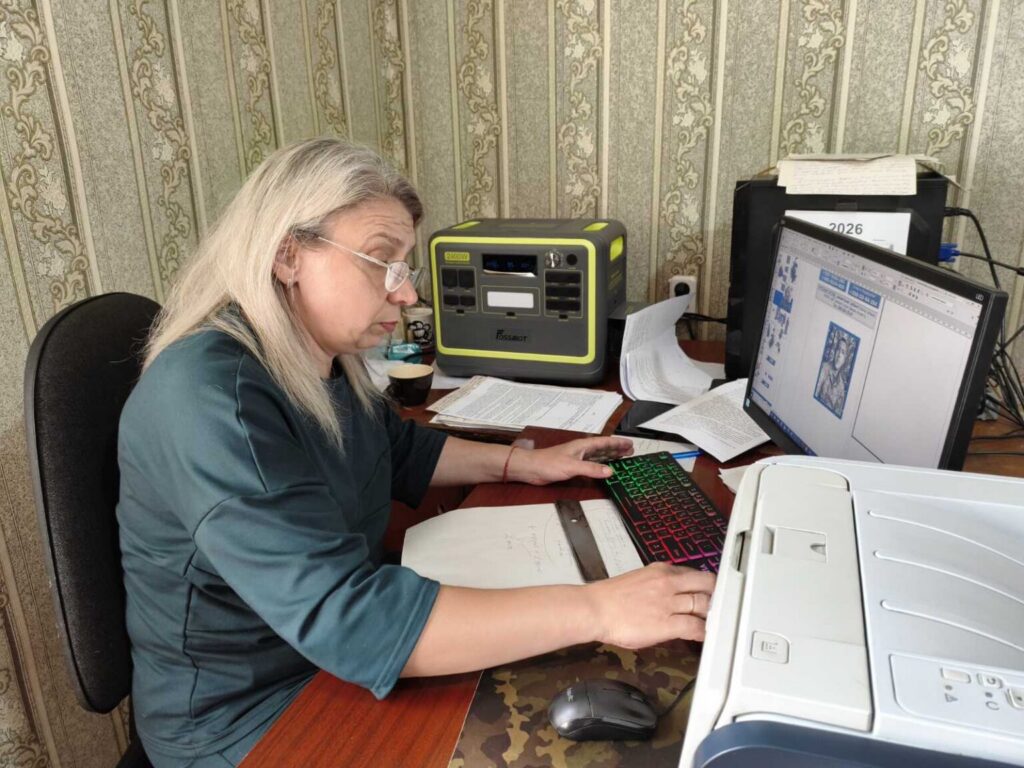
The editorial team of Siverskyi Krai has been working in border and frontline conditions for more than four years. Like many of their colleagues today, their work involves overcoming daily challenges: shelling, power outages, cold offices, and a lack of transportation. The publication took part in our Emergency Support Program for Regional Media and received funding to purchase a power station.
— It is no longer as frightening to think about late autumn and winter with their inevitable energy challenges. We are very grateful! — says the publication’s Editor-in-Chief Hanna Khaliman.
Read about the work of Siverskyi Krai in conditions where the number of subscribers has fallen to about one-third of its pre-war level, while businesses and residents of the community are leaving.
Working Under Shelling
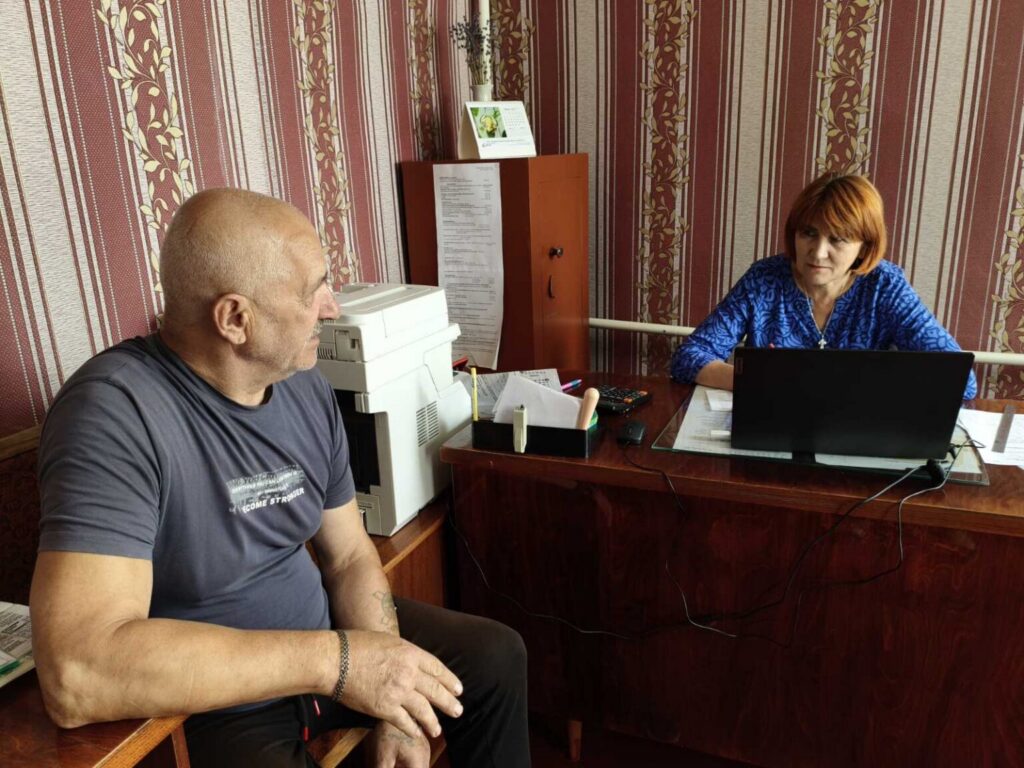
The editorial team switched to a hybrid format long ago: most of the time, the journalists work from home and gather together only twice a week—on “newspaper days.”
— We all meet at the editorial office only on Fridays and Mondays. On the other working days, there is just one person there, so that in the most critical situation as few people as possible would be at risk, — says Hanna.
An attempt to fully switch to remote work failed: power outages and communication problems made newspaper layout almost impossible.
— We even had to print out pages for proofreading and send the newspaper to print from Points of Invincibility, — the editor recalls.
Readers helped—the woman who lived nearby would turn on her home generator so that the editorial team could finish preparing the issue.
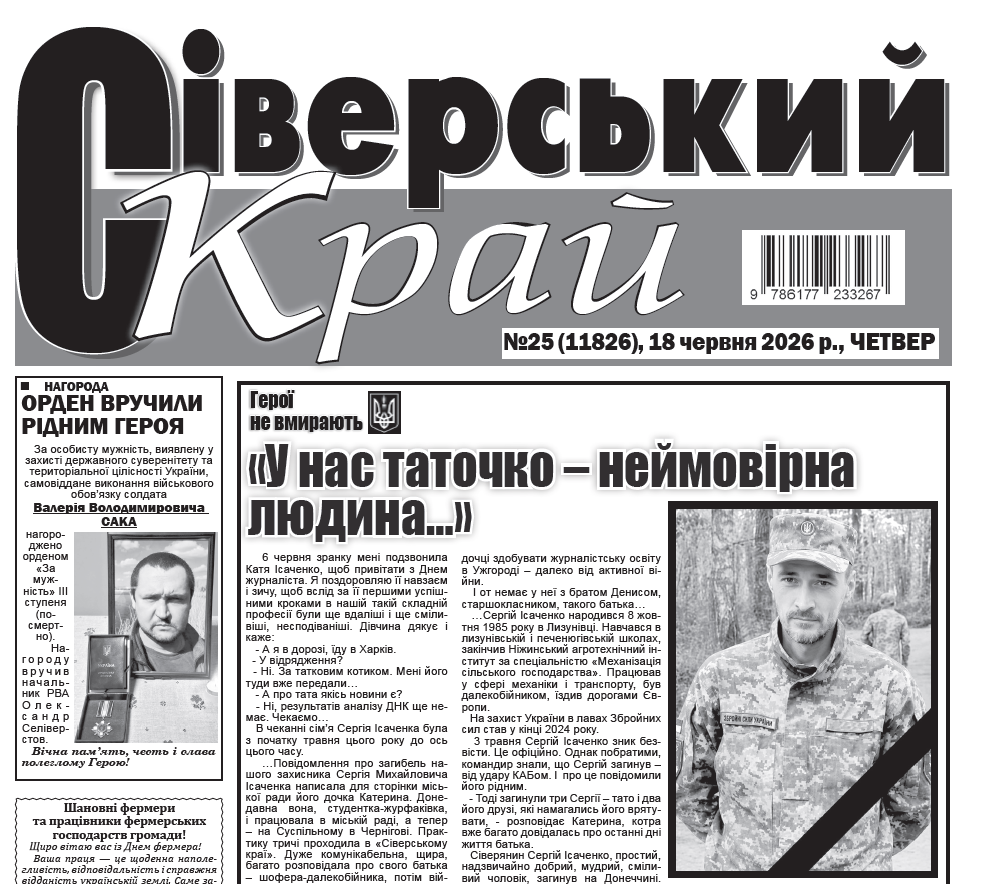
The newspaper’s premises were also damaged by strikes: shattered windows, cracks in the walls, and cold offices in winter.
— No matter how much firewood you burn, it is still freezing.
Safety practices have become part of everyday work: after “arrivals” (strikes), journalists do not immediately go to the sites of explosions to avoid the risk of repeated attacks. The editorial office has a room with four walls where they take shelter during direct danger.
— Unfortunately, we cannot spend every air raid alert in shelters—they can last for more than a day. But when we hear the roar of Shahed drones, we hide in the room with four walls, — says Hanna.
People and Resilience
The team consists of five women aged 40 to 66. They do not just write texts—they also carry firewood, clean the premises, and deliver the newspaper themselves.
— Maybe difficulties do not divide people but bring them closer. After two decades together, we know each other very well, — says the editor.
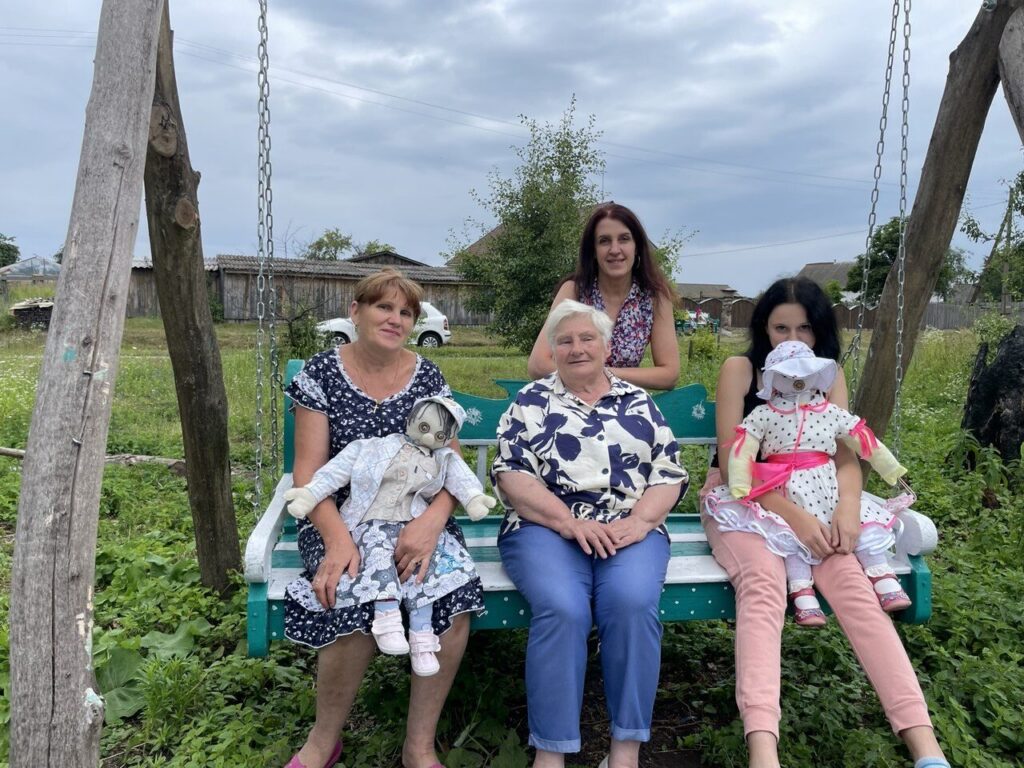
Each team member has her own hobby that helps overcome fear: weaving camouflage nets, creative activities, and literature. Hanna Khaliman writes stories and reads Ukrainian classics, which she covers in her “Let’s Read Ukrainian” column:
— When I hear the roar of low-flying UAVs or an explosion in the middle of the night and cannot fall asleep, I leave my bed, turn on my desk lamp, and write. It helps overcome fear and distracts me from anxiety.
The Newspaper as a Responsibility
Despite everything, Siverskyi Krai continues to be published regularly. Its main topics are the war, heroes, prisoners, volunteering, and community issues. But the newspaper also features stories about young people, sports, culture, and remarkable life stories.
— The hardest thing is writing about war and human suffering. You write—and you cry. But then the reader cries too, — says Hanna.
Readers ask for lighter content, but at the same time they thank the editorial team for difficult stories. The number of subscribers has fallen to one-third of the pre-war level. The main reason, of course, is the demographic situation: mandatory evacuation from 12 villages, the departure of businesses and residents, as well as ongoing delivery problems with Ukrposhta.
— Where are we supposed to find new subscribers? Businesses are leaving the community too; enterprises have been damaged or simply destroyed by the attacks, — says Hanna.
Despite her age—66 years old—Hanna Khaliman is not retiring.
— There is a responsibility—to the newspaper, the readers, and the team. My conscience does not allow me to abandon everything and leave, — says the editor.
For her, a journalist’s dignity means being ready to take risks without putting colleagues in danger. And most importantly—it means staying with readers even when it seems impossible to survive.
A reminder: insurance is available
Colleagues, a reminder: journalists working in high-risk regions have the opportunity to obtain free life and health insurance. This is part of the International Insurance Fund for Journalists (IIFJ) initiative, implemented in partnership with Ukrainian and European organisations.
Media professionals working in Kherson, Zaporizhzhia, Sumy, Mykolaiv, Donetsk, Luhansk, Odesa, Kharkiv, and Dnipropetrovsk regions, as well as border areas of Kyiv and Chernihiv regions, can apply. More information about the terms of free insurance is available here.
This article is part of a series of publications on the work of regional media in wartime conditions, safety protocols, and the psychological resilience of journalists. We have already published interviews with Zarina Zabrisky (Parts One and Two), Oleksandr Kachura, Vladyslav Safronov, Natalia Bilokudria, Serhii Horbatenko, Yevhen Khrypun, Anna Kaliuzhna, Polina Kulish, Nadia Sukha, Nadiia Karpova, Oleksandr Solomko (Parts One and Two), Diana Butsko, Oleksii Pasiuha, Oleksandr Chubukin, Aliona Serhiienko, Olha and Serhii Sydorov, Yevheniia Hrytsyna, Nataliia Kryvoruchko, Inna Shvydka, Pavlo Kliuchnyk, Larysa Hnatchenko, Diana Deliurman, Viktoriia Hnatiuk, Mariia Shevchenko, Anna Matviienko, Nastya Stanko, Iryna Sytnik, Svitlana Tomash, Olesia Bida, Yevhen Nazarenko, Oleksii Kovalchuk, Ilona Korotitsyna, Iryna Stolbova, and Kateryna Tyshchenko.
As a reminder, the International Insurance Fund for Journalists, implemented by the Association of Independent Regional Press Publishers of Ukraine, is part of the Voices of Ukraine / SAFE support program, coordinated by the European Centre for Press and Media Freedom. Voices of Ukraine / SAFE is implemented within the Hannah Arendt Initiative and supported by the German Federal Foreign Office