On the night of October 7, Yana Hudz, a correspondent for Kremenchuk Telegraph, woke up to explosions and began publishing updates about the attack on the city. A few hours later, one of the strikes hit her own courtyard. Her apartment was damaged, and the family’s car was buried under bricks from a destroyed building.
After the air raid alert was lifted, Yana went to the newsroom with her colleagues, as residents were not yet allowed to return home. She told the Association of Independent Regional Press Publishers of Ukraine (AIRPPU) about that morning, the support she received from her team, and what it was like to continue working after the attack.
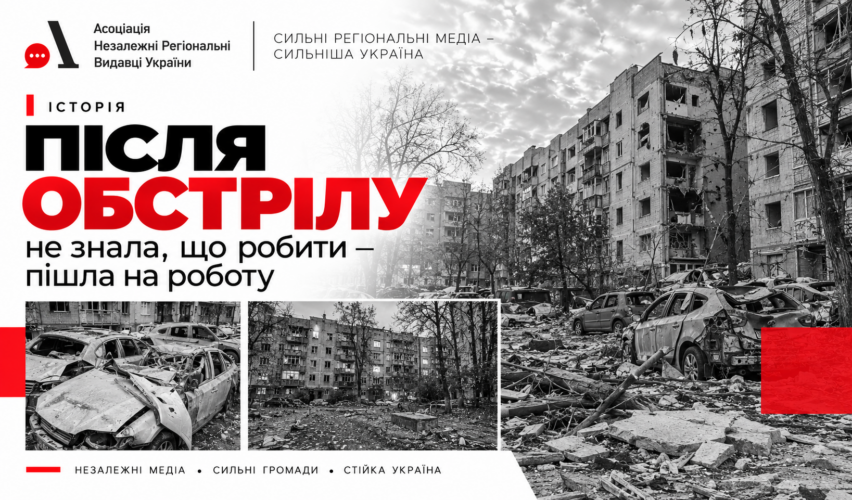
Two people were killed in the Russian attack on Kremenchuk on October 7, 2026. According to the Poltava Regional Military Administration, 47 people had been reported injured as of 6:50 p.m. that day, including two children.
From Breaking News to an Explosion in Her Own Courtyard
October 7 was Yana’s turn to cover the news feed, meaning she was responsible for publishing updates throughout the day and night. Her colleagues even joked that whenever she was on duty, something was bound to happen again. At around 3:30 or 4 a.m., the journalist woke up to the first explosions, which sounded relatively far from her neighborhood. After posting an update about the attack and exchanging messages on Telegram with colleagues who had also woken up, she went back to sleep. Closer to 5 a.m., she heard two more explosions and published another report about the renewed attack.
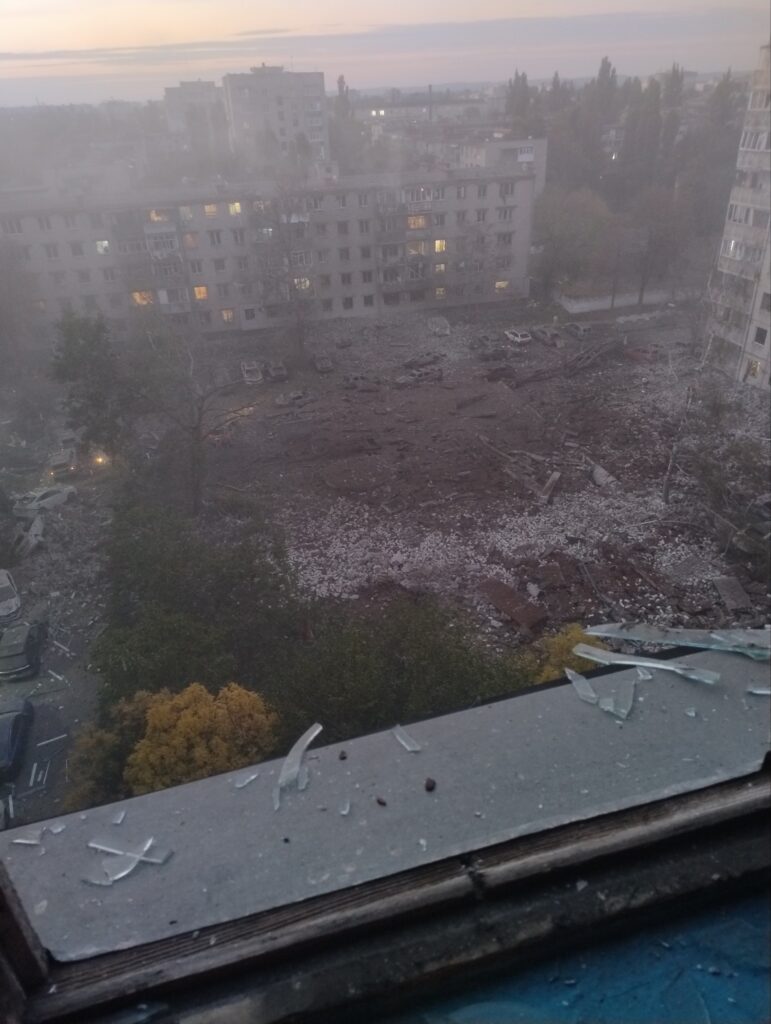
The first thing Yana saw from her apartment window. Destruction in Kremenchuk following the Russian strike on October 7. Photo by Yana Hudz.
By then, warnings had already been circulating that numerous missiles were heading towards the city. Previously, Yana had been skeptical of such messages, and that night she expected strikes in the areas targeted during earlier attacks. At around 6 or 6:30 a.m., her usual waking time, she decided not to go back to bed and went to the bathroom to get ready. There, she read a message from the head of the regional administration about a large-scale attack on Poltava region and Kremenchuk, urging residents to remain in shelters. She was also planning to publish that information on the website as quickly as possible.
While getting ready in the bathroom, Yana heard a rumbling sound. Her building stands near a busy street, where traffic can usually be heard clearly.
“At first, I thought it was a truck or some other large vehicle passing by. Then the rumbling turned into an incredibly loud whistling sound. I had never heard anything like it in my life. And then came the explosion. More experienced colleagues, including those who had moved from frontline areas, always told us that if you hear an explosion, that’s a good thing. So I thought the same: it was loud, but it must have happened a little farther away, not right next to us.”
At the same time, objects began falling from the bathroom shelves, and a cabinet door came loose and struck Yana lightly. Her husband, a serviceman, usually reacts more calmly to explosions, but this time the building shook so violently that he was jolted up from the bed where he was still sleeping. Yana said they needed to leave. When she opened the apartment door and saw plaster falling in the stairwell, she began getting ready even faster.
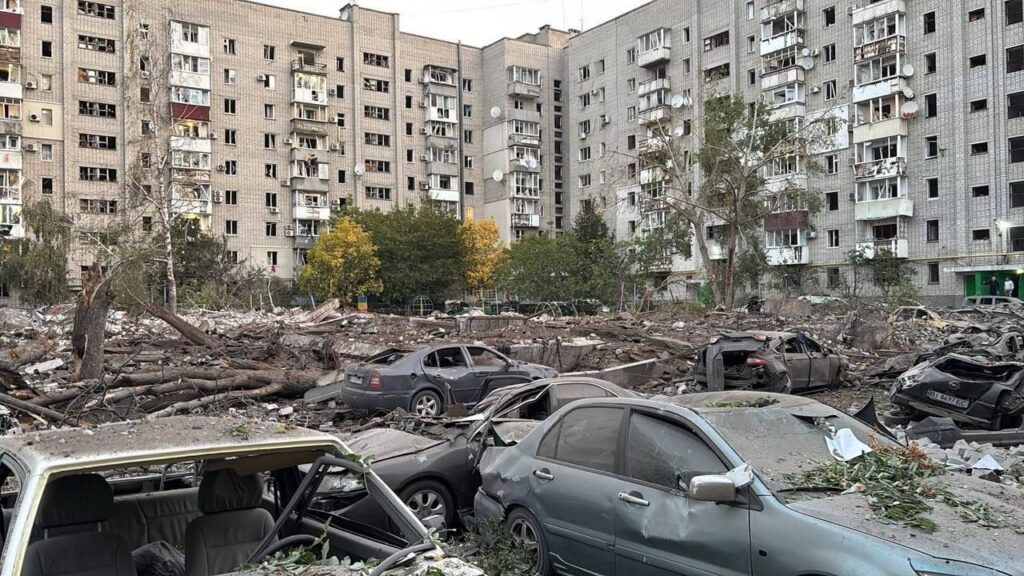
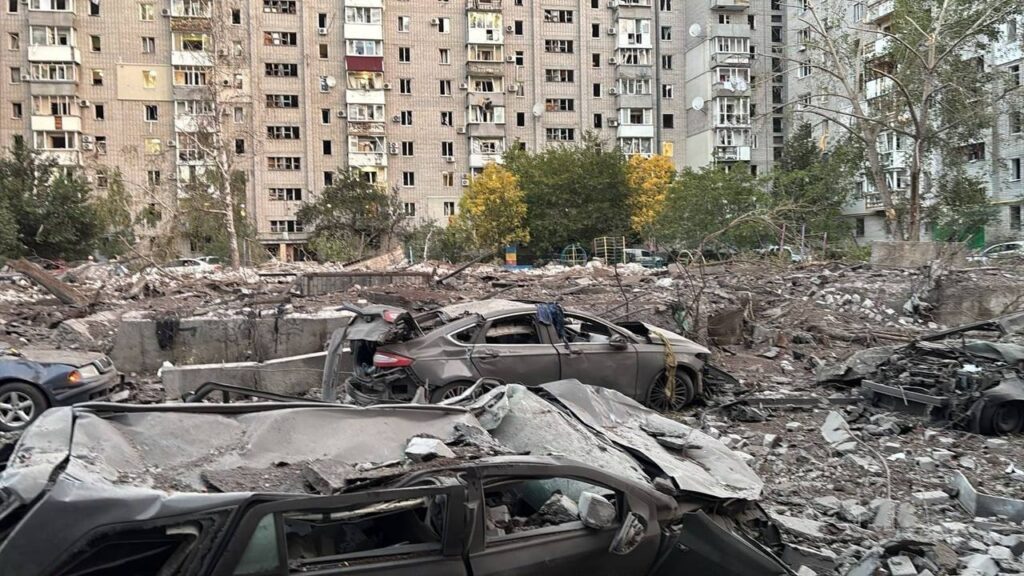
Yana’s apartment building. Destruction in Kremenchuk following the Russian strike on October 7. Photos by Yana Hudz.
A Crater Where a Familiar Courtyard Once Stood
Throwing on some clothes and a dressing gown, Yana stepped into the stairwell wearing slippers. The windows had been shattered, and the floor was covered with glass. She walked across it without injuring her feet.
“I looked out of the stairwell window into the courtyard, and our courtyard was simply gone. I don’t even know how to describe it. We had a beautiful courtyard. There was an old stone building in the middle that was no longer in use, with a playground and exercise bars nearby. Children used to play there. Residents had built little shelters for cats and regularly fed them. And now I looked out, and none of it was there. Just a crater, bricks, and earth.”
Yana believes the strike hit the structure in the middle of the courtyard. Cars had been overturned, trees were broken, and the area was covered with branches, glass, and fragments of balconies. Windows facing the courtyard had been blown out.
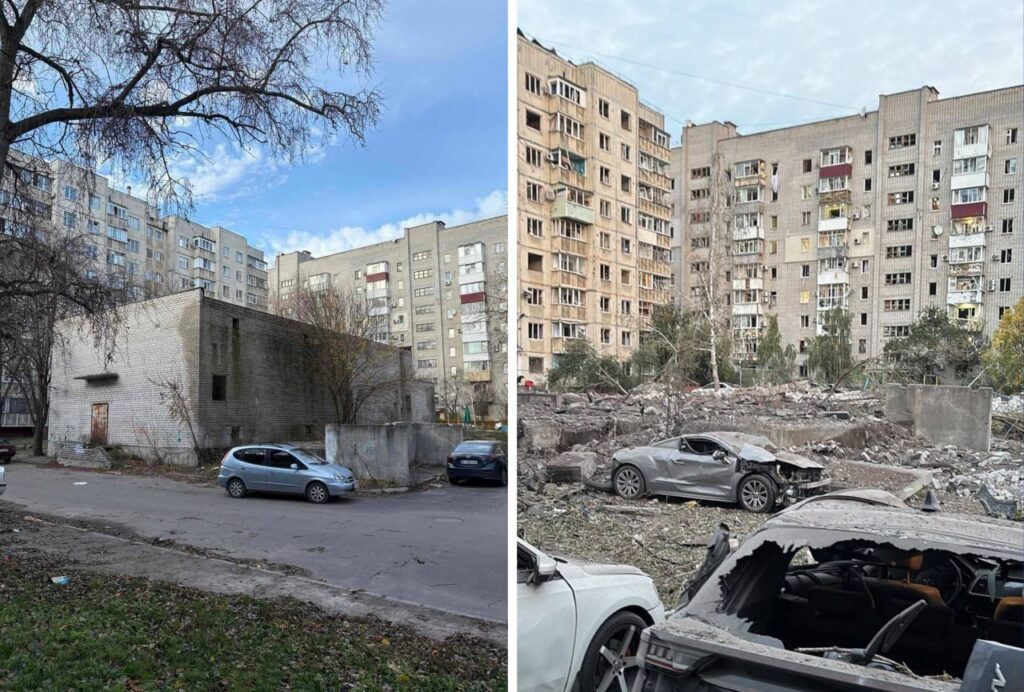
The structure believed to have been hit. Before-and-after comparison. Destruction in Kremenchuk following the Russian strike on October 7. Photo by Yana Hudz.
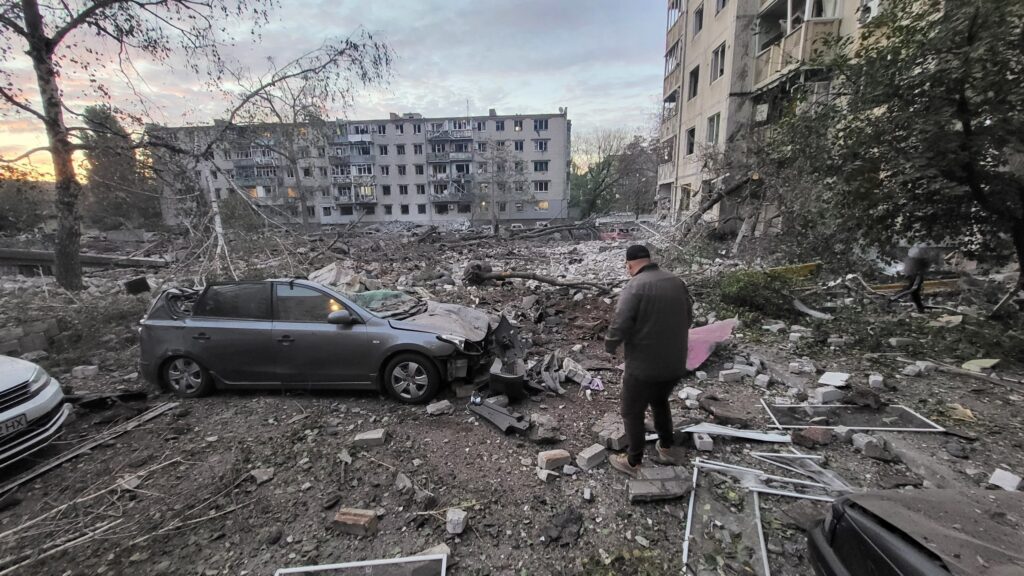
Destruction in Kremenchuk following the Russian strike on October 7. Photo by Yana Hudz.
Realizing she would not get far in slippers, Yana went back to change her shoes. She and her husband quickly gathered their laptops, documents, and money before leaving, without stopping to inspect the apartment. The air raid alert was still in effect, and they did not know whether more strikes would follow or whether there was a fire or damaged utility infrastructure in the building. Other residents were also leaving, some carrying their pets in carriers.
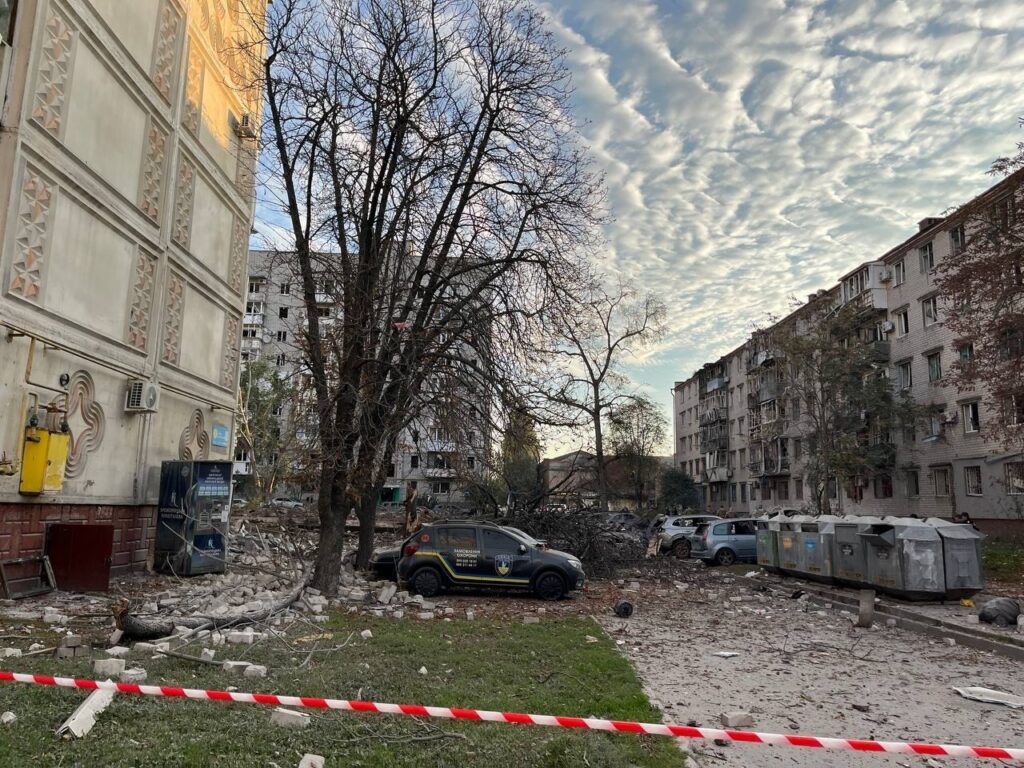
Destruction in Kremenchuk following the Russian strike on October 7. Photo by Yana Hudz.
Once outside, her husband remembered the tourniquets they had left in the apartment and went back to retrieve them. Meanwhile, two colleagues who lived nearby approached Yana. After moving away from the entrance, they took several photographs and sent them to newsroom colleagues who had been less affected by the attack and were able to continue publishing breaking news. They then went to a shelter together and waited until the air raid alert was lifted. Her husband stayed near the building.
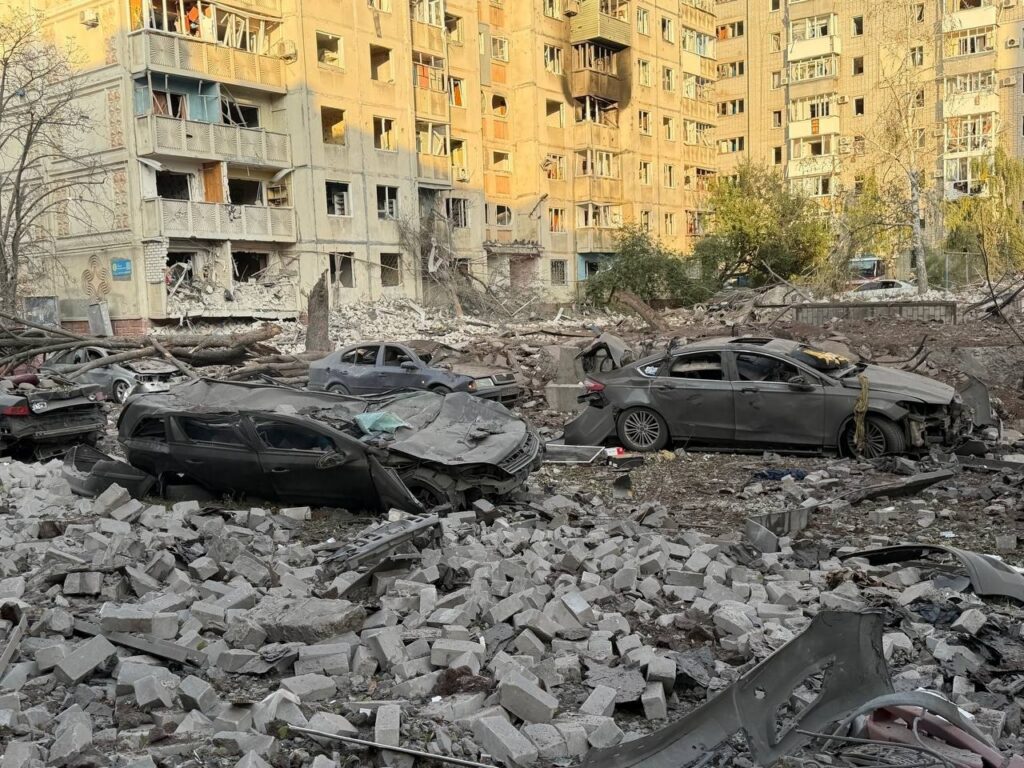
Destruction in Kremenchuk following the Russian strike on October 7. Photo by Yana Hudz.
From the Shelter to the Newsroom
Even after the air raid alert was lifted, residents were not allowed to return home because rescuers, police officers, and other emergency services were still working near the building. According to Yana, missile fragments were lying in the courtyard, and the area had been cordoned off.
“I didn’t know what to do, so I went to work. Our office is on the next street. On the way, I bought toothpaste and a toothbrush because I hadn’t had time to do anything that morning. At the newsroom, I could have some coffee and breakfast.”
Meanwhile, two colleagues went to report from the impact sites. In addition to Yana’s courtyard, a residential area of private houses two streets away had also been hit. She estimates the distance between the sites at approximately 700 meters. Yana stayed in the newsroom and published the videos her colleagues were filming.
“I’m incredibly grateful to my colleagues for getting me out of there and supporting me at work. I spent practically the entire working day in the newsroom. It was difficult to think or write, and there was no question of managing a full news shift. But I still understood that I needed to do something, at least something practical: upload a video to our Telegram channel, do some small task. Later in the afternoon, I managed to write a few news stories for the website.”
While Yana remained with her team, her husband waited near the building until he could reach their car. Residents were still not being allowed inside, and utility services had been shut off.
A Destroyed Car and the Return Home
The family had bought their car the previous year. As they did not have a garage, they usually parked it in the courtyard. After the strike, the vehicle was buried beneath debris from the destroyed building.
“The day before, my husband had parked the car right next to the building that was hit. All the bricks fell onto our car. There was practically nothing left of it.”
Her husband was deeply worried about the car and waited until rescuers and municipal workers began clearing the rubble. Once some of the bricks had been removed, he retrieved whatever he could, including his military documents. The car was then moved so it would not obstruct further work, and he filed a police report about the property damage.
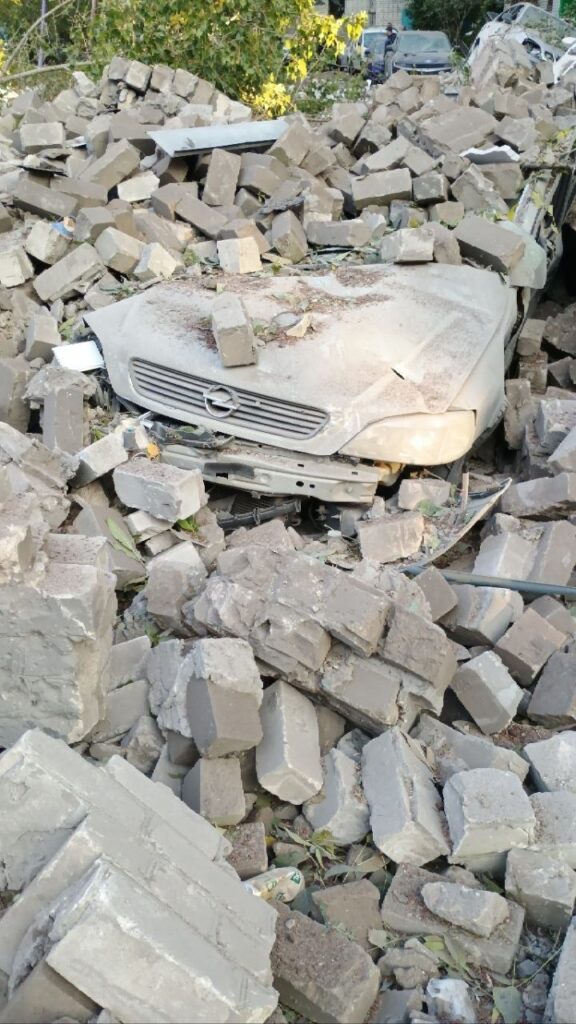
The couple’s car. Photo by Yana Hudz.
Towards the end of the day, residents gradually began to be allowed back into the building, and Yana was finally able to inspect her apartment. Municipal workers had cleared away the glass, but there was still a great deal to do at home. Belongings had fallen from shelves, windows were damaged, and the entrance door had shifted out of place. It still closed, but it was no longer secure. A neighbor’s apartment had suffered much more extensive damage: the blast wave had blown out the windows, doors, and balcony. Seeing this, Yana says she was simply lost for words.
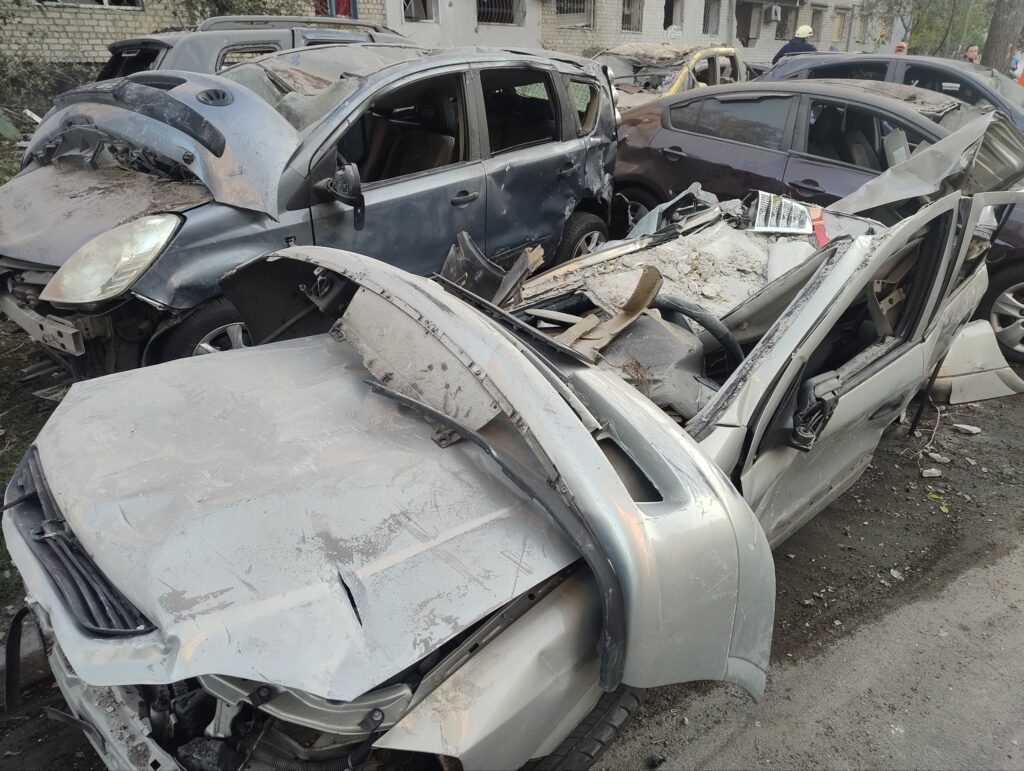
The couple’s car. Photo by Yana Hudz.
That evening and the following morning, the family cleared away glass, plaster, and whitewash and began putting their belongings back in place. Gas service had still not been restored at the time of the interview. Yana did not know whether a pipe had been damaged or the supply had been shut off as a precaution against leaks, or when it would be restored. Speaking about what her family had experienced, she said:
“It’s terrible. The only thing that matters is that we’re all alive.”
How to Support the Family
Colleagues and readers who would like to support Yana Hudz’s family can make a donation using the following bank card number: 4149439028976912.
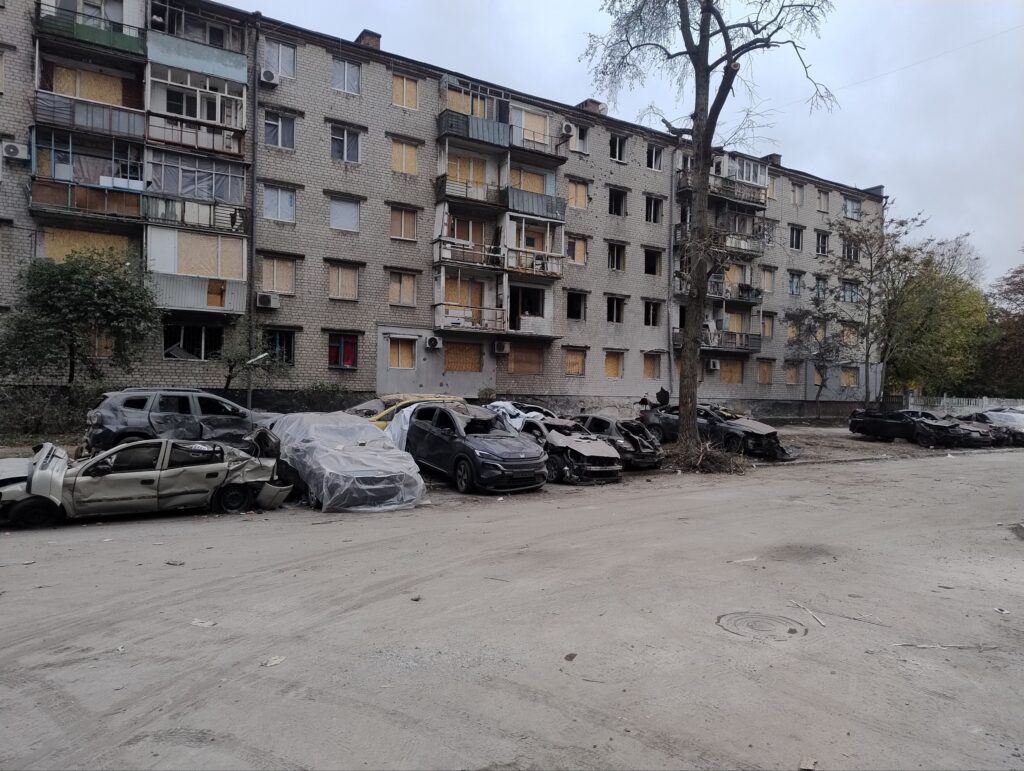
The morning of October 9. Photo by Yana Hudz.
Insurance for Journalists: Risks Extend Beyond the Frontline
Yana Hudz’s story shows that the dangers facing Ukrainian media workers today are not limited to frontline areas. Russian attacks can damage newsrooms and journalists’ homes far from the front line.
The free life and health insurance provided by AIRPPU together with its partners currently covers media workers during official assignments to designated high-risk areas. Poltava region is not included in the current list.
“Yana’s story highlights a problem we need to reconsider. A journalist may be insured while on assignment in a dangerous region but have no such protection when a missile strikes their own home. The war has long since extended beyond the areas we traditionally consider frontline territories. We therefore need to rethink our approach to the safety and insurance of media workers accordingly,” said Oksana Brovko, Director of AIRPPU.
Apply for insurance: https://war-correspondent.info/