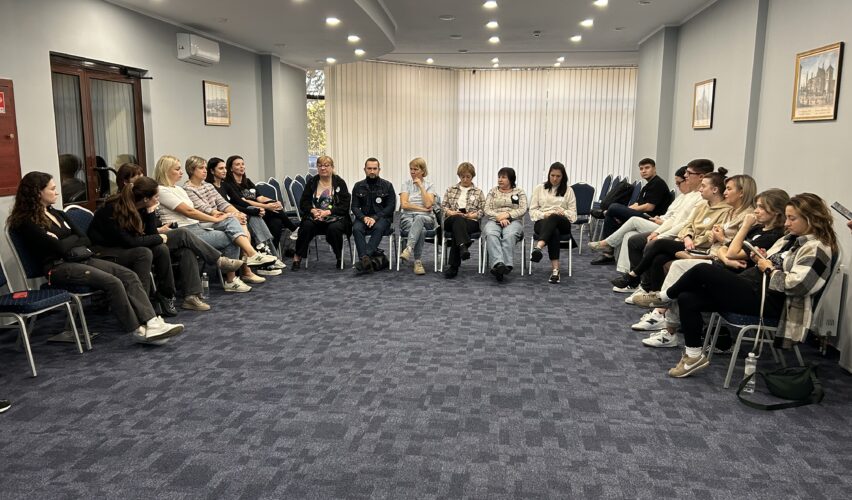
How do you respond to severe bleeding, apply a tourniquet correctly, perform cardiopulmonary resuscitation and use an automated external defibrillator? On 3–4 October, media professionals gathered in Lviv for two days of practical first aid training, developing skills they may need while working in wartime.
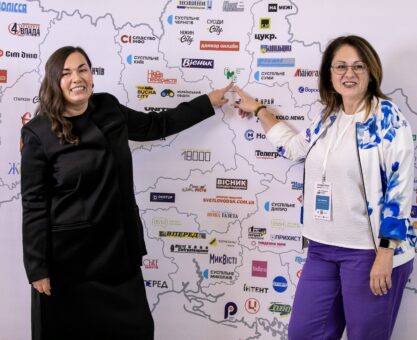
The safety training was organised by the Association of Independent Regional Press Publishers of Ukraine (AIRPPU). It was one of the side events of the 15th Media Congress, which brought together 180 participants from 58 newsrooms across 43 Ukrainian cities in Lviv on 2 October.
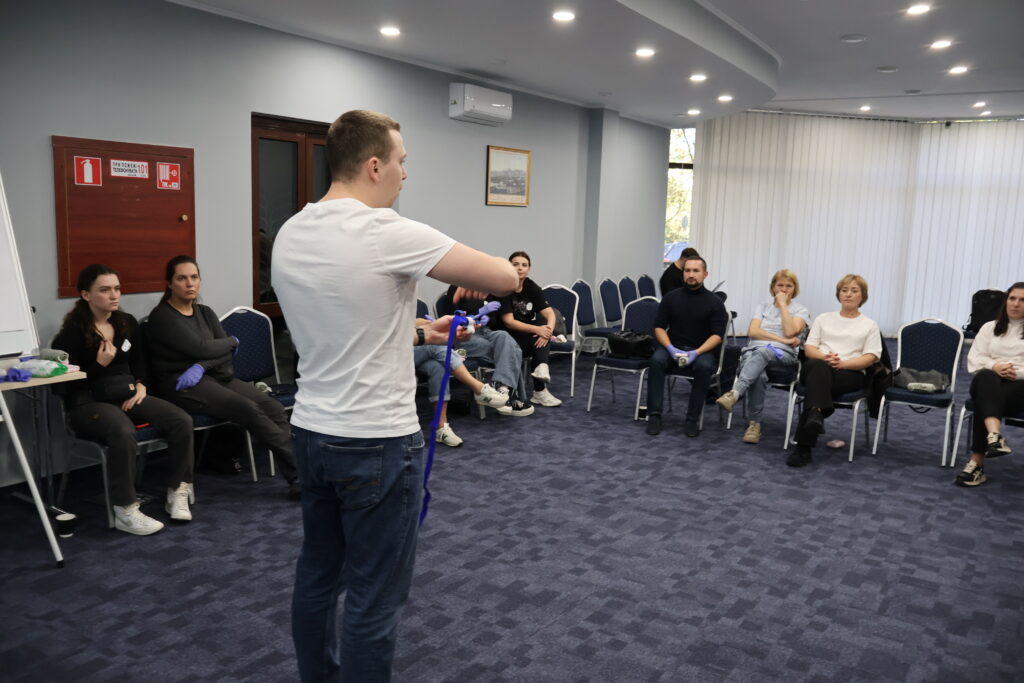
For journalists working near the front line, reporting from the sites of shelling and documenting the aftermath of Russian attacks, first aid skills are an essential part of professional safety. The two-day training therefore focused on hands-on practice and the steps to take in an emergency.
CPR, Defibrillators and Bleeding Control
The programme combined two international courses: Basic Life Support (BLS) from the European Resuscitation Council and Stop the Bleed from the American College of Surgeons.
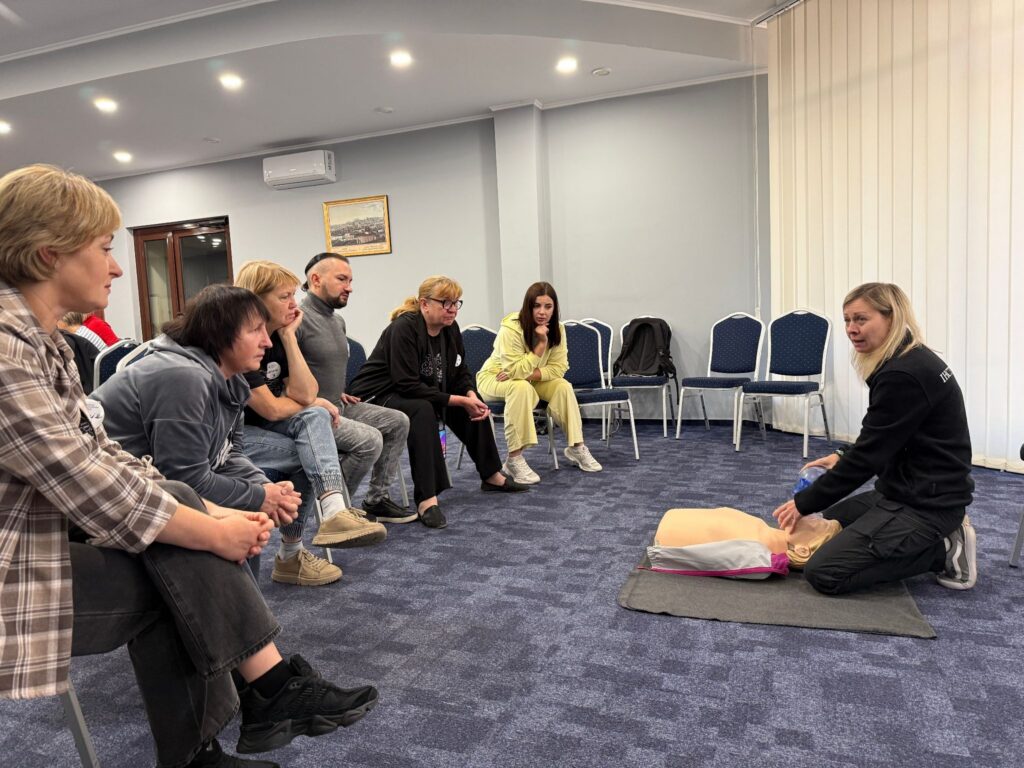
In the first part, participants practised responding to cardiac and respiratory arrest: assessing a casualty’s condition, calling for help, performing cardiopulmonary resuscitation (CPR) and using an automated external defibrillator (AED).
Alongside learning the sequence of actions, participants worked through each step themselves using training equipment, putting their knowledge into practice.
A separate session covered severe bleeding, one of the most dangerous emergencies, where taking the right steps in the first few minutes can be critical.
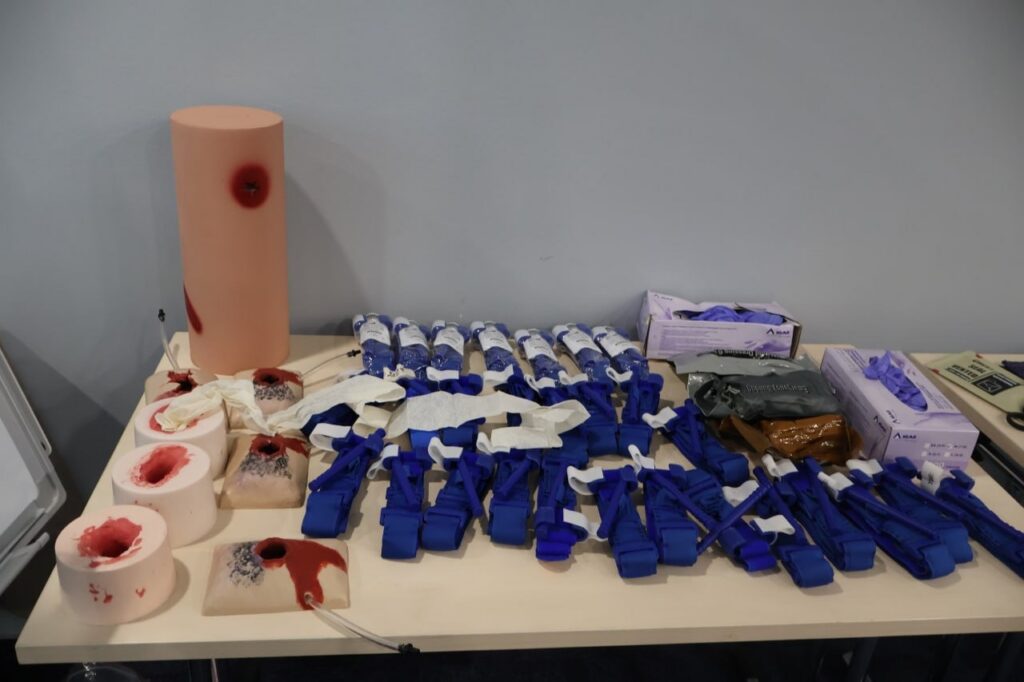
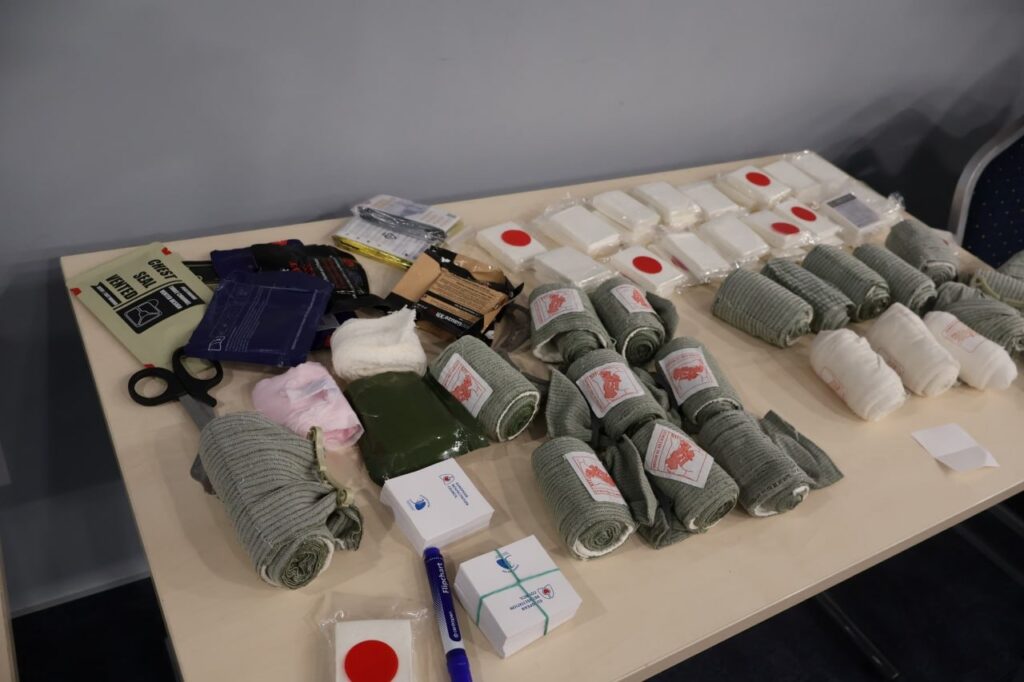
Participants learned to recognise dangerous bleeding, apply a tourniquet correctly, pack a wound and use bandages and haemostatic agents.
More Than a First Aid Kit: Knowing How to Use It
After the training, participants received individual first aid kits equipped with essential supplies.
The kits include certified CAT tourniquets, Israeli bandages, haemostatic agents, sterile wound-packing materials, trauma shears, gloves and CPR masks.
Providing journalists with the necessary equipment is only part of the training’s purpose. Learning to use it correctly and understanding which supplies are needed in a particular situation are equally important.
Working with the first aid kits was therefore part of the practical training. Participants rehearsed skills they might need to apply quickly and confidently in an emergency.
From Training to Real-Life First Aid: A Donetsk Region Editor’s Experience
Maksym Zabielia, editor-in-chief of Ridne Misto, shared how the skills learned during training can prove useful in real life.
In the spring, he attended one of AIRPPU’s earlier safety training sessions. After the practical exercises, he began carrying a tourniquet and an Israeli bandage with him at all times. Later, he found himself needing that equipment.
While working in an area near the front line, Maksym encountered a situation in which he needed to help someone with multiple shrapnel wounds.
He said the training helped him assess the bleeding and decide which supplies to use. The bleeding was not severe, so a tourniquet was unnecessary. Instead, he used an Israeli bandage to apply a pressure dressing and stop the bleeding.
“Fortunately, the bleeding wasn’t severe. We were also taught how to recognise that during the training. They showed us which signs to look for,” said Maksym Zabielia.
The journalist stressed that without the training, he would probably not have had the necessary supplies with him. Even more important, however, was feeling mentally prepared to stay calm and act.
“Without these training sessions, first of all, I definitely wouldn’t have developed the habit of carrying all this with me. Secondly, I’m sure that without the hands-on practice, I wouldn’t have had the confidence to step in and help in that emergency, even if I’d had some theoretical knowledge,” the editor-in-chief said.
Maksym explained that the practical exercises had given him the confidence to help the injured person. He was able to apply what he had practised during training in a situation that required quick decisions.
He also believes that completing a course once is not enough. Skills need regular practice so they remain familiar and can be recalled under stress.
“You need to keep practising these skills: at home, on refresher courses and at similar training sessions. That way, they stay in your memory, in your muscle memory, so you can actually use them in any situation,” Maksym Zabielia stressed.
Safety Starts with Taking Action
AIRPPU regularly organises safety training for media professionals. Previous sessions also combined BLS and Stop the Bleed courses, with participants highlighting the importance of repeated hands-on practice.
Maksym Zabielia’s experience is one example of how skills developed during training can be needed beyond the classroom.
For newsrooms continuing to work during the full-scale war, these skills are particularly important. Journalists visit communities near the front line, document the aftermath of shelling and report from the sites of Russian attacks. They may find themselves next to someone who urgently needs help.
In such situations, simply having a first aid kit is not enough. Journalists need to know how to assess an injured person’s condition, choose the appropriate supplies and stay calm in those first few minutes.
This is the focus of AIRPPU’s safety training: giving media professionals both theoretical knowledge and opportunities to practise the necessary actions, so they are ready to put their skills to use in an emergency.
The safety training for media professionals was organised by the Association of Independent Regional Press Publishers of Ukraine (AIRPPU) as part of the International Insurance Fund for Journalists project under the SAFE programme (formerly Voices of Ukraine), coordinated by the European Centre for Press and Media Freedom (ECPMF) within the Hannah Arendt Initiative, with support from the German Federal Foreign Office.