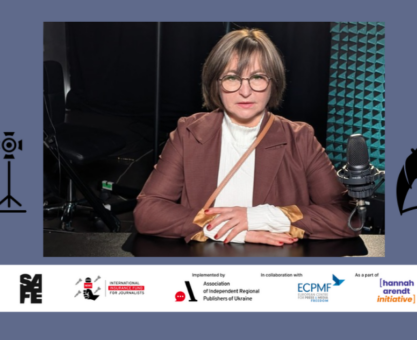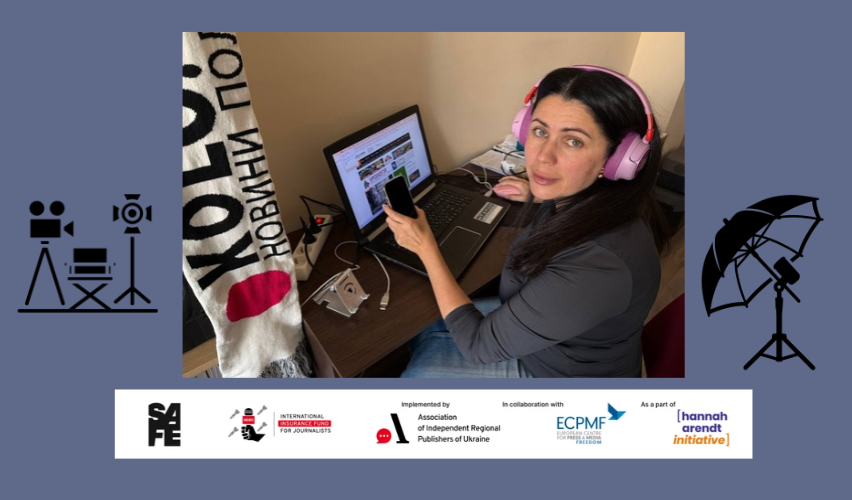
Tetiana Tsirulnik, editor-in-chief of Kolo.News, on setting boundaries in management, monetising a cooking blog, a new concept of audience and the realities of working in Poltava, a city away from the front line.
Working for a local media organisation in a relatively safe region away from the front line comes with its own challenges. There may be no daily trips to the front, but the exhaustion and the risk of losing the newsroom’s resilience are just as real. For a long time, Tetiana Tsirulnik, editor-in-chief of the Poltava-based Kolo.News, tried to be an “accommodating manager” — until she realised that being responsible for a media organisation requires firm boundaries, a clear commitment to protecting her own resources, and letting go of illusions about management and monetisation.
Leadership and Personal Boundaries: “Put Your Own Oxygen Mask on First”
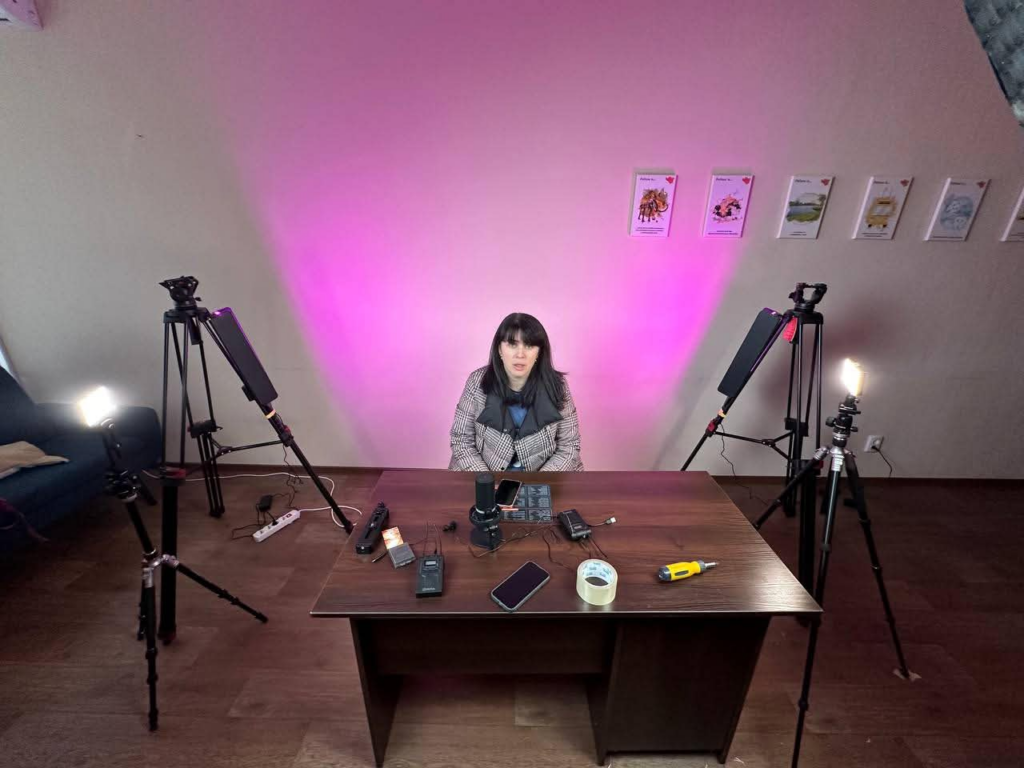
Initially, Tetiana tried to run the newsroom on the basis of full democracy: decisions were made by vote, and journalists were given as much flexibility as possible, with few strict boundaries. However, this approach proved misguided and led to serious staffing problems.
— There were several departures before I realised that there needs to be a certain distance between a manager and their team. We’re working together in difficult times. We support one another, but the ultimate responsibility, as well as the financial and legal risks, still rest solely with me. So maintaining some distance and being firm on matters of principle is essential.
Her understanding of the familiar slogan “people come first” has also changed. Tetiana realised that the manager is part of the team too, and that their capacity is critical to the survival of the publication.
— Now I understand that the CEO is also one of the “people”, and that it’s easier to replace a journalist or an SMM manager than it is to replace the person running the organisation. So I’ve come to realise that you have to put your own oxygen mask on first. My main responsibility is to ensure that the team has decent working conditions and that people can do their jobs. Salaries must be paid on time, days off and holidays must be provided — no exceptions. I’m very demanding when it comes to results: when it comes to the newsroom’s commitments under partnerships, grants, and advertising agreements, there is no room for excuses. But if the person on duty posts 15 stories instead of 20 on the website on a Sunday, that’s fine. I understand.
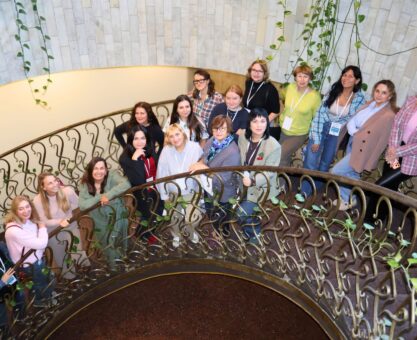
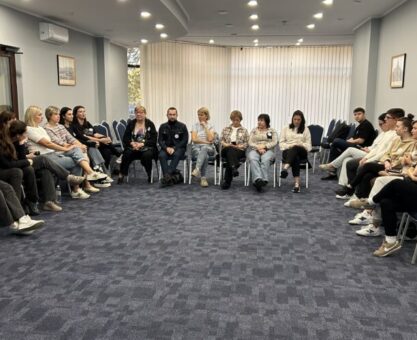
Taking part in the WIN Leadership Accelerator helped Tetiana develop a two-year action plan and learn to filter out secondary tasks, protecting her working time.
— I set myself a rule: I’d rather people think I’m not particularly polite than waste my time on things I’m not interested in. I don’t reply to emails with proposals that don’t interest me, and I don’t go to coffee meetings I don’t need just to avoid offending someone. I’ve learned to be much more conscious of how I spend my time and to stop wasting it on unimportant things.
Monetisation and the Search for New Models: From Tips to a Cooking Blog
In search of ways to achieve financial sustainability, Kolo.News experimented with various monetisation models. However, an attempt to establish direct reader support revealed that there are still systemic barriers in the local media market:
— We introduced a tipping feature on our website, allowing readers to “leave a tip for the author” below each article if they liked the piece. But it didn’t work for us. From what I’ve observed, audiences are not yet ready to pay for written content online on a mass scale. One reason why our colleagues struggle to build reader communities is that Ukrainian legislation is still inadequate: it provides no effective penalties for the theft of copyrighted content.
Tetiana then found an unconventional way to generate additional income to support the newsroom: developing video content.
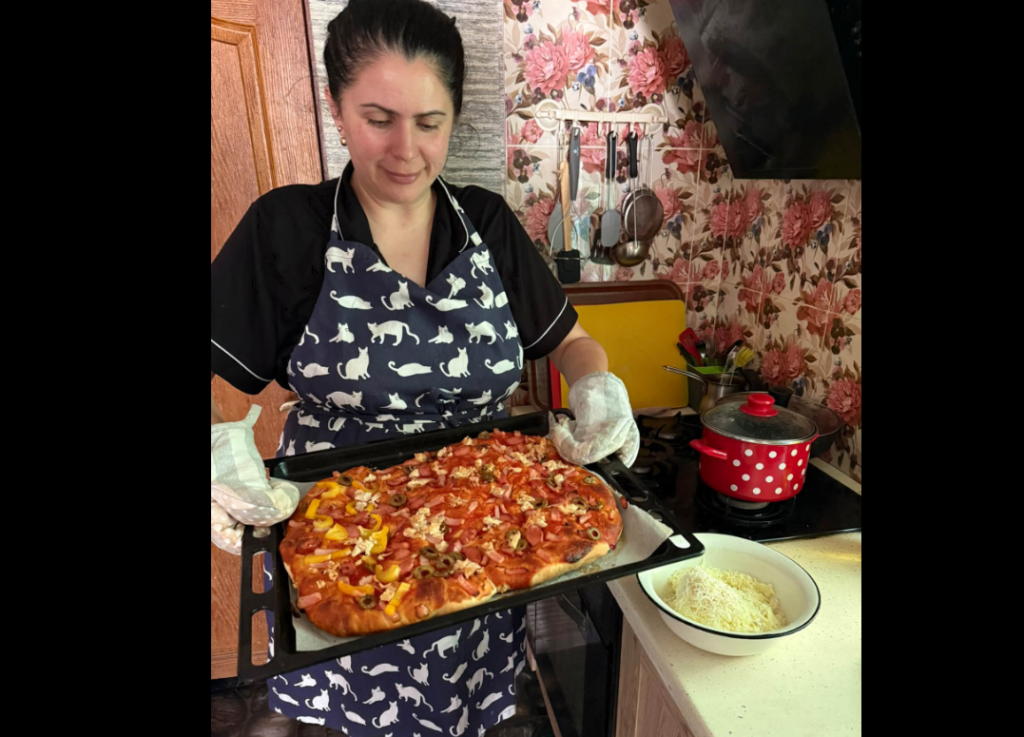
— The experimental format I launched during the war was a video blog about baking. I used the revenue it generated through Facebook monetisation to pay for the newsroom’s office. The blog now has a combined social media following of around 160,000. After that, I realised I could also use video to grow my professional account about the media. … Video first: anything that can be said in a video shouldn’t be written as text. I’m convinced of that.
Audience Transformation: A Media Outlet for Everyone Interested in the Poltava Region
The full-scale war has also changed the geographical makeup of the publication’s audience. Poltava has become a refuge for thousands of people from other regions, while some Poltava residents have moved abroad or to other cities. This has prompted Kolo.News to broaden its editorial focus.
— Fewer people have left Poltava than neighbouring Kharkiv. There are many internally displaced people from Kharkiv living in Poltava, and they’re interested in learning about the city that has become their second home. We also have a very active audience in Kyiv and Dnipro, while traffic from Poland accounts for up to 5% of visits to our website. So we’re not just a media organisation serving the Poltava community — we’re here for everyone interested in learning about the Poltava region.Fewer people have left Poltava than neighbouring Kharkiv. There are many internally displaced people from Kharkiv living in Poltava, and they’re interested in learning about the city that has become their second home. We also have a very active audience in Kyiv and Dnipro, while traffic from Poland accounts for up to 5% of visits to our website. So we’re not just a media organisation serving the Poltava community — we’re here for everyone interested in learning about the Poltava region.
Newsroom Work Away from the Front Line and Caring for the Team
Despite being relatively far from the front line, working in the rear still involves risks. In its editorial policy, Kolo.News adheres to strict fact-checking standards and seeks to avoid anonymous sources, considering anonymity justified only in exceptional circumstances.
— Let’s be honest: every article involves a risk. In our editorial practice, we almost never conceal the names of our sources, because information that no one is willing to put their name to may be false. If someone doesn’t want to be identified, we treat what they say only as a hypothesis that needs to be thoroughly verified. We publish it only if there is irrefutable evidence to support it. If we’re not sure, we don’t publish.Let’s be honest: every article involves a risk. In our editorial practice, we almost never conceal the names of our sources, because information that no one is willing to put their name to may be false. If someone doesn’t want to be identified, we treat what they say only as a hypothesis that needs to be thoroughly verified. We publish it only if there is irrefutable evidence to support it. If we’re not sure, we don’t publish.
However, wartime experience has shown that the concept of a region being safely away from the front line is highly relative: all regions of the country are exposed to missile and drone attacks to varying degrees. That is why AIRPPU emphasises that safety measures should not be neglected even in areas further from the front. Free life and health insurance provided by the International Insurance Fund for Journalists is an important protection measure that you can take advantage of by applying now.
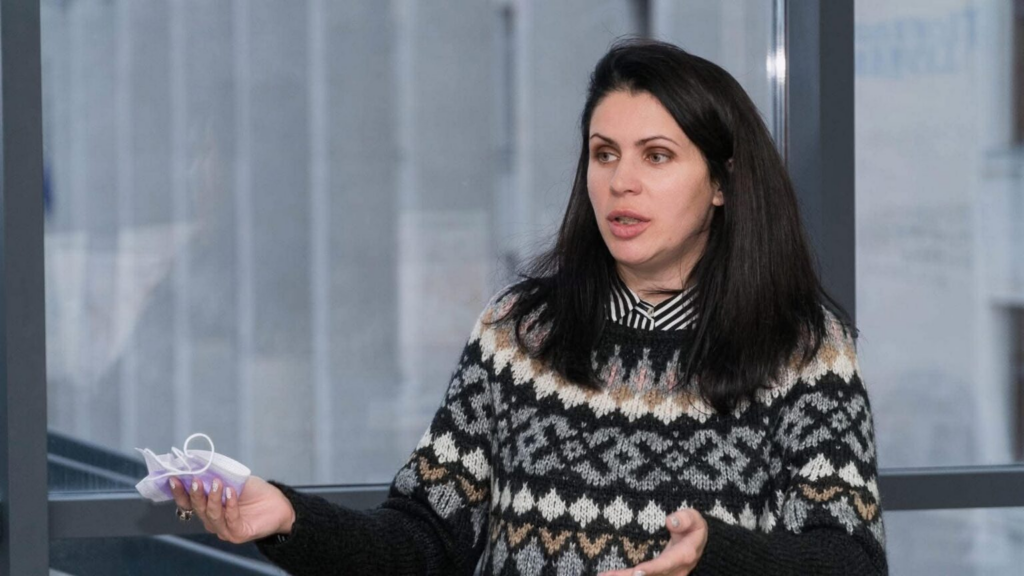
At the same time, accumulated fatigue remains the biggest challenge for a newsroom working away from the front line. To support her colleagues, Tetiana takes a flexible approach:
— The marathon has taken a tremendous toll on us. If journalists are exhausted, I let them work from home. If one of my colleagues’ husbands comes home on leave from the war, I immediately let her take time off. We have a sofa and a blanket in the newsroom, and if someone needs to lie down and get some sleep, they can. Anything that helps clear your head is allowed.The marathon has taken a tremendous toll on us. If journalists are exhausted, I let them work from home. If one of my colleagues’ husbands comes home on leave from the war, I immediately let her take time off. We have a sofa and a blanket in the newsroom, and if someone needs to lie down and get some sleep, they can. Anything that helps clear your head is allowed.
5 Things I Know Now: Quick-Fire Questions
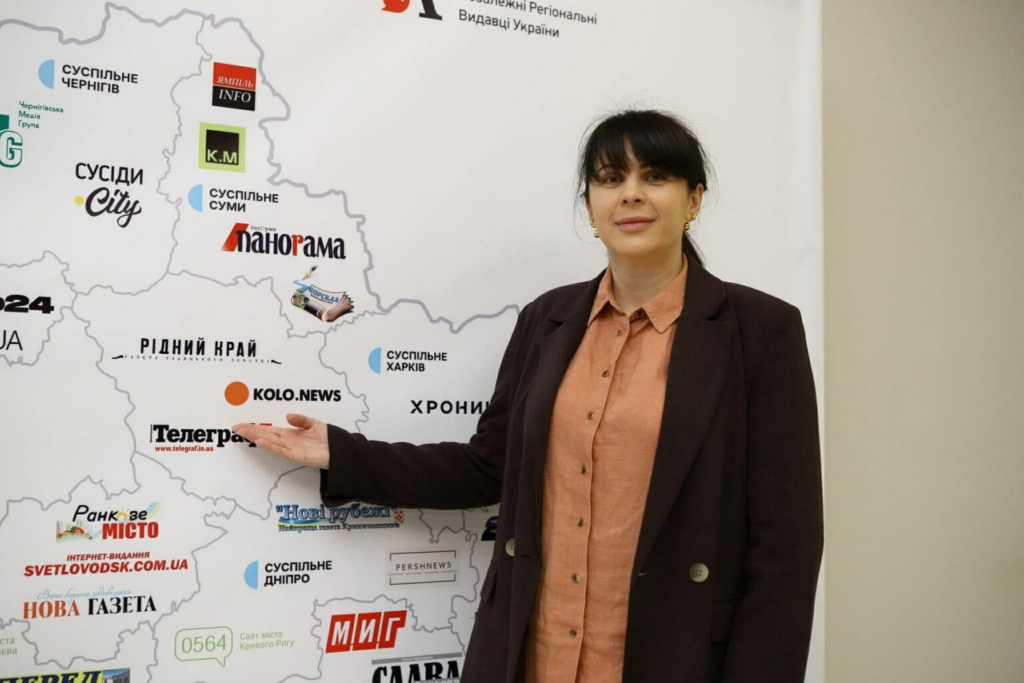
- One thing I’ve stopped doing as a manager. Offering to help colleagues with family matters.
- One thing I’ve started doing every day. Reading news about the media business.
- A decision I’m no longer afraid to make. Trying new things. And my colleagues aren’t afraid either. We’re ready to experiment with all kinds of new formats and aren’t afraid to fail.
- A mistake that taught me a lot. Giving in to pressure to raise salaries when there weren’t enough financial resources to do so. This resulted in a cut to my own salary.
- One piece of advice for a young female journalist aspiring to become a leader. Keep trying new ideas and formats. Journalism is changing rapidly — from newspapers to Reels, from text to video. No one knows what comes next for us. Perhaps you’ll be the one to set the next trend!
***
The International Insurance Fund for Journalists project is implemented by the Association of Independent Regional Press Publishers of Ukraine (AIRPPU) under the SAFE programme (formerly Voices of Ukraine), coordinated by the European Centre for Press and Media Freedom (ECPMF) within the Hannah Arendt Initiative and supported by the German Federal Foreign Office

We would also like to remind readers that the WIN Leadership Accelerator was implemented as part of AIRPPU’s Stronger Together: Gender Equality and Inclusion programme. It was one of the three key components of the Stronger Together project, focusing on developing leadership skills and providing career coaching through the Women in News programme.