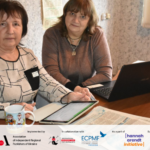



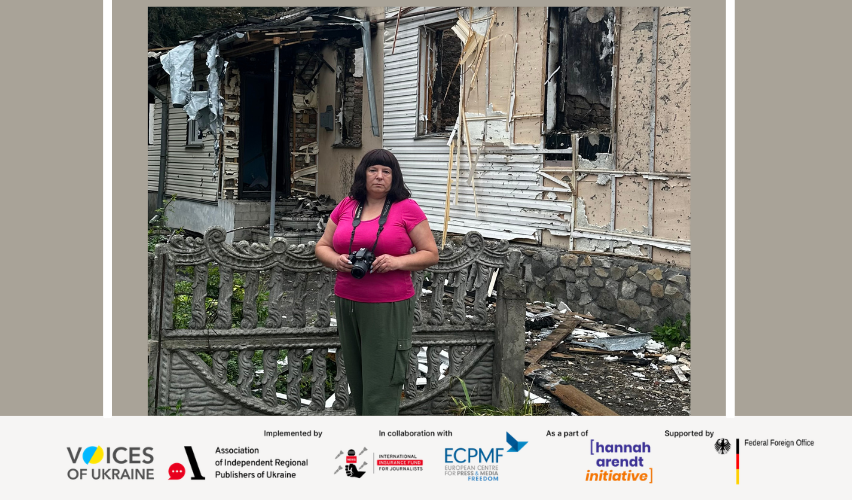
Glukhivshchyna newspaper is an example of how regional media continue to stand strong under the most difficult conditions. Its editorial team works in a border area, where every day is a balance between professional duty and survival. Editor-in-Chief Kateryna Tyshchenko shares how journalists have adapted to the realities of war, what helps them maintain their resilience, and why dignity in their work matters more than ratings.
Working Under Shelling
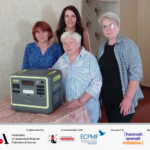
The editorial team stopped requiring employees to be physically present in the office long ago—the safety of the team comes first. Journalists work remotely but are always prepared for blackouts: they have power stations, power banks, and alternative sources of electricity.
“We strictly follow the rules on not disclosing military information: no photos or videos of strikes until official permission is granted.”
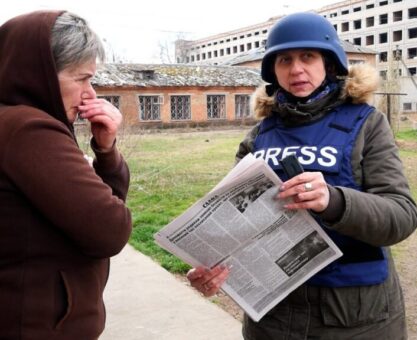
Trips to border communities present a separate level of risk. Stricter safety rules apply there, and communities provide journalists with body armor and helmets.
“When traveling to document war crimes, produce reports from strike sites, or work in areas considered more dangerous, we operate only after receiving permission from the relevant authorities—the State Emergency Service, police, military, or community representatives. A journalist’s daily work in border areas means staying alert, strong, and resilient. Especially mentally.”
The editorial team has not taken part in specialized safety projects, but its journalists have attended trainings and seminars. They are not provided with personal protective equipment, although they can temporarily receive body armor or “chuiky” (bulletproof vests) from the Sumy Regional Journalists’ Union.
“We are just like all ordinary residents of the border area. We are on equal footing with the people who live here.”
Despite the danger, the newspaper continues to write about farmers, utility workers, and defenders.
“Our main safety protocol is to survive and document the history of our resilience.”
Kateryna adds that the editorial team has its own “signals” indicating when work should be suspended: “These include repeated strikes on the same location within an hour, as well as several days of silence, which often precede heavy shelling. And another thing—on the very day the newspaper is sent to print, the power in the city often goes out.”
People as a source of support
Daily air raid alerts and explosions nearby are part of life in the border area. But it is the community that gives the editorial team strength.
“What keeps us going today? It is the people who live here, work here, and read our newspaper; those who rush to work every morning, come together to clear debris and restore order around their homes and public spaces after enemy strikes, support one another, and help when a real disaster strikes… And above all, it is the children who play on playgrounds, laugh, and enjoy life.”
The newspaper consciously avoids stories that exploit tragedy. “Everyone will write about the shelling. We want to show how quickly businesses recover, how people repair and rebuild on their own,” she adds.
The topics covered by the newspaper focus on what matters most for border communities: benefits, evacuation, safety, and the lives of communities under difficult conditions. “The hardest topics are people’s deaths. Human stories… Sensitive content,” says Kateryna.
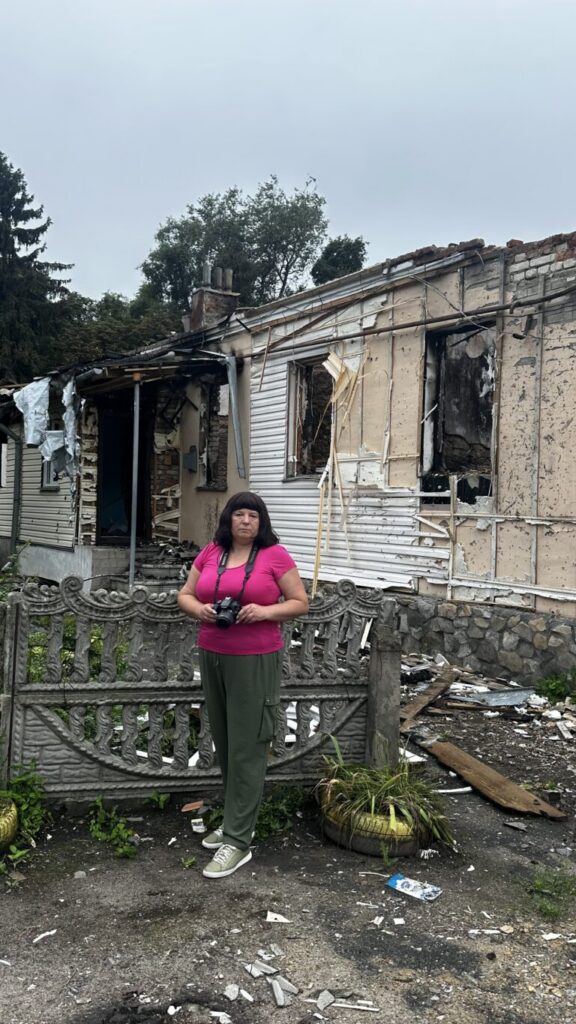
For the team, it is important to remain close to readers even in the most difficult moments:
“Having dignity as a journalist working in wartime means, above all, remaining a HUMAN BEING who will not chase ratings at the cost of other people’s suffering.”
A Symbol of Resilience
Hlukhivshchyna is published weekly, on Thursdays. The printed edition is delivered by Ukrposhta, while those who have left can access the newspaper in PDF format and through its Facebook page.
“Hlukhivshchyna is a print media outlet. We rent an office from the city council, spend a week working on materials, design the layout, and then send it for printing via an internet connection to a printing house in Vinnytsia. On Facebook, we provide more оперативна information, while the printed edition features in-depth stories about border communities and important social issues.”
“Residents of hard-to-reach villages receive the newspaper either at the community’s central office or through the starosta [local community representative],” the editor adds.
The war has halved the number of subscribers, and many villages have been destroyed, but the editorial team continues its work thanks to grant support and new advertisers.
Participation in AIRPPU projects helped preserve the team’s ability to work during the most critical moments. The most important stage of this cooperation was receiving a grant through the Emergency Support Program for Regional Media. “It did not just help us purchase equipment,” says Kateryna. “It gave Hlukhivshchyna the opportunity to continue living, to be published, and to fulfill its professional duty to the communities it serves.”
The editorial team consists of two media professionals who handle everything—from reporting and page layout to accounting. “Today, it is extremely important to have someone you can trust by your side. And our editorial team is exactly that—united and reliable.”

Even in the most turbulent days, journalists find ways to recover—a few days in a small cabin surrounded by a pine forest. “A day in silence is like a breath of fresh air for us,” says Kateryna.
A reminder: insurance is available
Colleagues, a reminder: journalists working in high-risk regions have the opportunity to obtain free life and health insurance. This is part of the International Insurance Fund for Journalists (IIFJ) initiative, implemented in partnership with Ukrainian and European organisations.
Media professionals working in Kherson, Zaporizhzhia, Sumy, Mykolaiv, Donetsk, Luhansk, Odesa, Kharkiv, and Dnipropetrovsk regions, as well as border areas of Kyiv and Chernihiv regions, can apply. More information about the terms of free insurance is available here.
This article is part of a series of publications on the work of regional media in wartime conditions, safety protocols, and the psychological resilience of journalists. We have already published interviews with Zarina Zabrisky (Parts One and Two), Oleksandr Kachura, Vladyslav Safronov, Natalia Bilokudria, Serhii Horbatenko, Yevhen Khrypun, Anna Kaliuzhna, Polina Kulish, Nadia Sukha, Nadiia Karpova, Oleksandr Solomko (Parts One and Two), Diana Butsko, Oleksii Pasiuha, Oleksandr Chubukin, Aliona Serhiienko, Olha and Serhii Sydorov, Yevheniia Hrytsyna, Nataliia Kryvoruchko, Inna Shvydka, Pavlo Kliuchnyk, Larysa Hnatchenko, Diana Deliurman, Viktoriia Hnatiuk, Mariia Shevchenko, Anna Matviienko, Nastya Stanko, Iryna Sytnik, Svitlana Tomash, Olesia Bida, Yevhen Nazarenko, Oleksii Kovalchuk, Ilona Korotitsyna, and Iryna Stolbova.
As a reminder, the International Insurance Fund for Journalists, implemented by the Association of Independent Regional Press Publishers of Ukraine, is part of the Voices of Ukraine / SAFE support program, coordinated by the European Centre for Press and Media Freedom. Voices of Ukraine / SAFE is implemented within the Hannah Arendt Initiative and supported by the German Federal Foreign Office