


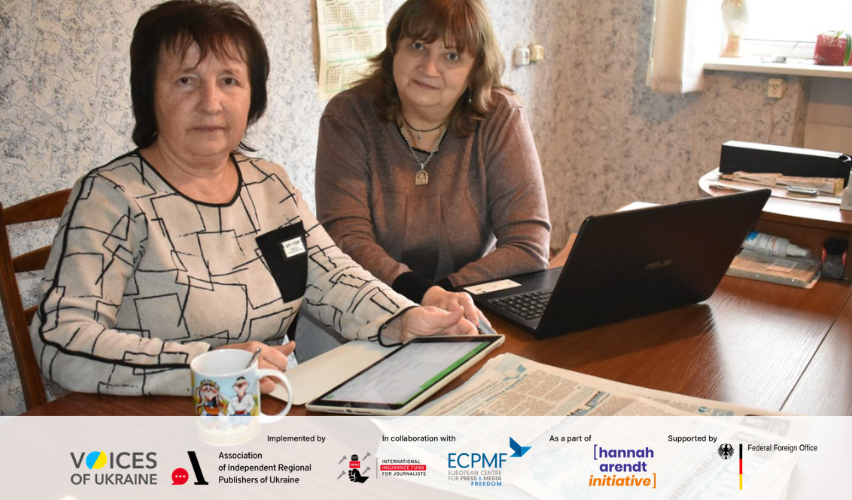
Despite evacuation, blackouts, and a reduced print run, Visti Barvinkivshchyny continues to publish both in print and online.
Visti Barvinkivshchyny is one of the few Ukrainian-language print newspapers that has survived in a frontline community in the Kharkiv region.
— Due to Russia’s full-scale invasion and the intense fighting in the Izium district, all four print newspapers (formerly district newspapers) were forced to suspend publication in February 2022, — says Editor-in-Chief Iryna Stolbova. — Trudova Slava in Borova, Obrii Iziumshchyny in Izium, Visti Balakliishchyny in Balakliia, and Visti Barvinkivshchyny in Barvinkove all stopped publishing at the same time.
The pause lasted eight months. During that time, the editorial team continued to work, gathering breaking news, maintaining the newspaper’s website, and managing its social media channels. However, there was no way to print or distribute the newspaper.
— Only after the liberation of the Izium district were we able to return home. Then came the question of restarting the newspaper. But the newsroom had no funds. Following the liquidation of Megabank, where the company’s funds had been held, our account was frozen.
The newspaper was eventually able to resume publication thanks to support from the journalism community and donor-funded initiatives, including the AIRPPU Emergency Support Program for Regional Media.
— We understood that we could not afford to restart the newspaper on our own. The community’s population had shrunk, and not everyone had returned to Barvinkove after evacuation. Advertising revenue had disappeared… We had to write project proposals and prove why our media mattered as the only Ukrainian-language print newspaper in a frontline community. We had absolutely no experience writing grant applications. But our determination prevailed… We received support—funding, office equipment, and technical supplies. Most importantly, it restored our confidence, — says Iryna.
In this interview, read how the newspaper continues to stay afloat, the challenges its team faces every day, and what helps them maintain resilience and dignity in their work.
“Working at Full Capacity While the Resources Last”
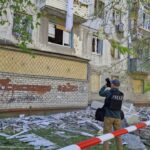
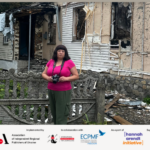
In a frontline community, journalism is always associated with risk. Last year, the editorial team partnered with an international humanitarian organization to raise awareness about the dangers of landmines and explosive remnants of war.
— We received a great deal of positive feedback. People told us they had not only become more aware of the risks but had also started following safety guidelines in practice, — says Iryna.
In addition, every issue of the newspaper includes guidance on what to do if explosive hazards are discovered. The editorial team is also participating in the Safe Steps project, publishing educational materials to help people return safely to war-affected areas in the Kharkiv region.
— There can never be too much of this, especially given how close our community is to the frontline. We truly hope that through both our conversations with people and our publications, we are helping save the lives and health of our fellow residents.
When danger escalates, the team follows a simple principle: keep working as long as it is safe to do so, but stop immediately when there is a direct threat to life.
Work becomes a lifeline—it brings structure to the chaos and restores a sense of control over one’s own life.
Psychological recovery relies on mutual support and conversations within the team.
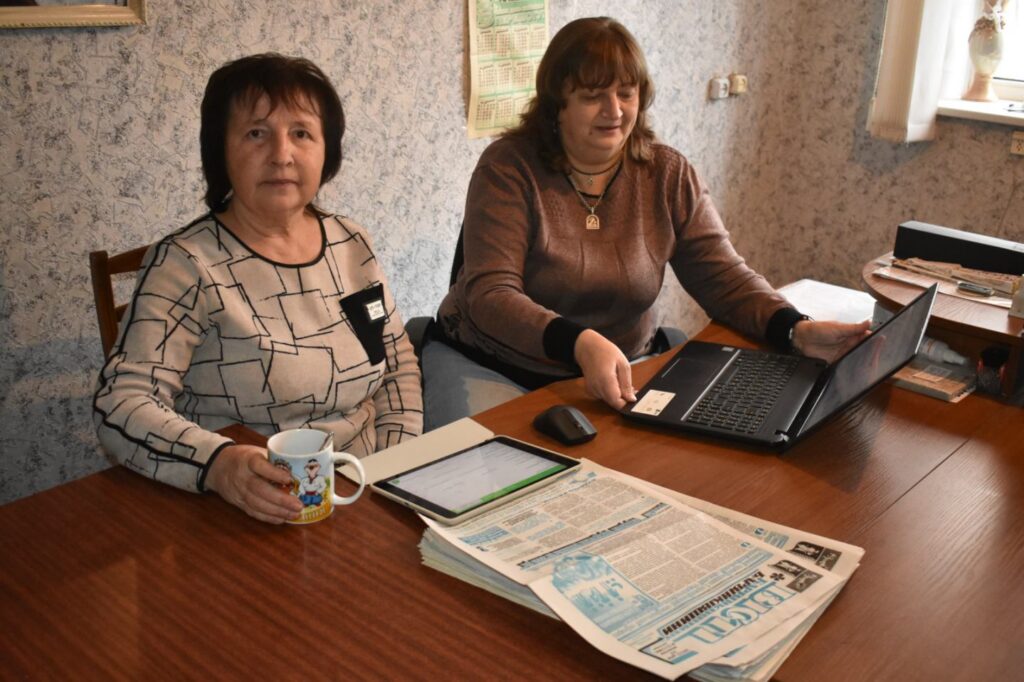
— We have long become something more than just colleagues. Our newsroom is a real family, — says Iryna.
“A Newspaper Is a Record of Its Time”
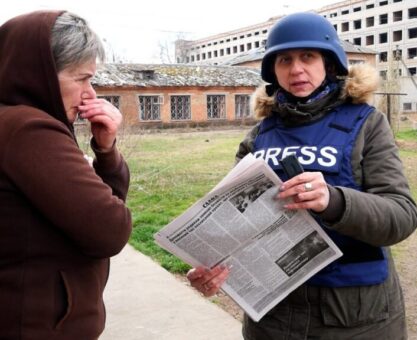
The editorial team works both for those who have stayed at home and for fellow residents who have left. Through its Facebook community, the team maintains a connection with local residents, while the printed edition of the newspaper remains the only source of information for elderly people in remote villages.
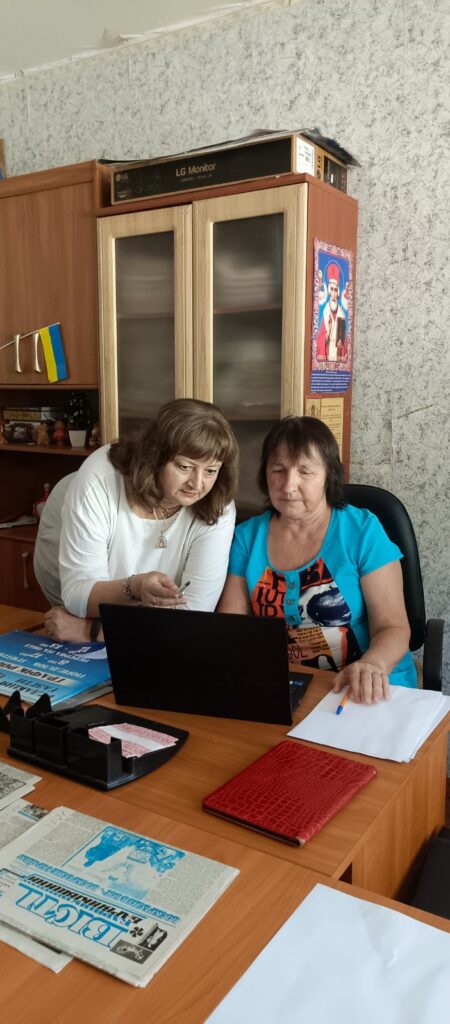
— The printed page preserves the history of this difficult yet heroic time, records our community’s contribution to the struggle, and serves as a document that will preserve our story for future generations.
However, delivery remains a painful issue. The high cost of Ukrposhta’s services, which is understandable given the circumstances, is compounded by poor quality—delays or even the absence of delivery altogether.
— Most of our subscribers are elderly people who live alone. They are very vulnerable; they wait for every issue and look forward to receiving each newspaper.
The print run has decreased from more than 2,000 to 700 copies. Despite this, every issue is an opportunity to preserve a publication with nearly a century of history.
The editorial team stays connected with readers through phone calls and social media. They are always open to questions and ready to help even those who have been evacuated or moved abroad.
For the editorial team, this is not just a job—it is a tremendous responsibility and a mission.
“Dignity Means Remaining Human”
The most popular topics are stories about fellow residents who are now fighting on the front line. The most difficult ones are the stories about those who have been killed.
— We carry each of these stories in our hearts, sharing the pain with the families, — says Iryna.
The three-person team works like a family, supporting one another after dangerous assignments. This helps them recover and maintain their pace of work. Their “recovery rituals” include daily conversations, mutual support, and simple everyday activities that bring back a sense of normality.
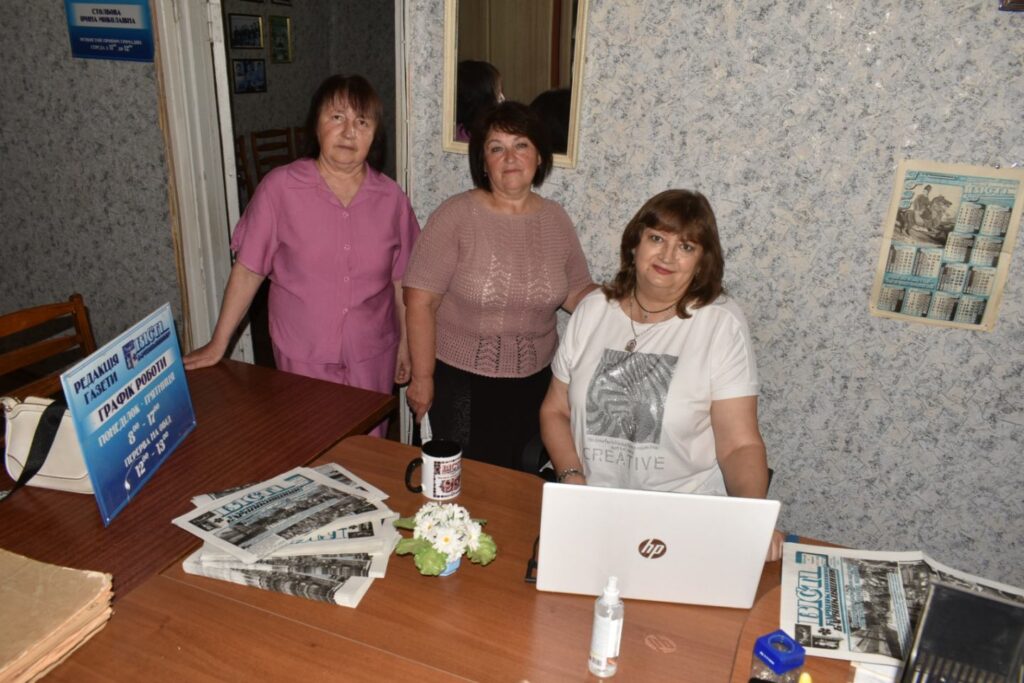
A journalist’s dignity during wartime is the choice to remain human where everything human is being destroyed.
A reminder: insurance is available
Colleagues, a reminder: journalists working in high-risk regions have the opportunity to obtain free life and health insurance. This is part of the International Insurance Fund for Journalists (IIFJ) initiative, implemented in partnership with Ukrainian and European organisations.
Media professionals working in Kherson, Zaporizhzhia, Sumy, Mykolaiv, Donetsk, Luhansk, Odesa, Kharkiv, and Dnipropetrovsk regions, as well as border areas of Kyiv and Chernihiv regions, can apply. More information about the terms of free insurance is available here.
This article is part of a series of publications on the work of regional media in wartime conditions, safety protocols, and the psychological resilience of journalists. We have already published interviews with Zarina Zabrisky (Parts One and Two), Oleksandr Kachura, Vladyslav Safronov, Natalia Bilokudria, Serhii Horbatenko, Yevhen Khrypun, Anna Kaliuzhna, Polina Kulish, Nadia Sukha, Nadiia Karpova, Oleksandr Solomko (Parts One and Two), Diana Butsko, Oleksii Pasiuha, Oleksandr Chubukin, Aliona Serhiienko, Olha and Serhii Sydorov, Yevheniia Hrytsyna, Nataliia Kryvoruchko, Inna Shvydka, Pavlo Kliuchnyk, Larysa Hnatchenko, Diana Deliurman, Viktoriia Hnatiuk, Mariia Shevchenko, Anna Matviienko, Nastya Stanko, Iryna Sytnik, Svitlana Tomash, Olesia Bida, Yevhen Nazarenko, Oleksii Kovalchuk, and Ilona Korotitsyna.
As a reminder, the International Insurance Fund for Journalists, implemented by the Association of Independent Regional Press Publishers of Ukraine, is part of the Voices of Ukraine / SAFE support program, coordinated by the European Centre for Press and Media Freedom. Voices of Ukraine / SAFE is implemented within the Hannah Arendt Initiative and supported by the German Federal Foreign Office