


The Obrii Iziumshchyny newspaper is the only media in Izium that continues to operate despite the occupation, shelling, and constant logistical challenges. The editorial team publishes a print edition, develops digital platforms, and has also become a social hub for the community.
We continue to tell the stories of newsrooms in border and frontline regions that operate under extremely difficult conditions, yet not only survive but also develop.
Today, Kostiantyn Hryhorenko, director of the Obrii Iziumshchyny media, talks about the challenges and achievements of his editorial team. The newsroom is participating in our “Stronger Together: Financial and Organizational Sustainability” program, through which it has already published 17 issues of the newspaper with a circulation reaching more than 85,000 readers, significantly expanded its digital presence, and launched monetization on YouTube and Facebook.
The newspaper has a history spanning more than a century and during that time was forced to suspend publication twice — during World War II and from March to September 2022, when Izium was under occupation. After the city was liberated, the editorial team quickly resumed operations and, by the end of that same year, had returned to regular weekly publication.
— By December 2022, we were already publishing weekly and distributing the newspaper ourselves, without the help of Ukrposhta, — says Kostiantyn Hryhorenko.
Challenges of War and Journalists’ Safety
The Obrii Iziumshchyny newspaper is printed in Balakliia, 50 kilometers from Izium. Like many other cities, it is under constant shelling, so practically the entire newspaper production chain, including printing and delivery, is at risk.
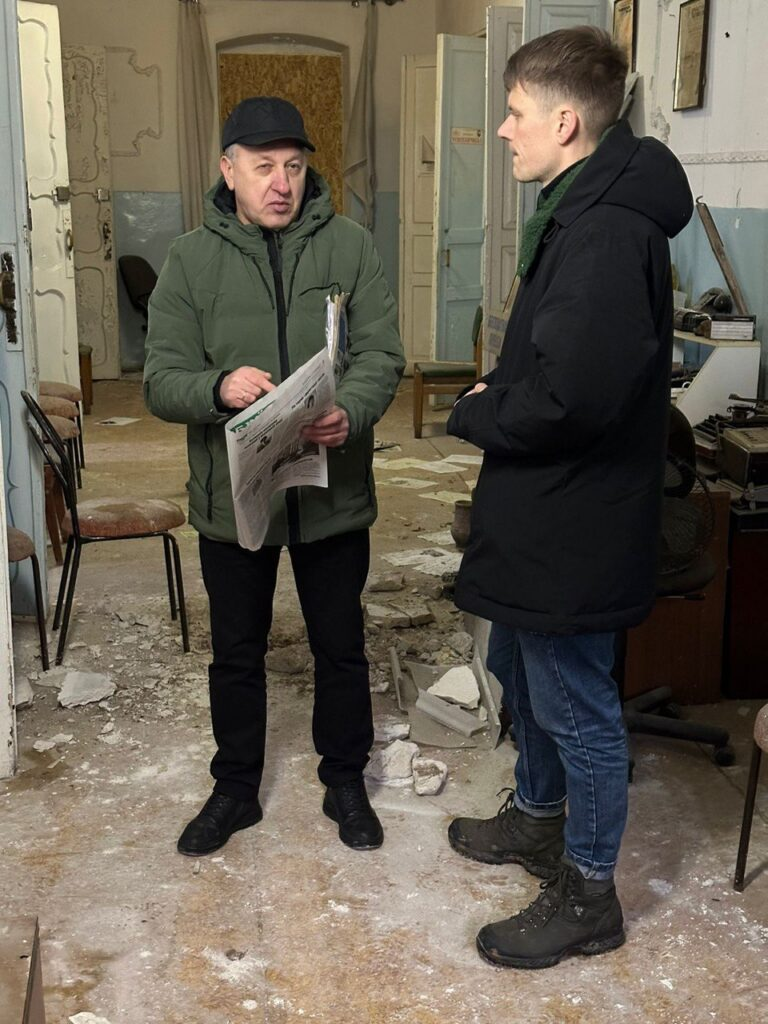
— The challenges we face are constant, — says Kostiantyn. — These include disruptions to logistics. Enemy missiles and drones strike Nova Poshta terminals, so there are sometimes delays in distributing the newspaper.
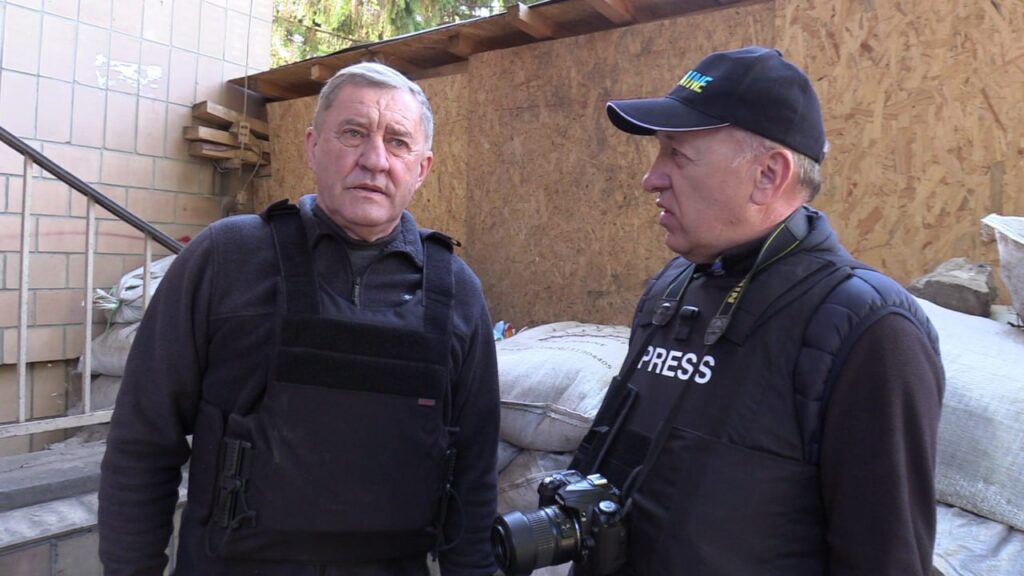
It is especially difficult to work in communities closest to the frontline: because of destroyed bridges, roads, increased mine danger, and, of course, the intensity and speed of shelling:
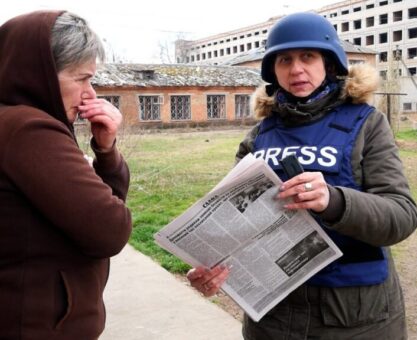
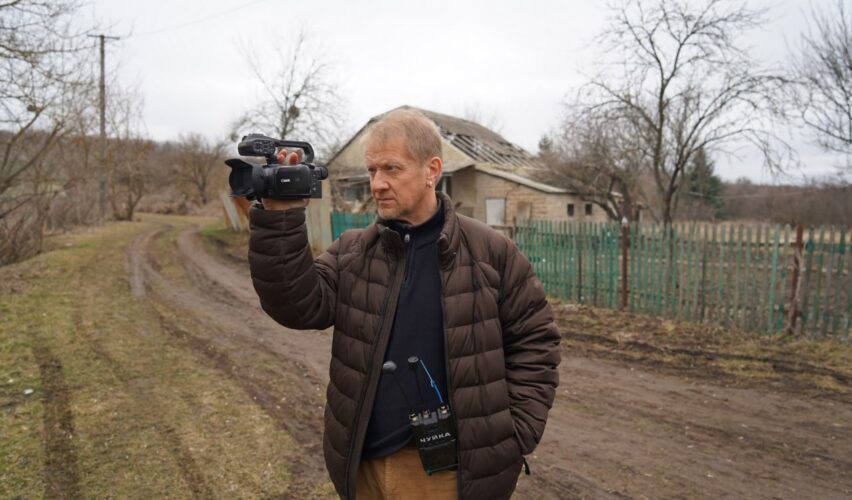
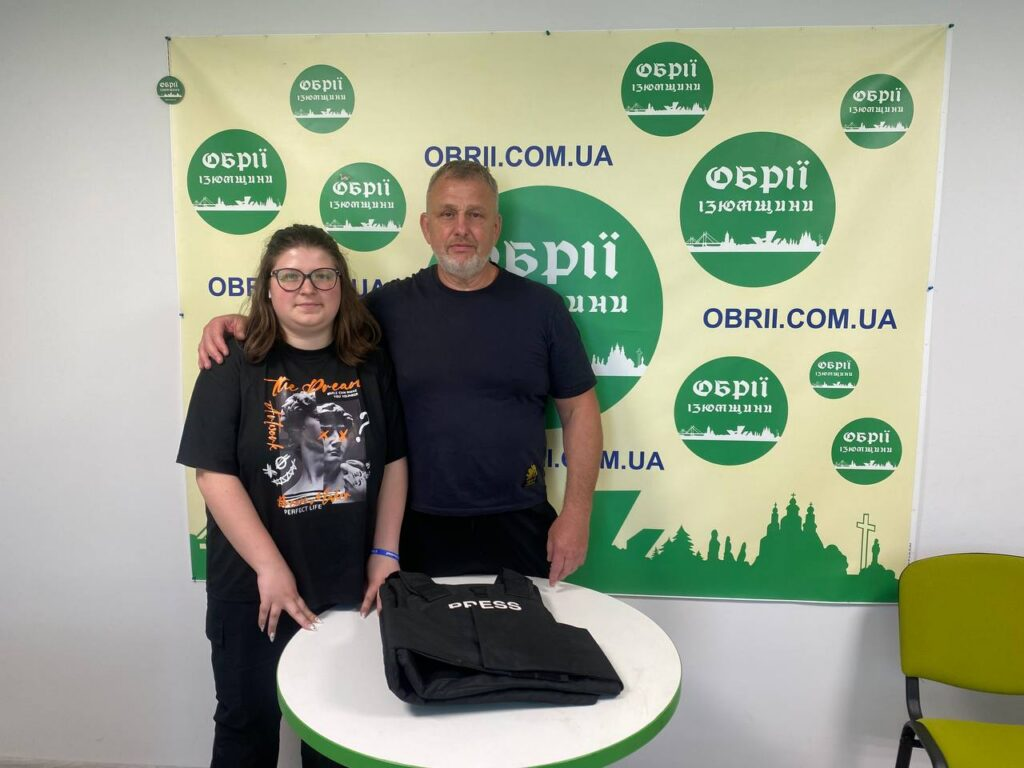
— We have limited trips to the Borova and Oskil communities because they are so dangerous that a bulletproof vest or helmet does not help. We use “Chuika,” which detects FPV drones, — he says.
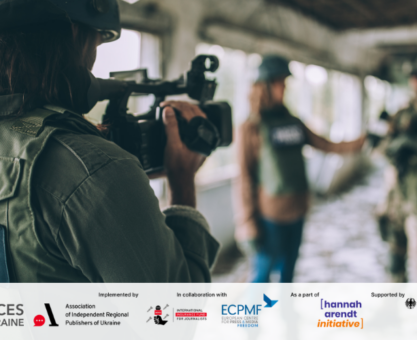
The editorial team has decided not to expose journalists to deadly risks. They travel to locations only in extreme cases, when an urgent report needs to be made or the evacuation process needs to be shown.
Content and Platforms: From Print to Digital
The team strives to produce quality content that meets the community’s expectations and helps people get the information they need. To do this, journalists carefully monitor readers’ feedback — in comments, letters, and phone calls. An important source of feedback is also the sellers who receive the newspaper every week and pass on the wishes of Izium residents.
— They are often the ones who voice the topics that people want to see in the newspaper, and this helps us adjust our work, — says Kostiantyn.
Despite the active development of digital channels, the print edition remains in demand. The older generation does not have access to social media, and in rural communities, the newspaper is often the only source of verified information.
— There have been cases when people learned the phone numbers for evacuation specifically from the newspaper, and this is a great responsibility for us, — he adds.
At the same time, the editorial team is actively developing its online presence. Facebook remains the largest platform, with the publication’s page receiving more than three million visits per month. At the same time, its audience is growing on Instagram, Telegram, and TikTok, where it already has more than five thousand followers.
— We receive income from monetization on Facebook and YouTube, and this is an important step toward sustainability, — the director says. — The future belongs to digital platforms, so we are constantly learning, attending training sessions, and even mastering the use of artificial intelligence in the work of a regional media.
Cooperation and Community
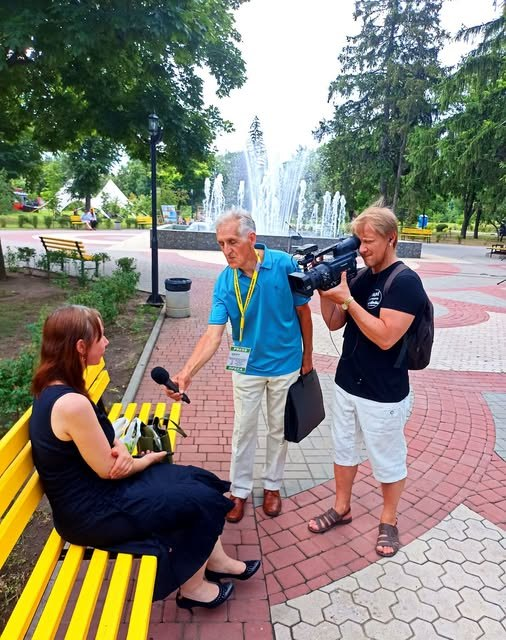
The Obrii Iziumshchyny newspaper is not limited to local topics — the publication is reaching an international level. Together with Italian colleagues, the journalists created a series of materials about cases in which residents of Izium district were injured by mines. The stories sparked active discussions and became an important tool for raising awareness.
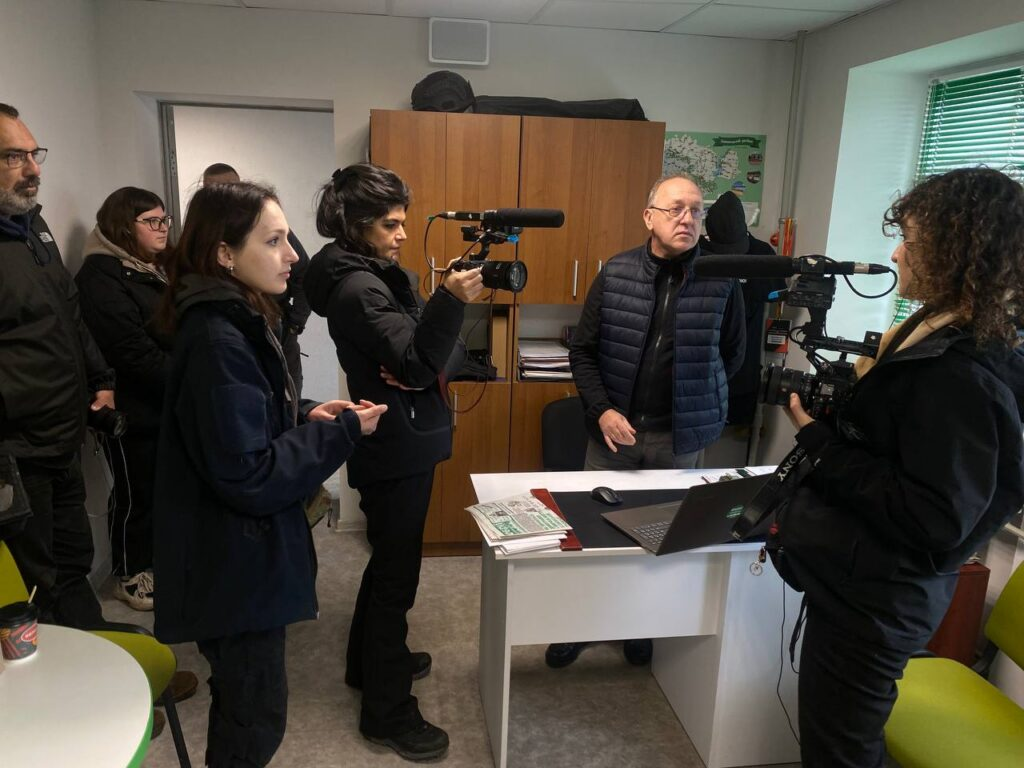
— We believe that this work is primarily preventive: it helps people understand the danger and avoid tragedies, — says Kostiantyn.
Overall, the editorial team has become a kind of social hub for the community. Journalists are trying to bridge the gap between those who experienced the occupation and those who left and returned. Together with the local museum of local history, they launched an initiative to create an Occupation Museum, which has already collected more than five hundred artifacts.
— These are personal belongings, documents, and even books that the Russians brought for studying according to their curriculum. We want the community to have a living testimony of what it went through, — he adds.
The editorial team organizes initiatives in support of the army. For example, it invited residents to hand in Russian-language books for recycling (the “Book by Weight — Donation to the Armed Forces of Ukraine” initiative).
— We collected more than 600 kilograms, and the funds were transferred to the volunteer center “Iziumski Pomichnytsi,” whose members weave camouflage nets and make trench candles for the military, — the director says.
Another example is a video bridge between Kremenchuk and Izium, where volunteer organizations shared their experience live on air.
Business and Sustainability
Despite the difficult conditions, the editorial team has maintained cooperation with local businesses. Small and medium-sized businesses have become the main advertisers and partners in distributing the newspaper.
— We had to create new sales points, but entrepreneurs responded and allowed us to sell the newspaper in their stores, — says the media director.
Advertising from local companies — regular, block advertising, on social media and on the publication’s website — helps the editorial team stay afloat.
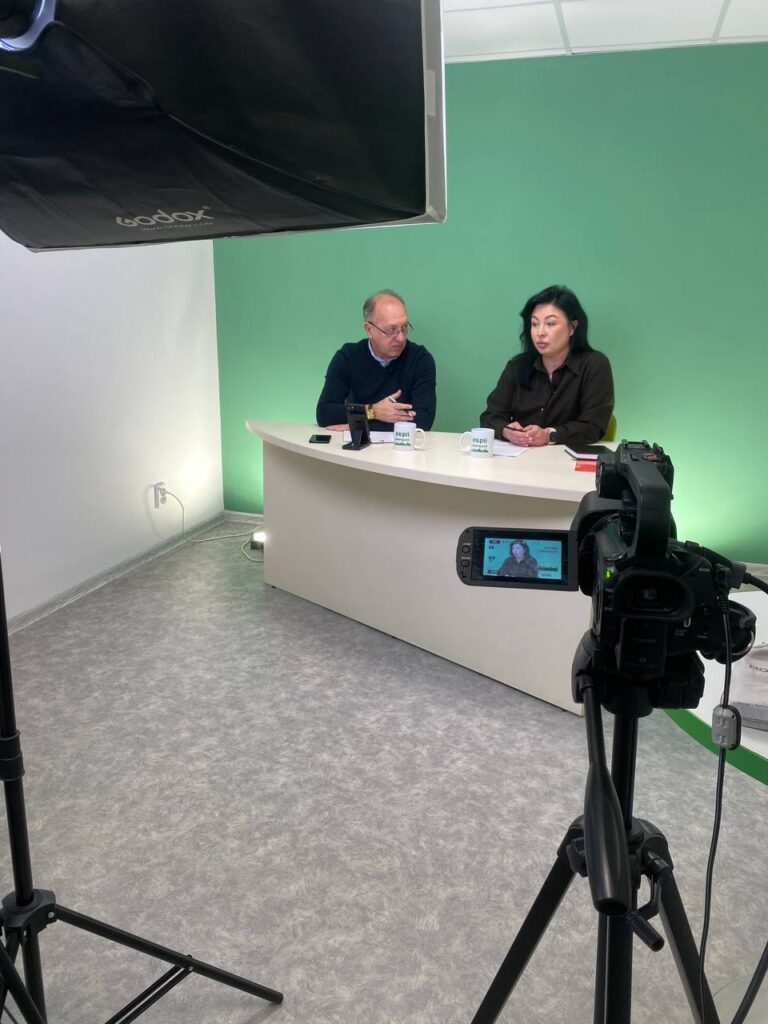
The editorial team looks to the future realistically: over the next six months, they plan to publish 2,000 copies of the print edition every week.
— We are not going to close or transform the newspaper, but we are closely following international experience, in particular that of Polish local media outlets that have switched to monthly digests, — says Kostiantyn.
Here, resilience means not only financial stability for the team, but also a constant presence in the life of the community.
— This set of measures makes it possible to keep going during this difficult time. We remain the only media outlet in Izium, and our presence reassures people: the Ukrainian word is there alongside the community, — Kostiantyn concludes.
A reminder: insurance is available
Colleagues, a reminder: journalists working in high-risk regions have the opportunity to obtain free life and health insurance. This is part of the International Insurance Fund for Journalists (IIFJ) initiative, implemented in partnership with Ukrainian and European organisations.
Media professionals working in Kherson, Zaporizhzhia, Sumy, Mykolaiv, Donetsk, Luhansk, Odesa, Kharkiv, and Dnipropetrovsk regions, as well as border areas of Kyiv and Chernihiv regions, can apply. More information about the terms of free insurance is available here.
This article is part of a series of publications on the work of regional media in wartime conditions, safety protocols, and the psychological resilience of journalists. We have already published interviews with Zarina Zabrisky (Parts One and Two), Oleksandr Kachura, Vladyslav Safronov, Natalia Bilokudria, Serhii Horbatenko, Yevhen Khrypun, Anna Kaliuzhna, Polina Kulish, Nadia Sukha, Nadiia Karpova, Oleksandr Solomko (Parts One and Two), Diana Butsko, Oleksii Pasiuha, Oleksandr Chubukin, Aliona Serhiienko, Olha and Serhii Sydorov, Yevheniia Hrytsyna, Nataliia Kryvoruchko (Parts One and Two), Inna Shvydka, Pavlo Kliuchnyk, Larysa Hnatchenko, Diana Deliurman, Viktoriia Hnatiuk, Mariia Shevchenko, Anna Matviienko, Nastya Stanko, Iryna Sytnik, Svitlana Tomash, Olesia Bida, Yevhen Nazarenko, Oleksii Kovalchuk, Ilona Korotitsyna, Iryna Stolbova, Kateryna Tyshchenko, and Hanna Khaliman.
As a reminder, the International Insurance Fund for Journalists, implemented by the Association of Independent Regional Press Publishers of Ukraine, is part of the Voices of Ukraine / SAFE support program, coordinated by the European Centre for Press and Media Freedom. Voices of Ukraine / SAFE is implemented within the Hannah Arendt Initiative and supported by the German Federal Foreign Office