


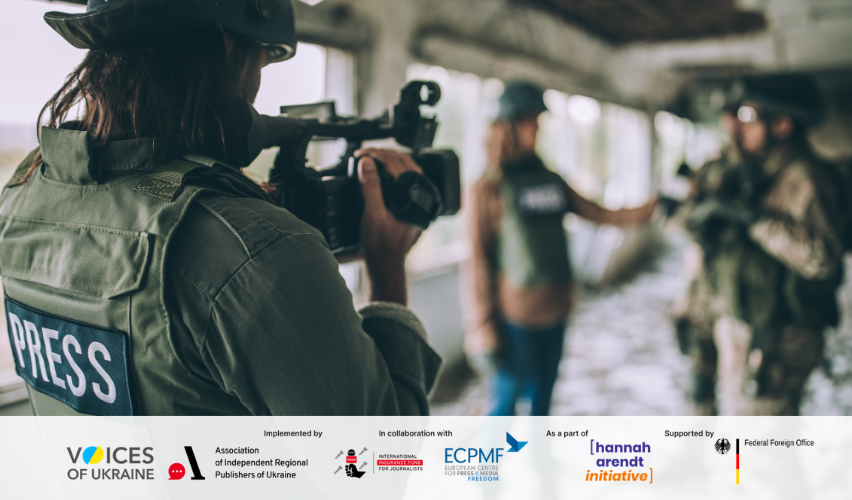
Insurance for journalists has become one of the most pressing needs of Ukraine’s media sector during the war, and the International Insurance Fund for Journalists has addressed this need. We asked Oksana Brovko, director of the Association “Independent Regional Publishers of Ukraine,” to share her observations on the work of this initiative — to talk about the challenges, results, and changes it has brought.
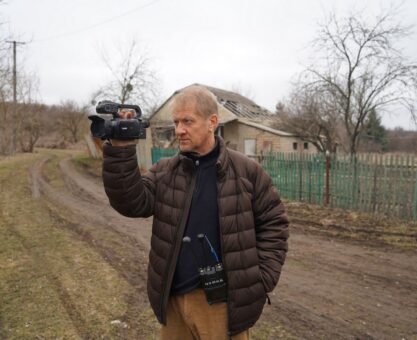
The International Insurance Fund for Journalists has been operating for several years and covers dozens of newsrooms. The initiative enables Ukrainian media professionals to receive free insurance while working in particularly dangerous areas. The program covers expenses in the event of injury or death and also provides support to newsrooms that send their employees to the frontline or border regions.
Since the beginning of 2026, we have approved 322 insurance applications, insuring 99 journalists from 19 media outlets for a total of 446 insurance days.
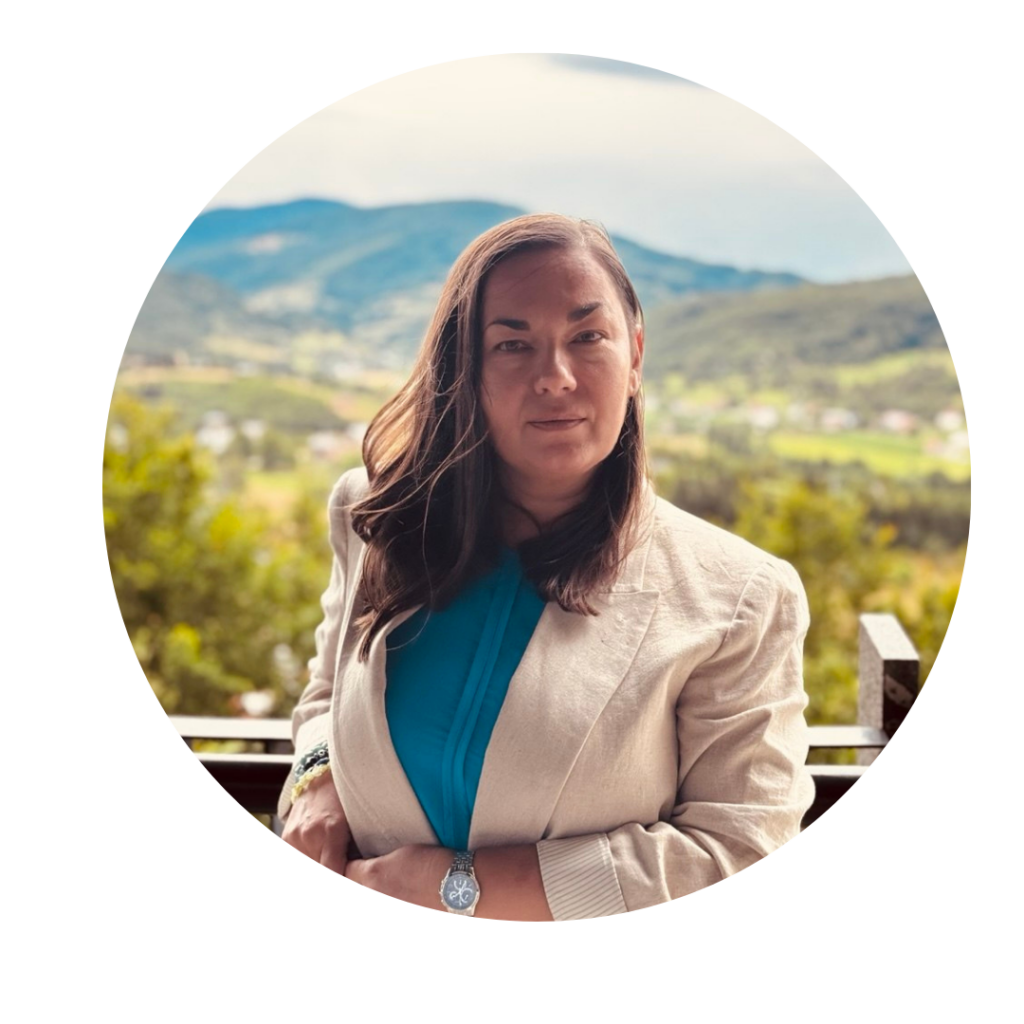
— Insurance for media professionals is extremely important for ensuring their safety and protection while they are in particularly dangerous areas, — says Association CEO Oksana Brovko. — Verified, high-quality content in the form of reports, news, and stories is an integral part of our struggle. We are trying to help independent media feel safer while carrying out their journalistic work.
We asked Oksana to explain how the program is changing the safety culture in newsrooms, affecting journalists’ trust, what it has taken from international experience, and what challenges had to be overcome while implementing the program.
— Oksana, how has the attitude of newsrooms toward safety changed since the launch of the program?
— Previously, insurance was often seen as something secondary: if there was an opportunity, the newsroom would consider it; if not, the journalist would simply go to work. Now we are seeing a different approach. Safety is gradually becoming part of editorial planning: newsrooms assess risks in advance, undergo training, prepare the necessary equipment, and think about insurance before a journalist heads into a dangerous area.
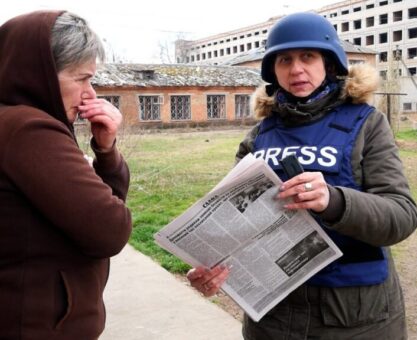
For me, this is one of the most important changes brought about by the program. We did not simply provide journalists with insurance; we started changing the very safety culture in newsrooms. In addition, we are seeing new challenges: the “Press” marking or a helmet sometimes does not protect journalists but instead attracts the attention of drone operators. Therefore, newsrooms are increasingly thinking about modern means of protection — drone detectors (“Chuika” devices), which can only be used after completing training.
— Has the program affected journalists’ trust in media organizations?
— Yes. But I would speak not only about trust in media organizations, but first and foremost about a change in the newsroom’s attitude toward its people.
When a newsroom does not simply tell a journalist “be careful,” but actually invests in their safety, it demonstrates the employer’s level of responsibility. This is especially important for regional media, where resources are significantly more limited, and journalists often work literally just a few dozen kilometers from the combat zone.
Insurance does not eliminate the risk. But it shows the journalist that, in the worst-case scenario, they and their family will not be left alone to deal with the consequences.
Read also: “We are not insuring people. We are insuring the possibility to continue telling the truth”
— What lessons from international experience have proved unexpectedly useful for Ukraine?
— One of the main lessons is that a journalist’s safety should not be a response to an emergency, but rather part of the newsroom’s work system.
In many countries, insurance, safety protocols, risk assessment, and preparation for working in dangerous conditions have long been part of professional practice. This is especially important for Ukraine because the war has made risks part of the daily work of a huge number of journalists.
We have also seen that even in a country where risks are extremely high, it is possible to create a transparent mechanism that allows independent newsrooms to obtain professional insurance protection.
— Has the program changed journalists’ attitudes toward their profession?
— Yes. And this is an important change.
Previously, journalists often viewed risk as an integral part of the profession: if a story needed to be done, they had to go. Now more and more people understand that professionalism is not only a willingness to work in dangerous conditions, but also the ability to properly assess the risk and prepare for it.
Insurance is only one element here. It needs to work together with training, protective equipment, risk assessment, and clear newsroom rules for working in dangerous areas. Without training, even modern equipment does not guarantee protection.
— How do you see the development of the program in the coming years?
— I would like journalist insurance in Ukraine to stop being perceived in a few years as a special program for working during wartime and become a normal part of responsible newsroom operations.
This requires more than donor support. We need a model that can operate in the long term and involve the newsrooms themselves, professional organizations, and insurance companies.
Our task now is not simply to continue a specific program, but to create a practice that will remain in the Ukrainian media market even after individual grant projects come to an end.
— What was the most difficult part of implementing the program for you personally?
— The most difficult part was creating a functioning mechanism in an area where there was virtually no such experience before the full-scale war.
We work with a very specific risk: journalists travel to combat zones, frontline and border areas. For the insurance market, this is a complex and costly risk, while for newsrooms, it is often financially inaccessible.
Therefore, we had to find a solution that would be realistic for insurers and affordable for independent media at the same time.
For me, it is especially important that as a result, we created not simply an opportunity for journalists to get insured, but a mechanism that can become part of the safety system of Ukrainian newsrooms.
A Reminder to Colleagues: The Opportunity to Get Insured
Journalists working in dangerous regions have the opportunity to insure their lives and health free of charge. This is part of the International Insurance Fund for Journalists (IIFJ) initiative, implemented in partnership with Ukrainian and European organisations.
Media professionals working in Kherson, Zaporizhzhia, Sumy, Mykolaiv, Donetsk, Luhansk, Odesa, Kharkiv, and Dnipropetrovsk regions, as well as border areas of Kyiv and Chernihiv regions, can apply. More information about the terms of free insurance is available here.
This article is part of a series of publications on the work of regional media in wartime conditions, safety protocols, and the psychological resilience of journalists. We have already published interviews with Zarina Zabrisky (Parts One and Two), Oleksandr Kachura, Vladyslav Safronov, Natalia Bilokudria, Serhii Horbatenko, Yevhen Khrypun, Anna Kaliuzhna, Polina Kulish, Nadia Sukha, Nadiia Karpova, Oleksandr Solomko (Parts One and Two), Diana Butsko, Oleksii Pasiuha, Oleksandr Chubukin, Aliona Serhiienko, Olha and Serhii Sydorov, Yevheniia Hrytsyna, Nataliia Kryvoruchko (Parts One and Two), Inna Shvydka, Pavlo Kliuchnyk, Larysa Hnatchenko, Diana Deliurman, Viktoriia Hnatiuk, Mariia Shevchenko, Anna Matviienko, Nastya Stanko, Iryna Sytnik, Svitlana Tomash, Olesia Bida, Yevhen Nazarenko, Oleksii Kovalchuk, Ilona Korotitsyna, Iryna Stolbova, Kateryna Tyshchenko, Hanna Khaliman, and Kostiantyn Hryhorenko.
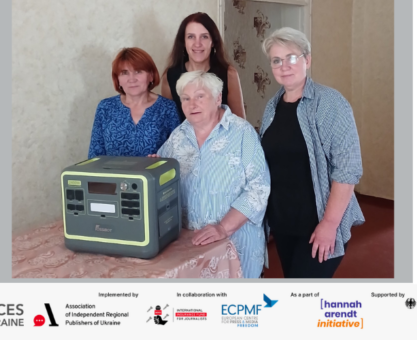
As a reminder, the International Insurance Fund for Journalists, implemented by the Association of Independent Regional Press Publishers of Ukraine, is part of the Voices of Ukraine / SAFE support program, coordinated by the European Centre for Press and Media Freedom. Voices of Ukraine / SAFE is implemented within the Hannah Arendt Initiative and supported by the German Federal Foreign Office