Freezing temperatures, prolonged blackouts, strikes on critical infrastructure, and shortages of essential resources — these are the challenges shaping life in regional newsrooms as winter approaches. For many teams, keeping their workplaces warm and powered is becoming no less critical than ensuring the safety of journalists in the field.
Last winter, freezing temperatures left people in apartments where indoor temperatures dropped to 4–6°C (39–43°F), and in some cases as low as 0°C (32°F). This year, the situation appears even more acute: cold workplaces, the risk of strikes on heat-generation infrastructure, multi-day power outages, and the need to find practical solutions — from generators to stockpiles of firewood. Added to this is the technical vulnerability of newsrooms. Without reliable equipment and power supplies, teams risk losing their ability to go on air and carry out their core function: keeping their communities informed.
Newsrooms’ Urgent Needs Ahead of Winter
- Lightweight portable power stations that can be moved from the newsroom to another workplace when needed.
- High-capacity power stations for extended operations in newsrooms.
- “Chuyka” portable warning devices to ensure the safe delivery of newspapers, along with expanded practical safety training on how to use them.
- Lightweight body armor for women media workers operating in high-risk areas and frequently on the move.
- Psychological support for newsroom teams.
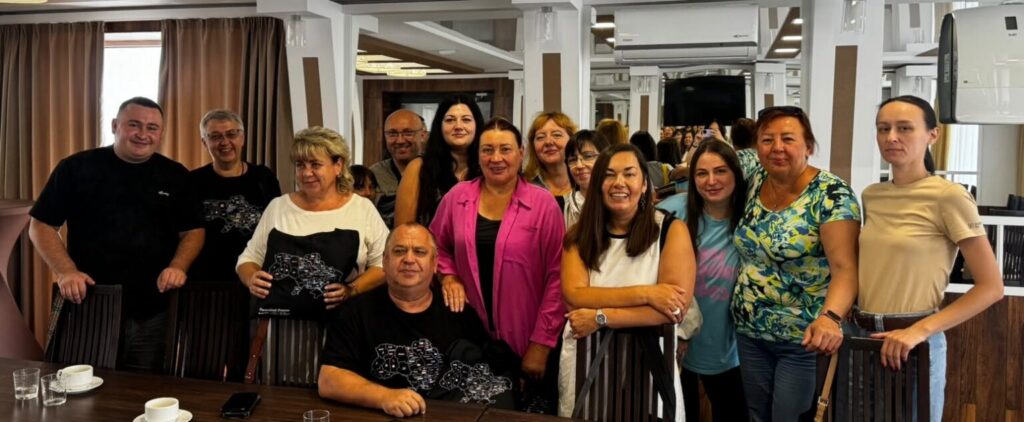
AIRPPU brought together journalists from regional media outlets to assess these urgent needs and develop a winter support plan for newsrooms. The meeting took place on August 17 in Truskavets as part of the Media Workers’ Recovery Programme. Representatives of nine newsrooms took part: Vorskla, Novyny Horodnianshchyny, Slavutych-Info, Odesa Life, Aktsent, Slobidskyi Krai, Dostup Media, Na Mezhi, and Objektiv.
Restoring journalists’ mental and physical resilience has become part of our Emergency Support Program for Regional Media for the first time:
“There are cases when newsrooms simply cannot wait a month for donors to make a decision. Equipment has been destroyed by fire, firewood is needed, or an evacuation is required — and the Emergency Support Programme allows them to receive assistance within just a couple of days,” says Oksana Brovko, CEO of AIRPPU. Commenting on the long-standing need for recovery programmes, she added: “This is an investment in the people who provide communities with reliable information every day.”

Heat and Equipment
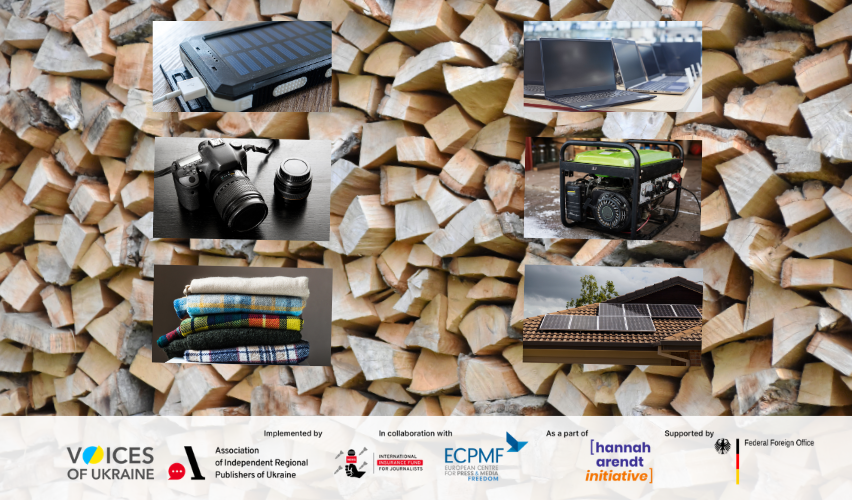
Energy security is the most pressing concern for newsrooms. The power stations currently available are no longer enough to meet their needs — additional batteries are required to keep operations running for several days. Some teams are having to consider stockpiling firewood as a simple yet critically important resource. In some cases, sleeping bags and blankets are also essential items that can determine whether a newsroom can continue operating during prolonged blackouts.
Technical equipment remains another weak point. Cameras without lenses, laptops running out of power in the middle of an editorial meeting, a lack of spare batteries or charging stations — all of these factors can determine whether a team is able to go on air.
“We have a camera, but no lens. We have a newsroom, but not enough batteries for our power stations,” says Anna Dobran of Dostup Media: Kropyvnytskyi.
Yet while heating and energy security are the biggest winter concern for all the newsrooms, they are also the most practical challenges — ones that newsrooms are determined to address and can realistically tackle with AIRPPU’s support.
Staffing and Psychological Support
The staffing crisis is no less acute. Young journalists are not staying in the regions, internships often become a mere formality, and newcomers’ enthusiasm quickly fades after their first unsuccessful attempts to obtain comments from local authorities.
This is compounded by psychological exhaustion. “Donors rarely pay attention to the recovery of newsroom teams. But taking time off and working with a psychologist are what allow us to keep going,” says a journalist from Kharkiv.
Security and Life on the Border
In addition to everything else, communities near the border are also dealing with enemy sabotage and reconnaissance groups, guided aerial bombs (KABs), and forced evacuations.
Read also: “We All Remain in the City, but Sometimes We Work from Cellars”
“We live in something of an appendix between the Kyiv and Chernihiv regions, and any escalation here is felt particularly acutely,” says Raisa Torchyshnyk of Slavutych Info.
Kseniia Karpenko spoke about cases when parents hid their children in sofas to prevent them from being forcibly evacuated: “We try to persuade people and explain why evacuation is necessary, but often they leave only after a direct strike.”
Participants also spoke about their own safety: body armor, helmets, first-aid kits, and safety training to reinforce first-aid skills.
New Formats and Growth
Despite all the challenges, newsrooms are looking for ways to grow. Videos about strikes and human stories are attracting hundreds of thousands of views.
“Our YouTube channel was dead, but after one video we got a million views and new subscribers,” says Kseniia Karpenko.
The team at Odesa Life has started producing anti-corruption investigations, despite initially being hesitant to take the risk and venture into this area. In Shostka, the Na Mezhi newsroom launched an evening news programme for an older audience accustomed to turning on the television at 7:30 p.m. Some teams are also launching YouTube memberships to foster a culture of supporting independent media.
“We know people are struggling financially, but even UAH 20–30 a month is a sign of trust. It is the future — a way to become less dependent on donors,” says Oleksandr Solomko.
Make Sure You’re Insured
Colleagues, a reminder: journalists working in high-risk regions have the opportunity to obtain free life and health insurance. This is part of the International Insurance Fund for Journalists (IIFJ) initiative, implemented in partnership with Ukrainian and European organisations.
Media professionals working in Kherson, Zaporizhzhia, Sumy, Mykolaiv, Donetsk, Luhansk, Odesa, Kharkiv, and Dnipropetrovsk regions, as well as border areas of Kyiv and Chernihiv regions, can apply. More information about the terms of free insurance is available here.
***
This article is part of a series of publications on the work of regional media in wartime conditions, safety protocols, and the psychological resilience of journalists. We have already published interviews with Zarina Zabrisky (Parts One and Two), Oleksandr Kachura, Vladyslav Safronov, Natalia Bilokudria, Serhii Horbatenko, Yevhen Khrypun, Anna Kaliuzhna, Polina Kulish, Nadia Sukha, Nadiia Karpova, Oleksandr Solomko (Parts One and Two), Diana Butsko, Oleksii Pasiuha, Oleksandr Chubukin, Aliona Serhiienko, Olha and Serhii Sydorov, Yevheniia Hrytsyna, Nataliia Kryvoruchko, Inna Shvydka, Pavlo Kliuchnyk, Larysa Hnatchenko, Diana Deliurman, Viktoriia Hnatiuk, Mariia Shevchenko, Anna Matviienko, Nastya Stanko, Iryna Sytnik, Svitlana Tomash, Olesia Bida, Yevhen Nazarenko, Oleksii Kovalchuk, Ilona Korotitsyna, Iryna Stolbova, Kateryna Tyshchenko, Hanna Khaliman, Kostiantyn Hryhorenko, Oksana Brovko, and Svitlana Karpenko.
As a reminder, the International Insurance Fund for Journalists, implemented by the Association of Independent Regional Press Publishers of Ukraine, is part of the Voices of Ukraine / SAFE support program, coordinated by the European Centre for Press and Media Freedom. Voices of Ukraine / SAFE is implemented within the Hannah Arendt Initiative and supported by the German Federal Foreign Office.
It is also worth noting that AIRPPU’s Emergency Support Program for Regional Media was launched in autumn 2025 in partnership with the Amedia Foundation as a response to the most pressing challenges faced by independent local and regional media during the full-scale war. Initially, the programme focused on equipping newsrooms with essential technology, supporting business continuity, developing investigative journalism, ensuring journalists’ safety, and addressing other critical newsroom needs. Spanish partners also joined the programme’s development: the Henneo media group, Fundación Ibercaja, and technology company Hiberus, which provided Ukrainian newsrooms with computer equipment.
This year, drawing on its experience of working with hundreds of Ukrainian newsrooms, AIRPPU expanded the programme to include a new area of support — the recovery of media workers. The initiative has been made possible with the support of Stichting Hulpacties, a charitable foundation established by three regional Dutch newspapers: Dagblad van het Noorden, Leeuwarder Courant, and Friesch Dagblad.