


Svitlana Tomash, Editor of Novyny Horodnianshchyny, on Working in a Border Community in Ukraine’s Chernihiv Region
Novyny Horodnianshchyny is among the highest-circulation former district newspapers in Ukraine’s Chernihiv region. During the occupation, its editorial team evacuated the newspaper’s archives right under the noses of Russian troops. After the region was liberated, the newsroom resumed publishing, sometimes working from cellars or under trees to bring people truthful information. Today, the publication has 1,900 subscribers and updates its Facebook page daily, reaching an audience of around 10,000 users. The editorial team receives technical assistance from the Independent Regional Press Publishers of Ukraine Association as part of the Emergency Support Program for Regional Media.
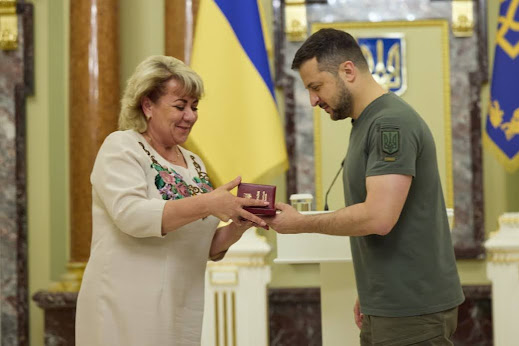
Svitlana Tomash, the newspaper’s editor-in-chief and journalist, was awarded the Order of Princess Olga, Third Class, a state decoration recognizing her work during the occupation and her contribution to resisting the enemy through information and journalism.
“I consider it an award for our entire team—for staying true to our profession and upholding all professional standards,” Svitlana says.
In this article, she reflects on safety practices, working with content and readers, and the team support that helps them carry on.
“The Only Equipment We Take Is a Phone”
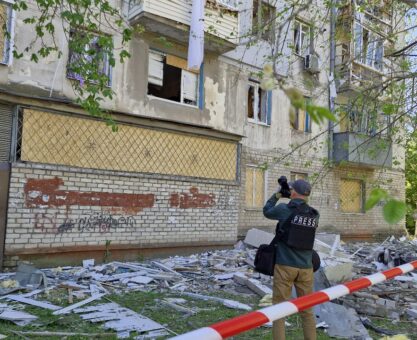
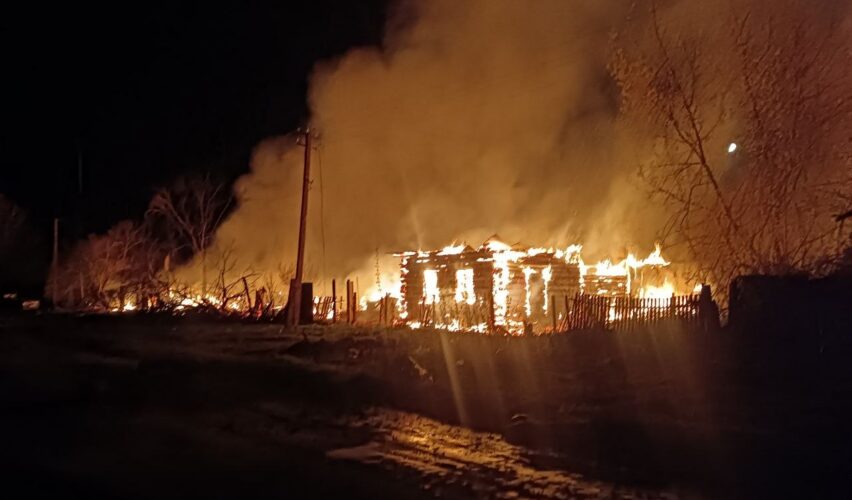
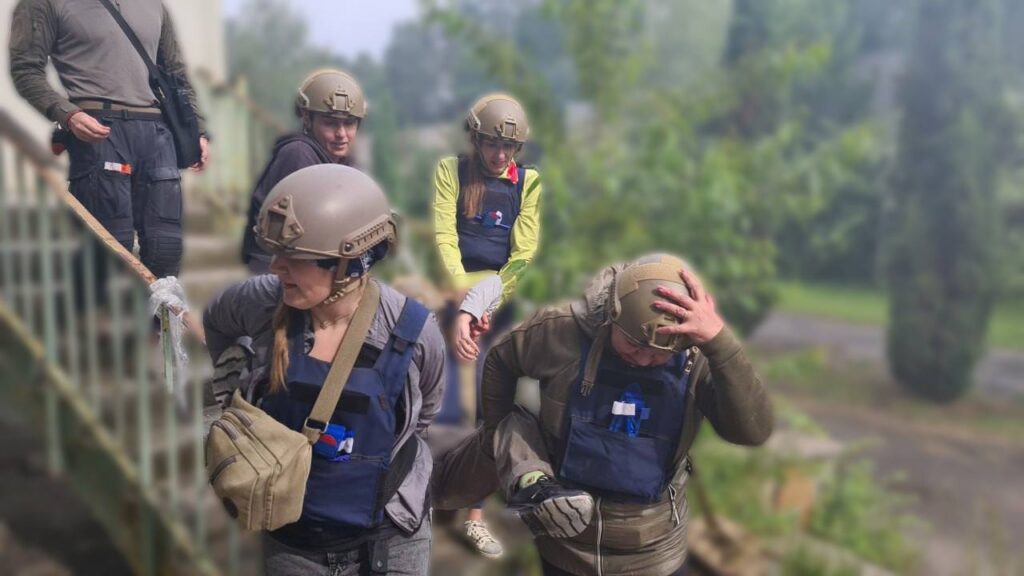
After the de-occupation of the Horodnianshchyna area (the Horodnia district and surrounding area in Ukraine’s Chernihiv region) in autumn 2022, Russian forces began regularly shelling border villages with heavy artillery. At first, journalists would take bulletproof vests, helmets, and permission from the Border Guard Service when going on assignments. But as the war evolved into a drone war, protective equipment itself became dangerous: the “PRESS” marking (as most of our interviewees note) started to make journalists a preferred target. After a vehicle belonging to Suspilne came under targeted fire, the Novyny Horodnianshchyny newsroom gave up using dedicated transport and began going on assignments only together with humanitarian missions or social services.
— We started taking only a phone as equipment, and we did photo and video shooting very quickly and discreetly, — says Svitlana Tomash.
Since 2025, the entire region has come under sustained, widespread attacks: civilian infrastructure, energy facilities, and residential buildings. As a result, the newsroom has shifted mostly to remote work, with each journalist working from home where there is a cellar available for shelter.
— We all remain in the city, but each of us works from a separate workspace at home. All of us live in private houses, and in our yards we have cellars where we can take cover in a critical situation. Trips to villages have not stopped, but each time they are becoming more dangerous.
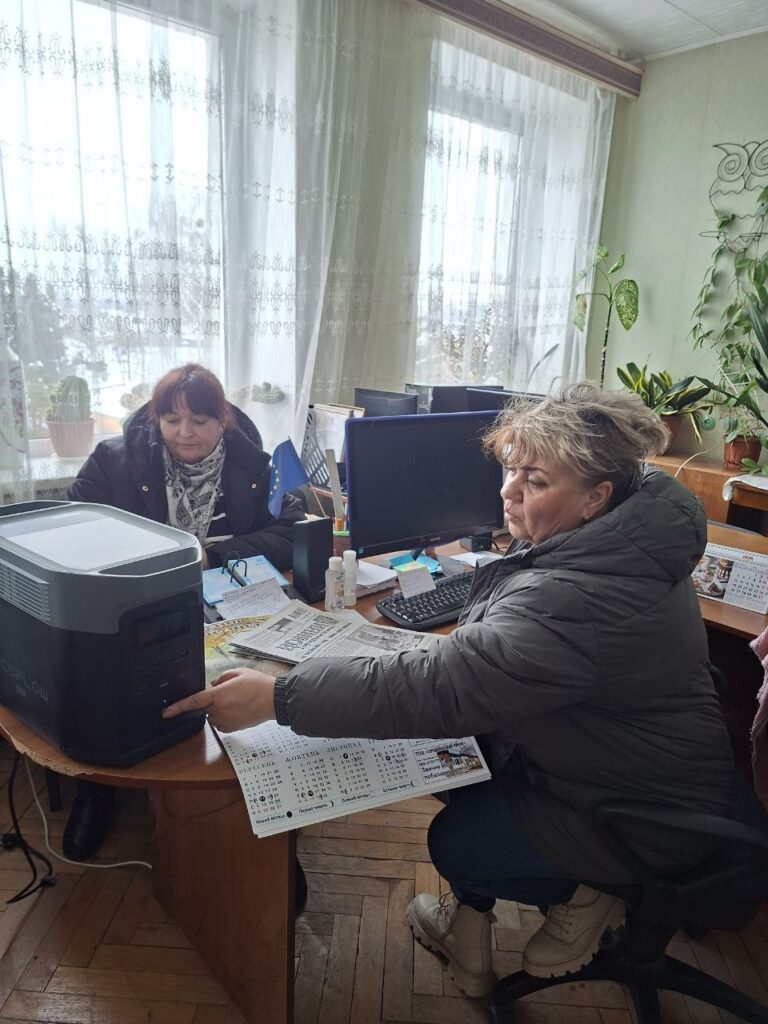
The editorial office is located in the city center and, despite remote work, it is still indispensable: twice a week, on “newspaper days,” the team gathers in person for final edits and layout. However, if there is an air raid alert or heightened danger in the city, everyone stays in safe locations. Layout sessions are postponed, but in a way that still allows them to meet the publishing deadline. Alternatively, everything is done remotely, no matter how much it complicates the editing process.
The team here is small: at the moment, it consists of four full-time employees, one of whom is on maternity leave. There is also only one journalist-editor, and that is Svitlana: she is the one who travels to the border villages.
“No ‘Press’ Markings, No Equipment Except a Phone”
The safety rules are simple: a tourniquet in the bag, no “Press” markings, and no equipment except a phone.
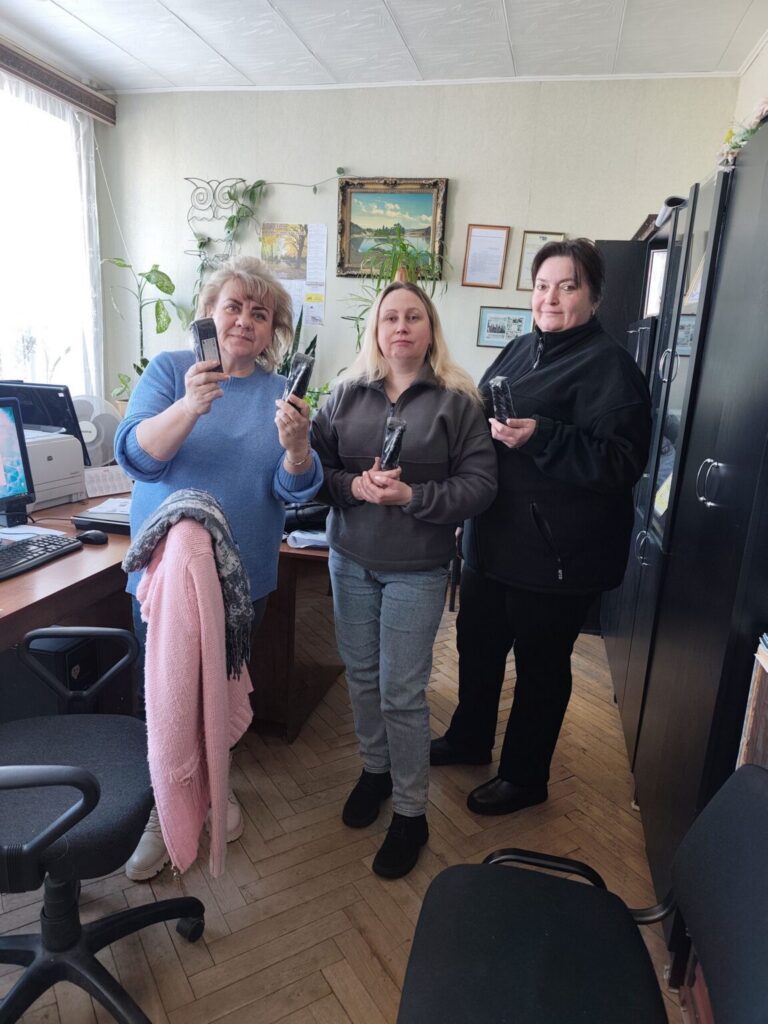
— The first rule is not to ignore any possible risks. Personal safety comes first. This is also what the MARCH protocol emphasizes.
No hint that you are a journalist. No markings on clothing or vehicles. No equipment except a phone. Fortunately, modern smartphones allow you to take high-quality photos and videos; I also use mine as a voice recorder. When arriving in a border village, the car is parked somewhere under the trees.
No hint that you are a journalist.
Another rule when traveling to border villages is to spend as little time outdoors as possible and carry out most of the work indoors:
— The appearance of an unfamiliar car or person in a small village (and in the Horodnianshchyna border area they are all like that) draws the attention of enemy drone operators, since they know most of the locals by sight.
I pretend to be someone’s daughter or niece who has come to visit relatives.
It is equally important to always react to sounds:
— FPV drones, which we call car and people hunters, have a distinctive sound. At the slightest hint of danger, we take cover in the nearest building.
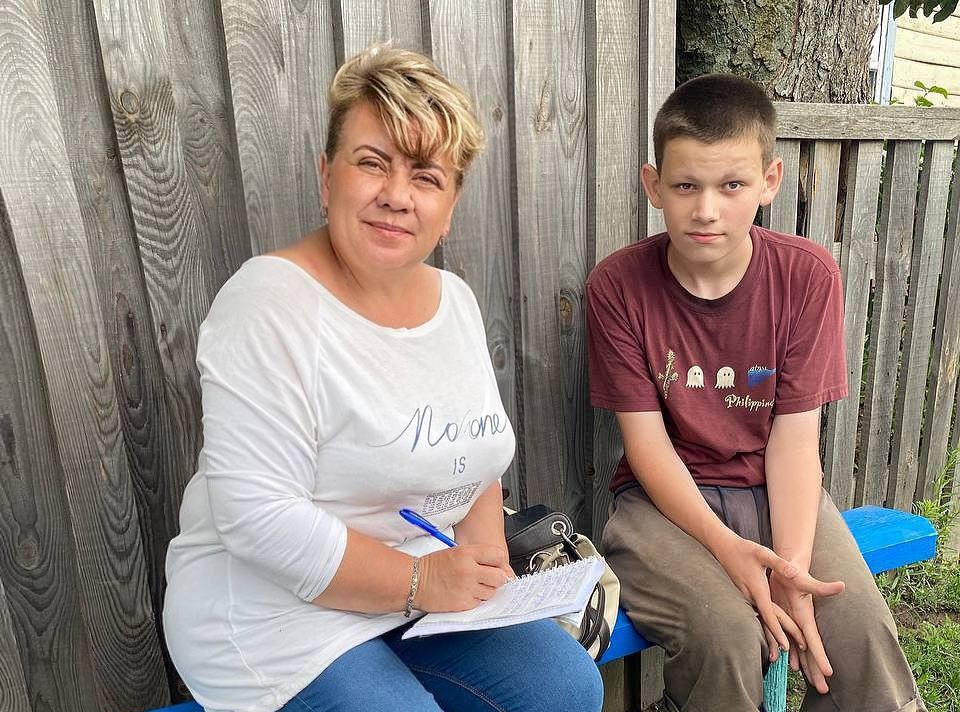
Safety Rules for Field Assignments
- Carry a tourniquet.
- Blend in: no “Press” markings, no visible cameras or microphones, and the car is parked under trees.
- Spend as little time outdoors as possible.
- Always respond to sounds.
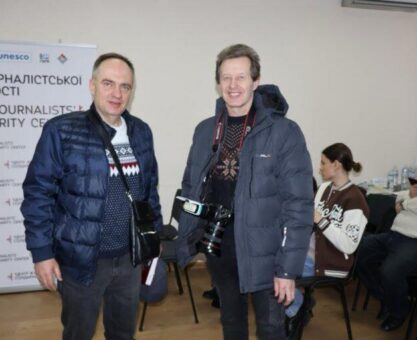
Svitlana has twice completed three-day safety training courses, both in classrooms and at a training ground, as part of social cohesion projects.
— How do you cope with feelings of anxiety or danger?
— I have a degree in pedagogy and psychology. I also have some experience working as the head of the psychological support department at a Social Services Center. But I don’t cope with myself very well. It is very difficult to provide psychological help to yourself. I think it is practically impossible.
But both at home and at work, I am surrounded by resilient people. There is full mutual support and a strong sense of solidarity. When one of us struggles, the others immediately step in and do not let them lose themselves.
“No Traffic to the Website Due to Poor Connection Quality”
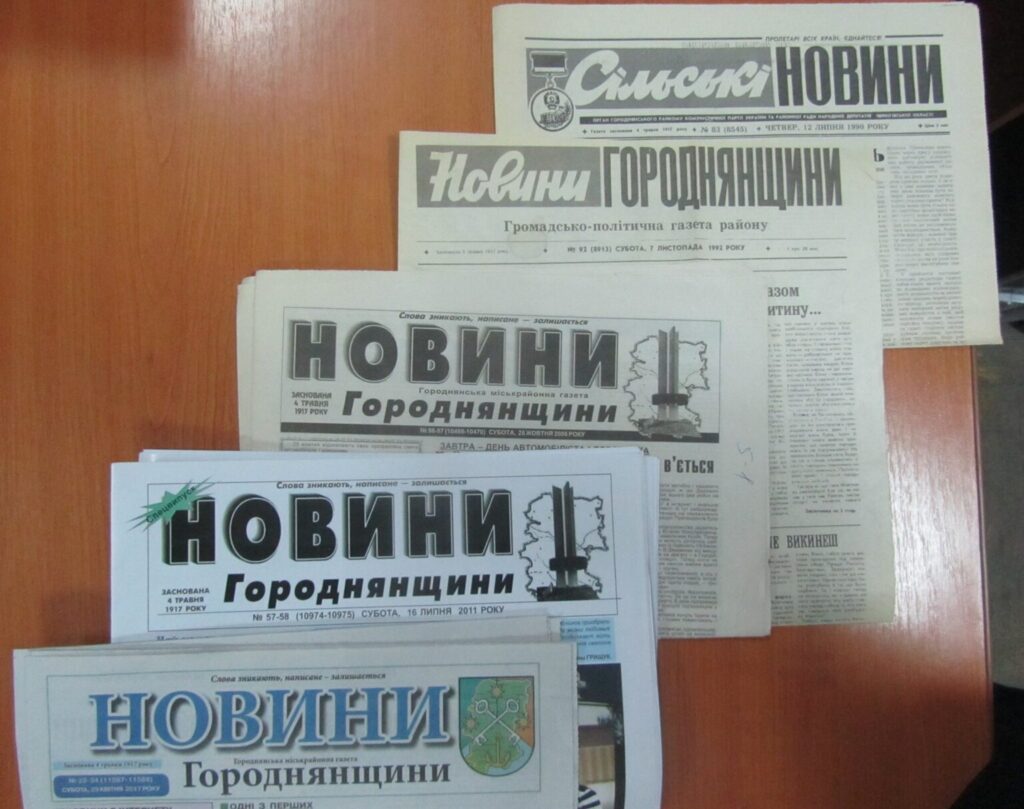
The newspaper is published weekly on eight pages. Before the war, it had 3,800 subscribers; now there are 1,900—the number that remained when the paper resumed operations after de-occupation. Delivery is carried out by Ukrposhta, whose mobile post office is based in Horodnia:
— Together with the city authorities, we developed optimal logistics routes. There are no problems with delivery to the main settlements. The only issue is that in some cases, newspapers are delivered a day or two late.
However, in remote small hamlets where the newspaper has up to five subscribers, the postal service does not go. There, copies are delivered through village heads or social workers, but no longer on time:
— The same applies to villages that are inaccessible due to the security situation. For example, in Berylivka, people themselves come once a week to Moshchenka to pick up newspapers for the eight residents of their village.
The population of the Horodnianshchyna area is 17,000 residents. This means that every eighth resident in our border region subscribes to the print edition.
The newspaper’s Facebook page is followed by 10,000 people:
— It is very active, updated daily, and according to Google Analytics, on some days we reach up to a million views.
Now, having reached a certain level of stability, the team plans to develop the newspaper’s presence on Instagram and TikTok:
— We are currently looking for another staff member, because it is extremely difficult for one journalist to produce the newspaper and manage three social media pages at the same time.
For now, the website is not being launched due to connectivity issues in the border area.
— Horodnianshchyna is a region with a low population density, spread across 60 settlements scattered through forested areas. In this border zone, there have always been problems with mobile coverage, internet access, and television. Today, due to shelling, these issues have multiplied several times over. Some villages have no communication or internet at all, while others rely only on Starlink connections located in the village council offices. However, even there the internet quality is so poor that people can only scroll through news feeds—and even that not consistently. There is no traffic to the website due to poor connection quality, the editor explains.
“Write About Us, Because Our Village Is Never Mentioned”
People themselves reach out to the editorial office:
— We often receive letters from villages that are under constant shelling. They are delivered through postal workers: “Write about us, because our village is not mentioned in the news, as if there were no war here at all.” People want the world to hear them, to know that the front line is not only in the east of the country, but also in the burning borderlands. And we go and write. In every issue, we publish at least one article from a series of human stories about people affected by the war.
In the community, one village has practically disappeared from the map due to the full-scale invasion. This is Senkivka, located at the very point where the borders of three countries meet—Ukraine, Russia, and Belarus. Russian forces turned the village into ruins with heavy artillery:
— Its residents have been evacuated to different places. Those who are far away read our newspaper on Facebook. But most have found new housing within the community, in safer villages. We have told the stories in the newspaper of almost everyone who has gone through this.
Readers from abroad reach out to the editorial team via Facebook. It usually starts with a comment or a response to an article that strikes a personal chord. Then the conversation can develop into material for the newspaper as well:
— Sometimes people from far away are looking for relatives because they do not know what has happened to them, and they turn to the newspaper. Sometimes they simply ask: “Is it quiet in Molozhava? There is no connection there, the news has no specifics, and my mother lives there… Please write, because I am worried.”
There are also topics that, for ethical and security reasons, are currently being kept “on the shelf”: such as stories about partisans during the occupation:
— In the border area, it is still very dangerous to publish them due to the activity of possible enemy sabotage and reconnaissance groups and the real threat of a renewed invasion. We will wait for full victory.
For me personally, as an editor, the most important thing is not to cause even more pain to a person who has already gone through some kind of trauma. No circulation numbers or likes can justify a lack of humanity on the part of a journalist.
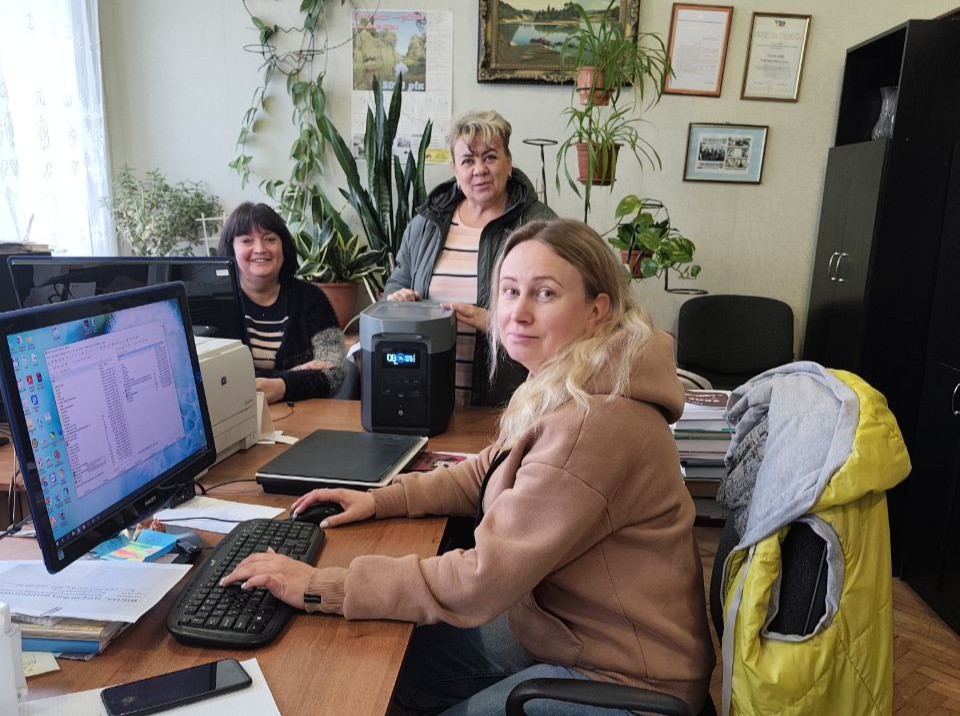
The community frequently experiences power outages due to shelling and targeted strikes on energy infrastructure by the enemy. Electricity is often unavailable for up to 12 hours a day. In this context, the Emergency Support Program for Regional Media by the Association has proven extremely helpful:
— A week ago (the interview took place on May 11 — Ed.), we received targeted funding from the AIRPPU to purchase an energy-saving device. We have already paid for it and are waiting for delivery. This will help protect the newsroom from the risk of work stoppages. We will report on it soon. And just now we received approval for our request to receive two laptops from AIRPPU. They are critically needed for fieldwork during trips to the border areas and for organizing remote work for the team due to security conditions.
The most difficult part of the job remains writing about losses:
— When a mother wants her son’s story, a fallen hero, to be preserved in print as more than just two paragraphs. When a wife, speaking about her beloved husband who returned “on his shield,” comes to the meeting with two small children who will never see their father again… When a single father raised his adopted son Ivan, and at the age of 20, he was burned alive in a tank while defending Chernihiv… You experience these losses as your own. And it is extremely psychologically and emotionally difficult, says Svitlana Tomash.
“Those Who Remain Here Are More Than Just a Team”
As noted above, the newsroom currently has four staff members, one of whom is on maternity leave. There are also four regular contributors: two are paid, while two write on a volunteer basis. All of them live in Horodnia, in the northern border area of Ukraine’s Chernihiv region.
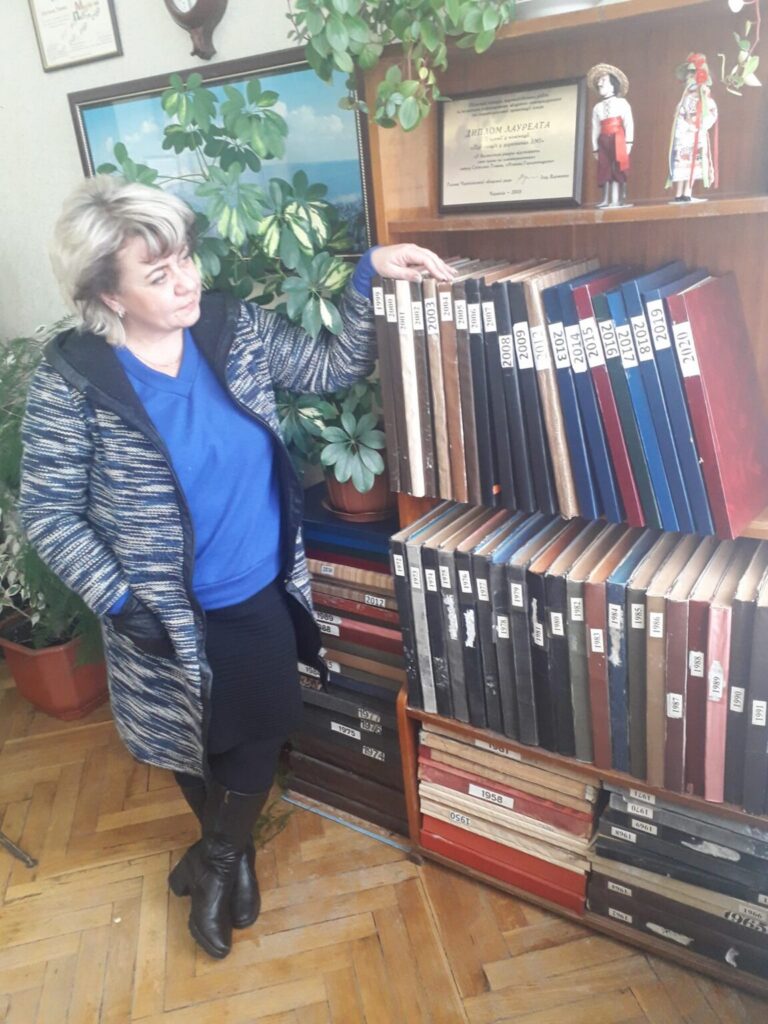
— We all went through the occupation together. We evacuated the newspaper archives (copies of the publication dating back to 1930, which had been stored in the newsroom) right under the noses of the “Orcs,” searched for places where we could get a signal to post life-saving information on the newspaper’s Facebook page, and shared the last potatoes and onions, matches, and warmth.
Those who have stayed here are more than just a team or a workplace. It is a family, where mutual support is the most important thing. Otherwise, it would be impossible in our conditions.
After difficult field assignments, the newsroom gathers to go through everything in detail, analyzing what can be improved in their work to avoid additional risks:
— A burden shared among all of us becomes less heavy. And then we dream. About higher circulation in the future, about life without shelling, about our shared trips and journeys from before the war. And we joke—often about ourselves.
The newsroom’s guiding principle is simple: “Help, but do no harm.” This means adhering to journalistic standards, rejecting sensationalism, and the pursuit of likes:
— Reader trust comes above all. And we have it, — Svitlana concludes.
Make Sure You’re Insured
Colleagues, a reminder: journalists working in high-risk regions have the opportunity to obtain free life and health insurance. This is part of the International Insurance Fund for Journalists (IIFJ) initiative, implemented in partnership with Ukrainian and European organisations.
Media professionals working in Kherson, Zaporizhzhia, Sumy, Mykolaiv, Donetsk, Luhansk, Odesa, Kharkiv, and Dnipropetrovsk regions, as well as border areas of Kyiv and Chernihiv regions, can apply. More information about the terms of free insurance is available here.
***
This article is part of a series of publications on the work of regional media in wartime conditions, safety protocols, and the psychological resilience of journalists. We have already published interviews with Zarina Zabrisky (Parts One and Two), Oleksandr Kachura, Vladyslav Safronov, Natalia Bilokudria, Serhii Horbatenko, Yevhen Khrypun, Anna Kaliuzhna, Polina Kulish, Nadia Sukha, Nadiia Karpova, Oleksandr Solomko (Parts One and Two), Diana Butsko, Oleksii Pasiuha, Oleksandr Chubukin, Aliona Serhiienko, Olha and Serhii Sydorov, Yevheniia Hrytsyna, Nataliia Kryvoruchko, Inna Shvydka, Pavlo Kliuchnyk, Larysa Hnatchenko, Diana Deliurman, Viktoriia Hnatiuk, Mariia Shevchenko, Anna Matviienko, Nastya Stanko, and Iryna Sytnik.
As a reminder, the International Insurance Fund for Journalists, implemented by the Association of Independent Regional Press Publishers of Ukraine, is part of the Voices of Ukraine / SAFE support program, coordinated by the European Centre for Press and Media Freedom. Voices of Ukraine / SAFE is implemented within the Hannah Arendt Initiative and supported by the German Federal Foreign Office