


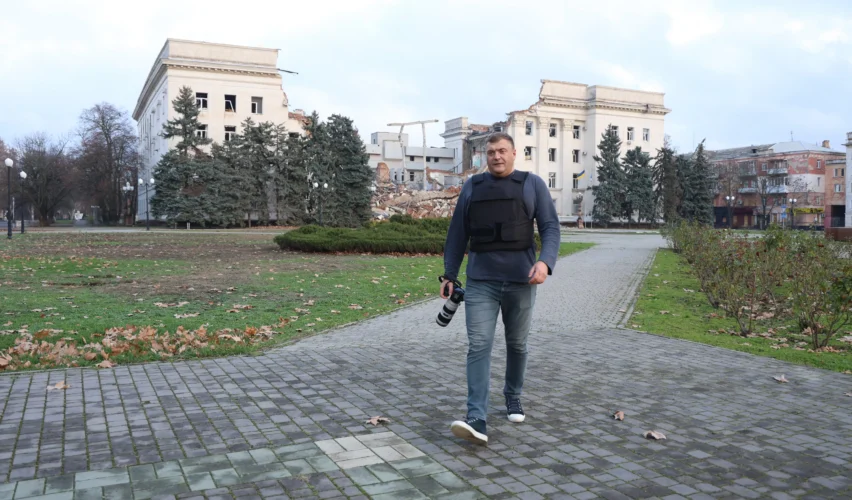
Responsible journalism is a voice that does not fall silent, even when a city lives under explosions, drone attacks, and constant shelling. It is about people who continue gathering information when communications fail, when occupation cuts off access to sources, and when journalists must work across different cities and recently liberated villages. Throughout Russia’s full-scale invasion, the Kherson-based media outlet «Most» has not only endured but also grown stronger, expanded its newsroom, and become one of the region’s leading independent news organizations.
As part of the INTERNATIONAL INSURANCE FUND FOR JOURNALISTS project, we continue sharing the stories of media outlets that work every day under constant threats and extraordinary challenges.
«Most» is now almost 14 years old. It is no longer a young newsroom, but a well-established, values-driven media brand that has earned the trust, loyalty, and support of its audience. Today, the outlet is backed by a community of more than 200 readers who actively support its work.
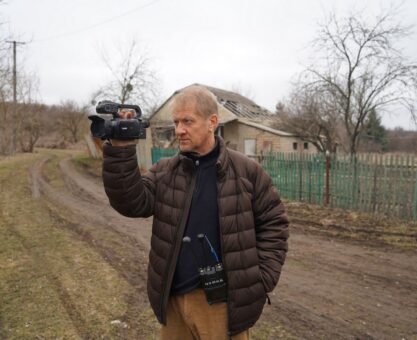
Before the full-scale invasion, the newsroom was very small, with a team of just three people. Editor-in-Chief and founder Serhii Nikitenko not only managed the organization but also wrote stories, filmed reports, and handled many other responsibilities himself.
Leaving Was the Only Safe Option
The team managed to leave Kherson during the first days of the invasion, before Russian forces occupied the city. The decision had to be made quickly, as it was clear that staying was too dangerous. The staff dispersed across different regions of Ukraine. At the time, Serhii Nikitenko was in Khmelnytskyi.
At the same time, the newsroom began looking for people who had remained in occupied Kherson and could continue providing information from the ground. One of them was journalist Viacheslav Husakov, who worked in the city throughout the entire occupation, Nikitenko recalls.
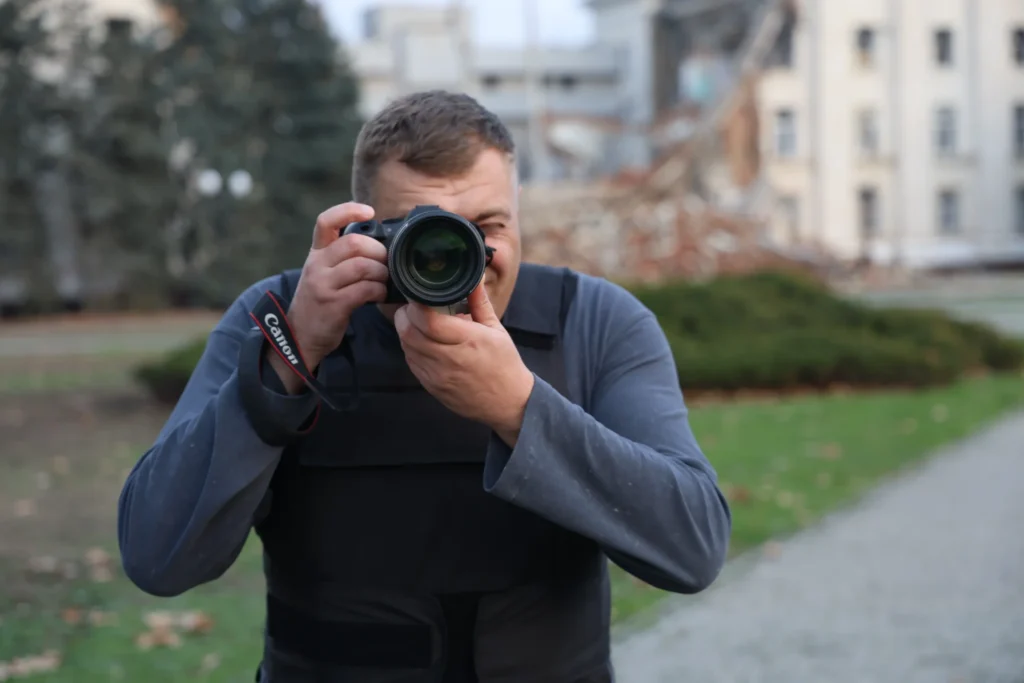
«A great deal of information came from our readers and friends. Despite all the risks, Viacheslav continued working even under occupation. That allowed us to verify a huge amount of information, and we were often the first to report on the most important developments», says Serhii Nikitenko.
Before the full-scale invasion, the newsroom did not even have a proper office. They had rented one just a few weeks before the war began, but never had the chance to finish the renovations, Nikitenko recalls. Some of the newsroom’s equipment was stored in a friend’s office. Remarkably, after Kherson was liberated, they managed to recover a camera that had survived the entire occupation.
«We still have it. It’s old now, but it has become a symbol for us», Serhii says with a smile.
An Overwhelming Flow of Information
During the first months of the war, the newsroom operated virtually around the clock. As an information vacuum spread across the region and Russian disinformation quickly filled the gap, the team had to respond immediately, counter false narratives, and provide people with verified information.
The enormous volume of incoming information soon forced the newsroom to expand. Journalists were recruited wherever possible. Many media professionals, particularly those working for regional commercial outlets, had lost their jobs after the invasion. Reporters from the Kherson region, Dnipro, Zhytomyr region, and other parts of Ukraine joined the team.
By the spring of 2022, «Most» had become one of the region’s primary sources of news, leading both in audience reach and website traffic, Serhii Nikitenko says.
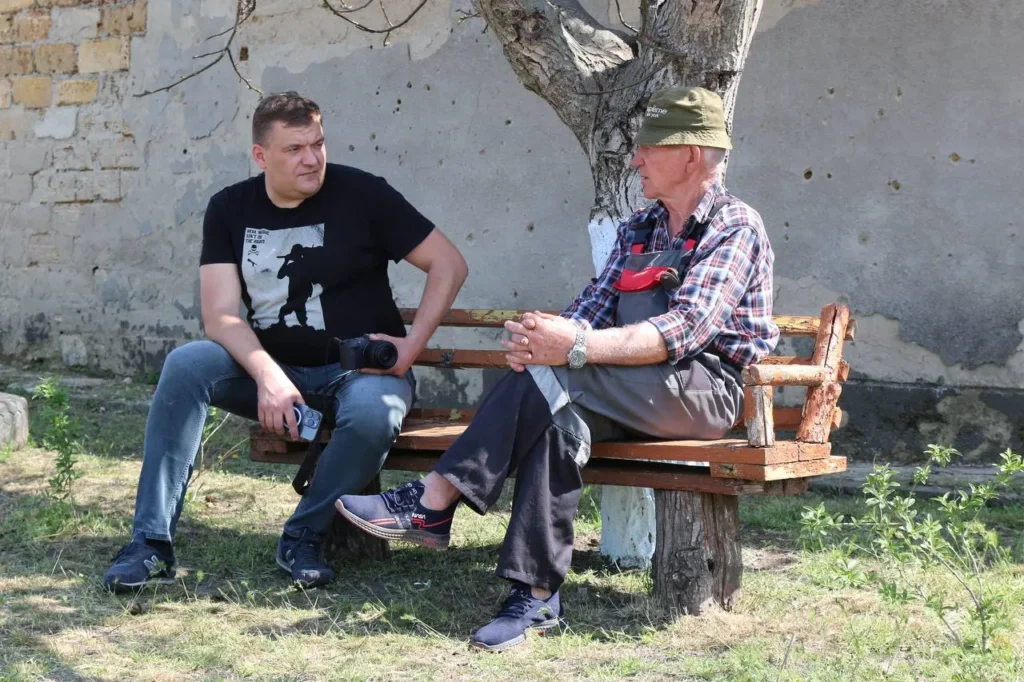
The newsroom’s extensive network of trusted contacts also played a crucial role. Journalists maintained reliable sources not only in Kherson but also in Skadovsk, Hola Prystan, and many other towns and villages across the region. They stayed in constant touch with village heads, city mayors, readers, and long-standing contacts.
«Information was coming in non-stop — literally around the clock», the editor recalls.
Ukrainian News Right Under the Russians’ Noses
Over time, some of these sources disappeared as people fled the region. Yet thanks to its well-established network of contacts, «Most» was among the first media outlets to report that Russian forces had withdrawn from Kherson. The newsroom also published one of the first videos from the Kherson Regional State Administration building after the occupying troops had retreated.
Even when internet access in Kherson had almost completely collapsed, the newsroom found a way to keep reporting. Journalists relied on Russian mobile networks operating from the occupied left bank of the Dnipro River to stay connected and continue publishing news—working, quite literally, under the occupiers’ noses.
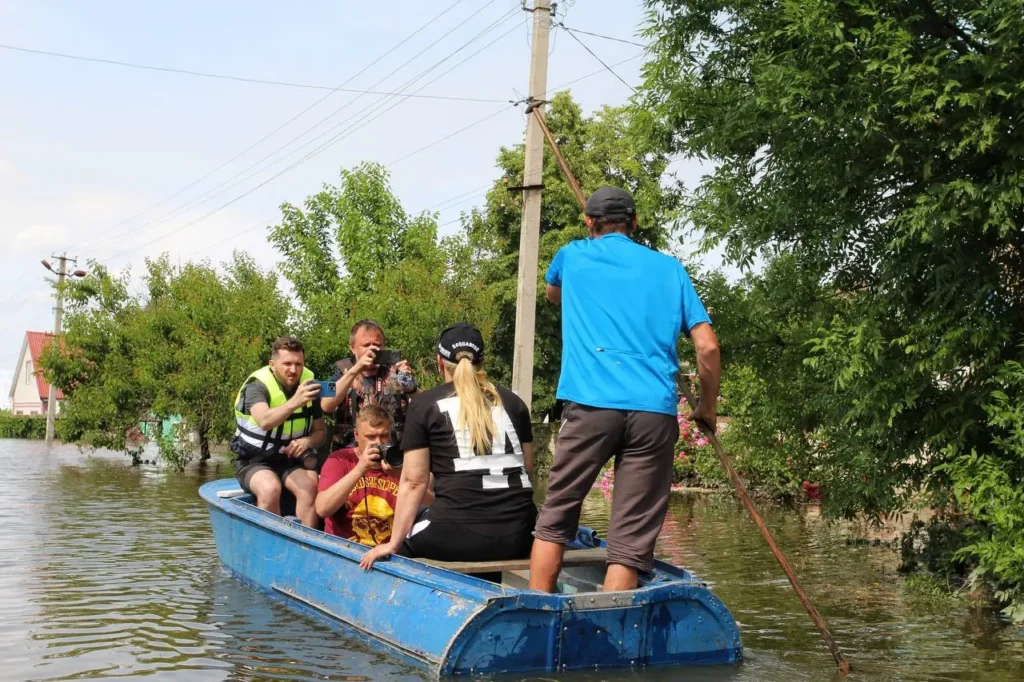
«We paid for Skype credit and used it to call Russian phone numbers belonging to our friends and relatives. That’s how we gathered information,” Serhii Nikitenko recalls. “Quite often, information also came from citizen correspondents—our readers who had remained in the city. One of them even drove far outside Kherson just to pick up a Russian mobile signal so he could call the newsroom and report that the television tower had been blown up».
Russian forces also took a keen interest in journalists. According to Serhii, people detained by the occupiers were repeatedly questioned about him, with interrogators trying to find out where he was.
«When former Kherson mayor Volodymyr Mykolaienko was captured, he later told me that during interrogations they urged him to call me. He told them I had already left,” Nikitenko says. “I believe the occupiers mainly worked through the contact lists of the people they detained, checking who was in their phonebooks».
Many people connected to the newsroom went through Russian detention facilities. Some were held captive and later released. Others remain imprisoned to this day.
How the Newsroom Changed
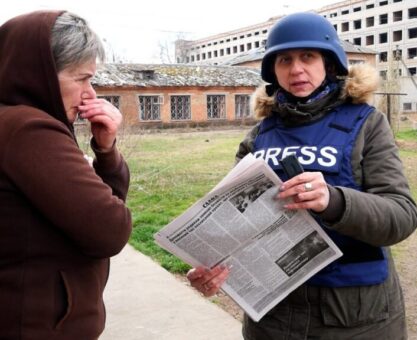
As the war evolved, so did «Most»’s journalism. During the first weeks of the invasion, the newsroom focused primarily on breaking news, providing people with timely and verified information. Later, its reporting shifted toward in-depth human stories, on-the-ground reporting, and documenting everyday life in both occupied and newly liberated communities.
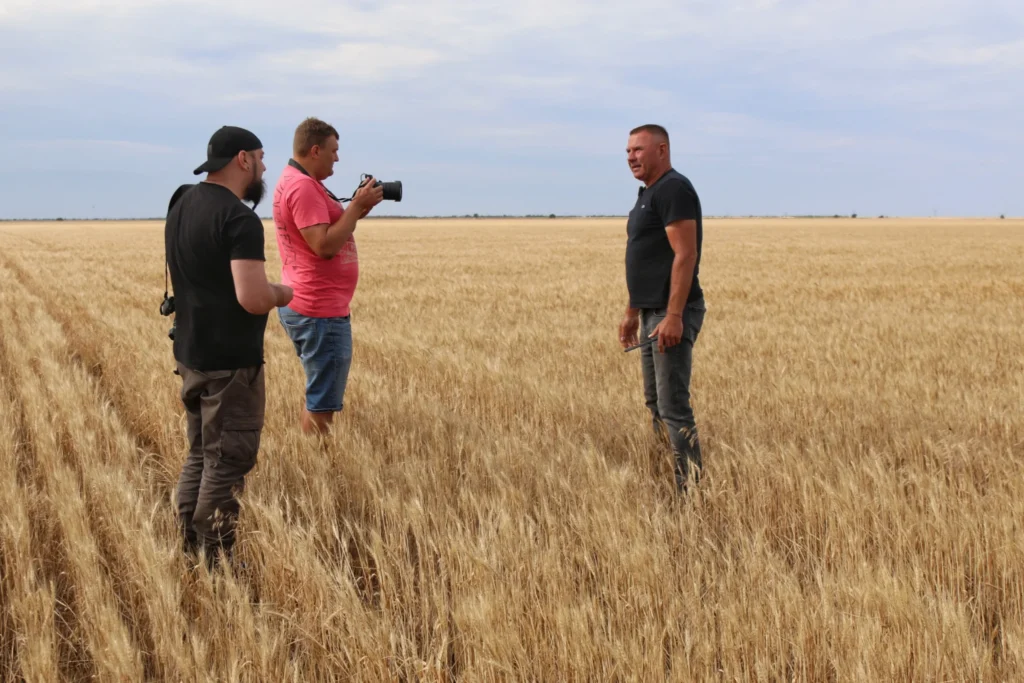
«We began traveling there almost immediately behind the advancing Ukrainian forces, documenting stories of occupation, war crimes, and combat,” Nikitenko says, recalling the newsroom’s reporting trips to the newly liberated northern part of the Kherson region. “Our team worked in Vysokopillia, Velyka Oleksandrivka, Vorontsovka, and the Novooleksandrivka community. After Kherson was liberated, we continued collecting stories in the city for quite some time before shifting our focus primarily to communities across the region. Today, our main priority is reporting from the communities of Kherson Oblast».
«Most» regularly publishes stories about the military, war crimes, everyday local life, farmers, community recovery, and even children’s after-school clubs in rural villages. Almost every month, the newsroom embarks on multi-day reporting trips across the region.
«Sometimes we drive nearly 100 kilometers across fields just to cover a single story because there are simply no roads left», the editor explains.
At the same time, the newsroom has been investing heavily in video journalism. Since 2024, the team has significantly expanded its video production and adapted more of its reporting for social media platforms.
«If you look at our TikTok, it has essentially become an encyclopedia of Kherson region’s history over the past four years», Serhii Nikitenko says.
Building a Community of Readers
Despite its large audience, commercial revenue remains extremely limited. According to the editor, advertising and commercial partnerships account for only about 10% of the newsroom’s budget. Another 4–5% comes from a reader community launched in 2023, which is now supported by more than 220 members.
Commercial advertising has all but disappeared, as there are very few businesses left that can afford to advertise. As Serhii Nikitenko puts it, the few that remain are businesses the newsroom would rather support than charge for advertising.
Before the full-scale invasion, however, «Most» was a fully self-sustaining media outlet.
«We were essentially funded by advertising,» the editor says. «After the cuts to U.S. funding, the newsroom lost more than 40% of its grant support. To survive, we started applying for dozens of small grants, submitting dozens of applications every week. Our reader community helped us get through the toughest period, and we’re proud that we didn’t have to lay off a single member of our team.»
Today, the newsroom includes reporters, social media specialists, video editors, and freelance contributors.
Some team members live in Odesa, while others remain in Kherson. The team gathers in Kherson before setting out to report from communities across the region, coordinating every route with the military. Alongside field reporting, the newsroom continuously monitors public procurement, investigates corruption risks, and analyzes documents issued by the Russian occupation authorities.
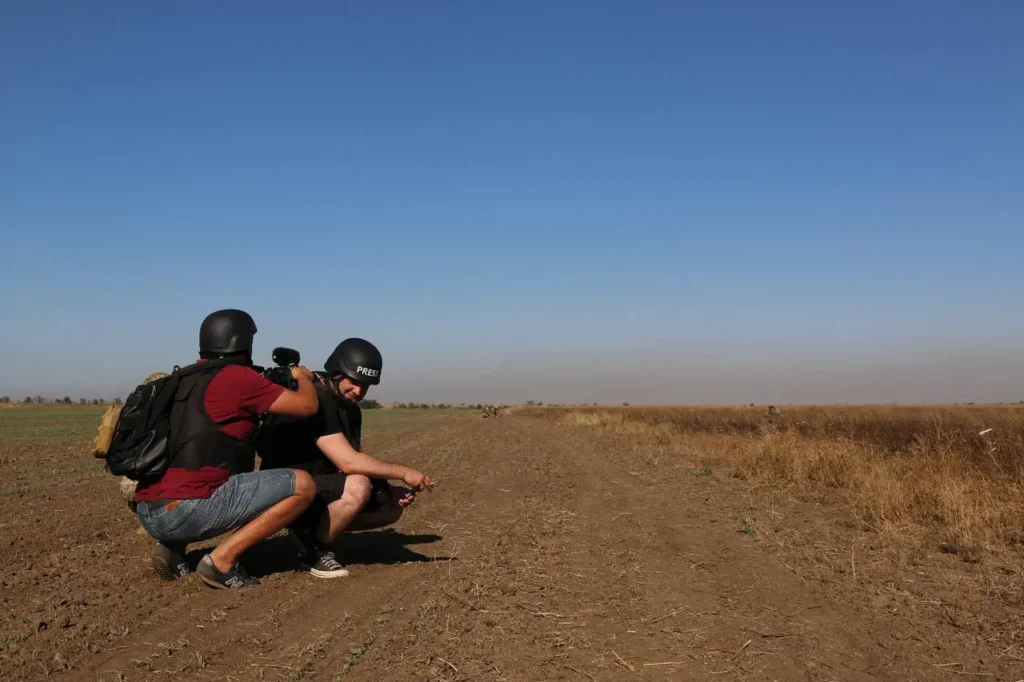
“We do a lot of reporting on the occupied territories. We analyze documents issued by the occupation authorities, review their decisions, and report on what is happening there,” says Nikitenko. Accessing this information, however, is becoming increasingly difficult. According to him, the Russians have even started blocking access to their websites from outside Russia, forcing the newsroom to rely on expensive VPN services.
The newsroom does not have insurance coverage, as most reporting trips depend entirely on the security situation and often require journalists to leave at a moment’s notice. Planning such assignments in advance is nearly impossible.
A Drone Detector Is Always Within Reach
In Kherson itself, journalists rarely leave without carrying drone detectors. The newsroom received the devices from donors and was able to provide not only its own team but also colleagues from other media outlets with them.
Nikitenko recalls that one of these detectors recently saved the life of one of the newsroom’s journalists. When the device alerted her to a drone approaching her house, she immediately grabbed her daughter and managed to run into another room just before the drone struck.
Safety measures extend beyond equipment. In Kherson and many other towns and villages across the region, the team stopped wearing clothing marked «PRESS» long ago to avoid becoming targets for shelling or drone attacks.
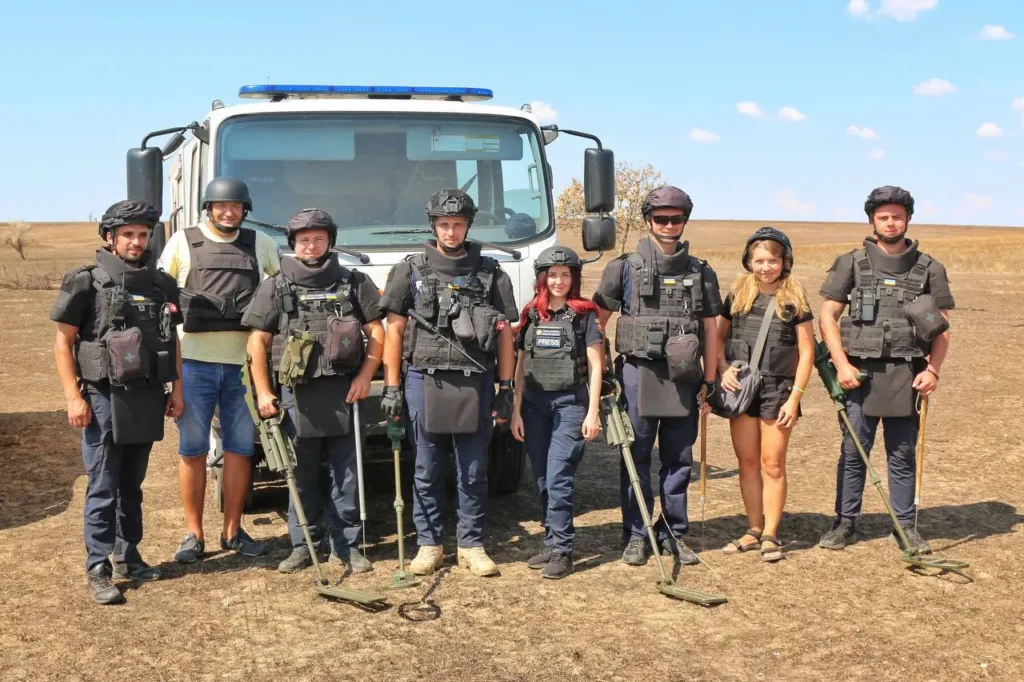
Today, virtually every member of the team lives in a different city. Serhii himself regularly travels from Odesa to Kherson. Part of his time is devoted to administrative work and paperwork, while the rest is spent reporting from communities across the Kherson region. According to him, the newsroom’s greatest challenge today is a shortage of people. There is still an urgent need for journalists to document the truth—but doing so should never come at the expense of personal safety.
«You have to take reasonable care of your own safety and follow security protocols. Then, hopefully, luck will be on your side,» says Serhii Nikitenko.
Protect Yourself with Insurance
We would like to remind our colleagues that journalists working in high-risk areas can receive free life and health insurance through the «INTERNATIONAL INSURANCE FUND FOR JOURNALISTS». The initiative is implemented by the Association of Independent Regional Press Publishers of Ukraine (AIRPPU) in partnership with Ukrainian and European organizations.
Applications are open to journalists working in the Kherson, Zaporizhzhia, Sumy, Mykolaiv, Donetsk, Luhansk, Odesa, Kharkiv, and Dnipropetrovsk regions, as well as in border areas of Kyiv and Chernihiv regions. You can learn more about the eligibility criteria and apply for free insurance here.
***
The content was produced with the support of the International Insurance Fund for Journalists implemented by the Association of Independent Regional Press Publishers of Ukraine is part of the Voices of Ukraine / SAFE support program, coordinated by the European Centre for Press and Media Freedom. Voices of Ukraine / SAFE is implemented within the Hannah Arendt Initiative and supported by the German Federal Foreign Office