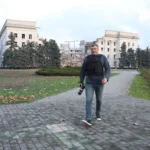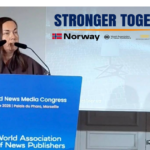



The Kyiv Independent journalist Olesia Bida discusses documenting war crimes, the ethics of working with survivors, and the power of documentary investigations
Olesia Bida is a journalist and documentary filmmaker with the War Crimes Investigations Unit at The Kyiv Independent. She specializes in reporting on war crimes against civilians, conflict-related sexual violence, the deportation of Ukrainian children, and the militarization of youth in Russian-occupied territories. She is the author of the documentary investigations He Came Back, When the Water Screams, Uprooted, and The War They Play.
Her work has received both Ukrainian and international awards, and she regularly takes part in public discussions on documenting crimes against civilians.
We spoke with Olesia about what motivates her, the ethical dilemmas of reporting on war crimes, the most challenging stories she has covered, the international impact of her documentaries, and how she recovers after working on emotionally demanding investigations.
“A Sense of Contributing to Justice”
— Olesia, before we talk about your investigations, I’d like to ask a more personal question. What gives you the strength to work on such difficult subjects, and what keeps you going day after day?
— I think it’s the sense of contributing to justice. The belief that, ultimately, those responsible for these crimes will be held accountable. That’s what gives me the strength to stay in this profession and continue reporting on war crimes.
Behind every crime is a specific person—the perpetrator, the commander, the one who gave the order. For me, it’s important to identify those individuals and demonstrate the systematic nature of these crimes. This isn’t some abstract notion of “evil”; these are real people who made decisions and bear responsibility for them.
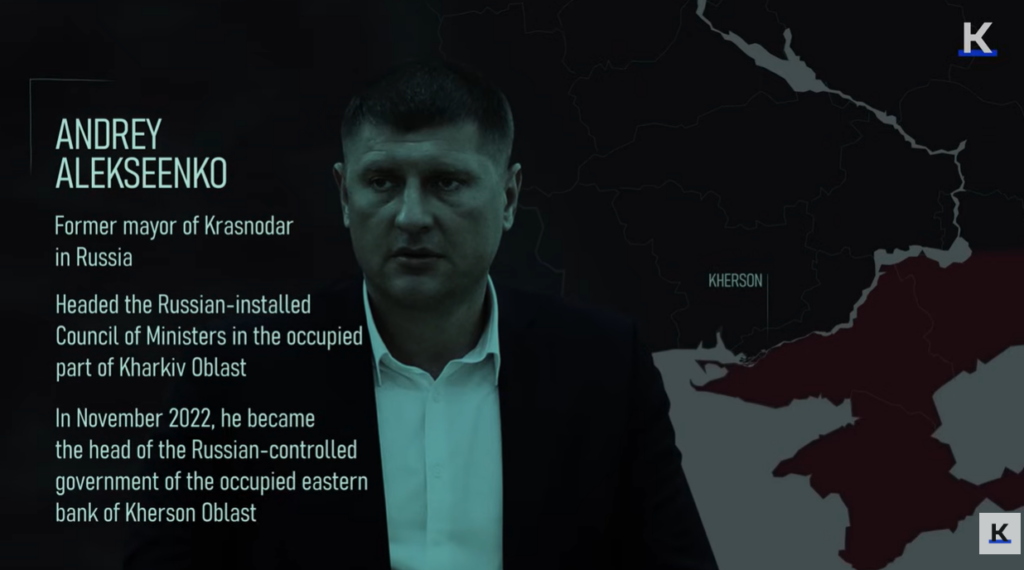
And another thing that keeps me going is the belief that journalism can be a tool for future justice. We’re not a court or a prosecutor’s office, but we document the facts and bring them to light. When I see our reporting being used by human rights organizations or international institutions, it gives me the strength to keep going.
— Looking at your work, much of it focuses on human rights issues. Why did you choose journalism rather than human rights advocacy?
— There’s always the temptation to move into human rights work, to become an activist and help people more directly. But what interests me is informing the public and exposing injustice.
Even before the full-scale invasion, I was always looking for the person or institution responsible—whether a government official or a public agency—and trying to explain how the problem could be addressed. That’s important to me: not only to show that a problem exists, but also to identify who’s responsible for it and what can be done to solve it.
For me, journalism is a more natural form of communication with the audience. I find it important to speak directly to people, to explain, to show, to expose.
Human rights work is more about documents, courts, and procedures. I want to work with people and for people, so that they know the truth and can draw their own conclusions.
“What matters most to me is leaving people with a choice”
— How do you structure your process of collecting data and testimonies? Do you consider their legal relevance?
— I’m not a human rights advocate or a lawyer. I’m a journalist, and I approach people as a media professional. I explain that the material will be published and always make it clear that law enforcement, human rights organizations, or international bodies may later contact them to request additional information or their contact details. However, I always emphasize that I can only share such information with their consent. We never pass on any raw material without permission.
This is a matter of principle for me: I work with sources as a journalist documenting and publishing stories, but I cannot share any data without explicit consent.
— What ethical dilemmas do you encounter in your work?
— Since we work with war crimes, most of them taking place in occupied territories, it is always a question of people’s safety. It is difficult because we are not just telling a story — it becomes part of an investigation. Sometimes it is impossible to avoid certain details, as they are crucial for establishing the facts. At the same time, those details may pose a risk to the person sharing them.
There was one case where a woman was unsure whether to speak openly. We recorded two versions of the interview — one with a standard camera setup and another with a filter — and left the choice to her.
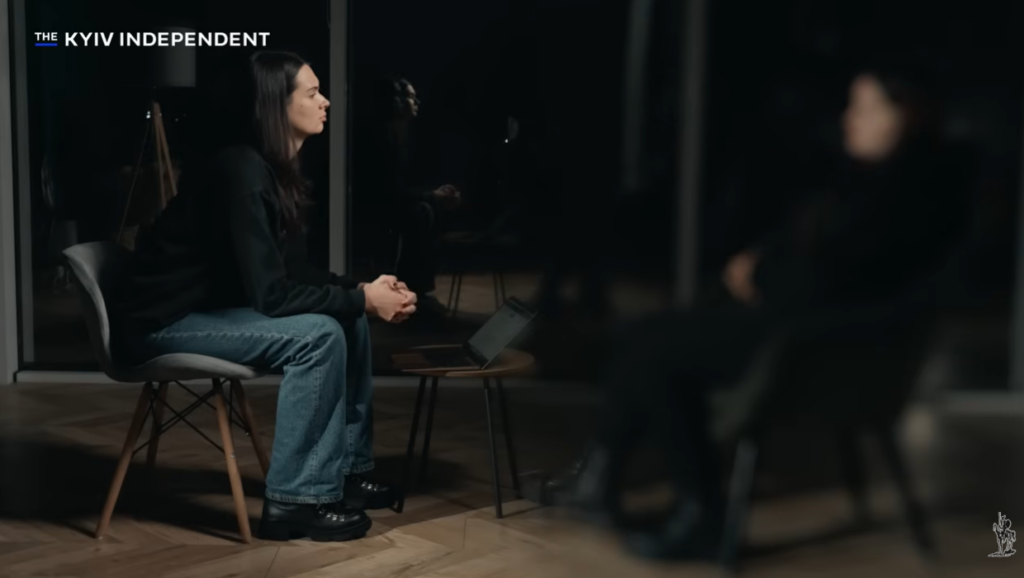
For me, this is the most important thing — leaving people with a choice. Because victims of war crimes were deprived of that choice for a certain period of time: they lived under occupation, they were held in captivity.
— Do you involve psychologists in your work? Do you have permanent psychologists you collaborate with? How does this work, especially when you speak with children?
— We always offer access to a psychologist. However, our sources usually already have their own specialists. Over the past three years, there has not been a single case where someone agreed to work with a psychologist we provided. So we always make that option available, but the decision is entirely up to the person.
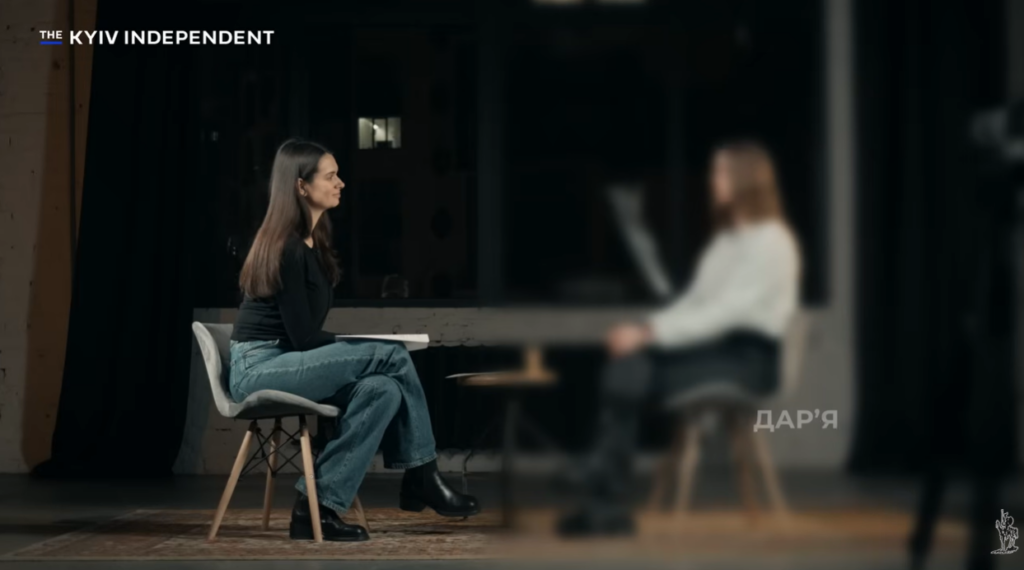
— How do you ask questions without causing further harm?
— I wouldn’t say there are any specific tricks. It’s a practice built over years — all the recommendations, training sessions, learning from colleagues, and exposure to similar work. For me, the most important thing is to remain human.
Of course, we come to people to ask for specific information, to have them talk about the worst moment of their lives.
But I cannot start a conversation by saying, “Tell me how you were raped.” I am interested in the person in a much broader sense: what their life was like before, what they were passionate about, how they are recovering now, and what gives them strength.
Yes, there was trauma in her life. But it is only one moment — it does not define her as a person. That is why I try to structure the conversation in a way that does not focus solely on that event, but instead builds a more comprehensive narrative. Sometimes it takes longer — not half an hour or forty minutes, but significantly more. But at least I can be confident that I did not leave the person in a vulnerable state, but helped bring them to a kind of “plateau.”
I always try to structure the conversation like a dramatic arc: first to ease into it, then to ask the most difficult question around the second third, and finally to gradually come out of it. I also always discuss in advance what we are going to talk about. I outline the topics and key points so that the person feels a sense of clarity and stability.
For example, with girls who have experienced sexual violence, we immediately agreed that I would not ask how exactly it happened. I am not interested in that. It is not the most important part of the story. And what value would that information have for me or for the audience? It would only cause additional trauma and humiliation.
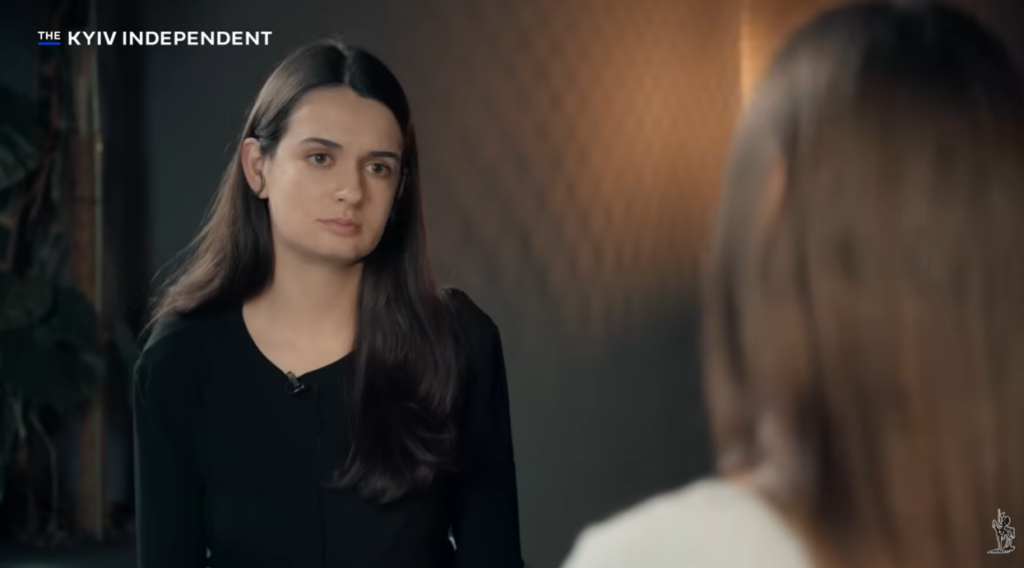
So the key thing is humanity and respect for the person you are speaking with — care for them. It is not a set of techniques, but an internal position that determines how I ask questions.
“I have never been at such a low psychological point”
— Which of your films was the most difficult to make?
— You’re probably expecting me to say it was the film about sexual violence…
— No, I don’t have any expectations. Maybe it’s not even a specific film, but certain episodes or moments. What has been the most difficult part of this work for you personally?
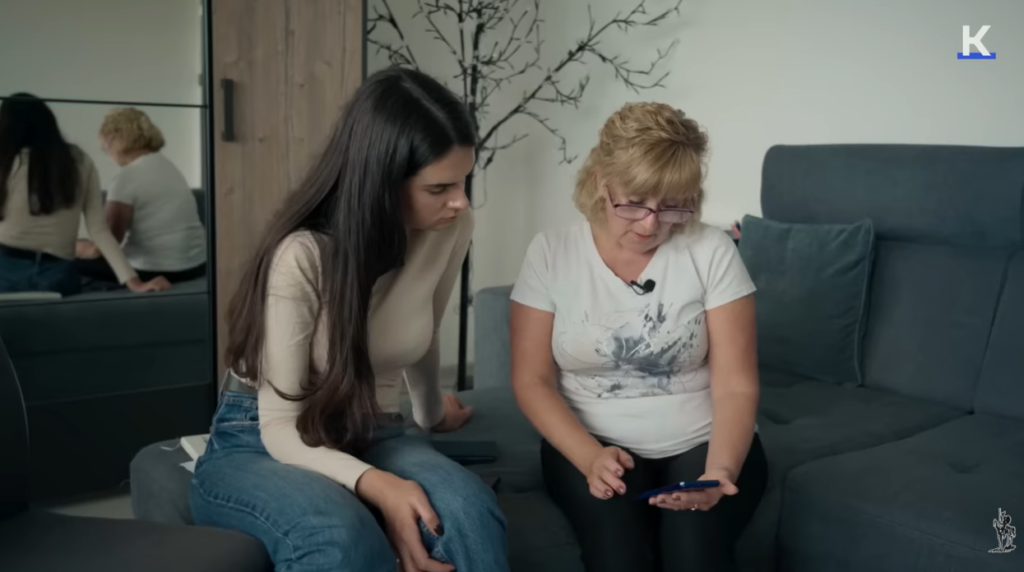
— The most difficult for me was working on the film about the destruction of the Kakhovka Dam. I have never been in such a low place psychologically. People had not yet processed their trauma — they kept talking and talking, and it was extremely hard to bear. To realize that your home has become a trap, that your loved ones are drowning, and that the occupying authorities are indifferent — it is a sense of total hopelessness.
This documentary film differed from others in that it did not lead to any “results” in the form of sanctions, indictments, or international attention. It was simply a statement of fact, and that made it even harder. In other cases, we could see the consequences: arrest warrants, responses from international organizations, and audience attention. Here, there was only pain and helplessness.
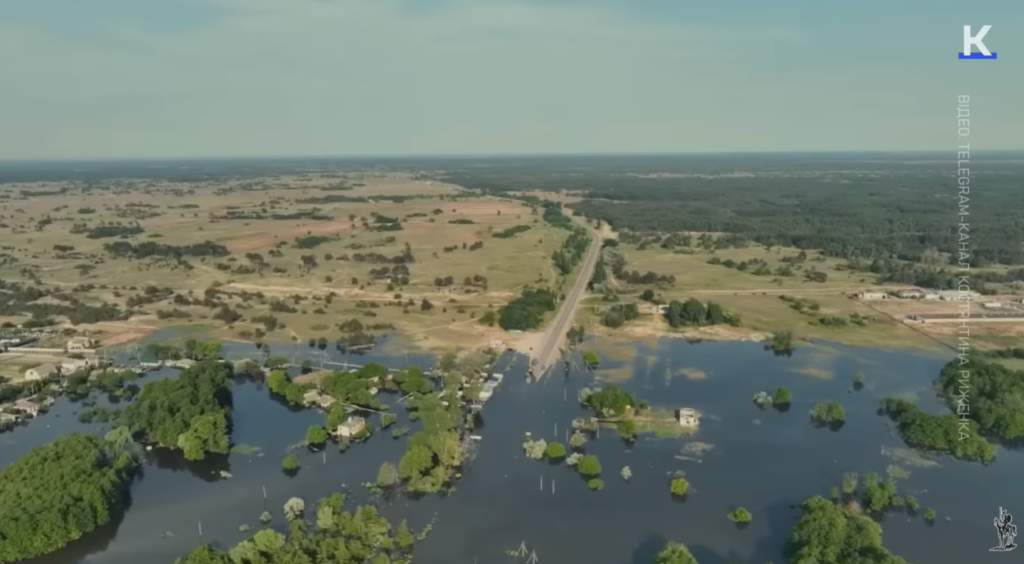
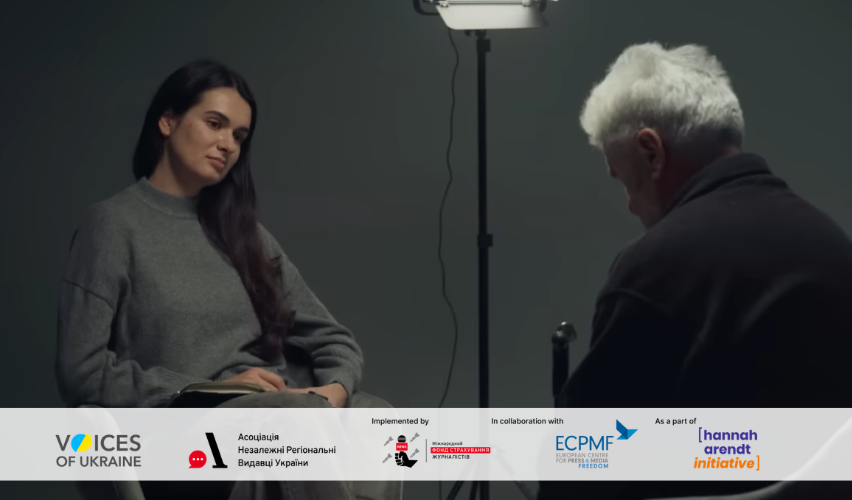
Still from the documentary When the Water Screams
I remember that after this film, I was more exhausted than ever before. It did not receive awards or significant public resonance, but it is very valuable to me personally. It was an experience that showed how deep trauma can be and how difficult it is to document it.
— How do you recover after working on such topics?
— Vacation, time with family, physical activity… Working with a psychologist helps me understand that I am quite resilient, that I have resources and skills I have built up over the years.
Years of experience make it possible to separate the personal from the professional. I already know that I can step out of an interview, put down the camera, and go for a walk to switch off. I can also talk to colleagues who understand me.
And also the sense that evil will be punished. That is very important to me. Because when you work with war crimes, you constantly see injustice. And if you don’t hold on to the idea that justice will eventually be restored, it becomes very easy to lose faith.
“These documentary films are important for both Ukrainians and the world”
— How do you balance the artistic and factual elements in your films?
— We use graphics — for example, in the style of children’s drawings. This always presents an ethical dilemma, because there is a risk that someone might see it as excessive aestheticization or even as diminishing the seriousness of the topic. But this effect helps convey the atmosphere and the emotion.
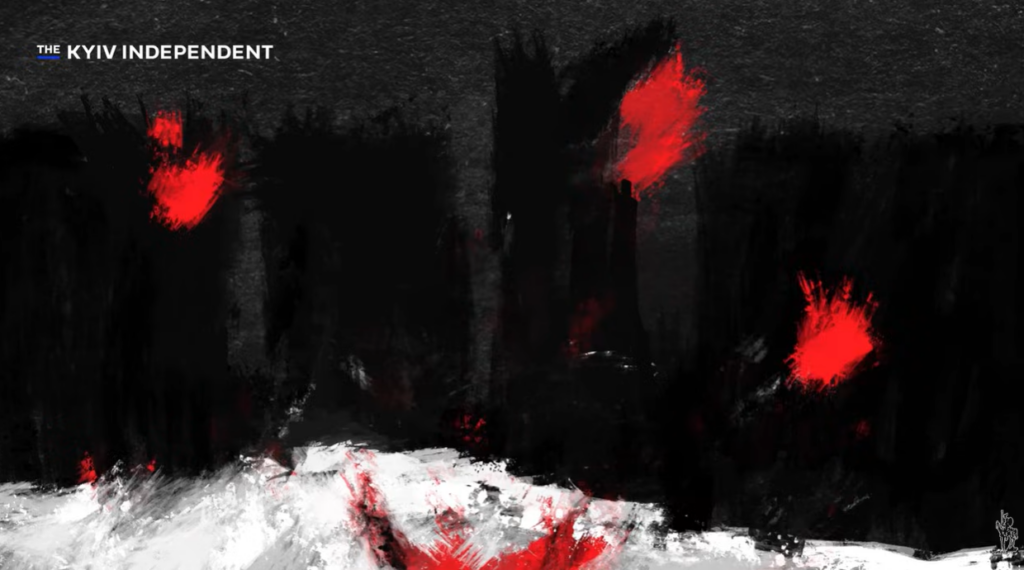
I always carefully control the style and colours to avoid crossing that fine line. We cannot afford to make anything “too beautiful” if it distracts from the substance. That is why every graphic element is checked: whether it is appropriate, whether it does not cause harm, and whether it does not distort the facts.
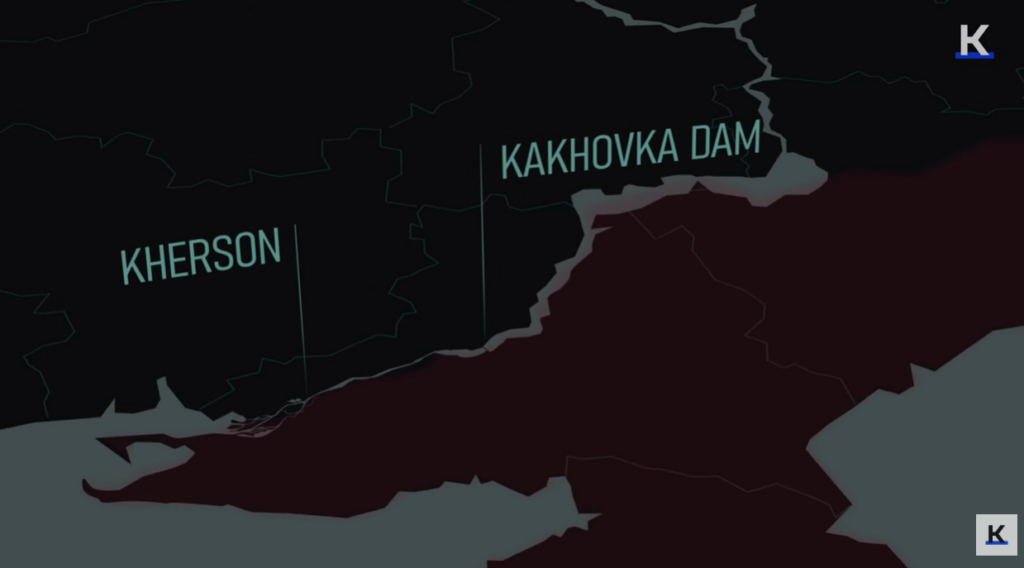
For me, it is important that artistic tools serve the factual content, not the other way around. They should help convey the truth, not obscure it. And that is where the balance lies: finding a form that strengthens the message without overshadowing it.
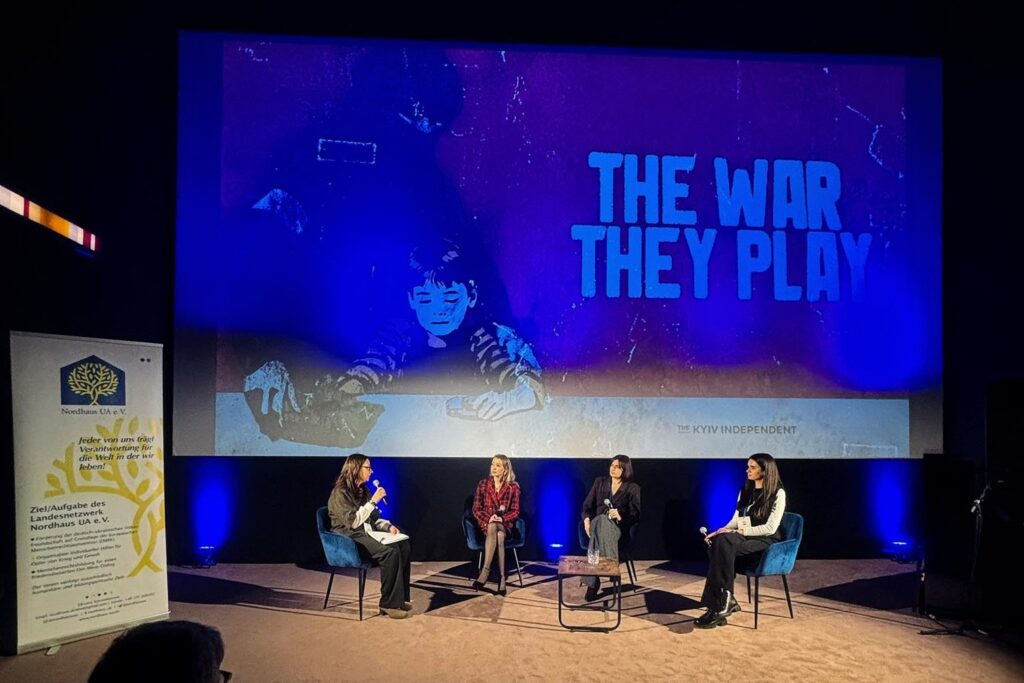
— How does the international audience respond?
— The level of understanding of the war varies from country to country. In some places, people are well familiar with the context and can engage with the stories without additional explanations, while in others you have to start almost from scratch and explain the basics.
— And the Ukrainian audience?
— We also produce films in Ukrainian. It is a costly and time-consuming production, so there are not many such pieces. It is important to find unique subjects and revelations so that the stories are interesting for Ukrainian viewers as well. The Ukrainian audience often expects new facts, evidence, and exposures, not only emotional storytelling. That is why we always think about how to combine documenting crimes with making it relevant for the domestic audience.
— Do you feel any competition with other newsrooms?
— Competition is a good thing — it pushes you to grow. We covered the topic of the deportation of children at the same time as Radio Liberty. It was even useful: we could see how colleagues were working with the material, and it motivated us to improve our own work.
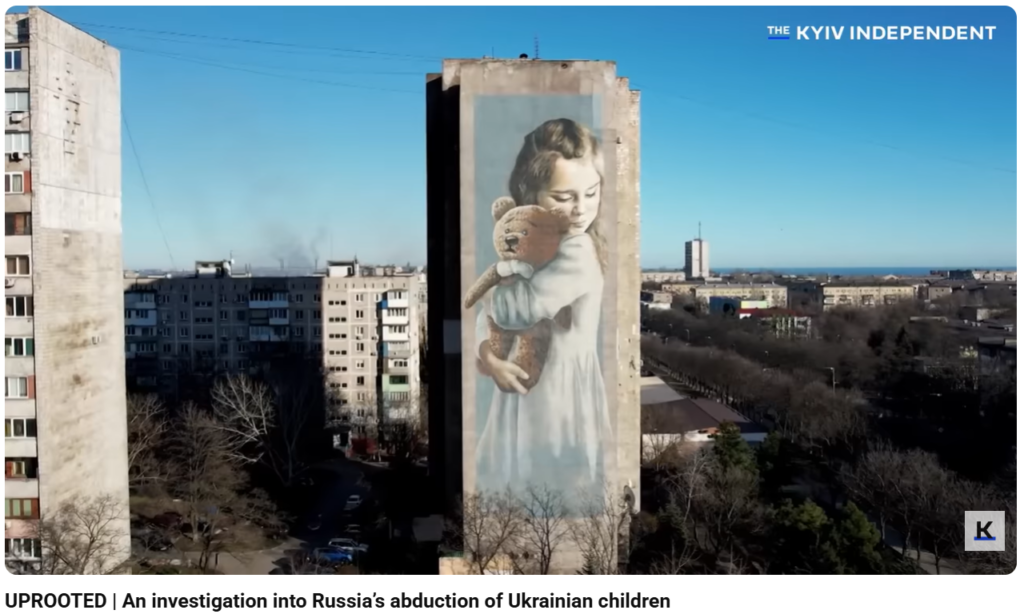
Sometimes we have chosen not to pursue a topic in order to avoid retraumatizing our sources: for example, if a colleague has already recorded an interview with someone who went through a painful experience. This is a matter of professional ethics.
I generally see competition in a positive light. It pushes you to move forward, to look for new approaches, new subjects, and new formats. Sometimes we coordinate with other newsrooms so as not to duplicate work and not to overburden people with unnecessary interviews.
— What are you working on now?
We are currently at a sensitive stage of an investigation, so I would prefer not to go into details. I will only say that it is a difficult and painful topic that requires particular caution and responsibility.
— What would you like to do after the war?
I am not sure I would have stayed in journalism if it were not for this subject and this format. I might have moved into human rights work. It is a natural continuation of what we are doing now: documenting crimes, giving a voice to survivors, and trying to convey the truth.
“Boundless respect for regional journalists”
— What advice would you give to regional journalists?
— I have boundless respect for regional journalists, especially those who have to work in frontline areas, endure constant attacks, and continue doing their job. Their main advantage is direct access to primary sources and the trust they receive from them. Regional journalists are always present; they are known personally, and people trust them. I believe that this — access to sources and audience trust — is essential. I hope this is what keeps them going, because it is very easy to give up and lose faith in what you are doing.
Whenever I work on any topic, I always turn to regional media and read materials recorded directly from people who witnessed or suffered from war crimes. These texts are extremely valuable. The most important thing is not to doubt their significance or the importance of your own work.
Make Sure You’re Insured
Colleagues, a reminder: journalists working in high-risk regions have the opportunity to obtain free life and health insurance. This is part of the International Insurance Fund for Journalists (IIFJ) initiative, implemented in partnership with Ukrainian and European organisations.
Media professionals working in Kherson, Zaporizhzhia, Sumy, Mykolaiv, Donetsk, Luhansk, Odesa, Kharkiv, and Dnipropetrovsk regions, as well as border areas of Kyiv and Chernihiv regions, can apply. More information about the terms of free insurance is available here.
***
This article is part of a series of publications on the work of regional media in wartime conditions, safety protocols, and the psychological resilience of journalists. We have already published interviews with Zarina Zabrisky (Parts One and Two), Oleksandr Kachura, Vladyslav Safronov, Natalia Bilokudria, Serhii Horbatenko, Yevhen Khrypun, Anna Kaliuzhna, Polina Kulish, Nadia Sukha, Nadiia Karpova, Oleksandr Solomko (Parts One and Two), Diana Butsko, Oleksii Pasiuha, Oleksandr Chubukin, Aliona Serhiienko, Olha and Serhii Sydorov, Yevheniia Hrytsyna, Nataliia Kryvoruchko, Inna Shvydka, Pavlo Kliuchnyk, Larysa Hnatchenko, Diana Deliurman, Viktoriia Hnatiuk, Mariia Shevchenko, Anna Matviienko, Nastya Stanko, Iryna Sytnik, and Svitlana Tomash.
As a reminder, the International Insurance Fund for Journalists, implemented by the Association of Independent Regional Press Publishers of Ukraine, is part of the Voices of Ukraine / SAFE support program, coordinated by the European Centre for Press and Media Freedom. Voices of Ukraine / SAFE is implemented within the Hannah Arendt Initiative and supported by the German Federal Foreign Office