


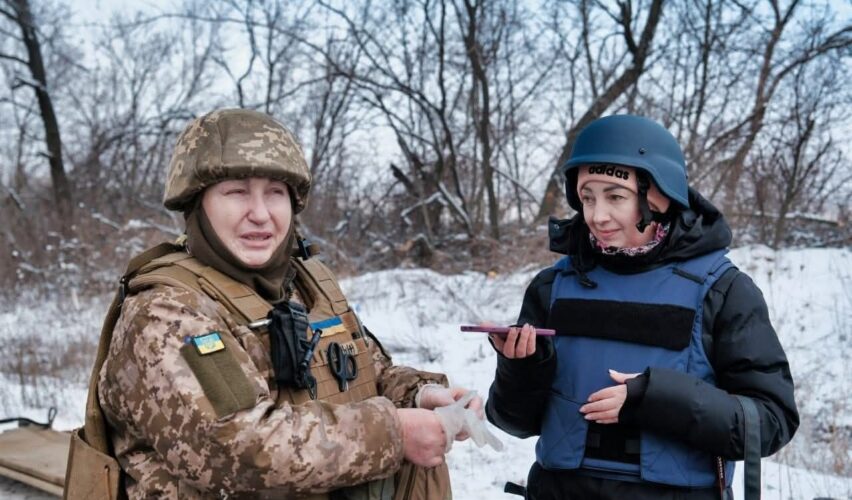
Editor-in-Chief of the Stepova Zorya newspaper and the Petropavlivka City media group, Iryna Sytnik, on the challenges of journalism during wartime.
We continue to share stories about the work of journalists in frontline and border regions. We have already published interviews with Zarina Zabrisky (Parts One and Two), Oleksandr Kachura, Vladyslav Safronov, Natalia Bilokudria, Serhii Horbatenko, Yevhen Khrypun, Anna Kaliuzhna, Polina Kulish, Nadia Sukha, Nadiia Karpova, Oleksandr Solomko (Parts One and Two), Diana Butsko, Oleksii Pasiuha, Oleksandr Chubukin, Aliona Serhiienko, Olha and Serhii Sydorov, Yevheniia Hrytsyna, Nataliia Kryvoruchko, Inna Shvydka, Pavlo Kliuchnyk, Larysa Hnatchenko, Diana Deliurman, Viktoriia Hnatiuk, Mariia Shevchenko, Anna Matviienko, and Nastya Stanko.
This time, we give the floor to Iryna Sytnik, Editor-in-Chief of the Stepova Zorya newspaper of the Petropavlivka City media group, which operates just 40 km from the front line.
“Strikes Hit Us Almost Every Day”
The media team in Petropavlivka continues to work from its own newsroom, despite the area having been designated a zone of potential hostilities. Over the five years of war, the situation has changed dramatically: the front line has moved closer, and mandatory evacuation has been announced for families with children in many villages.
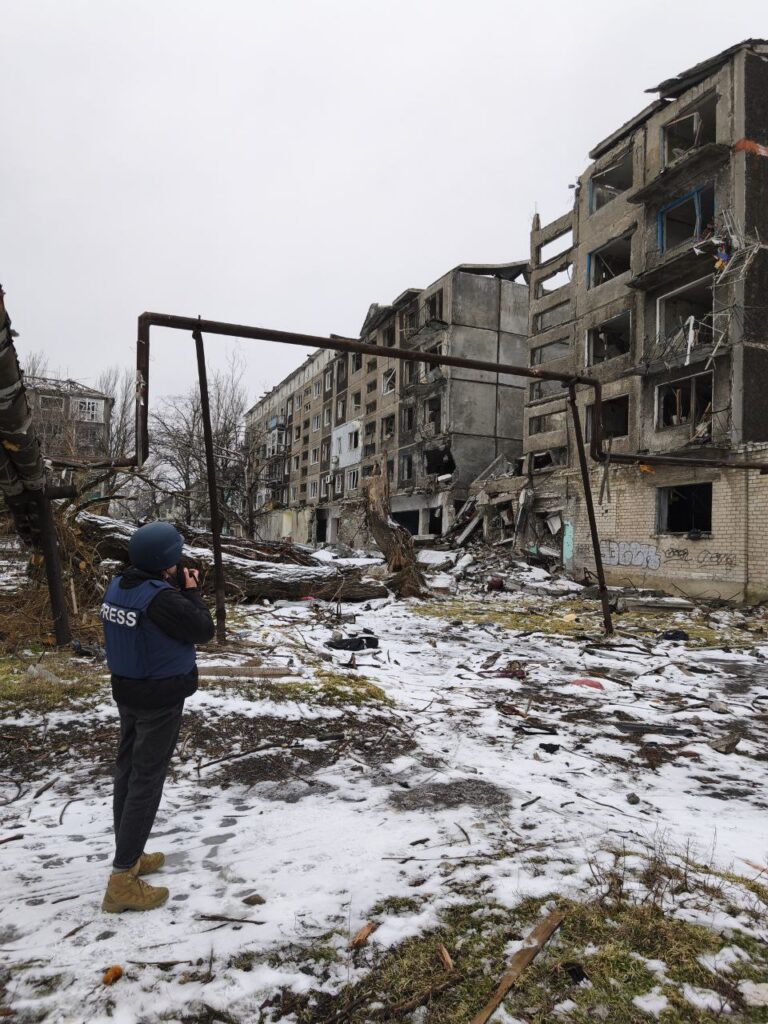
“These are mainly drones targeting cars as well as civilian homes.”
The work is further complicated by emergency power and internet outages, when even power banks and a small charging station are not enough. Journalists report from the sites of strikes while constantly watching the sky and monitoring air-raid alerts. Sometimes, follow-up attacks occur the very next day, when they are already heading out to cover the story.
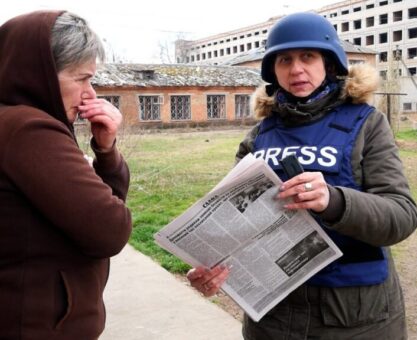
Speaking with people after tragedies is also difficult: some openly share their pain, while others shut themselves off. Still, the editorial team manages to find the right approach to document these events and give a voice to those affected.
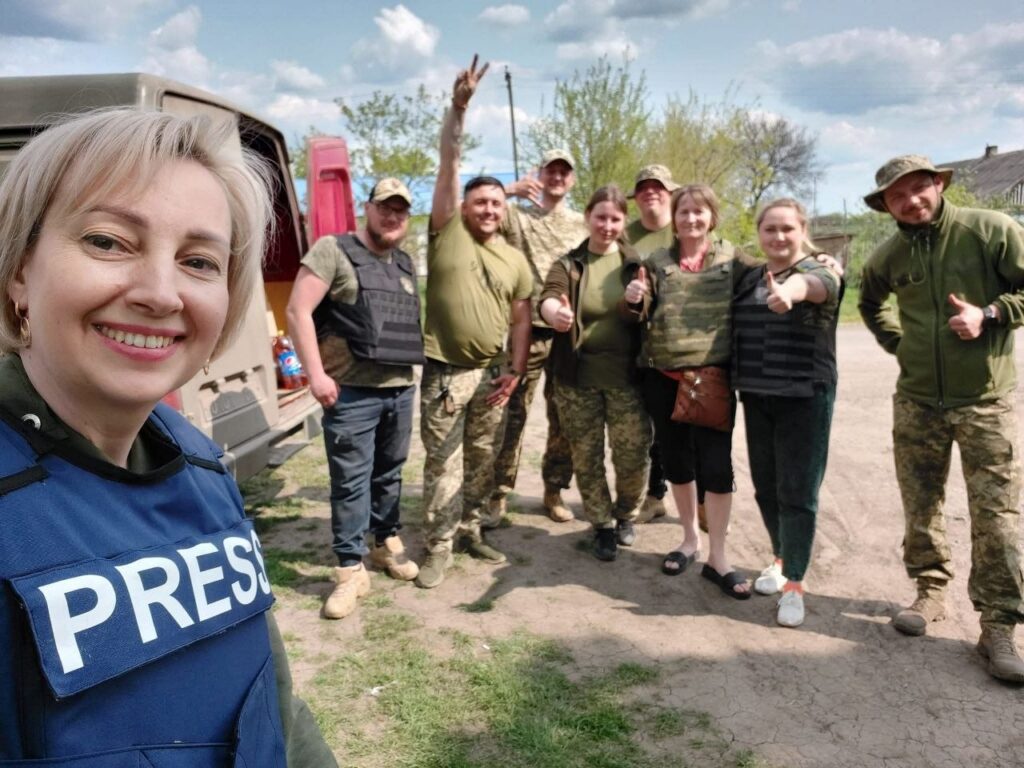
“People Like These Must Not Be Forgotten”
A separate area of work is covering the funerals of fallen soldiers from four communities. Journalists attend the burials, speak with families, take photographs, and prepare in-depth reports.
“We are making history, and it must be preserved on the pages of our newspaper so that our descendants will know their heroes.”
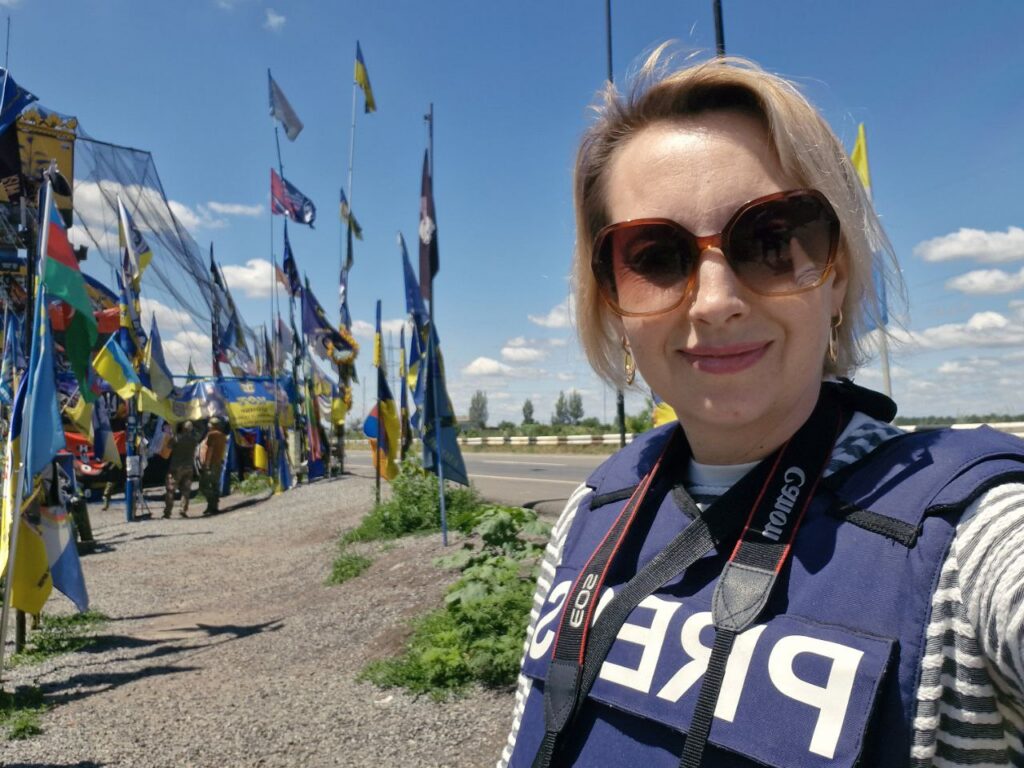
Over the years, safety practices have changed. Iryna is accredited by the Armed Forces of Ukraine and undergoes annual training in tactical medicine and works in combat zones. For field assignments, she carries a bulletproof vest, helmet, and a first-aid kit, uses equipment for monitoring the sky, and coordinates trips with the military. Journalists do not travel into dangerous areas alone.
“We do not go into dangerous areas or kill zones on our own—only with coordination and after taking all risks into account.”
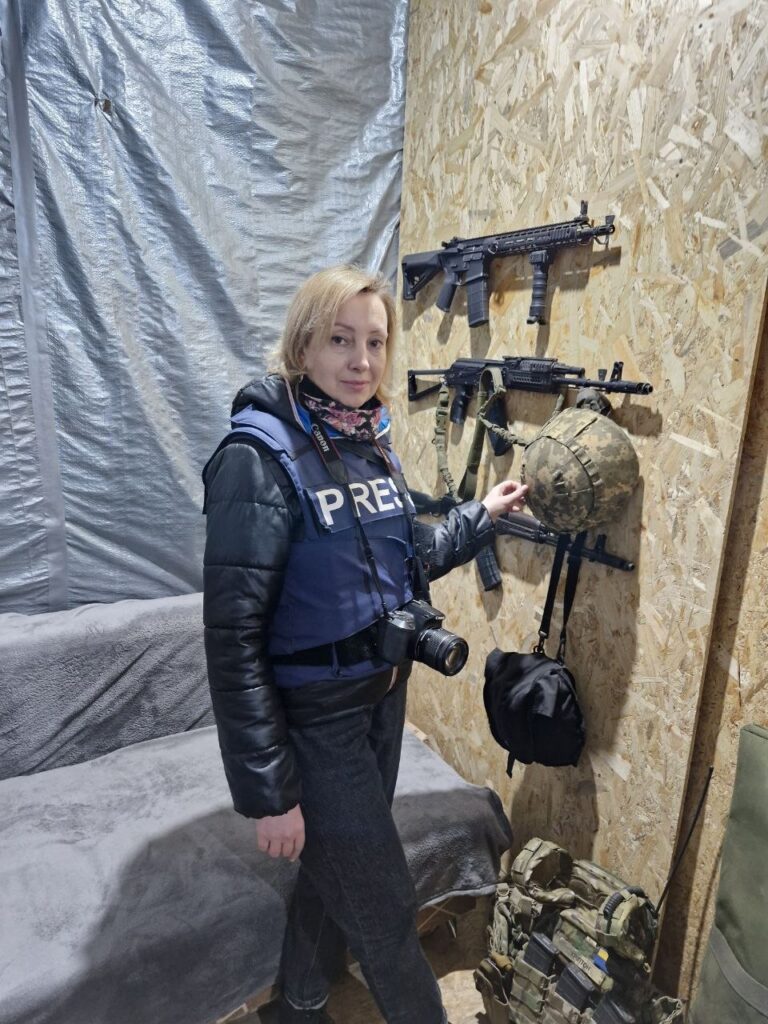
“The Work Itself Provides Resilience”
Despite constant encounters with death and tears, the work becomes a source of resilience. It helps prevent breaking down because journalists are always on the move, writing and filming. Retreats, changes of scenery, short trips, and rest by the river or at the cinema all help as well.
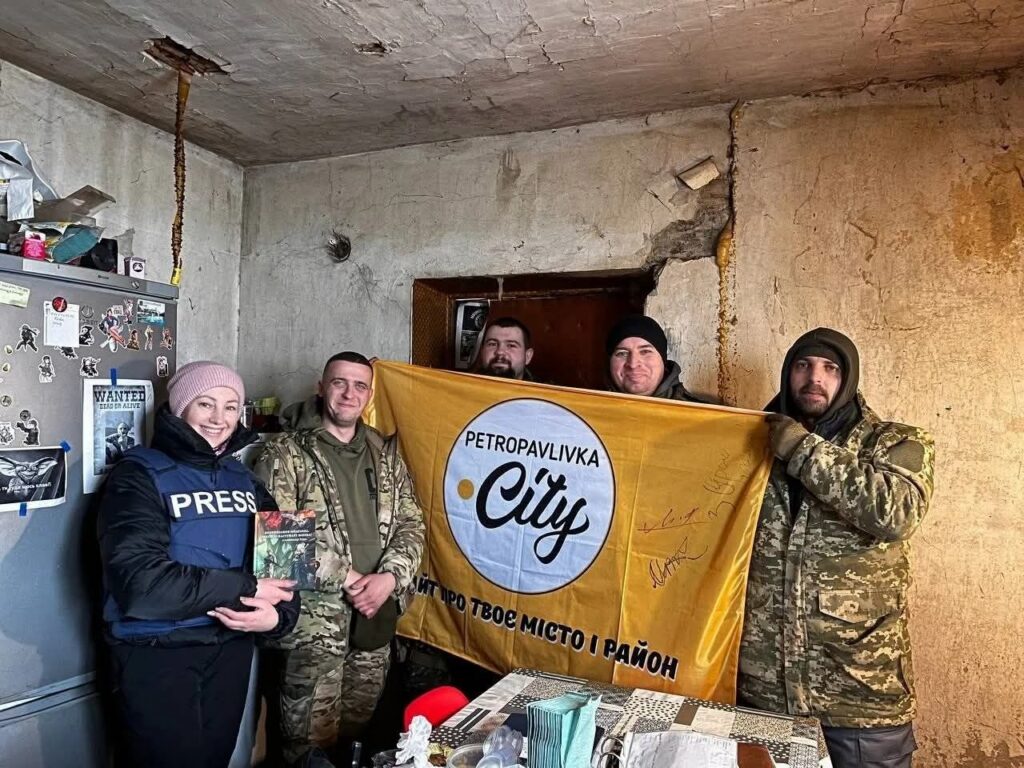
“Perhaps it is the work itself that gives this resilience and strength not to break down.”
In 2022, journalists were often prohibited from publishing photos, and every shot was criticized. Today, the newsroom follows timing rules—publishing no earlier than four hours after a strike. They often have to work through official information requests, as local authorities restrict access to information. At the same time, the team debunks false reports on social media and provides official data along with its own on-the-ground observations.
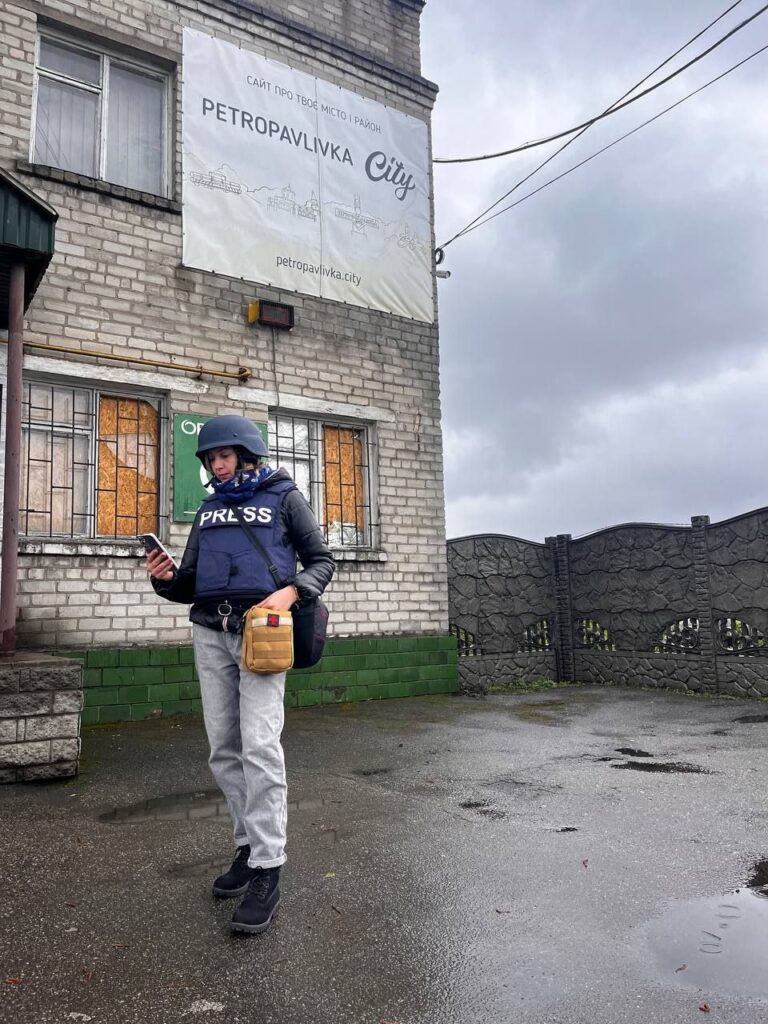
“People will still wait for the article to be published on our website. That is our strength and credibility.”
“We Work Without Holidays”
Only two people work in the newsroom. Every week, they publish an eight-page newspaper, update the website daily, and manage Instagram, Telegram, YouTube, and even TikTok.
“To stop would mean the newspaper wouldn’t come out and the website wouldn’t be updated, and we cannot allow that.”
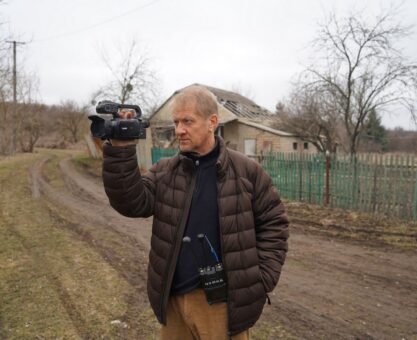
Equipment includes personal phones and cameras, several power banks, and spare microphones. Even in the case of technical failures, they try to use any available footage, adding captions or voice-over. Recovery after difficult shoots happens in the circle of family, on trips to places of personal strength, and in observing nature.
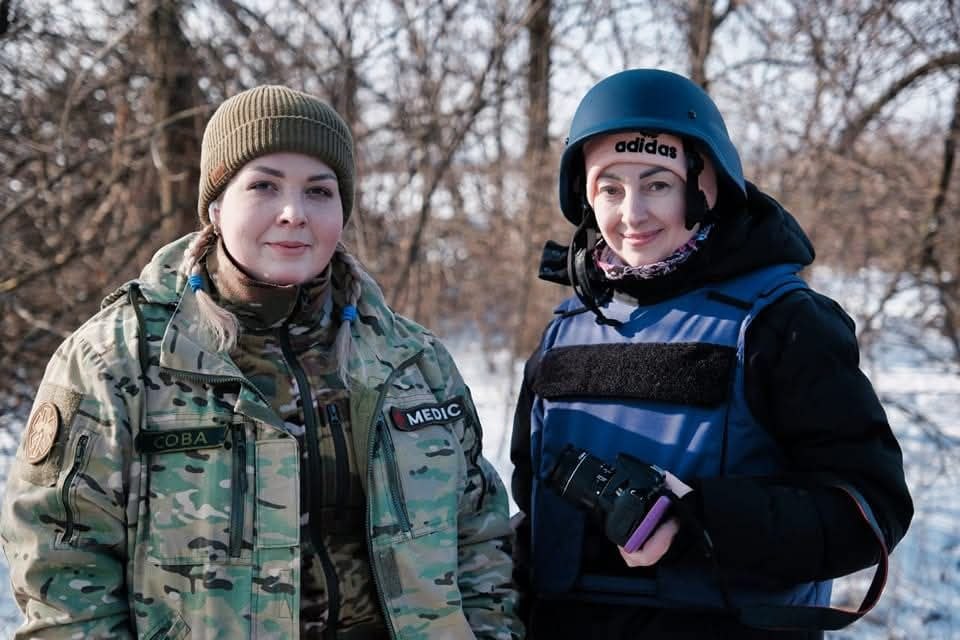
“I love going to our places of strength in Petropavlivka, to the river to film swans. For me, that is what helps me switch off.”
“Start With Insurance”
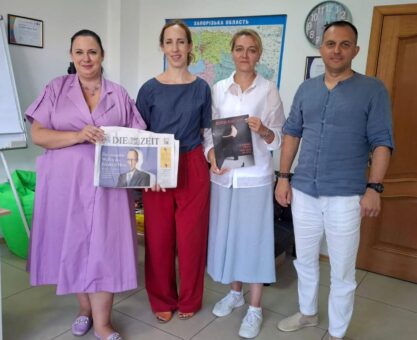
Colleagues, a reminder: journalists working in high-risk regions have the opportunity to obtain free life and health insurance. This is part of the International Insurance Fund for Journalists (IIFJ) initiative, implemented in partnership with Ukrainian and European organisations.
Media professionals working in Kherson, Zaporizhzhia, Sumy, Mykolaiv, Donetsk, Luhansk, Odesa, Kharkiv, and Dnipropetrovsk regions, as well as border areas of Kyiv and Chernihiv regions, can apply. More information about the terms of free insurance is available here.
The content was produced with the support of the International Insurance Fund for Journalists implemented by the Association of Independent Regional Press Publishers of Ukraine is part of the Voices of Ukraine / SAFE support program, coordinated by the European Centre for Press and Media Freedom. Voices of Ukraine / SAFE is implemented within the Hannah Arendt Initiative and supported by the German Federal Foreign Office