


How the Slidstvo.Info team works: new risks, psychological resilience, and the boundaries of ethics in the fifth year of the war.
We continue to share stories about the work of journalists in frontline and border regions. We have already published interviews with Zarina Zabrisky (Parts One and Two), Oleksandr Kachura, Vladyslav Safronov, Natalia Bilokudria, Serhii Horbatenko, Yevhen Khrypun, Anna Kaliuzhna, Polina Kulish, Nadia Sukha, Nadiia Karpova, Oleksandr Solomko (Parts One and Two), Diana Butsko, Oleksii Pasiuha, Oleksandr Chubukin, Aliona Serhiienko, Olha and Serhii Sydorov, Yevheniia Hrytsyna, Nataliia Kryvoruchko, Inna Shvydka, Pavlo Kliuchnyk, Larysa Hnatchenko, Diana Deliurman, Viktoriia Hnatiuk, Mariia Shevchenko, and Anna Matviienko.
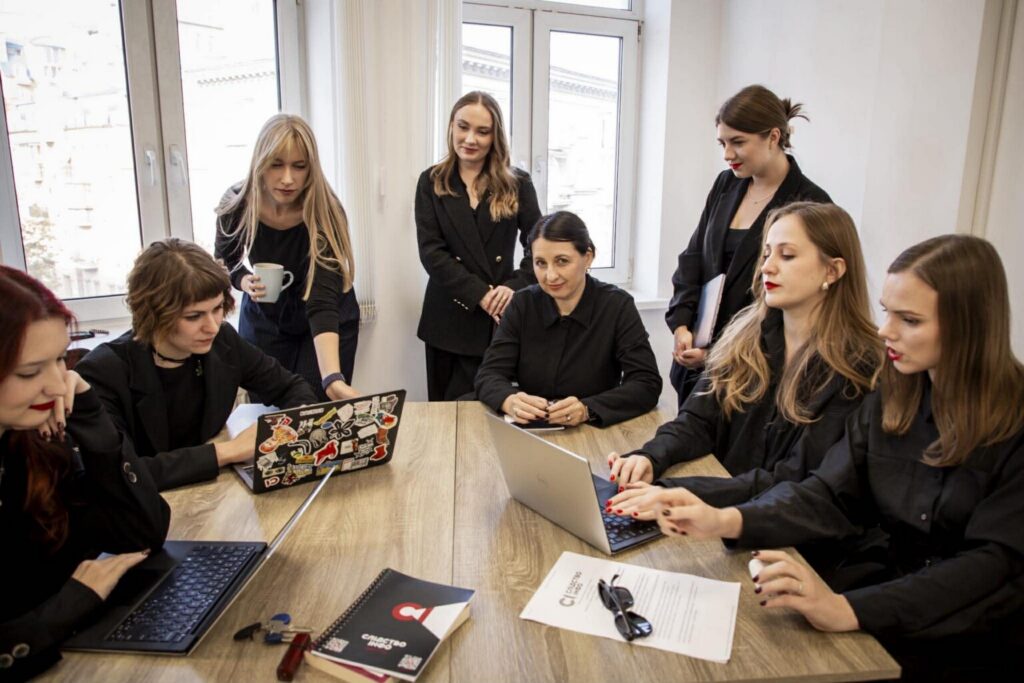
Now, Nastya Stanko, editor-in-chief of Slidstvo.Info, talks about how her team seeks a balance between the public’s right to know the truth and the need to protect the lives and resilience of those who bring that truth to light.
Since 2012, Slidstvo.Info has exposed corruption and abuses by Ukrainian officials, human rights violations, and international crimes. In 2018, the agency became the first in Ukraine to launch a regular series of investigative documentaries, each of which drew significant public attention and set a benchmark for other media outlets. During the full-scale war, the team has focused on investigating Russian war crimes and reporting from the front line.
“Routes change every day”
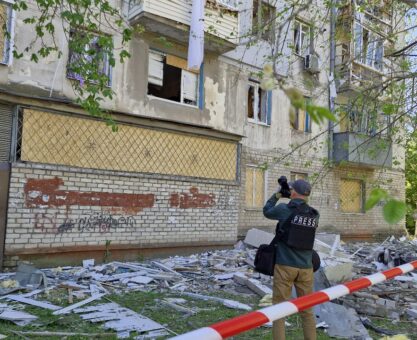
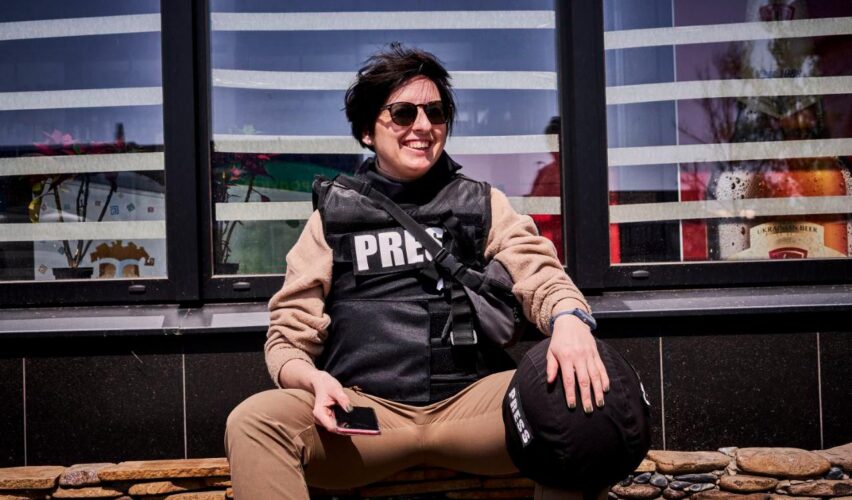
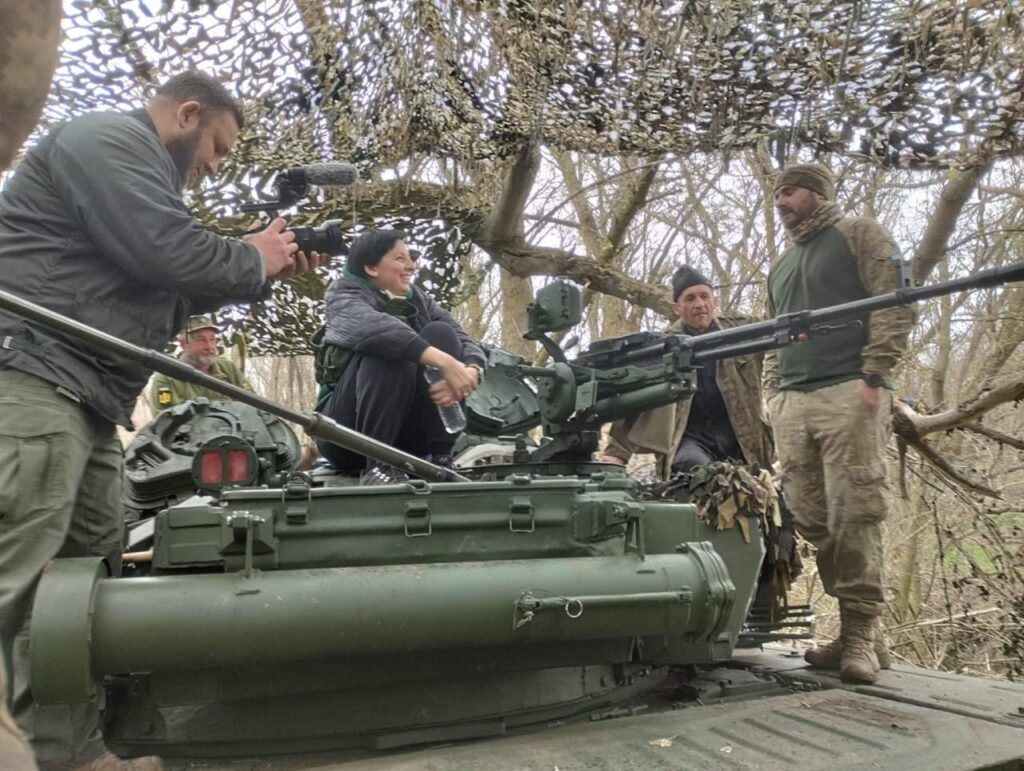
Many of our interviewees point out that drone activity has significantly affected journalists’ work in high-risk areas. The Slidstvo.Info team is no exception. Every trip to the front line already required careful planning, and now new challenges have been added as well.
Routes now have to be updated daily (whereas раньше they were changed once a week), especially in the Donetsk Oblast. The team assesses whether to travel independently or with the military. If they go with the military, they ask whether the unit has weapons capable of bringing down drones, such as a hunting shotgun, whether they have experience countering drones, and how to act if drones appear. They also check whether electronic warfare systems are operating, whether protective nets have been installed, and bring along a “Chuika” — a drone detection device.
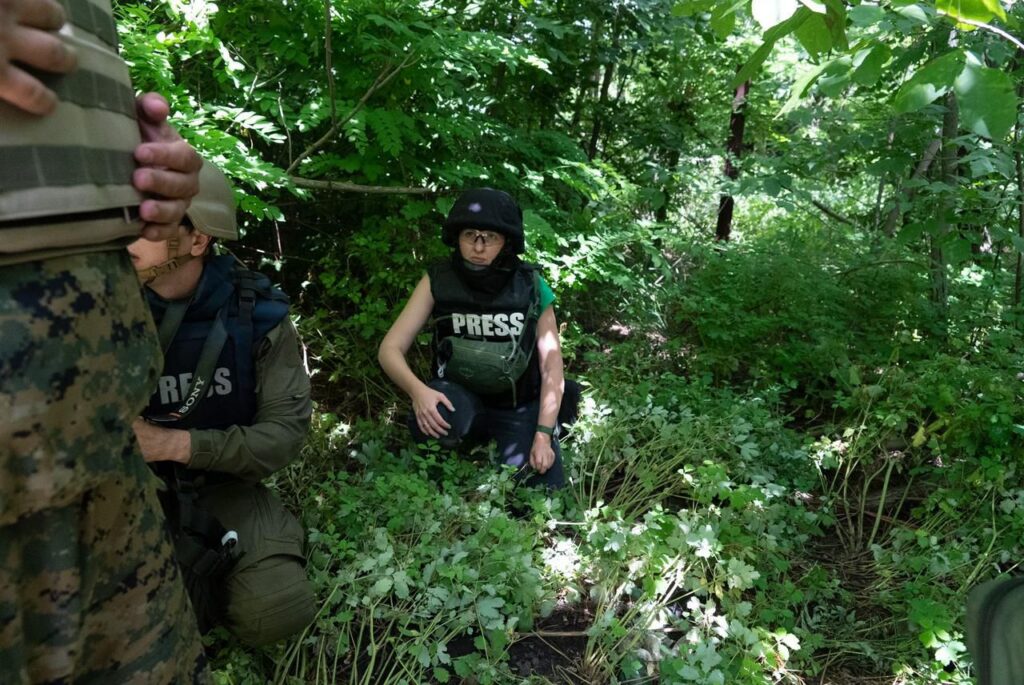
“We constantly practice how to get out of the car quickly if a drone appears,” says Nastya Stanko. Such protocols have become part of the team’s daily routine.
“We constantly practice how to get out of the car quickly if a drone appears.”
“A psychologist helps us process traumatic stories”
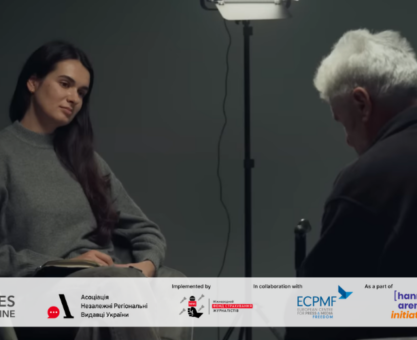
Working on war crimes, exhumations, and stories of torture and rape requires special support. The team has a psychologist who helps journalists process traumatic experiences. This has been made possible thanks to donor support.
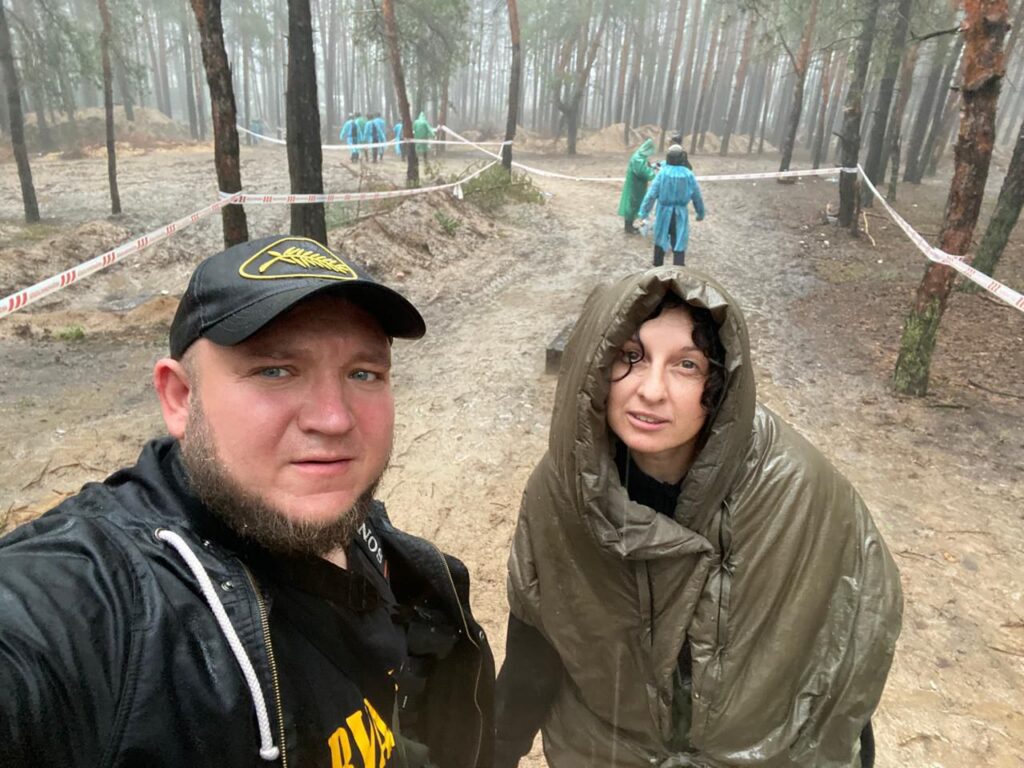
An important coping resource is sport: many people engage in physical activity to relieve stress. For Nastia, the main source of resilience is her family: “My children really help me a lot to defocus and relax.” Responsibility for her children forces her to remain grounded and engaged as a mother, even when her work is traumatic.
Sometimes colleagues become so exhausted that they start perceiving situations in a distorted way and drawing incorrect conclusions. In such cases, Nastia Stanko, as an editor, sends them on mandatory leave to prevent dangerous burnout. For herself, she finds recovery in simple things — a warm bath, playing with her children, conversations, and hugs with her husband.
Facts, atmosphere, witnessing
Stories are constructed in a way that combines facts, atmosphere, and human witness accounts. The camera remains on even during drone attacks — it is important to preserve the sense of the moment and convey it to the audience.
But sometimes a story is interrupted by the human factor. It happens that interlocutors categorically refuse to engage in dialogue. This was the case with women sentenced to life imprisonment for collaborating with Russia, who did not want to speak in any format. Such refusals block investigations: without testimonies and evidence, a complete picture cannot be formed, and the story falls apart.
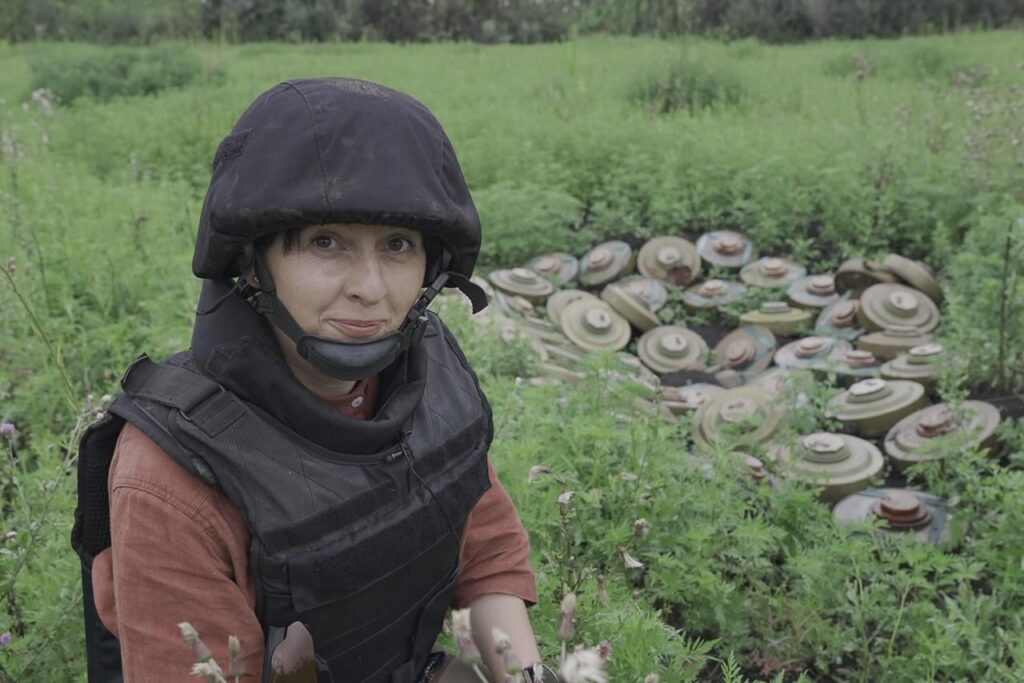
Information challenges have also become an integral part of the work. People who are initially willing to speak about problems in the military often refuse later due to fears for their own safety. This forces journalists to look for alternative approaches: to fight for access to military personnel and government representatives, to engage the community, and to show that the issue concerns not just one media outlet. Sometimes this brings results, sometimes it does not.
“We fight disinformation with facts.”
In the fight against disinformation, the team remains faithful to its methodology: “We fight disinformation with facts.” They track who is launching a campaign and for what purpose, and they identify and show the original source. This is how a story is built — through facts, atmosphere, and human witness accounts, which together create a coherent and credible picture.
“We are simply witnesses to extraordinary things”
Of course, there are cases when materials are deliberately not published. This applies to information that could put at risk the lives of soldiers who shared it. For Nastia, particularly difficult topics remain internal issues within the military — violence and violations of rights.
Despite everything, the main task remains to convey reality. Nastia emphasizes: “For me, the main thing is to be a witness who can convey the heroic things that Ukrainians are still doing. I perceive our role without any superheroism: we are simply witnesses, witnesses to often heroic, extraordinary things. And the fact that we can see this with our own eyes and pass it on to the audience is already a lot.”
Colleagues: Take Care of Yourselves
Colleagues, a reminder: journalists working in high-risk regions have the opportunity to obtain free life and health insurance. This is part of the International Insurance Fund for Journalists (IIFJ) initiative, implemented in partnership with Ukrainian and European organisations.
Media professionals working in Kherson, Zaporizhzhia, Sumy, Mykolaiv, Donetsk, Luhansk, Odesa, Kharkiv, and Dnipropetrovsk regions, as well as border areas of Kyiv and Chernihiv regions, can apply. More information about the terms of free insurance is available here.
The content was produced with the support of the International Insurance Fund for Journalists implemented by the Association of Independent Regional Press Publishers of Ukraine is part of the Voices of Ukraine / SAFE support program, coordinated by the European Centre for Press and Media Freedom. Voices of Ukraine / SAFE is implemented within the Hannah Arendt Initiative and supported by the German Federal Foreign Office