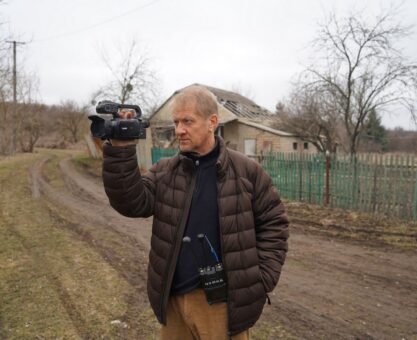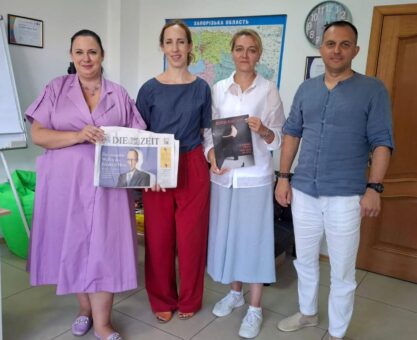




The AIRPPU team continues introducing you to high-quality independent regional media outlets in Ukraine as part of the International Insurance Fund for Journalists. We highlight newsrooms working close to the frontline, operating under difficult security conditions, yet continuing to produce strong, high-quality, and socially important journalism. This time, we turn the spotlight on the young team at Dnipro.media, which entered the market only recently but has already made a name for itself, developed a distinct style, and clearly defined its ambitions.
As co-founder Anna Matviienko explains, Dnipro.media was officially established in October 2024, with the website launching in February 2025. By market standards, it is still a very young newsroom, yet the team has already built its own identity, attracted an audience, and become one of the region’s most visible media outlets, establishing collaborations with leading national media organizations.
This year, the newsroom also joined the Stronger Together: Transparency and Anti-Corruption project, implemented by Association Independent Regional Publishers of Ukraine together with partners. Within the framework of this program, the team is further developing its investigative journalism capacity.
A Clear Mission and Goals
Interestingly, the idea of launching a media outlet in Dnipro did not emerge from a traditional newsroom or a classic journalistic environment. Instead, it grew out of personal circumstances and a desire to help drive change in the city, Anna shares.
“We have the second-largest city budget after Kyiv. I became increasingly interested in how the city’s funds were being allocated. That led me to become more active in the civic sector. When my friends and I realized that, as activists, we could not institutionally influence budget distribution, I wanted to do something bigger — perhaps create a civic organization. Later, I met my co-founder and editor, Nika Yehorova, whose brother serves in the Armed Forces. We combined our competencies: I have a strong background in IT and marketing, while my co-founder has eight years of experience in PR. That is how we created a young, stylish media outlet that is rapidly growing its traffic. The website is not even a year old yet, and we already have more than 40,000 unique readers,”says Anna Matviienko.
The newsroom quickly defined its mission from the very beginning.
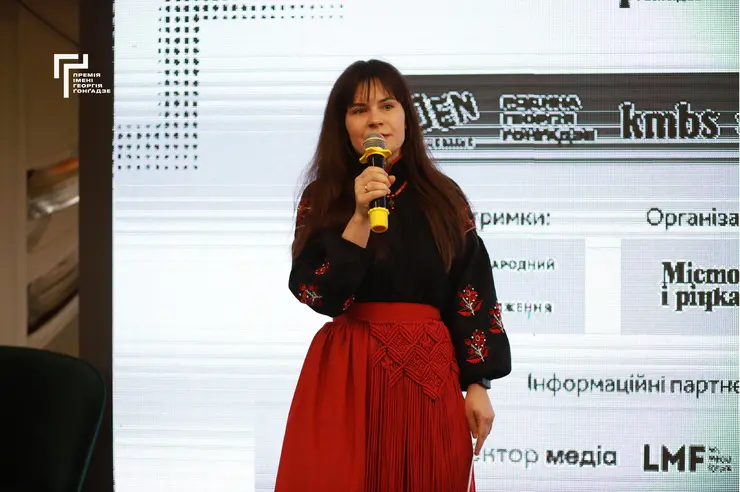
“Our main goal is the gentle awakening of civic awareness in Dnipro,” says the director. “We do not want to be just a news website or purely an investigative outlet. Our idea is to gradually engage residents in important issues through love for the city, modern content, and convenient formats. I want younger audiences to come through nostalgic content, content that celebrates Dnipro, stylish storytelling, and short videos — and then gradually move toward more serious topics. The user journey looks like this: a person comes for memes or light city-related content, stays longer, becomes more interested in local life, and eventually reads about the budget, government decisions, or watches city council sessions”.
Government Oversight and Investigations
One of Dnipro.media’s key priorities today is monitoring local authorities and explaining decisions that directly affect the city.
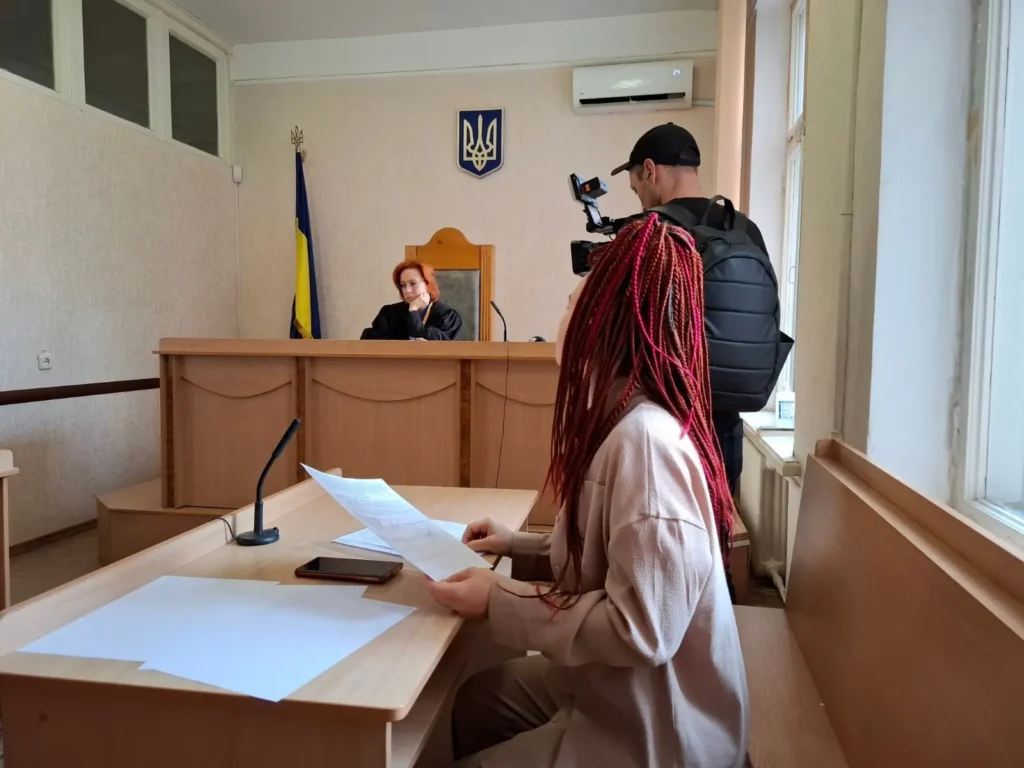
“We are the only media outlet that regularly attends Dnipro City Council sessions and analyzes its work,” Anna continues. “The newsroom reviews draft decisions, follows budget processes, and works with official documents. We also plan to strengthen our monitoring of the regional council. That is why developing investigations is so important for our team”.
This year, the newsroom joined the Stronger Together: Transparency and Anti-Corruption program, where it is developing its investigative journalism capacity and strengthening internal expertise. “We are very grateful to the Association and its partners for this opportunity. Yes, we still lack experience and some competencies, but we are determined to move forward in the field of investigations,” says Anna Matviienko.
At present, three people in the newsroom, including Anna, are working on this direction. Yet despite being only at the beginning of the journey, Dnipro.media already has notable achievements. The outlet has joined the OCCRP network and has also collaborated with Slidstvo.Info.
“We are proud to be part of the OCCRP network — one of the few Ukrainian media outlets included there,” says Anna Matviienko. “Among our joint stories was an investigation into the assets of the family of Timur Mindich in Dnipro”.
She is convinced that this is only the beginning.
Audience and Pressure on Media
The core age group of the audience, Anna notes, may come as a surprise: 18 to 28 years old. That is why the team focuses on modern content packaging — infographics, short-form video, and adapting stories for social media platforms.
“We repackage all of our content and see that it performs well,” Matviienko adds. “The strongest channel remains our website, followed by Instagram. TikTok is gradually growing, and we also want to strengthen our presence on Facebook”.

Working as an independent media outlet in a frontline region comes with its own risks. For security reasons, some team members remain in the city, some are abroad, and others work as freelancers. Four people work full-time, while others support the newsroom in various formats.
“We currently have only four people working here on a permanent basis,” says Anna Matviienko. “And it is not easy to find strong journalists in the region. Unfortunately, Dnipro has very little media culture”.
Security concerns are also complex. And these risks are not limited to the external aggressor — there are internal challenges connected to the work as well.
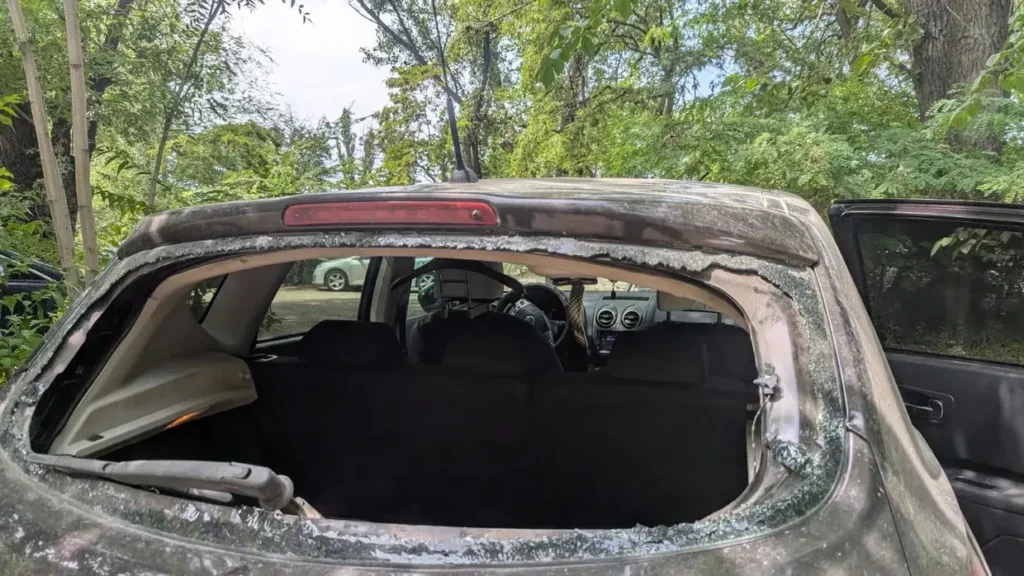
“Personally, I worry more about personal safety — my own and that of my colleagues,” Anna explains. “The newsroom has already received threats, suspicious packages, and faced pressure”.
The team is also affected by the broader consequences of war: shelling, staff relocation, and power outages. At present, around 93% of the newsroom’s budget comes from grants. At the same time, the team is gradually increasing its own revenue through advertising and reader support.
“We started from zero and have already reached 6% of our income from advertising,” the director says. “The newsroom also has around 50 paid subscribers and is searching for new monetization models. Our main goal in the near future is to grow recognition. By the end of the year, when people are asked what media outlets exist here, I want us to be at least fifth in terms of name recognition in the region. I want officials and people who should be accountable to worry that Dnipro.media may write about them”.
Resilience and Moving Forward
In Anna’s view, the newsroom’s resilience is built first and foremost on journalists who are not afraid to ask uncomfortable questions and who know that the newsroom will stand behind them.
“When the truth is on your side, when you understand that this is socially important information — it may sound lofty to say service to the community, but to some extent it is true. Financially, resilience means diversifying revenue streams. It is a challenge, but we will look for businesses that share our values and are ready to support media without influencing editorial processes,” she adds.
Like many other newsrooms, the team also experiences moments of fatigue and exhaustion. But it is always important to remember that this work matters, the heroine of this story emphasizes.
“Even when it feels like we are changing nothing, we never know what may become that butterfly effect leading to larger change. I would encourage colleagues in other regions to unite. There is strength in that,” she concludes.
***
Colleagues, a reminder: journalists working in high-risk regions have the opportunity to obtain free life and health insurance. This is part of the International Insurance Fund for Journalists (IIFJ) initiative, implemented in partnership with Ukrainian and European organisations.
Media professionals working in Kherson, Zaporizhzhia, Sumy, Mykolaiv, Donetsk, Luhansk, Odesa, Kharkiv, and Dnipropetrovsk regions, as well as border areas of Kyiv and Chernihiv regions, can apply. More information about the terms of free insurance is available here.
The content was produced with the support of the International Insurance Fund for Journalists implemented by the Association of Independent Regional Press Publishers of Ukraine is part of the Voices of Ukraine / SAFE support program, coordinated by the European Centre for Press and Media Freedom. Voices of Ukraine / SAFE is implemented within the Hannah Arendt Initiative and supported by the German Federal Foreign Office