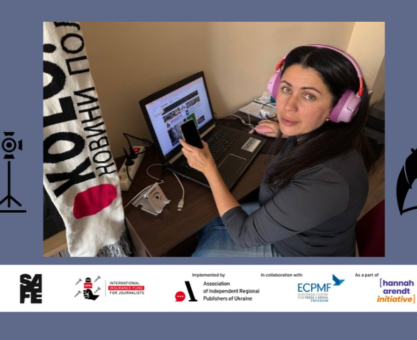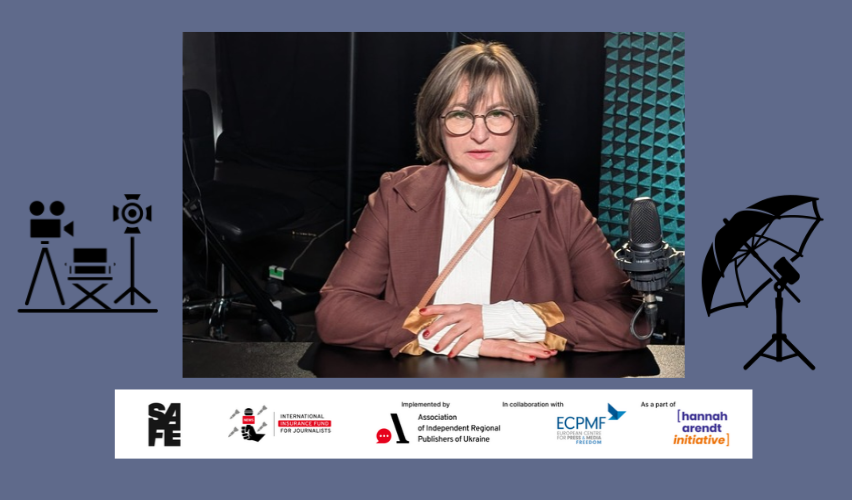
Viktoria Annopolska, CEO of the Kharkiv-based media group Objektiv, on flexible safety protocols in the grey zone, decisions about letting staff go, warning signs of exhaustion, and the mission of a media organisation working near the front line.
Working for a regional media organisation close to the front line is a daily test of sound judgement. Peacetime rules no longer apply: the risk of shelling means formats have to be adapted on the fly, while the constant pressure requires a manager to be not a controller but a source of support for the team. The experience of Viktoria Annopolska, CEO of the media group Objektiv, shows how a media organisation operating near the front line manages to protect its people, recognise its own warning signs of distress, and stitch together a community that has become scattered.
Safety in the Grey Zone and Maintaining Inner Resilience
For a media organisation working close to an active combat zone, safety protocols are a flexible tool for assessing the situation. When travelling to a location becomes a threat to life, the only right decision is to change the format rather than chase an exclusive story.
— While preparing a story about the Kozacholopanskyi Starosta District and the evacuation of residents, we found that the area had been under heavy shelling for quite some time and had effectively become a grey zone, — says Viktoria Annopolska. — We postponed the trip twice, but the security situation did not improve. So I decided to change the format. We didn’t abandon the story altogether, because the voices of people living in frontline areas are critically important. Instead, we conducted interviews online using safer communication channels. Our policy is based on one principle: “No story is worth a journalist’s life or health.”
The newsroom takes the safety of interviewees just as seriously. If someone is living under occupation or shelling, the team uses pseudonyms, avoids publishing sensitive photographs, and conceals identifying details, while openly explaining to readers why confidentiality is necessary.
We would also like to remind our colleagues that free life and health insurance is available through the International Insurance Fund for Journalists. This is an important protection measure you can take advantage of by applying now.
Once the immediate physical danger has passed, psychological well-being becomes the priority. The newsroom has clear support measures in place — from sessions with psychologists and regular days off to a commitment never to leave anyone alone with a difficult experience.
— After difficult and traumatic events (and these don’t necessarily have to involve a work assignment), the most important thing is not to pretend that nothing has happened. We sit down and talk — not just about work, but about how we feel, too. We talk things through. If someone needs peace and time to recover, they can take time off straight away, and the rest of the team will step in to keep things running.
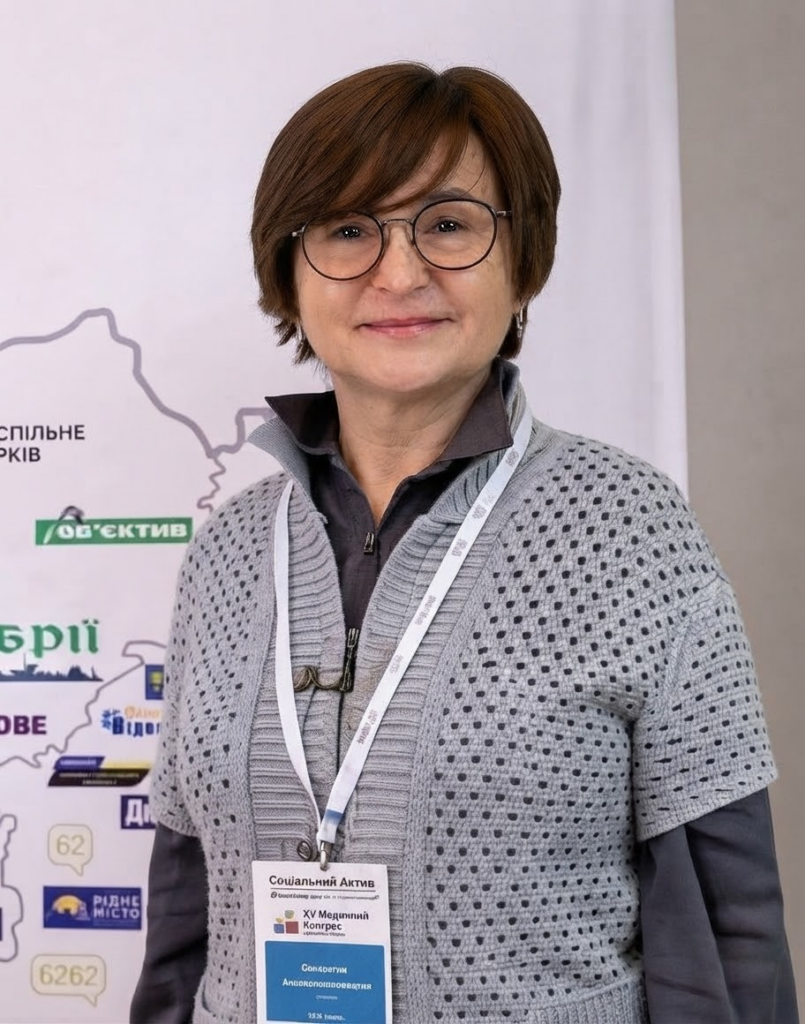
At the same time, working under prolonged stress requires a manager to recognise her own warning signs of overload. For Viktoria, the main indicators are growing self-doubt about her decisions and a feeling of losing control.
— As soon as I notice these signs, I consciously switch off from the constant flow of information. Physical activities that help me shift focus work best — tending to plants or making something beautiful and decorative for the home. They give me a clear cycle: action followed by a visible result — something often missing from long-term media work during wartime.
Read also: Emergency Support Program for Regional Media
Frontline Management: Tough Decisions, a Sustainable Pace and Letting Go of the Rush
Making the decision to part ways with employees during wartime is one of the hardest tests for a media manager, because every team member can seem indispensable. Yet trying to be “accommodating to everyone” only undermines the organisation. The ability to say a firm “no” helps protect the stability of the entire team.
— The hardest thing is deciding to part ways with people during a crisis, when it feels as though every employee is worth their weight in gold. I’ve had to say a firm “no” and bring certain processes to a halt. The consequences were emotionally difficult, but in the end, the team became stronger.
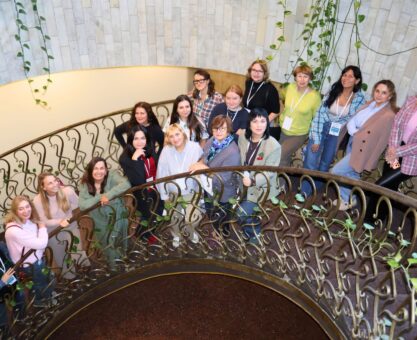
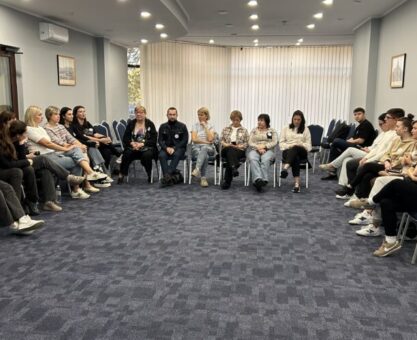
Viktoria’s management style also evolved through her participation in the WIN Leadership Accelerator. The key lesson was to move away from chaotic haste and towards a more systematic approach and a clear structure.
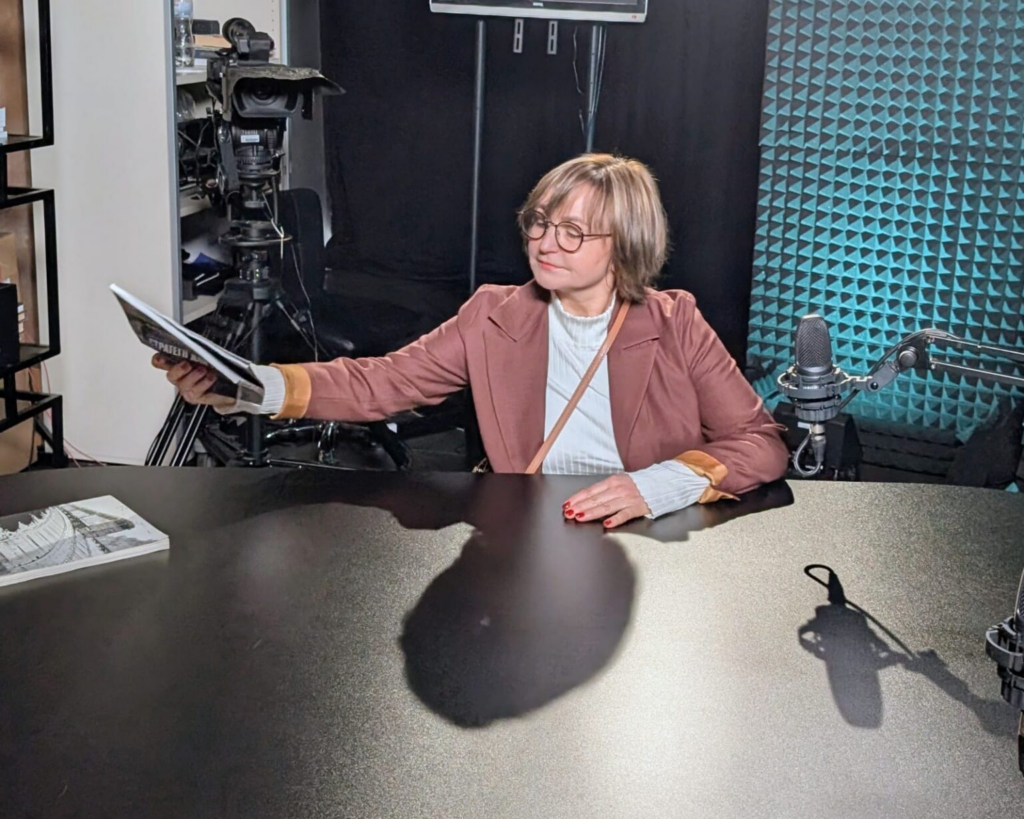
— I’ve slowed down. I give the team more time to absorb and reflect on my decisions, adapt to changes in work processes and learn new tools. This has improved the quality of implementation. The processes themselves have also become much more structured: we define areas of responsibility more clearly, which helps reduce anxiety within the team.
Experience has taught the media leader to value her own capacity and avoid wasting energy on futile explanations to people who are not committed to working together.
— At first, you feel you have to spend your energy explaining things to everyone. Over time, you realise it’s better to pay close attention to people — not to expect the impossible from those who are exhausted or not committed to the process, and, above all, not to waste precious time and energy on those who have no interest in achieving a shared result.
Content That Gives People a Sense of Control, and Media as the “Stitch” Holding a Community Together
In shaping its editorial agenda, the media group avoids the language of panic. Rather than frightening readers, it offers expert analysis and in-depth coverage of issues that directly affect life in the region. Environmental issues and reports on critical infrastructure have proved particularly popular.
— One of the strongest responses came from an environmental story about the Pechenihy Reservoir and the real risks of the dam being destroyed, as well as an analysis of the situation with forests covered in fibre-optic cables. People respond to issues that directly affect their safety and the environment they live in. It worked because we didn’t simply scare people; we provided expert explanations of what to expect and how to act, giving them a sense of control through information.
When it comes to financial support, the newsroom also relies on research rather than intuition. Together with external experts, the media group is exploring funding models suited to a frontline region, such as launching reader clubs and offering dedicated options for patron support.
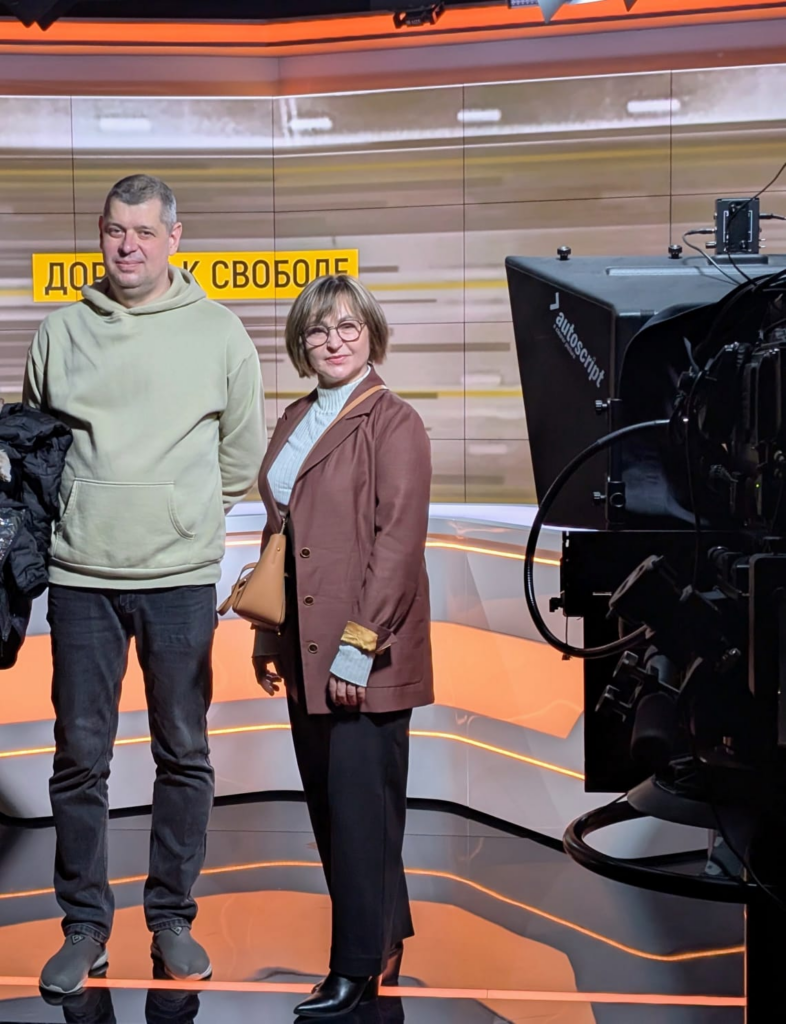
The main mission and value of media work during wartime, however, remains keeping a community together despite its members being scattered geographically by the war.
— Our superpower right now is being the “stitch” that holds a torn community together. We help those who have left understand what is happening in their home city, town or village and what is going on there, while also giving a voice to those who remain under threat. This creates a shared information space and helps people maintain their connection to their identity and home.
QUICK-FIRE ROUND: 5 Things I Know Now
- One thing I’ve stopped doing as a manager. Taking sole responsibility for the team’s results and forgetting to delegate.
- One thing I’ve started doing every day. Reviewing priorities and setting aside time for strategic thinking instead of focusing only on day-to-day tasks.
- A decision I’m no longer afraid to make. To resign — and to let people go.
- A mistake that taught me a lot. Trying to accommodate everyone instead of making unpopular but necessary decisions for the newsroom.
- One piece of advice for a young journalist aspiring to become a leader. Don’t rush. Take a closer look at the possible consequences of your decisions. If you’re confident in a decision, follow through despite the criticism — and there will be plenty of it.
***
The International Insurance Fund for Journalists project is implemented by the Association of Independent Regional Press Publishers of Ukraine (AIRPPU) under the SAFE programme (formerly Voices of Ukraine), coordinated by the European Centre for Press and Media Freedom (ECPMF) within the Hannah Arendt Initiative and supported by the German Federal Foreign Office

We would also like to remind readers that the WIN Leadership Accelerator was implemented as part of AIRPPU’s Stronger Together: Gender Equality and Inclusion programme. It was one of the three key components of the Stronger Together project, focusing on developing leadership skills and providing career coaching through the Women in News programme.