How to Turn the News into a Tool for Change and Support: Maryna Smagina, the editor-in-chief, spoke about Rubrika’s experience.
Constructive journalism is an approach that helps restore trust in the media by highlighting not only problems but also real solutions to them. In a world where news fatigue and a crisis of trust are becoming global challenges, solutions journalism offers a different path: telling stories in a way that inspires change.
We continue to share the most interesting highlights from our workshops as part of the “Media Bridges: Finland—Ukraine” project. This time, we’ll be discussing Ukraine’s experience with solutions journalism, as presented by Maryna Smagina, editor-in-chief of the media outlet Rubrika.
See also: Fact-checking as a Tool for Self-Regulation: Experience of the Finnish Public Broadcaster YLE
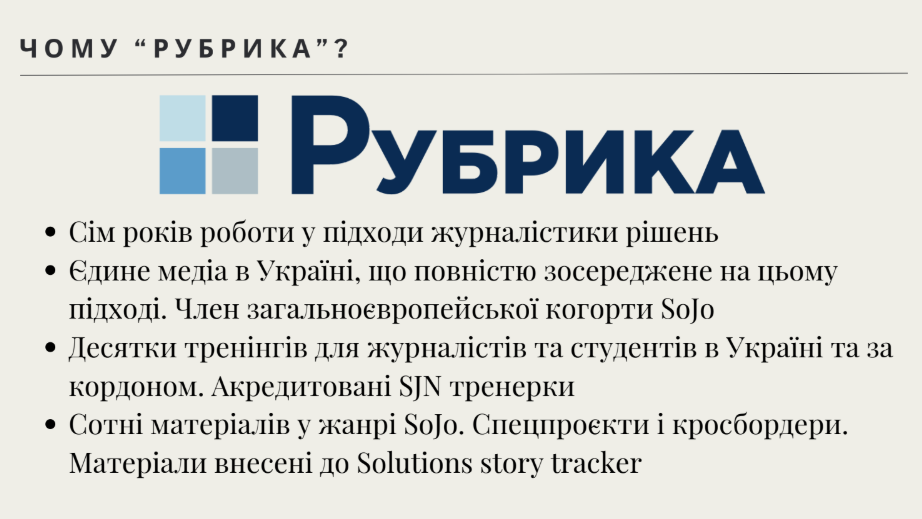
Rubrika has been operating exclusively as a solutions-based journalism outlet for over seven years. During this time, the editorial team has produced hundreds of stories, conducted dozens of training sessions for journalists and students, joined the European Solutions Journalism cohort, and contributed its stories to the international Solutions Story Tracker database.
The Essence of the Approach
Solutions journalism is in-depth coverage of solutions to societal problems. It doesn’t shy away from complex issues, and at the same time, it always looks into what has already been done to address them, what effectiveness evidence there is, what insights participants in the process have gained, and what limitations remain.
At Rubrika, this approach has four key components:
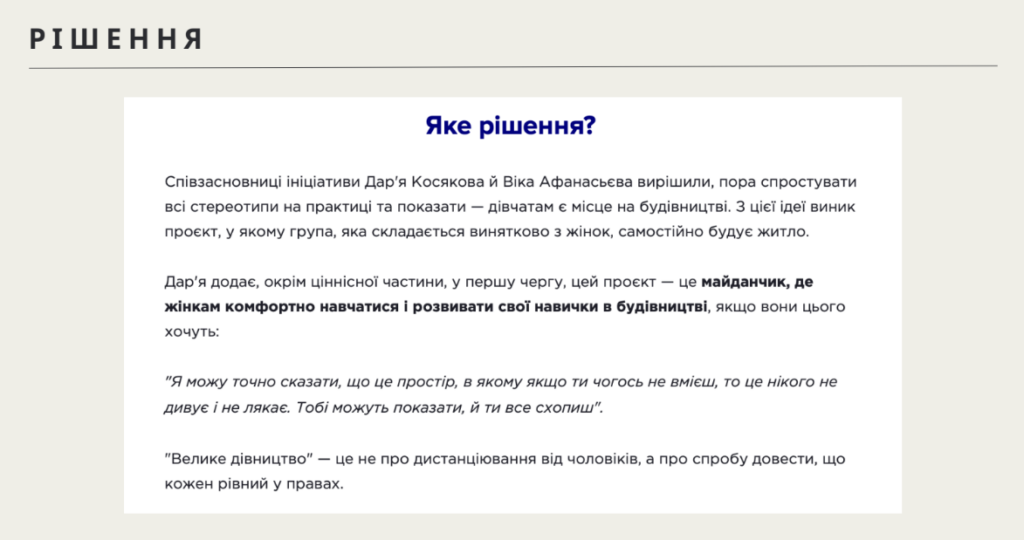
1. A solution as a response to a problem: in solution-oriented journalism, the key is not only to describe the problem itself, but also to show what has already been done to address it. The content should focus on a specific response: how communities, organizations, or individuals are trying to change the situation. This approach helps readers see that even in difficult circumstances, it is possible to identify practical steps they can take.
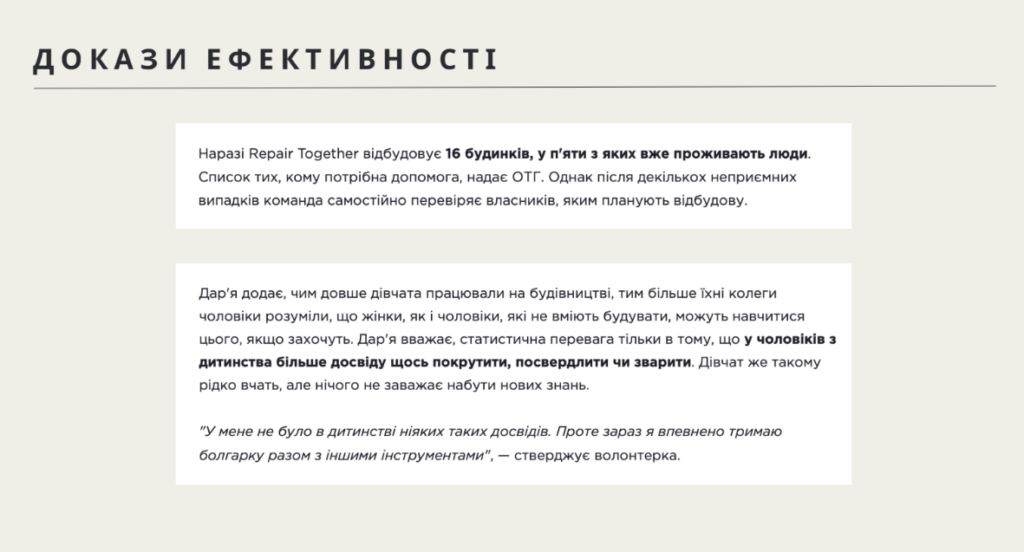
2. Evidence of effectiveness — quantitative and qualitative ones. To make a story compelling, solutions journalism always seeks confirmation that the solution works. These can be numbers: how many homes have been rebuilt, and how many people have received assistance. Or qualitative results, such as participants’ feedback or changes in their lives. Evidence of effectiveness lends credibility to the content and sets it apart from mere “success stories.”
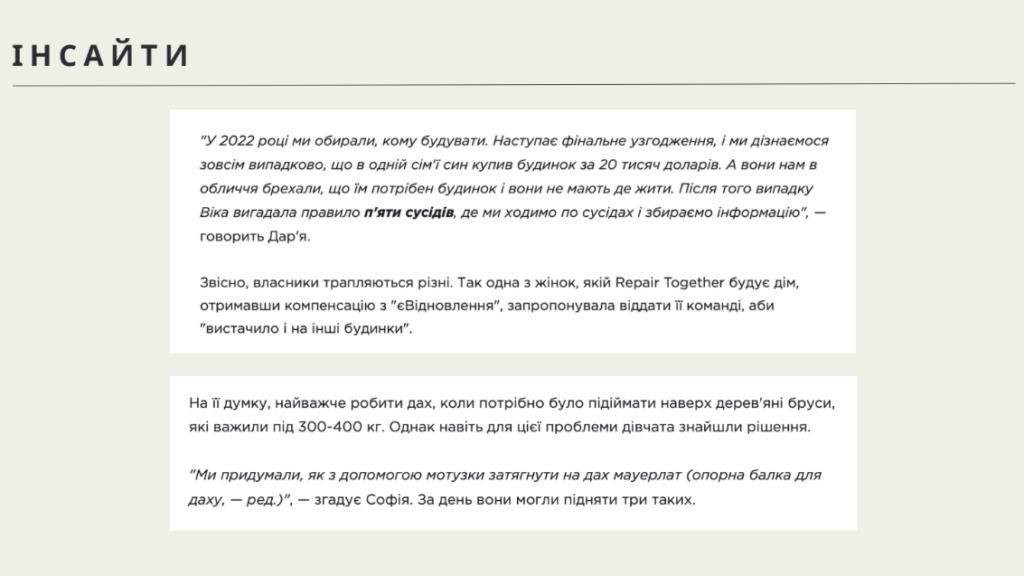
3. Insights — lessons learned during implementation. Every decision brings its own unexpected discoveries, which become valuable to others. These are the lessons that participants learn only through hands-on experience: what worked, what was difficult, and what new rules or approaches had to come up. These insights make the story useful for anyone who wants to replicate the experience in their own community, since they show not only the result but also the path to achieving it.
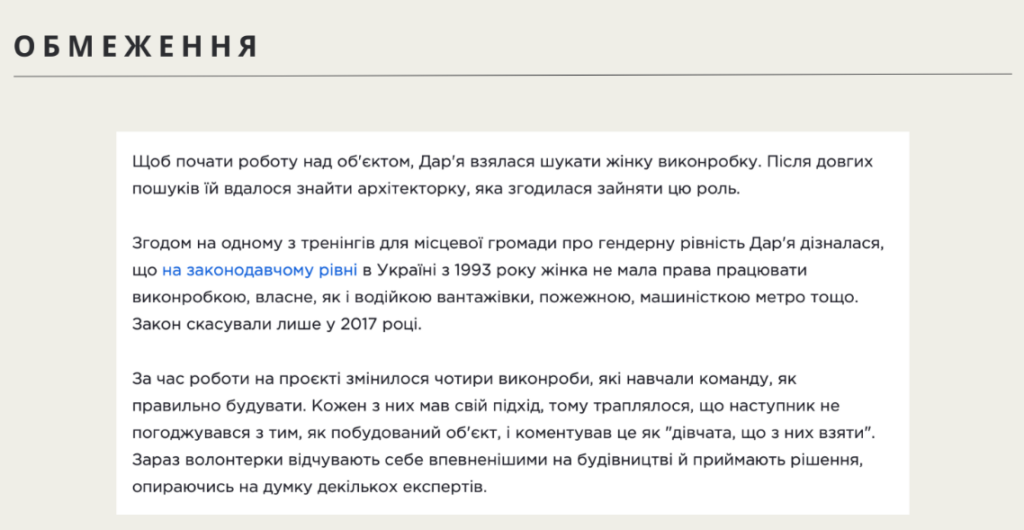
4. Restrictions: honest recognition of what doesn’t work. It’s important not to view the world through rose-colored glasses. Instead, also show what didn’t work out: what difficulties arose, what mistakes were made, and what had to be changed. This lends credibility to the story and helps others avoid the same problems. Honestly acknowledging limitations makes the story more constructive and useful than idealized accounts.
Cases: Repair Together — “The Great Girlhood”
After Russian troops withdrew from Chernihiv region, thousands of homes were left in ruins. The Repair Together volunteer initiative has brought together more than 4,000 people who help clear debris and build housing. “The Great Girlhood” project, which focused on women’s teams, stood out as something special.
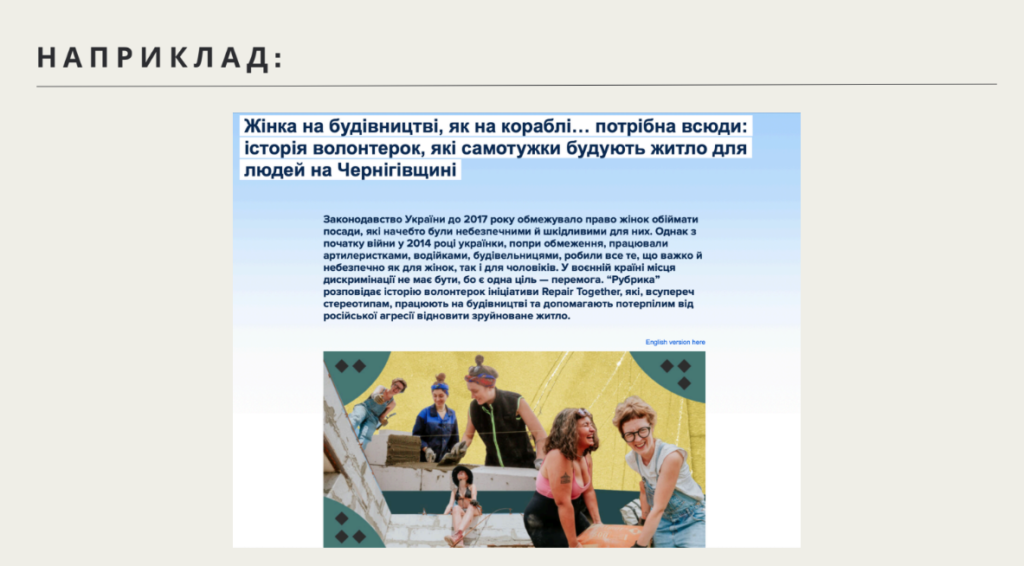
It not only rebuilds homes, but also challenges gender stereotypes: women work in construction on an equal footing with men.
As of the time of the publication, 16 buildings had been restored, and people were already living in five of them. The volunteers came up with the “five neighbors” rule to verify legitimacy of applications and even developed their own methods for lifting heavy beams onto the roof.
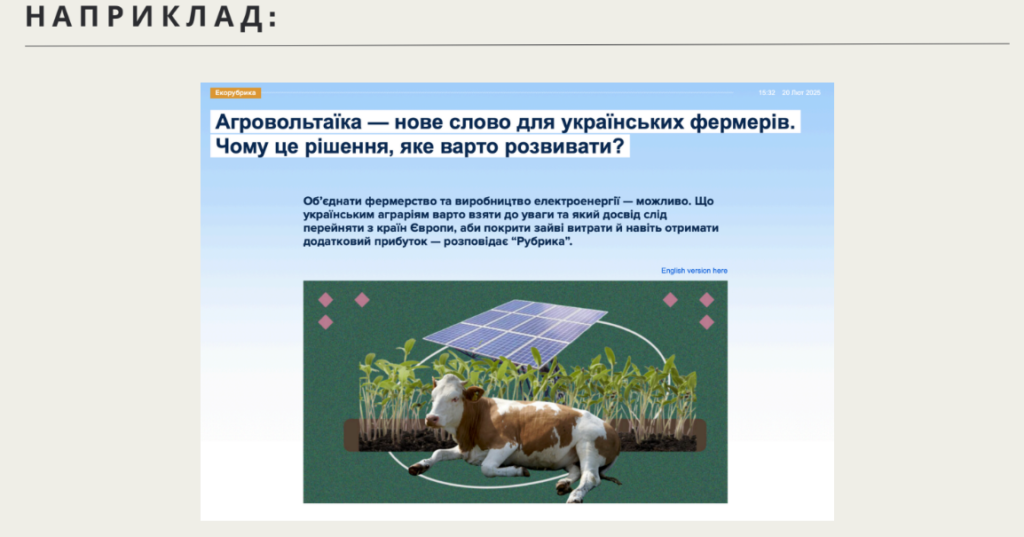
Or here’s another example: about Chortkiv and solar panels. During the winter, when the entire country was suffering from power outages, the community of Chortkiv was able to ensure uninterrupted operation of their critical infrastructure due to solar panels. This is an example of a local solution that can be scaled up in other cities as well.
Cases: Eco-Solutions and Social Stories
Ukraine’s experience with solutions journalism shows that even short articles can have a significant impact. One of the most striking examples is a story about disappearance of Ukrainian rivers. Rubrika examined the causes of ecosystem degradation, particularly illegal activities of agricultural companies that planted crops in coastal areas. Following publication of this investigation, law enforcement agencies opened a criminal case drawing attention to the problem that had remained unnoticed for years. This proves that solutions journalism can not only inform but also set in motion processes of change at the level of governmental institutions.

Another example is a series of papers on prosthetics for Ukrainian veterans. Rubrika reported on the collaboration between the BGV Charity Fund and the Estonian government, which funded the program. The reports featured real-life stories of soldiers who received prosthetics and were so compelling that the Estonian partner decided to extend the program for another year. This is an example of how media can serve as a bridge between charitable initiatives and international partners ensuring sustainability of important projects.

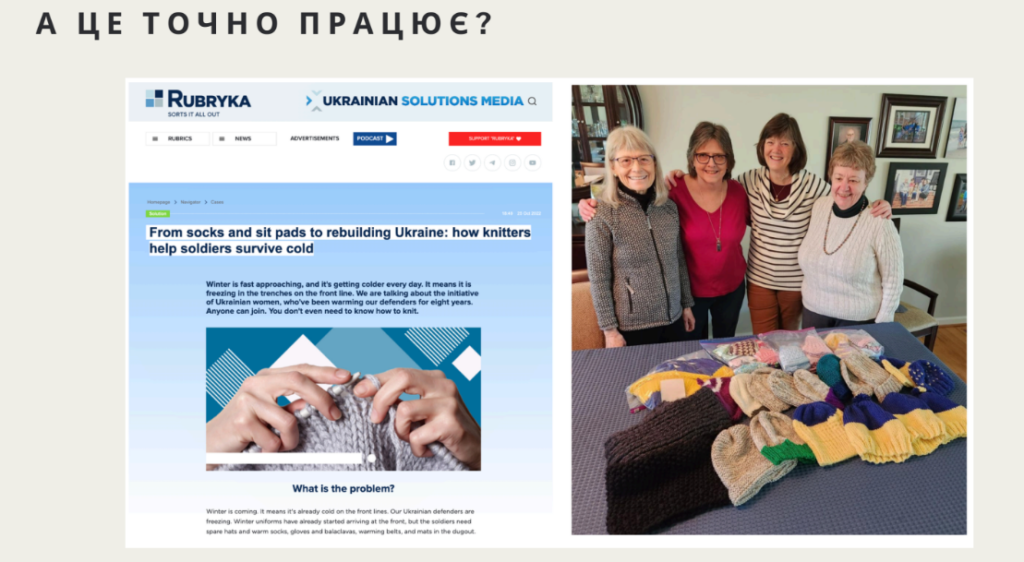
Another heartwarming and telling story is that of the Ukrainian female volunteers who knitted clothes for soldiers during the first winter of the war. Rubrika translated the story into English, and it was seen by women from an American retirement club who also knit. Inspired by this example, they decided to join in: they wrote to the editorial office, asked for the address, and sent several packages of warm clothes to Ukraine. Some of those were sent to the front line, while children’s items went to orphanages. This is a story about how a local initiative can resonate in a completely different corner of the world and turn into an international wave of solidarity.
How to Write a “Solution Story”
A classic solution story begins with a problem, presents a specific solution, explains how it works, provides evidence of its effectiveness and insights, and honestly describes its limitations. This is standard journalistic work, but with an emphasis on a constructive approach.
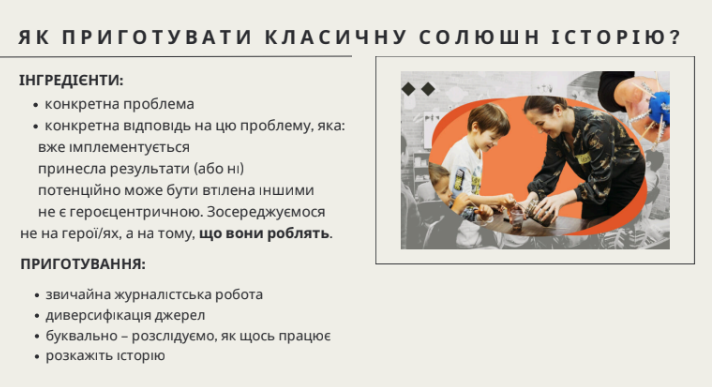
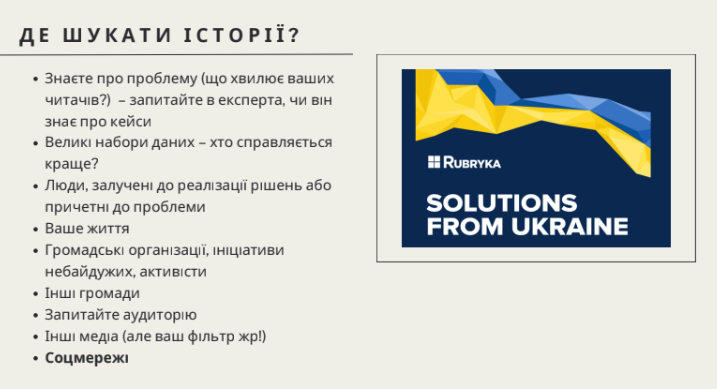
Ideas for such content come from problems, large datasets, social media, civil society organizations, or even from the audience itself. It’s important not only to notice the negative, but also to pay attention to those who are already looking for solutions.
Useful resources from Rubrika:
- Rubrika: Solutions Journalism — How It Works in Ukraine
- Rubrika: What Is the Solutions Format and How Do We Use It?
- The Power of Solution Journalism: How Rubrika Works with It
- Solutions Journalism Network (official website)
- Solutions Story Tracker — a database of solution stories from around the world
- European Center for Journalism: An Introduction to Solutions Journalism for Newsrooms and Journalists
- Engaging News Project: A Study of the Impact of Solutions Journalism
***
This material was prepared based on a workshop held on April 7, 2026, as part of the “Media Bridges: Finland—Ukraine” Program implemented by the Association of Independent Regional Publishers of Ukraine in partnership with News Media Finland, and funded by the Finnish Ministry of Foreign Affairs