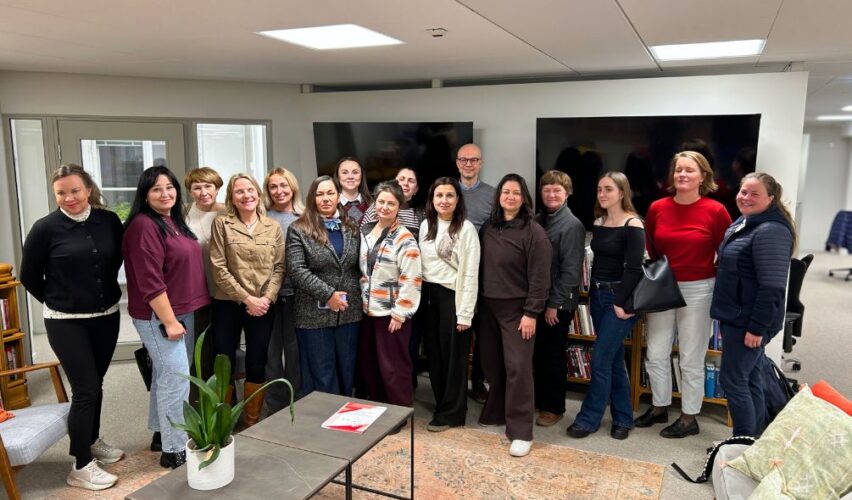
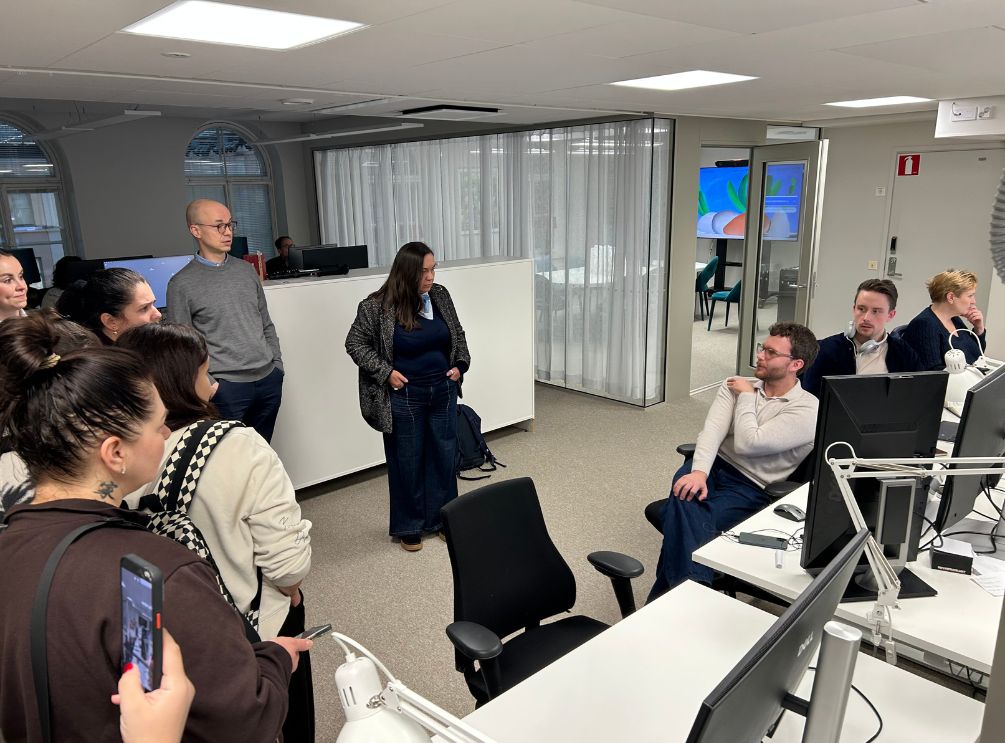
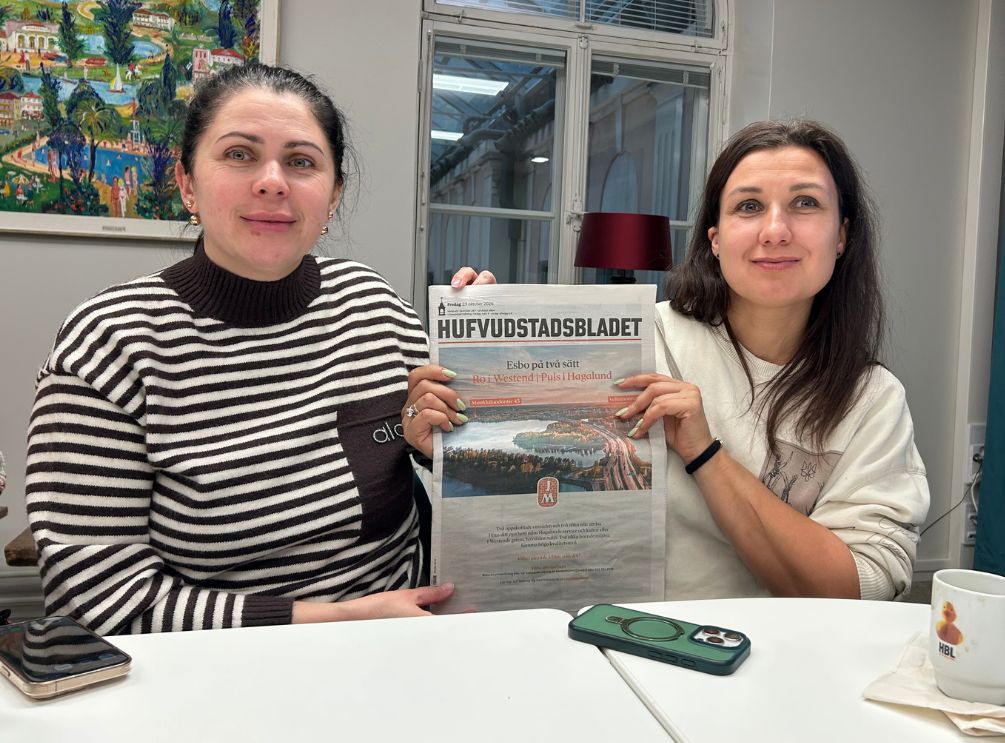
On 16 November, Ukrainian women journalists visited the newsroom of Hufvudstadsbladet (HBL) in Helsinki, Finland’s largest Swedish-language daily newspaper. During the meeting, they discussed how independent media operate amid Russia’s full-scale war against Ukraine, the mobilisation of journalists, psychological exhaustion in newsrooms, and the investigations Ukrainian media continue to pursue despite the challenges.

The visit was part of the international Media Bridges: Finland – Ukraine project, which aims to strengthen cooperation and facilitate the exchange of experience between Ukrainian and Finnish media. Oksana Brovko, CEO of the Association of Independent Regional Publishers of Ukraine (AIRPU), also took part in the meeting.
Inside One of Finland’s Oldest Newsrooms
The Ukrainian journalists were welcomed by Kalle Silfverberg, Editor-in-Chief of Hufvudstadsbladet.
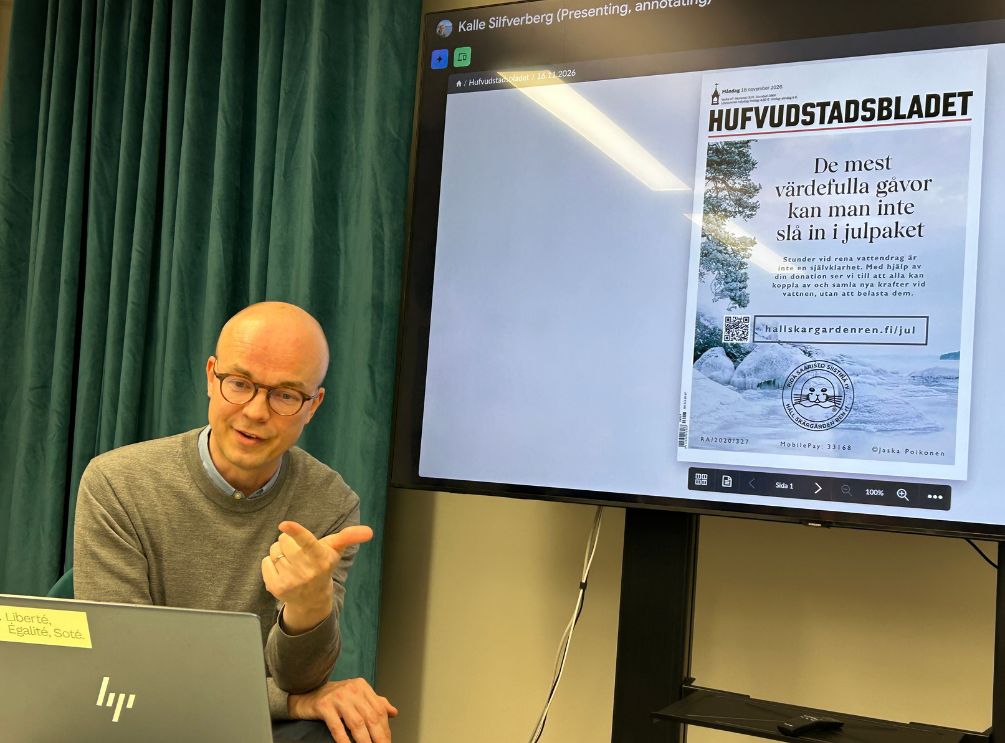
Founded in 1864, Hufvudstadsbladet has been an important source of news for Finland’s Swedish-speaking community for more than 160 years. Today, the newspaper publishes both print and digital editions and is part of a media company in which Sweden’s Bonnier News holds a majority stake.

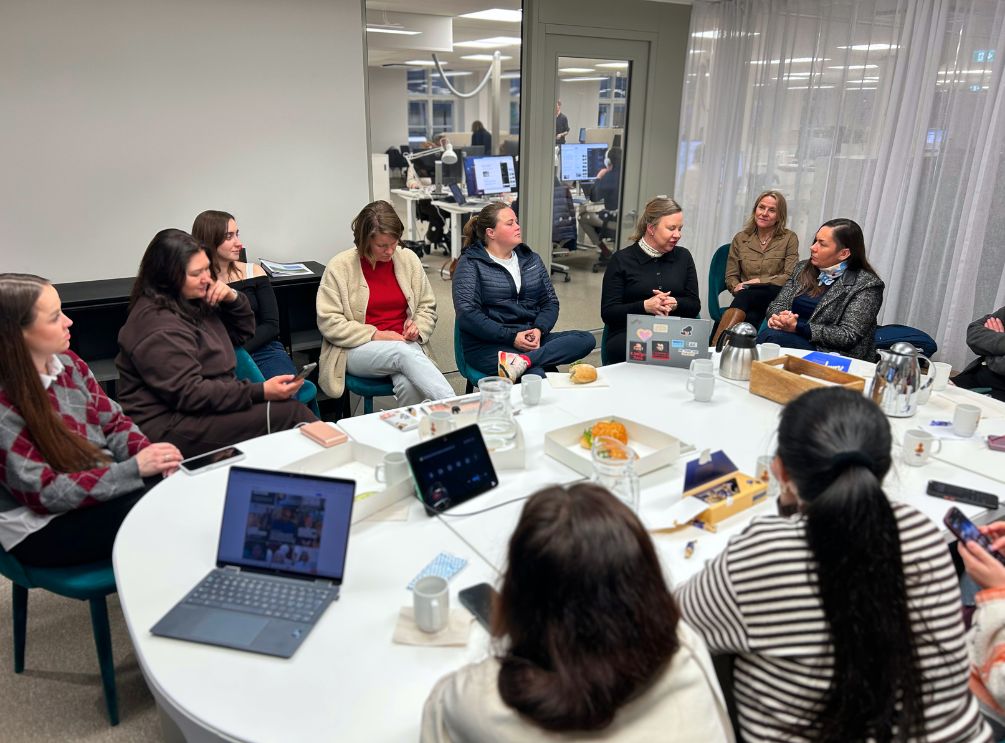
During the visit, the Ukrainian journalists learned about the Finnish newsroom’s operations and discussed professional challenges faced by journalists in both countries. Much of the conversation focused on Ukraine’s experience. Their Finnish colleagues wanted to understand how regional media continue operating during the war, what happens when newsroom staff join the military, and how journalists cope with the constant psychological pressure.
When Journalists Join the Military, Newsrooms Must Find Replacements
One of the issues raised by the Finnish journalists was the mobilisation of media professionals. They asked whether Ukrainian legislation provides special exemptions for journalists and how military service affects newsroom operations.
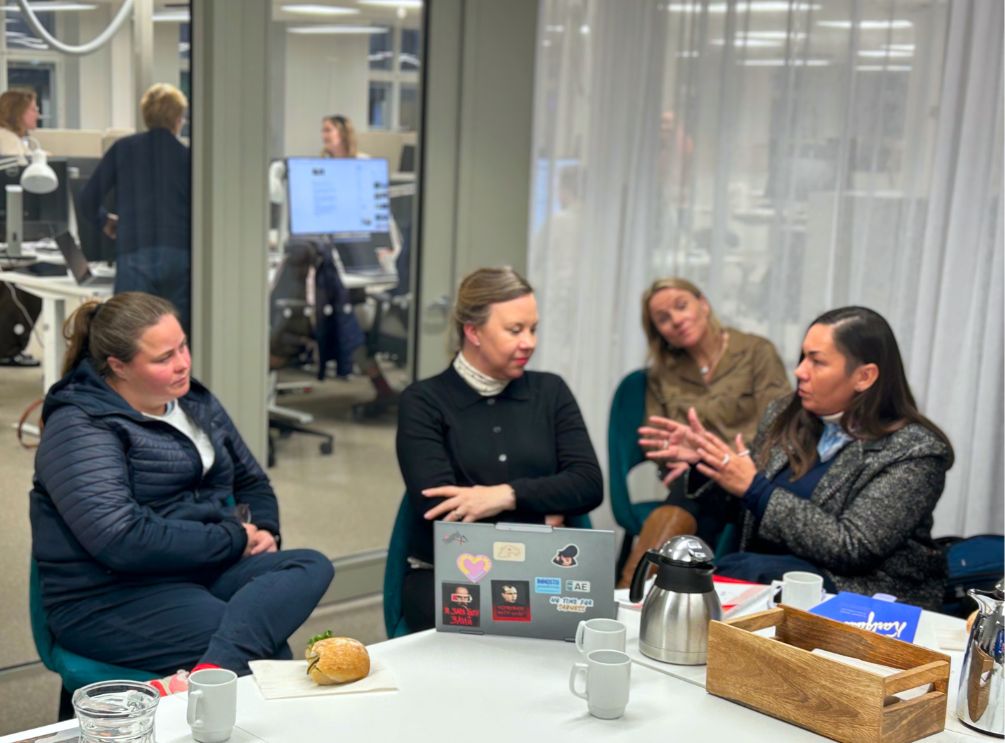
Oksana Brovko explained that working as a journalist does not automatically exempt someone from mobilisation. Some media professionals have been called up for military service under Ukrainian law, while others have volunteered to defend their country. Among them are women who have left journalism to serve in the armed forces, including as combat medics.
“Many of our colleagues are now serving in the military. Some were mobilised under the law, while many others volunteered. And this is not just about men, but women as well. Some of our female colleagues have left journalism to become combat medics. Today, it is quite common to see job announcements from newsrooms looking for a new editor because the previous one has gone to the front line. Sometimes, that editor is a woman,” Oksana Brovko explained.
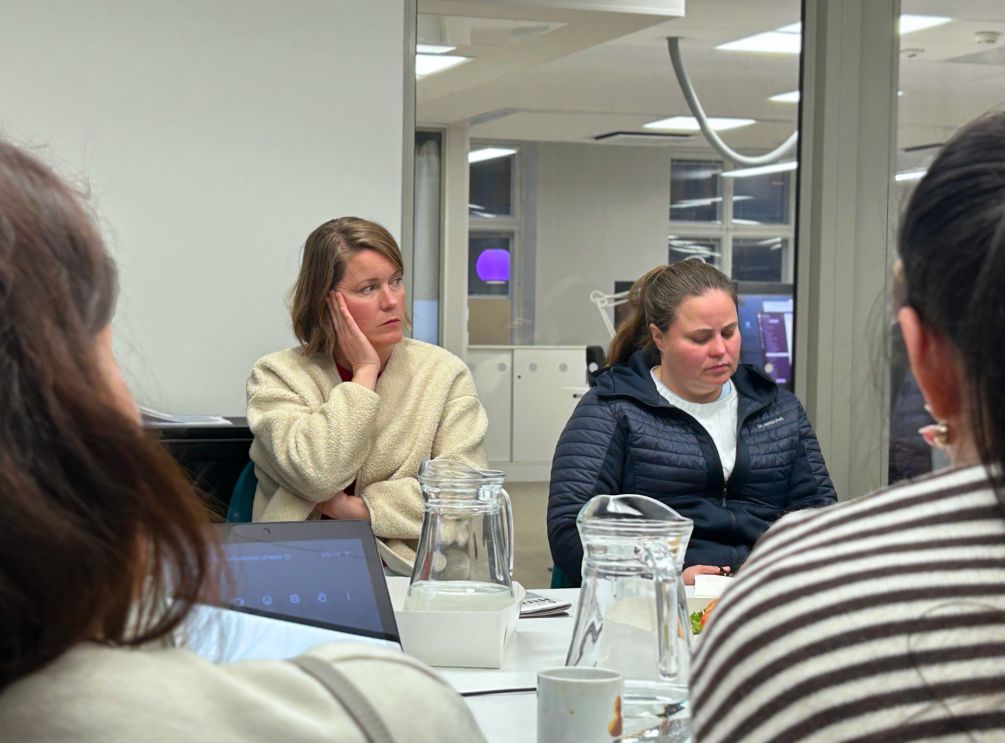
For local media, this means losing experienced staff, recruiting new professionals, and reorganising newsroom operations. At the same time, editorial teams must continue providing their communities with daily news, maintaining journalistic standards, and finding ways to sustain their work.
Reporting on Loss: How Newsrooms Handle Stories of Trauma
Another important topic was the psychological toll of war reporting on Ukrainian journalists. Their Finnish colleagues wanted to know how media professionals cover sensitive issues, interview people who have experienced loss, and report on traumatic events.
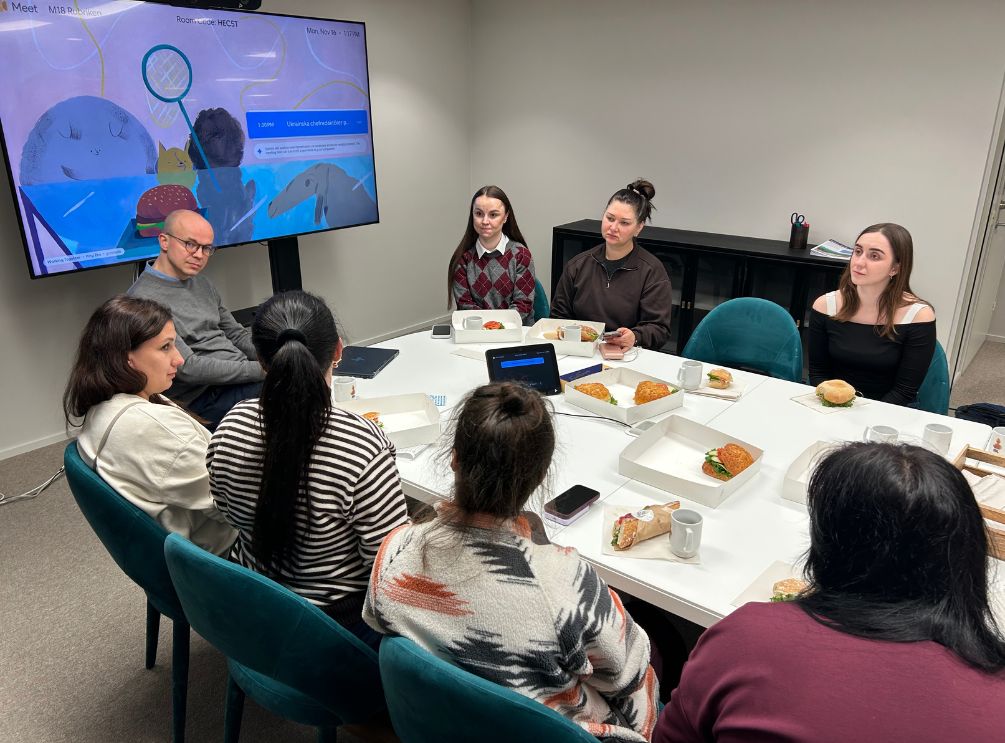
Oksana Brovko emphasised that Ukrainian journalists are not only documenting the consequences of war but are also living through them every day. They report on fallen soldiers and civilians killed in the war, speak with grieving families, and document the stories of people whose lives have been changed by the invasion.
“It is very difficult to report on these topics. We interview people who have experienced trauma, but at the same time, we are traumatised by the war ourselves. Today, many of our newsrooms effectively have a new role: a journalist who attends funerals and tells the stories of soldiers and civilians killed during the war. Psychologically, this is extremely difficult work. That is why so many newsroom teams are now deeply exhausted,” Oksana Brovko said.
Such reporting has become part of everyday journalism for many Ukrainian newsrooms. Journalists preserve the memory of those who have died, tell their life stories, and document the human cost of war, while often needing psychological support themselves.
This part of the discussion highlighted another dimension of independent journalism during wartime: the need not only to provide communities with reliable information but also to care for the people who gather and report that information every day.
More Than 170 Investigations: How Regional Media Hold Authorities Accountable During the War
The meeting also addressed the financial sustainability of regional media and their ability to continue investigative journalism amid Russia’s full-scale invasion.
Oksana Brovko spoke about Ukrainian local newsrooms investigating potential corruption, examining how public funds are spent, and scrutinising the activities of government authorities. According to Brovko, a small group of regional media outlets has already produced more than 170 investigative reports.
The Finnish journalists were interested in how their Ukrainian colleagues organise investigative work during the war and how local audiences respond to these stories.
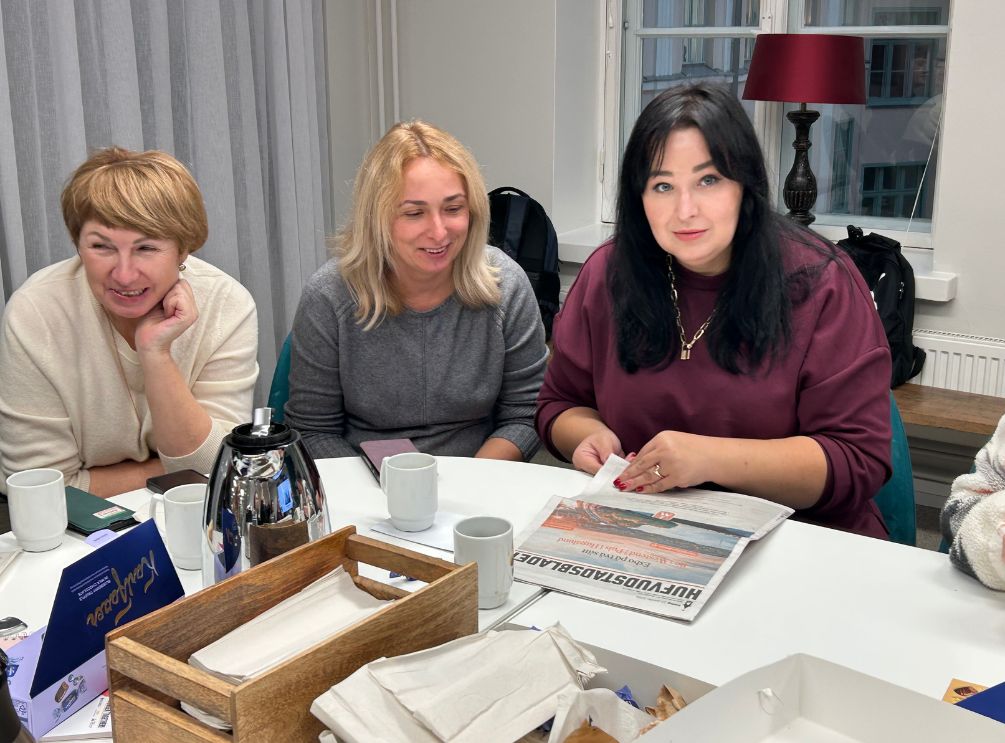
The participants discussed why independent scrutiny of those in power remains essential even under constant security threats. Communities need information not only about the war itself but also about local government decisions, the use of public money, and issues affecting their everyday lives.
For Ukrainian newsrooms, developing investigative journalism is also part of their efforts to strengthen their resilience and build a sustainable professional future.
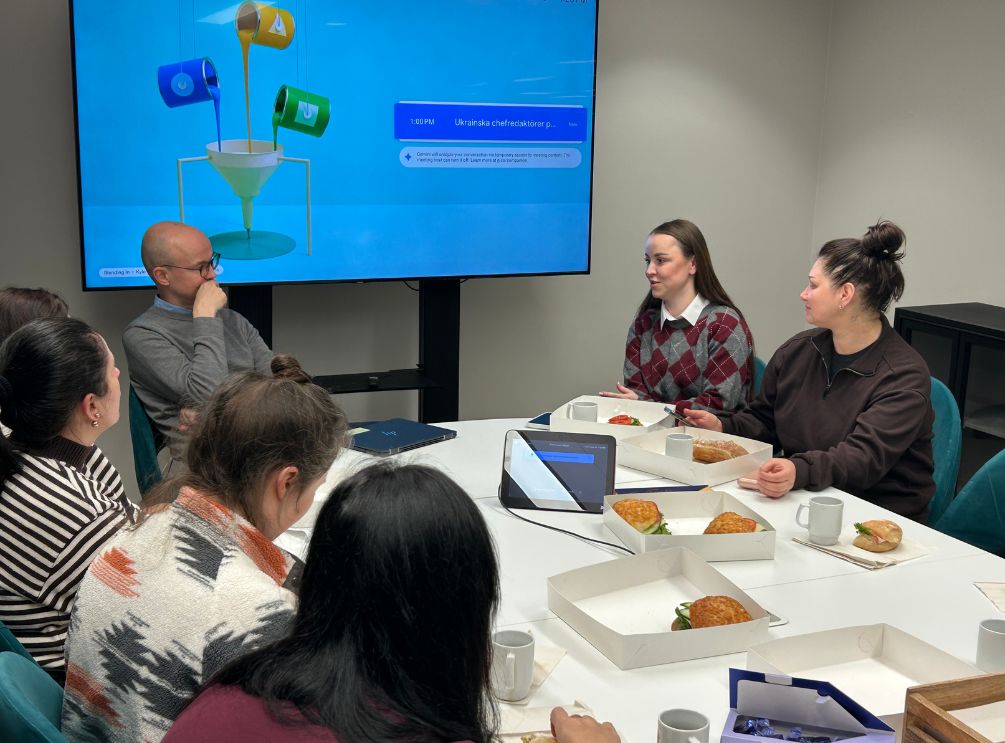
Exchanging Experience Between Ukrainian and Finnish Media
The visit to Hufvudstadsbladet was part of a broader professional dialogue between Ukrainian and Finnish journalists.
For Ukrainian media professionals, meetings like this offer an opportunity to learn how European newsrooms operate, how they develop print and digital journalism, and how they engage with their readers. At the same time, Finnish colleagues gain firsthand insights from journalists who continue working amid Russia’s full-scale war against Ukraine.
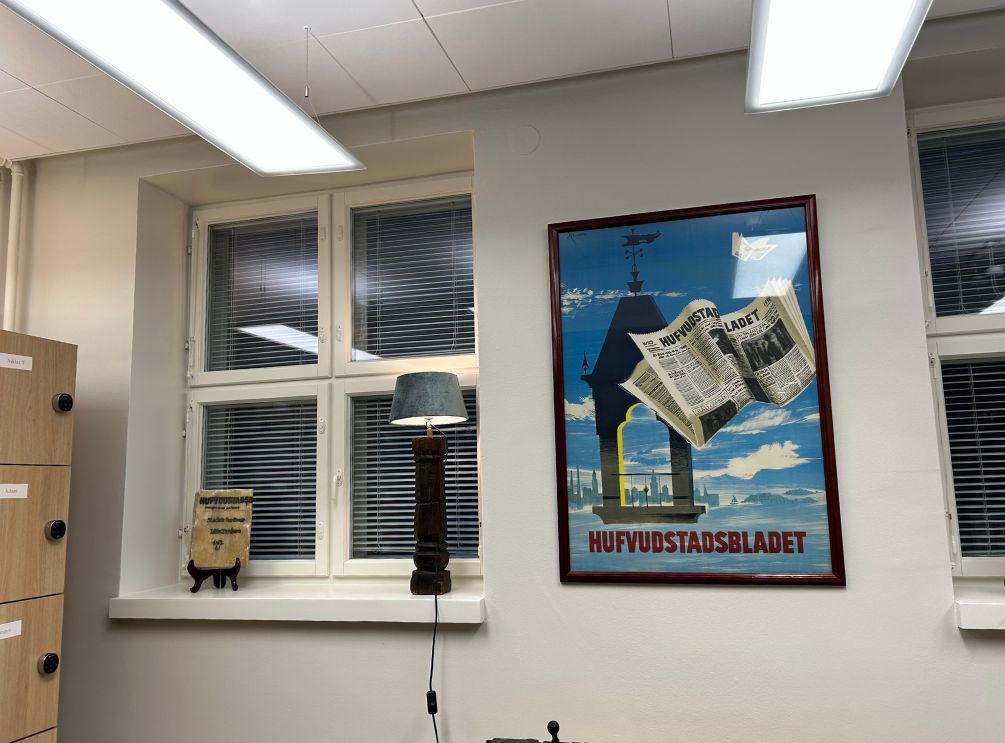
The meeting demonstrated that Ukrainian regional media have valuable practical knowledge to share with their European partners, rather than simply learning from them. Their experience includes operating during crises, keeping newsroom teams functioning, and ensuring that communities continue to receive reliable information.
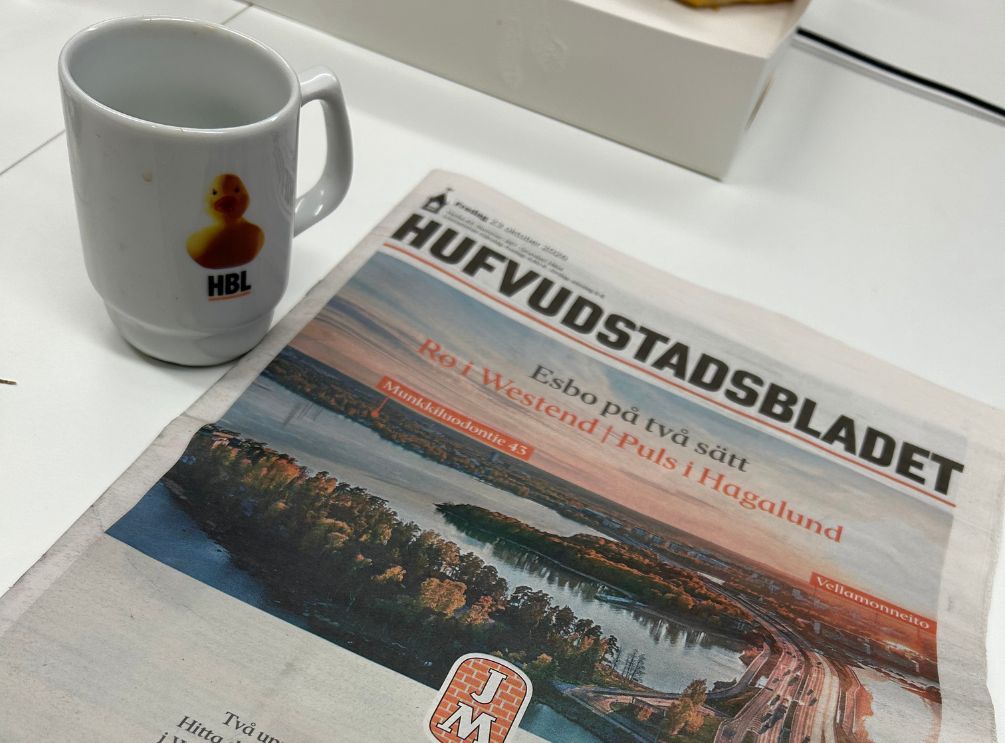
The visit took place during a study tour of Finland for Ukrainian women journalists, held from 15 to 21 November 2026 as part of the Media Bridges: Finland – Ukraine programme.