Millions in public funding for information services, waterfront land, utility payments and expensive assets owned by officials’ relatives have come under scrutiny in a new wave of regional investigations. Journalists examined not only declarations and public registries, but also the systems through which communities spend public money or may be losing potential revenue.
Some of these stories involve years of court proceedings and contracts; others focus on assets registered to parents, children or other relatives. Newsrooms compared documents, analysed court decisions, checked prices, questioned officials and conducted their own experiments.
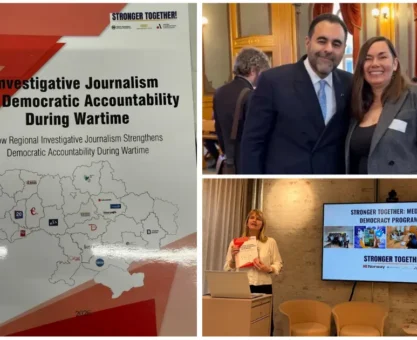
The materials were produced as part of the “Stronger Together: Transparency and Anti-Corruption” project. Here is what nine regional newsrooms managed to uncover.
Dnipro.media
Publication date: 31 August 2026
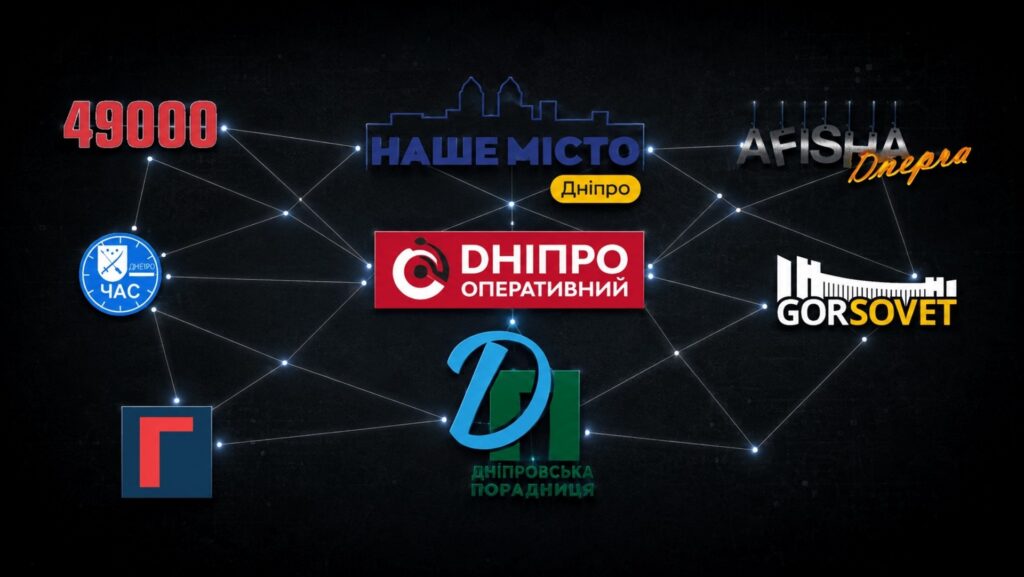
For 2026, Dnipro allocated UAH 97.5 million to the municipal television studio Dnipro TV. But public spending on coverage of the city authorities’ work does not end there. Dnipro.media traced a group of privately owned websites, Telegram channels and social media pages that publish content about the mayor and city council, while some of these platforms also release similar negative stories about the authorities’ opponents almost simultaneously during periods of political conflict.
The newsroom found shared addresses, telephone numbers and advertising email contacts across the platforms, and then tested those connections through an experiment. Posing as advertisers, the journalists received a single price list covering eight websites and a large number of social media pages. An article commissioned for one outlet appeared on another without separate approval, while payment for placements across different platforms was proposed through the same individual entrepreneur, who has long worked with these media outlets and with information-service contracts commissioned by city institutions.
How Dnipro’s publicly funded information contracts intersect with private media, what connects dozens of these platforms and who earns money from their advertising, read the full Dnipro.media investigation.
Dostyp.Media
Publication date: 11 September 2026
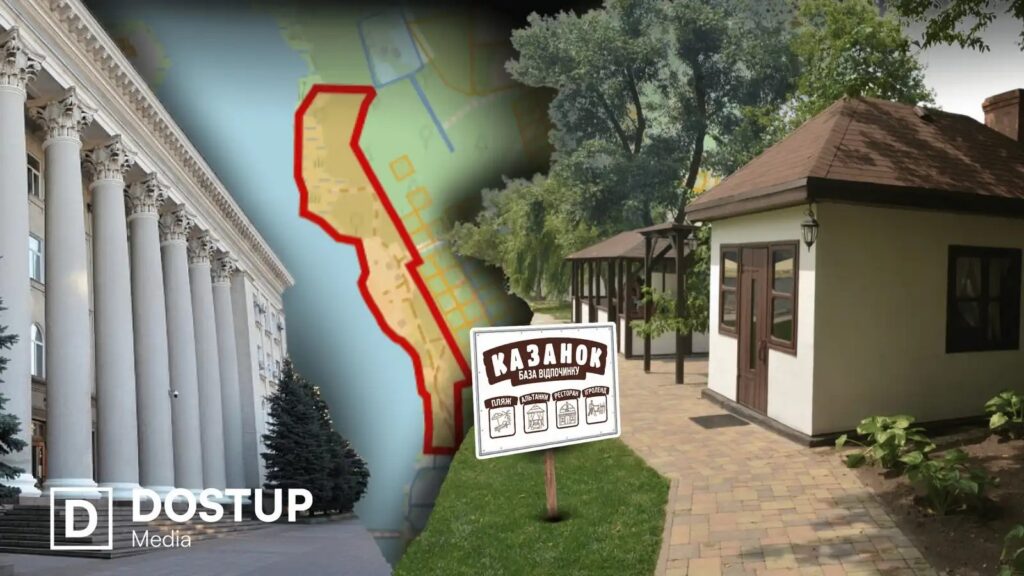
Kropyvnytskyi has no officially designated public beaches, yet residents have spent years relaxing along the Novomykolaivka Reservoir. Part of this waterfront area is occupied by the Kazanok recreation complex, which operates on land leased from the community. Years ago, courts identified irregularities in the transfer of this plot, and in 2024 a court even ordered the land to be returned to the city. The ruling was later overturned on appeal, leaving the lease in force.
Dostyp.Media found that the city council had not inspected how the waterfront land was being used for years, even as new infrastructure appeared on the site and preparatory construction work is now under way. A fence separating the free beach from Kazanok extends into the water, while residents and the complex’s owners give different accounts of access to this part of the shoreline. The newsroom also tried to determine how much the community receives in rent, but the city council did not disclose the actual amount being paid.
Why a private business continues to operate on waterfront land that a court had ordered returned to the community, who is responsible for controlling access to the shoreline and what is happening on the Kazanok site now, read the Dostyp.Media investigation.
Intent
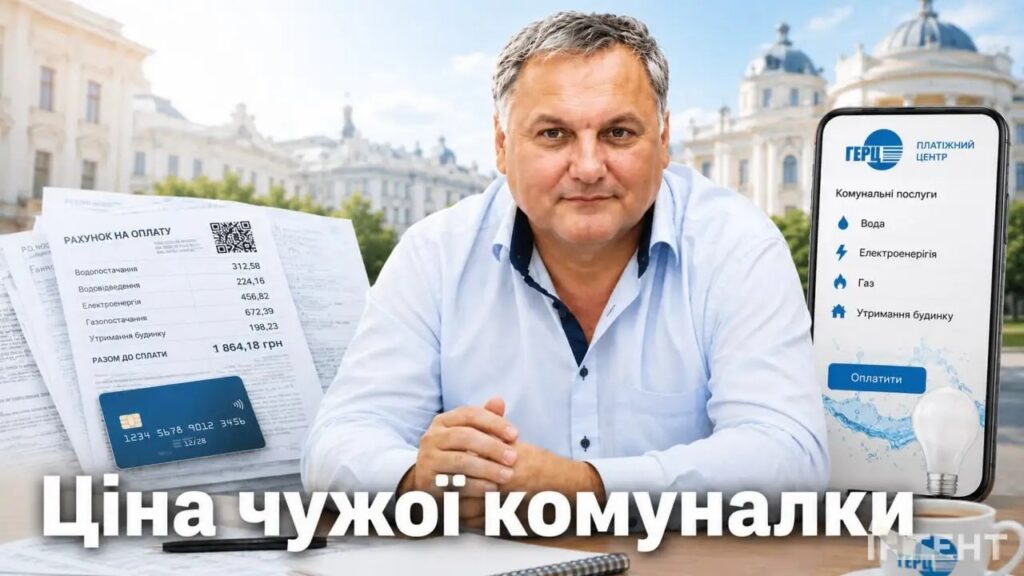
Odesa residents’ money in a private company’s pocket: how GERTS became embedded in utility payments
Publication date: 29 August 2026
For many Odesa residents, paying utility bills has long been associated with the private company GERTS, which processes payments and charges a commission. Intent set out to understand how a private business became such a prominent part of the city’s payment system and why the software it developed still remains in private ownership.
The company’s cooperation with the city began in 2009. The following year, Odesa planned to transfer the ESAN payment system into municipal ownership: both a contract and a transfer-and-acceptance act had been prepared. However, the software was never transferred to the municipal enterprise Informresurs, while the property rights remained with GERTS. At the same time, the city council rejects claims that the company holds a monopoly and stresses that residents can also pay their utility bills through banks.
How a private company became embedded in the city’s utility payment system, why the software never passed into municipal ownership and who stands behind GERTS, read the full investigation by Intent.
Locator Media

Publication date: 3 September 2026
The declarations of Roman Pshyk, deputy head of the Zaporizhzhia Regional Prosecutor’s Office, list neither a house of his own nor expensive cars. Yet he uses a house near Kyiv free of charge as well as vehicles worth more than UAH 1 million that are registered to his father. Locator Media traced how these assets appeared in the family and what income and savings preceded the purchases.
According to declarations, the US dollar savings of Pshyk Sr.’s wife increased by USD 66,000 in 2022. In 2023, Mykhailo Pshyk received almost UAH 2.4 million in state housing compensation as an internally displaced person, and the following year he and his wife purchased a house in Mykulychi for nearly UAH 3.5 million. Mykhailo Pshyk told journalists that a significant part of the purchase was financed with the compensation. His son, the prosecutor, also uses the house free of charge.
How the family’s assets accumulated, why expensive property is registered to the official’s father and what the Pshyk family declarations reveal, read the Locator Media investigation.
20 Minutes (Ternopil)
Publication date: 3 September 2026
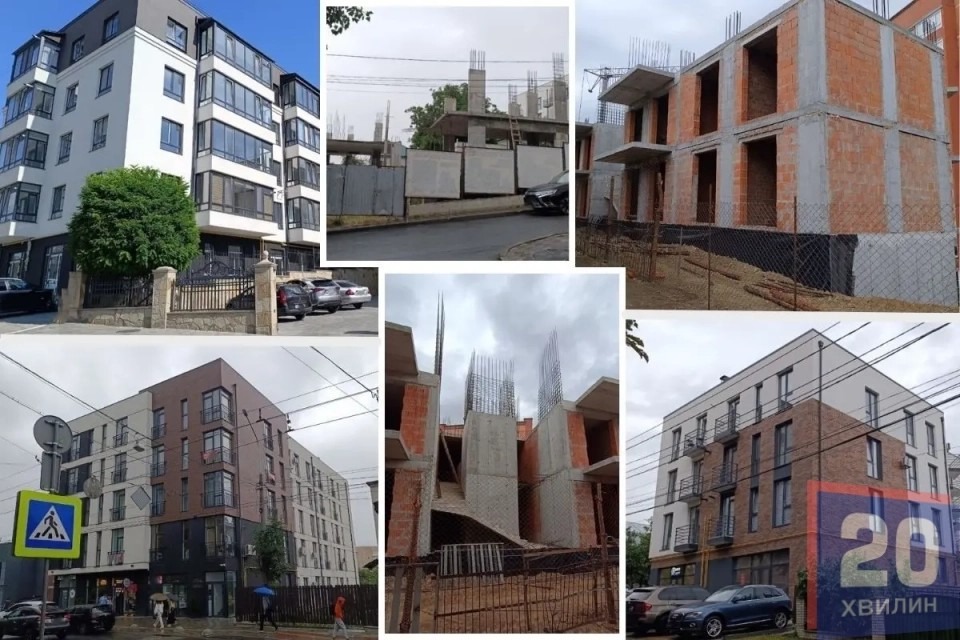
For years, large buildings have been constructed in Ternopil while remaining classified in official documents as individual residential houses. Formally, this can comply with existing requirements: the law does not set a maximum size for such homes, while developers of properties larger than 500 square metres obtain urban planning conditions and restrictions. At the same time, journalists found completed examples where former “individual houses” now contain separate apartments and condominium associations.
20 Minutes examined why such developments are difficult to monitor. Inspections are significantly restricted under martial law, while experts explain that after an individual residential house is commissioned, there are legal mechanisms through which separate apartments can later be registered inside it. The newsroom also raised additional questions after finding that the husband of one employee of the city’s architectural and construction control department had designed some of the projects of this type.
How individual houses in Ternopil become buildings with separate apartments, why inspecting these developments is now extremely difficult and which regulatory gaps allow the practice to continue, read the 20 Minutes investigation.
Molodyi Bukovynets
Publication date: 7 September 2026
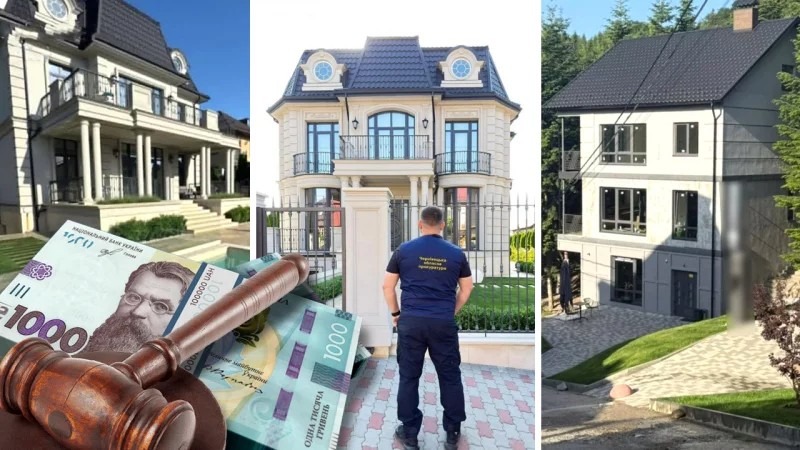
A house with a swimming pool near Chernivtsi, property in the tourist village of Myhove and newly acquired nearby land plots drew law enforcement attention to the family of Serhii Savchuk, head of the regional office of the StateGeoCadastre. In June, Savchuk was notified of suspicion of illicit enrichment, while journalists at Molodyi Bukovynets examined which assets appear in the case and in whose names they are registered.
A significant share of the assets is registered to Savchuk’s former wife, with whom he continues to live, and to his mother. Journalists visited Myhove, where one plot linked to the family forms part of the Forest House complex, while Savchuk’s mother acquired several more land plots nearby. According to investigators, property worth tens of millions of hryvnias substantially exceeds the family’s officially declared income. A court froze part of the assets, Savchuk was suspended from his post, and the pre-trial investigation is continuing.
Which assets law enforcement links to the official’s family, what journalists found in Myhove and why the origin of this property became the subject of an investigation, read the Molodyi Bukovynets investigation.
20 Minutes (Vinnytsia)
Publication date: 2 September 2026
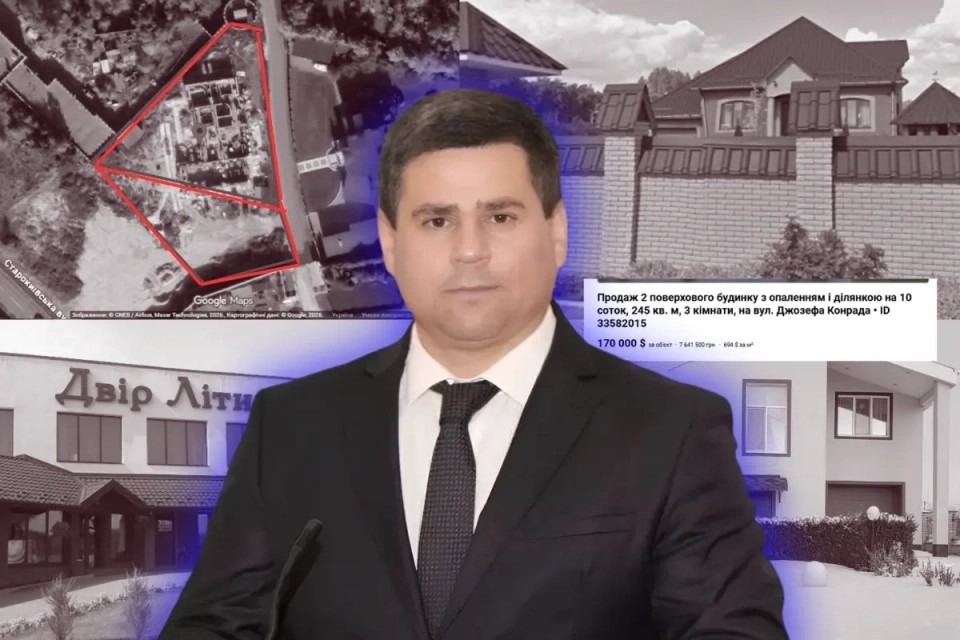
Journalists found that the family of Oleksandr Vilchynskyi, a judge of the Vinnytsia District Administrative Court, owns land and an unfinished mansion in Kozyn, an apartment in Kyiv’s Pechersk district, parking spaces and other real estate. A significant share of the family’s most expensive assets is now registered to the children: at the age of 16, the son received from his mother a land plot with a house of almost 500 square metres, while the daughter was later gifted an apartment in Kyiv and parking spaces.
20 Minutes traced how the property appeared within the family over the years and was transferred from the mother to the children. Against this backdrop, the judge’s own asset declaration appears far more modest: in terms of real estate, he effectively retains only inherited agricultural land. His former wife, Nataliia Vilchynska, told journalists that she had acquired the assets with her own earnings and business income and stressed that all the property had been obtained lawfully.
How the judge’s family acquired expensive real estate in Kozyn and Kyiv, how it was transferred to the children and how the Vilchynskyi family explains the origin of these assets, read the 20 Minutes investigation.
Tochka Skhodu
Publication date: 7 September 2026
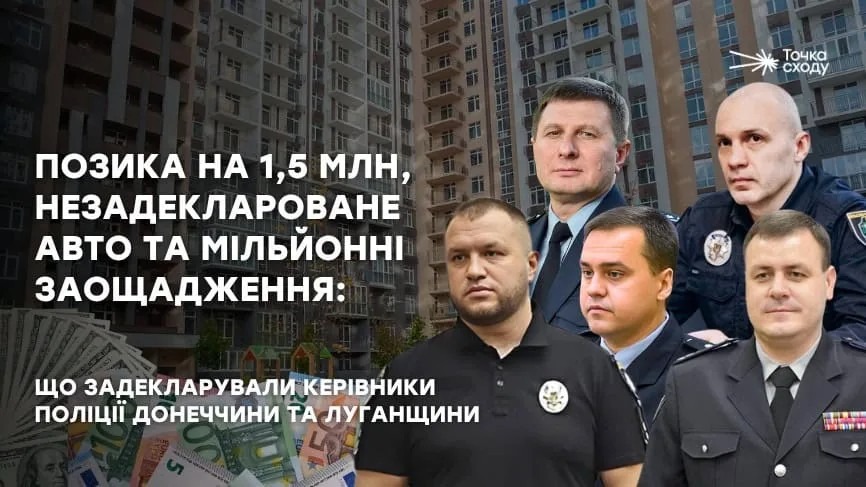
Tochka Skhodu compared the asset declarations of senior police officials in Donetsk and Luhansk regions and traced how their income, property and savings changed over several years. The documents included large loans issued to other individuals, apartments and parking spaces declared at values below the prices of comparable properties, vehicles received as gifts, and savings that increased severalfold within a year.
Police officials and their relatives explain some of these changes through state compensation, property sales, previous business activity and personal savings. At the same time, in several cases the publicly available data is insufficient to conclusively explain the origin of the funds or the discrepancies identified by the journalists.
What changed in the declarations of senior police officials in the two regions, which assets drew the newsroom’s attention and how the officials themselves explain their wealth, read the Tochka Skhodu investigation.
Kremenchuk Telegraph

Publication date: 25 September 2026
The Economic Security Bureau of Ukraine is responsible for detecting economic crimes and tax evasion schemes. Kremenchuk Telegraph decided to examine the declarations of employees of the Bureau’s Poltava regional office and look at the property, vehicles and savings they declare, as well as assets owned by their relatives.
Among the assets identified by journalists were a Tesla registered to a detective’s mother, a Porsche used by an analyst but owned by her sister, and a country house near Poltava purchased by the 76-year-old mother of an ESBU employee. The newsroom also traced how the income and savings of several employees and their relatives changed over different years. The officials and their relatives explain some of the purchases through their own income and accumulated savings, while the ESBU told journalists that no internal investigations had been conducted into these employees over their declarations or possible conflicts of interest.
What the declarations of Poltava ESBU employees reveal, how they explain the origin of their assets and which property caught the journalists’ attention, read the Kremenchuk Telegraph investigation.
Read also:
Abuses in the Regions: A New Wave of Investigations by 18 Newsrooms
Bringing Schemes to Light: What Investigative Journalists Are Examining in the Regions
Millions, Assets and Hidden Ties of Officials: New Investigations by 18 Regional Newsrooms
The Stronger Together: Media and Democracy programme is implemented by the World Association of News Publishers (WAN-IFRA) in partnership with the Association of Independent Regional Press Publishers of Ukraine (AIRPPU) and the Norwegian Media Businesses’ Association (MBL), with support from Norway. The views expressed by the authors do not necessarily reflect the official position of the programme partners.