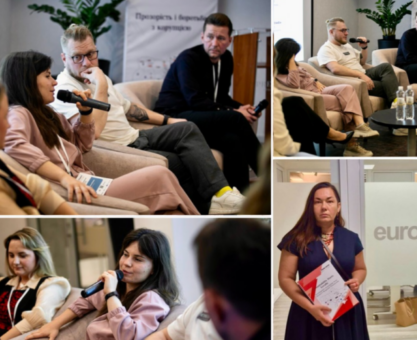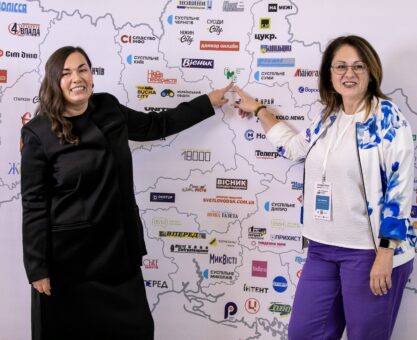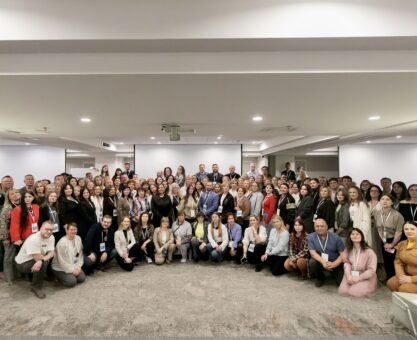
The 15th Media Congress has come to an end, and its participants have returned to their newsrooms with new ideas, solutions, and partnerships.
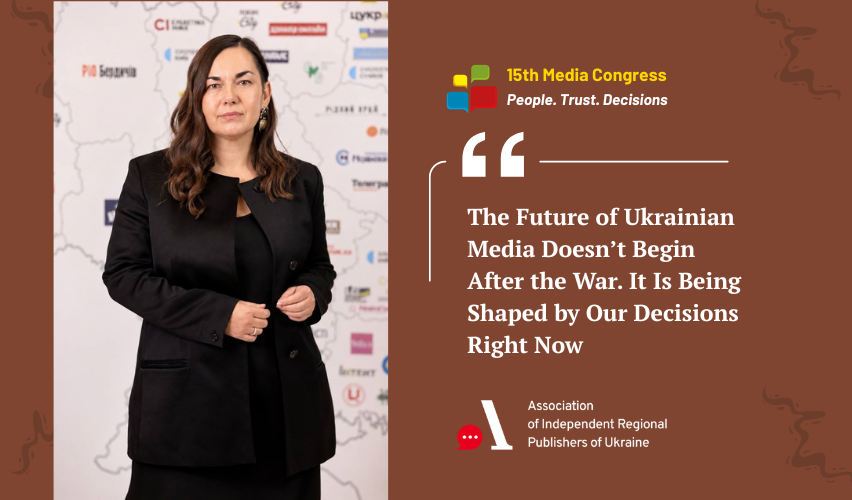
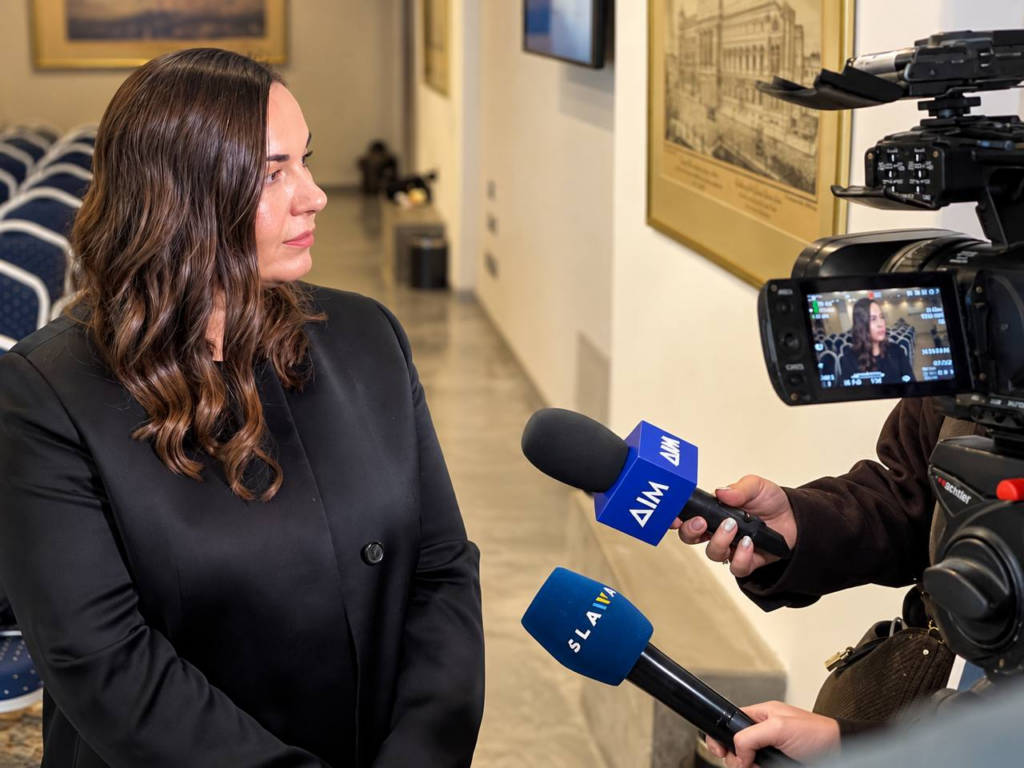
As we reflect on the event, we are launching a series of publications featuring some of the most compelling materials and speeches. Opening the series is an emotional and deeply moving speech by AIRPPU CEO Oksana Brovko at the opening ceremony. She spoke about the exhaustion and everyday resilience of Ukrainian media professionals, about small lights in the darkness, and about why the work of local media has now become a matter of saving human lives.
***
When my children go to bed, I leave a small night-light on in their room. It barely gives off any light. It simply creates a small circle of brightness. The children may wake up during the night, see it, and know: they are not alone. I am here.
I think adults sometimes need the same thing. Not solutions to all their problems.
Just knowing that you are not alone.
Over these five years of full-scale war, we have learned all too well what it means to be afraid of the night. And now we also know what it means to endure relentless shelling during the day. What it means to check the movement of drones before going to bed and to wake up to explosions.
Staring at your phone, waiting for a message from someone you love. Leaving a city without knowing whether you will ever return. Opening your newsroom after a shelling, when the key gets stuck in a door warped by the blast. And, all too often, being forced to clear the rubble at the very place where, only yesterday, you were working on an investigation.
We know what it is like to bury colleagues, and then go back to work as if life had not stopped for someone. To smile as you answer “alive!” when someone asks, “How are you?” To routinely and almost automatically check information about expected attacks — by now, even more often than we check the weather.
I don’t want to say today that we are unbreakable. I think we are all tired of that word, because we are exhausted: some of us deeply, some to the point where we no longer even talk about it. Someone has lost a friend. Someone’s home has been destroyed. Some have lived alongside the front line for years. Some people check every morning to make sure everyone is alive before they even have their coffee.
We are exhausted — and that is the truth. But even when we have almost no strength left, we can still do something for the person next to us. That is the role of independent media.
Look at what the media are writing today for people who remain in frontline cities. The Hryvna newspaper in Kherson tells them: “Open all the locks.” Because a locked basement or entrance, which in peacetime meant order and safety, can become a trap during a drone attack. “Do not try to outrun a drone by zigzagging.” Because now you have to do more than simply run: you need to listen, see the next shelter, and know where you are heading if you hear the sound. “Do not drive at dusk with your headlights on.” Because the light from your car can make you visible to a drone from many kilometers away. “Close your windows.” Because an FPV drone can fly through an open window.
And perhaps the scariest thing is not any one of these headlines, but the fact that they have become ordinary headlines in our local media — on pages where, today, you are explaining to people not only what has happened, but how to stay alive until tomorrow. How to get through the cold. How to keep a child warm. How to preserve water. How not to break down psychologically. How to hear a drone or find shelter. How to make it home.
There are so many stories in the local media of Kherson, Sumy, Kharkiv, and Zaporizhzhia that are meant for the person who simply wants to make it through one more day. And there is a journalist doing their job at that very moment. For me, that is the simplest explanation of why we are needed.
War can so easily turn a person into a number: the number of people killed, the number of homes destroyed, the number of people who have left, billions in losses. But the media give that person their name back.
And I want us not to remain just a number today, either. There are around 200 people in this room right now.
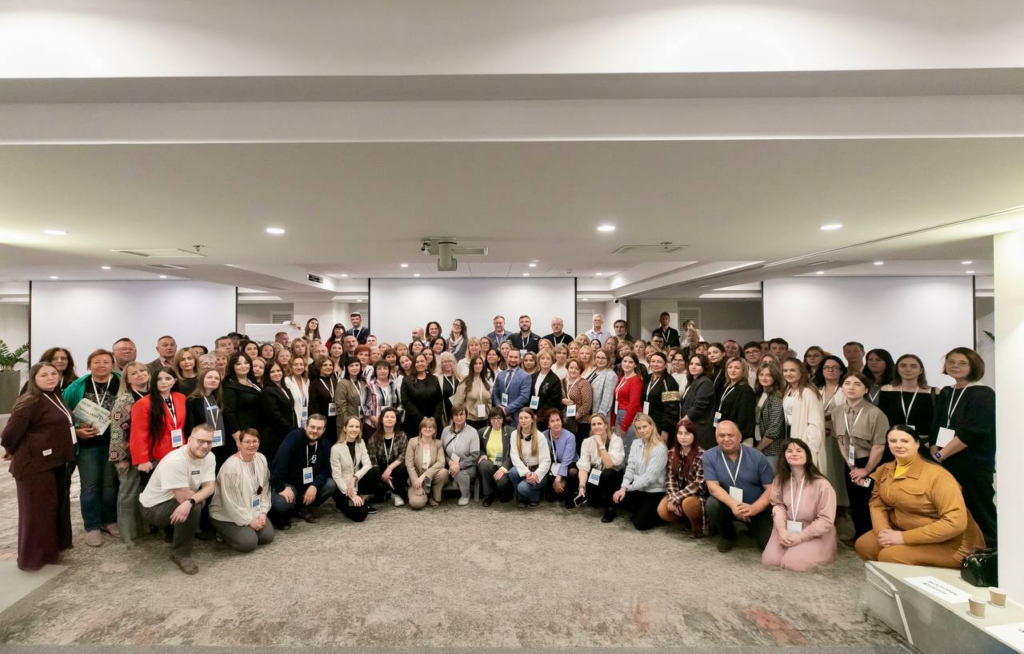
58 media outlets from 43 cities across 21 regions of Ukraine. Together, we reach at least 25 million readers.
I want us to look at one another now. I will name a region, and I ask those who came from there or work for readers there to stand up: Vinnytsia, Volyn, Dnipropetrovsk, Donetsk, Zaporizhzhia, Kyiv, Kirovohrad, Luhansk, Lviv, Mykolaiv, Odesa, Poltava, Rivne, Sumy, Ternopil, Kharkiv, Kherson, Khmelnytskyi, Chernivtsi, Chernihiv.
Look around. Here we are. We are the people that others in our cities call when they need to find something out, verify something, or understand what is happening.
Thank you for being here today.
But to continue doing this work, we need support and reliable partners by our side. Over the past few years, people and organizations from different countries have become such partners for Ukrainian media.
Today, we are joined by colleagues from Norway, Finland, Canada, Poland, Croatia, and other countries that support independent Ukrainian regional media. Thank you for standing by us — back then, in 2022, and now.
I am happy that today you are not just the word “partner” on a screen, but are here among us. Thank you for once telling me: “We will be there for you.”
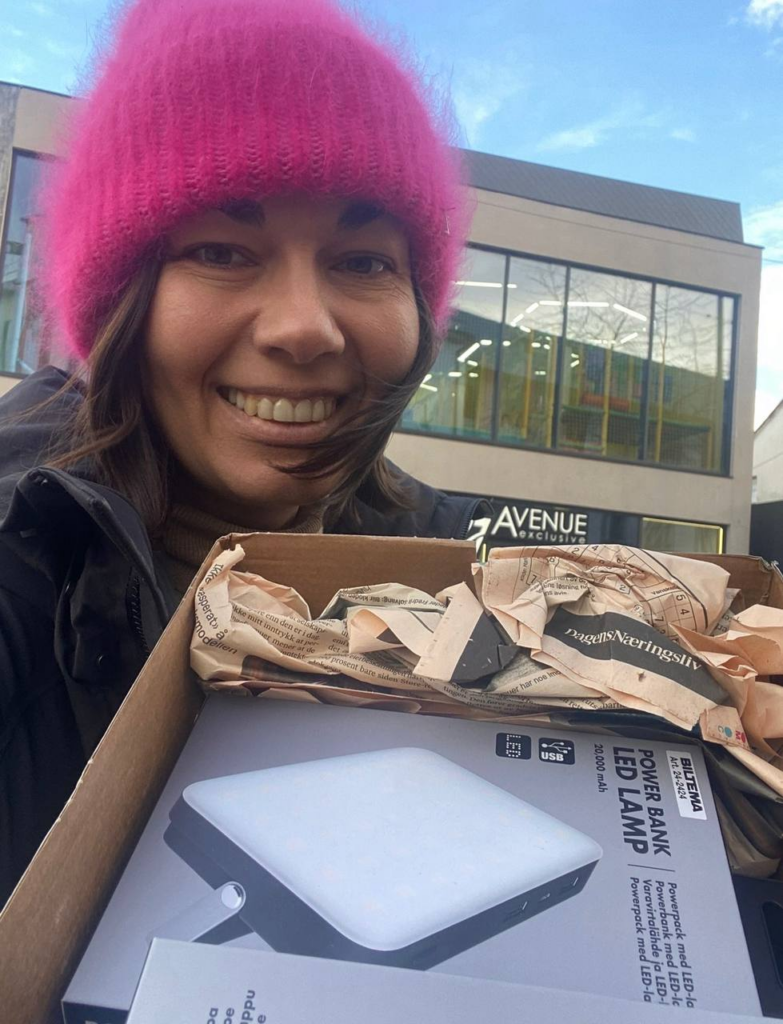
I remember one such act of support very well. The Norwegian Media Businesses’ Association sent me two boxes of lamps. At the time, there were often power outages in newsrooms. I distributed them among my colleagues and kept one for myself. I still have it.
Randi from MBL is here today. Of course, those lamps could not stop the war. They simply gave off light. But for a journalist working in the dark, that mattered. And I often think about why.
We are used to thinking of help as something large-scale. But every small act matters greatly.
We cannot save everyone, and we cannot be strong all the time. But we can help the person next to us, here and now.
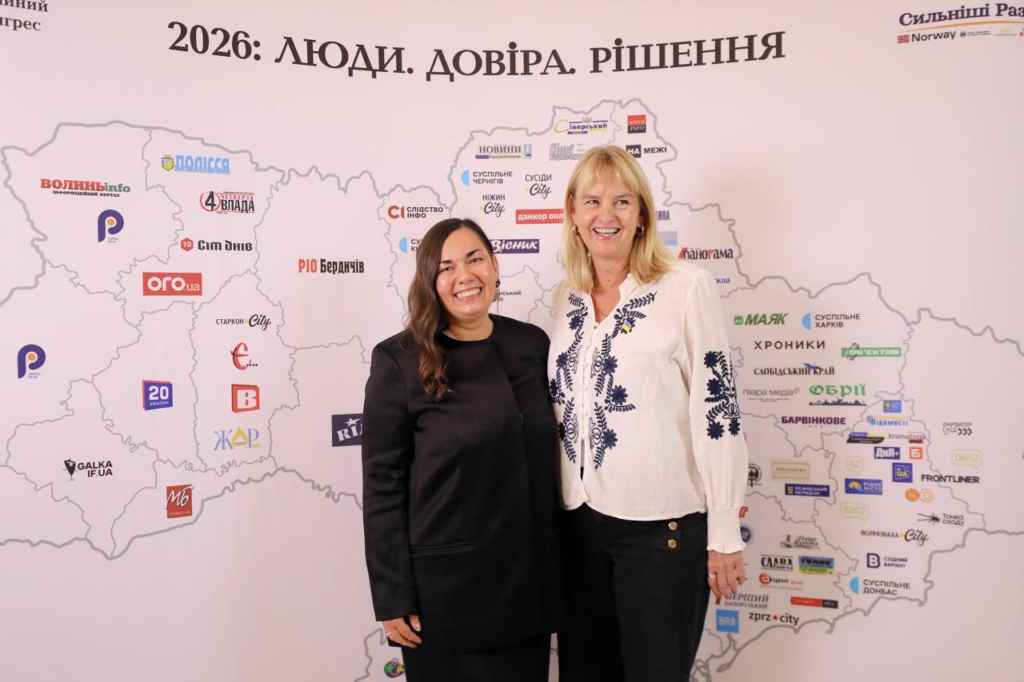
The light does not have to illuminate the whole room. It is enough for it to be on.
Resilience, freedom, independence — these sound like big words. But in real life, they are found in ordinary work: when you verify information even though simply republishing it would be faster. When, after a call from a local government official, an editor still decides to publish the story.
Our resilience today is an exhausted newsroom manager in Odesa who, after a sleepless night, still returns to work and opens the newsroom door. It is an editor from the Kharkiv region who decides to go to the front. It is a journalist from Zaporizhzhia who puts on a bulletproof vest and delivers her newspaper to her readers on the front line.
Our resilience is not always about loud, grand gestures. Very often, it is the small steps taken by tired people that still move us toward victory.
In the first years, we learned how to withstand. But we cannot spend the next years simply surviving. We need to build media that people will need five and ten years from now. We need to learn how to succeed. Build communities. Use new technologies and create new products. And, at the same time, never give up our independence.
Because the future of Ukrainian media will not begin after the war. It is being shaped by the decisions we make right now.
Five years ago, Randi gave me two boxes of small lamps. I kept one. Randi, look. It is still shining.
Thank you all for being here today. And welcome to the 15th Media Congress.