Working in local media during wartime means striking a daily balance between reporting events promptly and keeping your own team safe. At the editorial offices of the newspapers Dlia domu i simyi and Kremenchutskyi Telegraph, where journalist and editor Oksana Hrynychenko works, the team has made a conscious decision not to pursue speed at any cost. For Oksana, the priorities are clear: ensuring the safety of team members in the field and taking a thoughtful approach to sensitive topics.
We are continuing our series of conversations with media professionals working during the war, this time focusing on the challenges facing women leading regional media. We speak with women leaders, including participants in our WIN Leadership Accelerator programme, about practical safety measures and on-the-ground risk assessment, making difficult and unpopular decisions, finding effective ways to engage with audiences during wartime, and the personal rules that help them avoid burnout and keep their editorial teams going.
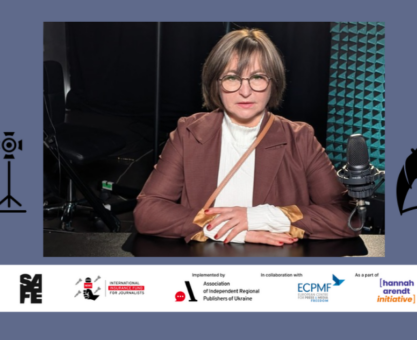
Today, we bring you the story of Oksana Hrynychenko, editor of the newspaper Dlia domu i simyi and journalist at Kremenchutskyi Telegraph.
Safety: Practical Measures and Risk Assessment
— Oksana, can you recall the most recent incident when your team had to work in a high-risk situation? How did you decide whether or not to go to the scene? What did you allow your journalists to do, and what did you categorically rule out?
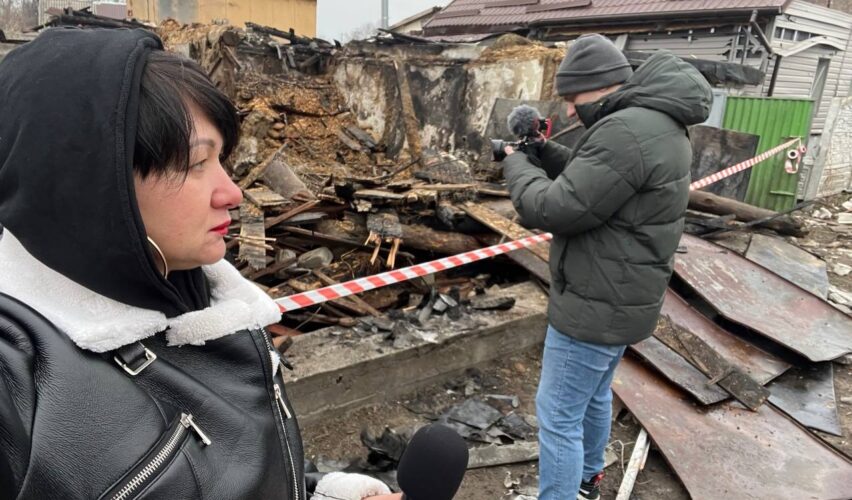
— One of the most recent incidents of this kind was a missile strike on Kremenchuk. I was nearby when it happened. I filmed what I could and what was safe to capture at the time, but after that, my colleagues and I followed our safety protocol to the letter.
As an editor, my guiding principle in such situations is that no story and no shot is worth a journalist’s life. That’s why no one on our team goes directly to an impact site during an air raid alert. We also take the risk of follow-up strikes into account and don’t rush to the scene immediately after an attack. That time, we waited until the all-clear was given before heading out to cover the aftermath.
I didn’t have to tell my journalists, “No, you’re not going there”, because these rules have already become part of the professional culture in our small team. Everyone understands the procedures and knows where the limits of acceptable risk lie. At the same time, as the team leader, I believe it’s important that the ultimate responsibility for such decisions rests with me.
If I see that the risk is too high, I’m prepared to say: we’re not going. It’s better to lose the opportunity to report a story immediately, or even miss the story altogether, than to put someone’s life at risk for the sake of a few photos or a minute of video.
— What safety checks are mandatory before a high-risk assignment? How does your newsroom handle insurance and protective equipment? What is working well, and where are the gaps?
— Before any potentially high-risk assignment, we first assess the situation and the risks: whether an air raid alert is in effect, what we know about the location, and whether it is safe to go there at that particular moment. It is essential to me that a journalist never goes to a scene simply because we need to get photos or information as quickly as possible.
Our newsroom has body armour, helmets and first-aid kits. Our journalists have attended safety training sessions, but that was several years ago, so I realise this knowledge needs to be regularly refreshed. In wartime, you cannot attend a training session once and consider the matter of safety settled.
Insurance is a separate issue. Our newsroom is small, we work mainly in Kremenchuk and do not regularly send journalists on assignments to high-risk areas. As a result, we have not yet taken out separate insurance for journalists undertaking such assignments.
But my position is clear: if we need to send a journalist on a dangerous assignment, insurance will be one of the mandatory requirements. Perhaps the biggest challenge for small regional newsrooms is a lack of resources. But limited resources can never justify putting people’s lives at risk. If we cannot provide a journalist with an adequate level of protection, they should not go.
— Have you ever had to change the focus of a story, conceal a source’s identity, postpone publication or abandon a story altogether for safety reasons? How did you explain this to your team and readers?
— I have never had a situation where a finished story had to be pulled from publication because it posed a threat to the person featured in it. I think that’s because we discuss safety issues before we even start working on a story. If someone wants to remain anonymous, we decide in advance exactly how we will present them. We don’t disclose their name or show any details that could identify them. If it’s a video, we can film the person from behind or in a darkened room, blur their face, alter their voice — we do whatever is necessary to make sure they cannot be recognised.
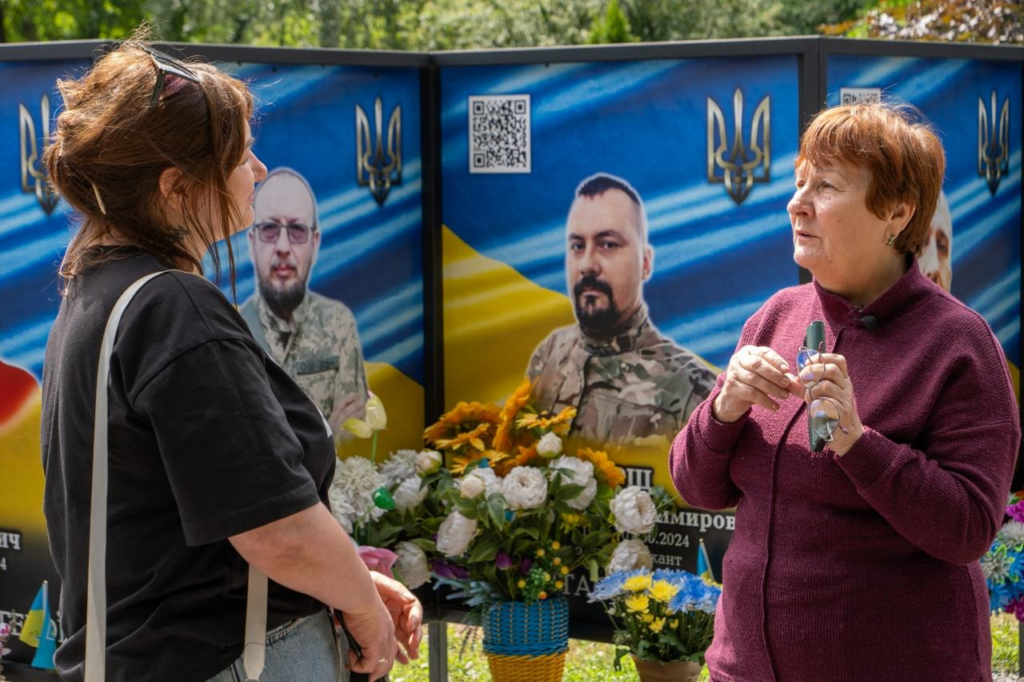
But there’s another aspect that I consider equally important. Sometimes people experience very intense emotions and, in that moment, are willing to share far more than they might actually want to see published later. We need to be particularly careful when working with people who have experienced traumatic events. Simply obtaining someone’s consent to an interview is not enough for me. That’s why we don’t just ask, “Do you agree to this?” We may ask for confirmation several times, explaining where the story will be published, who might see it and what consequences going public could have. People need to understand that once a story is published, their words may remain in the public information space for a long time.
For me, this is also part of journalistic responsibility.
Our job is not to take advantage of a moment when someone is willing to say everything, but to make sure they understand the consequences and genuinely want to speak publicly. Only then do we proceed with the interview.
— How do you support your team after difficult or traumatic assignments, when the physical danger has passed but the psychological strain remains?
— Today, I wouldn’t say that journalists’ psychological strain is linked exclusively to assignments in dangerous areas. We all live and work in wartime conditions, where danger has become part of everyday life. On top of that, journalists are exposed to other people’s pain every day: they work at missile strike sites, attend funerals, speak with the families of those killed, military personnel, veterans and people who have experienced traumatic events. And all of this is impossible to simply leave at the newsroom door. We are a small team, so we are very aware of how each other is doing.
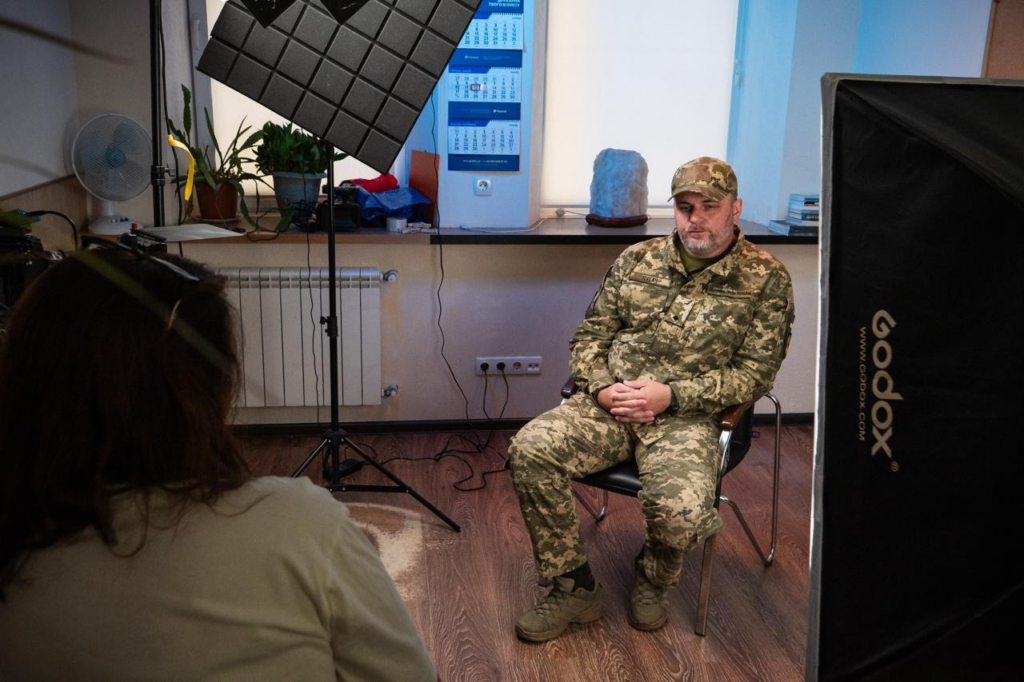
Our newsroom does not have a dedicated, ongoing psychological support programme, but I try to make use of every opportunity available. Whenever I come across psychological recovery training, programmes for journalists or opportunities to receive professional psychological support, I always bring them to the team’s attention. And this applies even when someone has not just returned from a high-risk assignment. Sometimes it’s important simply to spend a few days in a different environment, switch off, take a breath and recover. I believe that a team leader should pay attention not only to whether a story has been filed or an issue has gone to print on time.
You need to look after the people around you.
If a journalist is constantly working with difficult stories, we shouldn’t wait until they say, “I can’t do this anymore.” It’s better to offer support before that point. For me, caring for the team’s psychological well-being is just as much a part of safety as body armour, a helmet or a first-aid kit. Physical danger may pass in a matter of minutes, but the stories we see and hear during the war stay with us for much longer.
Women in Leadership: Decisions and Lived Experience
— Have you ever had to be an “unpopular leader” — say a firm no, let someone go, put an end to a conflict or go against the majority? Could you tell us about such a situation and its consequences?
— I find it difficult to let people go. We have a small team, we work closely together and know each other well, so for me, letting someone go is never just a staffing decision. I always try to find a compromise first, understand the reason behind the problem and give the person another chance.
I’m quite accepting of mistakes. Even a serious mistake is not, in itself, a reason for me to part ways with someone if I can see that they acknowledge it, are making an effort and want to put things right. People make mistakes and go through difficult periods, especially now, during the war. And I believe a team leader needs to take that into account.
But experience has taught me something else: there is a big difference between someone who makes a mistake and someone who consistently has no willingness to work.
If I see a persistent pattern of avoiding responsibility, unwillingness to do one’s share of the work, passing tasks on to others and making no effort to change, then I’m prepared to say a firm “no” and part ways with that person. Because in a small newsroom, one such person affects everyone. They take up an enormous amount of the manager’s time and energy, their colleagues have to pick up the slack, and fatigue and resentment build up. Ultimately, the whole team suffers.
Perhaps one of the things I’ve learned as a leader is not to confuse being humane with making endless concessions. Giving someone a chance is the right thing to do. But giving them an unlimited number of chances when nothing changes is unfair to those around them who are doing their jobs conscientiously.
— How do you strike a balance between demanding results and caring for people? Where do you draw the line between supporting your team and being overprotective?
— In a small newsroom, it’s very difficult to draw a clear line between professional and personal relationships. We’ve worked side by side for many years, we know what’s happening in each other’s lives and understand when someone is genuinely struggling. This is especially important during the war, because practically every one of us has our own circumstances, losses, anxieties and family problems. So I always try to understand the person first.
If a journalist needs time, is dealing with family circumstances, emotional exhaustion or simply going through a difficult period, I’m willing to be flexible, redistribute the workload and give them an opportunity to recover.
I don’t believe a good leader is someone people are afraid of.
At the same time, we have a newspaper that needs to come out on time. We have readers, deadlines and a responsibility to ensure the quality and accuracy of the information we publish. So I do have high expectations when it comes to results. If you take on a task, you are expected to do it well.
For me, the line between support and overprotectiveness is crossed when a manager starts doing someone else’s job for them on a regular basis. Helping — yes. Stepping in when it’s genuinely necessary — yes. But if it becomes a pattern where the manager constantly reminds people, monitors every step, corrects their work and finishes it for them, that’s no longer support.
I want the people on my team to know that if they’re genuinely struggling, I’m there for them and ready to help. At the same time, each of us is responsible for our own part of the work we do together.
I believe it is precisely this combination of trust, humanity and personal responsibility that holds our small team together.
— How has your leadership style changed since taking part in the WIN Leadership Accelerator? Can you name a specific habit, approach or decision that you have changed or started applying differently?
— The main thing I learned after the WIN Leadership Accelerator was how to say “no”. Previously, it was much harder for me to turn down an offer, a request or an opportunity, especially when it involved my professional network.
Now I understand that saying “no” is also a management decision. It doesn’t mean you’re letting someone down. Sometimes you’re simply choosing what really matters most at that particular moment.
Recently, I had to make exactly that kind of choice: I turned down an opportunity to attend a journalism congress that was extremely important to me because I was scheduled to speak at the 63rd session of the UN General Assembly at the same time. In the past, I might have tried to juggle both commitments right up to the last minute.
The second major change is that I’ve learned to delegate. For a long time, my approach as a manager was that it was easier and quicker to do things myself. This is especially true when you work in a small newsroom: you can write a story, edit it, organise something, oversee the process — and gradually you find yourself taking almost everything on your own shoulders. But that’s a path to burnout, and it also shows a lack of trust in your own team.
Now I’m learning to delegate tasks without hovering over people and monitoring their every move. It’s about trusting colleagues, giving them responsibility and the freedom to find their own solutions.
And I’ve realised something very simple: when you give someone room to work and show them that you believe in them, they often achieve even more than you expected. Perhaps this is what has changed my understanding of leadership more than anything else.
A leader is not someone who can do everything themselves. A leader is someone who can bring a team together, trust its members and make difficult decisions.
Content, Audiences and Media Sustainability
— Can you tell us about a specific story or experimental format that resonated particularly strongly with your audience, perhaps more than you expected? Why do you think it worked?
— One example is my story about a veteran who served on the front line, suffered a serious injury, underwent an amputation and is now learning to live with his new circumstances. The story received tens of thousands of views, which was further confirmation for me that audiences respond strongly to honest, deeply human stories.
I do a lot of work on veterans’ issues, particularly with people who have suffered serious injuries or undergone amputations. And I try to portray them as more than just their trauma or loss.
It’s important to me to show how a person moves forward: the challenges they face in everyday life in an ordinary city, how they return to work, build relationships, start their own business and stand up for their rights.
It’s important to me to show how a person moves forward: the challenges they face in everyday life in an ordinary city, how they return to work, build relationships, start their own business and stand up for their rights.
Why do these stories resonate? I think it’s because, behind the overarching story of the war, readers see a real person. Not a statistic or an abstract “veteran”, but someone from their own community.
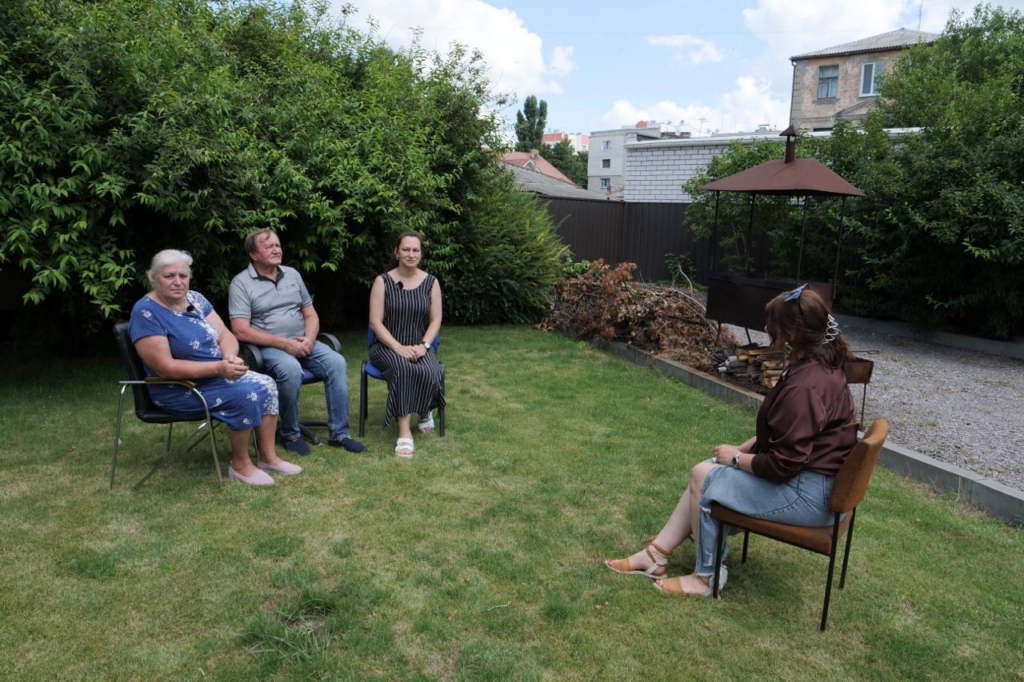
I’ve also realised that local journalism can do more than just tell stories — it can influence what happens after a story is published. People call, offer help, support those featured in the stories and start discussing issues such as accessibility and veterans’ transition back to civilian life.
That’s why one of the most powerful formats for me today is people-centred journalism. You can talk at length about a major issue, but sometimes one honestly told human story explains it far better than dozens of figures.
— Is your audience willing to pay for media or support it financially? What have you tried so far — donations, subscriptions, crowdfunding, membership communities? What has delivered tangible results, and what hasn’t?
— Print journalism is my main area of work, and here the answer is clear: yes, our audience is willing to pay for media. The newspaper is distributed through subscriptions and sold as a single copy. In other words, the business model of a print publication is based on readers paying for content they trust and want to receive regularly.
The situation is more complicated with online media. So far, we haven’t managed to build a model in which the stories I work on directly generate revenue for the newsroom. We don’t have an established system of donations or paid subscriptions for this content. But I’ve noticed another very interesting response from our audience. When I write about veterans, their return to civilian life, or the challenges they face after serious injuries or amputations, readers often get in touch after publication to ask: “Where can we find their bank details? How can we help this person?” And people really do help. For me, this is a very important indicator of trust in both the story and the media.
At the same time, it’s important to be honest: this money goes to the person featured in the story, not to the newsroom. So this kind of journalism does not yet provide a financial safety net for the media itself. But I also see it from a longer-term perspective.
Quality content helps grow the audience, while honest reporting on difficult issues builds trust in the media. And trust is a form of capital too.
A larger and more loyal audience makes the media more valuable to advertisers, partners and potential collaborators on new projects.
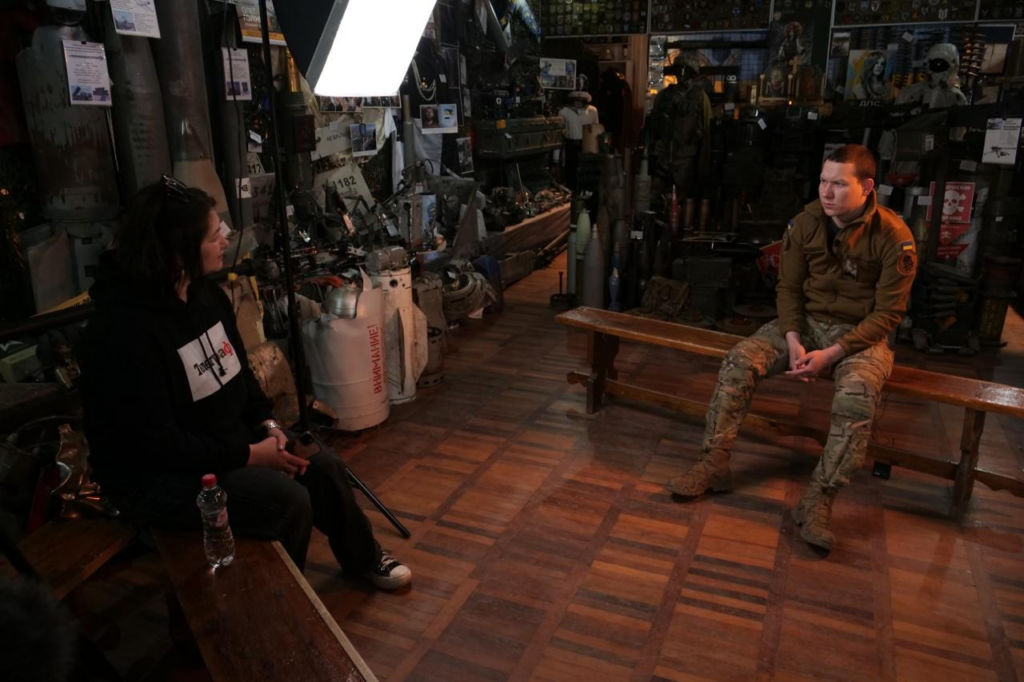
That’s why our task is not simply to find ways to monetise every story immediately, but to build a community of readers who trust us. In the longer term, we can turn that trust into a more sustainable financial model for the media. Although, given the realities we face today, I have very little faith in the prospects for paid subscriptions to regional news websites.
— How do you remain a media organisation serving your community when that community itself has become dispersed — some people have left, some are living in evacuation, while others remain under threat?
— In our case, I would say that the community hasn’t simply become dispersed — it has changed and grown. Kremenchuk has become one of the cities where many people from frontline and occupied territories have relocated because of the war. These people are gradually becoming part of our community and, consequently, part of our new audience.
We can see this happening. We’re now being read by people who had no connection to Kremenchuk just a few years ago but who now live and work here, take their children to school, use the city’s services and want to understand what’s happening in the city. For them, local media is one way of becoming part of their new community.
But there’s another important aspect. It’s not just individuals who have relocated to Kremenchuk; representatives of entire communities have moved here too. So we try not to lose sight of the issues and news that matter to those communities. We follow their news and cover it on our website because we understand that, for some of our new readers, this remains an important part of their lives.
The war has profoundly changed my understanding of what local media really means.
Previously, things were fairly straightforward: there was a city and its residents — that was your audience. Today, the boundaries of the community are much broader. Some Kremenchuk residents have left, while thousands of new people have arrived, bringing their own stories, problems and information needs.
So our task is not simply to remain a media organisation “for those who have always lived in Kremenchuk”, but to serve the people who live here today — whether they were born in Kremenchuk or have only recently come to call this city home.
What Keeps a Leader Going
— How do you recognise that you’re approaching burnout, and what specific habits or rules help you restore your energy?
— For me, one of the first signs of exhaustion is when even ordinary work-related matters start taking up too much energy. It becomes harder to concentrate, and I get the feeling that there’s always something I have to do and never a moment to stop. My typical response used to be to throw myself even deeper into work: pull yourself together, get things done, keep going. Now I understand that you cannot keep drawing on your own reserves indefinitely without replenishing them.
I’ve developed a few small routines to help me recharge. I do a lot of walking, love spending time in nature, try to travel and change my surroundings, even if only for a little while. I also swim in cold water. For me, it’s an incredible reset: the cold seems to switch off all the unnecessary thoughts instantly, restores my sense of energy and helps me shift gears.
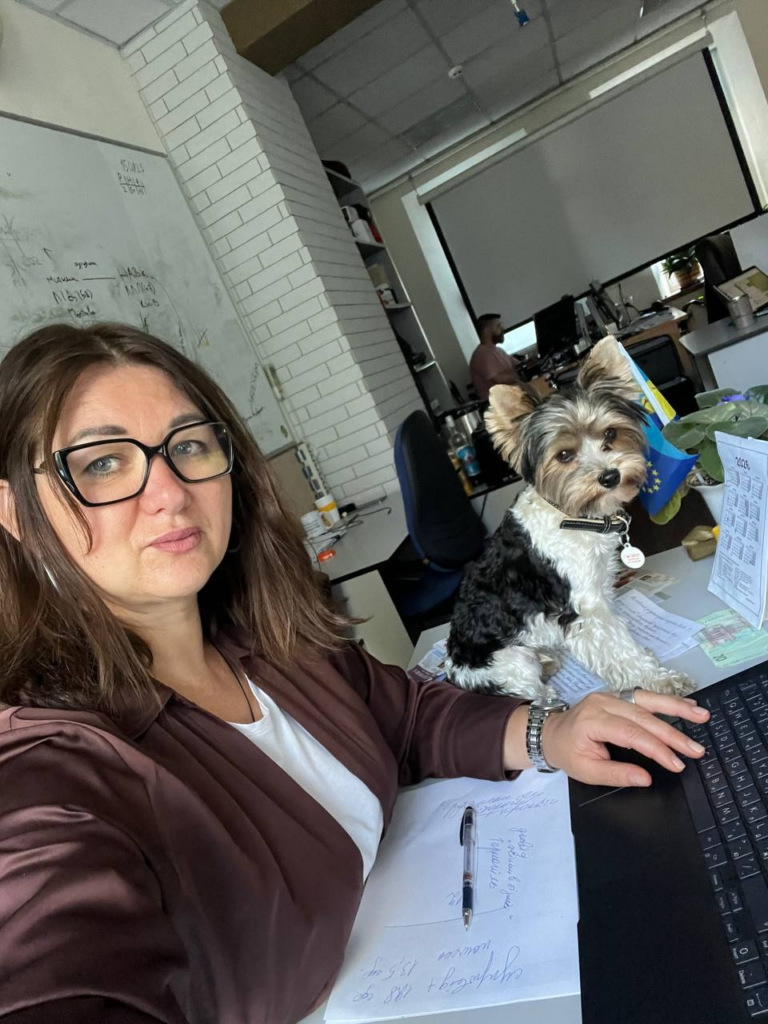
Another personal stress reliever has been my little dog. I got her last year and had no idea how much she would change my daily routine. I take her for walks and often bring her to work with me. Sometimes all it takes is stepping away from the computer for a few minutes, playing with her or going for a walk together, and the tension starts to ease. She’s become something of a little “therapist” for our newsroom.
Another thing I’m gradually learning is not to take everything upon myself. This is directly connected to delegation. When you trust your team, you realise that the world won’t come to a standstill just because a particular issue is handled by someone other than the manager.
And perhaps most importantly, I’m learning to stop treating rest as a reward that you first have to earn. During wartime, when we’re constantly living with anxiety, working with difficult stories and other people’s tragedies, taking time to recover is a necessity.
— Looking back on your leadership journey from where you are today, what’s the one piece of advice you would give yourself at the very beginning?
— If I could tell myself something at the start of my leadership journey, it would be: “Don’t try to prove that you can do everything yourself.” For a long time, I thought a good manager had to know everything, keep everything under control, be everywhere at once and, if necessary, do other people’s work themselves. Now I understand that this isn’t a sign of strength in a leader, but the shortest route to burnout. Don’t be afraid to trust people and delegate. Don’t be afraid to say “no” when you know something isn’t your priority. Don’t be afraid to make decisions that some people may not like. And don’t wait until you feel completely ready to take the next step — that moment may never come.
I’d also tell myself: don’t underestimate your own potential. What seems too big or out of reach today may become part of your professional story tomorrow. The key is to allow yourself to grow, try new things and step outside your comfort zone.
And one more thing — take care of yourself. A woman’s leadership career is not a sprint or a competition to see who can endure the most. To me, true leadership today is not about being able to carry everything on your own, but about building a team you can trust and moving forward together.
Quick-fire Questions
1. One thing I’ve stopped doing as a manager. Trying to do everything myself. I’m learning to trust my team and stop monitoring every step.
2. One thing I’ve started doing every day. Finding at least a little time for myself. A morning coffee, having my dog with me at work, going for a walk.
3. A decision I’m no longer afraid to make. Saying “no”. Even to a good opportunity, if I know I have a different priority at the moment.
4. A mistake that taught me a lot. Giving someone too many second chances when it’s already clear that they have no intention of changing. I’ve realised that this exhausts not only the manager but the entire team.
5. One piece of advice for a young journalist aspiring to become a leader. Don’t wait for someone to tell you that you’re ready to lead. Take responsibility, don’t be afraid of difficult decisions, speak in your own voice — and never stop learning.
A Reminder: Free Insurance Coverage Available
Dear colleagues, we would like to remind you that journalists working in high-risk regions can obtain free life and health insurance. This is part of the International Insurance Fund for Journalists (IIFJ) initiative, implemented by the Association in partnership with Ukrainian and European organisations.
Media professionals working in the regions of Kherson, Zaporizhzhia, Sumy, Mykolaiv, Donetsk, Luhansk, Odesa, Kharkiv and Dnipropetrovsk, as well as in border areas of Kyiv and Chernihiv regions, are eligible to apply.
Find out more about the terms of the free insurance coverage here.
***
The International Insurance Fund for Journalists project is implemented by the Association of Independent Regional Press Publishers of Ukraine (AIRPPU) under the SAFE programme (formerly Voices of Ukraine), coordinated by the European Centre for Press and Media Freedom (ECPMF) within the Hannah Arendt Initiative and supported by the German Federal Foreign Office

We would also like to remind readers that the WIN Leadership Accelerator was implemented as part of AIRPPU’s Stronger Together: Gender Equality and Inclusion programme. It was one of the three key components of the Stronger Together project, focusing on developing leadership skills and providing career coaching through the Women in News programme.