Thebuchacity is becoming a community service: explaining, helping, creating spaces for interaction, and launching new formats that bring about real change
A local media outlet becomes stronger not when it publishes more news, but when it turns into a service for its community — explaining, helping, and creating spaces for interaction. This is the approach Thebuchacity is taking: the newsroom is not only increasing the volume of its content but also building trust and providing practical value to Bucha residents.
Like many Ukrainian media outlets, it operates amid war: blackouts, shelling, and instability are forcing the team to seek autonomous solutions and new ways to stay close to readers during the most difficult moments.
We spoke with the publication’s editor-in-chief, Viktoriia Shatylo, about the challenges facing local media and its development. In the first part, read about quality content, audience engagement, growing the team, and new formats.
A Management Case: Reallocating Time
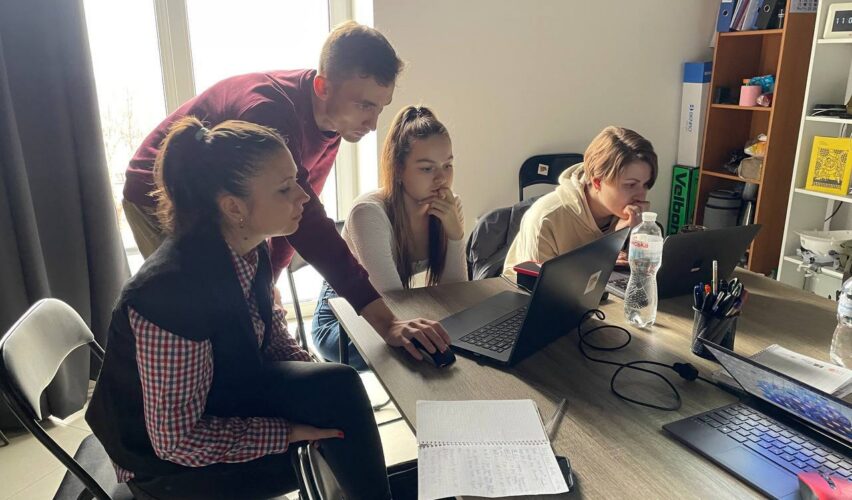
An important step for the team was creating a dedicated weekend editor position. Previously, the journalists took turns covering weekends themselves, leaving little time for in-depth stories. Once someone took responsibility for this area, the team’s workload became much more manageable.
“This freed up the other journalists’ time and allowed us to work on more in-depth stories. We were able to launch new formats — interviews, features, and explainers — that we simply did not have time to produce before,” says Viktoriia Shatylo.
The change proved to be more than an organizational adjustment; it was also a strategic one. The newsroom gained an opportunity to broaden its coverage and offer the community a new product that became an important tool for engagement.
Community and Explanatory Journalism
The freed-up capacity allowed the team not only to work on new formats but also to engage more deeply with the community. Thebuchacity began producing explanatory content that helps residents understand decisions made by the city authorities and make sense of local issues. These stories have become a practical tool for people.
“We see readers turning to us as a media outlet that can explain what is happening and help them find solutions. That is an important indicator for us: we are not just informing people, but genuinely helping the community,” says Viktoriia.
This is how a community is forming around the publication: people are no longer passive news consumers but actively engage with the newsroom, bringing their questions and problems to the team. For the newsroom, this confirms that the media outlet is becoming a service with practical value in the life of the community.
Staffing Decisions and Team Development
Thebuchacity’s development is driven not only by new formats but also by changes within the newsroom. The team gradually separated editorial and management responsibilities so that each person could focus on their respective area. This helped prevent overload and made the newsroom’s work more structured.
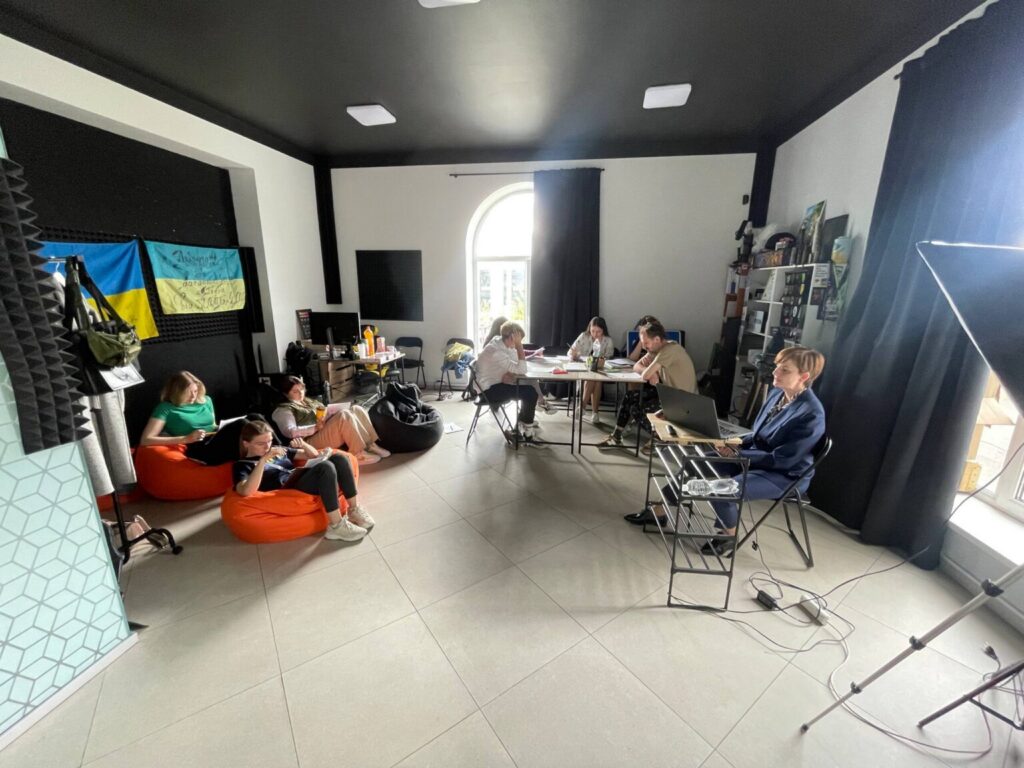
“We are trying to structure our processes so that journalists can focus on content, while managers focus on organization and development. This helps us work more efficiently without compromising quality,” says Viktoriia Shatylo.
Training programmes have also become an important resource. The team has taken part in various trainings, including sessions on using artificial intelligence, such as the August Newsroom AI Masterclasses. This is helping the newsroom strengthen its resilience and ability to respond quickly to challenges.
Participation in the “Stronger Together: Financial and Organizational Sustainability” and “Stronger Together: Gender Equality and Inclusion” projects has provided additional support for the newsroom. The programmes allowed the team to receive institutional support, undergo training, and exchange experience with colleagues from other regions. This strengthened the newsroom’s management capacity and helped consolidate the changes being introduced within the organization.
SEO and Digital Development
For Thebuchacity, it is important that its stories reach the people who need them. Search optimization helps make content visible to a wider audience, while giving greater visibility to issues affecting the community:
“We see that after our stories are published, local authorities begin responding to issues that had previously gone unnoticed. SEO helps bring these topics to light and strengthens our impact.”
For the newsroom, digital development is a way to enhance the practical value of journalism: residents get answers to their questions, while the community gains a mechanism for influencing decisions made by local authorities.
Partnerships, Monetization and Offline Events
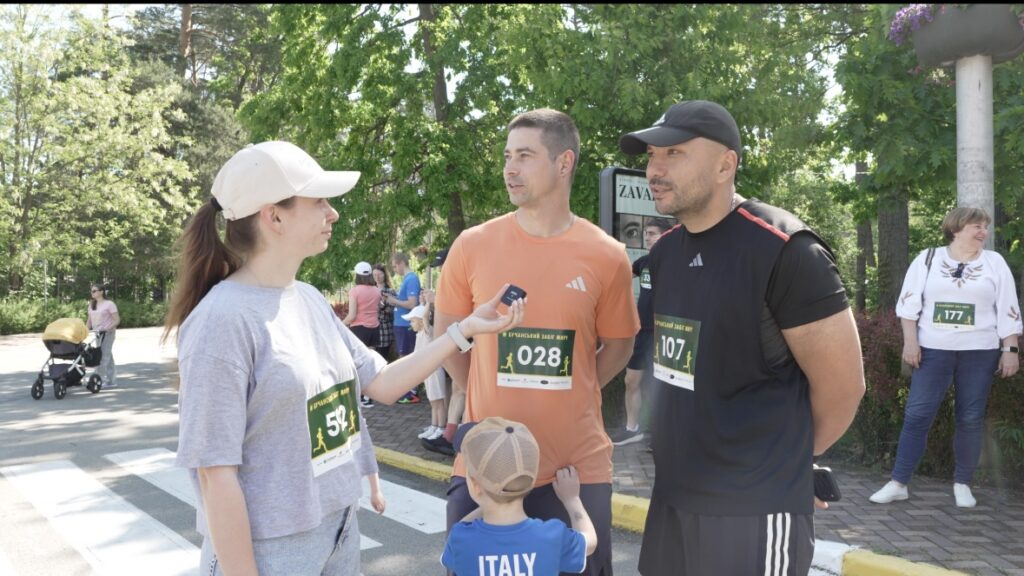
Media sustainability is impossible without financial support. The newsroom is experimenting with different forms of monetization: branded products at festivals, merchandise, and a “Support Us” button on the website. All of this creates additional revenue streams while strengthening the connection with readers, who feel part of the community around the media outlet.
“We work with businesses in a way that benefits both them and the community. It is a partnership that allows us to remain independent and continue growing,” says Viktoriia.
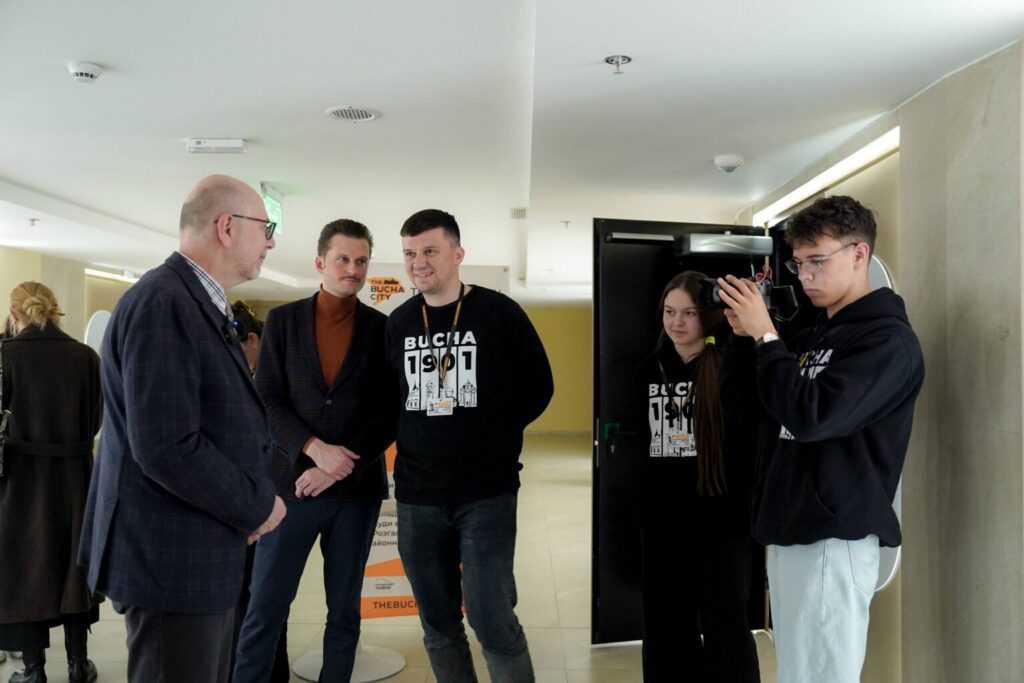
One of the newsroom’s areas of focus has been offline events. Because of restrictions on holding large public gatherings, the team has adapted its format and shifted to more local events without broad public announcements.
“We are currently running, for example, a major tour of residential complexes, where we hold film screenings mainly for children and their parents. This works very well both for maintaining our presence in the life of the city and for engaging with local businesses,” Viktoriia says.
The newsroom brings partners on board for these events. The medical partner for the film screenings is a local clinic, whose representatives take part in the events. The team also works with cafés and other businesses that create their own products or integrate naturally into the format:
“For example, one of the local café-bakeries made special cookies for our events, and we mentioned them as a partner.”
In this way, the newsroom shows businesses that it can be more than just an advertising platform — it can be a partner that helps them build meaningful connections with local audiences.
At the same time, the team is investing in developing its in-house advertising operations:
“Our advertising manager is currently taking a course at Kyiv Media School to strengthen her skills in client relations, sales, and attracting advertising revenue.”
In the second part of the interview, coming soon, read more about diversifying revenue streams, as well as how the newsroom maintains resilience during the war and becomes a “Point of Invincibility” for the community.
A Reminder: Free Insurance and Emergency Support for Media Workers
The resilience and sustainable development of Ukrainian media are under constant pressure from the daily challenges of war. With this in mind, we would like to remind you of two important opportunities: free insurance for journalists and the Emergency Support Programme for Regional Media.
Journalists working in the Kherson, Zaporizhzhia, Sumy, Mykolaiv, Donetsk, Luhansk, Odesa, Kharkiv, and Dnipropetrovsk regions, as well as in the border areas of the Kyiv and Chernihiv regions, can obtain free life and health insurance. This is part of the International Insurance Fund for Journalists (IIFJ) initiative, implemented in partnership with Ukrainian and European organisations. More information about the terms of free insurance is available here.
The Emergency Support Programme for Regional Media is designed to respond quickly to urgent needs: helping newsrooms reprint newspapers after losses, providing equipment or power sources, and more. The programme is ongoing, so applications can be submitted at any time without waiting for a new round to be announced.
More about the programme and eligibility requirements: New Emergency Support Programme for Regional Media
As a reminder, the International Insurance Fund for Journalists, implemented by the Association of Independent Regional Press Publishers of Ukraine, is part of the Voices of Ukraine / SAFE support program, coordinated by the European Centre for Press and Media Freedom. Voices of Ukraine / SAFE is implemented within the Hannah Arendt Initiative and supported by the German Federal Foreign Office