


The Lokator‑Media team left occupied Berdiansk and today works in Zaporizhzhia. We speak with the head of the media, Nataliia Kryvoruchko, about discipline, psychological endurance, and the dignity of a journalist in wartime.
Lokator‑Media is an independent publication about the socio‑political life of Zaporizhzhia region, which continues to record events in the temporarily occupied territories. We speak with Nataliia Kryvoruchko about discipline, psychological endurance, and the dignity of a journalist in war.
“Postponing until tomorrow may not work”
90% of the Lokator‑Media team left the temporarily occupied territories of Zaporizhzhia region, Nataliia says. They have not been home for almost four years. Despite losing access to family memory, friends, and familiar places, the newsroom continues to work—in frontline Zaporizhzhia, under constant alarms and power outages.
The newsroom employs six permanent staff members (and four more contracted specialists). Lokator‑Media is also a media NGO that organizes exhibitions, educational events, and cooperates with foreign newsrooms.
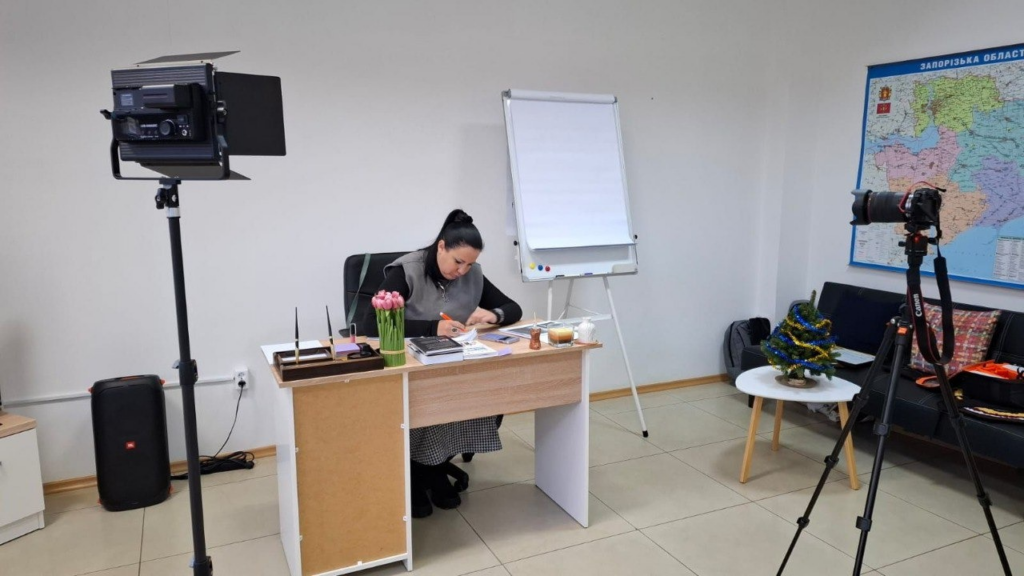
— “Recently, I was in Kyiv,” Nataliia recounts. “I worked for about five hours on the minus fourth floor of a hotel because there was very heavy shelling. The first thing I carried out of the room was my work laptop. Of course, after such a night, you feel shattered—but what can you do? Either safety or ignoring the risks.”
Discipline shapes a new rhythm, characteristic these days, probably for all Ukrainians: you have to work whenever there is an opportunity, because “postponing until tomorrow may not work.”
Every day in the newsroom begins with a roll call—contact with editor‑in‑chief Oleksandr Pylypenko, who serves in the Armed Forces of Ukraine, and with the team in Zaporizhzhia.
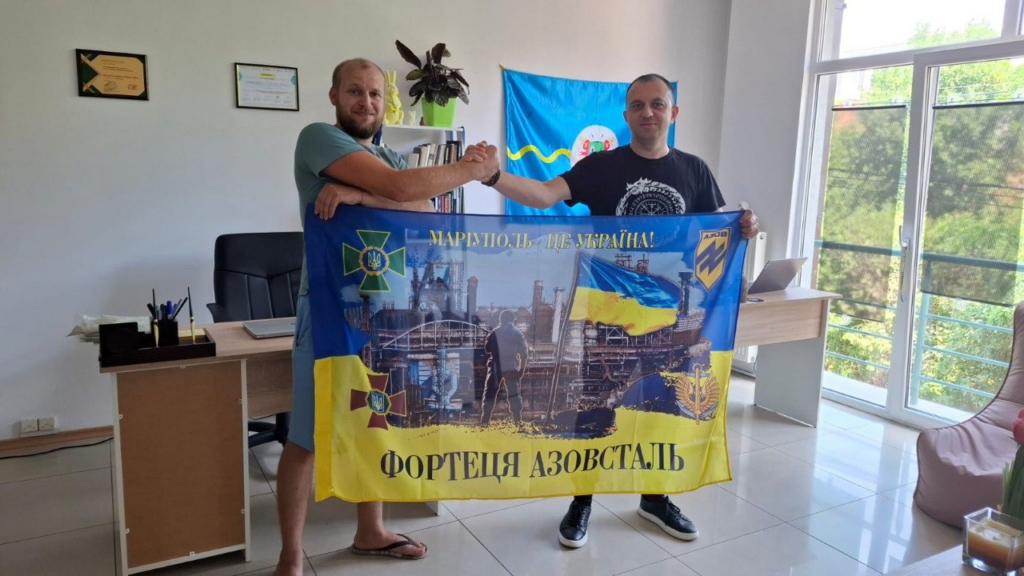
— “This is the foundation. Mobile phones must be charged, laptops as well. We have powerful power banks, flashlights, and EcoFlow devices. First comes checking personal safety; second comes checking the equipment.”
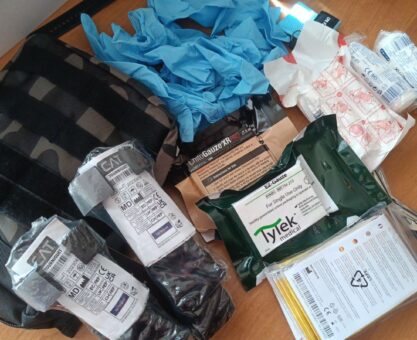
Part of the team has undergone training in first aid, and the newsroom has developed policies on self‑care and emergency evacuation.
Team and Renewal
The newsroom does not go into dangerous communities, but, like most Ukrainians, works under conditions of power outages, round‑the‑clock air raid alerts, and shelling.
— “The understanding that you are not alone, that you are a member of a team—all this keeps us together,” Nataliia recounts.
For journalists, days off and sick leave are provided, but the leadership works overtime.
— “Sometimes, despite fatigue or burnout, we continue to work. This is wrong, but the lack of staff forces us.”
With the beginning of the full‑scale invasion and the occupation of their native city, the resource for recovery has been significantly reduced. If earlier it was possible to gather by the sea, Nataliia says, now it is only short pauses or personal “rituals.”
— “Sometimes after a difficult conversation you want to take a pause. The editor‑in‑chief, before mobilization, used to go play the drums; I love going to the theater; other journalists devote more time to their children.”
“Youth in Occupation” and the Daily Moral Challenge
The most difficult topic in the work is occupation.
— “Every day we record all events in the temporarily occupied territories, understanding that all this is happening in our native city. This is a daily moral challenge.”
The content of Lokator is mainly texts. But now the newsroom has begun to work actively with video content.
— “Traditionally, we worked with topics of anti‑corruption investigations, monitoring and control of authorities, and during the election period, we actively covered issues of party financing. With the beginning of the full‑scale invasion and the occupation of our region, already by 75%, we could not but focus on the issues of the temporarily occupied territory of Zaporizhzhia region.”
Almost 50% of the newsroom’s content is now devoted to events in the temporarily occupied territories. Among the topics are collaboration activities, the politicization and militarization of children, and ecocide. A separate direction is the coverage of cases of civilian imprisonment: sometimes it is possible to establish names and surnames, which becomes a great stress for their families.
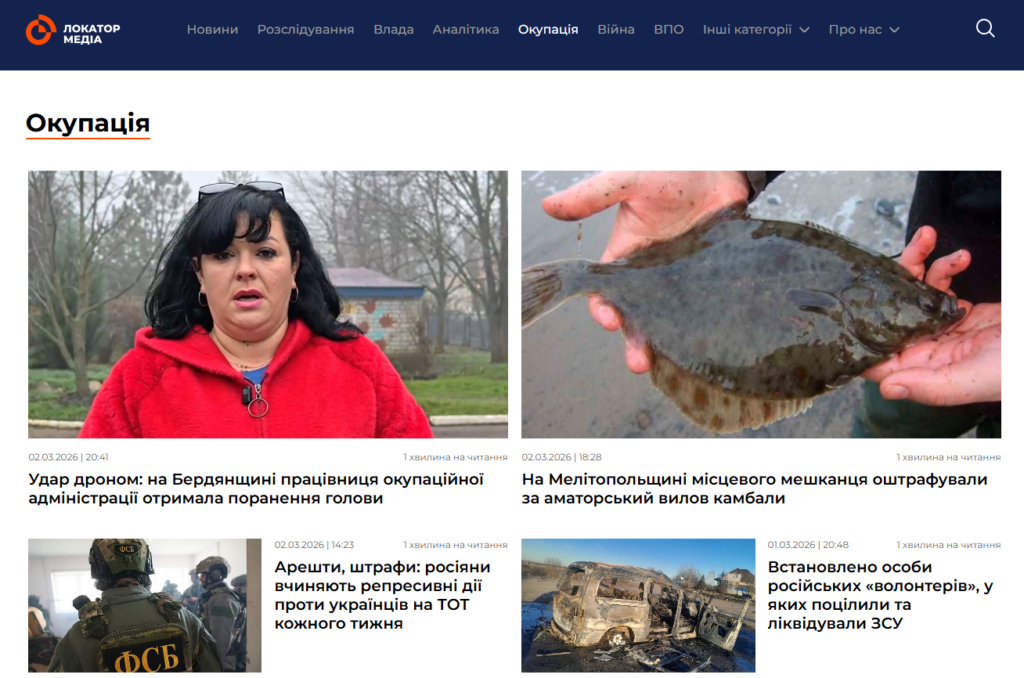
Sometimes it is necessary to change the format of materials for ethical reasons:
— “We had a project ‘Youth in Occupation.’ One of the participants refused to publish her video interview. So we had to completely transform the material, convert it into text format, and remove the photos.”
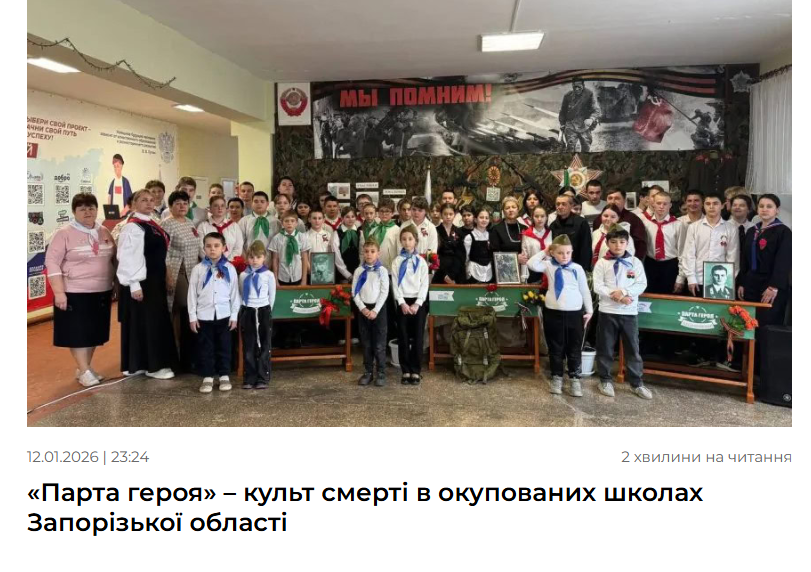
Separately, it is worth mentioning the “Enemies of Zaporizhzhia” database — as Natalia describes it, the first and only regional database of collaborators and occupiers. It already contains over 700 profiles with documented evidence of cooperation with Russia. The outlet publishes openly, not anonymously, fully aware of all the risks.
At the end of the conversation, we asked about dignity in the journalistic profession.
— “Dignity in the work of a journalist during war is adherence to standards and the code of ethics, self‑regulation, and humanity. We must understand that the person comes first, and only then coverage and reposts.”
Take care of your safety
The Association of Independent Regional Press Publishers of Ukraine (AIRPPU) offers journalists working in dangerous regions the opportunity to obtain life and health insurance. This is part of the International Insurance Fund for Journalists (IIFJ) initiative, implemented in partnership with Ukrainian and European organisations.
Media professionals working in Kherson, Zaporizhzhia, Sumy, Mykolaiv, Donetsk, Luhansk, Odesa, Kharkiv, and Dnipropetrovsk regions, as well as border areas of Kyiv and Chernihiv regions, can apply. More information about the terms of free insurance is available here.
This publication continues a series of interviews with media professionals working in frontline and border regions. Previously, we published interviews with Zarina Zabrisky (Parts One and Two), Oleksandr Kachura, Vladyslav Safronov, Natalia Bilokudria, Serhii Horbatenko, Yevhen Khrypun, Anna Kaliuzhna, Polina Kulish, Nadia Sukha, Nadiia Karpova, Oleksandr Solomko (Parts One and Two), Diana Butsko, Oleksii Pasiuha, Oleksandr Chubukin, Aliona Serhiienko, and Olha and Serhii Sydorov.
The International Insurance Fund for Journalists project is part of the Voices of Ukraine program, which is included in the SAFE programme coordinated by the European Centre for Press and Media Freedom. Voices of Ukraine is implemented within the Hannah Arendt Initiative.