


The Kharkiv publication Slobidskyi Krai is one of the oldest in Ukraine. Despite danger, losses, and constant challenges, it continues to be published both digitally and in print. Journalists work for their readers—those who remain in local communities, those who have relocated within Ukraine, and those who have gone abroad. Their mission is to be the voice of the people and to maintain a thread of connection with home.
Within the project “Stronger Together: Financial and Organizational Sustainability” we speak with editorial teams that have joined the program of institutional support. You can read more about the selection process in the article: “Stronger Together in 2026: Sustainability as a Development Strategy. Results of the Selection of Regional Media.”
Today’s focus is on the media outlet Slobidskyi Krai: its team works under constant danger yet does not stop, continues to search for new formats, and supports its readers. Below is the account of editor‑in‑chief Larysa Hnatchenko about their work experience, the difficulties they face, and what inspires them to keep moving forward.
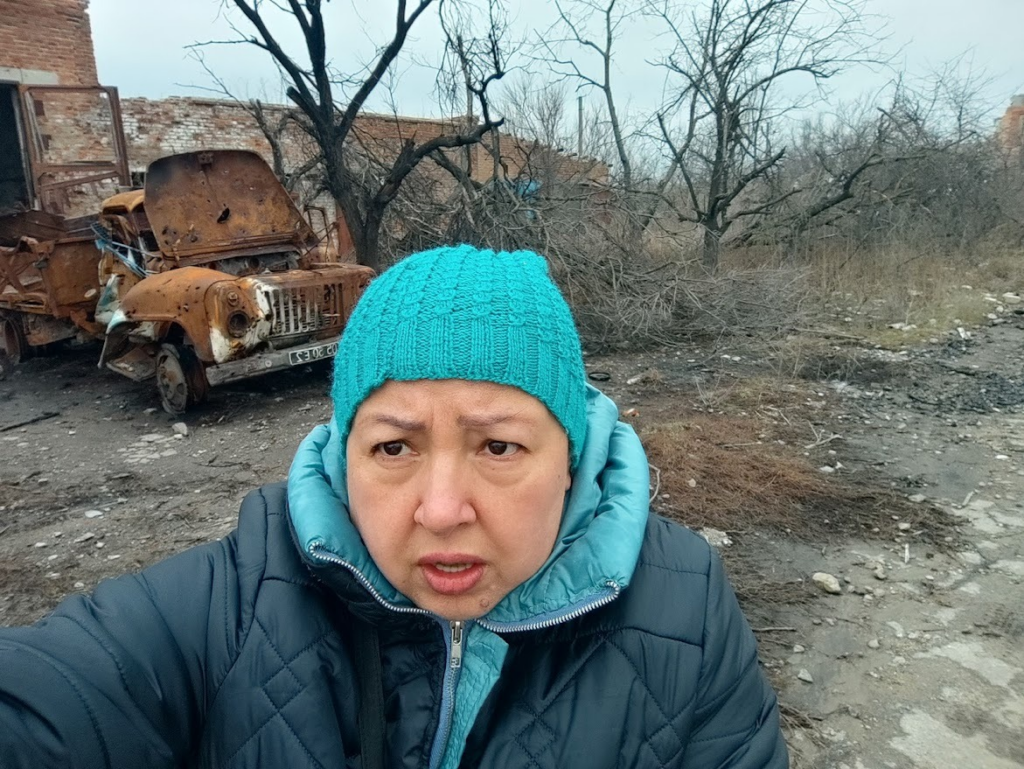
“We have already learned to follow safety rules that reduce risks”
At the beginning of the full‑scale invasion, almost all members of the editorial team were forced to leave Kharkiv. Only two remained in the city. Now most have returned, with just one person continuing to work remotely from the Lviv region.
— “Many of us, myself included, had our homes damaged,” says Larysa. “We have already learned to follow safety rules that reduce risks. For example, we don’t often all work together in the office—we gather in small groups when needed, for filming or working with documents. I don’t bring everyone together in one place, because that also means traveling, and some live in dangerous areas such as Pyatykhatky or Saltivka. We minimize risks, have provided staff with charging stations, and installed optical internet so they can work remotely.”
Before each trip to the communities, the editorial team consults with community heads and elders. If there are reports of danger, they change the route.
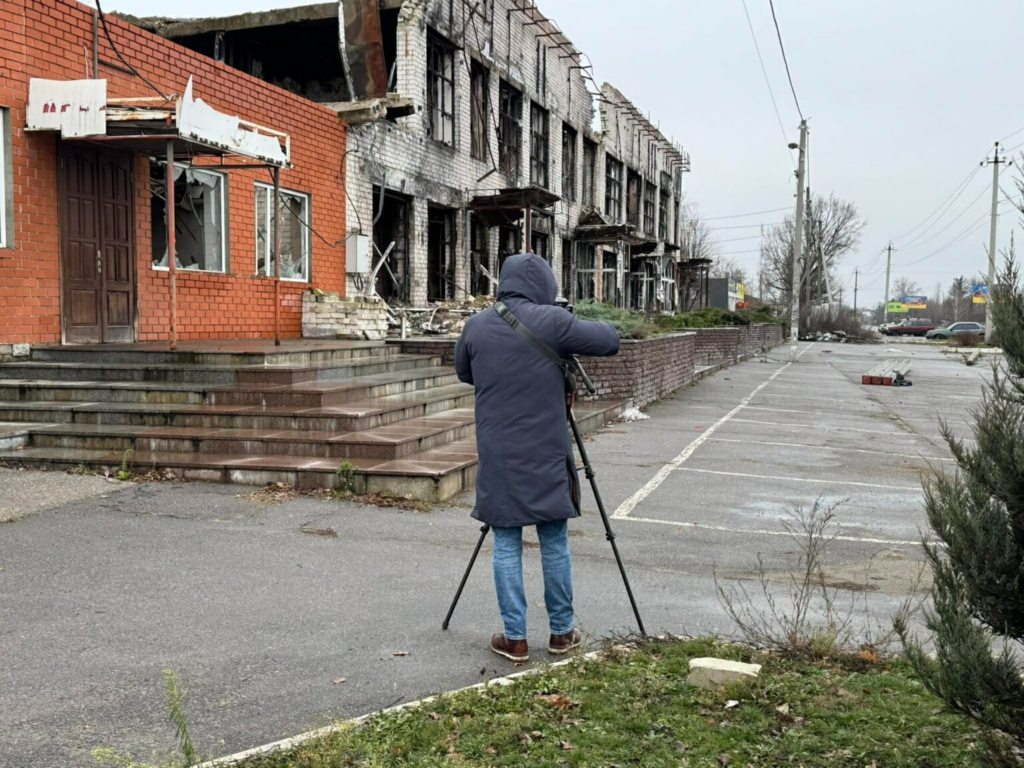
— “For example, we had already arrived and were supposed to go to one village, but the elder said that in the past two days drones had become more active there. So we changed the route. Yesterday, a colleague from a ‘hot’ community pointed out which section of the road was dangerous, and we discussed an alternative route.”
Danger can strike anywhere. Larysa recalls a moment that spread across the world: the strike on a kindergarten in the center of Kharkiv.
— “I was in the building opposite (a glass building) for negotiations. My counterpart was concussed, and I was showered with glass because two glass walls collapsed on me. When I went to the meeting, I wasn’t wearing protective gear. As someone from the team said: if you stay here, you must understand that at any moment you can come under fire.”
The team reacts differently to risks: some are afraid to go out, while others, on the contrary, feel a rush of adrenaline.
— “There are a few people who go… ‘with pleasure’ is not the right word, but perhaps we’ve already become a little hooked on that adrenaline.”
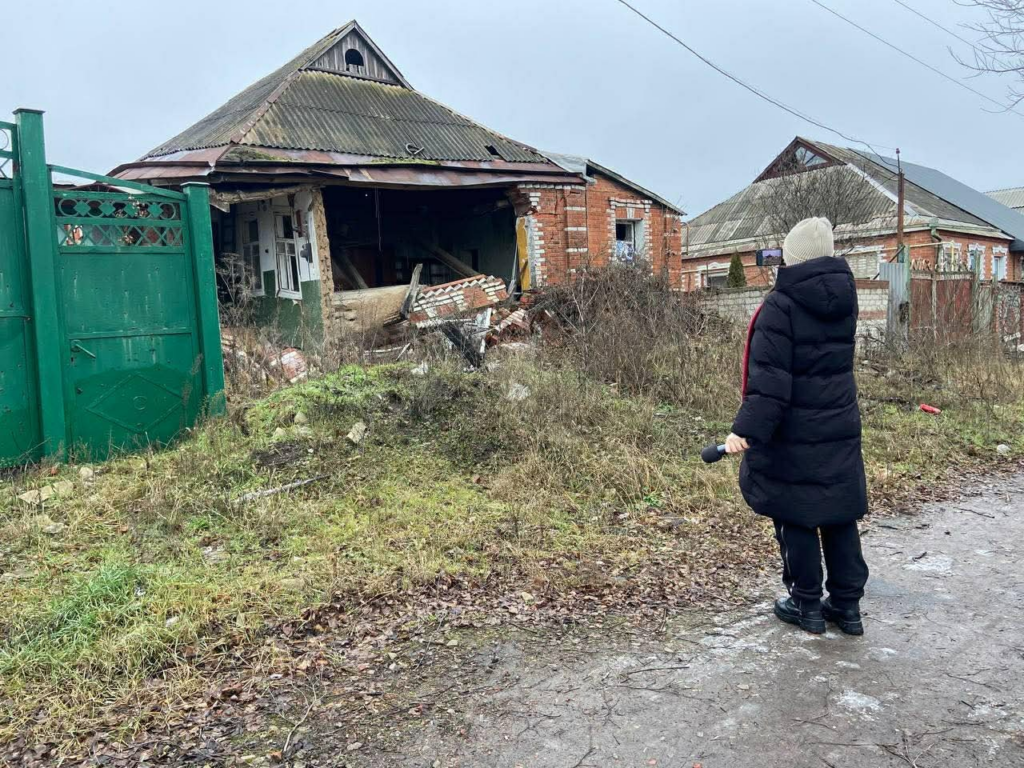
Every year, the editorial team looks for mental‑health support programs so that journalists have access to psychologists and can recover.
“People need their stories to be told”
The editorial team constantly studies its audience. Some readers have gone abroad, some relocated within Ukraine, and others have remained in their communities. For many, the newspaper and website remain a thread that connects them to home.
— “They read us, look for information about their town, write in messengers, and comment on social media. Our main platform is Facebook, with 25,000 active followers—genuine ones, not bought. We also try to deliver printed newspapers to hubs for elderly people.”
The most popular topics are housing restoration, problems with documents, and practical issues such as aid, employment, and access to doctors.
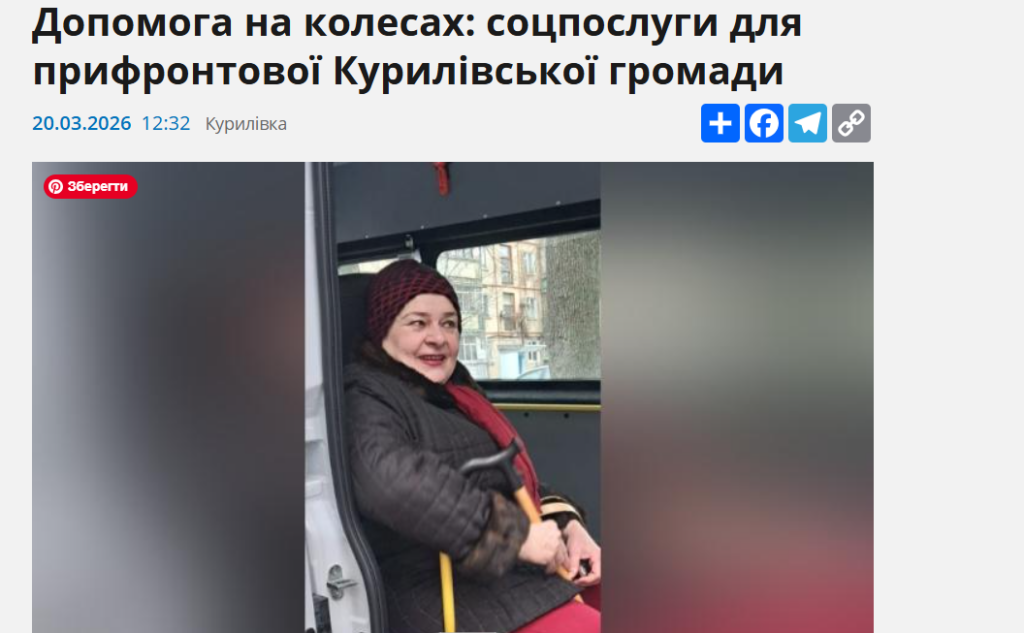
— “It is important for people that their stories are told. We write about individuals and communities that no one else will cover. Some of our communities are relatively safer, but they have a large influx of internally displaced persons, and we tell stories of integration and the conditions provided for them. Our goal is for people to find meaning in life.”
The editorial staff consists of 15 people: one man and 14 women. The website editor, Larysa’s daughter, graduated from university and went on to serve in the Armed Forces of Ukraine.
The team’s main focus is the news website with extensive content. They have also begun developing a video direction: short videos on Facebook have reached up to 2 million views. Journalists themselves post content on Facebook, while a freelancer manages Instagram. The newsroom is also mastering mobile journalism: they received kits for fieldwork, shoot footage themselves, and outsource large editing projects.
The current print run of the newspaper is 3,500 copies, plus about 2,500 electronic subscriptions purchased by libraries—including abroad—and by people who have left the country. The full‑scale invasion hit subscriptions hard, the editor‑in‑chief explains:
— “People don’t know where they will be in a month, so they don’t subscribe.”
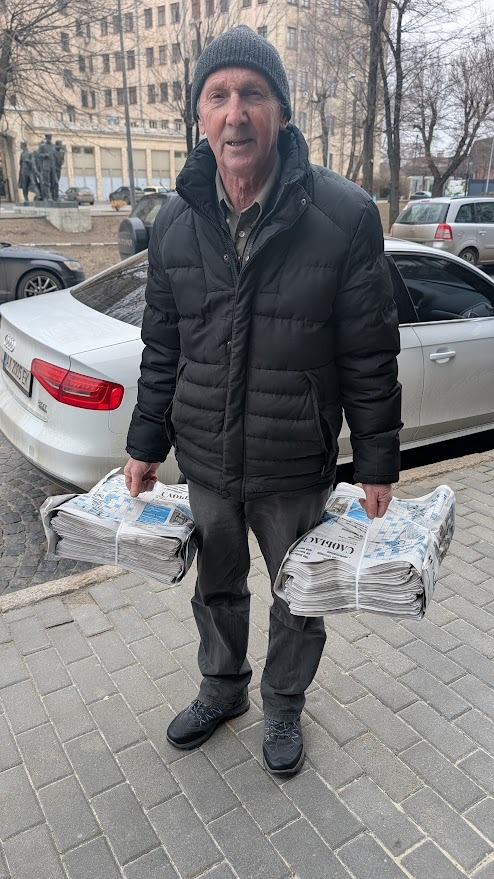
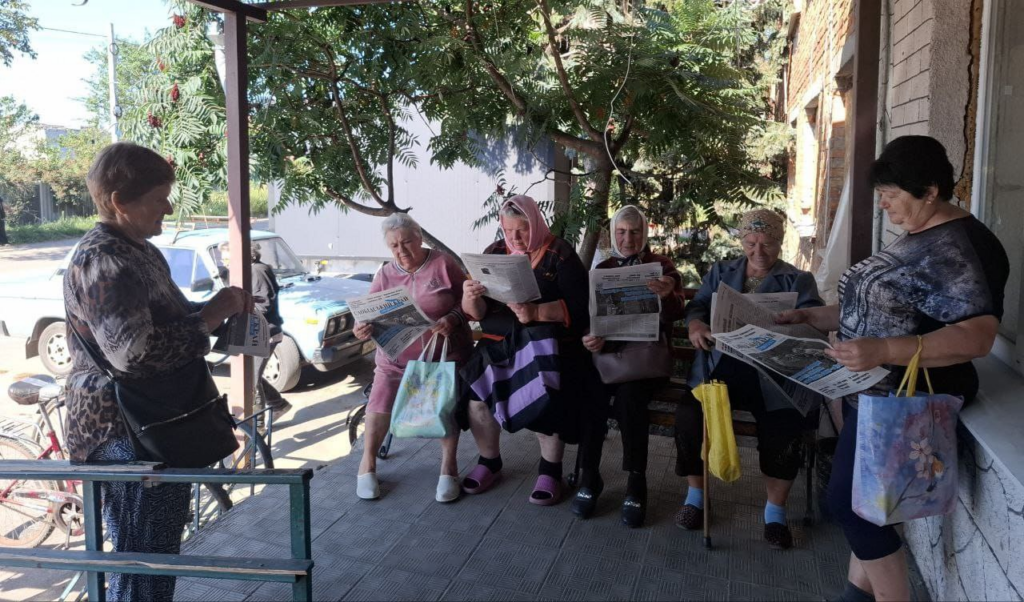
So the main sales happen through Ukrposhta branches and newspaper kiosks in Kharkiv and towns across the region. Part of the print run is provided free of charge to the military and to communities. Special issues are delivered by Nova Poshta, or community representatives come to the newsroom themselves, pick up the newspapers, and distribute them to hubs, later sending photo reports of the distribution.
Despite the drop in subscriptions and the challenges of distribution, the editorial team does not abandon the print version. For many readers—especially elderly people and those without stable internet access—the newspaper remains critically important. The printed edition is what gives them a sense of connection to home and to their communities.
Institutional support from the “Stronger Together” project of the Association of Independent Regional Press Publishers of Ukraine has become crucial: it helps offset financial costs and ensures the release of special issues for communities.
“There are things that, if we don’t do them, no one else will”
The hardest topics to cover are the deaths of children, Larysa shares.
— “For example, there was a piece about a woman who lost her entire family during a strike on a gas station. Or stories of women who lost their children. We don’t force journalists to take on such topics—each decides for themselves.”
Recovery after working on such heavy subjects comes through self‑care.
— “There are moments when I simply collapse. And I’ve already realized that the only thing that can sustain me is self‑care. A year ago, after yet another trip, I decided to fulfill a long‑held dream and started learning to dance. It fills me with positive energy. Many in the team also have their own activities that help them ‘refill the glass.’”
At the end of our conversation, we asked Larysa what journalistic dignity means to her. She replied that it is doing the work despite the risks and that she understands why it is being done.
— “Not for politicians, not for donors, not for money. But for people. When a grandmother or grandfather writes a letter and thanks us for our work, that means to me that I am fulfilling my profession with dignity.
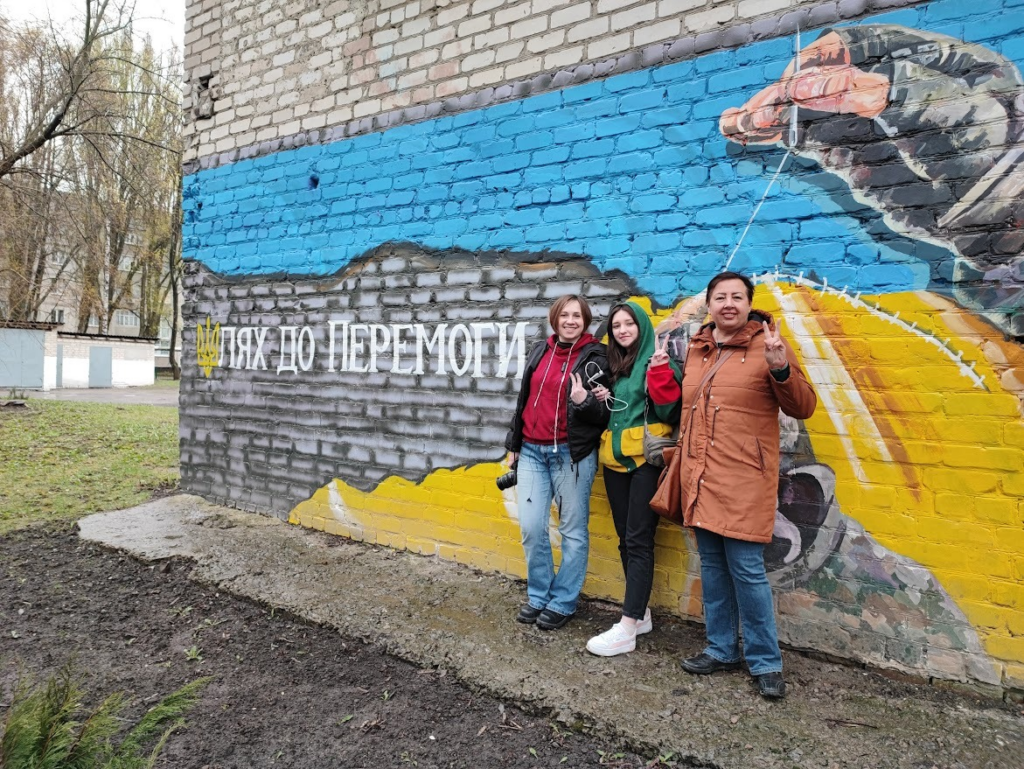
The newspaper is 109 years old — and this is the third war it has endured, Larysa says:
— “We understand that we have a social mission. There are things that, if we don’t do them, no one else will. We are all in the same boat. And we have already gone through so much, and we are not going to stop.”
Take care of your safety
The Association of Independent Regional Press Publishers of Ukraine (AIRPPU) offers journalists working in dangerous regions the opportunity to obtain life and health insurance. This is part of the International Insurance Fund for Journalists (IIFJ) initiative, implemented in partnership with Ukrainian and European organisations.
Media professionals working in Kherson, Zaporizhzhia, Sumy, Mykolaiv, Donetsk, Luhansk, Odesa, Kharkiv, and Dnipropetrovsk regions, as well as border areas of Kyiv and Chernihiv regions, can apply. More information about the terms of free insurance is available here.
This publication continues a series of interviews with media professionals working in frontline and border regions. Previously, we published interviews with Zarina Zabrisky (Parts One and Two), Oleksandr Kachura, Vladyslav Safronov, Natalia Bilokudria, Serhii Horbatenko, Yevhen Khrypun, Anna Kaliuzhna, Polina Kulish, Nadia Sukha, Nadiia Karpova, Oleksandr Solomko (Parts One and Two), Diana Butsko, Oleksii Pasiuha, Oleksandr Chubukin, Aliona Serhiienko, Olha and Serhii Sydorov, Yevheniia Hrytsyna, Nataliia Kryvoruchko, Inna Shvydka, and Pavlo Kliuchnyk.
Let us recall that the Emergency Support Program for Regional Media was launched in autumn 2025 in cooperation with Amedia Foundation and aims to preserve and strengthen independent local and regional newsrooms producing print and online media under the difficult conditions of war and energy crises.
It should also be noted that the International Insurance Fund for Journalists project is part of the Voices of Ukraine program, which is included in the SAFE programme coordinated by the European Centre for Press and Media Freedom. Voices of Ukraine is implemented within the Hannah Arendt Initiative.