Finnish experience shows that media education is effective when journalists and newsrooms become an integral part of school life and lives of young people. At the workshop in the framework of “Media Bridges: Finland–Ukraine,” two speakers addressed this topic: Susanna Ahonen, a media literacy and advocacy expert at News Media Finland, and Sauli Pahkasalo, audience engagement manager at Kaleva Media. While Susanna outlined national campaigns and systemic approaches, Sauli demonstrated how regional newsrooms can engage young people in quality journalism through schools and thereby expand media literacy efforts across the country.
“Finland has historical grounds for focusing on media literacy and critical thinking. It’s important for us to hear directly from the sources how it works and why it’s successful. This resonates in the Ukrainian context as well,” said Oksana Brovko, ANRPU Manager and workshop moderator. In January, as part of a business trip, Oksana visited Finland, where she had a meeting at the Ministry of Foreign Affairs: there, they discussed how to adapt Finland’s best practices of media education to the Ukrainian context. For more details on this, read: Media Literacy, Freedom of Speech, and Support: Oksana Brovko on a working visit to Finland.
See also: How to Engage Schools in Media Literacy: experience with the game “NotaEnota”
National Campaigns as a Foundation
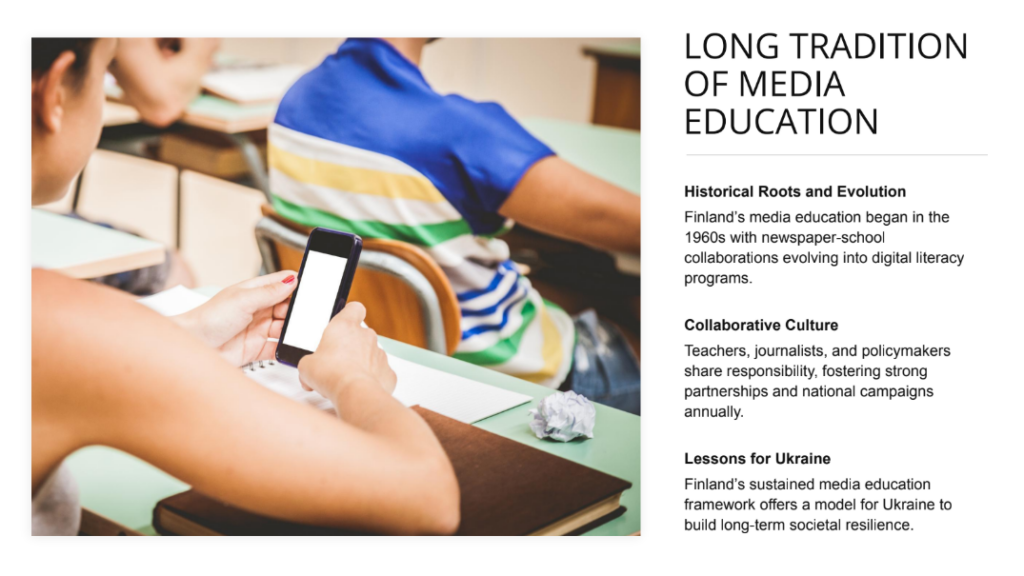
For more than 60 years, Finland has had a tradition of media education integrated into the school curriculum. Susanna Ahonen emphasizes: the most important thing is to teach children to look for primary sources, distinguish facts from rumors, and understand the importance of journalism for democracy. She suggested the example of the “Broken Telephone” game, which demonstrates how information gets distorted as it is passed along and teaches children to trust primary sources.
See also: How the Media Works Shouldn’t Be a Secret, or How Media Literacy Is Taught in Finland
“In journalism, we don’t publish rumors; we publish our own reports and original stories. The most important thing is to demonstrate the importance of journalism for a democracy.”
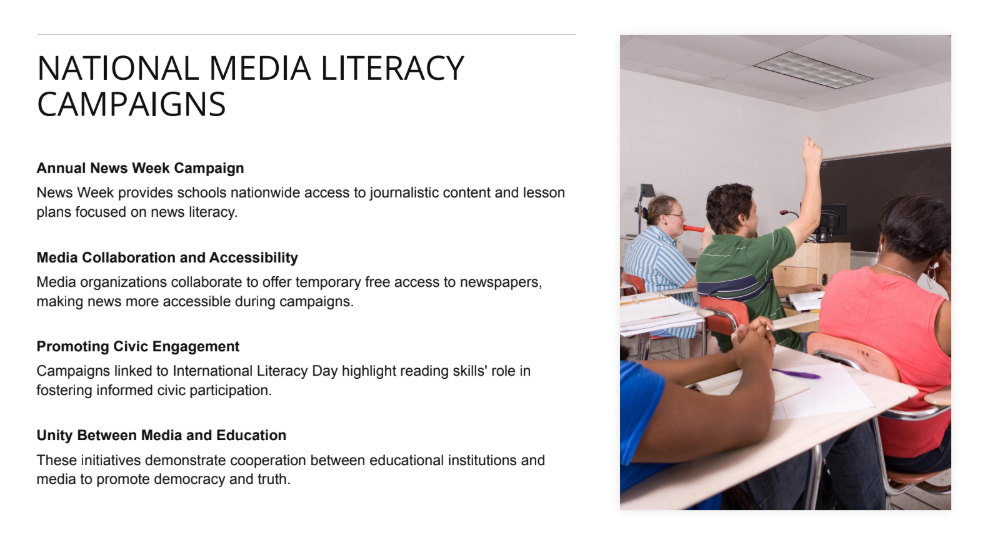
National campaigns, such as “News Week,” provide schools with ready-made materials: assignments, presentations, and videos. Journalists visit classrooms or invite students to their newsrooms. The campaign costs dozens of thousands of euros and appears prestigious and appealing to teachers.
Regional News Outlets as Strategic Players
Kaleva Media is one of the largest regional companies in Finland, reaching more than 1.2 million readers. The company has 22 brands, including newspapers, radio stations, and digital apps.
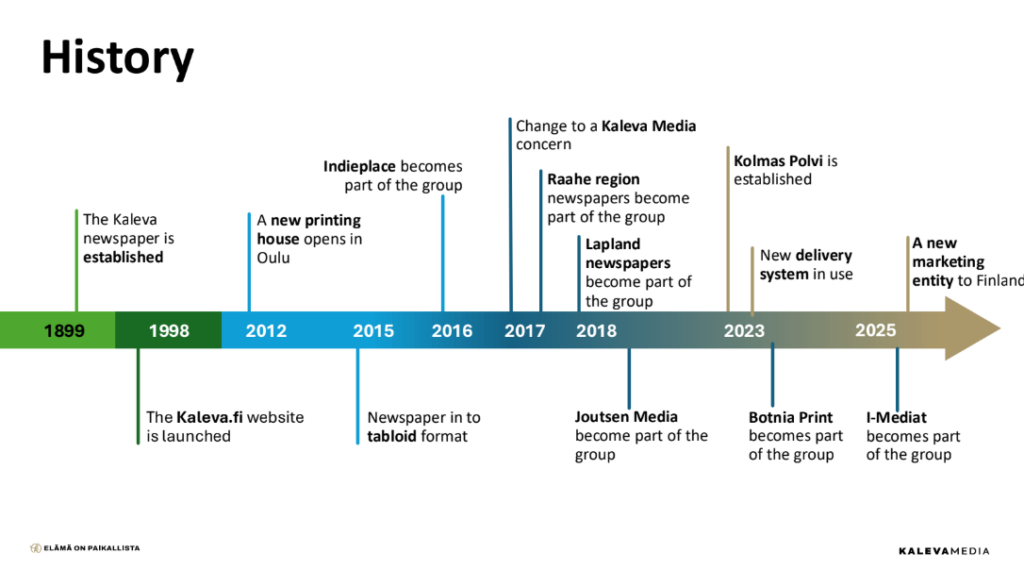
Sauli explains: the role of news organizations is not only to inform the public, but also to visit schools, introduce children to journalists, and show them how a news organization works. This fosters transparency and trust, and also creates a sense that local media are part of community life.
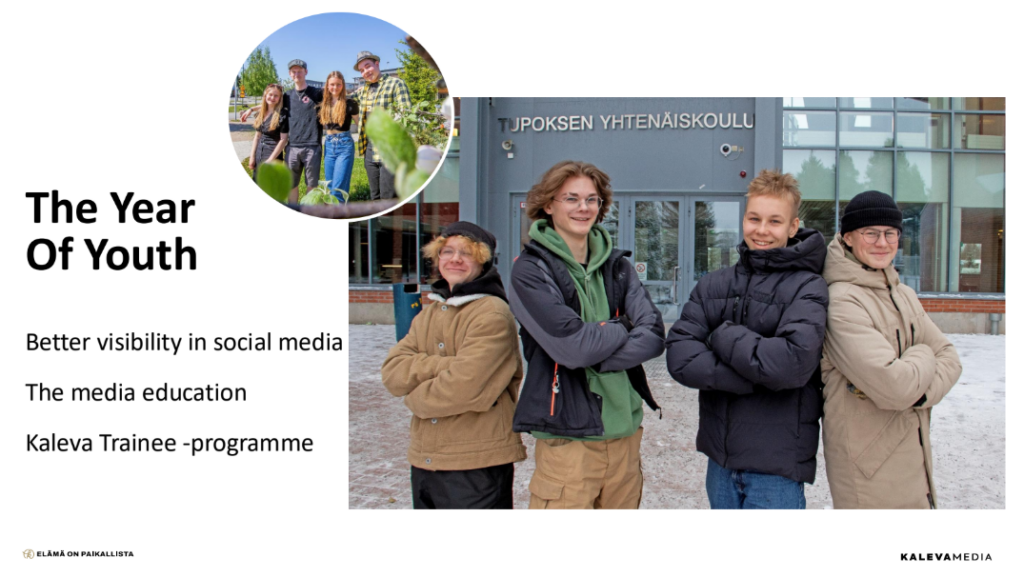
Kaleva Media has declared 2026 the “Year of Youth.” This means greater visibility on social media, the launch of the Kaleva Trainee program, and development of partnerships with schools.
Schools as Partners of Newsrooms
The first step is to find interested teachers and principals. Sauli emphasizes: “It’s very hard to work without their interest.” That’s why newsrooms start small: a phone call, a personal letter, or a brief visit.
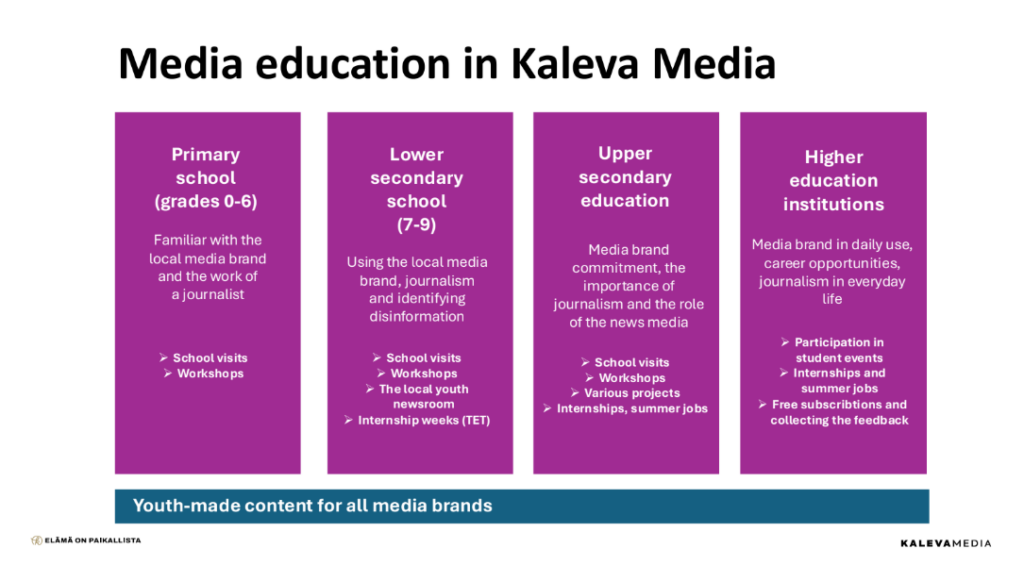
Cooperation with educational institutions is divided into several levels. In elementary school, this involves introducing students to the brand, explaining what a journalist does, and encouraging them to read. Children ask questions and try to create their own content.
See also: A Children’s Newspaper You Won’t Find Online: a unique experience from Finland
In secondary school, students begin learning about social media, how to spot disinformation, and how to create podcasts. Students participate in week-long internships. High school focuses more on participation in projects, internships, and summer jobs. And finally, at universities, these include free subscriptions to regional newspapers and lectures on use of journalism and artificial intelligence.
“When one school sets an example, others begin to follow. In Finland, this works in part because of healthy competition: schools want to replicate these successful practices.”
Youth Editorial Teams and Hands-On Formats
Another area of focus is creation of youth editorial teams. A team like this is already operating in the Southern Region: children write articles and are paid based on the number of publications. It turns out to be a unique combination of a hobby, learning, and an opportunity to earn money.

One example of such projects is the News Week. Ten to fifteen ninth-graders work in the newsroom preparing stories, and at the end of the process a TV show similar to “Good Morning” is produced. The municipality funds the broadcast.
Or live streams: students operate cameras during concerts or celebrations streaming the events online. One example is the broadcast of a concert by a Finnish artist, which was organized entirely by the students.
Schools often serve as testing grounds for new formats. It’s sort of an idea sandbox. If something works at one school, that practice is then extended to others.
“The best way to improve media literacy is to teach children to create stuff themselves: write stories, make videos, or create podcasts. When they see their work published, it’s the most powerful experience.”
Value for Teachers and the Community
Success depends on teachers. When one school sets an example, others follow. In Finland, this works in part because of “healthy envy”: schools want to replicate their competitors’ successful practices.
It is important for educators that collaboration be simple and not overwhelm them. Therefore, the editorial teams take on most of the organizational work, while schools are expected to only contribute their time and participation.
Local news outlets, in partnership with schools, give children a voice in community matters and help them understand the decisions that affect their lives. Sauli offers an example: a quiet 15-year-old student, who the teacher initially didn’t think would make into the team, became the news anchor on a school TV show and called the experience “the best week at school.”
***
The Finnish experience shows: regional news outlets can be active participants in community life. When working with schools, they engage young people in quality journalism, build trust, and promote media literacy.
This is a systematic effort that has been ongoing for decades. National programs provide scale and unity, while local editorial offices foster a direct connection with young people. It is precisely this combination that shapes a generation that trusts journalism and understands its importance for democracy.
See also: Media Literacy as a Common Language for Newsrooms in Ukraine and Finland
“Media education is a long-term endeavor. There are no quick results here. But if young people are familiar with local media and trust them, we are laying the foundation for a democratic society,” says Sauli Pahkasalo.
This material was prepared based on a workshop held as part of the “Media Bridges: Finland—Ukraine” Program implemented by the Association of Independent Regional Publishers of Ukraine in partnership with News Media Finland, and funded by the Finnish Ministry of Foreign Affairs.