


Yevhen Khrypun, editor of Mezhivskyi Meridian, talks about daily work under Russian KABs and FPV drones
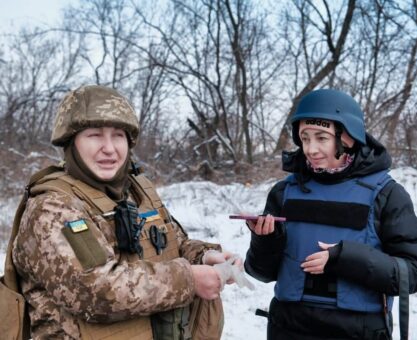
We continue to share stories about the work of journalists in frontline and border regions. Earlier, we published conversations with American journalist Zarina Zabrisky, who works in Kherson (parts 1 and 2); with military correspondents Anna Kaliuzhna, Nadia Sukha, Oleksandr Kachura, Natalia Bilokudria, and Serhii Horbatenko. Today, we speak with journalist Yevhen Khrypun.
At the end of 2023, the distance from the settlement of Mezhova in Dnipropetrovsk region to the front line was 60–65 km. In 2025, only 15 km. Mezhova lies between two directions — Pokrovsk and Novopavlivka — and is regularly hit by enemy strikes. Yet people continue to live there.
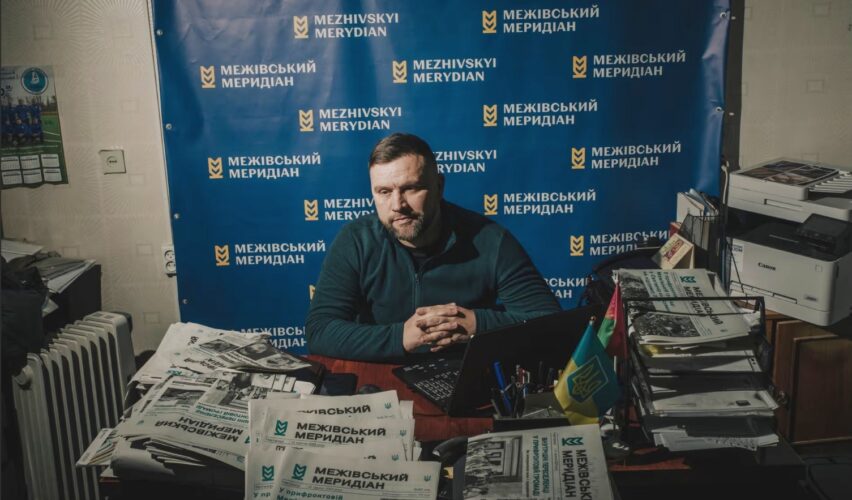
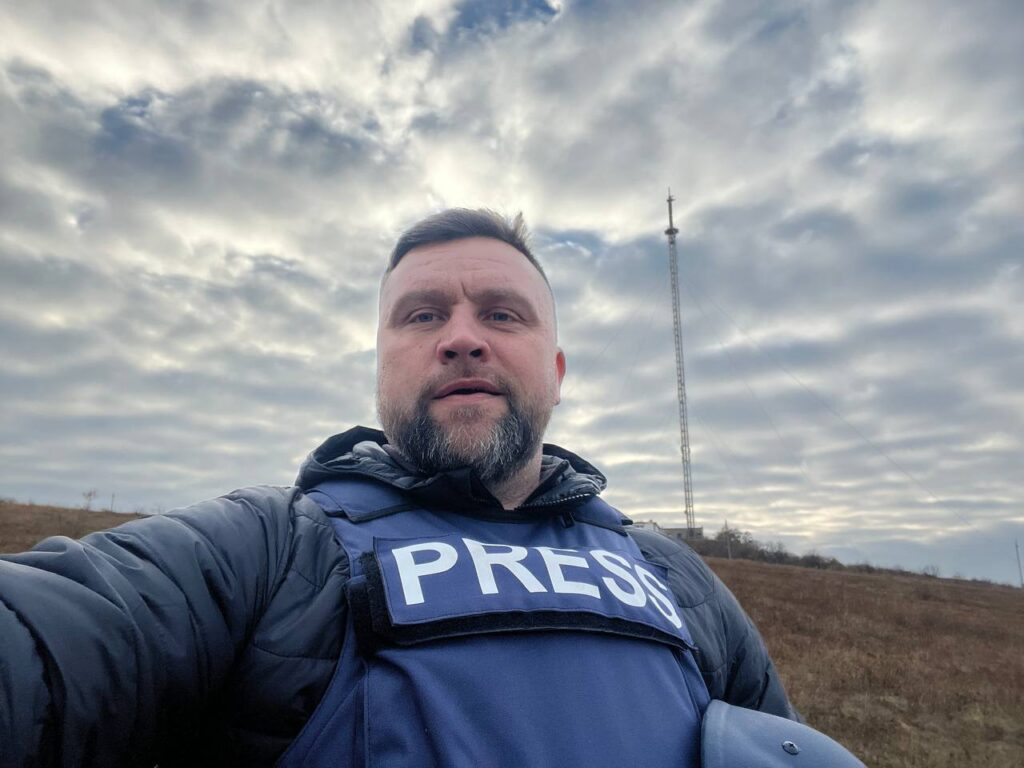
Among them is Yevhen Khrypun, editor of the Mezhivskyi Meridian newspaper. Every day, he films the consequences of attacks in the community, posts information on the website, on social media, on YouTube, and also publishes a printed newspaper that local residents eagerly await to learn the latest news.
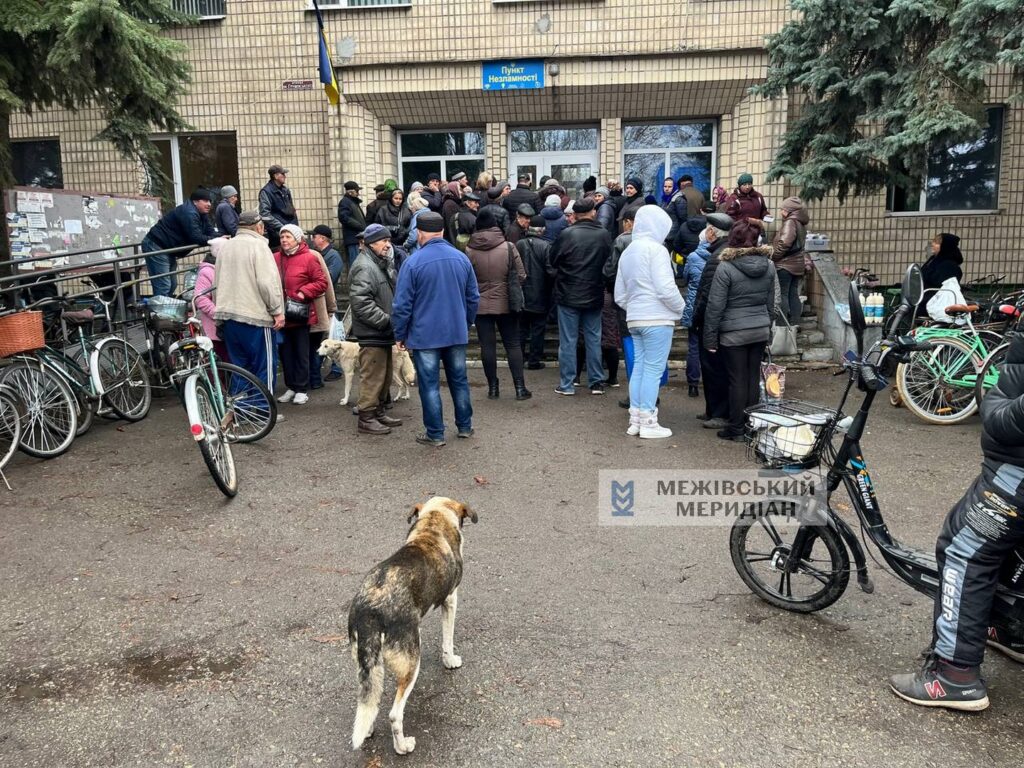
“The day before yesterday, I delivered 1,000 newly printed newspapers. For people, it’s important to receive newspapers. When there is no electricity, no connection, the newspaper is almost the only source of information. On some streets in Mezhova, people have lived without electricity since August. There is no gas, no water supply at all.”
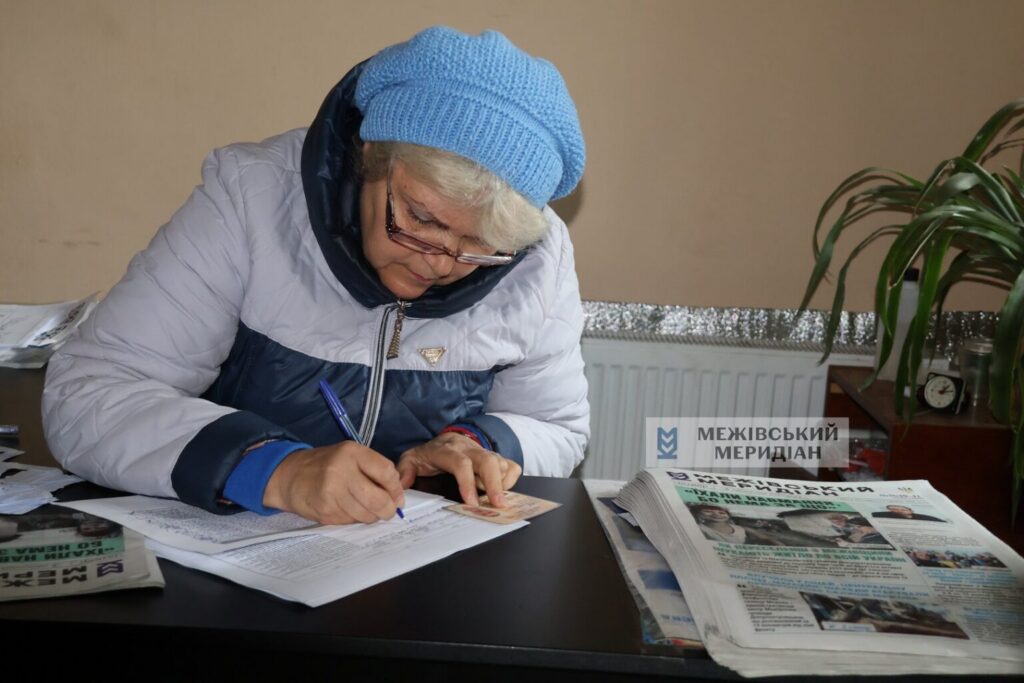
That’s why locals take the newspaper as something no less essential than humanitarian aid. The editor says people first skim through it, then reread it several times, and afterward use it however they see fit. Some use it for rolling homemade cigarettes — since cigarettes are hard to find, almost everyone smokes rolled ones.
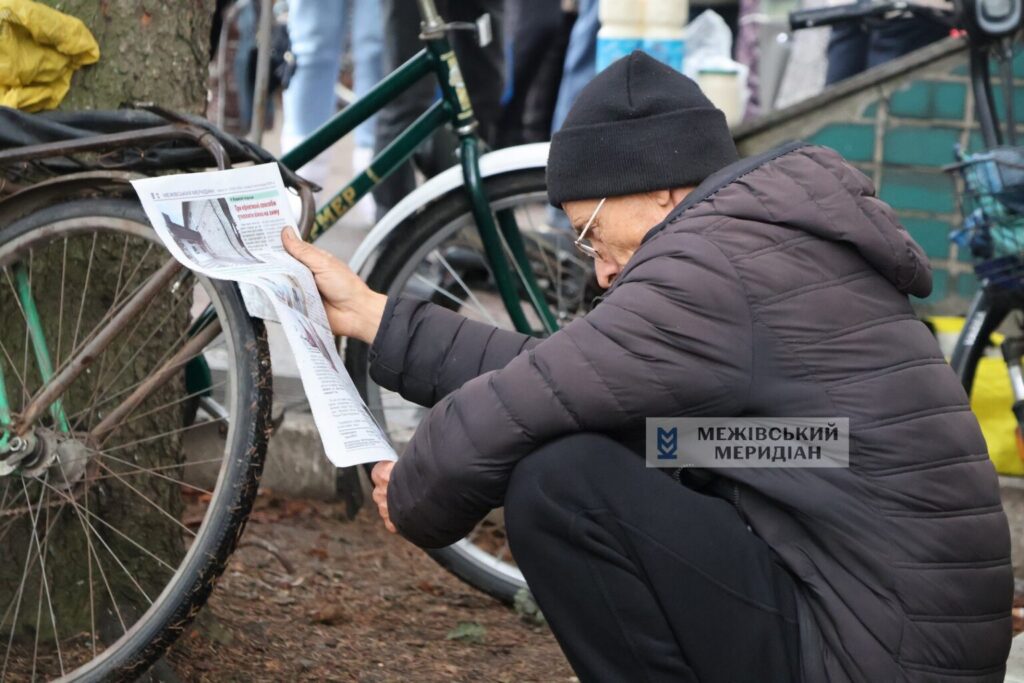
“Last time I delivered the paper, one man said: ‘I’ll roll it, but I’ll read it first.’ And that’s probably why I keep traveling around the community, gathering information, going into the most dangerous corners, filming, and telling about everything that happens.”
War Destroys Homes, But Not Humanity
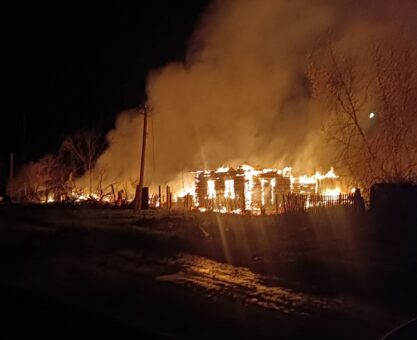
We spoke with Yevhen on the morning of December 3 — he had just returned from a shelling site. Seven Russian KABs hit Mezhova, destroying half a street completely. One of them struck the yard of his “dacha.”
“I used to grow grapes there, and yesterday I was filming the consequences of the strike. There’s a huge crater in the yard, and about 30 meters of metal fence were destroyed. But the scariest thing is that people live nearby. It’s a miracle no one was injured. The dog that was tied up was released. The hardest part is not the destruction itself, but the feeling of helplessness — of both people and animals.”
Yevhen worries about the fate of animals in frontline villages no less than about people. He says hundreds of dogs and cats have been abandoned. He feeds them and tries to free those that remain tied.
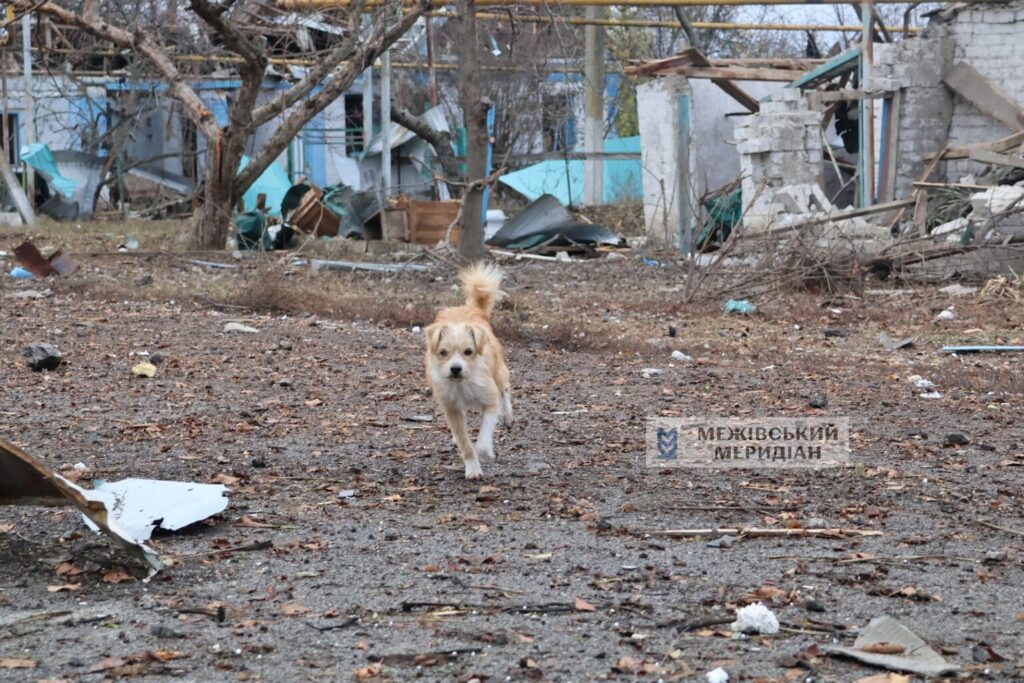
“Often dogs get tangled in anti-drone nets; some even die if no one comes in time to free them.”
Today, more than 4,000 residents remain in the entire community; fewer than a thousand remain in Mezhova — and more people keep leaving.
“Because there is no electricity, no heating, endless shelling. Today, there is not a single intact social infrastructure facility in Mezhova. The bus station, three lyceums, the hospital, a residential district — all destroyed. The court, the administrative services center, the cultural center, the shopping complex — everything is ruined. Only two small shops remain where people can buy anything. Mostly they survive thanks to humanitarian aid…”
Closing a Chapter
Despite everything, Yevhen Khrypun continues to live and work under constant attacks. He says it is difficult when there is no mobile signal, and you learn about incoming KABs only when you hear the explosions.
“How many times has it happened: you sleep in an apartment where it’s 5–7 degrees Celsius, and you hear KABs landing somewhere nearby. There’s no connection. So you can’t read that launches were detected, you don’t hear any alert because there’s no power. You only hear them flying, and the question is: where will they hit this time? And, more importantly, will you survive?”
Yevhen recalls August, when Russians approached the village the closest: up to 100 drones flew in, with KAB attacks every half hour.
“Now, with the leaves gone and everything practically bare, the drones keep flying. They look for targets in the half-empty settlement. They fly around, looking for a place to strike…”
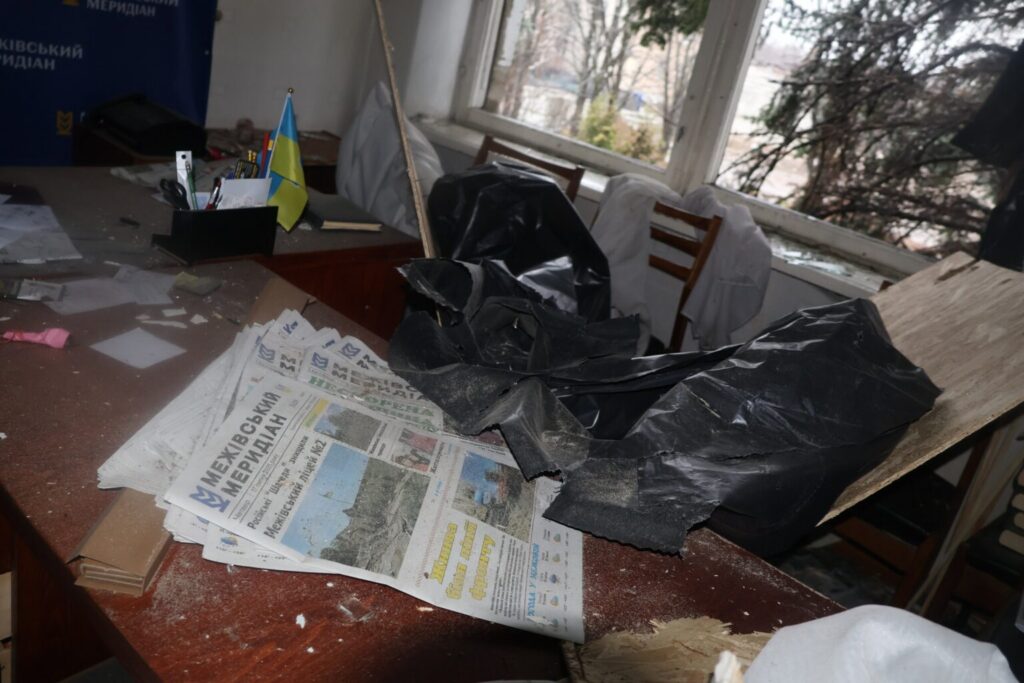
Despite the danger and despite his newsroom having been destroyed in August, he refuses to evacuate to a safer region because Mezhova is his home. He says he was a journalist here when everything was fine — and believes it is right to work here now, when everything is not.
“It’s the need to close a chapter. People need information — I try to provide it. People subscribed to the newspaper for 2025. The print run was 1,500 copies. Now, with the few funds left, I keep printing the newspaper and delivering it to people, because they need it.”
Eight Million Views Per Month
Of course, under such conditions, it is hard to plan anything. At any moment, something unprecedented could happen, including a mandatory mass evacuation. Still, Mezhivskyi Meridian continues to operate.
The Facebook page has over 23,000 followers and 7–8 million monthly views. There is a successful YouTube channel, Telegram channel, a Telegram chat, and a website — but the editor dreams of continuing to publish the printed edition. He even joined Ukrposhta’s subscription campaign for the next year.
“It’s hard to predict how things will be. Maybe I’ll ask people to subscribe to the PDF version, but I keep searching for opportunities to continue printing the newspaper.”
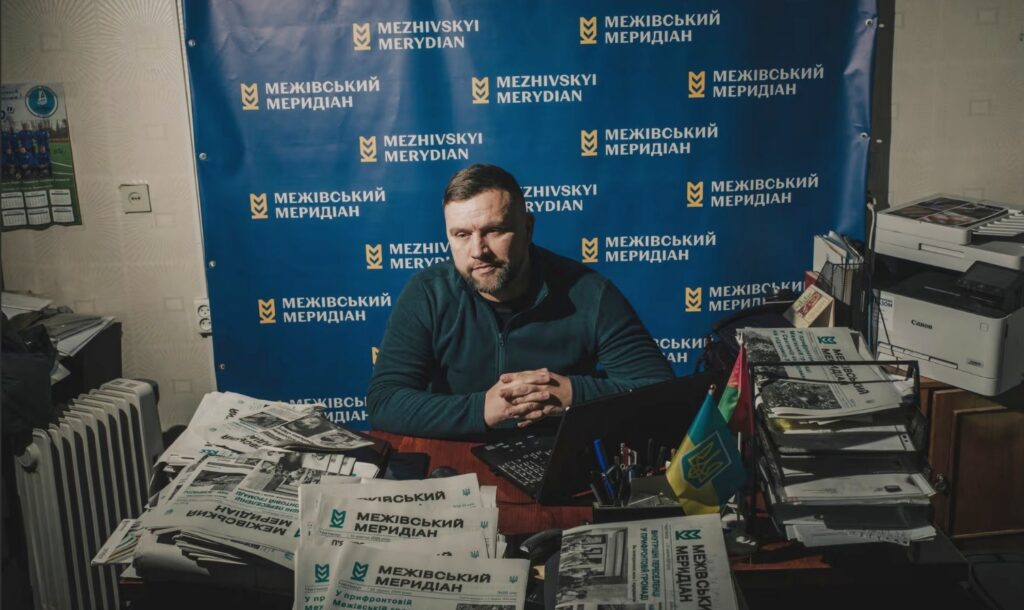
And as long as the opportunity exists, Yevhen says he will keep doing his work: gathering news, filming the consequences of shelling, and delivering the newspaper to people — even if someone later says, “I’ll roll it, but I’ll read it first.”
Journalist Insurance: Why It Cannot Wait
The Association of Independent Regional Press Publishers of Ukraine (AIRPPU) offers journalists working in dangerous regions the opportunity to obtain life and health insurance. This is part of the International Insurance Fund for Journalists (IIFJ) initiative, implemented in partnership with Ukrainian and European organisations.
Conditions for free insurance are available here.
Applications can be submitted here.
Media workers eligible to apply include those working in Kherson, Zaporizhzhia, Sumy, Mykolaiv, Donetsk, Luhansk, Odesa, Kharkiv, Dnipropetrovsk regions, as well as border areas of Kyiv and Chernihiv regions.
The project is implemented by the Association of Independent Regional Press Publishers of Ukraine (AIRPPU) together with partners. The initiative is part of the Voices of Ukraine program, coordinated by the European Centre for Press and Media Freedom (ECPMF). Voices of Ukraine is carried out within the framework of the Hannah-Arendt-Initiative and funded by the German Federal Foreign Office.