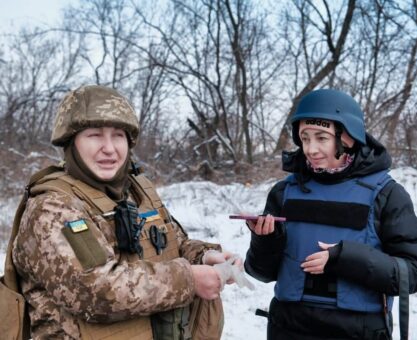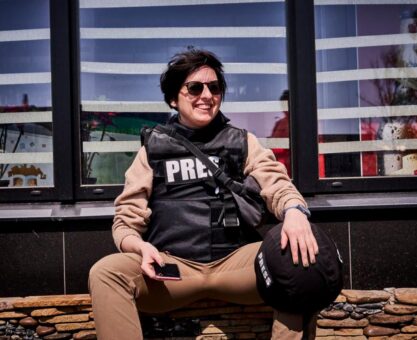



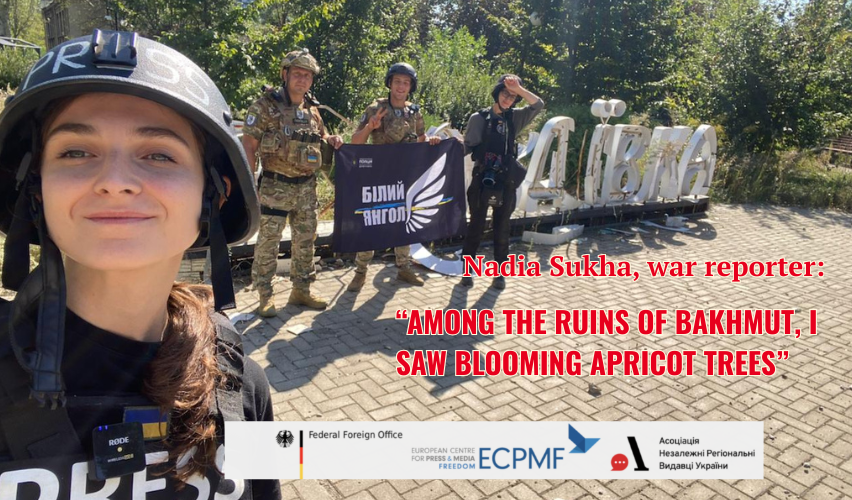
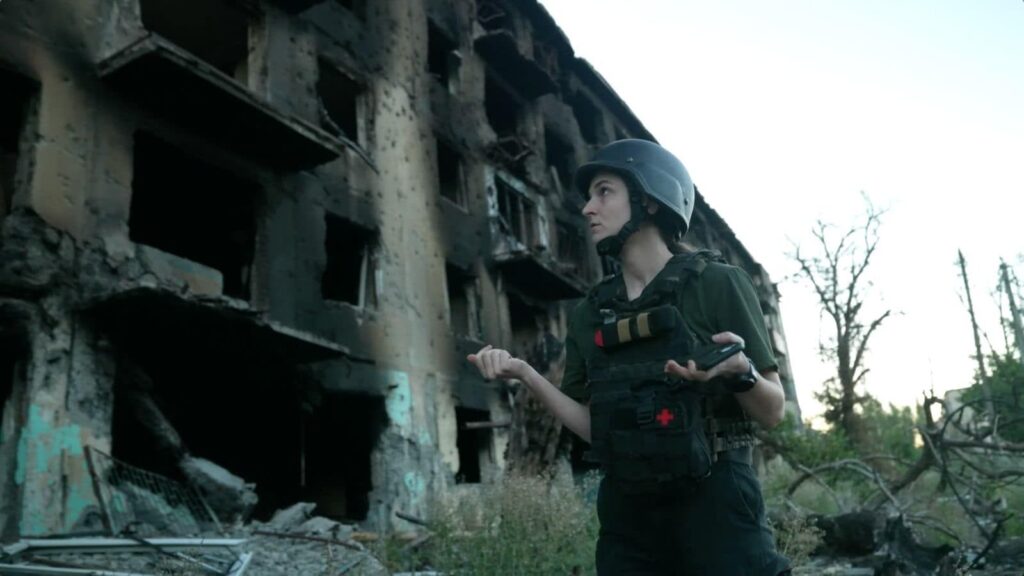
Frontline reporter Nadia Sukha has been living between field trips for almost three years now: Kramatorsk, Bakhmut, and frontline villages where drones and mortar shells fly overhead. Nadia did not manage to join the army, although she really wanted to, and today she compensates for this by working alongside those who are holding the line. She listens, records, films — so that the stories of those who risk their lives every day are not lost in the noise of war.
We continue to share the experiences of women and men in the media who work in frontline and border areas. We have already published a conversation with American journalist Zarina Zabrisky, who works in Kherson; war correspondent Oleksandr Kachura; videographer Vladyslav Safronov; as well as journalists Natalia Bilokudria, Serhii Horbatenko, Yevhen Khrypun, Anna Kaliuzhna, and Polina Kulish. Today, we present to you a conversation with Nadia Sukha.
From the media outlet “Grunt” to her own YouTube channel
Before the full-scale invasion, Nadia worked for the media outlet Grunt, where from the first days of the war she began developing frontline coverage.
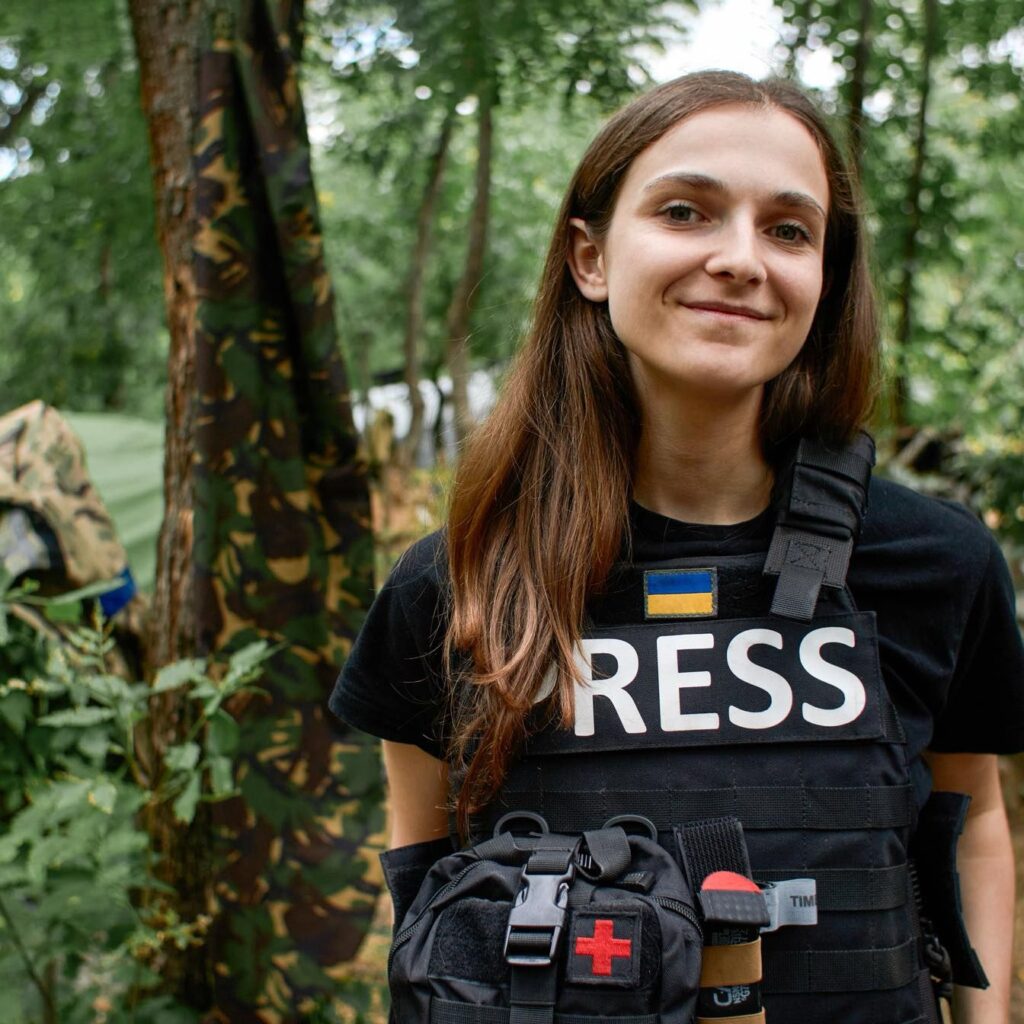
— I was looking for protagonists for reports and interviews, traveling to areas close to the front line, to de-occupied territories, going out to positions. Later, I started working with a team of war reporters who focused exclusively on the war. I worked as a reporter with Bihus Info and over time fully transitioned to “frontline work.” Now I have my own YouTube channel, and I film most of my materials specifically for it.
“The hardest part is when a story turns into a requiem”
Through Nadia’s hands and camera pass soldiers from different directions. She has filmed almost everywhere. Speaking about the heroes of her stories, Nadia emphasizes the importance of every single one.
— I perceive them as if I live through a part of life together with them.
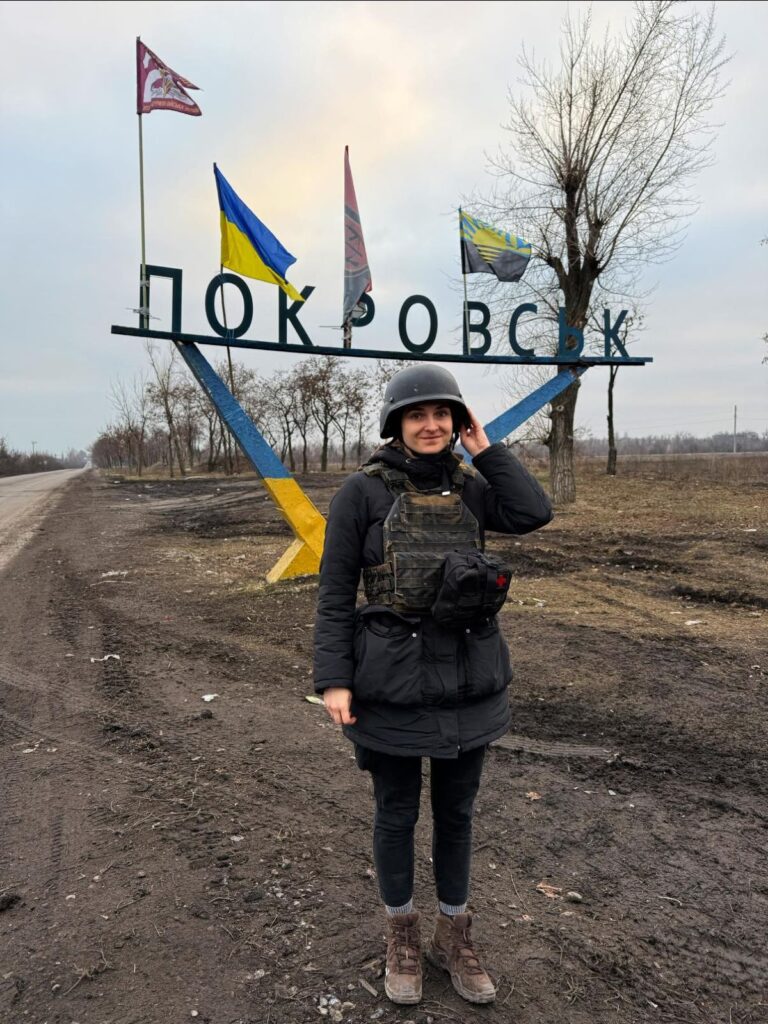
In risky circumstances, people become especially real: open, sincere, sharing what they usually hide deep inside. But there are stories that cut into memory in a different way.
— The hardest part is when the material I shoot about a person later turns into a requiem. I had a hero, an assault trooper of the 5th Separate Assault Brigade, Vlad “Kapa” Tkachenko. Very bright, smiling, with a boyish look. He paradoxically combined the maturity of someone who had seen death with the lightness of someone who still believed in the future. We recorded a deep interview. We talked about his past, about the decision to go to the front, about his views…
A few days later, there was an assault on Klishchiivka in which Vlad took part.
Nadia recalls editing the material when she suddenly saw an Instagram story on the assault trooper’s page: Vlad, smiling into a GoPro camera, saying, “Everything’s great, we’re going into the assault.”
— The very next day, commanders informed me that Vlad had been killed. It was a blow for me. But even harder was watching the footage from the GoPro camera, which captured the moment of his death, — she says.
During the assault, Vlad was helping evacuate a wounded comrade, encouraging him. Suddenly, there was an incoming strike. The soldier was killed on the spot. The body was recovered. The camera survived.
— I received permission from Vlad’s relatives to use this video. I remember watching it, and it felt like an eternity. I could hear the surrounding sounds, see him lying next to a branch of wormwood. That frame is still in front of my eyes…
The material was released after Klishchiivka had already been liberated and became a reminder of the price we pay for every step of liberated Ukrainian land.
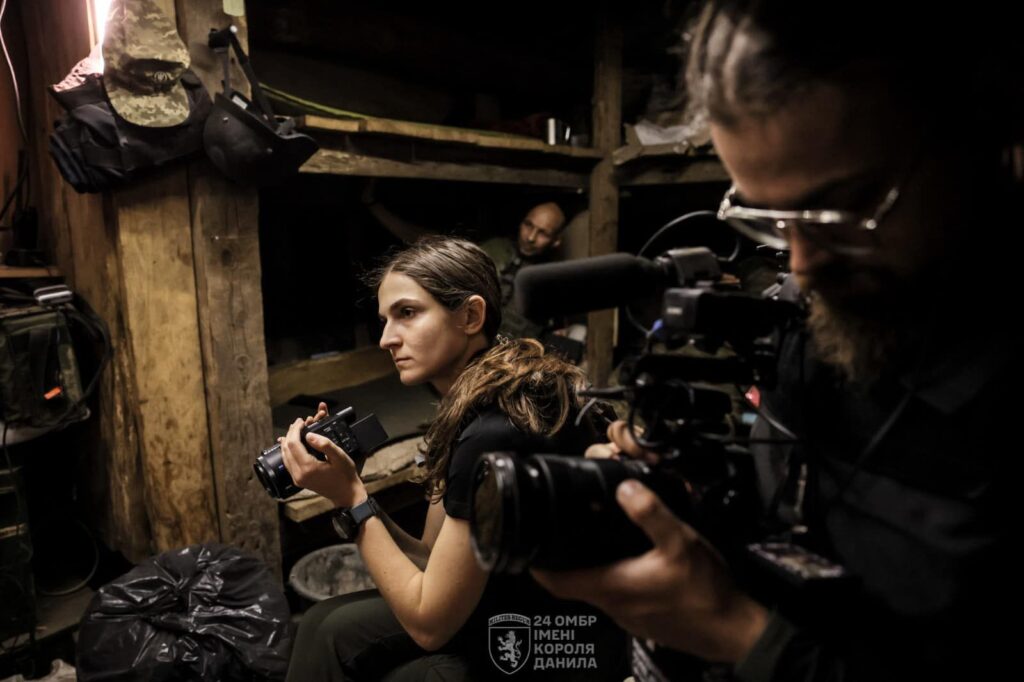
— This is probably what affected me the most during my entire time as a war correspondent, — Nadia admits. — Every time it becomes especially hard and scary, when it feels like I don’t have enough strength, I remember Vlad’s smiling face and his words about why we must do this. “If not us, then who?”
Fragile rituals of survival
After such stories, a person might want to stop. Turn off the camera, give themselves time just to breathe and recover. But the work continues. And instead of a pause, another mode turns on: the brain, protecting itself, makes emotions thicker, slower, as if wrapping them in cotton wool so that you can keep the lens steady and continue asking questions.
— At some point, I realized that my body, my psyche, works by protecting itself. It postpones all these emotions for later. I will live through them later, but for now I have to keep working.
What keeps her going are simple things: therapy, reflection, and small “proofs of life” that she knows how to notice.
— I know organizations that provide psychological support to journalists. I recommend everyone not to neglect this opportunity, because mental health is very important. Besides that, I try to hold on to things that remind me of the flow of life, that it is constant and just as beautiful.
She cites her favorite café in Kramatorsk, where she stopped on every visit:
— I hope it’s still open and that I will visit it again. They have very tasty coffee and pastries. These are the things that remind me of simple pleasures that, despite the war, continue to exist.
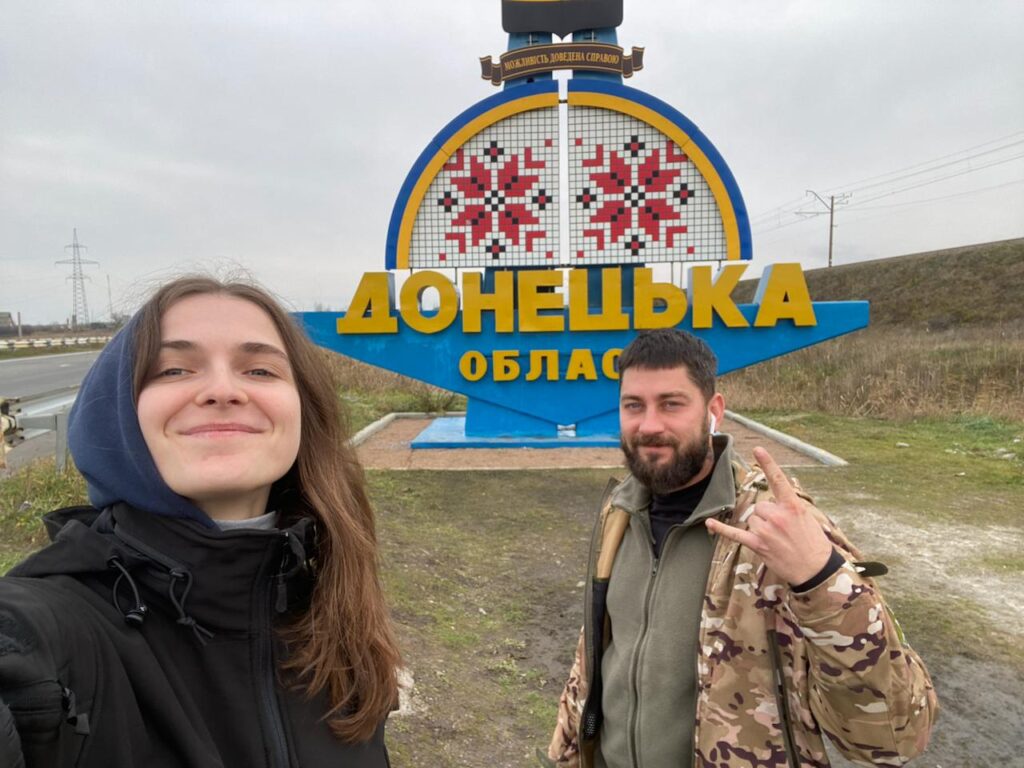
Nadia talks about difficult shoots in Bakhmut:
— All around are destroyed buildings, explosions, and I’m looking only at blooming apricot trees. And this keeps me going: despite the entire nightmare, apricots remind me that life goes on, and our Defense Forces are doing everything so that it can be restored, even in such hell.
She recalls filming in Selidove:
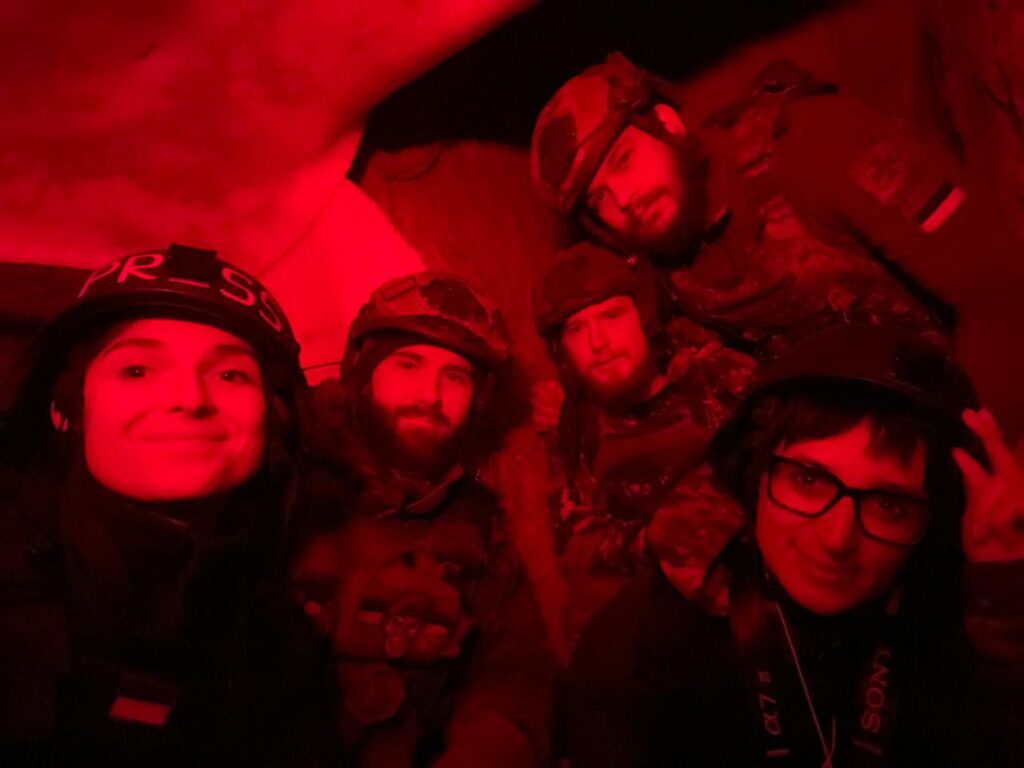
— I was working at night with drone operators. I remember it was a private residential area, and at some point I realized I was standing on a recently cultivated garden plot. It was September, the soil was still warm, loose. I was sinking my fingers deep into the earth to feel it. For me, at that moment, it felt very important. In that garden, I found a tomato and ate it right there, on the spot. For me, it was something like the presence of life here and now.
— Such small things connected to something constant, to nature, support me a lot. I always focus on them, — Nadia says.
“I want to be a bridge of communication”
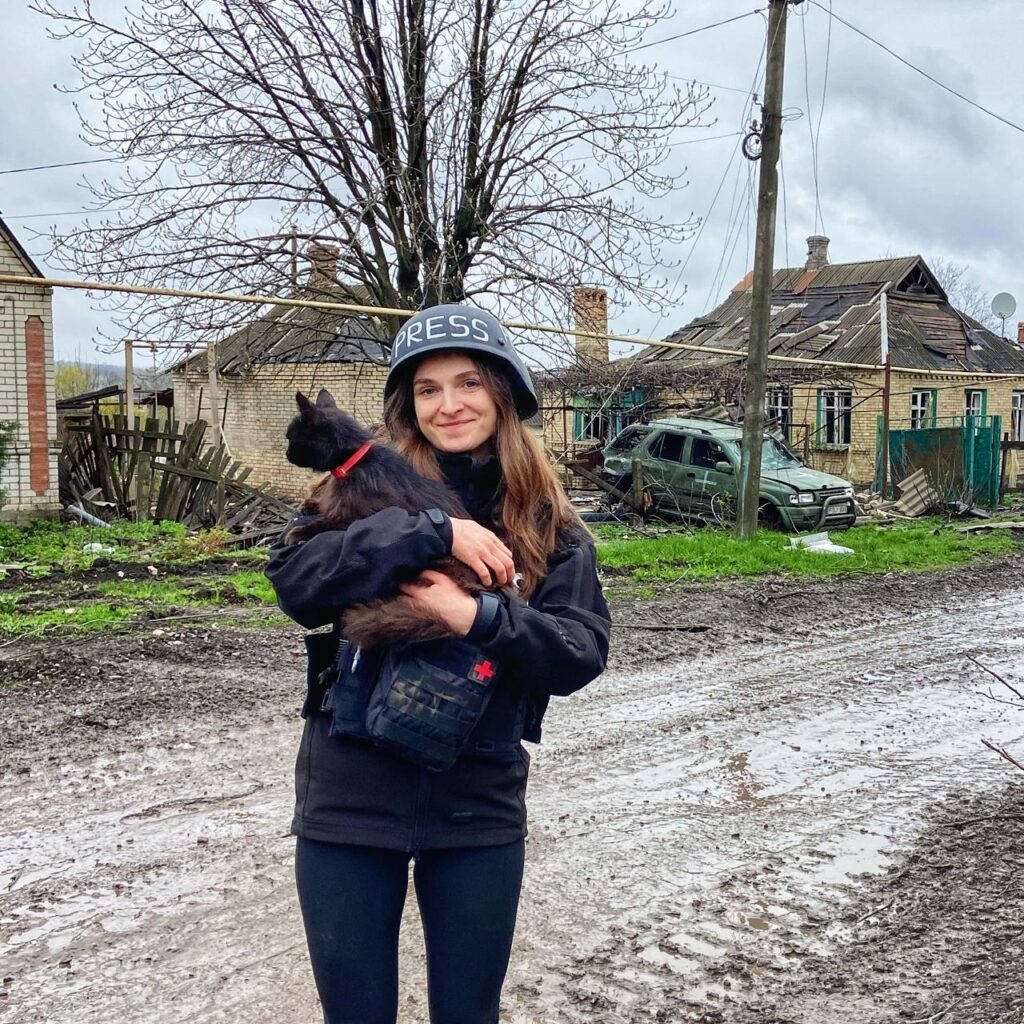
At the beginning of the full-scale invasion, Nadia Sukha wanted to join the army, but for objective reasons, this did not work out. To still be close to those who defend the country, she chose another path: to become the voice and eyes of those on the front line.
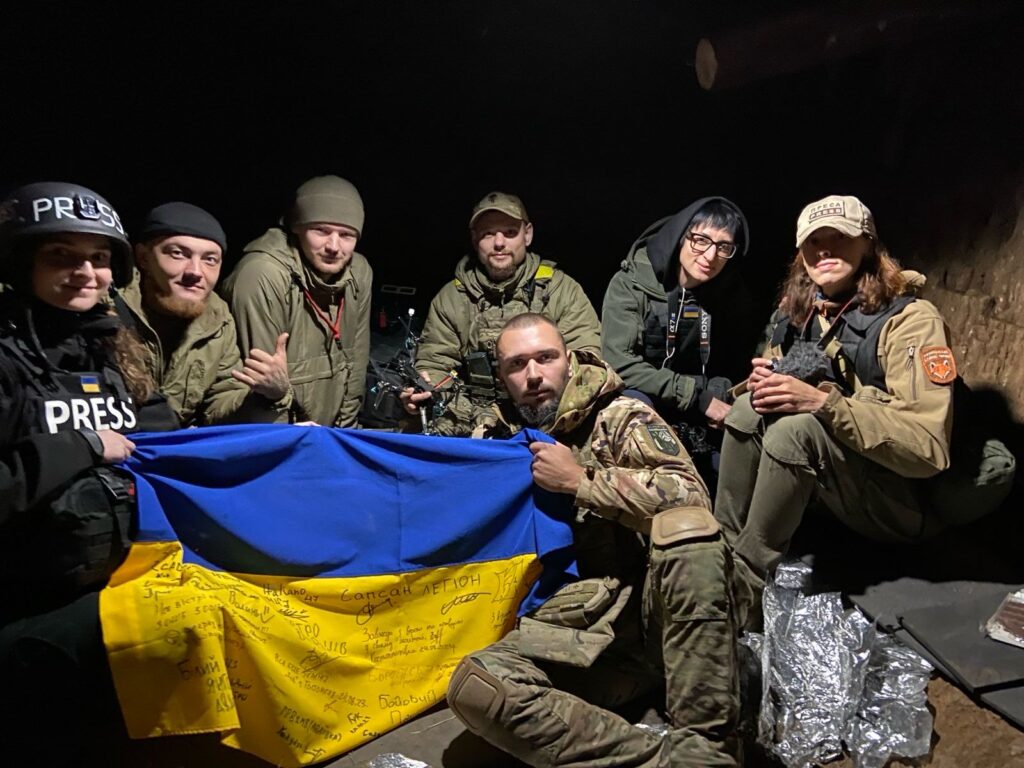
— I need to be with them, to tell their stories — they must be preserved. I know how to do this. This is my strong side. As long as I can, I would very much like to stay involved.
Another important reason is the possible post-war gap between soldiers who experienced the war firsthand and people who live far from it:
— At some point, it seemed to me that I could be a “bridge of communication” between these people, — Nadia says. — On my channel, I can show not just heroes of war, titans, but reveal them as people who have worries, fears, children, and wives. I had a hero who happily grew raspberries, but left this occupation and went to the front. An ordinary man who, at one moment, made a brave choice…
Journalists’ insurance: why it should not be postponed
The Association of Independent Regional Press Publishers of Ukraine (AIRPPU) offers journalists working in dangerous regions the opportunity to obtain life and health insurance. This is part of the International Insurance Fund for Journalists (IIFJ) initiative, implemented in partnership with Ukrainian and European organizations.
The terms of free insurance are outlined here.
You can apply here.
Media professionals working in the Kherson, Zaporizhzhia, Sumy, Mykolaiv, Donetsk, Luhansk, Odesa, Kharkiv, and Dnipropetrovsk regions, as well as in border areas of Kyiv and Chernihiv regions, are eligible to apply.
The project is implemented by the Association of Independent Regional Press Publishers of Ukraine (AIRPPU) together with partners. The initiative is part of the Voices of Ukraine program, coordinated by the European Centre for Press and Media Freedom (ECPMF). Voices of Ukraine is implemented within the Hannah Arendt Initiative and funded by the German Federal Foreign Office.