



Within the project Stronger Together: Transparency and Anti-Corruption, we have prepared a new selection of investigative materials created by 18 participants of the additional support tranche. These texts may serve as examples for other newsrooms and a source of ideas for those working on issues of transparency, government oversight, and integrity within their communities.
These materials demonstrate how local journalists uncover facts, analyze data, ask the questions that matter to their regions, and refocus attention on areas where transparency is critically needed. Each investigation is a concrete story based on documents, open data, testimonies, and consultations with the project’s mentors.
Below is a series of published investigations, arranged by publication date.
Chernihiv Media Group
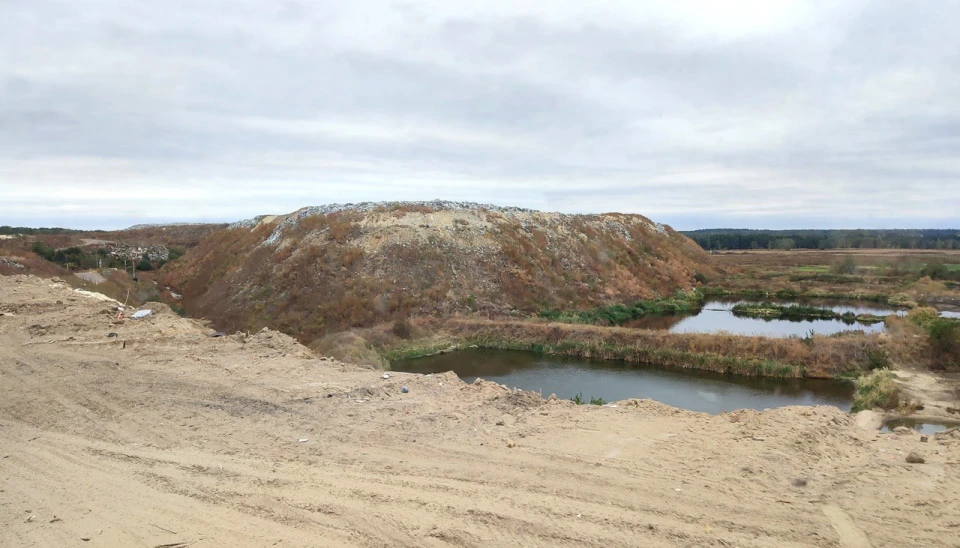
The Toxic Zone of Chernihiv: The Accumulation Ponds Everyone Keeps Silent About Remain a Threat
Team mentor: Nataliia Lazarovych, Bihus.Info
Date of publication: 17 November 2025
The war has had a significant impact on the environment. Combustion products from numerous fires, destroyed facilities, explosive materials, and mined territories are consequences we are dealing with now — and will continue to face in the post-war period. At the same time, there are environmental threats that have existed for years and still remain unresolved.
Such is the situation in Chernihiv. At the city landfill in the Masany district, liquid toxic waste accumulation ponds have existed for several decades, containing up to 130,000 cubic meters of hazardous substances. These toxic materials were generated as a result of industrial activities in the regional center during the Soviet period.
Odessa Life
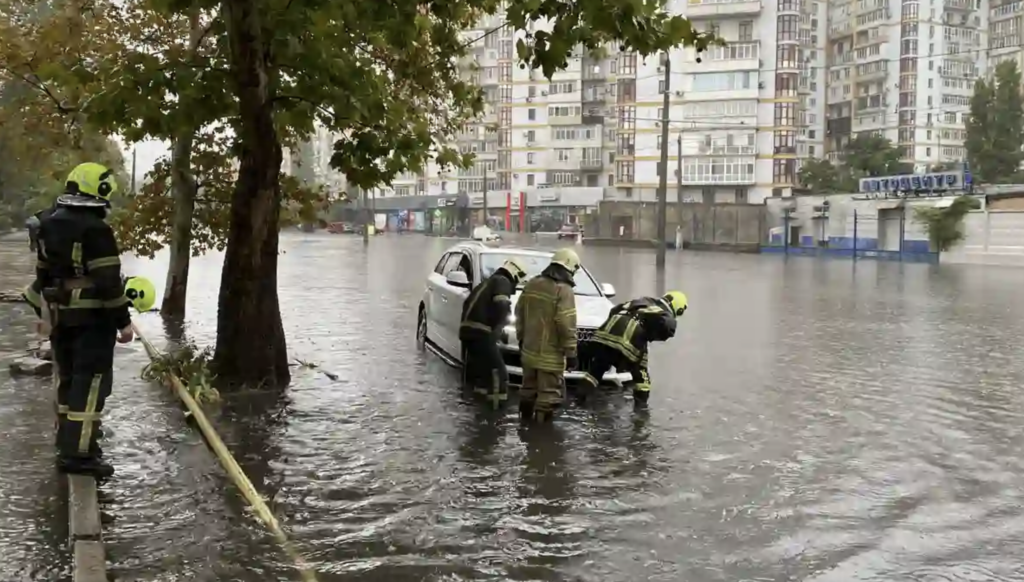
The Next Downpour Without Casualties: What Odesa Authorities Have Done to Prevent a Repeat of the September 30 Tragedy
Team mentor: Alisa Yurchenko, The Kyiv Independent
Publication date: 17 November 2025
On 29 October, the official website of the National Police reported that notices of suspicion had been issued to nine individuals: the former mayor of Odesa (Hennadiy Trukhanov), two of his deputies, officials of the Odesa City Council departments, as well as the director and several employees of a municipal enterprise. They are accused of official negligence that led to the deaths of people during the 30 September downpour. The charge — Part 3 of Article 367 — carries a penalty of up to eight years of imprisonment.
Law enforcement authorities state that the tragedy occurred due to improper maintenance of the city’s stormwater drainage system.
The following day, the Pechersk District Court of Kyiv imposed preventive measures on the suspects: either 24-hour or nighttime house arrest, except for the Director of the Department of Municipal Security, who was remanded in custody with the option of bail.
According to a source in the regional prosecutor’s office cited by «OZh», two additional expert examinations are ongoing as part of the investigation and may affect the number of suspects.
Read the continuation of the story
18000
Arrest Me If You Can: How Cherkasy Utility Services Funnel Millions to Their Own Business
Team mentor: Maksym Opanasenko, Bihus.Info

Publication date: 19 November 2025
The next time you feel the urge to complain about your job, think of entrepreneur Roman Komlyk. This autumn, he will have to prune trees and maintain a nearly 10-hectare park in one of Cherkasy’s districts entirely on his own. At least, that is what is stated in the contract signed with Komlyk at the end of October by the director of the municipal enterprise «Dyrentsiia parkiv», who is also a deputy of the Cherkasy City Council, Hennadii Shevchenko.
According to the agreement, Komlyk will receive more than one million hryvnias for this solo performance. Why the irony? Because over the past year, municipal officials have already «poured» almost 6 million hryvnias into this sole proprietor. Komlyk has become the «favorite» of an enterprise that employs more than 150 staff members, yet repeatedly outsources various tasks to this one «universal» individual. Why do they need him, and where a potential conflict of interest may be hiding — the report by «18000» investigates.
4Vlada
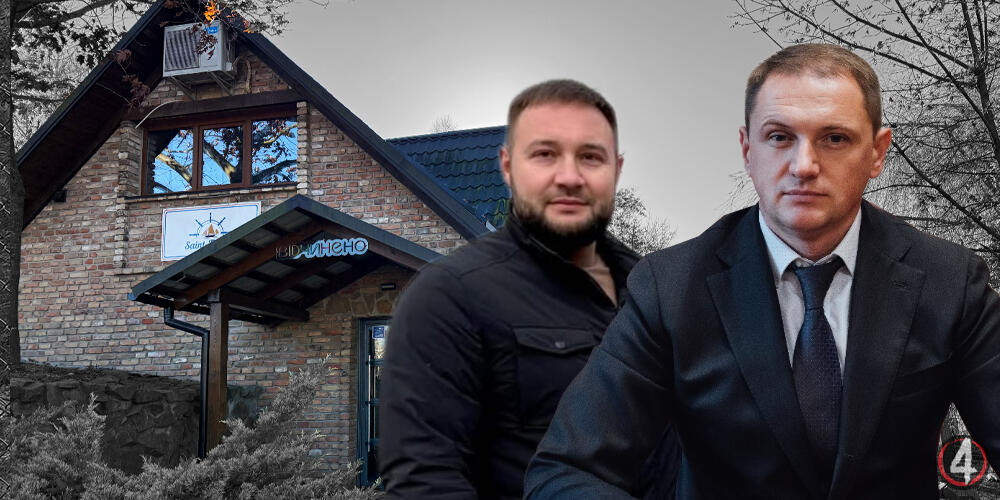
Secrets of Saint-Tropez: How a Recreation Base That Was Supposed to Be Demolished Became an Asset of a Prosecutor’s Friend
Team mentor: Oleksandra Gubytska, NGL.media
Date of publication: 20 November 2025
In 2023, the Rivne Regional Prosecutor’s Office obtained a court decision ordering the demolition of part of the recreation base «Sen-Trope», located near a reservoir outside Rivne. The dining hall–restaurant and 54 gazebos were to be dismantled. Yet two years have passed, and the facility not only remains in place — it was actively receiving visitors this summer. And it appears that no one ever intended to carry out the demolition.
The secret behind the base’s resilience may be surprisingly simple. Ownership of part of «Sen-Trope» suddenly passed to a company belonging to a friend of the regional prosecutor, and later — to a relative of an official who worked in the Department of Strategic Investigations of the police and is now a deputy head of a unit within the Criminal Investigation Department of the National Police of Ukraine.
How three years of work by investigators and prosecutors ended with new owners of «Sen-Trope» was examined by «4Vlada».
Ye
«Cheap» Luxury: How Officials in Khmelnytskyi Region Turn High-End Cars into Nearly Worthless Assets in Their Declarations
Team mentor: Nataliia Onysko, NGL.media

Date of publication: 20 November 2025
How officials purchase cars or land for suspiciously low prices — and what they themselves say about it — is covered in the investigation by journalists of the «Ye ye.ua» website.
A Tesla for 15,000 hryvnias or a Porsche Cayenne for 10,000… A luxury Audi sold by a friend for a symbolic 100,000, or a dozen land plots for 2–3 thousand — again, hryvnias — each… This is not a «Black Friday» promotion at a car dealership that you missed, but the declared «acquisition value» of vehicles and real estate listed by officials from Khmelnytskyi region.
And this is also a common way to avoid scrutiny from the National Agency on Corruption Prevention (NACP). In some cases, it allows officials to hide the fact that their official income does not match their expenses — and avoid answering the question: «Where did the money come from?»
Intent
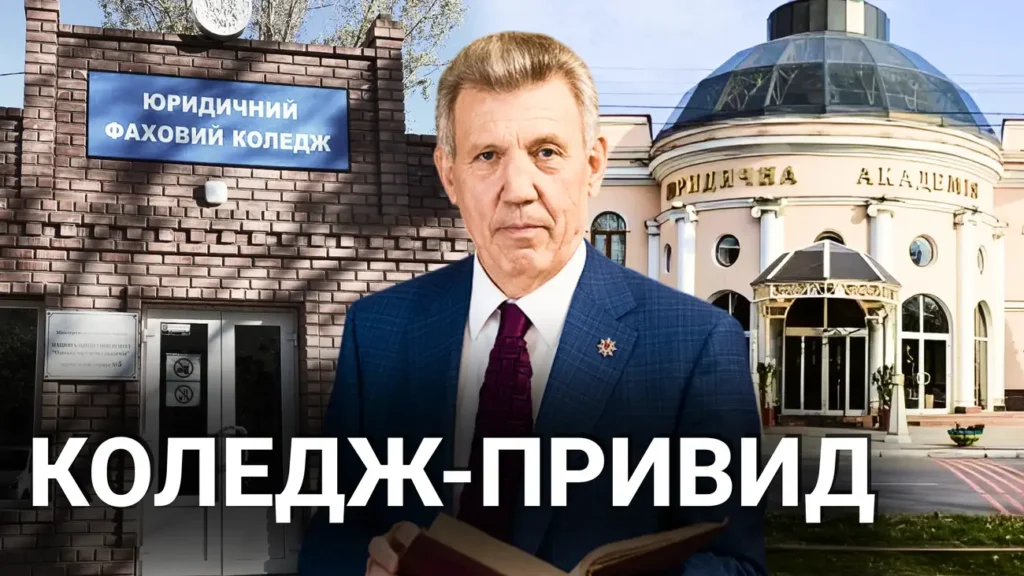
How a State College in Odesa Was Substituted with a Private One
Team mentor: Nataliia Onysko, NGL.media
Publication date: 20 November 2025
In the summer of 2025, Odesa resident Serhii Markiv (name changed) took his son to submit documents to the «Professional College of the National University “Odesa Law Academy”». On the college website, the family studied the admission requirements and found the address of the admissions office, which operated in one of the buildings of Odesa Law Academy. All roads led to the so-called «law academy». The son enrolled in the college, and the family was happy.
Only when they checked the payment details did Serhii suddenly discover that the college his son had entered had no legal connection whatsoever to the Law Academy. In other words, his son would spend three and a half years studying at a private institution rather than a state one.
When «Intent» journalists started looking into this case, it turned out that Serhii Markiv was not the only one who had found himself in such a situation. That is why we decided to find out in detail who, how and when «swapped» the educational institutions and «forgot» to inform prospective students about it.
20 Hvylyn (Vinnytsia)
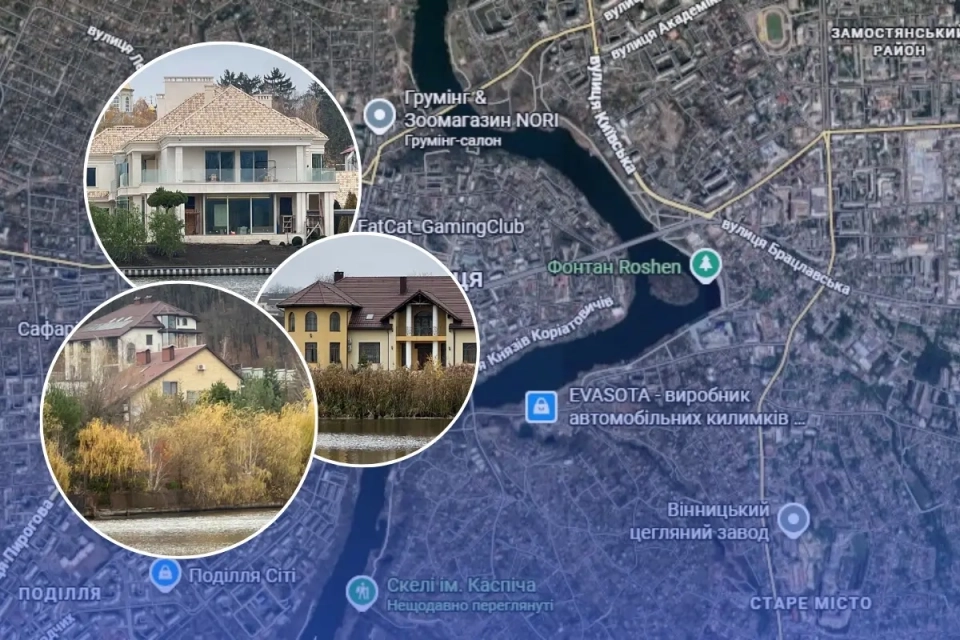
The Bank of the Southern Bug for the Selected Few: Who Is Blocking Vinnytsia Residents’ Access to the River?
Team mentor: Anastasiia Usenko, Bihus.Info
Date of publication: 20 November 2025
Karmalita, Bartsoś, and the Tkachuks are not just former members of city and regional councils — some of them even served in the Verkhovna Rada of Ukraine. For Vinnytsia residents, however, they have become the people who blocked public access to the river and obtained land plots directly on the bank of the Southern Bug.
City beaches and coastal areas, which by law must remain open to everyone, have effectively ended up behind the fences of their private estates.
And while Vinnytsia residents search for ways to reach the water, the families of former deputies continue to use the riverbank as they please — with gazebos, flower beds, and even small ponds.
Crimean Center for Investigative Journalism
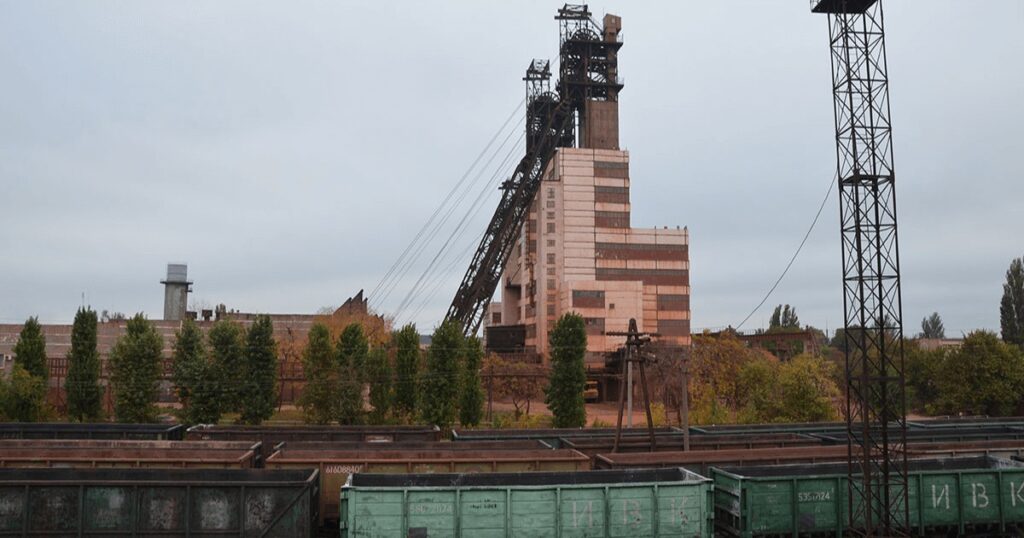
How Russia Seized the Zaporizhzhia Iron Ore Plant — and Who Profits from the Stolen Ore
Team mentor: Alisa Yurchenko, The Kyiv Independent
Date of publication: 20 November 2025
In 2022, caravans of ammunition and military equipment moved into the Ukrainian territories in the south that Russia had seized, while in the opposite direction went railcars and trucks loaded with stolen property and natural resources. Among them were highly valuable sinter and open-hearth iron ores from the Pivdenno-Bilozerske deposit in the Zaporizhzhia region — ores with a high iron content that require no beneficiation.
The Zaporizhzhia Iron Ore Plant, which extracted these resources, became the most valuable stolen asset in the region, topping the charts in both revenue and profit for the occupiers. As a result, this link in the supply chain of raw materials to metallurgical plants in occupied Donbas and Russia is controlled by individuals closest to the occupation and federal authorities — including entities within the business orbit of Viktor Medvedchuk and Ramzan Kadyrov.
The lawful owners and largest shareholders of PJSC «Zaporizhzhia Iron Ore Plant» are the Ukrainian company «Zaporizhstal», the Slovak firm «Minerfin», and the Czech company KSK Consulting. The ultimate beneficial owner — Ukrainian oligarch Rinat Akhmetov — filed a claim with the European Court of Human Rights back in 2022, seeking compensation from Russia for damages and violations of his property rights. A request from the Crimean Center for Investigative Journalism for an interview with the plant’s director or another competent representative went unanswered.
Read the team’s full investigation
Skhidnyi Variant
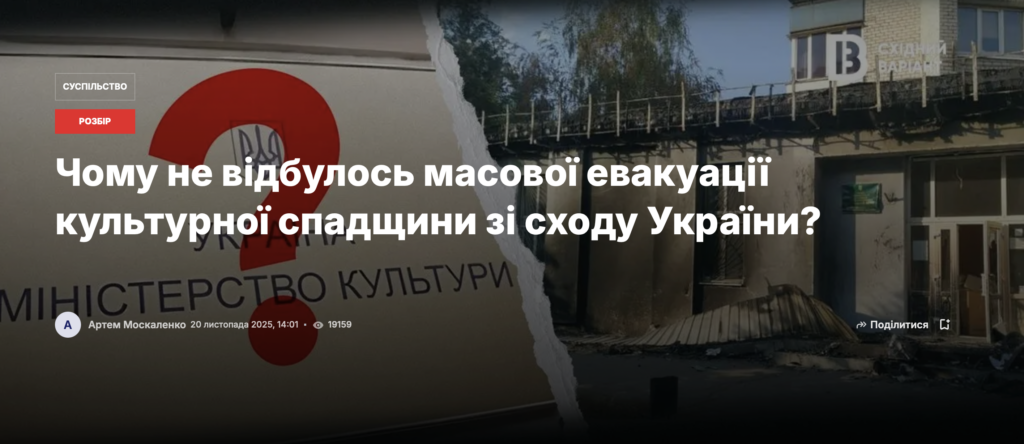
Why Did a Mass Evacuation of Cultural Heritage from Eastern Ukraine Never Take Place?
Team mentor: Alisa Yurchenko, The Kyiv Independent
Date of publication: 20 November 2025
Neither after 2014 nor after 2022 did the Ministry of Culture develop an effective policy for evacuating museum collections from frontline regions. Responsibility remains blurred between museum staff and central and local authorities. As a result, Ukraine risks losing cultural heritage objects now directly threatened by the advancing front line.
According to the Ministry of Culture, not a single museum exhibit was evacuated from Luhansk or Donetsk regions before 2022. At the same time, Ukrainian authorities have neither updated nor created any new action protocols for museum professionals, nor have they prepared in any way for a potential large-scale evacuation of collections.
Eighteen teams of regional media are participating in the project. You can read the first series and the initial selection of materials here: Truth in Detail. A Review of Investigative Journalism within the Project Stronger Together.
The second selection of materials is available here: Stronger Together: The Second Wave of Investigative Reports from Regional Media.
***
The Stronger Together: Transparency and Anti-Corruption program is implemented by AIRPPU in partnership with WAN-IFRA and the Norwegian Media Association (MBL), with the support of Norway.