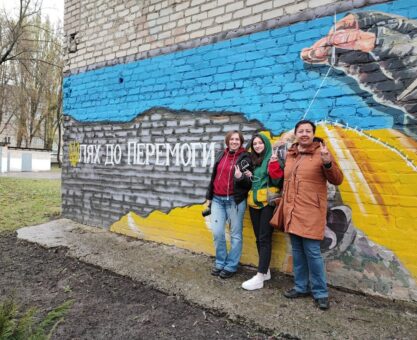



Journalists in northern Sumy risk their lives so the world can learn about Russian crimes: they document destruction, civilian deaths, and work daily in border towns under attack.
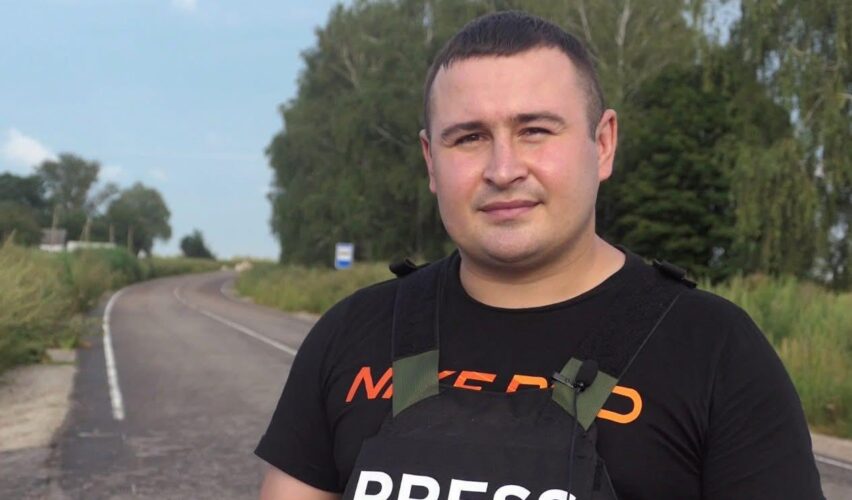
We continue sharing stories about journalists working in frontline and border regions. Previously, we published interviews with Zarina Zabrisky (Parts One and Two), Oleksandr Kachura, Vladyslav Safronov, Natalia Bilokudria, Serhii Horbatenko, Yevhen Khrypun, Anna Kaliuzhna, Polina Kulish, Nadia Sukha, and Nadiia Karpova. Today, we spoke with Oleksandr Solomko, the founder of a media network in northern Sumy.
Oleksandr explained why journalists from Yampil.Info, Hlukhiv.City, and Na Mezhi choose to work under fire rather than prioritize their own safety.
For four consecutive years, they have been documenting the consequences of Russian war crimes, destruction, and civilian casualties—and they say it is essential for them:
“Since the beginning of the war, many media closed. We were the only film crew working on the border. Now we’ve expanded into a larger network and are present in all settlements of the Shostka community.”
Working at risk, Oleksandr says, means you never know if you’ll return or if you’ll become part of the story yourself—but you go anyway.
“If not us, then no one. Other media don’t make it here. Kyiv is 300 km away, the regional center is far.”
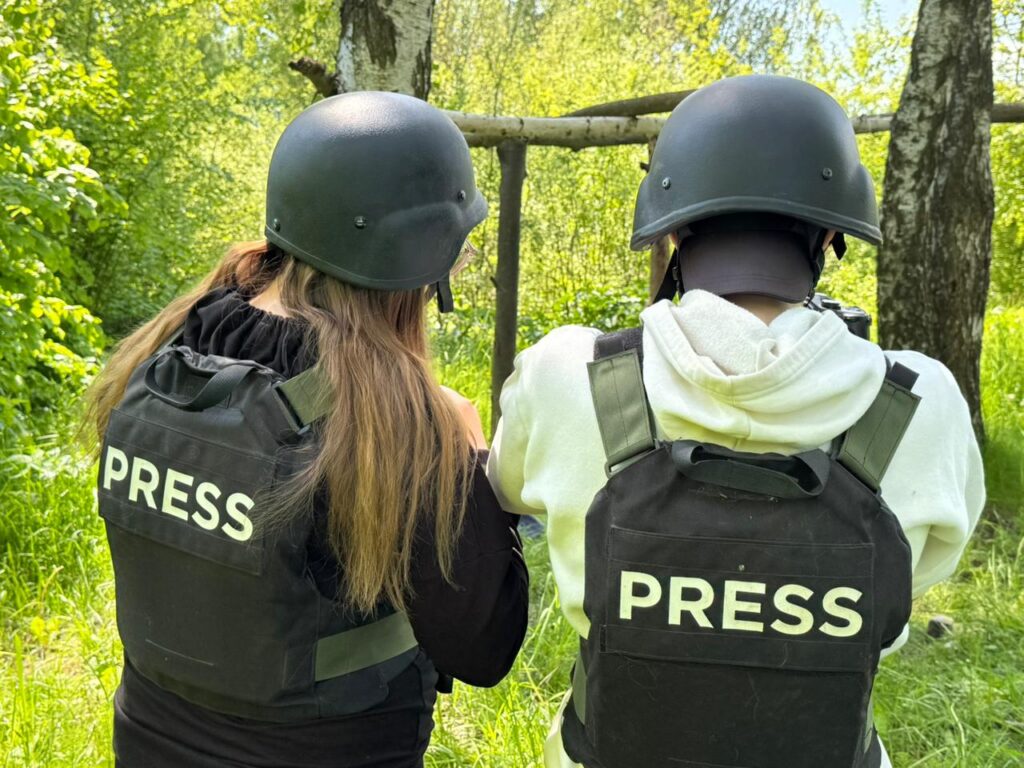
The team is small but professional. Oleksandr proudly names his journalist colleagues:
“Maria Kapustina, Anastasia Lutchenko, Yulia Andrusenko, and Nadiya Cheberyako work in Shostka and Hlukhiv. They go to every attack. For a long time, we didn’t take women to dangerous shoots, but for them, it is important.”
Escalation: August 2024
According to Oleksandr, in August 2024, after the start of the Kursk operation by the Armed Forces of Ukraine, the Russians became increasingly reckless.
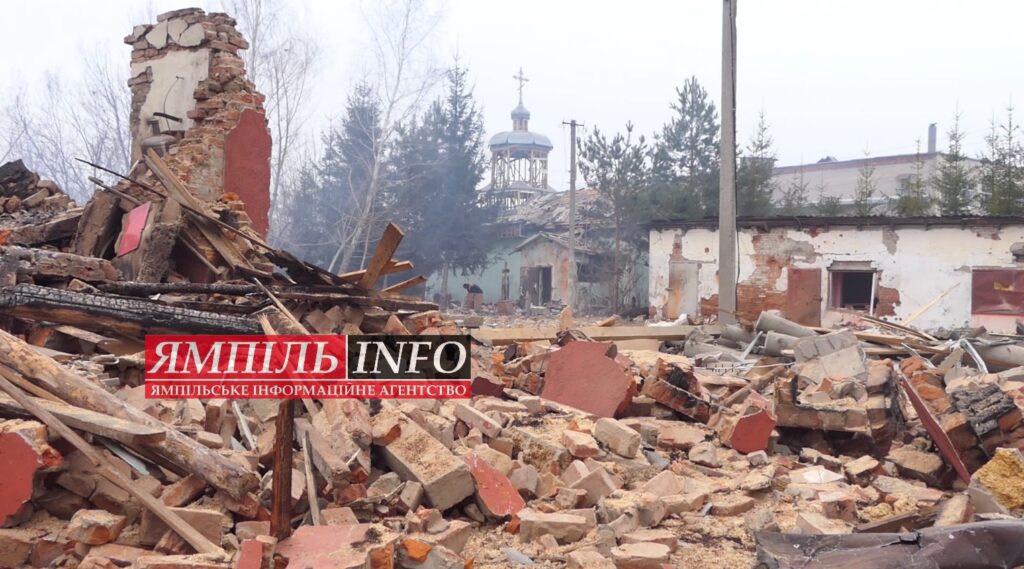
“They destroyed everything indiscriminately—border towns like Yampil, Svesa, and Hlukhiv were completely wiped out. KAB bombs (guided aerial bombs) fell one after another.”
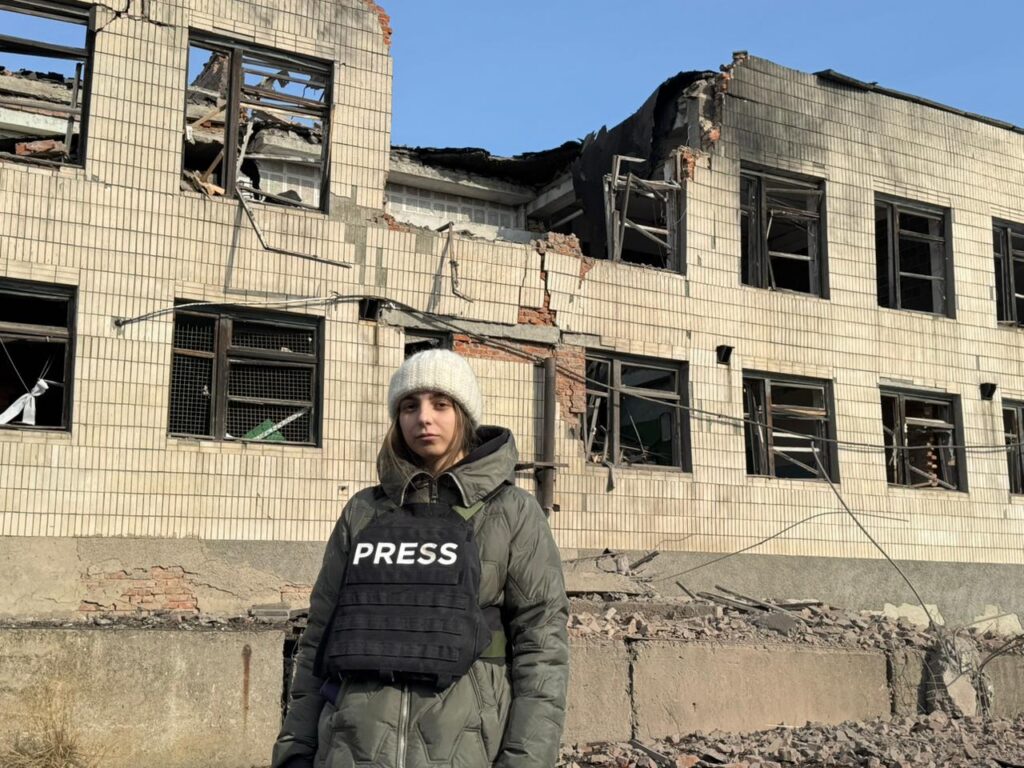
After every strike, another followed. They targeted town centers and killed civilians.
“In Hlukhiv, on July 17, they hit the city center—14 wounded, two dead, including five children. In Yampil, civilians riding a motorcycle were killed. Svesa suffered on Independence Day—a KAB bomb hit a five-story building.”
Chronicles of Horror
November 2024 was especially difficult for Oleksandr. Several times, he came within meters of Russian shells. He recalls:
“We were filming a damaged building in central Hlukhiv when we heard distant propeller sounds. We barely managed to get into the basement when we heard the dropping sounds. We returned to finish filming—and two more drones were targeting us.”
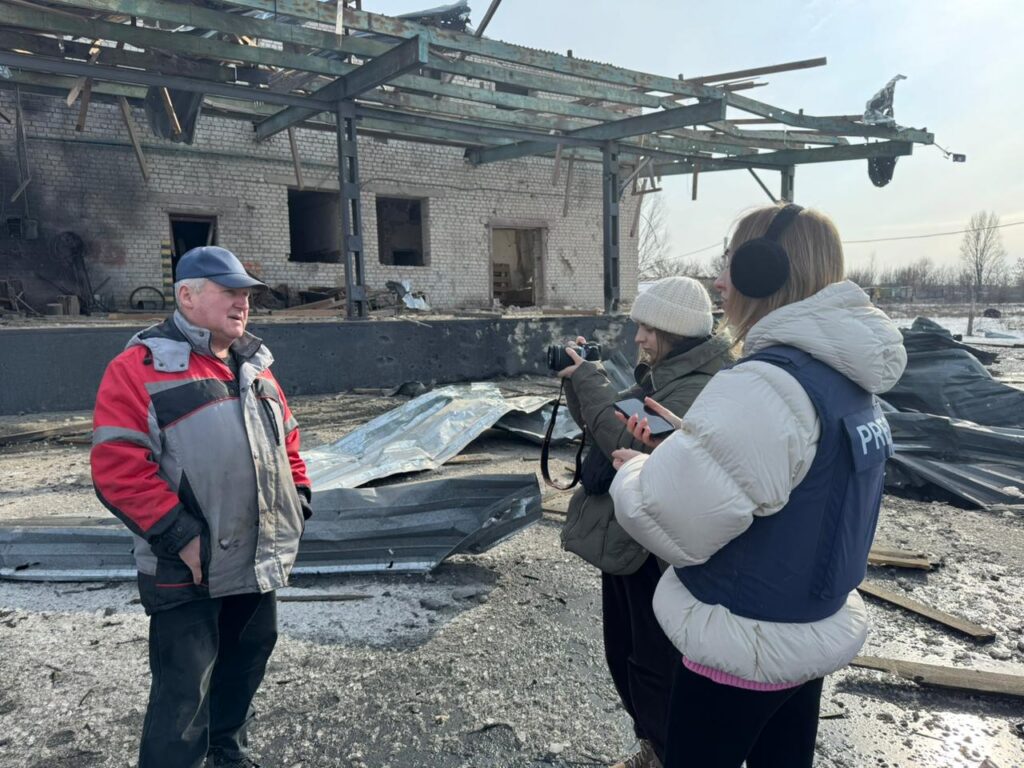
In the village of Knyazhychi, where an explosion killed a homeowner, the film crew was hit again:
“As soon as we approached the shelled house, we heard a whistling shell and a powerful blast nearby. We ran inside. I stepped into a pool of blood of the person who had been killed the day before…”
In Hlukhiv, when a Russian drone hit a dormitory of a medical college housing displaced people, Oleksandr took part in the rescue operation:
“Two Russian kamikaze drones hit the dorm one after the other, where people who had evacuated from border villages were staying. I was in a neighboring building at the time. I heard two powerful explosions and ran to the scene.”
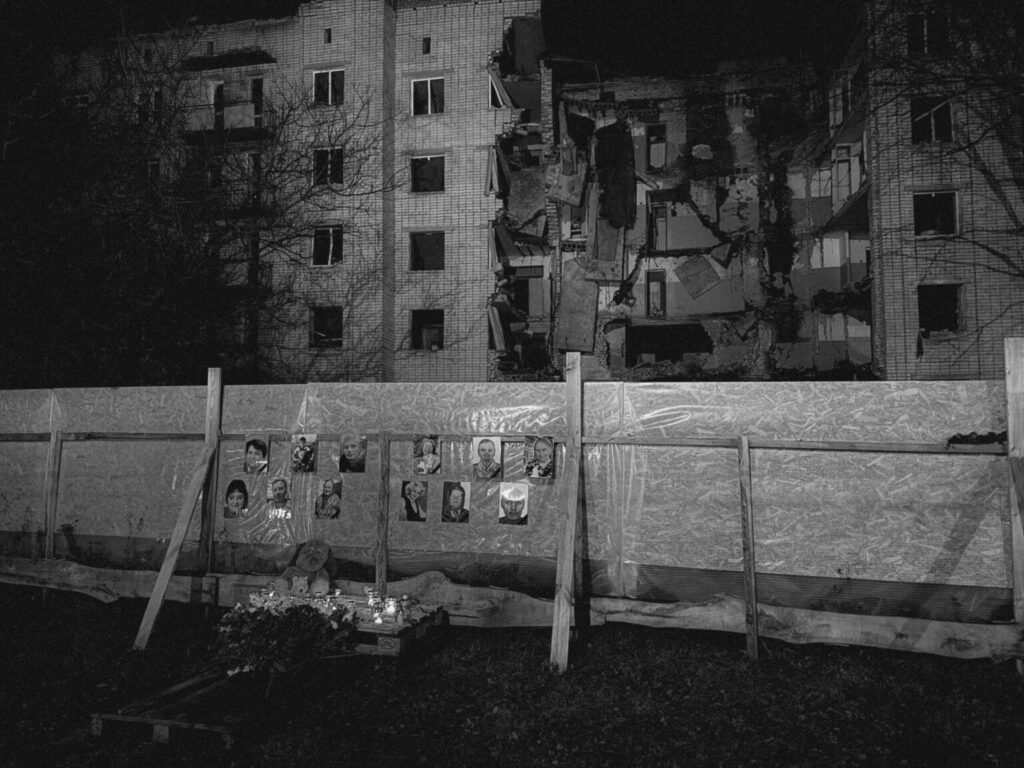
The central part of the building, from the fifth to the first floor, collapsed, trapping people under the rubble.
“In the night darkness, screams were heard. Injured people were carried to the nearby hospital.”
Police and rescue services soon arrived. During the rescue operation, attacks continued.
“In the hospital shelter, where we went during the drone attacks, it was terrifying: frightened patients, many barefoot, broken glass underfoot…”
When Oleksandr left the shelter, some relatives who continued clearing the rubble had already pulled out bodies:
“Under the debris, we found 12 bodies, including a seven-year-old boy. The Russians didn’t care who was there—they just targeted the group of people.”
How Locals Respond
Despite the pain, people willingly share their stories.
“Over four years, we had only one aggressive incident. Mostly, people hug us, thank us for coming, especially in remote villages,” Oleksandr says.
He emphasizes that for locals, it is important to tell about their losses and what they have endured.
“In one village, which was shelled daily, a social worker delivering bread to her clients by bicycle was killed. We came to film, and people lined the entire street to tell this story. It was very painful for them.”
“The Children Were Evacuated in Time”
Asked where the team draws strength, Oleksandr cites a recent case:
“Recently, Russians hit Shostka, a sports complex with 16 children and their coaches inside.”
The second kamikaze drone exploded inside. It was a terrible blast.
“We went there with only one thought in mind—the children. When we learned they all made it to the shelter unharmed, we felt relieved. That was probably the strongest motivation.”
“This Must Be Shown”
Life on the border, Oleksandr calls true hell: people suffer, lose relatives, health, and homes.
“You go to sleep in your house, not knowing if you’ll wake up. Russians strike single-story houses with five or six drones. We came and saw entire streets burned to the ground.”
Without exaggeration, the journalist says that documenting all Russian crimes is their mission:
“We believe there will be a court and punishment. A hundred years ago, we had similar events. We told people about it, but they didn’t believe us. They didn’t believe in Russian atrocities. They didn’t believe in the Holodomor, calling it fiction. We must admit—Russians have erased historical memory. Our task is to preserve evidence, not remain silent. Silence is what the enemy expects.”
Journalist Insurance: Take Care of Your Safety
The Association of Independent Regional Press Publishers of Ukraine (AIRPPU) offers journalists working in dangerous regions the opportunity to obtain life and health insurance. This is part of the International Insurance Fund for Journalists (IIFJ) initiative, implemented in partnership with Ukrainian and European organizations.
Conditions for free insurance are available here.
Applications can be submitted here.
Media workers eligible to apply include those working in Kherson, Zaporizhzhia, Sumy, Mykolaiv, Donetsk, Luhansk, Odesa, Kharkiv, and Dnipropetrovsk regions, as well as border areas of Kyiv and Chernihiv regions.
The project is implemented by the Association of Independent Regional Press Publishers of Ukraine (AIRPPU) together with partners. The initiative is part of the Voices of Ukraine program, coordinated by the European Centre for Press and Media Freedom ECPMF. Voices of Ukraine is implemented within the Hannah Arendt Initiative and funded by the German Federal Foreign Office.