


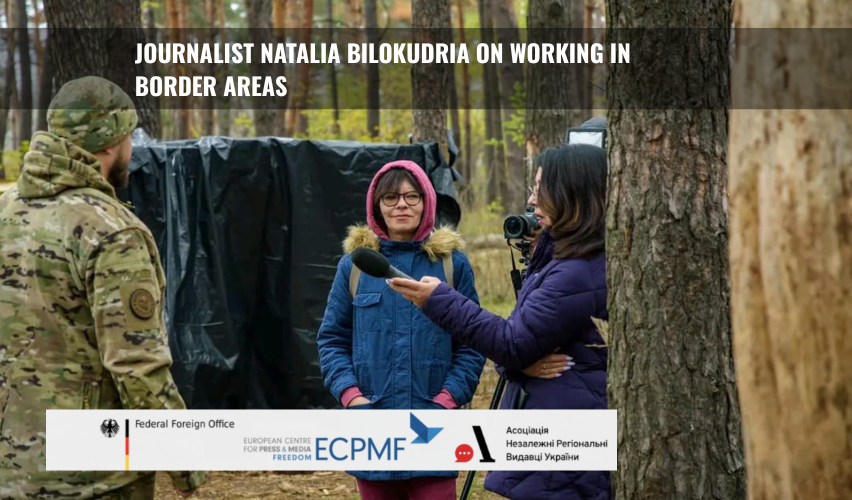
Journalist Natalia Bilokudria works in Kharkiv, documenting life in frontline communities across the city and region.
We continue to share stories about the work of journalists in frontline and border regions. Earlier, we published an interview with American journalist Zarina Zabrisky, who works in Kherson, as well as conversations with war correspondent Oleksandr Kachura and videographer Vladyslav Safronov. Today, we are telling the story of Kharkiv journalist Natalia Bilokudria.
airpu.org/en/projects-en/journalism-under-fire-daily-work-in-kherson/↗
See also: “We went through fire”: how journalists work in Kherson
Natalia works in Kharkiv for the Freedom TV channel — a state enterprise of the Ukrainian State International Broadcasting Multimedia Platform. Together with a cameraman, she documents life in the city and region, including in frontline communities where danger is a constant backdrop.
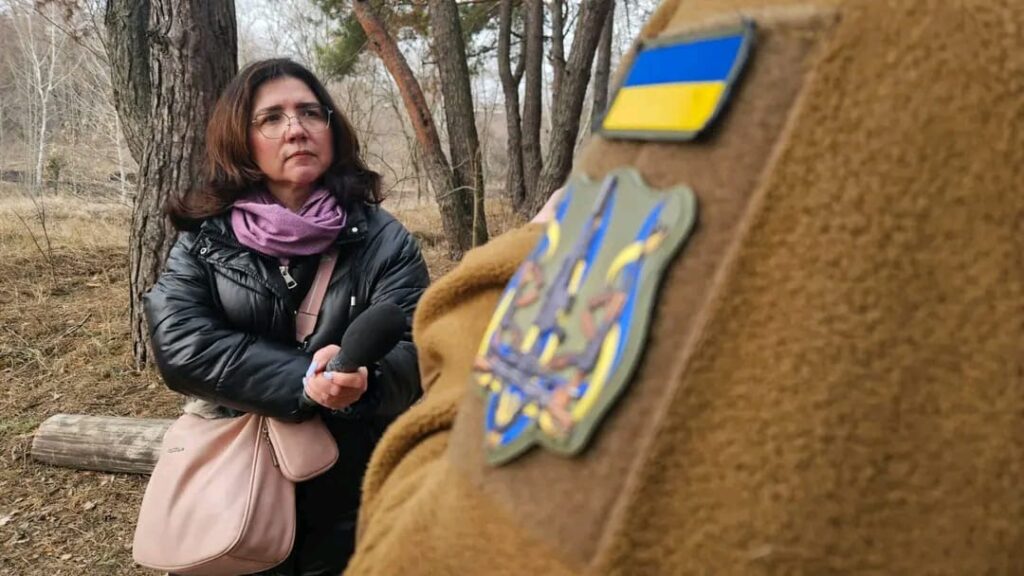
Her routes include Kupiansk, Staryi Saltiv, the Derhachi community, and the villages of Prudnianka, Slatyne, and Tsupivka. These are areas within reach of Russian MLRS strikes.
“We try not to travel too often to the most dangerous places, but we still work wherever our units are positioned. During interviews, I literally keep turning my head 360°, listening to every sound,” Natalia says.
Safety gear — helmets and bulletproof vests — is always close. But even they cannot eliminate the sense of danger. This summer, during one of their trips, an enemy drone followed their car for a long time.
“We were driving 150 km/h, trying to get away. When the guys said it had disappeared, I realized how dangerous it had been. Honestly, I was scared,” Natalia recalls.
Reporting Under Fire and Technical Challenges
In a journalist’s work, sometimes the tools fail. That is what happened during a live broadcast after a nighttime attack on Kharkiv:
“We were rushing to the morning live shot, with a shattered supermarket behind me. And suddenly the cameraman says: ‘The camera can’t see LiveView.’ We couldn’t go on air. It was a pity, but we quickly switched to Zoom. It wasn’t perfect — I held the phone in my hands, you could see my fingers, and the video didn’t convey the scale of destruction. But we managed, and the editors thanked us,” she says.
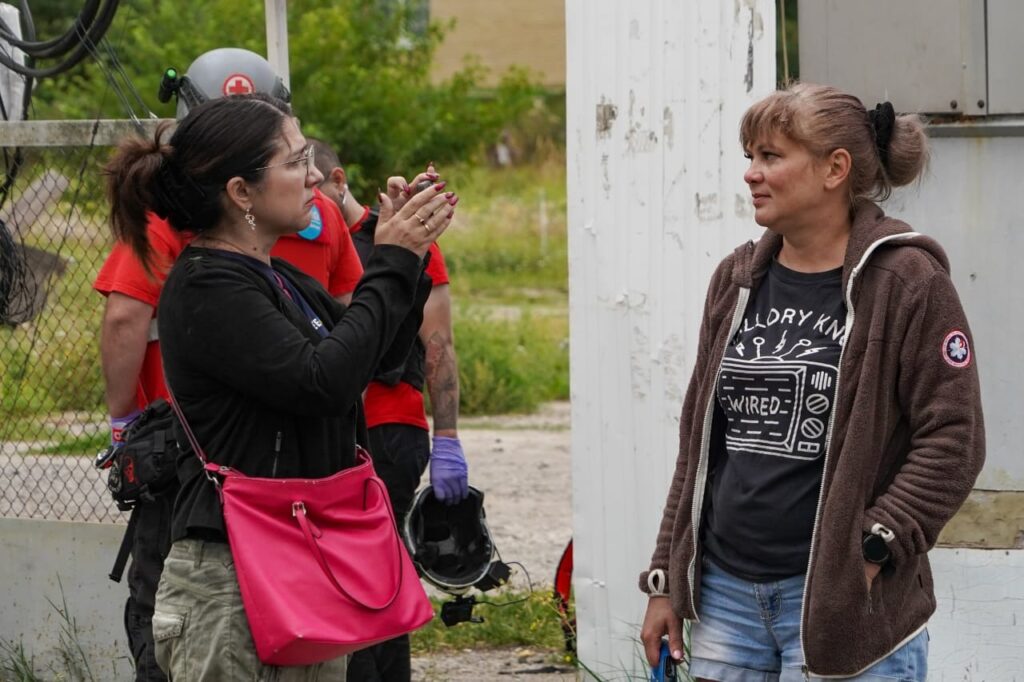
Nearly four years into the full-scale invasion, all shootings and interviews are emotionally heavy, Natalia says.
“Ninety per cent of my interviewees have lost their homes or loved ones. People in Kharkiv are made of steel — hardly anyone refuses an interview. But every conversation is painful,” she adds.
A Day in the Risk Zone and Inner Compasses
Filming days begin very early. Press officers schedule trips between attacks to reduce risks.
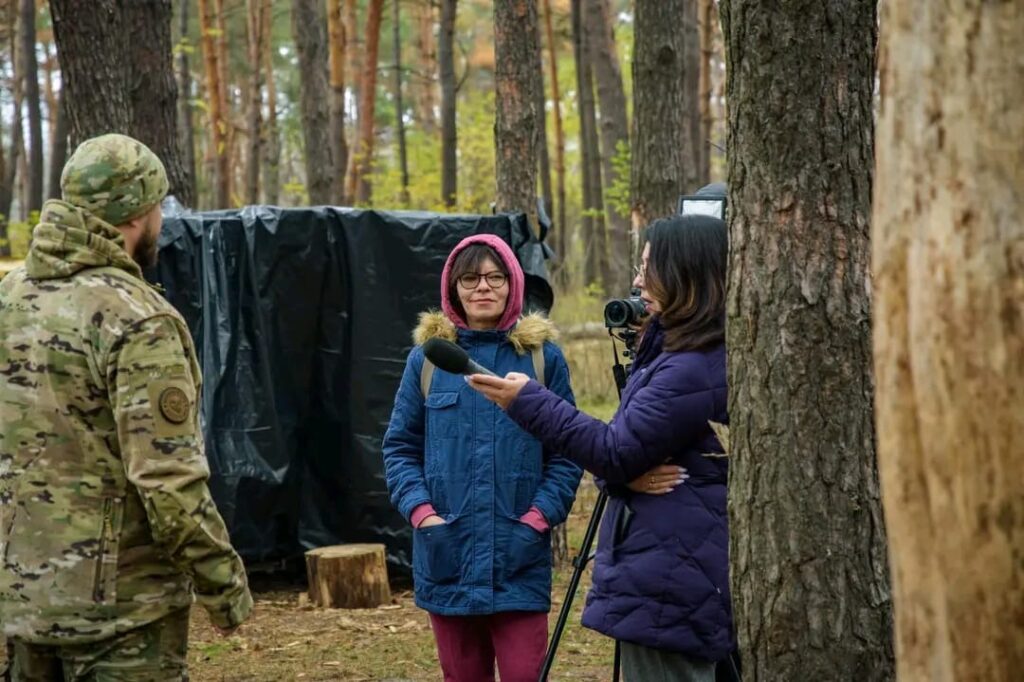
“We meet in a safe zone, put on bulletproof vests and helmets, switch to a military vehicle, and head to the site. With a journalist around, nothing changes — everyone remains as focused as ever,” she says.
But sometimes work forces one to pause. A recent tragedy at the Freedom TV channel took the lives of her colleagues, Yevhen Karmazin and Aliona Hramova. A Russian Lancet drone hit their vehicle while they were working in Kramatorsk.
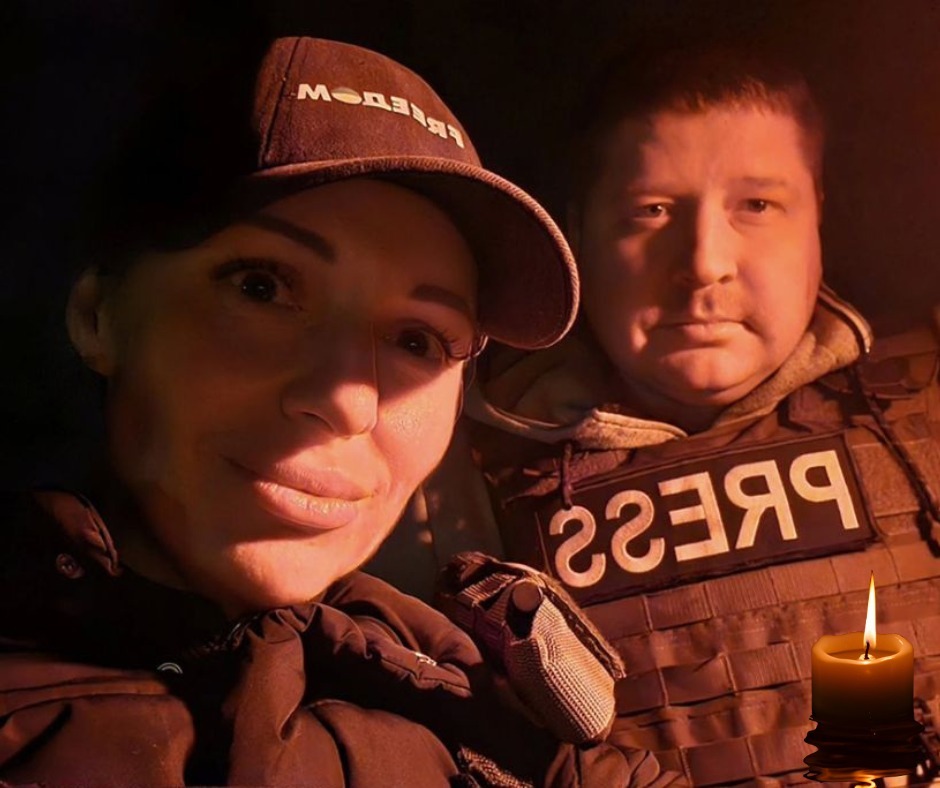
“They were my friends. After the funeral, I couldn’t work for a week — I withdrew into my psychological baseline, and I needed to regain strength and think about how to go on. But what can you do… Time passes, and we must show viewers what the enemy is turning Kharkiv and the region into. We must remember the fallen and continue the fight,” Natalia says.
The Hardest Topics and Motivation
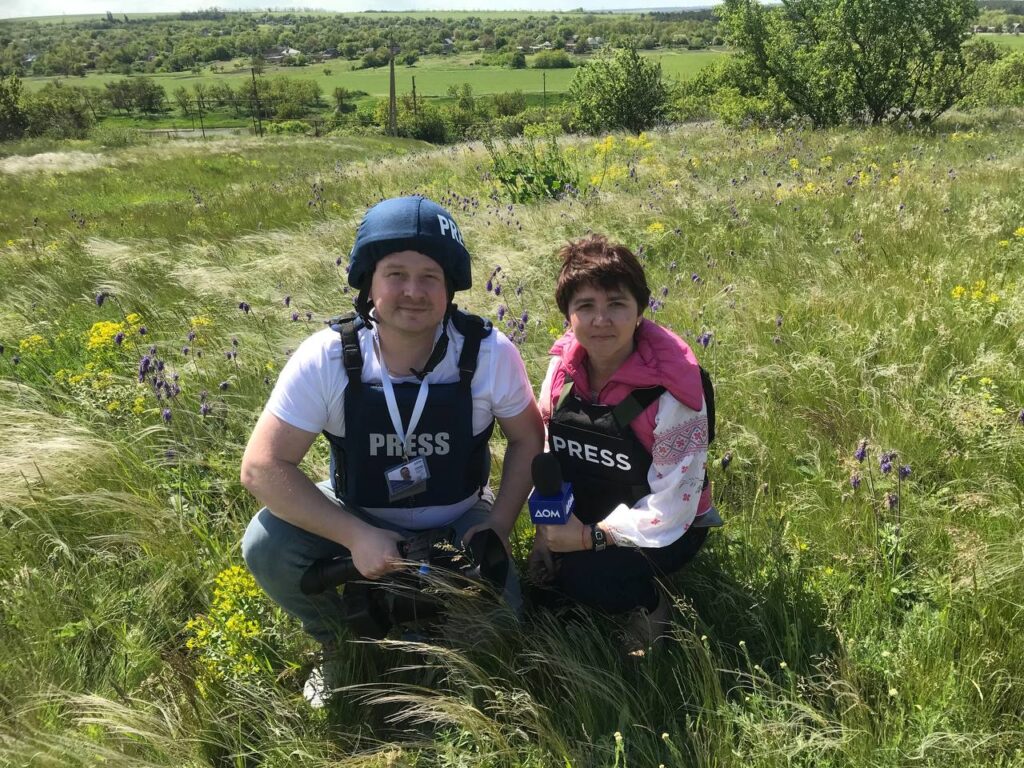
Over more than 25 years in television, Natalia has filmed dozens of stories about tragedies. The most painful are children’s deaths.
“I filmed up to ten reports about children’s deaths. It’s one of the hardest tasks. Whether a child dies because of war or an accident, you must pull yourself together and show the truth. Maybe it will stop someone from making a reckless decision. If even one person changes their behaviour — my work makes sense,” she explains.
She recalls reporting on the death of Maidan activist Vladyslav Zubenko:
“He was a very young guy, a bright person. I couldn’t read the script because I kept crying. It was very hard. I remember the director sitting next to me was also crying, and we barely managed to finish that report. But we had to tell his story.”
Make Sure You Are Insured While Working
It may sound obvious, but to keep telling the stories of this war, journalists themselves must be protected.
The Association of Independent Regional Press Publishers of Ukraine (AIRPPU) offers journalists working in dangerous regions the opportunity to obtain life and health insurance. This is part of the International Insurance Fund for Journalists (IIFJ) initiative, implemented in partnership with Ukrainian and European organisations.
The terms of free insurance are outlined here.
You can apply here.
Media professionals working in the Kherson, Zaporizhzhia, Sumy, Mykolaiv, Donetsk, Luhansk, Odesa, Kharkiv, and Dnipropetrovsk regions, as well as in border areas of Kyiv and Chernihiv regions, are eligible to apply.
The project is implemented by the Association of Independent Regional Press Publishers of Ukraine (AIRPPU) together with partners. The initiative is part of the Voices of Ukraine program, coordinated by the European Centre for Press and Media Freedom (ECPMF). Voices of Ukraine is implemented within the Hannah Arendt Initiative and funded by the German Federal Foreign Office.