


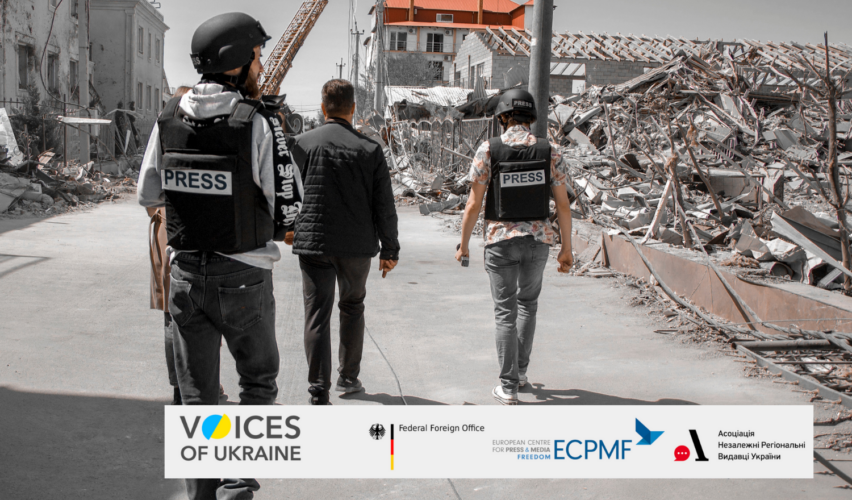
During the full-scale war, journalism in Ukraine continues to be a high-risk profession. Reporting from frontline areas, working in the aftermath of shelling, traveling to de-occupied and border regions, and even covering the consequences of attacks in one’s own community — all of this requires not only professional skills, but also real insurance protection. This is precisely why the programme of the International Insurance Fund for Journalists is critically important and highly effective.
The team of the Association of Independent Regional Press Publishers of Ukraine, together with Ukrainian and international partners, launched this project back in 2022. In 2025 alone, 67 journalists from 15 media outlets were insured through the programme. The total number of insured days reached 953. These figures are not just statistics — they represent real trips, assignments, and hours of work carried out in conditions of genuine danger, enabling the world to see the truth.
As part of the programme, the Association not only provides insurance coverage in case of injury, but also organises safety training for media professionals. For example, in December the tenth such training took place, during which professional instructors taught journalists how to act confidently even in the most critical moments — when a single second can determine one’s own survival or that of those nearby.
More details about the programme were shared by Oksana Brovko, СEO of the Association, in an interview with the team of Suspilne Broadcasting, which also cooperates with the International Insurance Fund for Journalists. Suspilne’s reporting teams regularly travel to dangerous areas, while regional teams from frontline branches work continuously in high-risk environments and therefore require reliable insurance protection. The interview is presented below in full.
«Insurance for media workers during wartime is a basic necessity. Today, journalistic work is often associated with danger and risks to life and health. That is why there must be reliable financial guarantees and confidence that this support mechanism will function in the worst-case scenarios. I am deeply grateful to the International Journalists’ Insurance Fund for providing an insurance opportunity that any newsroom can use.
Even though Ukrainian insurance companies have entered the market offering similar services, the level of coverage provided by the Fund is several times higher. Moreover, not every media outlet has the financial capacity to insure itself independently. Without exaggeration, the Fund provides unique support to Ukrainian media», says Viktoriia Sydorenko, Director of Human Resources at Suspilne Broadcasting.
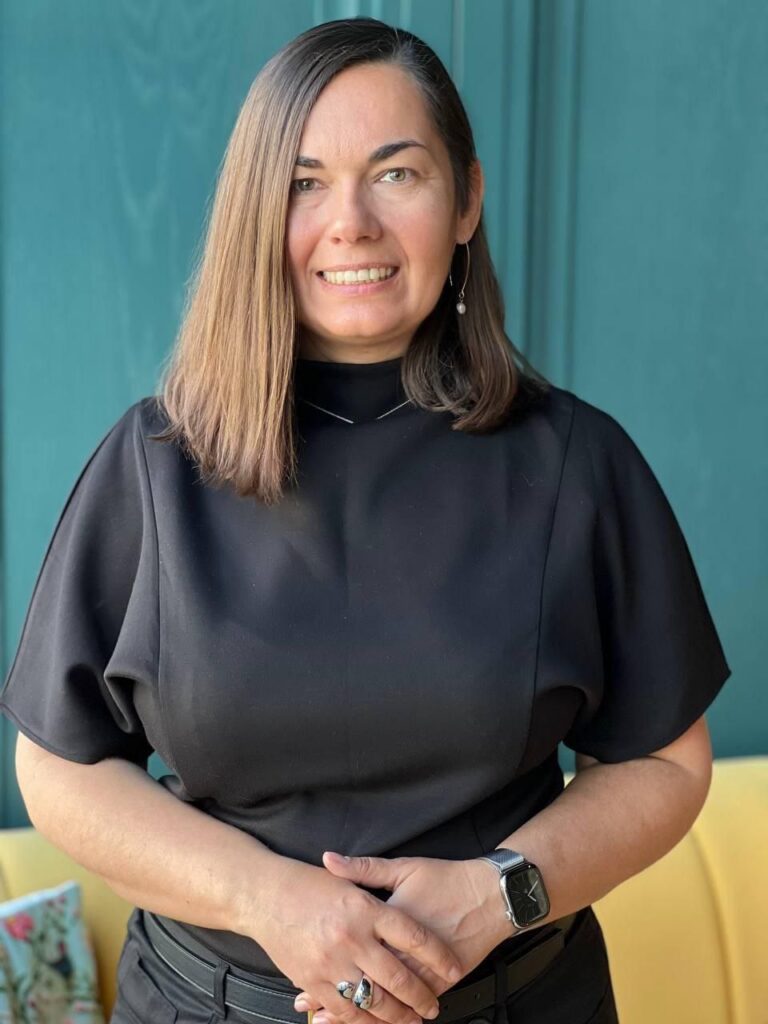
According to Oksana Brovko, СEO of the Association of Independent Regional Press Publishers of Ukraine, the programme will run until mid-2027. She spoke about the specific features of the project and shared insights into the challenges and needs currently faced by the media community.
Are there many insurance options for journalists on the Ukrainian market, and does the state support the initiative of the International Insurance Fund for Journalists?
— No, the state does not support the initiative of the International Insurance Fund for Journalists. In Ukraine, anyone can purchase health insurance as a commercial service, but professional insurance for media workers — insurance that truly protects journalists while they are carrying out editorial assignments — did not exist.
When the full-scale war began and it became clear that Ukrainian media professionals were working without any professional insurance protection, together with colleagues we started raising this issue both at the national and international levels. We wanted Ukrainian insurance companies to be able to create high-quality products comparable to international ones, specifically for media professionals, as has long been the case globally. However, since no such mechanism existed in Ukraine, we launched the insurance programme of the International Insurance Fund for Journalists, which provides Ukrainian journalists with an opportunity to receive real professional protection while working in high-risk areas.
At present, some insurance offers for journalists have appeared on the Ukrainian market, but they still do not provide the level, scope, and range of coverage offered to Ukrainian media professionals by the specialised international insurance company we cooperate with.
Is the programme of the International Insurance Fund for Journalists free of charge for Ukrainian media professionals?
— Yes, absolutely. One day of insurance for one person costs approximately USD 100 (at the beginning of the full-scale invasion, this amount reached nearly USD 190). We managed to attract a donor who fully covers these costs for the insurance company, so each policy has significant value, yet for Ukrainian media teams it remains completely free of charge.
The role of the Association of Independent Regional Press Publishers of Ukraine in this process is decisive. It is the Association that coordinates interaction between journalists, the insurance company, and donors, ensuring the smooth functioning of the entire insurance protection system.
The Association is not an insurance company; it is a professional media community and a non-profit organisation that has taken responsibility for the full insurance cycle — from submitting an application to receiving the policy. Our coordinators work in a coordinated manner and, in practice, around the clock. They respond quickly to editorial requests and help journalists obtain real protection even in the most difficult and dangerous working conditions.
Our project has become a point of support for many media outlets. It allows journalists to work in high-risk areas without fear, with a sense of protection, and therefore with inner freedom.
What are the current insurance terms, and what level of coverage is provided for journalists?
— The programme of the International Insurance Fund for Journalists provides insurance coverage of up to USD 100,000. This means that every journalist, camera operator, fixer, or photographer travelling on assignment to a dangerous area can rely on real financial protection in the event of injury or trauma, or — in the case of death while performing professional duties — their family can rely on compensation.
What has changed in the new wave of insurance? Has the number of insured days or opportunities for teams increased?
— After a short pause, the team of the Association of Independent Regional Press Publishers of Ukraine, together with partners, managed not only to continue the programme but also to significantly expand its capabilities. We no longer limit the number of insured days or the number of team members travelling to dangerous regions. Previously, assignments lasted two days, at most four; now each trip is covered for as long as necessary. The insurance coverage remains up to USD 100,000 — a serious level of protection for journalists, camera operators, and fixers working in high-risk areas.
We also launched the programme with an improved condition — no limits on the number of team members, although in practice such assignments are usually carried out by small teams.
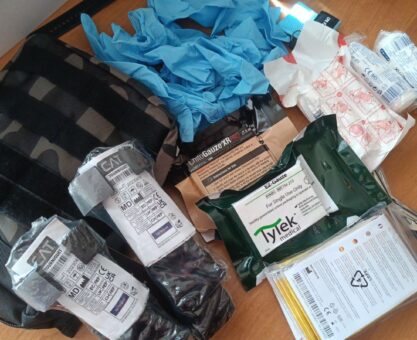
On 3–4 December, another safety training session took place — an essential component of our programme. During the training, participants practiced practical skills related to behaviour during shelling, evacuation, and the provision of first aid. We strive for every representative of Ukrainian media to feel confident, protected, and prepared — even when their work involves daily risk.
Are there any priorities within the programme? Who is insured first?
— We review applications in the order in which they are received, but we insure only Ukrainian media professionals — journalists, camera operators, fixers, photographers, and editors who work as part of a team and are sent on assignments to combat zones, liberated territories, border areas with Russia or Belarus, as well as frontline regions, and who have personal protective equipment.
Coverage applies to trips to Kherson, Zaporizhzhia, Sumy, Mykolaiv, Donetsk, Luhansk, Odesa, Kharkiv, and Dnipropetrovsk regions, as well as border areas of Kyiv and Chernihiv regions. When Ukrainian forces entered the territory of Kursk Oblast, we even managed to arrange insurance coverage for journalists travelling there on assignment.
Among the applicants are journalists from Freedom, Suspilne, Slidstvo.Info, Hromadske, Frontliner, Kordon.Media, as well as many other national and regional media outlets. Over the past year and a half, 92 journalists have been insured for a total of 1,230 days spent in dangerous conditions. We received 704 applications, of which 633 were approved, including one confirmed insured incident.
How can journalists apply for insurance?
— The process is as simple as possible — journalists need to fill out an online application. We are ready to help if someone is going through this process for the first time and does not fully understand certain steps. The insurance form can be found via the “Get Insured” buttons on the website of the International Insurance Fund for Journalists, on the website of the Association of Independent Regional Press Publishers of Ukraine, as well as on our partner: Suspilnist, Detector Media, IRRP, IMI, and the Centre for Democracy and Rule of Law (CEDEM).
Applicants must attach documents that are essential both for us and for the insurer: an assignment order or official letter confirming that the trip is authorised and specifying the location, dates, and duration of travel; a journalist’s ID; personal identification documents; and a copy of accreditation from the Armed Forces of Ukraine. Our coordinators check whether all documents are complete. If something is missing, we immediately communicate with applicants, make corrections if any mistakes were made, and add the missing documents.
Once everything is in order, within one hour the application is submitted for a vote. The vote is conducted by the Coordination Council we established, consisting of six representatives from different partner organisations. I represent the Association of Independent Regional Press Publishers of Ukraine; Taras Petriv represents the Suspilnist Foundation; Liudmyla Pankratova represents IRRP; Oksana Romaniuk represents IMI; Svitlana Ostapa represents Detector Media; and Ihor Rozkladay represents CEDEM.
We have a rule to vote within four hours. If someone does not vote within four hours from the moment the application is submitted, their vote is considered positive, in order not to delay the process and to act in the best interests of the media. As soon as a decision is approved, we immediately contact the insurance company, quickly receive confirmation of inclusion in the insured list under our policy, and inform the team that they can proceed with the assignment. We also provide a memo explaining how to act and whom to contact in the event of an insured incident.
Do you plan to expand the insurance programme in the future?
— I dream of a day when we can provide insurance coverage to all journalists who permanently live and work in regions under constant shelling — in Kherson, Mykolaiv, Sumy, Zaporizhzhia, Kharkiv, and other frontline areas. These are people who work daily under drones and fire.
Ideally, the programme would cover not only short-term assignments but also permanent insurance for those who remain on the ground every day. I hope that in the future, partners will emerge who are ready to support this initiative.
Physical safety is the foundation of everything. A person can work effectively only when they feel protected, supported, and confident that help will be available in a critical moment.
Based on your professional and personal experience, what key advice would you give to journalists working in dangerous areas?
— Documents are just the technical part, and we always help with that. But the most important thing is personal safety. What matters is not only the stories journalists bring back from the front, but also that they return home alive.
During the war, even standard attributes — a helmet, body armour, a “Press” label — can become targets. In some regions, colleagues are forced to remove helmets to avoid attracting drone attention.
True safety, however, is not armour on the body, but the ability to act quickly, clearly, and calmly when danger surrounds you. That is why we urge journalists not to ignore training sessions, to build stress resilience, and to seek psychological support. Knowing how to apply a tourniquet, provide first aid, or evacuate correctly is not a formality — it is a life-saving competence. We have heard many stories where this knowledge proved decisive.
Physical and psychological safety is just as important as professionalism, ethics, and responsibility to the audience. If you are planning a trip to a dangerous area — contact us. We will help arrange insurance, advise on preparation, and support you in staying safe. Because every journalist who returns home is a preserved voice of truth.
***
The project is implemented by the Association of Independent Regional Press Publishers of Ukraine (AIRPPU) together with partners. The initiative is part of the Voices of Ukraine program, coordinated by the European Centre for Press and Media Freedom (ECPMF). Voices of Ukraine is carried out within the framework of the Hannah-Arendt-Initiative and funded by the German Federal Foreign Office.