


The editorial team of Zaporizhzhia-based Aссent works every day under the threat of shelling. Today’s conversation is about concentration, safety checks, and finding a balance between the profession and life.
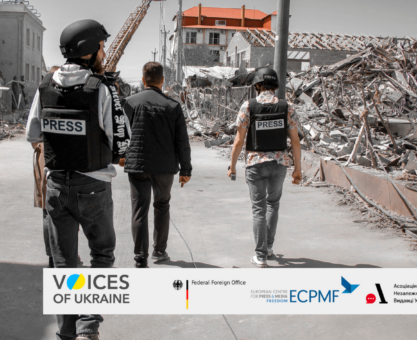
Working as a journalist in frontline regions means daily balancing between professional duty and danger. Constant shelling, drones, unexploded ordnance, power and communication outages — all of this creates an environment where every day requires maximum focus and resilience.
We continue our series of conversations with media professionals working in frontline and border regions. Previously, we published interviews with Zarina Zabrisky (Parts One and Two), Oleksandr Kachura, Vladyslav Safronov, Natalia Bilokudria, Serhii Horbatenko, Yevhen Khrypun, Anna Kaliuzhna, Polina Kulish, Nadia Sukha, Nadiia Karpova, Oleksandr Solomko (Parts One and Two), Diana Butsko, and Oleksii Pasiuha. Today, we offer you a conversation about the everyday work of the Zaporizhzhia media Aссent: our questions are answered by Editor-in-Chief Oleksandr Chubukin and journalist Andrii Bezdolnyi.
“Danger Requires Prolonged Heightened Concentration”
Constant threats naturally force the team to work in a state of prolonged concentration, which is psychologically and emotionally exhausting. This affects the very organization of work: schedules become flexible, and the workplace — and even where family members live — has to change depending on the security and energy situation.
— Every day, the first thing we monitor is safety issues, says Oleksandr. — This includes the level of threat from shelling, the types of weapons that pose danger in the near term, as well as the energy and communication factors: we check the charging of gadgets, power banks, charging stations, the availability of fuel at gas stations and in the car, and fuel reserves for the generator.
— Do you have your own “signals” — when it’s worth continuing work and when to pause?
— Yes, usually when I “freeze” and can’t concentrate on completing a task quickly. I usually take certain breaks every 1–2 hours to return to a “zero position.”
— What rules or habits help you reduce risks during field trips?
— Monitoring the level of danger from shelling and making my own assessment of the situation helps.
“The signal for a pause is when I freeze and can’t concentrate on completing a task quickly.”
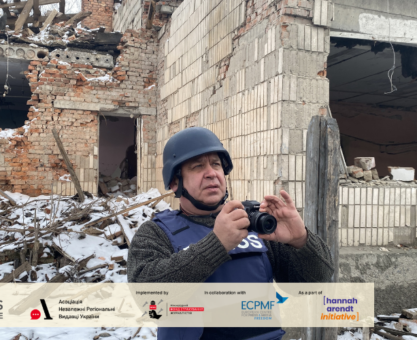
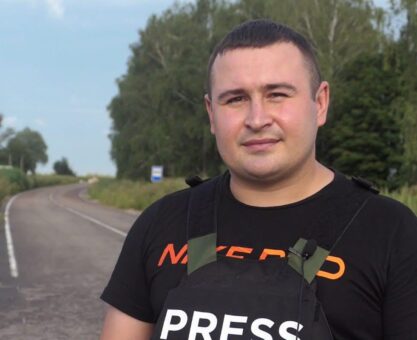
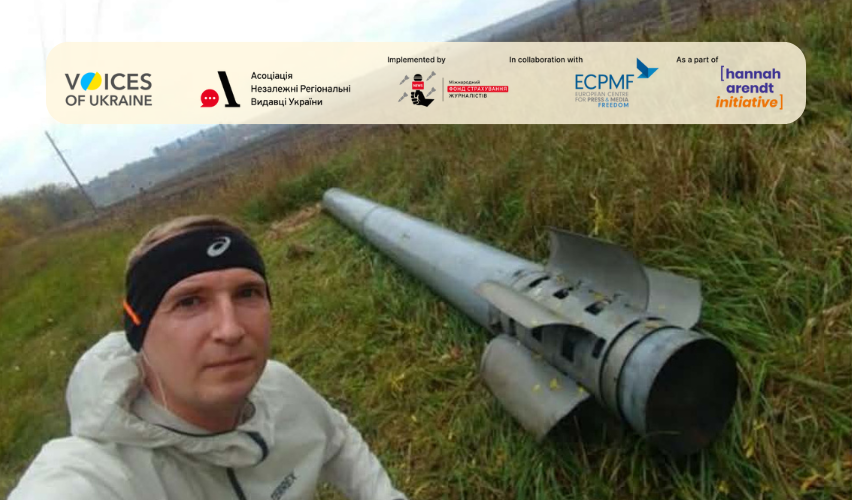
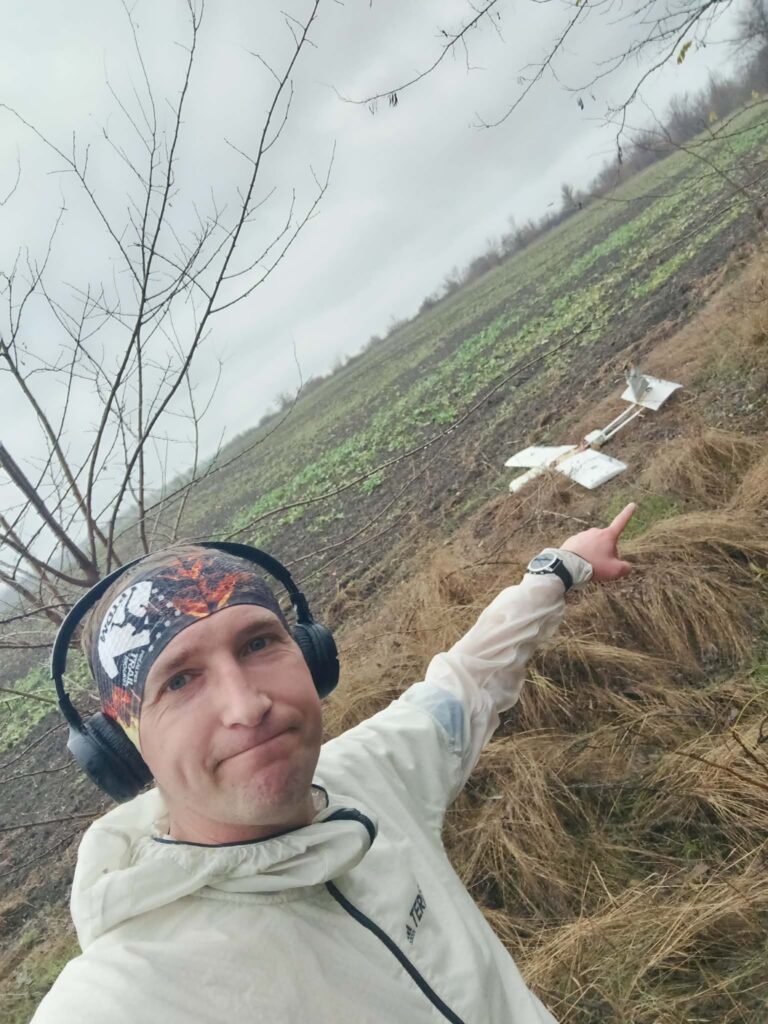
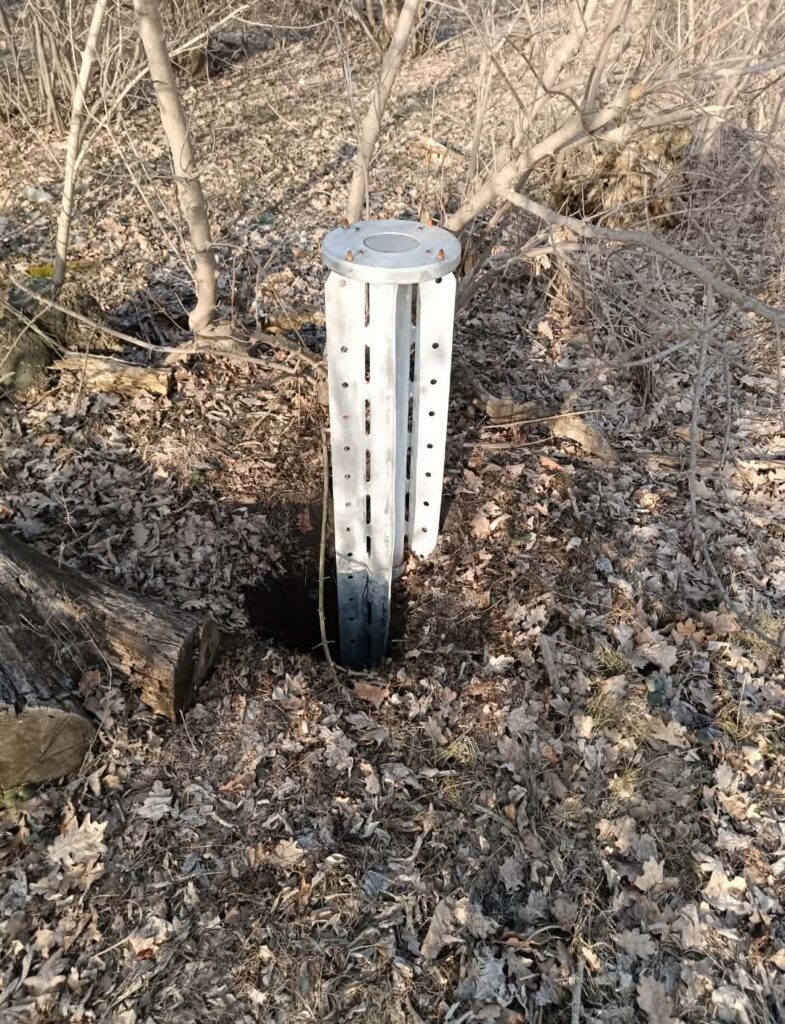
Journalist Andrii Bezdolnyi says that during his work, he constantly encounters remnants of munitions, strike UAVs, unexploded shells, and other explosive hazards.
— You have to visually assess how dangerous they are, photograph them, and send the photos to pyrotechnicians or explosives experts, and, if necessary, call a demining team, he says.
The most difficult part here is accurately determining the location of the impact or fall in order to pass the correct coordinates to specialists.
“While performing my professional duties, I constantly encounter remnants of munitions, strike UAVs, unexploded shells, and other explosive hazards.”
“People’s Personal Tragedies Are the Most Difficult Topics”
Ethical dilemmas are also part of the job. Sometimes the editorial team deliberately refuses to publish materials or footage, especially when it concerns personal tragedies. These topics are the hardest because a journalist inevitably “tries them on” personally.
— Oleksandr, how important is it to have a team or partner nearby? What does support look like in your newsroom after dangerous assignments?
— It’s really important. As for support, it can be simple advice, or the opportunity to share your problems so someone listens to you, to talk about both difficult topics, and to distract yourself. This helps you make more balanced decisions, because someone else may have a more “cool-headed” view of your problem. If there has been a difficult and dangerous period of work, there may be additional rest, a flexible schedule for the near future, or a meeting.
“Psychological support is provided by family — in particular, my wife, who can give useful advice at the right moment.”
“The Most Important Thing Is to Withstand the Psychological Load”
The constant feeling of anxiety complicates not only work but also family life. Simple things help restore balance: family, children, board games, movies, and walks. These are a kind of ritual for returning to normal life after dangerous assignments.
— It can also be a change of scenery for a few days: a trip to a dacha outside the city, fishing, or walks around the city and parks, says Oleksandr.
— How do you understand dignity in the work of a journalist under conditions of war or constant risk?
— In fact, during wartime, it’s difficult for everyone, not to mention Ukrainian defenders. So I wouldn’t single out our profession. The most important thing is to withstand the psychological load, because you constantly have to remain in a complex and dangerous information field and to timely and professionally inform about important news in the region that concerns security and the socio-economic life of the region’s residents.
“In wartime, it’s difficult for everyone. The most important thing is to withstand the psychological load and to timely and professionally inform about important news.”
Take Care of Your Safety
The Association of Independent Regional Press Publishers of Ukraine (AIRPPU) offers journalists working in dangerous regions the opportunity to obtain life and health insurance. This is part of the International Insurance Fund for Journalists (IIFJ) initiative, implemented in partnership with Ukrainian and European organizations.
Media professionals working in Kherson, Zaporizhzhia, Sumy, Mykolaiv, Donetsk, Luhansk, Odesa, Kharkiv, and Dnipropetrovsk regions, as well as border areas of Kyiv and Chernihiv regions, can apply. More information about the terms of free insurance is available here.
The project International Insurance Fund for Journalists, organized by the Association of Independent Regional Press Publishers of Ukraine, is part of the Voices of Ukraine program, which is included in the SAFE program coordinated by the European Centre for Press and Media Freedom. The Voices of Ukraine project is implemented within the framework of the Hannah Arendt Initiative.