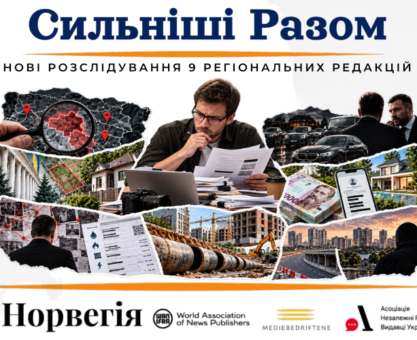
The assets of customs officers and public officials, property owned by their families, public contracts worth hundreds of millions of hryvnias, property developments, business connections, and activities linked to Russian-occupied territories are at the centre of a new wave of investigations by 18 Ukrainian regional newsrooms.
As part of the “Stronger Together: Transparency and Anti-Corruption” project, journalists examined asset declarations, public registers, procurement records, court documents, and other open sources to trace connections, investigate the origins of assets, and show how decisions made by officials and the use of public funds affect local communities.
Each newsroom investigated a story rooted in its own community, seeking evidence and answers to questions that matter to its audience. Here, we explore what the journalists uncovered and the stories behind this new wave of investigative reporting.
Dnipro.Media
Published: July 17, 2026
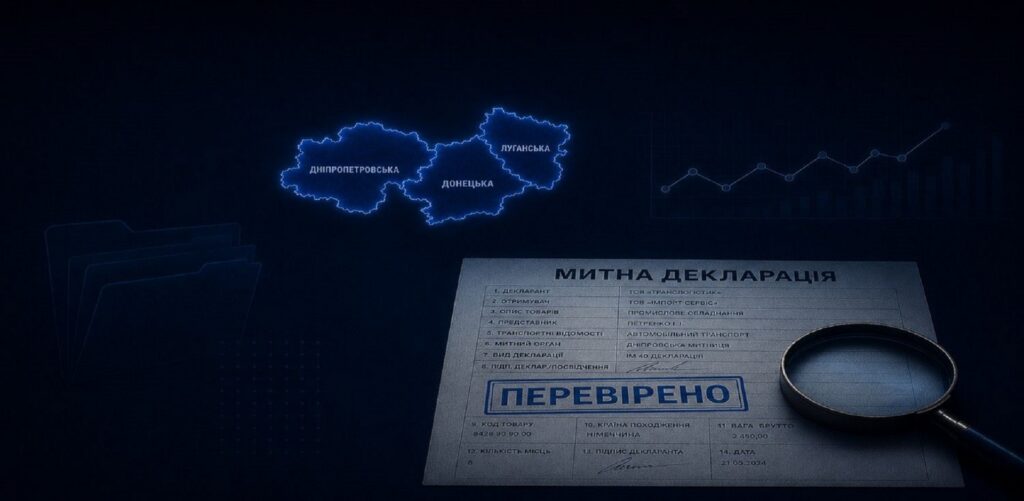
Journalists at Dnipro.Media examined the asset declarations of senior officials at the South-Eastern Customs Office and the heads of customs posts across Dnipropetrovsk region. Official income and property records revealed a series of striking details: real estate owned by relatives, vehicles registered to other people, wives of customs officials earning millions of hryvnias, and substantial cash savings.
One case involves Ihor Bezsmertnyi, First Deputy Head of the South-Eastern Customs Office. Two of his sons also hold senior positions within the customs service, while his wife’s officially reported income increased almost sixfold over five years, exceeding UAH 6 million in 2025. Another official examined in the investigation is Vitalii Sobchuk, head of the Kamianske customs post. Ukraine’s Specialised Anti-Corruption Prosecutor’s Office filed a lawsuit with the High Anti-Corruption Court seeking the recovery of nearly UAH 9 million in his assets for the state.
How can someone buy a car for just UAH 3,000? What assets are declared by customs officers’ relatives, and where do their multimillion-hryvnia savings come from? Discover how the officials themselves responded to these and other questions in Dnipro.Media’s investigation.
Dostup.Media
His Wife’s Business or the Councillor’s? How a Kropyvnytskyi Family Works with Public Funds

Published: July 14, 2026
Viktoriia Shapovalova, the wife of Kirovohrad Regional Council member Vladyslav Shapovalov, works as a laser hair removal specialist. At the same time, two companies operating in construction and renovation, as well as a registered sole proprietorship, are registered in her name. These businesses have worked with public-sector clients for years. Journalists at Dostup.Media set out to understand how such different activities fit together and who actually manages the businesses.
According to the newsroom’s calculations, the two companies and the sole proprietorship received nearly UAH 22 million in revenue from public procurement contracts over the past decade. Of that amount, UAH 16.6 million was earned during the previous five and a half years, after Vladyslav Shapovalov became a regional councillor and subsequently took charge of a municipal enterprise.
How does a laser hair removal specialist combine her work with running two companies and a sole proprietorship? Who actually makes the business decisions, and how do these family-owned enterprises secure public contracts? Read more in Dostup.Media’s investigation.
Intent
Half a Billion Down the Pipeline: Who Paid for the Water Supply Serving Odesa’s High-Rises?
Published: July 20, 2026
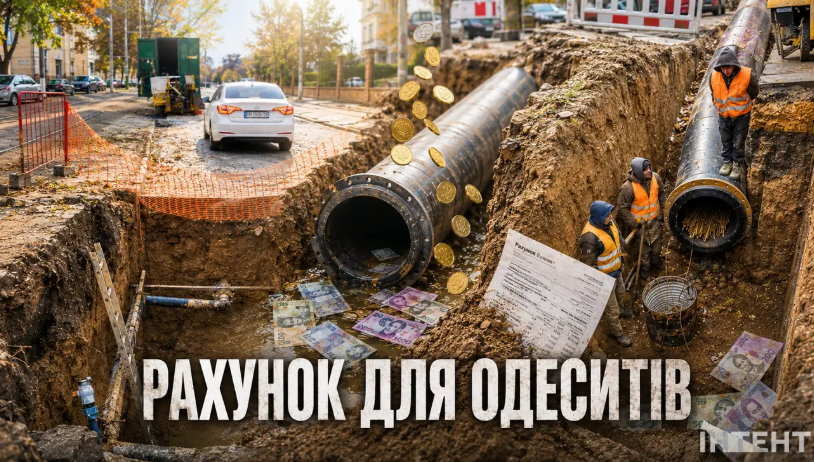
Construction of the Bahrytskoho–French Boulevard main water pipeline in Odesa, worth approximately half a billion hryvnias, is nearing completion. The need for the pipeline emerged long before Russia’s full-scale invasion. The city launched the project back in 2010 as water consumption increased, while high-rise residential developments continued to expand across the Prymorskyi district. Funding was eventually secured after 2022, including through the Fund for the Elimination of the Consequences of Armed Aggression.
Intent, together with the Centre for Public Investigations, examined how this long-standing infrastructure project obtained such substantial funding. The journalists identified another revealing detail: documents from 2023 listed more than one million people, effectively Odesa’s entire population, as potential beneficiaries of the pipeline. The following year, that figure fell to 503,000, although the project itself remained unchanged.
Why is a water pipeline needed to support years of new construction ultimately being financed from public funds? How did the project’s justification change, and who might operate the new network once construction is completed? Read the full story in Intent’s investigation.
Lokator Media

Published: July 21, 2026
Zelena Stolytsia LLC was registered in Kyiv in 2010, but for the next 14 years it had little noticeable business activity. That changed dramatically in 2024. The company acquired new owners and managers, shifted its business focus, and secured its first major project: the UAH 19.6 million reconstruction of Metallurgists’ Park in Zaporizhzhia. From 2025 onwards, the company began winning public contracts with a combined value exceeding UAH 320 million within a single year.
Lokator Media also investigated links between Zelena Stolytsia and another company, Ukrainian Investment Technologies, which participated in the same tenders. Klyment Hryniov appeared in the records of both firms, their tender documentation was prepared by the same person, and Ukrintek subsequently transferred UAH 4.5 million to a company founded by a former director of Zelena Stolytsia. In June 2026, Ukraine’s Antimonopoly Committee opened proceedings concerning the two companies over indications of possible anti-competitive concerted practices. No final decision had been issued at the time of publication.
How did a company that had remained largely inactive for years secure hundreds of millions of hryvnias in contracts within such a short period? Who stands behind the connected businesses, and why did their relationships attract the attention of the Antimonopoly Committee? Find out in Lokator Media’s investigation.
20 Minutes (Ternopil)
Published: July 21, 2026
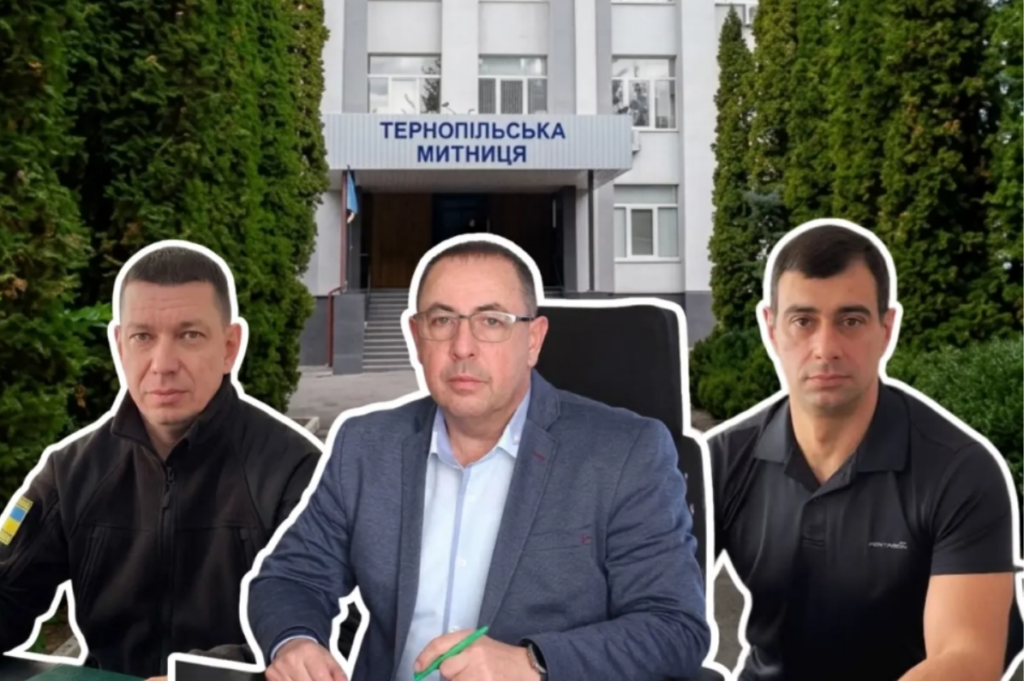
Journalists at 20 Minutes examined how the asset declarations of senior Ternopil Customs officials had changed during Russia’s full-scale war. Their investigation focused on Acting Head Yurii Matsibora and two of his deputies. The newsroom compared their incomes, real estate, land, vehicles, and savings, while also examining property owned by close relatives.
In August 2022, Yurii Matsibora received a house of nearly 187 square metres in Vinnytsia as a gift, while his partner acquired another 17 land plots during 2024–2025. In the family of Deputy Head Andrii Petrusenko, a Kia Soul valued at UAH 687,000 appeared, while his annual salary almost tripled between 2022 and 2025. Another deputy, Kostiantyn Tishyn, purchased a Volkswagen E-Golf for UAH 764,300 in 2024 and inherited shares in an apartment and a land plot in Stryi.
How have senior customs officials’ assets changed over four years? Which relatives acquired additional land, and what purchases attracted journalists’ attention? Read more in the investigation by 20 Minutes.
Molodyi Bukovynets
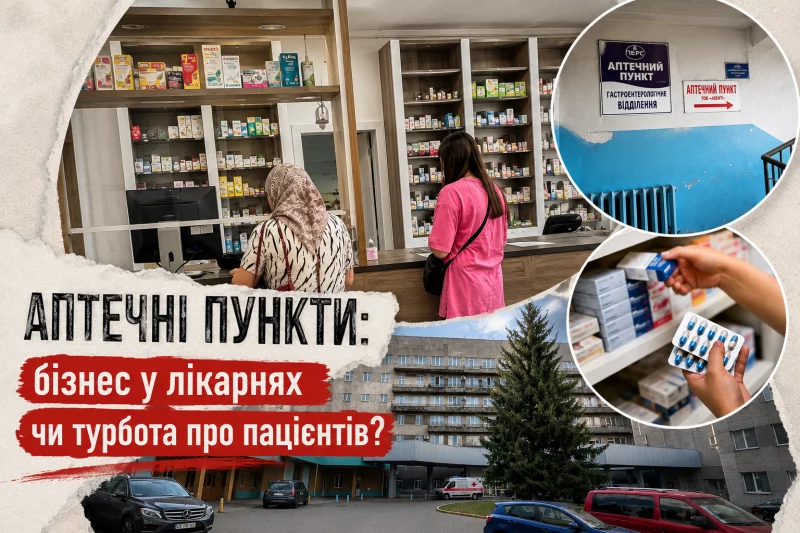
Pharmacies Inside Chernivtsi Hospitals: Who Profits from Medicine Sales?
Published: July 23, 2026
Journalists investigated pharmacy outlets operating inside Chernivtsi’s largest hospitals: the Regional Clinical Hospital, the Emergency Medical Hospital, and the City Children’s Clinical Hospital. These outlets attract regular customers and queues, with individual purchases often costing hundreds or thousands of hryvnias. Prices are frequently higher than at other city pharmacies or online.
The newsroom investigated who rents the premises used by these pharmacies, how much they pay, and how their lease agreements were concluded, in some cases as long as 20 years ago. Doctors and public officials were among the business owners identified. The largest number of hospital pharmacy outlets in Chernivtsi belongs to Komplex LLC, part of a major pharmaceutical company based in Dnipro.
The investigation also examines other tenants, including entrepreneur Halyna Koval, who combines pharmaceutical business activities with medical practice, and the municipal enterprise Bukovyna-Farm, which operates under preferential rental conditions.
How do pharmacies inside Chernivtsi hospitals operate, who owns them, and how much do they pay in rent? Read the full investigation by Molodyi Bukovynets.
Kremenchuk Telegraph
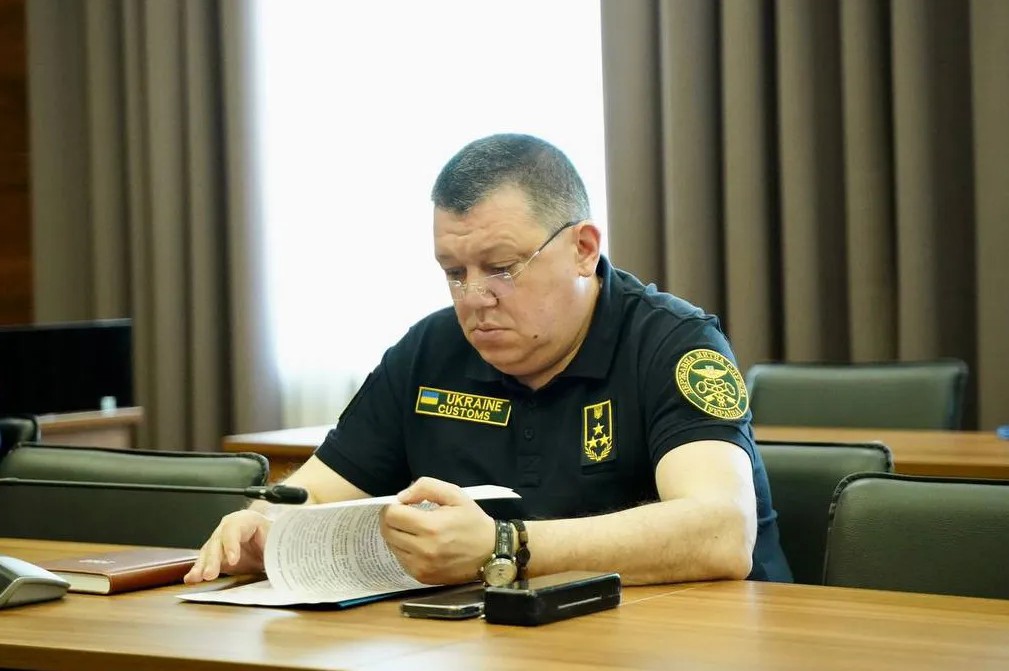
Seaside Property at a Surprisingly Low Price: What a Poltava Customs Official’s Declarations Reveal
Published: July 31, 2026
Journalists analysed the asset declarations of Oleksandr Horbov, Deputy Head of Poltava Customs, uncovering details concerning his family’s property and business interests. The declarations include apartments in Odesa purchased at prices significantly below market value, a seaside house in Mykolaiv region, and property in Cyprus that the family had used for several years.
The newsroom also examined the family’s income and expenses, including a sharp increase in the customs official’s salary in 2018, loans worth hundreds of thousands of hryvnias, multimillion-hryvnia gifts from parents, and his wife’s business activities, which were not always declared. Horbov himself attributes the origins of the family’s assets to legitimate income and the sale of previously owned property.
How did the official’s income and property change over time? What do his family’s declarations reveal, and why do the declared property values raise questions? Find out in Kremenchuk Telegraph’s investigation.
Tochka Skhodu
Published: July 20, 2026
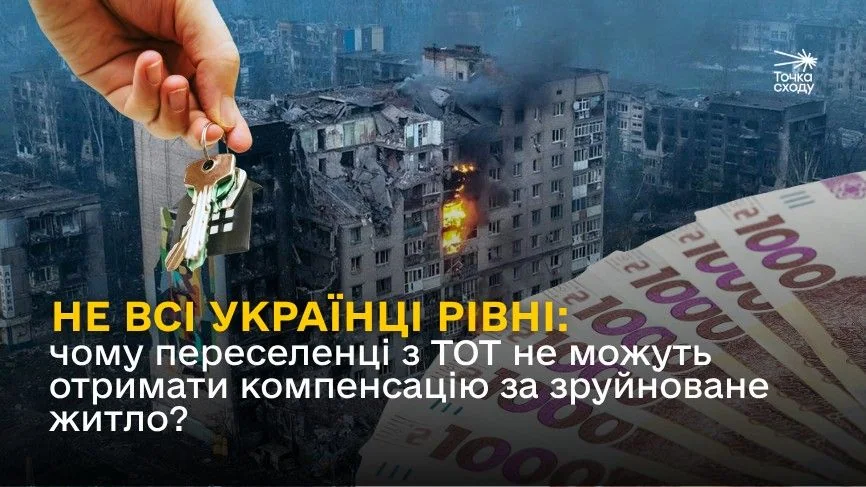
Journalists examined legislation, government decisions, official responses, and testimonies from internally displaced people to understand why owners of homes in temporarily occupied territories still lack an effective compensation mechanism. Despite the adoption of a basic law and several government resolutions, inspection commissions cannot physically assess properties in occupied areas. A pilot scheme allowing damage to be verified remotely in Melitopol was never extended to other regions.
A separate law, No. 11161, intended to make compensation available to these property owners, was passed by Ukraine’s parliament in December 2024 but had not entered into force. The authorities cite insufficient funding and the prioritisation of defence spending as reasons for the lack of an operational mechanism. Meanwhile, more than 118,000 Ukrainians in government-controlled territory have already received approximately UAH 41 billion in compensation, while displaced people from occupied territories remain without effective assistance.
Why has compensation not been made available to everyone? What legislation has been adopted, and what do displaced people themselves say? Read the investigation by Tochka Skhodu.
Vgoru
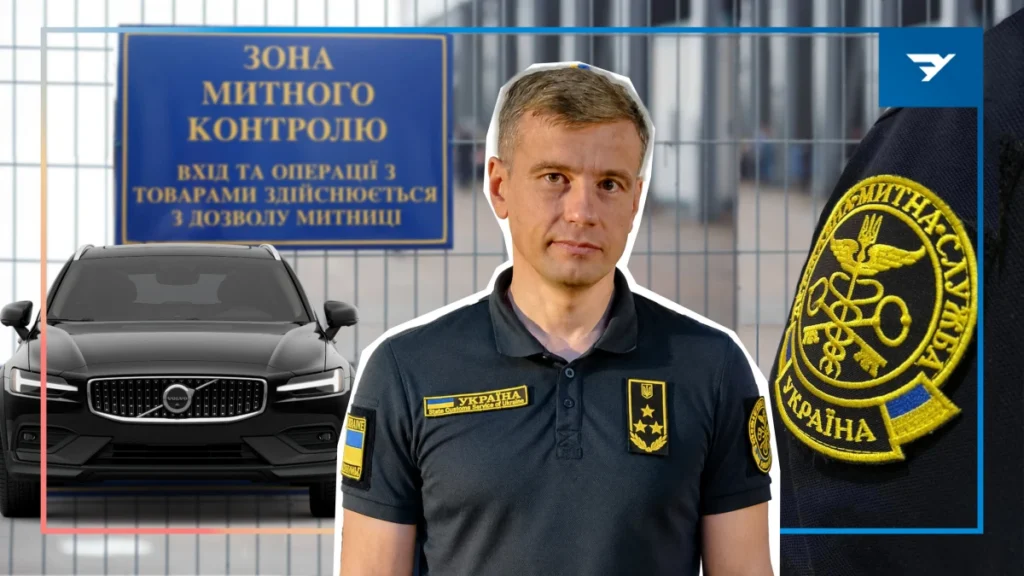
All Roads Lead to Volvo: How a Former Kherson Customs Chief Drives His Relatives’ Cars
Published: July 24, 2026
The newsroom analysed the asset declarations of former Kherson Customs Chief Yurii Yermakov and identified a series of potential red flags. Although the official had not owned a car himself for years, he regularly used vehicles belonging to relatives, including his father-in-law, brother, wife, and son. The declarations list Audi, Toyota, and several Volvo models, with declared values significantly different from market prices.
Beyond the vehicles, journalists examined the family’s income and gifts, including substantial financial contributions from his wife’s mother, a new apartment in Mykolaiv, rising salaries, and business earnings. Yermakov explains the discrepancies in vehicle values by referring to asset declaration rules, while noting that the cars he used belonged to relatives.
How did the family’s income change? Who gave them apartments and hundreds of thousands of hryvnias, and why did the customs official drive expensive Volvos registered to relatives? Read more in Vgoru’s investigation.
20 Minutes (Vinnytsia)
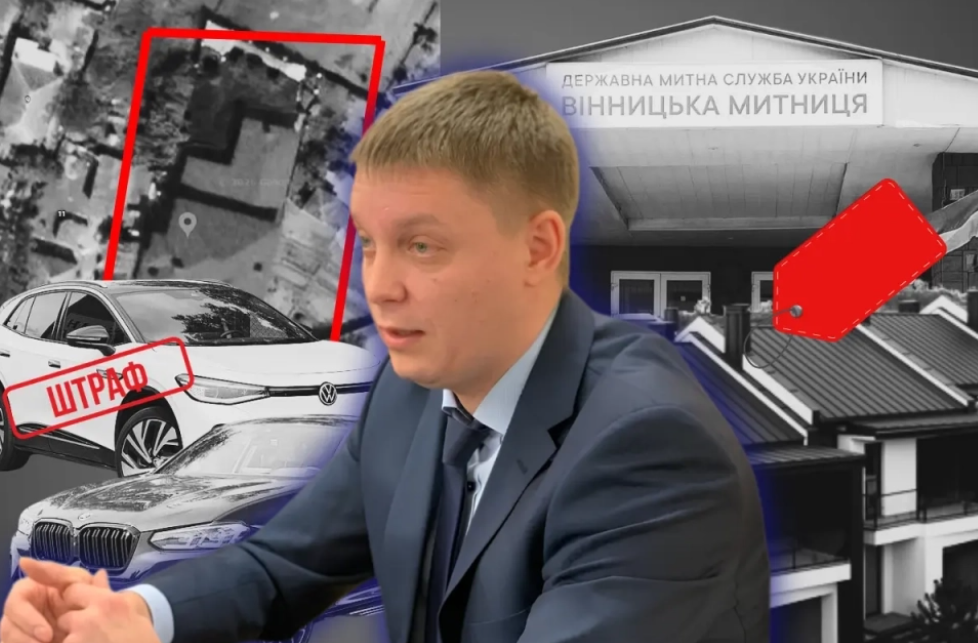
Published: July 17, 2026
Journalists at 20 Minutes analysed the asset declarations of Volodymyr Dubovyi, Head of Vinnytsia Customs, and found that although he officially owns no expensive property, he uses valuable assets belonging to relatives and business associates. These include a BMW X5 registered to his father-in-law, an apartment in the city centre owned by his mother-in-law, and a townhouse belonging to his wife’s business partner.
The newsroom also examined family income and gifts that appear to support a considerably more affluent lifestyle than the official records alone might suggest. Dubovyi explains his use of these assets by noting that they belong to people close to him, while attributing differences in declared values to the rules governing asset declarations.
How does the customs official’s family use property registered to others, and what do the declarations reveal about their financial circumstances? Read the investigation by 20 Minutes (Vinnytsia).
Pechera.info

Published: July 20, 2026
Pechera.info tells the story of graduates of the Chernihiv Flight School whom the war has placed on opposite sides of the front line. Former classmates who once learned to fly the same aircraft now find themselves facing one another in the skies as enemies. Some serve in the Armed Forces of Ukraine, while others have joined the Russian military.
The article explores how war has torn apart shared memories and friendships, transforming a former professional bond into a painful contrast. “Burned bridges” becomes a metaphor for a lost past and the impossibility of returning to the sense of unity that existed before the war.
How do the personal stories of these aviators reflect a deeper rupture in identity and collective memory? Read the investigation by Pechera.info.
ZHAR.INFO
Murky Deals: How Khmelnytskyi Customs Officers Used Questionable Car Ownership Arrangements
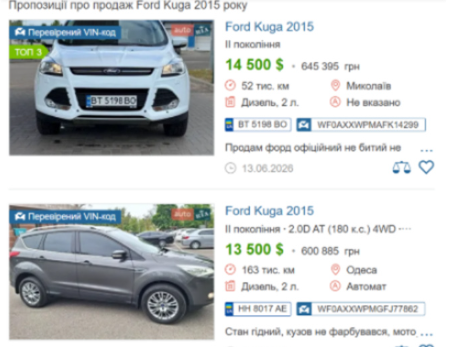
Published: July 20, 2026
Journalists at ZHAR.INFO analysed 156 asset declarations submitted by Khmelnytskyi Customs officials and identified numerous questionable arrangements involving their vehicles. Some declarations list cars at remarkably low prices, including a Ford Kuga valued at UAH 40,000 and a Kia Sportage at UAH 28,000, with certain vehicles declared at a symbolic UAH 100. Yet the market value of such cars can reach hundreds of thousands of hryvnias.
The investigation shows how customs officials use expensive vehicles registered to relatives or third parties, regularly replace their cars, and declare sales at prices that are difficult to reconcile with market values. The report includes examples from the declarations of deputy heads and senior customs officials, alongside their explanations that unusually low prices reflect damaged vehicles or symbolic transactions between relatives.
How do these arrangements work? Why do the officials’ declarations raise questions, and what might attract the attention of Ukraine’s National Agency on Corruption Prevention? Find out in ZHAR.INFO’s investigation.
Poltava Wave
Russian Hits, Fights, and “Respectable People”: Inside Poltava’s Shchastia Entertainment Complex

Published: July 20, 2026
Poltava Wave investigated the operations of Shchastia, an entertainment complex in Poltava that has become known not only for its parties but also for controversies. The report examines incidents of fighting, the playing of Russian music during the war, and the venue’s positioning as a place for “respectable people”.
Journalists collected accounts from visitors, analysed social media posts, and examined documents to explore how the complex operates amid growing public sensitivity to cultural and security issues. The investigation raises questions about the responsibility of the venue’s owners and the local community’s response to these practices.
How does an entertainment business in Poltava balance profit, reputation, and public expectations? Read more in Poltava Wave’s investigation.
Zaporizhzhia Investigative Centre
A Swimming Pool on the Edge: What’s Behind Starbath Spa’s Missing Permits?
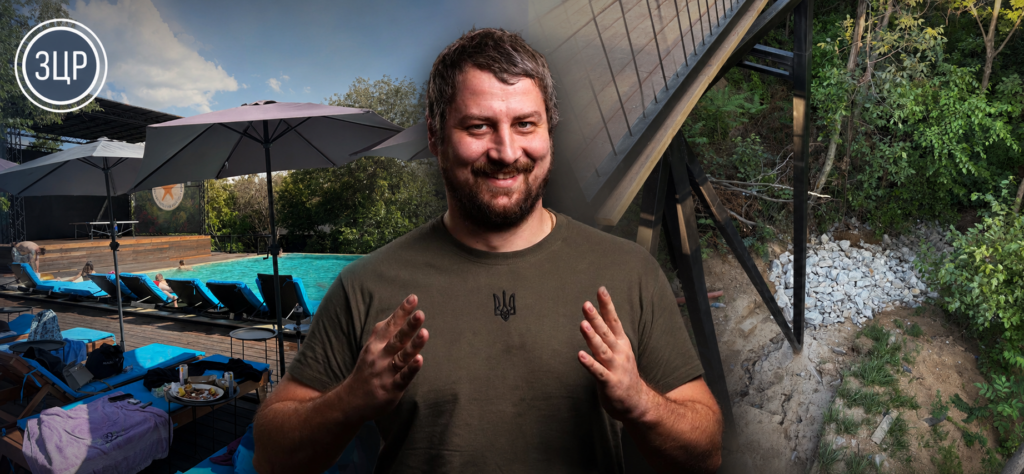
Published: July 17, 2026
Journalists at the Zaporizhzhia Investigative Centre examined the operations of Starbath Spa, a popular swimming pool and sauna complex reportedly operating without the required permits. According to the investigation, the facility lacks official commissioning certificates, while visitors use structures that journalists describe as potentially unsafe and built in violation of regulations.
The newsroom examined public registers and spoke with local residents and experts to show how the business operates without documented safety assurances for its customers. The investigation focuses on the responsibilities of its owners, regulatory oversight, and potential risks to visitors.
How does Starbath Spa operate, why do its pools lack the necessary documentation, and what could this mean for visitors? Read the investigation by the Zaporizhzhia Investigative Centre.
Anti-Corruption Prydniprovia
A Customs Officer and a Forest Land Plot Near Dnipro
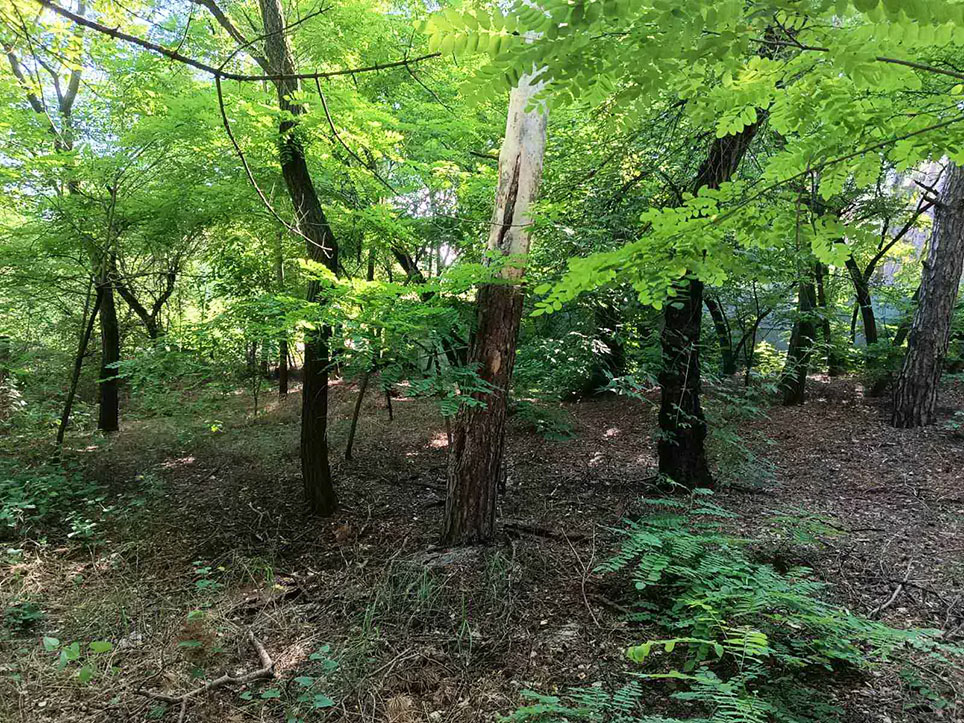
Published: July 20, 2026
The Anti-Corruption Prydniprovia team examined asset declarations and public registers to investigate how a customs officer from Dnipro acquired a plot of land in a forested area near the city. According to the investigation, the land was registered to the official and his family under questionable circumstances, raising concerns about compliance with regulations governing forest land use.
The journalists explored the connections between the official’s public service role and his private interests, as well as questions surrounding the legality of acquiring and using the land. The investigation also examines transparency in asset declarations, accountability among public officials, and the implications for a community that has effectively lost access to part of its forest.
How did the customs officer acquire forest land near Dnipro, and why does the case raise questions about potential conflicts of interest? Read more in Anti-Corruption Prydniprovia’s investigation.
Odesa Life
Cash and a Range Rover from a Pensioner: The Gifts Received by an Odesa Customs Official’s Family

Published: July 21, 2026
Journalists at Odesa Life examined the asset declarations of the First Deputy Head of Odesa Customs and identified unusual gifts received by his family. These included substantial amounts of cash and an expensive Range Rover registered to a pensioner.
The newsroom highlighted how these “gifts” significantly affected the official’s family’s financial circumstances and raised questions about their origins and legality. The customs official maintains that the property belongs to relatives, while journalists point out that such arrangements can potentially conceal the actual ownership of valuable assets and the extent of personal wealth.
How did the customs official’s family receive cash and a luxury Range Rover, and why did these details raise red flags in the declarations? Read the investigation by Odesa Life.
Farvater.Skhid

Published: July 20, 2026
Journalists at Farvater.Skhid investigated the family of a senior Luhansk Customs official who maintained their position after the war began, but in a very different environment. The report examines how the customs officer’s relatives shifted their business interests towards Russian agribusiness, registered companies in occupied territory, and began operating under the rules imposed by the aggressor state.
The newsroom analysed company registers, asset declarations, and other documents to trace the transition from public service in Ukraine to private business connected with Russia. The investigation raises questions about the legality of these activities, potential conflicts of interest, and the consequences for a community that has lost access to its resources and land.
How did the Luhansk customs official’s family establish a business under occupation, and what does the story reveal about the risks of conflicting loyalties? Read more in Farvater.Skhid’s investigation.
Kolo
A Public Official with a Wealthy Mother-in-Law: How Poltava Customs Chief Volodymyr Kasian Lives

Published: July 2026
Journalists at Kolo analysed the asset declarations of Volodymyr Kasian, Head of Poltava Customs, paying particular attention to his family’s property and income. The investigation examines the substantial assets associated with the official’s mother-in-law, who owns real estate and provides generous gifts. Kasian maintains that his use of relatives’ property is lawful, while journalists highlight how such arrangements can raise concerns about potentially concealed wealth.
The newsroom examined the apparent differences between Kasian’s official income and his family’s standard of living, including the significant role played by gifts from his wealthy mother-in-law. The investigation focuses on transparency in asset declarations, potential conflicts of interest, and public trust in the customs service.
How does the Poltava Customs Chief explain the origins of his family’s property, and why did the wealthy mother-in-law’s role raise questions for journalists? Read more in Kolo’s investigation.
Read also:
Abuses Across Ukraine’s Regions: A New Wave of Investigations by 18 Newsrooms
Exposing the Schemes: What Regional Investigative Journalists Are Uncovering
The “Stronger Together: Media and Democracy” programme is implemented by the Association of Independent Regional Press Publishers of Ukraine (AIRPPU) in partnership with WAN-IFRA and the Norwegian Media Businesses’ Association (MBL), with the support of Norway. The views expressed by the authors do not necessarily reflect the official position of the programme partners.