


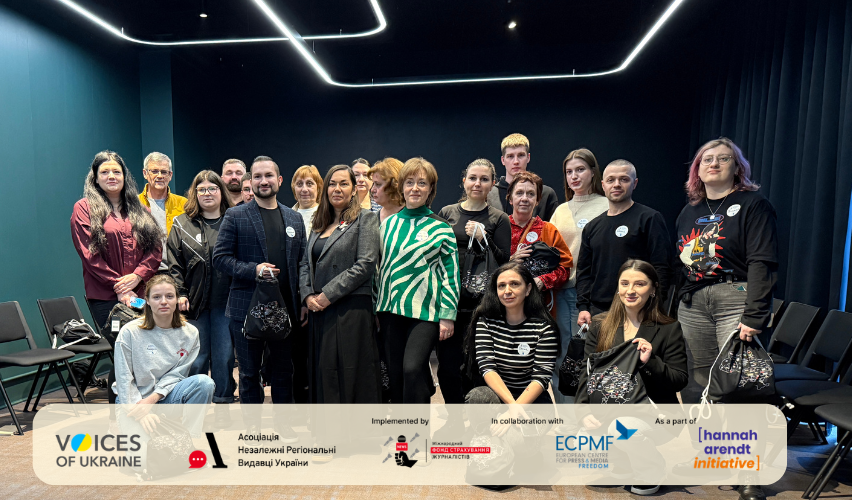
On March 5–6, a safety training for journalists took place in Lviv, organized by the Association of Independent Regional Press Publishers of Ukraine. Participants learned how to provide first aid in critical situations and received professional first-aid kits equipped with modern supplies.
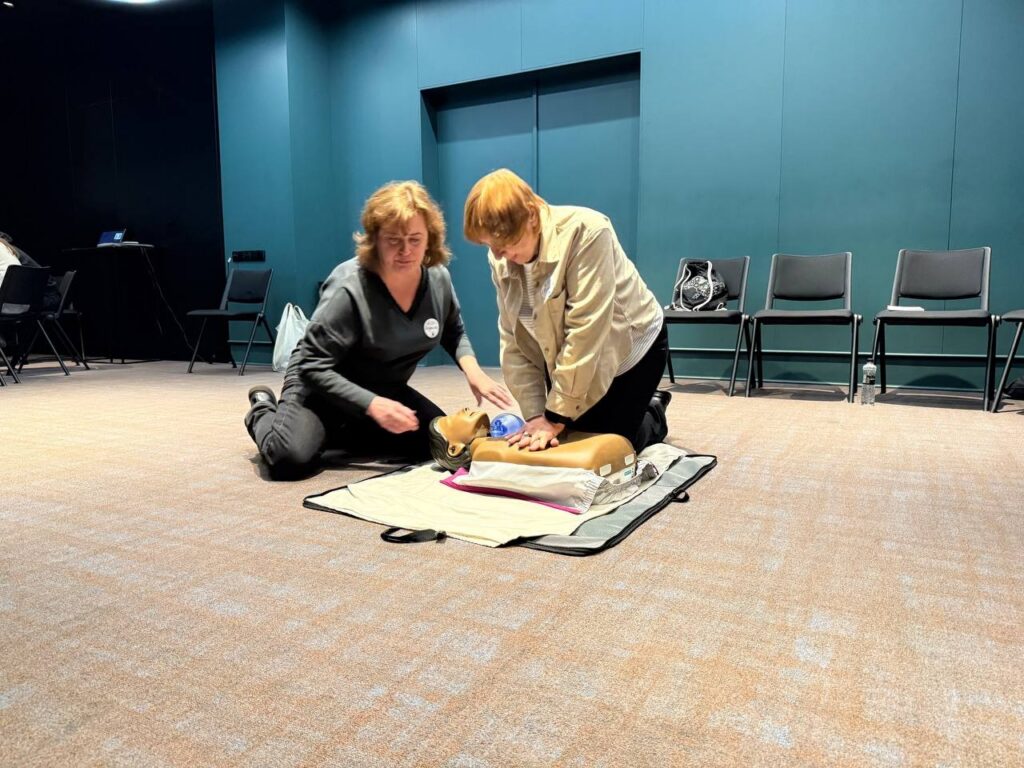
Over two days, participants learned how to provide first aid in critical situations—such as respiratory and cardiac arrest, as well as severe bleeding. The training consisted of two courses. The first was Basic Life Support (BLS) / AED course from the European Resuscitation Council (ERC), where participants practiced proper chest compressions, rescue breaths, and the use of an automated external defibrillator (AED). The second was Stop the Bleed, an international program by the American College of Surgeons, focused on how to respond quickly and correctly in cases of life-threatening bleeding.
The training was conducted by certified instructors from the All-Ukrainian Resuscitation Council, which serves as the national representative in Ukraine for the European Resuscitation Council (ERC) and the European Society for Emergency Medicine (EUSEM).

“What knowledge is now vital for everyone living in Ukraine? How to stop bleeding, how to apply a tourniquet, how to perform artificial respiration… and more. Over two days, 20 media professionals received this training. We at AIRPPU organize such safety trainings regularly; it is one of our important projects.”
Oksana Brovko, CEO of AIRPPU
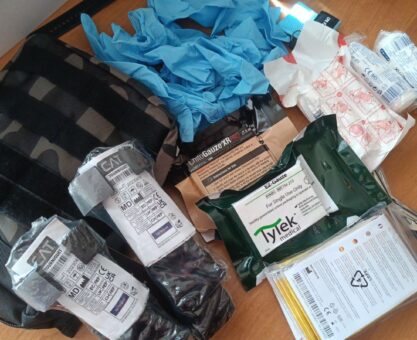
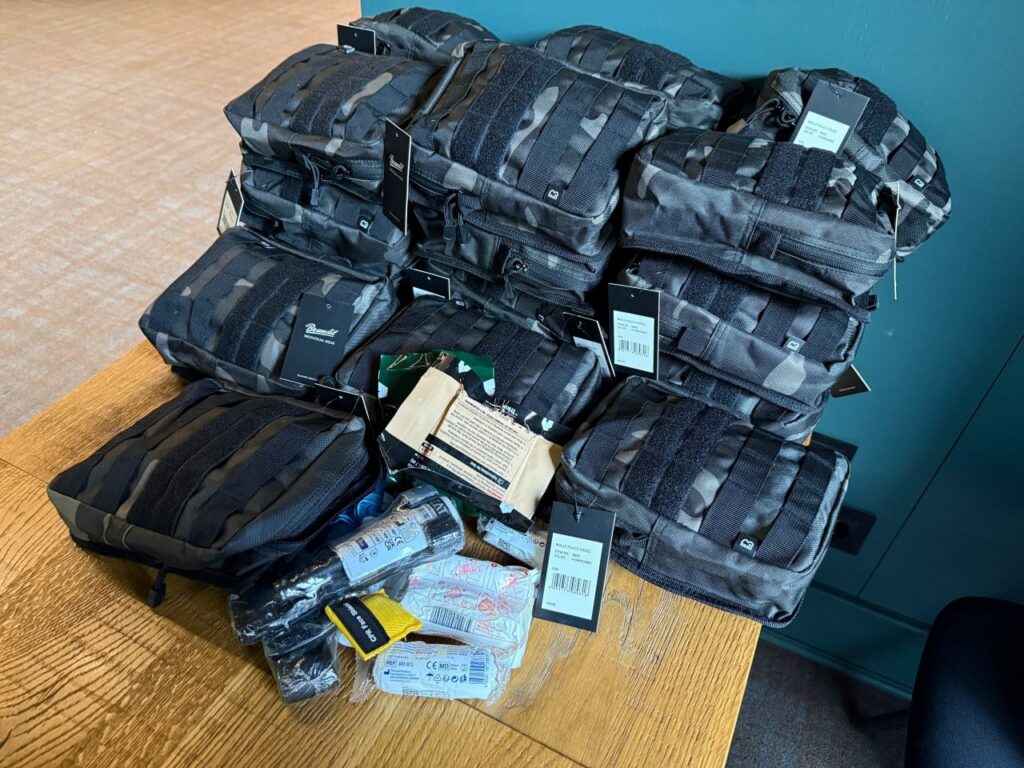
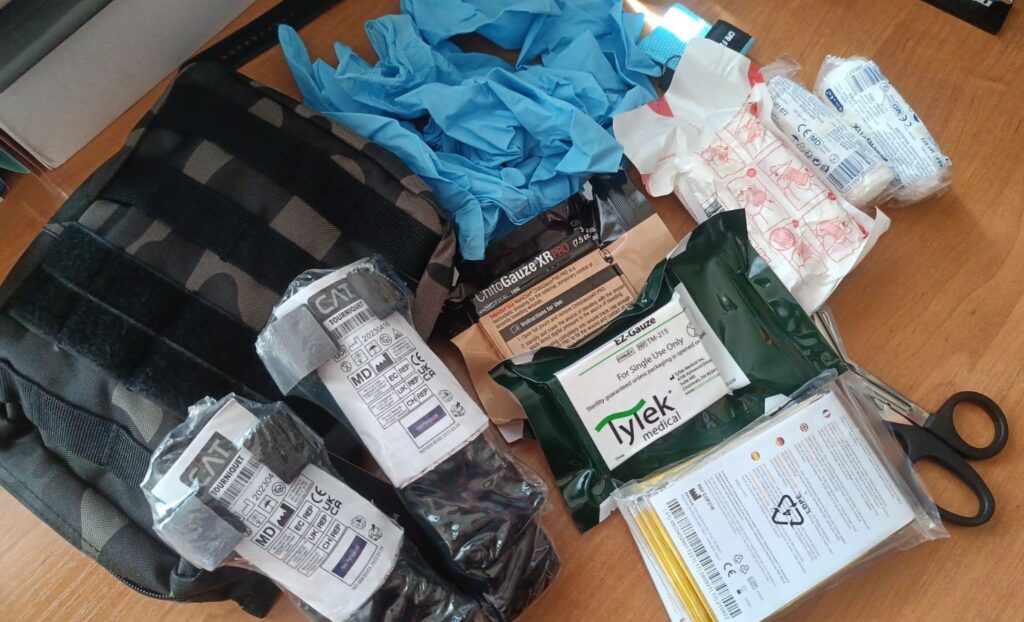
Thanks to partner support, each participant received a professional first-aid kit equipped with modern supplies: high-quality tourniquets, an Israeli bandage, hemostatic gauze, specialized packing bandages, tactical scissors, protective gloves, and a CPR mask keychain.
Participant Feedback
Svitlana Karpenko, “Trudova Slava” newspaper:
I try to attend such trainings regularly. In our reality, this is no longer just additional knowledge—it is a necessity. It’s important to constantly refresh skills and practice them until they become automatic, because in a critical situation there is no time to think.
During the sessions, I renewed my knowledge of the signs of severe bleeding, the action protocol in such situations, the tools to stop bleeding, and the rules for using them safely.
I also practiced applying a tourniquet, wound packing, direct pressure, and pressure dressings.
I would especially like to highlight the instructors. The training took place in a very professional yet comfortable atmosphere. The material was explained clearly and understandably, and the program was well balanced: brief theory and lots of practice. Practicing each step hands-on really helps consolidate knowledge and build confidence in one’s actions.
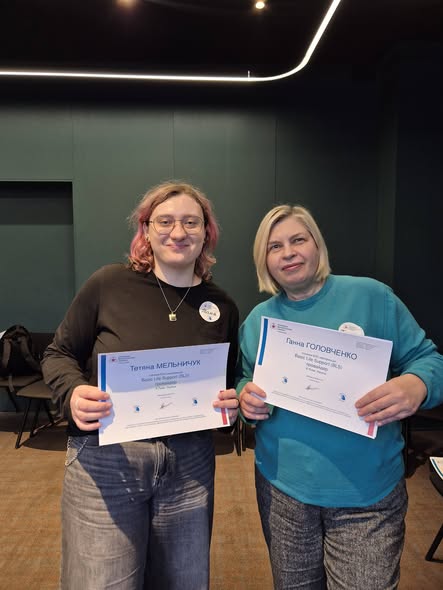
After completing the training, I received internationally recognized certificates for successfully completing both courses.
Many thanks to the AIRPPU for organizing the training and for providing the first-aid kit I received. This is truly important and necessary.
In our reality, courses like these are not a formality. They provide knowledge and skills that, in a critical moment, can save a life—either your own or that of someone nearby.
Nataliia Shutko, “Nash Krai” newspaper:
First-aid knowledge is critically important not only during war. Timely action in the first minutes—or even seconds—can be a real chance to save someone’s life on the street, in the office, or at home. The training emphasized that personal safety comes first. Wound care must always be done with gloves. Rescue breaths for strangers should only be given using a protective valve or a breathing bag.
A very welcome and important bonus after the training was the professional first-aid kit, equipped with everything needed to meet modern standards. Overall, the two days of safety training flew by in an instant! Incredible organization, professional instructors, and a wealth of essential information—all at a very high level.
Oksana Kovalenko-Zaichenko, “Dostup Media: Kropyvnytskyi”:
During the training, I heard a phrase that really struck me: ‘More tragic than death is a death that could have been prevented.’ Indeed, in our time, first-aid skills are no longer just ‘for emergencies’—they are a necessity. You never know what might happen today or tomorrow. And it’s one thing if it’s a stranger… but what if it’s a family member or someone close?
I am incredibly grateful to work at Dostup Media: Kropyvnytskyi, and I thank the Association of Independent Regional Press Publishers of Ukraine for the opportunity to learn from such skilled instructors and gain knowledge that can save lives.
Special thanks also for the first-aid kit we received after the training, complete with tourniquets, hemostatic bandages, and everything needed for first aid. Now it’s not just knowledge, but also tools that can help in a critical moment. And now I know: if someone nearby needs help, I will not stand aside.
“Odesa Life” newsroom:
Everyone needs to know and be able to do this. And not just because our country is at war. Providing first aid, stopping bleeding, and thereby saving a life—this is essential knowledge for everyone.
Denys Nepohodiev, “18000. Novyny Cherkas” media:
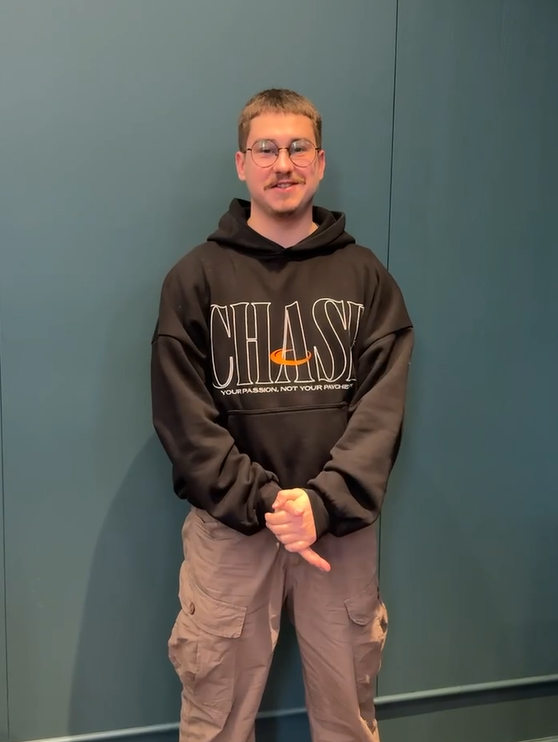
First of all, I really enjoyed this training, and secondly, I learned a lot of new things and refreshed some previous knowledge. This is truly relevant and very necessary, especially while such a large-scale war continues in Ukraine.
Maksym Zabelia, Myrnohrad city newspaper “Ridne Misto”:
Considering that our media outlet operates in Donetsk region, it’s clear that safety is extremely important for us. That’s why all members of our team try to attend such trainings at least once a year—to refresh our skills and understand how to handle the challenges we face in our work.
This training was somewhat of a revelation for me, because in addition to updating existing knowledge, there were many practical cases and a lot of myths about first aid were debunked.
The instructors showed maximum openness and engagement in the process, and it felt like the training was not only highly practical but also helped form a clear mental algorithm for providing aid. I now feel confident that I would be able to give this help if needed.

Tetiana Melnychuk, “Rayon in UA”:
My colleague Hanna Holovchenko and I participated in a safety training for media professionals. Safety is a fundamental part of our lives, especially during wartime, so we now have first-aid skills: how to help a person who has lost consciousness, someone who is conscious but unable to move, and how to assist them in helping themselves. We also learned how to apply tourniquets and how to assist people with moderate and severe bleeding.
We thank the Association of Independent Regional Press Publishers of Ukraine for the opportunity to improve our skills, as well as for providing first-aid kits for our newsroom. Let’s take care of ourselves and remember that knowledge saves lives.
***
The safety training for media professionals was organized by the Association of Independent Regional Press Publishers of Ukraine (AIRPPU) as part of the International Insurance Fund for Journalists project. The project is part of the Voices of Ukraine program, which is included in the SAFE programme coordinated by the European Centre for Press and Media Freedom. Voices of Ukraine is implemented within the Hannah Arendt Initiative.