Clickbait headlines seems a quick way to attract attention. But behind every “shock” and “sensation” there lies the risk of losing readers’ trust. In the age of information warfare, this poses a threat to society.
We’ve prepared an in-depth story for you where we’ve thoroughly examined the phenomenon of clickbait from every angle. We also included insights from Erja Yläjärvi and Natalya Burlaku – editors-in-chief of the Finnish newspaper Helsingin Sanomat and the Ukrainian websitete.20minut.ua, respectively — which they shared during the webinar on “Anti-Clickbait as a Tool for Building Trust” as part of the “Media Bridges: Finland—Ukraine” project. But before you read the article, test your knowledge by taking our quiz:
The headline as a promise
The headline is the first thing the reader sees. It determines whether people will open the content, whether they will trust the media, and whether they will return. In the digital medium, it has become a distinct genre of journalism: a few words that determine the fate of a text.
Clickbait headlines play on emotions: they exaggerate, omit details, or create suspense. “You won’t believe it…,” “CRAZY stuff in the city center,” “This product will save your life” – all these phrases abuse fear, curiosity, or sensationalism. On social media, they really do produce quick results: they instantly grab attention, evoke emotion, and generate short-term traffic.
But there is a risk – disappointment after reading the article, hostility toward the media, and gradual loss of trust. When the headline doesn’t match the content, the reader feels misled. This undermines the relationship between the media and its audience. In the long run, people stop opening articles from such a publication, even if the information is truly important.
Manipulation and Information Warfare
Clickbait often becomes a tool for manipulation. In times of information warfare, sensational headlines are used to spread panic, mistrust, and chaos. Such formulas turn headlines into a tool for influencing public sentiment, and they gradually erode trust in the media.
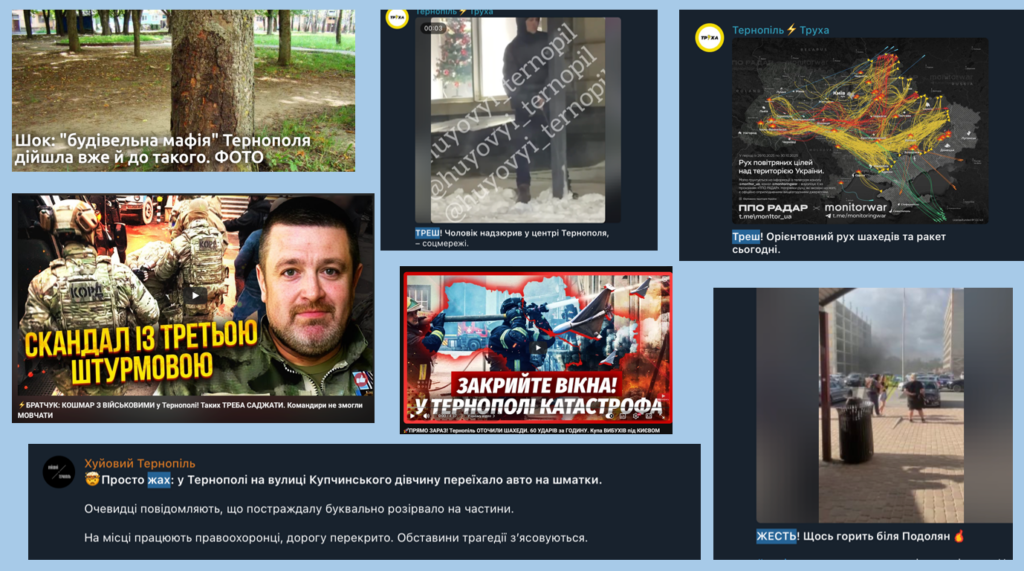
For example, headlines like “CRAZE in downtown Ternopil” or “Catastrophe in the City” rely solely on emotions and have no informational value whatsoever. “The city will be without water” can cause panic, even if it’s just a matter of a few hours of repair work. “Europe in Panic” creates a sense of crisis where there is none. Exaggerating the scale of an event alters our perception of reality and creates a sense of chaos.
Monitoring by the Institute of Mass Information (IMI) shows that clickbait headlines are systematically eroding trust in the media. In such cases, misinformation tactics are often used: the title does not match the text, or key details are missing. This leaves readers feeling deceived and undermines long-term relationships with the audience. For example, in the headlines: “Pensioners in Ukraine will receive UAH 10,000 each” – even though the report referred only to certain categories of internally displaced persons; “Supermarkets are closing en masse in Ukraine” – even though only a few stores in Kyiv were actually closed.
One of the most recent examples of clickbait information campaigns is the “migrant influx.”
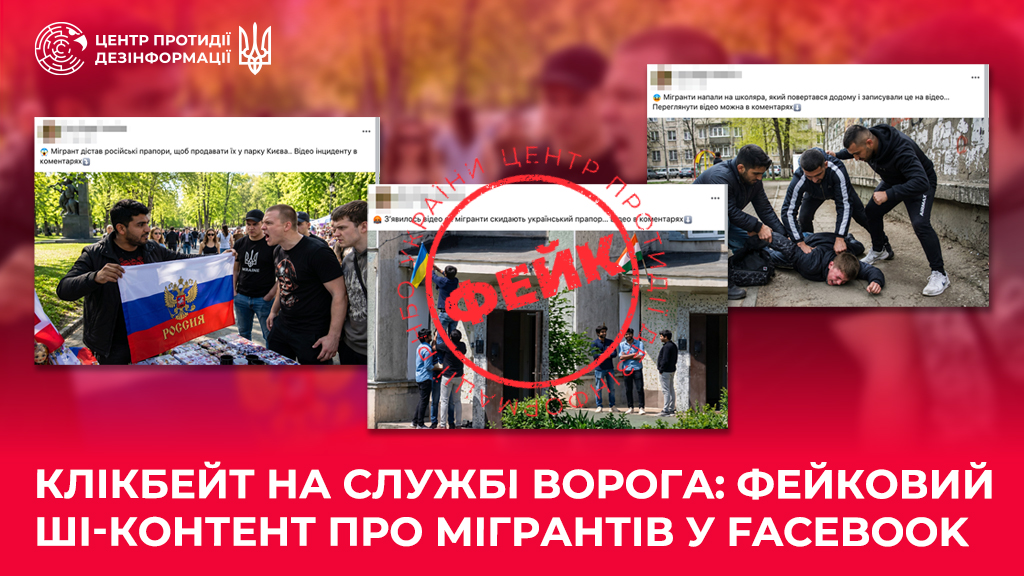
This topic was actively circulated as a scare story; however, as media expert Otar Dovzhenko noted, Ukrainian media and think tanks were a role model of self-regulation: they thoroughly analyzed and explained the issue, launching a countercampaign. This effort was joined not only by specialized publications and organizations focused on combating disinformation, but also by major, popular media outlets whose claims matter.
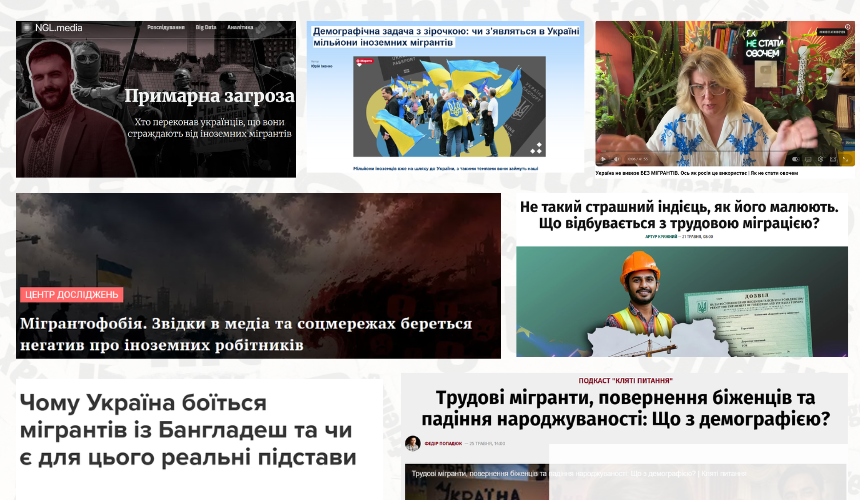
As a result, an almost immediate “immune response” emerged in the information space, which halted the spread of panic. However, despite efforts of dozens of professional teams, a portion of the public remains concerned about “arrival” of hypothetical migrants and is even outraged by the authorities’ imagined plans. This clearly demonstrates how clickbait scare stories can fuel anxiety and mistrust, even when they have no roots in reality.
An IMI survey published in February 2026, “YouTube as a Means of Diversification. How Ukrainian News Outlets Monetize Content,” revealed that a significant portion of Ukrainian media outlets actively monetize their channels through fear-based clickbait.
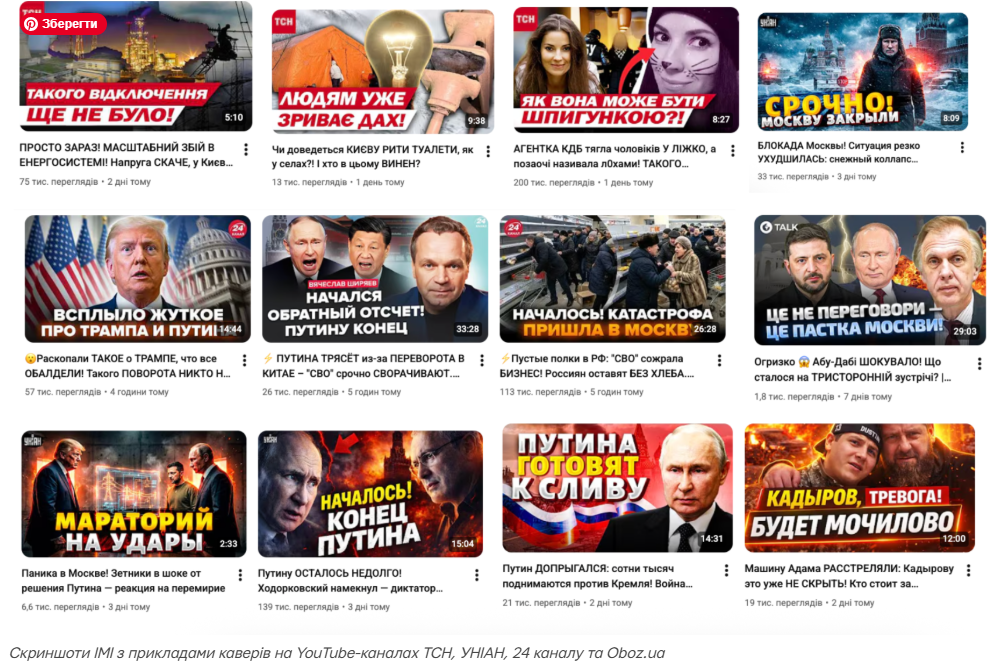
“Scare tactics” and dramatic cover images drive views, but at the same time they undermine professional standards and desensitize the audience to actual threats. The topics of the war, energy security, Russia’s domestic problems, and portrayals of world leaders are most often exaggerated.
Experts emphasize: the pursuit of algorithms and revenue causes newsrooms to neglect ethical standards, and excessive sensationalism leads people to lose the ability to distinguish actual danger from yet another fabricated “sensation.”
The Psychological Dimension
Both journalists and readers are affected by clickbait. For example, back when the editorial staff at the Finnish newspaper Helsingin Sanomat resorted to clickbait, the journalists admitted: even if the story was well-written, the sensational headline was nothing to be proud of.
This created a sense of professional embarrassment and de-motivated the team. Giving up clickbait became a way to regain self-respect.
For readers, the consequences are even more pronounced. After reading clickbait news, one gets a feeling of “dirt” or even the desire to “wash up,” according to colleagues from Ukrainian regional media outlets. Constant exposure to sensational headlines increases anxiety, creates a sense of chaos, and impairs critical thinking.
Honest headlines have the opposite effect. They reduce stress levels and foster a sense of stability and trust. A person who opens a piece of content and finds there exactly what was promised feels a sense of psychological comfort and the willingness to return to that source again.
Trust and Reputation: Experience of Newsrooms
Trust in the media is built gradually, one story at a time. Each headline is a little test: is the media outlet honest with its readers? If a headline manipulates, even high-quality content won’t save the day.
In Finland, Helsingin Sanomat stopped using clickbait due to a decline in trust. Readers began to perceive the brand as “cheaper,” and journalists were not proud of their headlines. Following the reform, the traffic stabilized and confidence increased.
Translation of a slide from the presentation by Erja Yläjärvi, editor-in-chief of Helsingin Sanomat
The editorial staff of Ternopil publication “20 Minutes” emphasizes: clickbait in regional media provokes aggression, but it doesn’t create the habit of returning.
Here, they have developed an algorithm for verifying headlines and a corporate handbook to build community loyalty.
How to check a headline: an algorithm
Newsrooms can use a simple verification process. It helps one determine whether the headline matches the content and whether it exaggerates the emotion. It is a unique tool for self-monitoring that reduces the risk of manipulation.
The test questions are simple: Is it clear from the headline what the story is about? Does the text live up to the promise? Does it provide specific details and value for the reader? Is the scale of the story exaggerated? If the answer to at least two of these questions is “no,” the headline shows signs of being clickbait.
This algorithm helps instill discipline in journalists and fosters a new culture of working with text. It helps newsrooms build long-term relationships with their audience, where every headline serves as a testament to their integrity.
Challenges and Solutions
It’s not easy to stop using clickbait. Some news stories may seem boring when presented without embellishment, while social media algorithms reward sensationalism. There’s always the temptation to fall back on old practices. But based on experience, we can say: in the long run, readers’ trust and loyalty are more important than immediate traffic.
At Helsingin Sanomat, the editorial staff deliberately avoided using dramatic adjectives and verbs and chose not to obscure key facts (not “One of restaurants is closing,” but “Restaurant X is closing”). It was a difficult decision, but it restored readers’ trust.
For Ukrainian regional news outlets, the main goal is no longer to lure readers in with clickbait, but to make them want to come back. For example, the editorial office in Ternopil developed the principles of an anti-clickbait approach, which laid the foundation of a new editorial culture.
Technology can also be a helpful tool along this path. At many news organizations, journalists submit several headline options; editors test them and sometimes use AI as a “source of inspiration” for ideas. But the final decision always rests with a human.
Even before AI services became widespread, the “Molodyi Bukovynets” team had been experimenting with various headline-generation services. The conclusion was the same: no system can replace a journalist, but it can serve as a backup tool.
Meanwhile, the editorial team at “20 Minutes” created a special prompt for ChatGPT that analyzes headlines based on criteria of professional journalism, SEO, and anti-clickbait policies. This helps, but it doesn’t replace editorial oversight.
The Ethical Dimension
Clickbait headlines violate basic professional standards. The Code of Ethics for Ukrainian Journalists directly states: editorial processing of materials, including headlines, must not distort the content. This means that any exaggeration or concealment of key facts violates the public’s right to objective information. So this is essentially a direct ban on clickbait, since that is exactly what it is – it promises one thing in the headline but delivers something else in the text.
The Code also requires a clear distinction between facts, opinions, and assumptions. Clickbait headlines often blur these lines by presenting assumptions as facts (“The city will be without water”), which misleads the reader.
Journalists understand very well that the headline is an integral part of the story’s content. If it misleads the reader, even a well-written text cannot remedy the situation. Honesty in headlines is a matter of trust and fulfilling one’s professional duty to society.
***
Anti-clickbait is a strategy focused on building trust and long-term relationships with readers. In times of war, an informative headline becomes a force that counters manipulation and chaos. It helps the media remain a source of truth and avoid becoming a tool for emotional speculation.
For journalists, this is the path to professional self-respect and pride in their work. For readers – a guarantee of stability and peace of mind. When the headline matches the content, it fosters the habit of daily reading and builds a lasting connection between the media and its audience.
As a result, informative headlines become a competitive advantage. They don’t always generate immediate traffic, but they deliver what matters most: loyalty and the long-term reputation of a media outlet that values its readers.
This article was prepared as part of the “Media Bridges: Finland—Ukraine” Program implemented by the Association of Independent Regional Publishers of Ukraine in partnership with News Media Finland, and funded by the Finnish Ministry of Foreign Affairs