


Press freedom matters not only to journalists. It matters to society, which has the right to know the truth, even when attempts are made to destroy it alongside cities, newsrooms, and human lives.
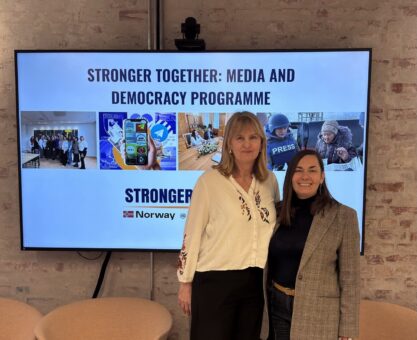
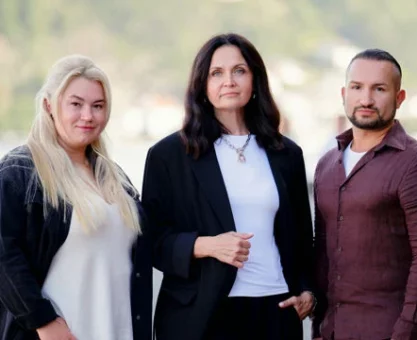
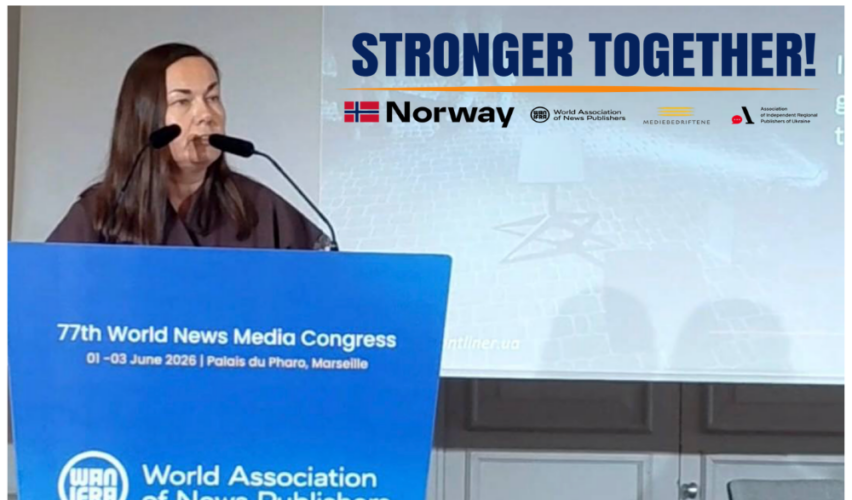
Last week, CEO at AIRPPU Oksana Brovko spoke at the 77th WAN-IFRA World News Media Congress in Marseille, bringing together media leaders from around the world. In her speech, she spoke about Ukrainian regional media outlets operating under shelling, about journalists who have gone to the front lines, and about newsrooms that have lost offices and team members but continue their work.
««We can not normalise such tragedies. As independent media, we must continue telling the truth and do everything we can to ensure that the world remains with us», she stressed.
As a reminder, 16 participants of the Stronger Togethe Programme: Gender Equality and Inclusion also travelled to Marseille with AIRPPU. They took part in the women’s leadership development programme and joined the events of the World News Media Congress.
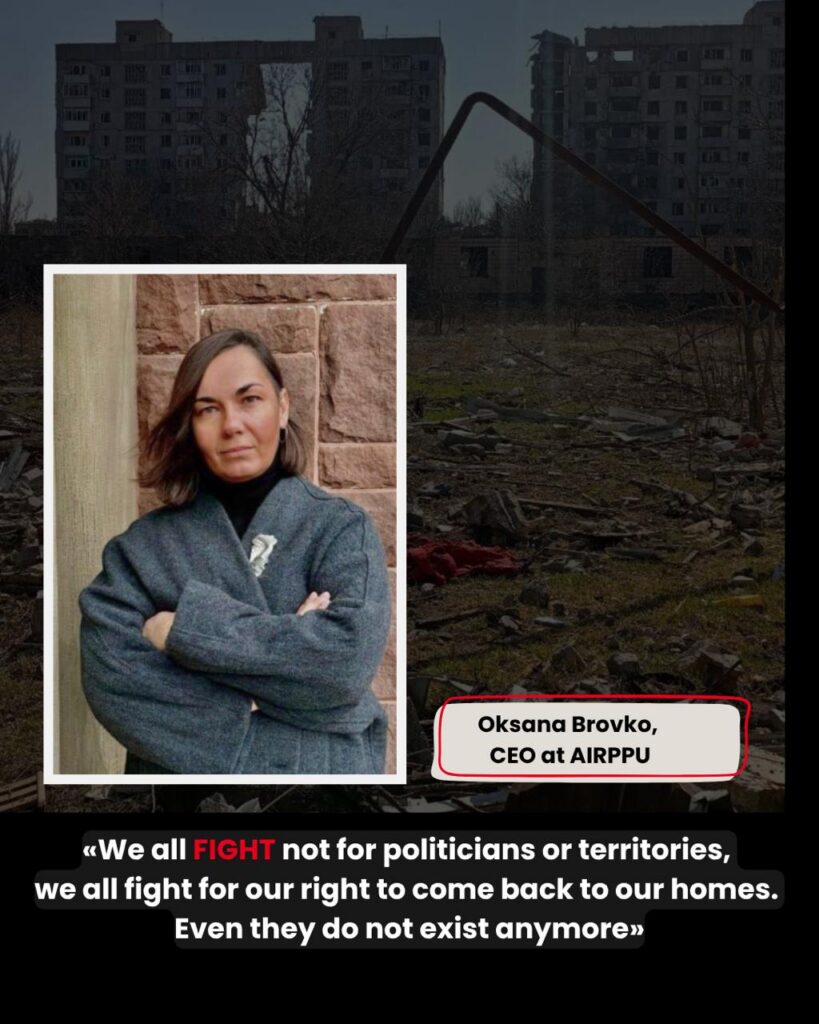
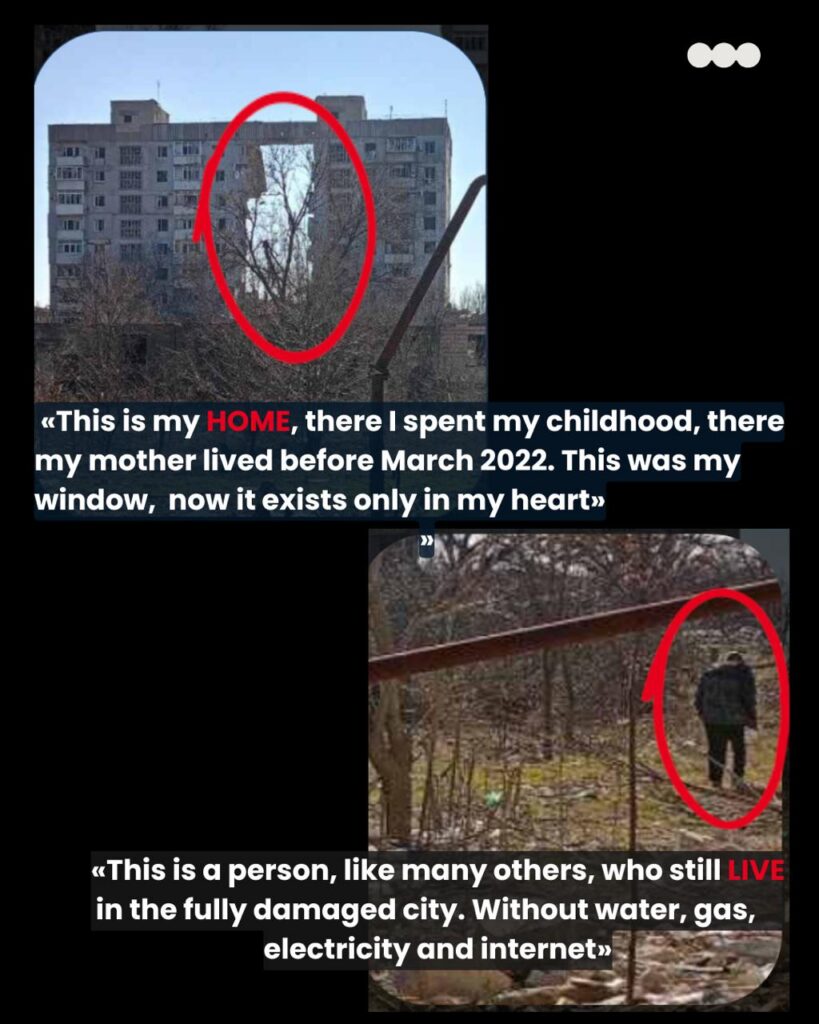
Below, we publish the full text of the speech. The cards below also feature the main quotes and key messages.
Oksana Brovko
Marceille, June 1, 2026
When people talk about war, they usually talk about Kyiv, Sumy, Bahmut, but there thousends of smaller and bigger cities which are already totally destroyed. Like this city Kostiantynivka in Donets region, or my city Orikhiv, in Zaporizka region. This is my house, there I spent my childhood, there my mother lived before March 2022. This was my window, now it exists only in my heart. And this is a person, like many others, who still live in the fully damaged city. Without water, gas, electricity, internet.
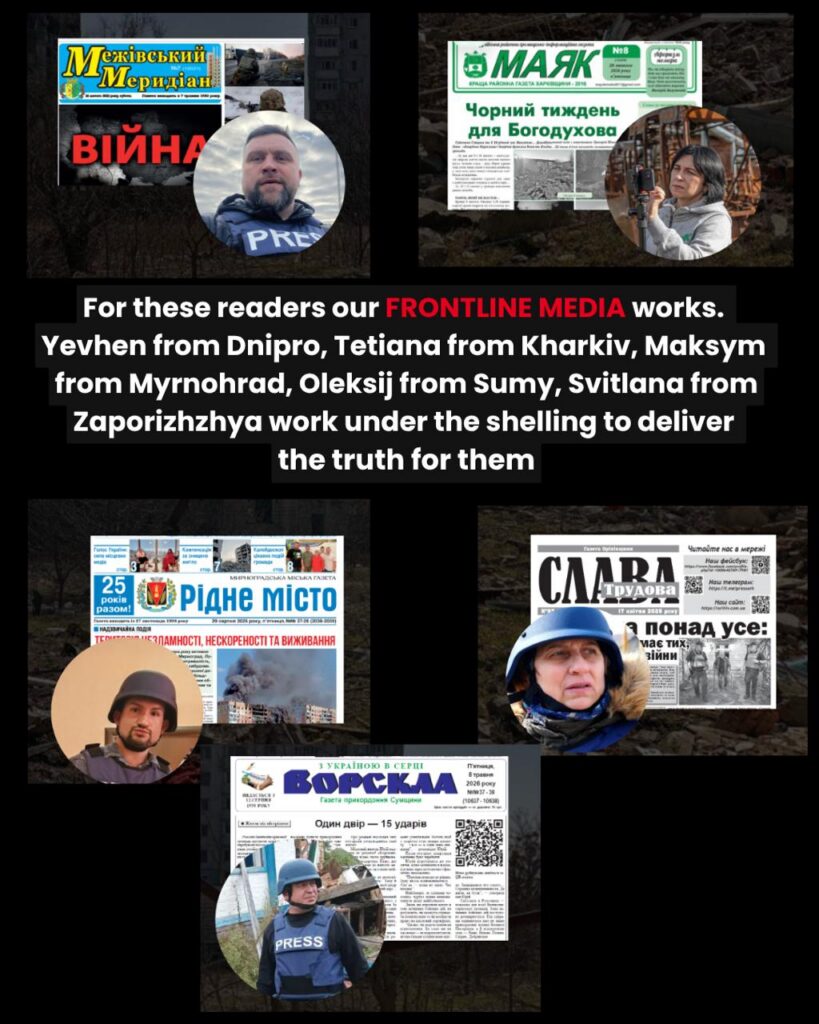
For these readers our frontline media works. Yevhen from Dnipro, Tetiana from Kharkiv, Maksym from Myrnohrad, Oleksij from Sumy, Svitlana from Zaporizhzhya work under the shelling to deliver the truth for them.
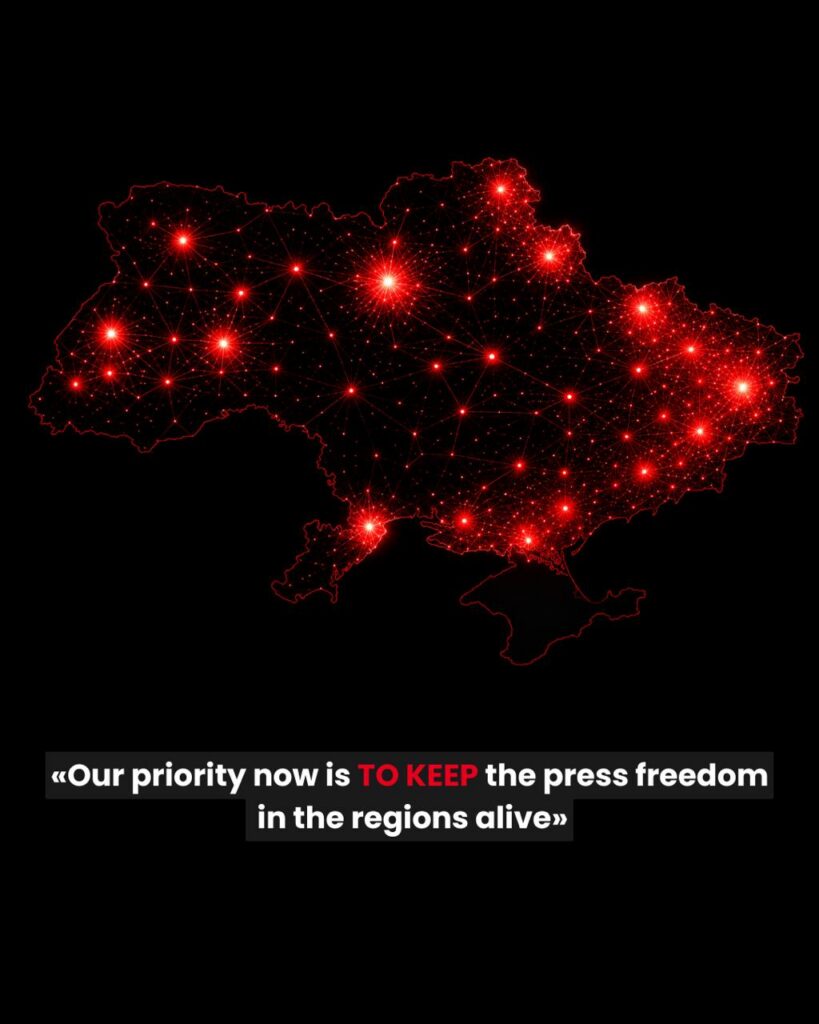
Our priority now is to keep the press freedom in the regions alive.
Kill zone.
This is not military terminology anymore.
It is part of civilian life. And part of journalistic work. This phrase describes areas constantly under threat from drones, artillery or missile strikes.
The sign PRESS on a bulletproof vest does not protect us anymore, it makes us a visible target to russian fpv drones.
Journalists in frontline territories are exposed to chemical substances — and many already suffer long-term health effects.
More and more the first item in a journalist’s equipment list is not a notebook and even not a bulletproof vest. Very often – the anti-drone devices.
In most Ukrainian newsrooms today, electricity and internet are not guaranteed. Generators and charging stations have become more important than printing presses.
It is no longer surprising to see job announcements for editors because the previous one has gone to the frontline.
And more and more often, the editor leaving for the army is a woman.
Women today hold many leadership roles in Ukrainian regional media.
And increasingly they leave journalism to defend the country not with words, but with weapons.
This is the environment in which local journalism in Ukraine operates today.
I would summarise all the challenges into the five main.
First — physical pressure.
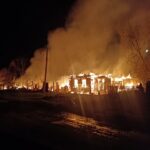
Journalists are joining the Armed Forces. Air attacks happen almost every day across most regions of Ukraine. Newsrooms are damaged or completely destroyed.
This huge bomb crater was a regional newsroom just one month ago — the newsroom of Mezhivskyi Meridian, led by Yevhen Hrypun.
Today, the only thing left standing there is the Ukrainian flag.
Second — financial pressure.
Local advertising markets have collapsed. Many local businesses — which previously were advertisers for the regional media — have disappeared or relocated. As a result, many newsrooms now depend heavily on international support simply to survive.
Psychological pressure.
Journalists report on destruction, trauma and loss in their communities. At the same time, they experience these losses themselves — among colleagues, friends and family. Burnout is becoming a serious challenge across the media sector.
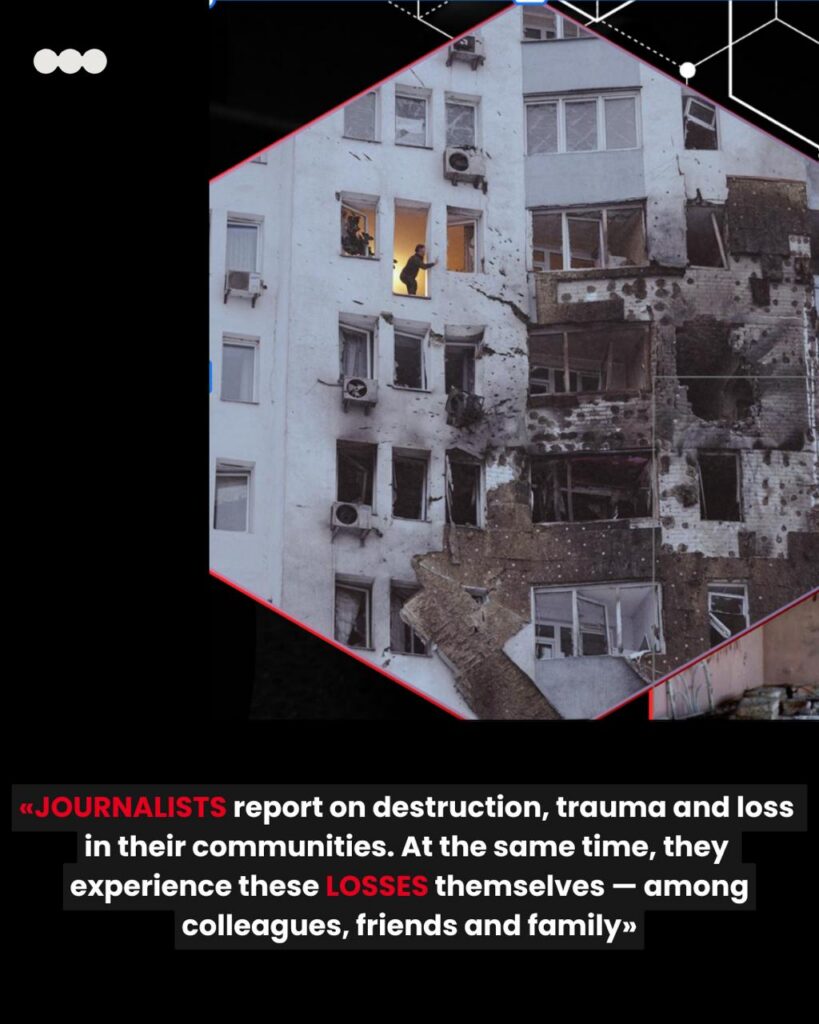
Fourth challenge — editorial pressure and influence.
Some journalists report attempts by local authorities or political actors, local businesses to influence on editorial content and decisions.
And finally, the fifth level of pressure is what we call stable instability.
Regional media operate in an environment where long-term planning is nearly impossible. Editorial priorities change constantly. Newsrooms must adapt very quickly.
What can you do?
Act.
The most easy way is to publish stories on your media. Then 20 civilians during ceasefire killed in Ukraine – it should be on your frontpage. We can not normalise such tragedies.
Second, donate. Your donations can keep alive local journalists who keep doing their work under the fire.
Your donation of 1K EUR can help to buy a generator to keep the newsroom alive and truth deliver to the readers.
Donation of 7K EUR can help to publish weekly small frontline newspaper during 3 months.
Donation of 50K EUR – support of a midsize regional newsroom during the half a year.
Share your experience: if you have the best know how experience in this or that area in media, let me know and let’s organize experience exchange with our newsrooms.
If you can host 5-7 journalists, local correspondents in your newsroom, let me know and we will organse the study tour and give them a chance not just to get experience, but also to breathe a peaceful air.
Act, don’t freeze.
Over the past year we have worked together with many partners to strengthen regional media. One of the main project we build and have now – is the programme which we have with you – Stronger Together Programme, implementing with WAN-IFRA as a lead partner and MBL as norwegian partner.
40+ regional and local media supporting.
Up to 1000 media managers participated in our training programmes.
120+ anticorruption investigations in the regional and local media were produced.
In times of crisis, isolation is one of the greatest risks for independent journalism.
Partnerships break that isolation. I would like to thank you – our partners and all media community – who are ready to walk this journey with us.
I want to finish my presentation in a way that may be unusual for a media conference – with words, written by Ukrainian writer Viktoriia Amelina, who was killed in Kramatorsk in 2023.
Homecoming Story
When Mira was leaving home she took a bead from her jewelry box
When Tim was leaving his town he picked up a rock from the street
When Yarka was leaving her garden she took an apricot pit
When Vira was leaving home she took nothing
I will be back soon, she said
and took nothing at all
When you are fleeing your home
she says
behind your back
Home gets smaller
to save itself
Your home turns into
grey rock
a bead
a last-year apricot pit
a Lego figure
seashell from Crimea
sunflower seed
a button from Dad’s uniform
So what did you take with you?
I only took this story
The story about homecoming
Here,
I pulled it out into the light –
It is growing
We all fight not for politicians or territories, we all fight for our right to come back to our homes. Even they do not exist anymore.
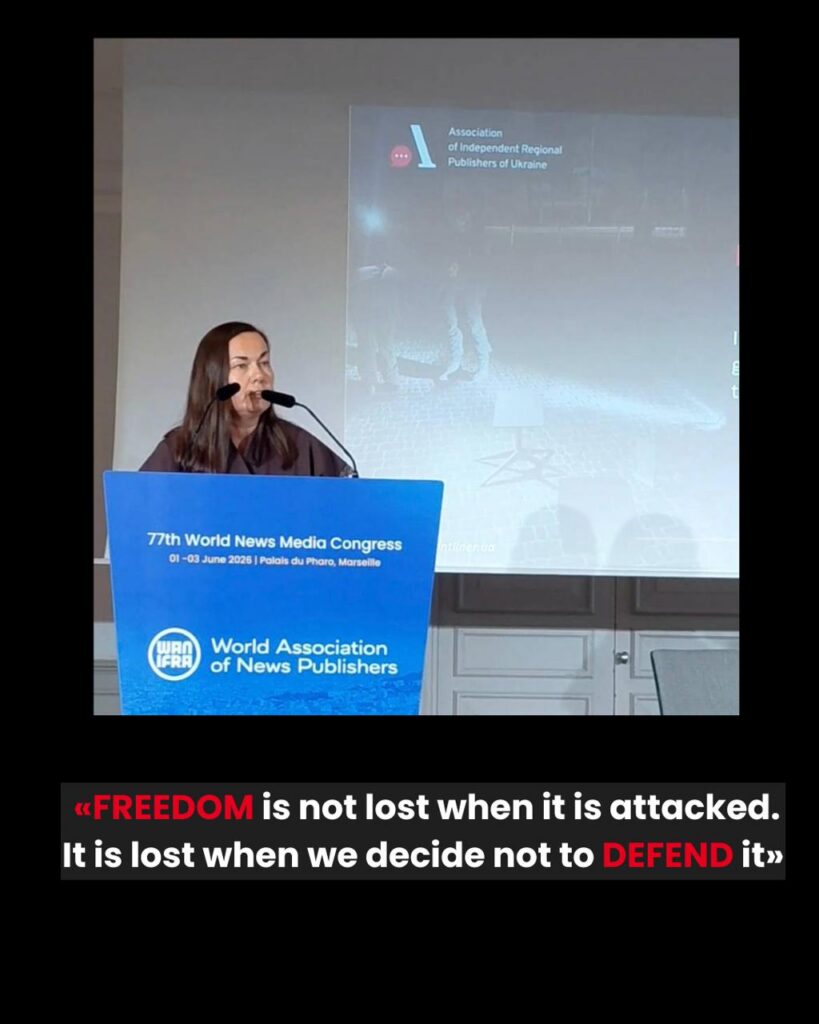
Because freedom is not lost when it is attacked.
It is lost when we decide not to defend it.
***
As a reminder, the programme «Stronger Together: Media and Democracy» is implemented by the Association of Independent Regional Press Publishers of Ukraine (AIRPPU) in partnership with WAN-IFRA and the Norwegian Media Businesses’ Association (MBL), with the support of Norway.