


The Zaporizhzhia Investigation Center works in a city that lives daily under the threat of Shahed and FPV drones. This conversation is about danger, self‑censorship, support, and perseverance as a form of professional dignity.
— “Right now, as we write this, Zaporizhzhia is enduring its second day of almost nonstop Shahed attacks. The previous wave lasted about six days.
The investigative team, like most Ukrainians today, works under conditions where any plan can collapse—from an editorial meeting to a field shoot. Air defense operates for hours, yet the city does not stop, and journalists remain alongside it.”
We continue the series of conversations with media professionals working in frontline and border regions. Previously, we published interviews with Zarina Zabrisky (Parts One and Two), Oleksandr Kachura, Vladyslav Safronov, Natalia Bilokudria, Serhii Horbatenko, Yevhen Khrypun, Anna Kaliuzhna, Polina Kulish, Nadia Sukha, Nadiia Karpova, Oleksandr Solomko (Parts One and Two), Diana Butsko, Oleksii Pasiuha, Oleksandr Chubukin, and Aliona Serhiienko. Today we continue the theme of Zaporizhzhia media: co‑founders of Zaporizhzhia Investigation Center, Olha and Serhii Sydorov, share their experience.
“Zaporizhzhia media organizations are already training to use ‘Chuyka’ drone detectors”
— You work where danger is always near. How does that change your focus and way of working?
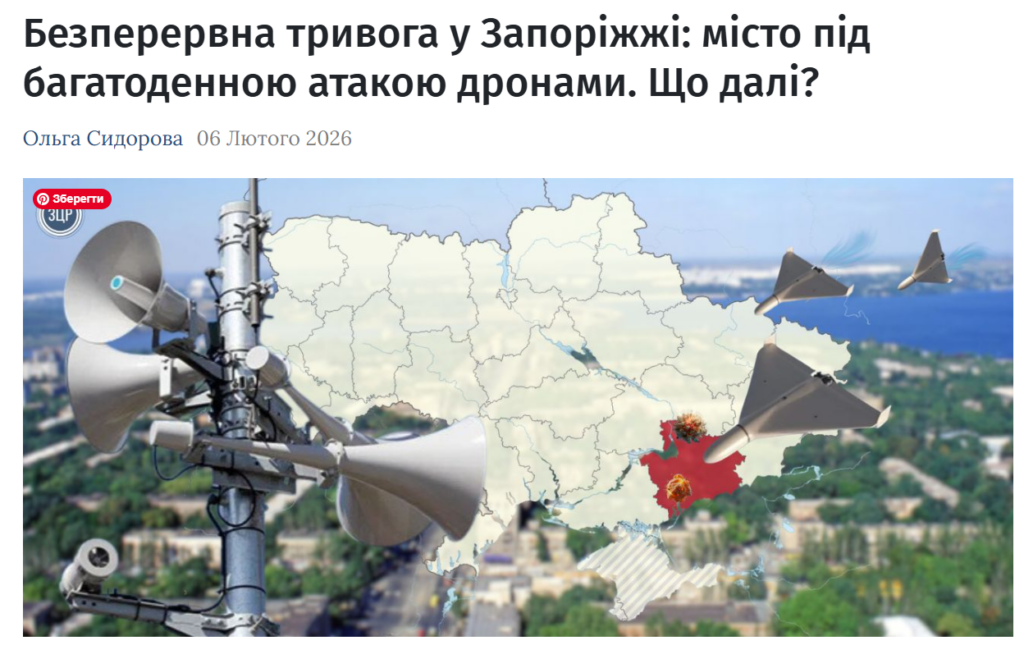
— We are not correspondents or fixers, but investigators, so our risks are truly the risks of every resident of Zaporizhzhia. Right now, as we write this, it’s the second day of almost nonstop Shahed attacks on the city. The previous wave lasted about six days. In such conditions, every step outside the house is already a danger, but the city lives and works, so we work too.
— What does daily safety checking mean for you? Which things do you monitor first?
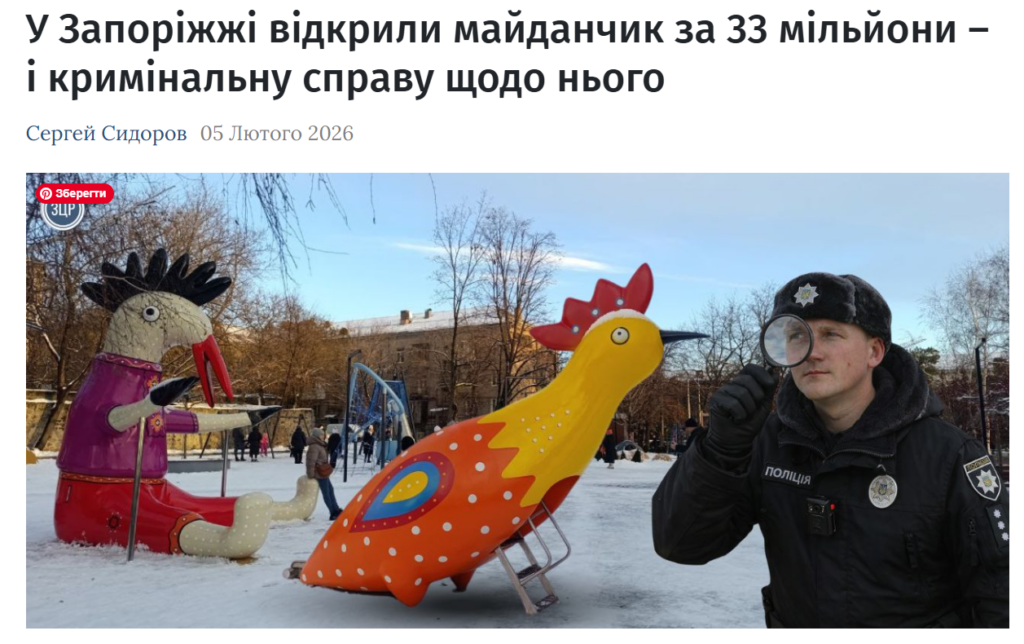
— The southern districts of Zaporizhzhia are attacked by FPVs several times a week. Local media organizations are already training to use “Chuyka” drone detectors, but we don’t yet have our own. Sometimes FPVs fly deeper into the city: we film at a new children’s playground, and the next day, a drone hits the shop across the street. For now, though, these are more exceptions than the rule.
Zaporizhzhia residents, however, remain unbroken. People from the most heavily shelled district of the city—considered dangerous even by Zaporizhzhia standards—came to us the other day to ask why a trolleybus route hasn’t been extended to them all these previous years. In such conditions you stop complaining and realize that life goes on.
When a major strike happens, there’s always a roll call in the chats: who is where, and did they hear it clearly. We know more or less not only where team members sit and work, but also where their husbands and other relatives are working, and we ask how they are. Some of them have already had their windows replaced for the third time.
— How important is it to have a team or a partner nearby? What does support in your newsroom look like after dangerous assignments?
— Street filming is better done as a team. A lone journalist with just a phone, not with a camera and microphone, is a potential target for overly vigilant citizens. More than once, people have tried to call the police on us. The police, in this sense, are much more reasonable.
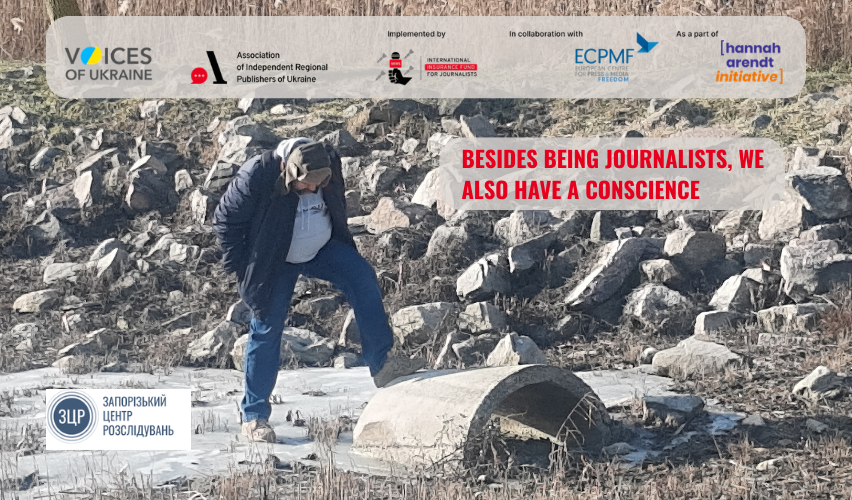
“Besides being journalists, we also have a conscience”
— Have there been moments when you decided not to publish material or show footage for safety or ethical reasons?
— Well, apart from safety concerns, there are also purely professional risks of living in a frontline city. Probably the biggest of them is self‑censorship. In our information space, there are plenty of highly controversial topics that, from a journalist’s perspective, could and should be covered… But you either don’t write, or you don’t write everything. Last summer, oil leaked into one of the city’s small rivers from an industrial plant. It happened a day after a shelling and spilled from the grounds of one of the city’s most frequently targeted defense‑related enterprises.
The ecological damage was undoubtedly done, but no one wrote the name of the polluter: besides being journalists, we also have a conscience.
At the same time, the frontline status of the city and region gives the authorities a kind of carte blanche to conceal a lot of information—including things that in other regions might be reported. For example, we were never able to obtain information about tests or calculations of which Russian munitions the structures can withstand. Nor about the companies that are spared power cuts during outages.
— What topics are the hardest for you to cover—and why exactly those?
— We cannot promptly inform people about decisions made at city council sessions. The time and place of the session are known to several thousand people in Zaporizhzhia—yet there is still a “gentlemen’s agreement” not to publish materials from the session until it is over. The flight time of ballistic missiles is just minutes, but the argument is questionable. On the other hand, no one wants to test it on themselves.
“Our dignity is called steadfastness”
— Do you have your own “signals”—when it’s worth continuing work, and when to pause?
— Today, we canceled our scheduled weekly meeting about social media content. When outside the window, air defense has been chasing another Russian Shahed for three hours straight, it’s not easy to stay focused.
Right now, the office isn’t very warm, so part of the workday we spend at the director’s old apartment. On one side, the windows and frames are still damaged after a drone fragment hit the neighbor’s flat. We’re waiting for compensation through YeVidnovlennia (a Ukrainian government program that provides financial aid for repairing housing damaged by the war — Ed.) to repair them. But there’s steady electricity on a 4/5 schedule, and the boiler works—enough for one hot bath. In some ways, that puts us in a better position than people in Kyiv.
— How do you cope with the constant sense of anxiety or danger? Do you have your own methods of psychological support?
— Walks in the fresh air. Olga also does breathing exercises, and Serhii plays another soulslike on PlayStation. We used to drink coffee three or four times a day. Now we’ve switched to pu‑erh tea, which is pretty good too.
— What helps you recover after difficult shoots or conversations? Do you have your own “rituals” for returning to normal life?
— Reading paper books. The main thing is not to hold a smartphone or laptop for about half an hour, and to make sure the book is as far removed from the present as possible. Olga is currently reading Rex Stout, while Serhii is reading Plutarch’s Parallel Lives.
— How do you understand dignity in the work of a journalist under conditions of war or constant risk?
— Our dignity is called steadfastness. In some ways, even stubbornness.
Life and health insurance for journalists
Colleagues, a reminder: journalists working in dangerous regions have the opportunity to obtain free life and health insurance. The Association of Independent Regional Press Publishers of Ukraine (AIRPPU) offers journalists working in dangerous regions the opportunity to obtain life and health insurance. This is part of the International Insurance Fund for Journalists (IIFJ) initiative, implemented in partnership with Ukrainian and European organisations.
Media professionals working in Kherson, Zaporizhzhia, Sumy, Mykolaiv, Donetsk, Luhansk, Odesa, Kharkiv, and Dnipropetrovsk regions, as well as border areas of Kyiv and Chernihiv regions, can apply. More information about the terms of free insurance is available here.
Let us recall that the Emergency Support Program for Regional Media was launched in autumn 2025 in cooperation with Amedia Foundation and aims to preserve and strengthen independent local and regional newsrooms producing print and online media under the difficult conditions of war and energy crises.
It should also be noted that the International Insurance Fund for Journalists project is part of the Voices of Ukraine program, which is included in the SAFE programme coordinated by the European Centre for Press and Media Freedom. Voices of Ukraine is implemented within the Hannah Arendt Initiative.