


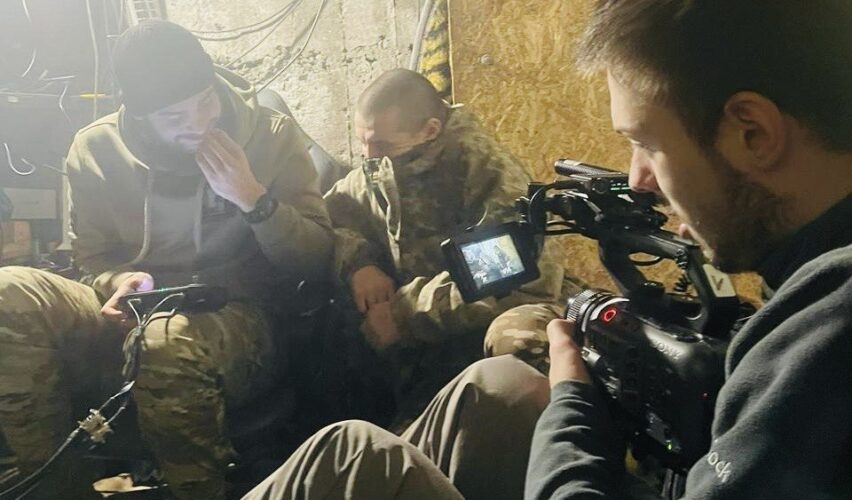
«I Came to Film the Truth». The Story of Frontline Videographer Vladyslav Safronov, Who Documents the War.
Vladyslav Safronov is a 22-year-old videographer from hromadske who chose to film and show the world the truth about the war in Ukraine. For the past two years, he has been travelling on assignments to frontline areas, documenting the realities of the war and its impact.
This is his first job in the media. Before that, Safronov worked in documentary filmmaking and later moved into journalism — to capture authentic, documentary moments of life and preserve them for history.
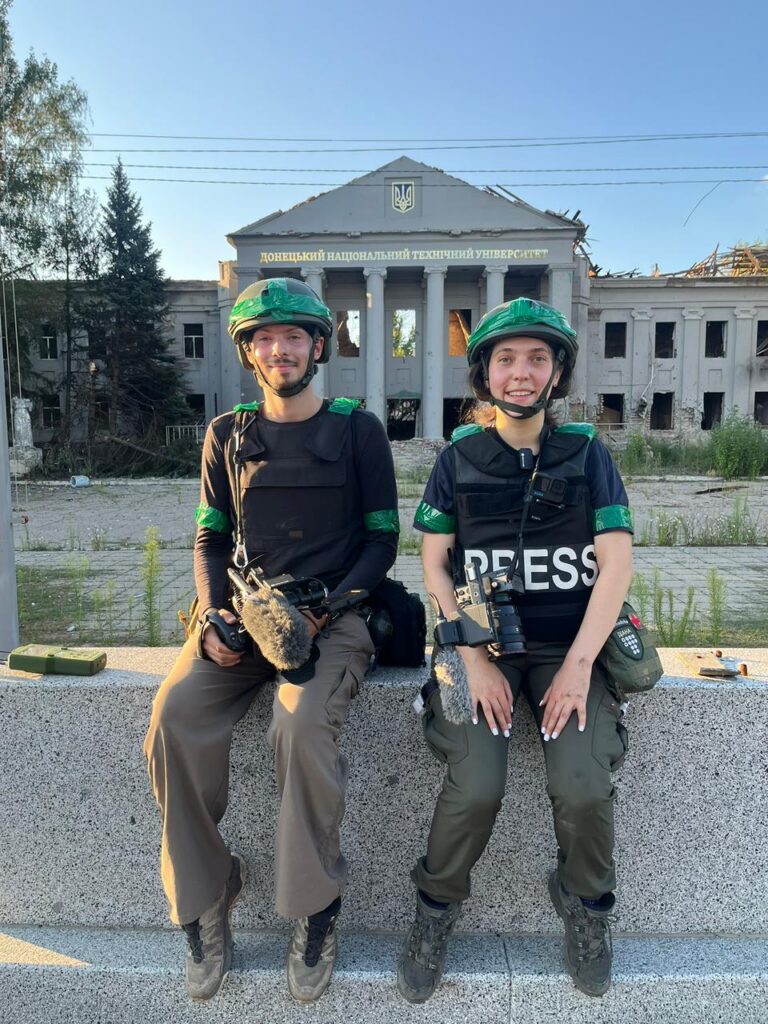
He works in tandem with journalist Diana Butsko. Together they travel to the frontline, pass through dangerous areas side by side, and return together — with video footage, people’s stories, and firsthand experience that will be deeply familiar to those living close to the line of contact.
The media team uses the International Insurance Fund for Journalists, implemented by the Association of Independent Regional Press Publishers of Ukraine in cooperation with its partners.
From first field trips to regular frontline work
At just 22 years old, Vladyslav already has footage behind him that few people ever witness. He admits that he truly loves his work and sees it as a mission. Despite the risks, he continues moving forward — preserving in his memory and in his video stories the history of his country and its people.
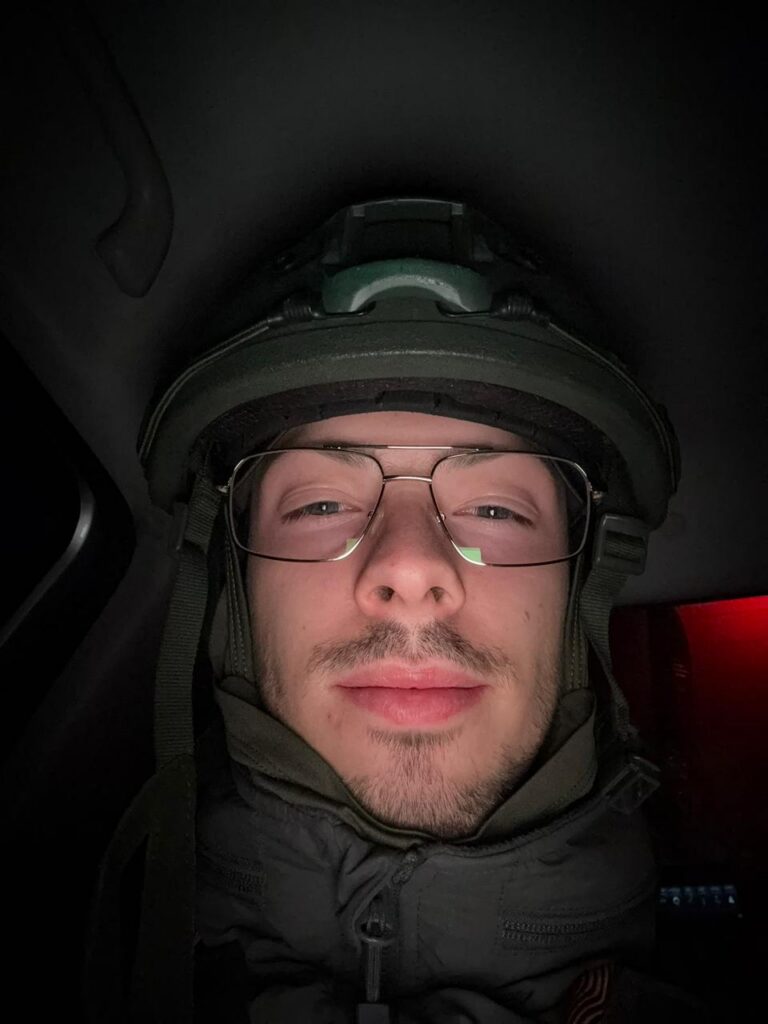
«I used to work in video production, and later I was offered a job in the media, so I have been here at hromadske for more than two years now. This is my first experience in journalism, and it is extremely valuable», the interviewee begins. — «When I am there, on the frontline, where danger surrounds us everywhere, I stay максимально focused on my work. That concentration helps me do everything properly and not constantly think about the threats — because they are everywhere anyway».
Assignments to the frontline have become an integral part of his life. The East, the South, the North — he has worked in all directions. However, over the past six months, trips have had to be shortened due to enemy “safaris” targeting not only civilians, but journalists as well. Still, at least three trips per quarter remain regular. Now the newsroom tries to reduce the time spent in dangerous areas.
«We try to work there for about a week, or slightly longer, and then return», he shares. — «It is extremely dangerous not only for us, but also for the military personnel who accompany us».
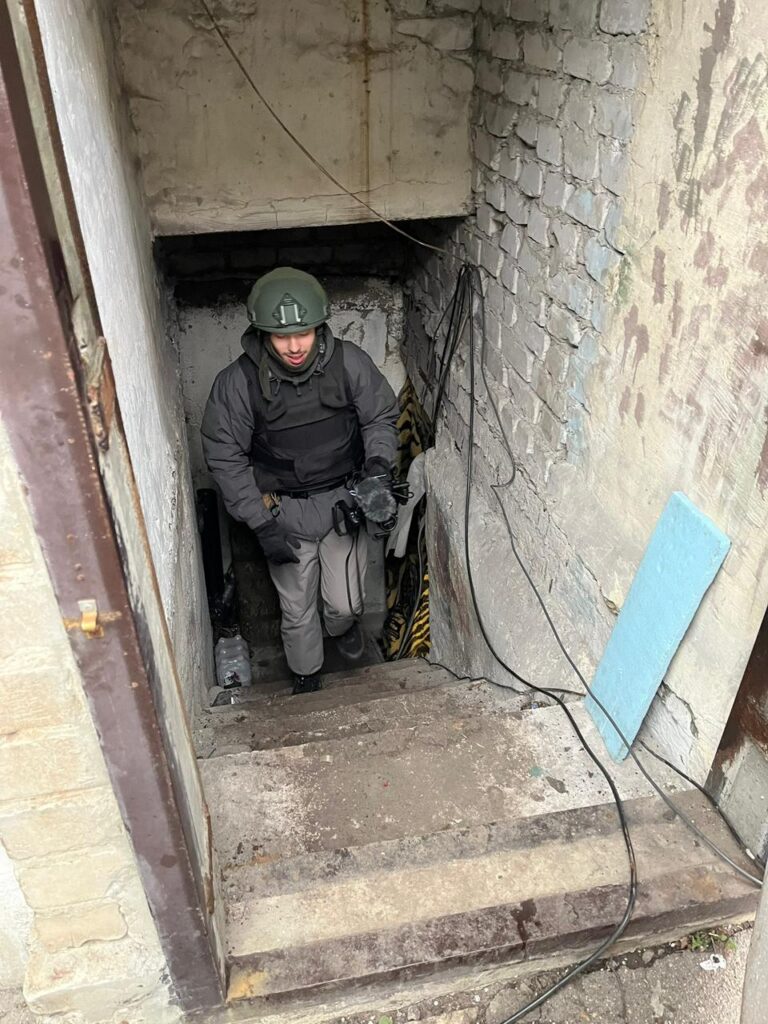
The team «covers the entire line of contact» and travels to the places where the most important events are unfolding. Among his most recent assignments, Vladyslav mentions Kherson — a city that lives under the constant threat of «drone safari». He also names Kupiansk and Dobropillia, where the situation remains «hot». The Pokrovsk direction was covered in the summer, when journalists were still allowed into the city and managed to enter it «among the last ones».
«The situation is extremely difficult now. Over the past year, there has been a clear trend of the kill zone expanding. Getting closer than 20 kilometres to the line of contact has become very dangerous — both for journalists and even for the military», he emphasises. — This is due to the sheer number of drones, including fibre-optic ones, for which there is no effective countermeasure. In practice, there are directions that are almost impossible to reach».
Working under drones and artillery
For journalists, this means working in places where every trip may be the last, and every frame is filmed under the watchful eyes of the enemy in the sky. It is a daily choice between fear and professional duty — when instead of a safe rear, there is only a body armour vest, a helmet, and the certainty that this story must be shown to the world. The work of a reporter and videographer on the frontline is a constant balancing act on the edge, where the price of truth is measured not only in time and effort, but also in one’s own life.
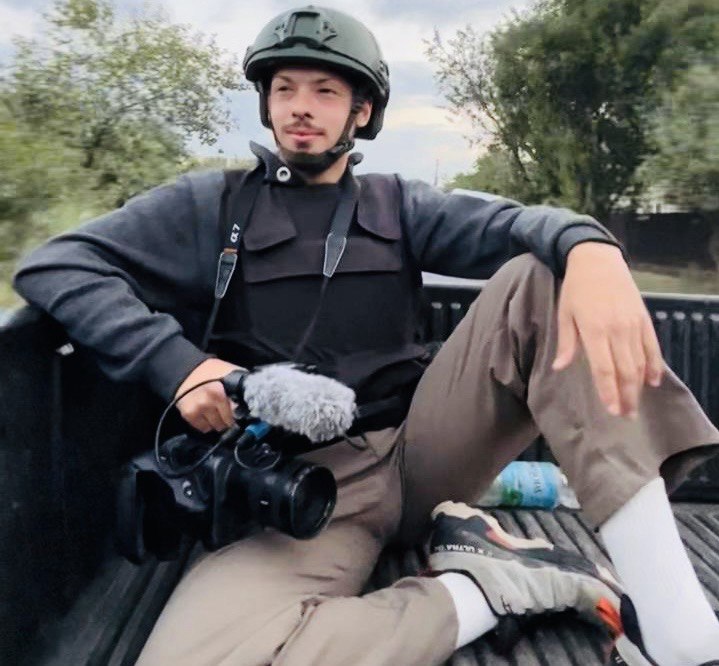
«If you think only about how to get the shot, you stop thinking about how safe or dangerous the situation is. You focus entirely on the work», the videographer repeats once again, as if articulating the most important thing he wants to convey.
He then recalls one of the most dangerous episodes of his work — entering Chasiv Yar in the summer of last year.
«Almost the entire way, we were hiding from drones. We were moving together with a military reconnaissance officer who was, in effect, teaching us how to hide properly in order to survive. The distance was short — about one and a half kilometres — but it took us roughly two hours to cover it, because we constantly had to wait out the danger. In the final third of the route, we came under artillery fire and effectively found ourselves between two artillery positions — ours and the enemy’s. All we could do was wait, because usually at that moment there is a drone hovering overhead, monitoring the situation, and there was no point in trying to move», he recalls.
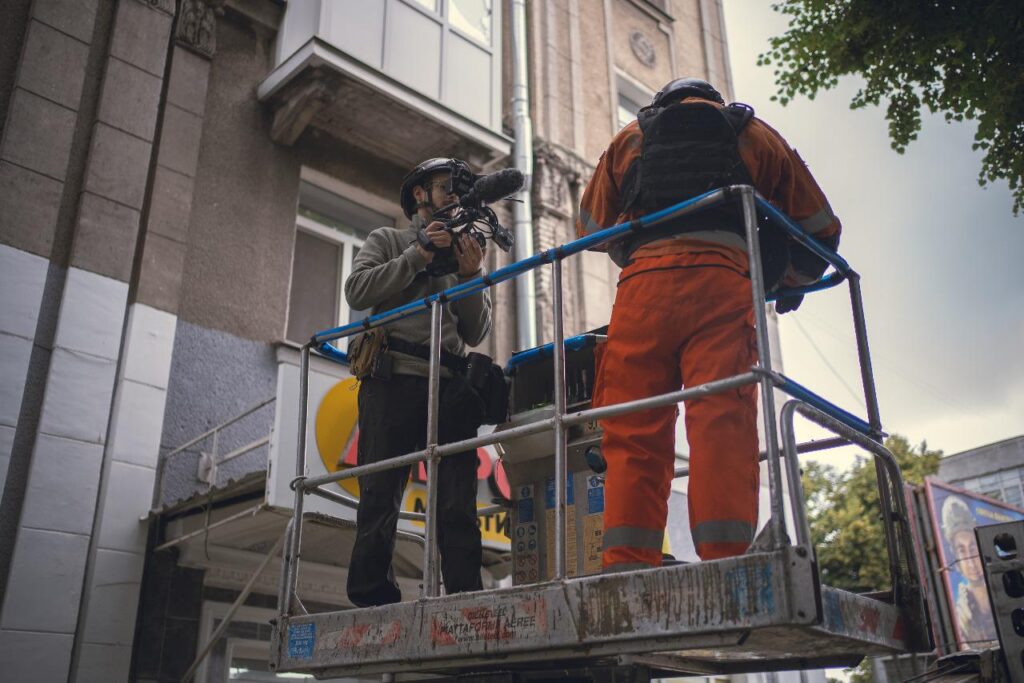
This story is the everyday reality of frontline work for videographers and journalists: drones, artillery, the constant search for shelter, and the ever-present risk of ending up in the sight of an unmanned aerial vehicle.
The enemy is too close
A separate and defining reality of frontline journalism today is drones. Vladyslav clearly explains how this weapon has changed everything:
«It seems to me that a year ago there was not such a high concentration of deaths among journalists doing this work. Unfortunately, we are now seeing many losses. Just recently — the death of a French photographer and the injury of a photographer from Kharkiv; the death of a team of journalists in Donetsk region, when a strike drone hit their vehicle. Of course, this seriously undermines morale… But we came into this profession to cover what is happening on the frontline, and for now we are not considering any other kind of work», he says.
Our interviewee is well aware of so-called “human safari” tactics. In Kherson, he notes, people have been living under these conditions for the longest time. Civilians try to adapt to the terrifying reality in any way they can. Journalists, volunteers, military personnel, and even some elderly women there carry drone detectors. «It’s like a phone you keep checking — or even more often», he adds.
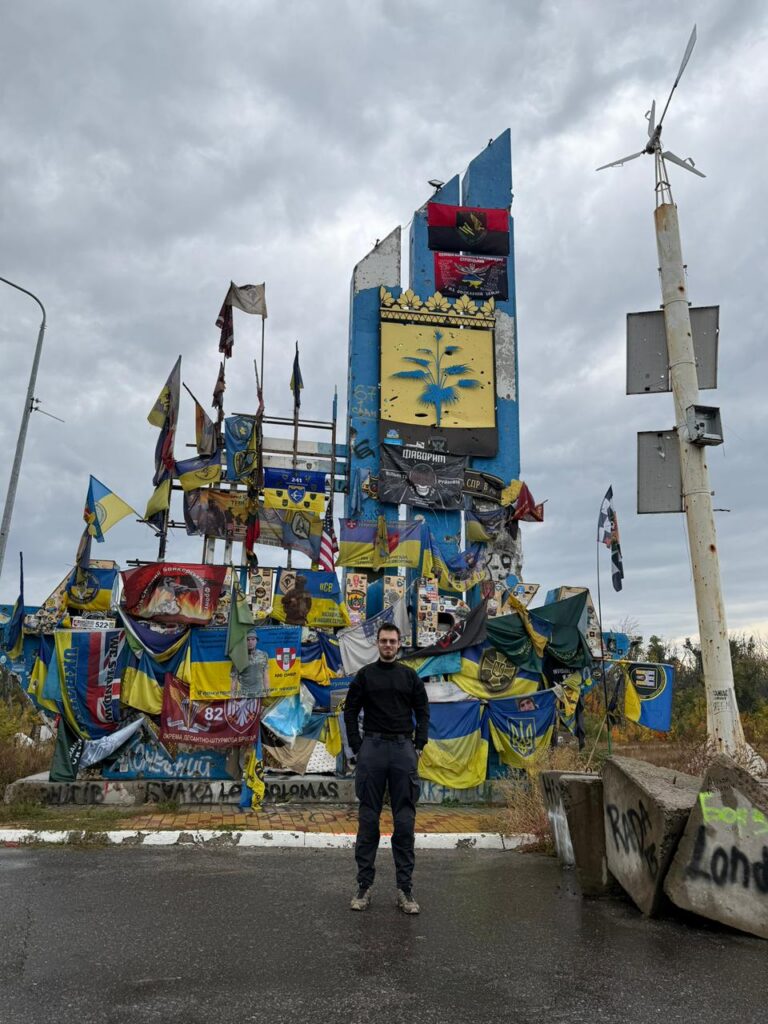
Vladyslav works closely with drone operators — military personnel who also understand the importance of the media dimension:
— «We have friends on the Pokrovsk direction — drone operators. They are responsible for part of their brigade’s media work, they understand the value of coverage, and they agree to guide almost all media crews. But the enemy has already moved very close to their positions, and intense small-arms fighting has begun. Working there has become extremely difficult, and for journalists to access these areas now is almost impossible», he emphasises.
Equipment burns, protection from drones is essential
The technical conditions of frontline work are a separate level of complexity. The newsroom has Starlink, but in positions the team usually relies on the military’s internet connection. In frontline towns, mobile communication still works to some extent, but closer to positions phones are switched to airplane mode for security reasons, Vladyslav explains.
After an incident in which colleagues lost equipment when an FPV drone hit their vehicle — burning camera lenses, part of the gear, a helmet, and a hard drive with footage — he now always makes backups and tries not to carry the primary data storage to shoots unless absolutely necessary.
When it comes to safety, the team largely relies on press officers:
«If we go out to positions with someone, the press officer or the military escort effectively becomes our “security director”».
Even so, Vladyslav admits there is always an instinctive urge to look for cover everywhere. He says he dislikes late autumn and winter — less foliage means fewer places to hide. That is why the team identifies several needs as critically important: a drone detector, which has now become a basic survival tool, and a net launcher — a non-lethal means of protection against drones.
Insurance is about a sense of protection
All these risks only underline how essential insurance is for media workers.
«We are filming a war, and every trip could be the last one. Insurance doesn’t save you from a drone or artillery, but it protects your loved ones from being left alone with the consequences», the interviewee notes.
That is why he is grateful to the team of the Association of Independent Regional Press Publishers of Ukraine and its partners for this opportunity. In addition, the team tries to attend safety trainings on a regular basis, as knowledge must be constantly updated and skills continuously refined. Notably, on 3–4 December, the Association held safety training for media professionals.
In the end, despite fatigue, fear, and constant danger, Vladyslav and his colleague Diana Butsko continue their work, fully aware of the value of every single frame they capture. Their photographs and videos become evidence, history, and memory. And reliable protection and support are the essential conditions that allow journalists to keep working.
***
The project is implemented by the Association of Independent Regional Press Publishers of Ukraine (AIRPPU) together with partners. The initiative is part of the Voices of Ukraine program, coordinated by the European Centre for Press and Media Freedom (ECPMF). Voices of Ukraine is carried out within the framework of the Hannah-Arendt-Initiative and funded by the German Federal Foreign Office.