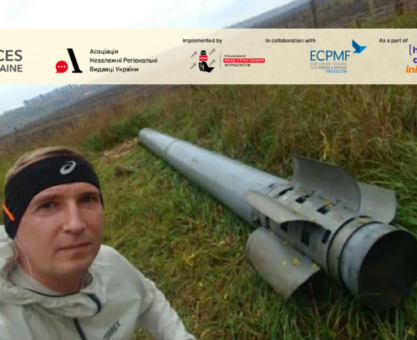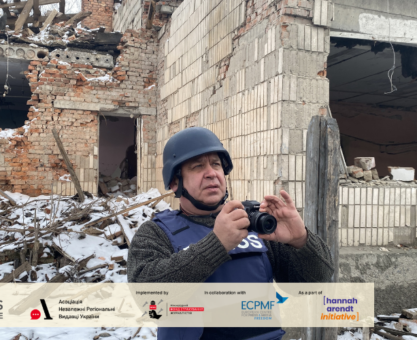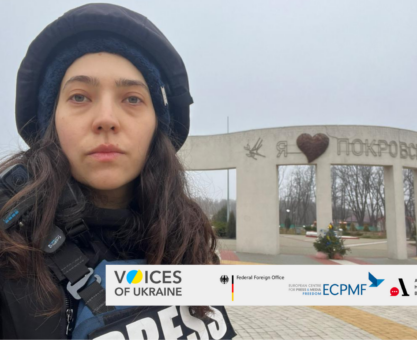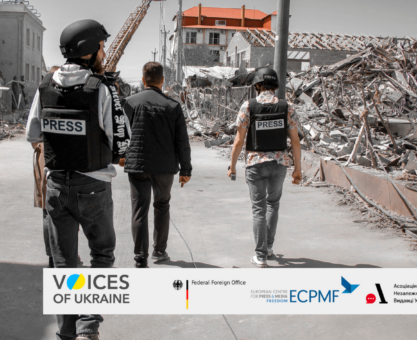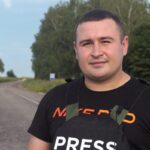



In war, the road sometimes tells more than the position itself — and Nadiia Karpova knows this better than many.
For Frontliner videographer Nadiia Karpova, the journey to a story often becomes a separate ordeal: dangerous routes, decisions that affect others, and physical strain without which it is impossible to reach the filming location.
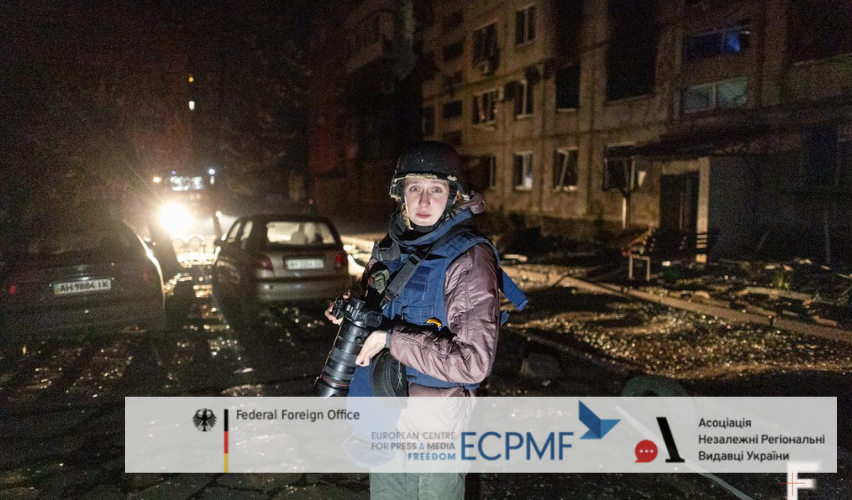
We continue sharing stories about the work of journalists in frontline and border regions. Earlier, we published conversations with Zarina Zabrisky (Parts One and Two), Oleksandr Kachura, Vladyslav Safronov, Natalia Bilokudria, Serhii Horbatenko, Yevhen Khrypun, Anna Kaliuzhna, Polina Kulish, and Nadia Sukha. Today, we present a conversation with Frontliner videographer Nadiia Karpova.
Danger, Routes, and Physical Endurance
— Nadiia, you often work in places where danger is a constant backdrop. How does this affect your concentration and way of working?
— Everything has changed because the frontline risk zone has expanded significantly. Within 10–15 kilometres, anything can potentially hit you: FPV drones, Molniia drones, Lancets.
You constantly analyse routes and try to find alternative roads. All main roads are under control — it’s a roulette: you’re either lucky or you’re not.

Before a trip, you need to plan the route very precisely and try not to deviate from it, because GPS can fail, there’s no internet, and no electricity. Navigation becomes extremely difficult.
The road alone can now take a full day, and you arrive exhausted. You need time to rest, recover, and only then work with focus.
— What does a typical working day in a risk zone look like?
— Very few press officers or brigades are willing to take journalists to the frontline now. No one wants to take responsibility for the risks involved.
It’s possible to go, but access is extremely limited.
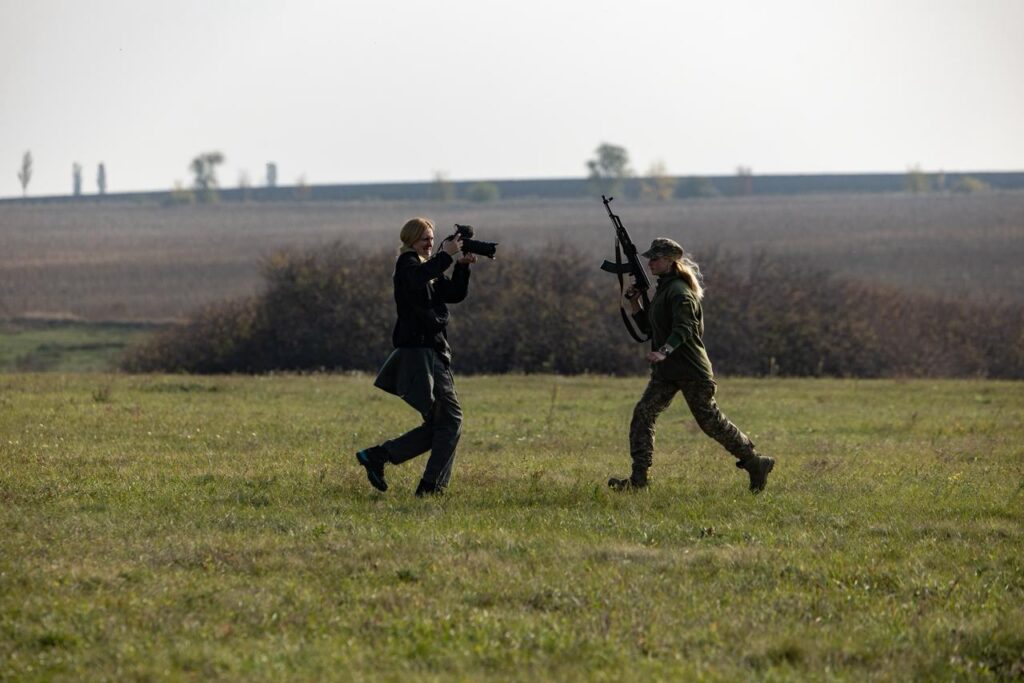
To reach some positions, you have to walk five kilometres carrying your gear — body armour, a backpack with a camera, all your equipment. It’s endurance work.
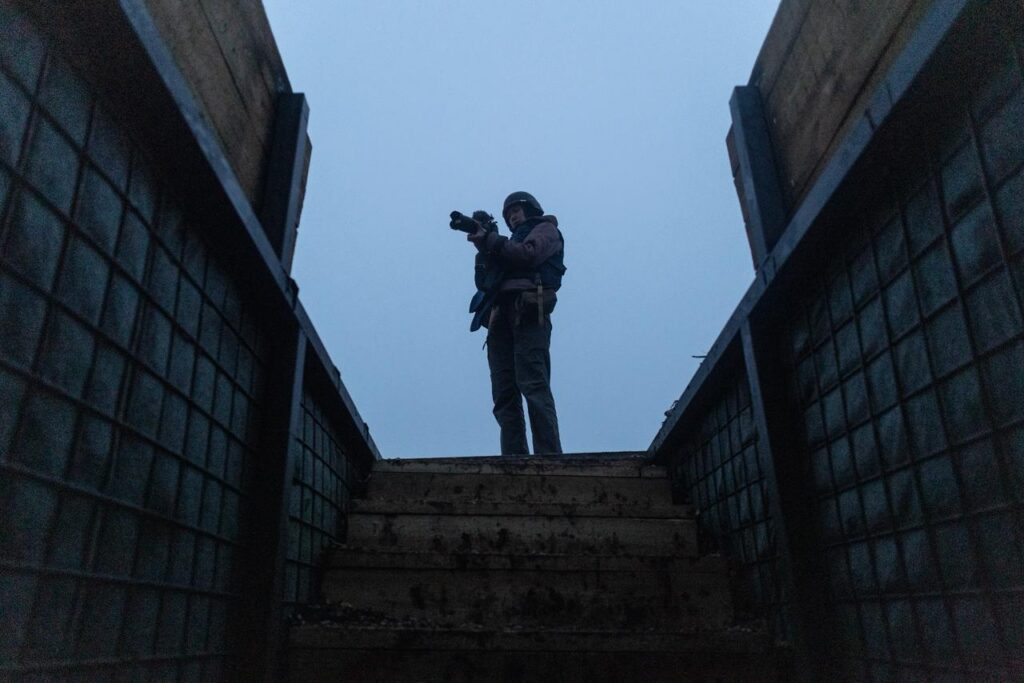
You can’t say halfway through, “Sorry, I’m tired.” You have to stay focused, alert, and physically strong — and follow instructions.
There are no universal rules. You need internal resources to manage your mental and psychological state.
Inner Compasses and Work Rhythm
— Do you have inner markers for when to keep going and when to pause?
— I constantly listen to how I feel. I can’t work until I’ve eaten — hunger kills focus, makes me sleepy and cold.
I’ll wake up earlier just to eat properly — and then I can handle the entire day.
You shouldn’t take on ten topics at once. That won’t produce a meaningful story. I’m interested in long, in-depth topics that require time and trust.
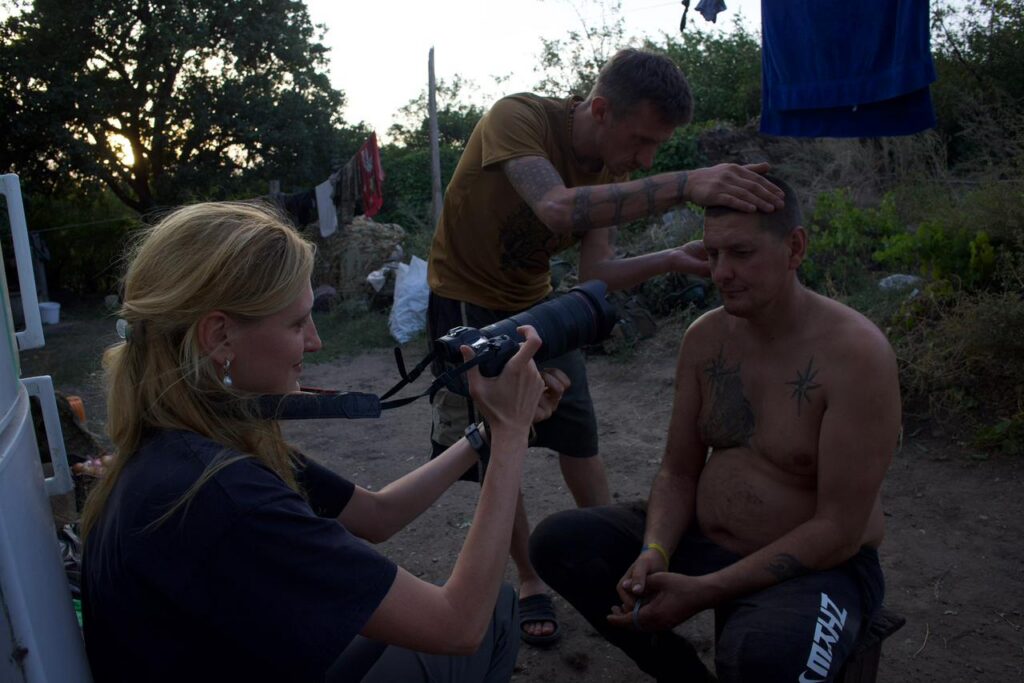
I always build in extra days as a buffer — for weather, health, or unforeseen changes.
Long-Term Projects, Ethics, and Boundaries
— Which story stayed with you most because of the process itself?
— I’ve been working for a long time on former prisoners who signed contracts with the Armed Forces of Ukraine. It’s my longest project — a year and a half.
I always have the energy and motivation to return to it.
No matter how much I work, it feels like I still don’t fully understand anything. Everything repeats itself; only names, call signs, and cities change. But each time I learn something new.
You can never convey through images what actually happened to you. An FPV attack — we hid in bushes. Or a car crash.
And then you ask yourself: is this game worth your life?
I know I physically can’t walk ten kilometres. I won’t put others at risk if I’m not physically prepared.
— Have you ever decided not to publish certain material?
— Of course. I have many videos and photos that were never published.
You must think about the people who trusted you. No image is worth a soldier’s life.
You film everything, but publish only after checking: “Have you left this house? This position?” Someone else may have moved in. You wait and verify. Feeding your ego is not journalism.
— Which topics are hardest for you?
— Infantry. You can’t film their work. You can accompany them or meet them, but they choose the hardest path.
You have to find the right language, think about ethics, about people, about what you want to tell.
Sometimes you want to go, but you realise it would put them at risk, so you stay behind.
Recovery, Dignity, and Composure
— What helps you recover after difficult trips?
— Coming home, taking a shower, cooking good food, watching a film, meeting friends — but also maintaining discipline.
A routine: vitamins, proper meals, walks, travel, and good sleep. When I don’t let myself sink into procrastination, I recover faster.
— What does dignity mean in journalism during war?
— If you’re not fighting, you work honestly. Be honest with yourself and with your work, and believe in what you do. Every profession matters if done well. We’re given time that we shouldn’t waste. We must live with dignity and use the time given to us by the military.
— What mattered most to you in projects created under risk?
— To explore the topic without surrendering to emotions. Stay composed, remember why you came. Follow intuition — but in moderation. Otherwise, emotions can lead you too far. We often don’t have time to process what’s happening. Staying focused is essential.

Take Care of Your Insurance
The Association of Independent Regional Press Publishers of Ukraine (AIRPPU) offers journalists working in dangerous regions the opportunity to obtain life and health insurance. This is part of the International Insurance Fund for Journalists (IIFJ) initiative, implemented in partnership with Ukrainian and European organisations.
The terms of free insurance are outlined here.
Media professionals working in the Kherson, Zaporizhzhia, Sumy, Mykolaiv, Donetsk, Luhansk, Odesa, Kharkiv, and Dnipropetrovsk regions, as well as in border areas of Kyiv and Chernihiv regions, are eligible to apply.
The project is implemented by the Association of Independent Regional Press Publishers of Ukraine (AIRPPU) together with partners. The initiative is part of the Voices of Ukraine program, coordinated by the European Centre for Press and Media Freedom ECPMF. Voices of Ukraine is implemented within the Hannah Arendt Initiative and funded by the German Federal Foreign Office.