


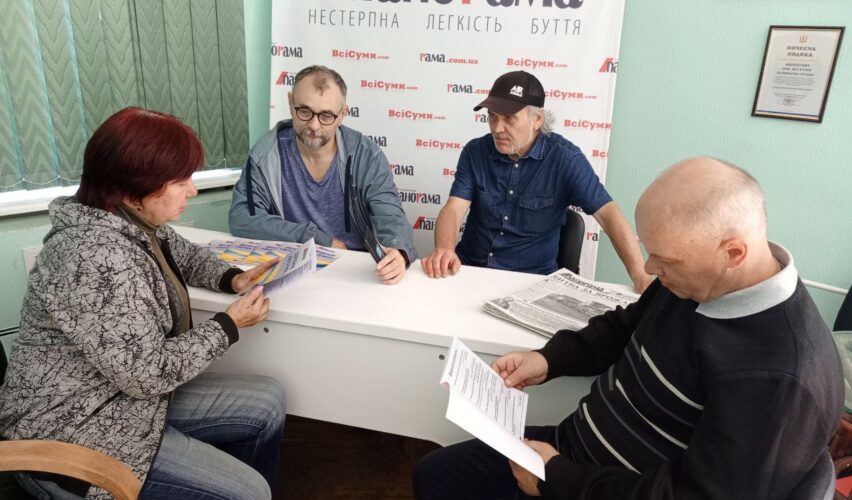
In Sumy, news coverage is often interrupted by air raid sirens, editorial plans are constantly adjusted due to the security situation, and journalists simultaneously act as informers, explainers, and a source of support for their community. In such conditions, newsroom work goes beyond journalism — it is about responsibility to people living near the border who rely daily on verified, accurate, and useful information.
As part of the project International Insurance Fund for Journalists, the team of the Association of Independent Regional Press Publishers of Ukraine (AIRPPU) spoke with Yevheniia Hrytsyna, Director of «Vsi Sumy Panorama-Media» LLC. She emphasizes that for the newspaper «Panorama», operating in a border region, its mission during the war has evolved from purely informational to one of public service and informational resilience. In times of full-scale war, media becomes a target for manipulation. The mission of «Panorama» is to remain a platform for critical thinking, where facts are separated from emotions and propaganda.
Protecting readers from disinformation
— We support the spirit of the Sumy community. Media acts as a «glue» that holds society together, preventing hostile narratives from spreading despair or division, and our mission here is to support identity. In border areas, where the enemy constantly spreads fakes about «offensives», «evacuations», or «cities being abandoned», our main task is to be a trusted source. Today, security is not only about protecting data, but also about protecting the reader from disinformation, — she says.
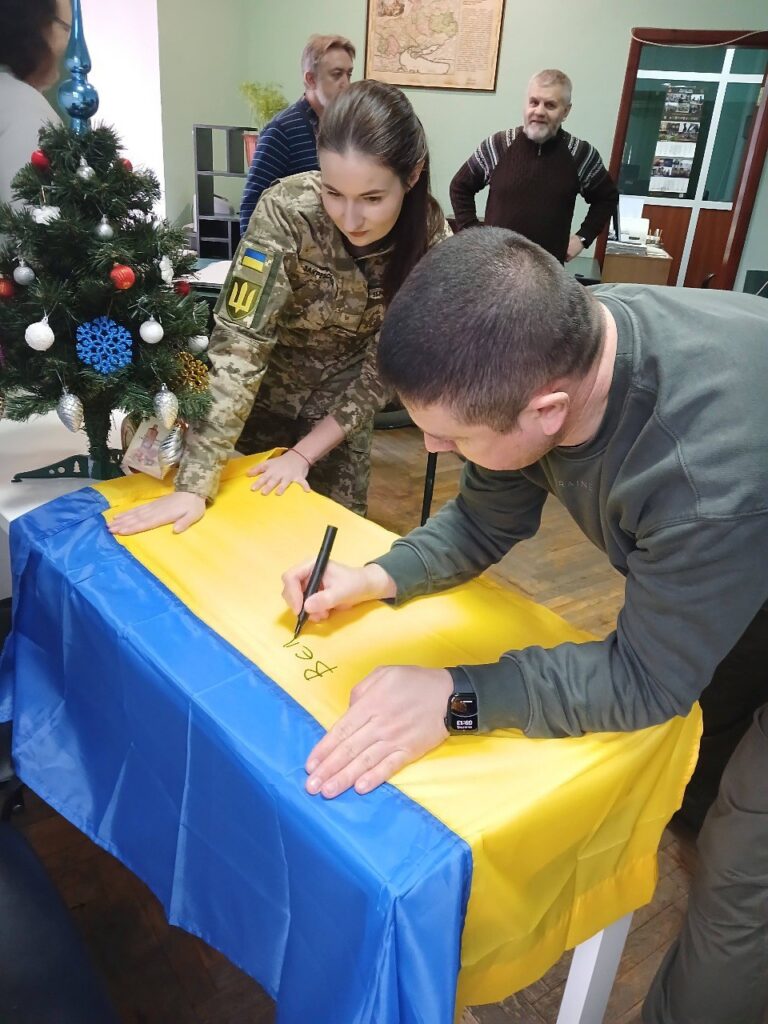
Over the past four years, the media outlet has undergone numerous transformations, primarily in terms of staffing. In the very first hours of the full-scale invasion on February 24, 2022, Sumy, like much of the region, fell under occupation. As a result, it became impossible to publish, print, or distribute the newspaper. Its publication resumed in May 2022, after the Sumy region was fully liberated from Russian forces, the director explains.
At the same time, the website continued operating without interruption — editors worked from home, publishing news, informing audiences about the current situation, and providing guidance on personal safety. During that period, many newsroom staff left the city through «green corridors» to safer regions, including abroad. It was not possible to retain the full team, and the number of employees decreased. Today, the newsroom has six full-time staff members and regularly works with freelancers and contributing authors.
After the de-occupation of the Sumy region, the newspaper resumed publication, though with fewer pages and a smaller print run.
— The main topics of our coverage are the war, the security situation, stories about war heroes, volunteers, and internally displaced persons, who are numerous in Sumy despite its proximity to the border. At the same time, we remain a socio-political newspaper in the full sense of the term — we cover city life, cultural, sports, and artistic events, publish interviews with interesting and well-known individuals, including military personnel, and produce exclusive analytical, archival, and historical materials. Despite constant air raid alerts and strikes, most of the newsroom works from the office, and the workflow is well established. Remote work mainly applies to website editors, — says Yevheniia.
A daily survival test
She has been leading the media outlet since 2023, so the decisions that must be made in wartime conditions are, in effect, daily tests of survival.
— Advertising revenues have dropped dramatically — they are almost non-existent, as many businesses have relocated from the city. We had to shift to «digital tracks», relaunch two of our newsroom’s websites, while preserving the print edition, change our business model — moving away from traditional revenue streams and focusing also on grants, donor support, and reader contributions. We also introduced internal editorial restrictions regarding the publication of information about the Armed Forces of Ukraine, the consequences of shelling, and much more, — she explains.
In addition to financial and staffing challenges, there are, of course, constant security risks. According to Yevheniia, the city of Sumy is almost daily and nightly under attack by various types of drones, with occasional missile and guided aerial bomb strikes as well.
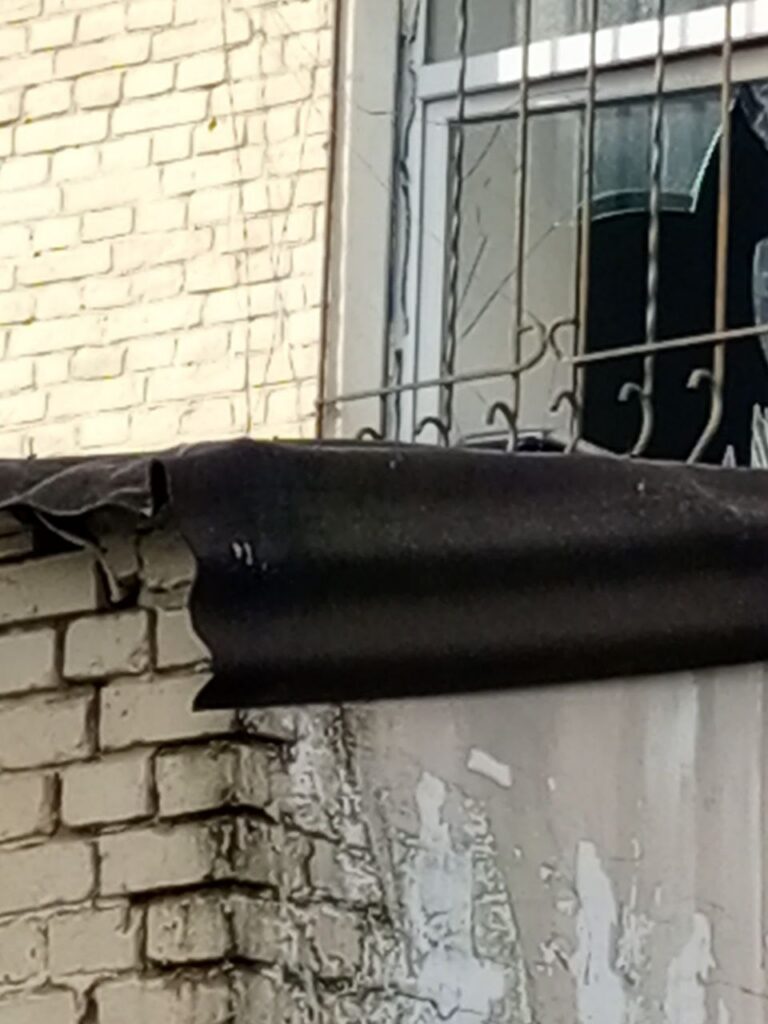
— On February 17, Shahed drones attacked an administrative building located just 20 meters from our newsroom — twice. Several windows in our office were shattered, and there were power and heating outages. Fortunately, no one was physically injured, but people experienced significant stress, — the director says.
The newsroom does not have the capacity to travel on assignments closer to the border — due to a shortage of journalists, difficulties in obtaining permits for such trips, and the constant danger. The media team is not insured, but following recent events — including the strike on the nearby administrative building and the damage to the newsroom — they have begun to seriously consider it.
Notably, applications for insurance can be submitted via the website of the project International Insurance Fund for Journalists.
Information about «strikes», impact locations, and destruction is sourced by «Panorama» from official channels, with full adherence to security considerations, the team assures.
Humanity as protection against burnout
The border areas of the Sumy region are largely devastated — with destroyed settlements and scorched land constantly under fire from various types of weapons. It is physically exhausting and psychologically overwhelming. And it is precisely media professionals who help people access verified information and maintain a sense that life continues.
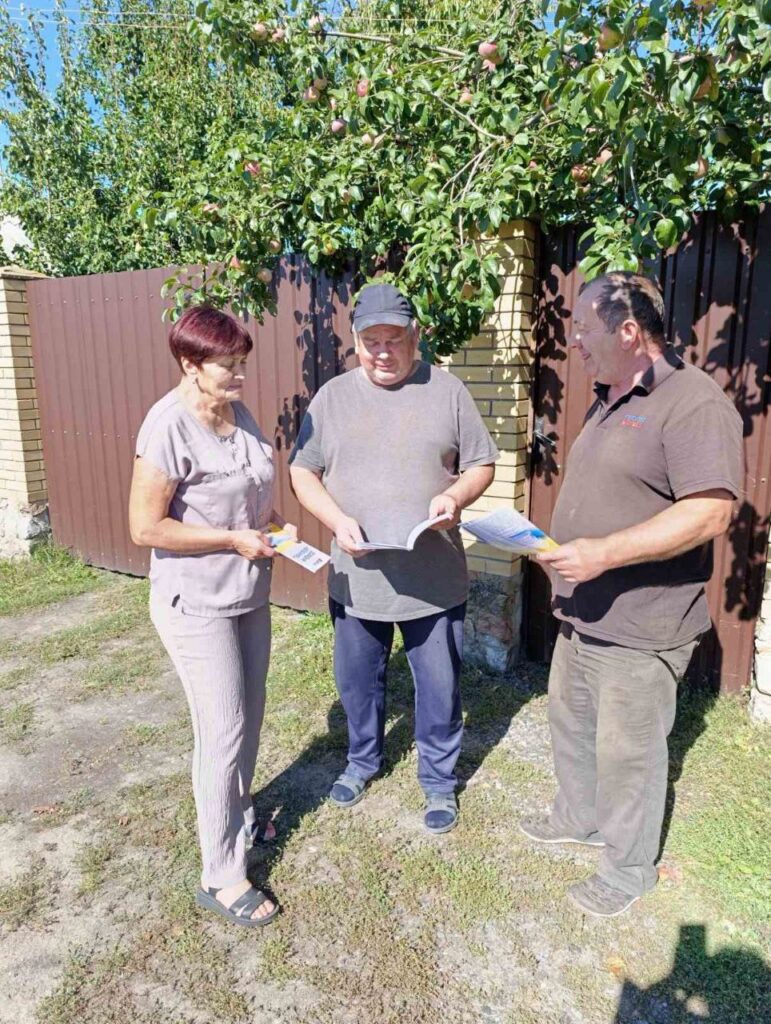
Where do journalists find the strength to keep doing their work? Paradoxical as it may sound — in everyday routines and communication with colleagues.
— It is very important for us that we work mostly from the office, which gives us the opportunity to communicate — both professionally and on a human level. We often spend time together with our families, try to support one another. We also have a great team, so misunderstandings or conflicts are rare, and if they do occur, they relate only to work matters. We can have lunch together, drink tea or coffee, or simply talk about life. We always celebrate colleagues’ birthdays and other special occasions, and gather for holidays — Christmas, New Year, and so on. These are the simple recipes of our newsroom life, — says Yevheniia Hrytsyna.
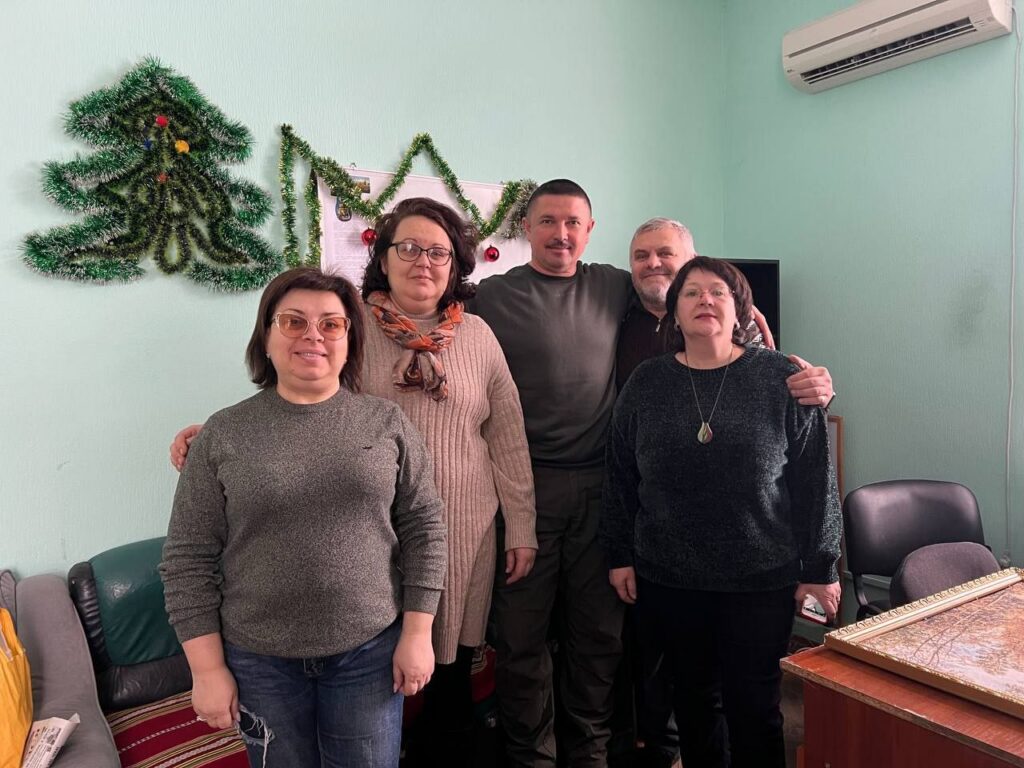
Resilience for a newsroom today is the ability to maintain professional identity and operational continuity despite external shocks, she continues.
— In human terms, it is about support across all areas. It is important that people understand the purpose of their work, as shared values become the main resource in times of crisis. Financially, resilience means maximum diversification. It is about moving away from dependence on a single source of income toward a hybrid model that combines grants, advertising, and reader support. In editorial terms, it is about combining technological autonomy with a commitment to standards. Resilience is reflected in the ability to work without connectivity or electricity, to quickly adapt formats to audience needs, and to maintain a strong filter of critical thinking, — she explains.
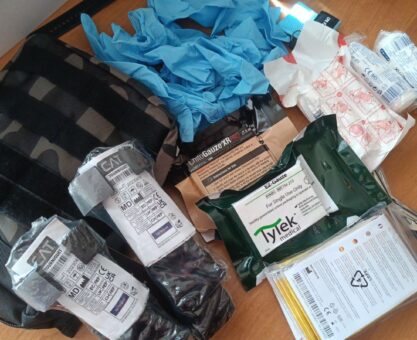
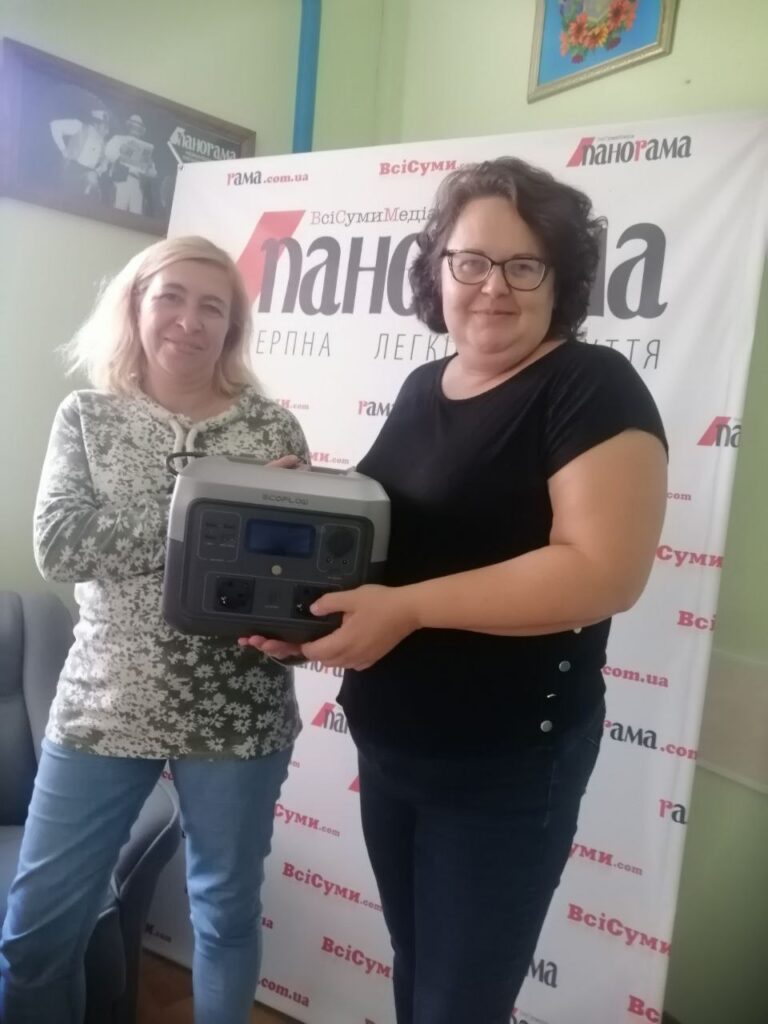
Notably, the «Panorama» newsroom recently received support from the Association of Independent Regional Press Publishers of Ukraine (AIRPPU) and its partners within the Emergency Support Programme. If you need assistance, you can apply here.
A focus on standards and innovation
According to the director, these are the key editorial priorities that remain unchanged for «Panorama»:
— Adherence to standards and fact-checking. In times of crisis, speed often becomes the enemy of quality. Accuracy remains the priority: it is better to publish information ten minutes later, but be confident in its reliability.
— Commitment to readers’ interests. This means choosing topics that are vital for audiences: security, social support, legal assistance, and explaining complex processes.
— Ethics and sensitivity. War imposes special responsibilities in how we portray tragedies, communicate with victims, and cover the work of the military. The principle of «do no harm» becomes the number one priority.
— Institutional memory. This includes preserving archives, values, and a unique editorial voice. Resilience means the ability to continue the story without losing the mission that existed before the war.
— Openness and trust. In difficult times, it is important to speak honestly with readers about how the newsroom operates, where its funding comes from, and what principles guide editorial decisions. Trust is built on transparency. A key development priority for this year is gaining knowledge and skills in working with AI. Learning to use artificial intelligence is important for «Panorama», as it allows us to automate routine tasks and free up resources for our social projects, — she adds.
A front page about Victory
How does the newsroom see itself in a few years?
— My «Panorama» will be a space where veterans find support, where families of Heroes feel the city’s gratitude, and where every resident knows their voice is heard. With the integration of AI, the newsroom will become faster and more modern, while preserving the same warm, human-centered uniqueness that cannot be replaced by algorithms. And on the front page — in large letters — there will be the story we are working for today. It will be a story about the end of the war and Ukraine’s victory, — Yevheniia shares.
In conclusion, she wishes fellow journalists the strength to keep going and endure these turbulent times.
— Take care of your life and health, because your work is needed for Ukraine both now and after victory. A critically important shift for Ukrainian media today is the transition from survival to sustainability through cooperation with the community. This means transforming newsrooms into social hubs that not only inform, but genuinely help their audiences solve problems during the war and in the future. This model is especially relevant for small local media like ours, — she concludes.
We hope this story inspires you to develop your own media — or the one you work in. And if you are a reader, choose trusted sources and support your local media. At the same time, the team of the Association of Independent Regional Press Publishers of Ukraine (AIRPPU) continues to do everything possible to support and strengthen independent media across the country, already reaching more than 150 newsrooms.
Follow our pages so you don’t miss important updates.
***
The International Insurance Fund for Journalists project, organized by the Association of Independent Regional Press Publishers of Ukraine (AIRPPU), is part of the Voices of Ukraine programme, which is included in the SAFE programme coordinated by the European Centre for Press and Media Freedom. The Voices of Ukraine project is implemented within the Hannah Arendt Initiative.