


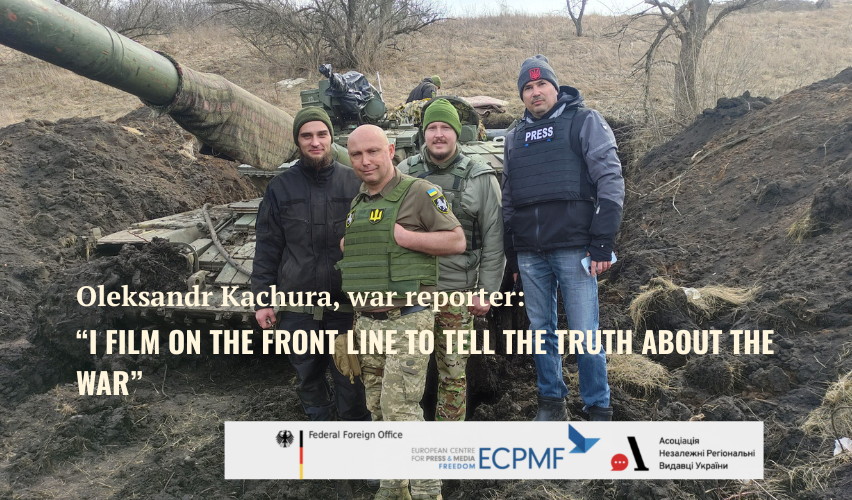
Oleksandr Kachura, a war correspondent, works at the epicenter of the war.
He is 35 years old, and for the last nine years, he has spent his time alongside the military, in destroyed cities, at positions where whistling bullets and incoming fire are everyday realities. Oleksandr is a war correspondent, reporter, and producer for foreign film crews.
His job is to be close to real events, even when it is dangerous.
The path to journalism and the beginning of the war
Oleksandr is from Donetsk, and he used to work in business. But 2014 turned his life upside down:
— In 2014, I left occupied Donetsk for Mariupol. There I began working in the press service of the State Emergency Service, and later as a war correspondent for “Eastern Front”.
He worked at the Donetsk Regional Military Administration, filmed reports for foreign media, and documented the crimes of the occupiers in frontline towns and villages.
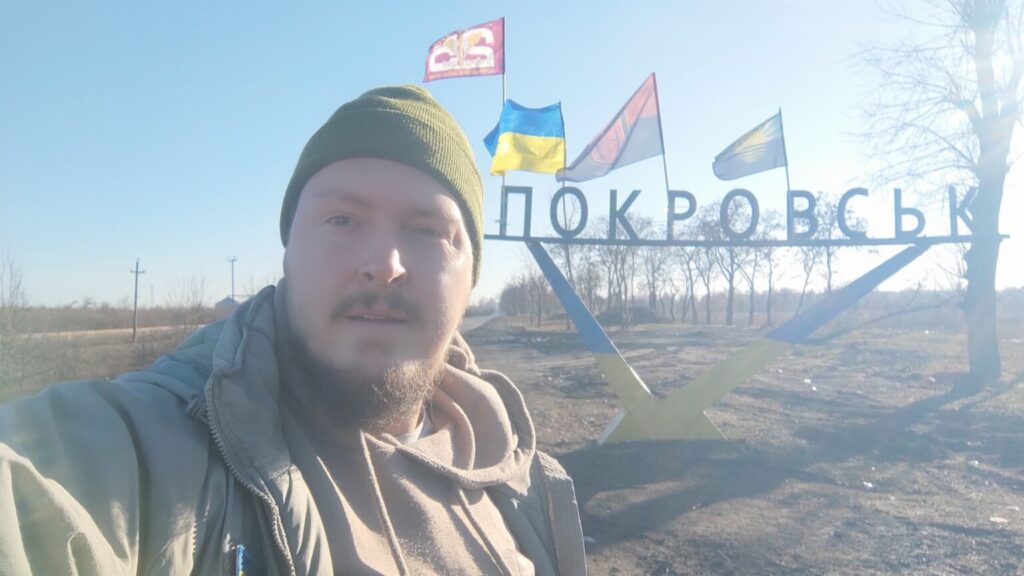
The full-scale invasion only intensified his work:
— After February 24, the scale changed. I continued working as a correspondent and as a producer for foreign TV channels. I believe it’s important to convey to the world what is happening in Ukraine, what our people are going through, the journalist emphasizes.
Documenting the war: Bakhmut, Bohorodychne
Today, Oleksandr creates livestreams, works on new reports, and gathers material for a major documentary film about the Donetsk region, about Donbas.
Before this, five documentary films were released on the Hungarian TV channel ATV: about Bakhmut, about the village of Bohorodychne, and about Chasiv Yar.
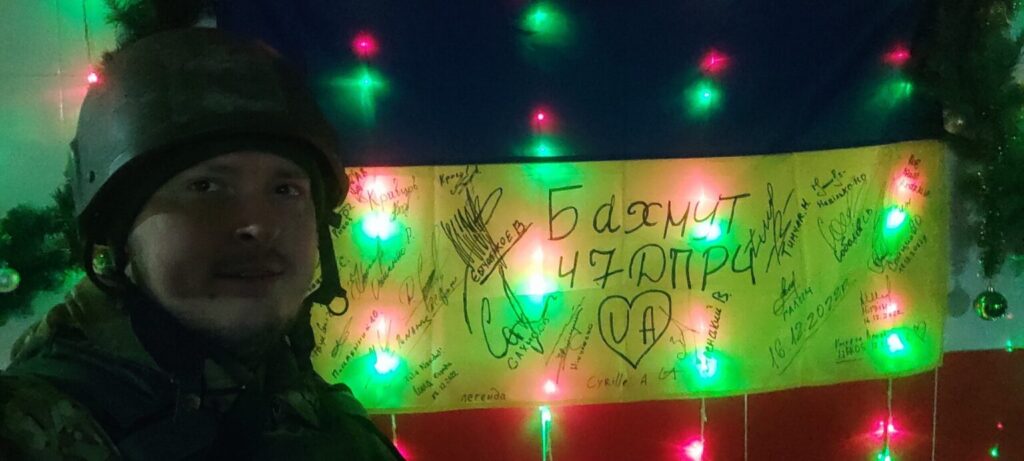
All of them were filmed directly on the frontline — under the sounds of artillery, in conditions where one has to move through territory littered with destroyed equipment.
— The first film is about Bakhmut. The next two episodes are about the settlement of Bohorodychne, which had been under Russian occupation for more than three months. The Russians destroyed all the houses in the village, the infrastructure, shops, the church, and the roads. But Bohorodychne stood in the way of the occupiers and stopped the Russian onslaught. As a result, the occupiers were unable to capture Sloviansk or Druzhkivka.
In his reports about Bohorodychne, Oleksandr told how people tried to survive under shelling, about the shootings of locals.
— All of this is in my work.
Chasiv Yar — a true fortress
Last year, two episodes of a documentary about Chasiv Yar were released. It is the next populated area after Bakhmut and has become a real fortress. Even now, fighting continues there, and Ukrainian forces are still partially present in the city.
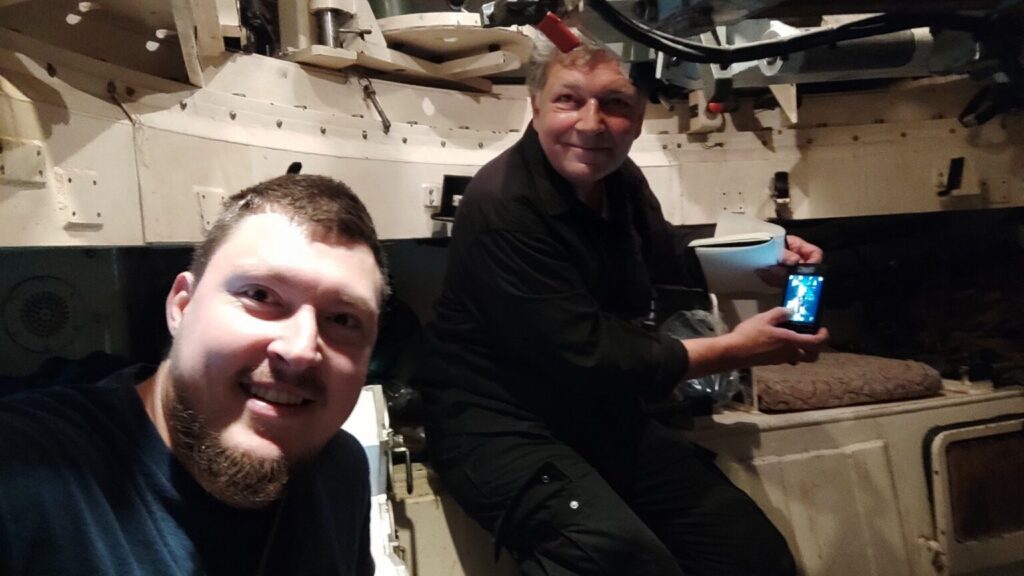
Chasiv Yar became one of the most difficult locations. Oleksandr Kachura speaks separately about his work there. He recalls how he first entered the city together with the head of the military administration:
— We traveled in an armored vehicle with electronic warfare systems, but could only reach the outskirts. We filmed a little, and later that night I entered “Chasik” with the military. It was real action. I saw a completely different picture: everything that had been intact a few days earlier was destroyed. Even the road to the city had become more dangerous: smashed cars on both sides, completely burned-out fields. You drive and don’t know if you will return.
Faces of war
The war correspondent has many stories in his collection. But the one that struck him the most was the story of a man named Serhii, whom he met in Bakhmut. The man, who appeared to be about 40, sought help.
— He approached me and asked: “Are you military?” Then he took off his hat, and it was pure horror. His entire head was smashed, covered in blood. We provided first aid and brought him to a “Point of Invincibility,” where there was communication — volunteers and the police had to be called.
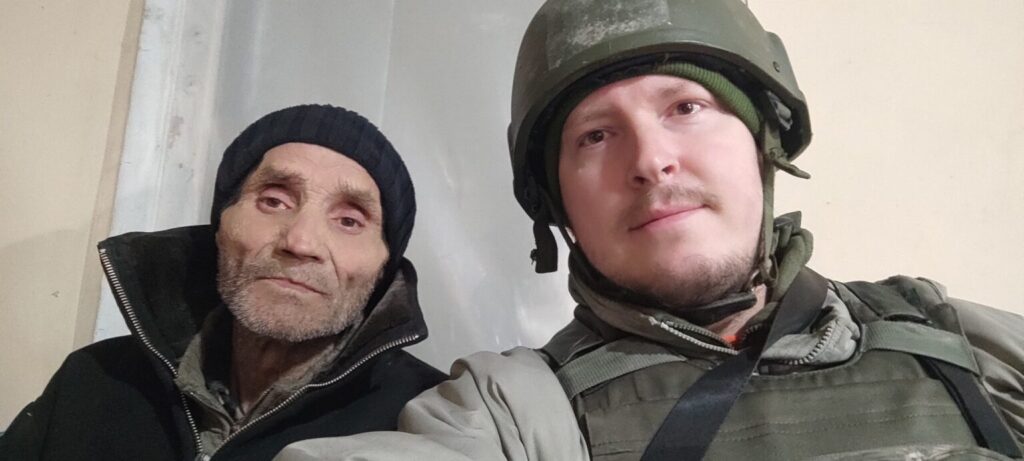
Serhii said he had stayed in the city because of his sick mother. When the woman died, he buried her in his own garden. He said he simply had nowhere to go. During prolonged street fighting, he hid in a basement. There, Russian Wagner fighters spotted him and threw a grenade inside, without asking whether anyone was there. With a severe head injury, the man managed to cross the river to the side where Ukrainian troops were located, and there he met Oleksandr Kachura, who at that moment was working with foreigners.
— With a group of people preparing for evacuation, Serhii first left for Sloviansk, where stitches were put on his head, and then went to western Ukraine. He kept repeating that he had nowhere to go. He had no family. So this story remains in my memory…
“Every trip is a lottery”
Each such trip is a direct threat to life. During filming, Oleksandr has repeatedly found himself in situations where seconds decided everything.
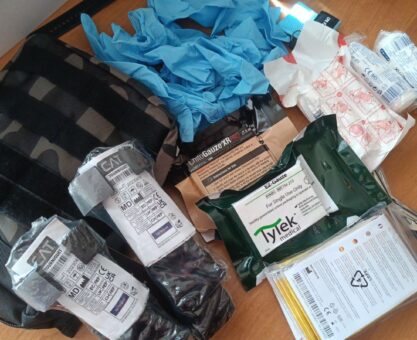
— You sit in a car and feel like you’re in a submarine moving through darkness. The air is thick, tense. Inside — silence, outside — explosions. A first aid kit at hand. A helmet on your head. A bulletproof vest on your body. And the thought that won’t leave you: will you be able to return or not? Will you make it or not? What if today is that very day?
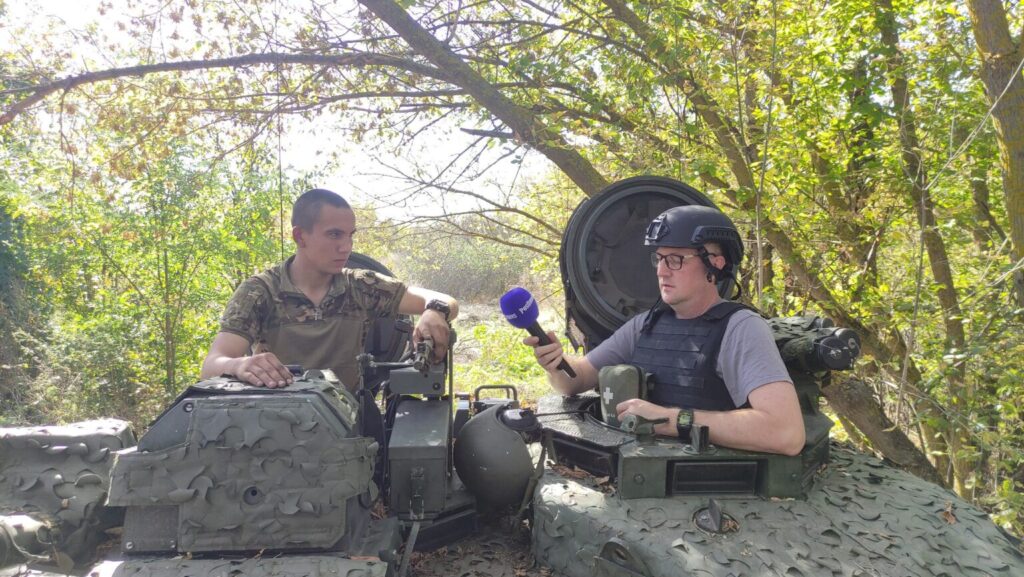
The journalist knows how colleagues died nearby. Knows how they were hit during filming. Knows that no protection guarantees a return. But he still goes where it is extremely dangerous.
— I rely on fate, on God — we all walk under Him. You never know who will draw that unlucky ticket today — a drone, a shell, a fragment… It’s pure lottery.
Motivation is stronger than fear
Why do journalists continue to work where every day could be their last? Because information is also a weapon. It is an opportunity to counter Russian propaganda, spread the truth, and document crimes against civilians.
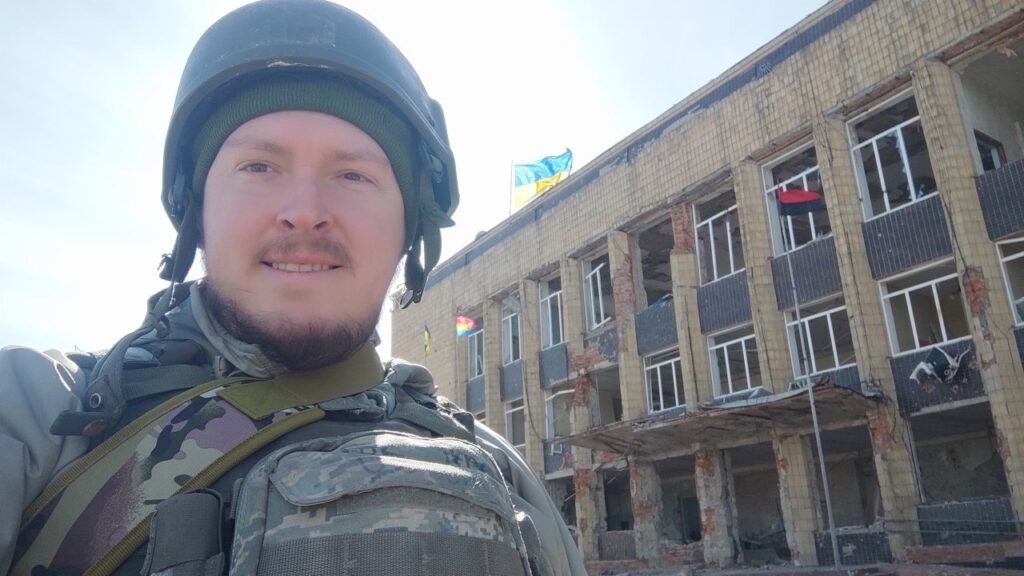
Oleksandr says giving up such work is impossible.
— For me, it’s probably a thirst to prove the truth to people so they won’t watch Russian propaganda, but will see with their own eyes what is happening. This desire justifies all the risks.
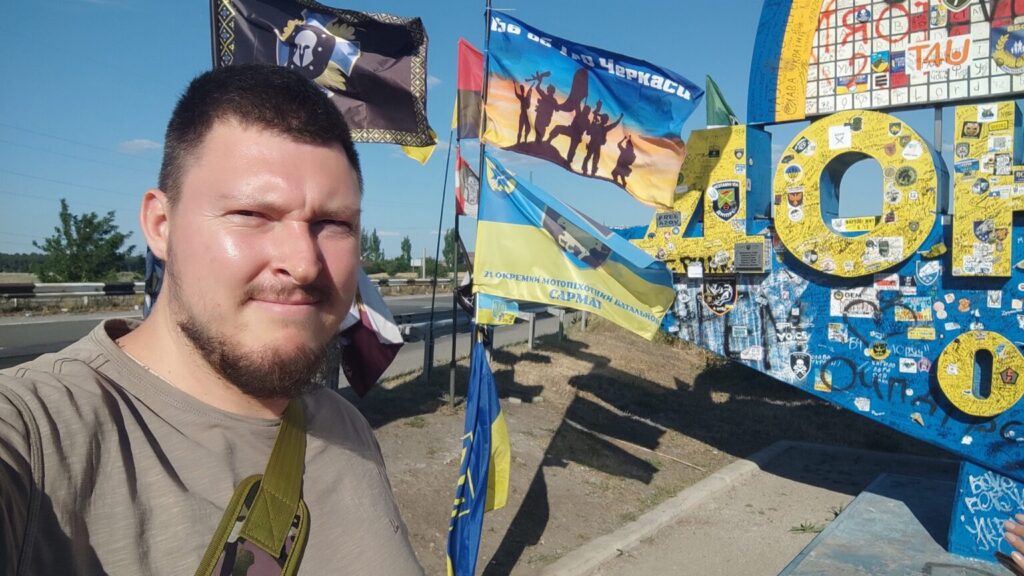
The journalist worked in the Donetsk region, in the Kharkiv and Kherson regions, and was in the Sumy region. He continues to travel to hot spots. He does this completely consciously.
— It’s worth admitting that we all live in our own micro-world. And when you arrive in the Kyiv region or western Ukraine, it feels like there is no war. I film so that people understand: the war is here, it is close, and we are all one whole. Not fragments of temporarily occupied or liberated territories, but one country in which we must live. We must show what Ukraine is going through. So that everyone understands that the war is not somewhere far away, but in our common home.
Insurance for journalists: why it must not be postponed
The war continues, and the media front is just as important as the military one. Journalists help the world see the truth. But they also need protection.
The Association of Independent Regional Press Publishers of Ukraine (AIRPPU) offers journalists working in dangerous regions the opportunity to obtain life and health insurance. This is part of the International Insurance Fund for Journalists (IIFJ) initiative, implemented in partnership with Ukrainian and European organisations.
The terms of free insurance are outlined here.
You can apply here.
Media professionals working in the Kherson, Zaporizhzhia, Sumy, Mykolaiv, Donetsk, Luhansk, Odesa, Kharkiv, and Dnipropetrovsk regions, as well as in border areas of Kyiv and Chernihiv regions, are eligible to apply.
The project is implemented by the Association of Independent Regional Press Publishers of Ukraine (AIRPPU) together with partners. The initiative is part of the Voices of Ukraine program, coordinated by the European Centre for Press and Media Freedom (ECPMF). Voices of Ukraine is implemented within the Hannah Arendt Initiative and funded by the German Federal Foreign Office.