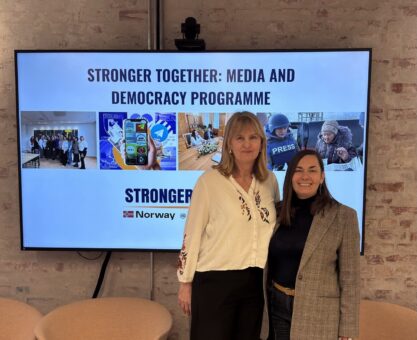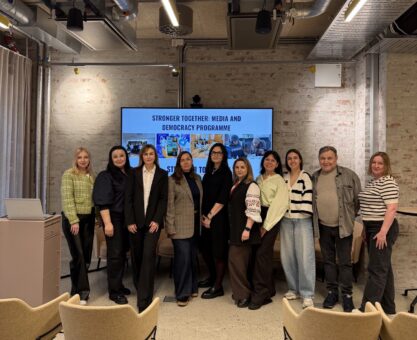



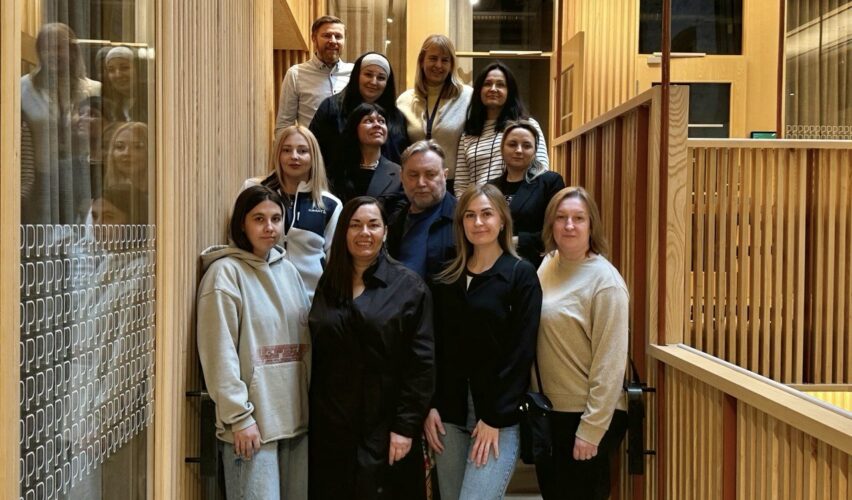
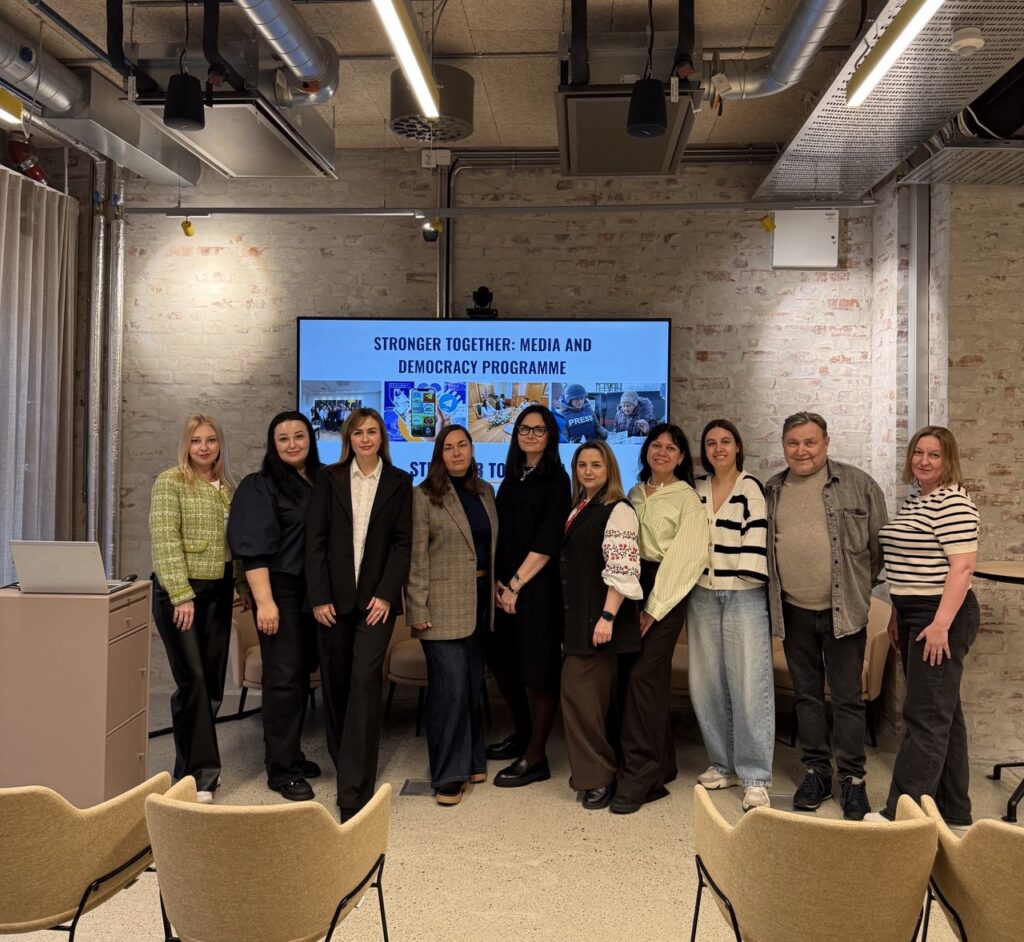
New connections, hands-on experience, and a rethinking of internal newsroom processes — these are the concise yet key takeaways shared by Ukrainian media professionals who spent the past week in Norway as part of the Norwegian Partnerships Programme, a component of the project «Stronger Together: Media and Democracy».
As a reminder, the programme was officially launched in Oslo, where representatives of four Ukrainian and Norwegian media outlets signed memorandums of cooperation. Read more below about how the meeting unfolded and the key annual results of the project «Stronger Together: Media and Democracy» presented by the partners.
Internships and hands-on experience
Over the course of several days, representatives of Ukrainian newsrooms worked directly within Norwegian media outlets, observing real-time editorial processes and discussing approaches to product development, audience engagement, monetization, and internal team dynamics. The visit was not only an exchange of experience but also an opportunity to better understand how local media can remain strong, resilient, and closely connected to their readers.
One of the key insights was how systematically Norwegian newsrooms work with their audiences — through content, services, apps, and direct engagement. At the same time, Ukrainian journalists had the opportunity to share their own experience of working during wartime, as well as their strategies for content development, subscriptions, and social media.
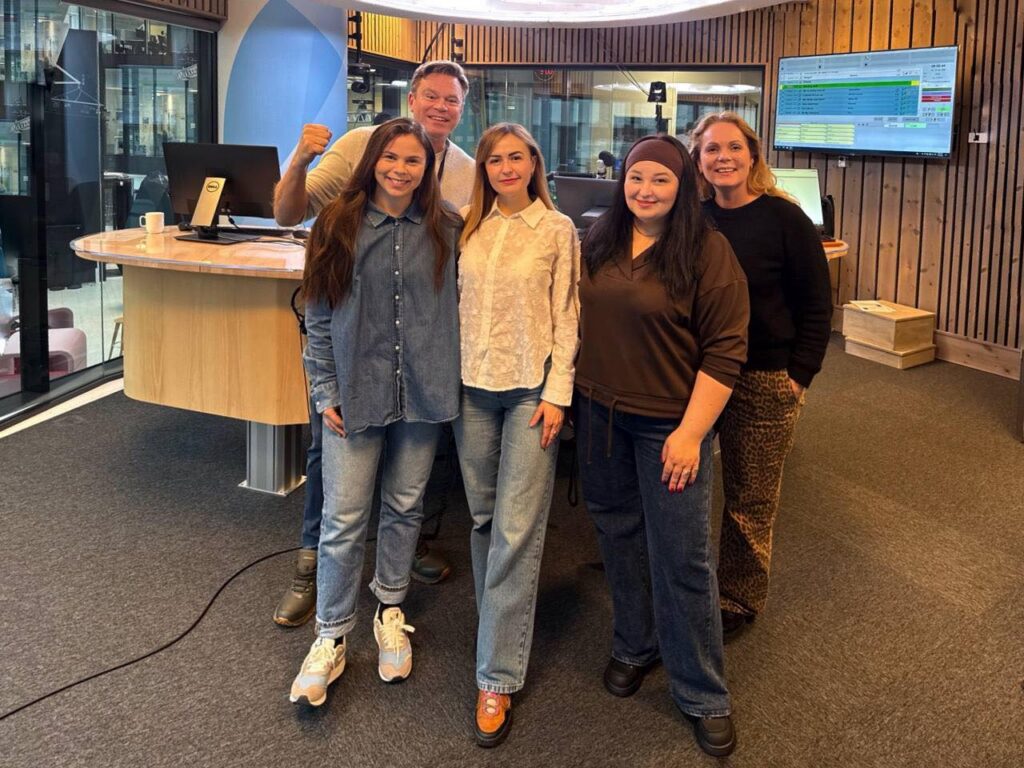
A separate highlight for participants was the opportunity to present Ukrainian media on the international stage. For example, the team of the «20 Hvylyn» newsroom from Ternopil appeared on local NRK radio in Bergen, where they spoke live on air about the challenges of working during the war, the transformation of journalistic workflows, and the predominantly female faces of their newsroom.
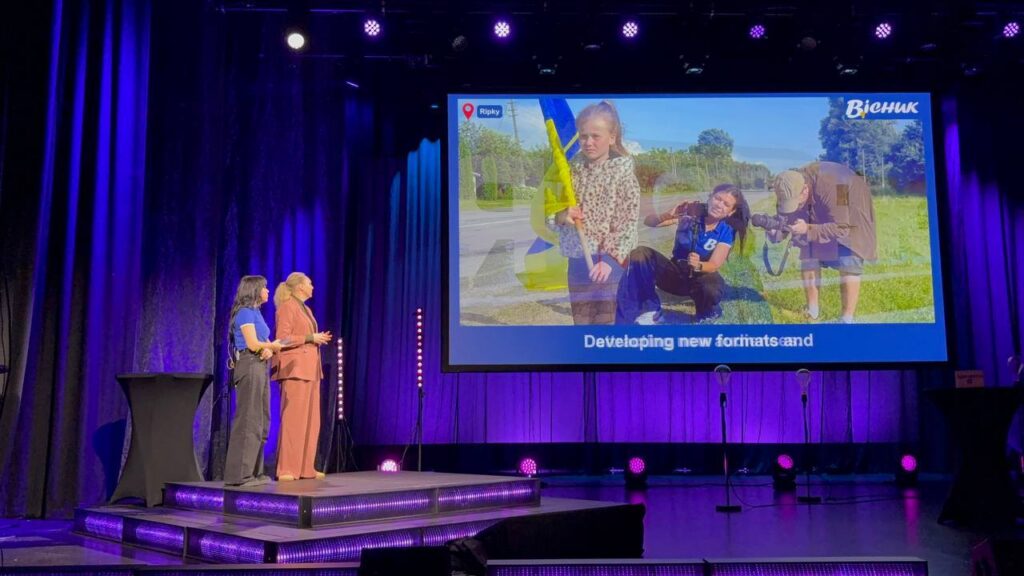
Meanwhile, participants from the Chernihiv-based media outlet «Visnyk Ch» attended a student festival in Arendal, where they spoke about working in a border region.
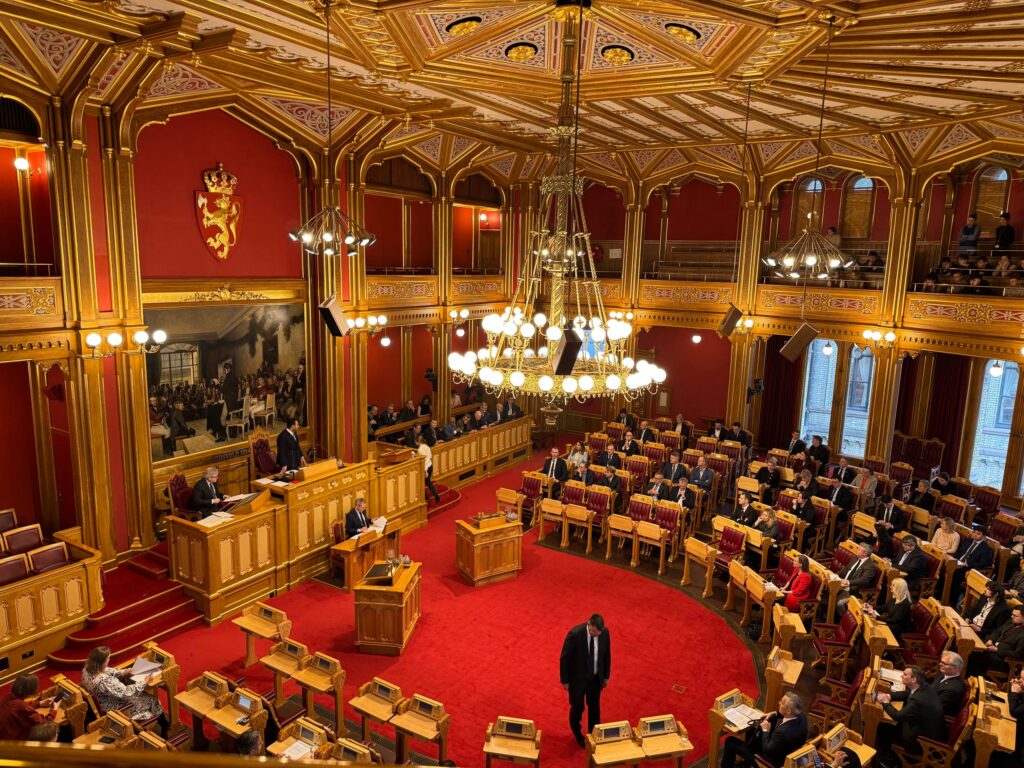
Meanwhile, representatives of «Kremenchutskyi Telegraf» got a behind-the-scenes look at the Norwegian Parliament and attended a meeting with representatives of the Ukrainian government.
A shared direction for moving forward
The hands-on experience of working inside newsrooms proved especially valuable — from content production and the use of AI in workflows to print design processes. Engagement with Norwegian society also highlighted the openness of people, their deep interest in Ukraine, and their willingness to better understand the realities of working during wartime.
Despite very different contexts — peaceful Norway and Ukraine living under the conditions of a full-scale war — both sides note that newsrooms share common challenges and goals. These include building audience trust, developing sustainable business models, and strengthening independent journalism.
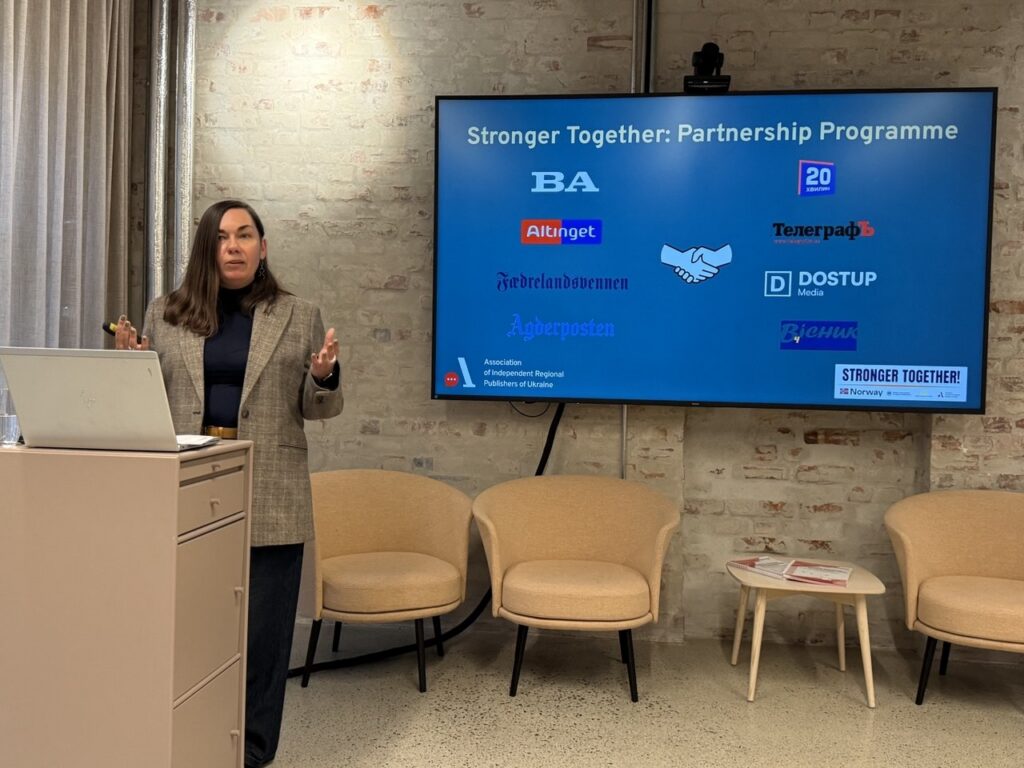
— This visit was not just a short-term internship, but the beginning of long-term cooperation between newsrooms. Ahead lies a year of joint work, exchange of experience, and the search for solutions that will help Ukrainian regional media become stronger, more resilient, and even closer to their audience. At the same time, Norwegian partners gain a deeper understanding of the Ukrainian context and the role of journalists in safeguarding truth and democratic values. In times of crisis, isolation is one of the greatest risks for independent journalism. Partnerships help overcome it — they create networks of trust, knowledge exchange, and long-term collaboration. I am grateful to our Norwegian partners who are ready to walk this path together with us, — says Oksana Brovko, CEO of the Association of Independent Regional Press Publishers of Ukraine (AIRPPU).
We also share brief reflections from programme participants that were voiced during the joint meeting in Norway. More insights from each partnership will follow soon.
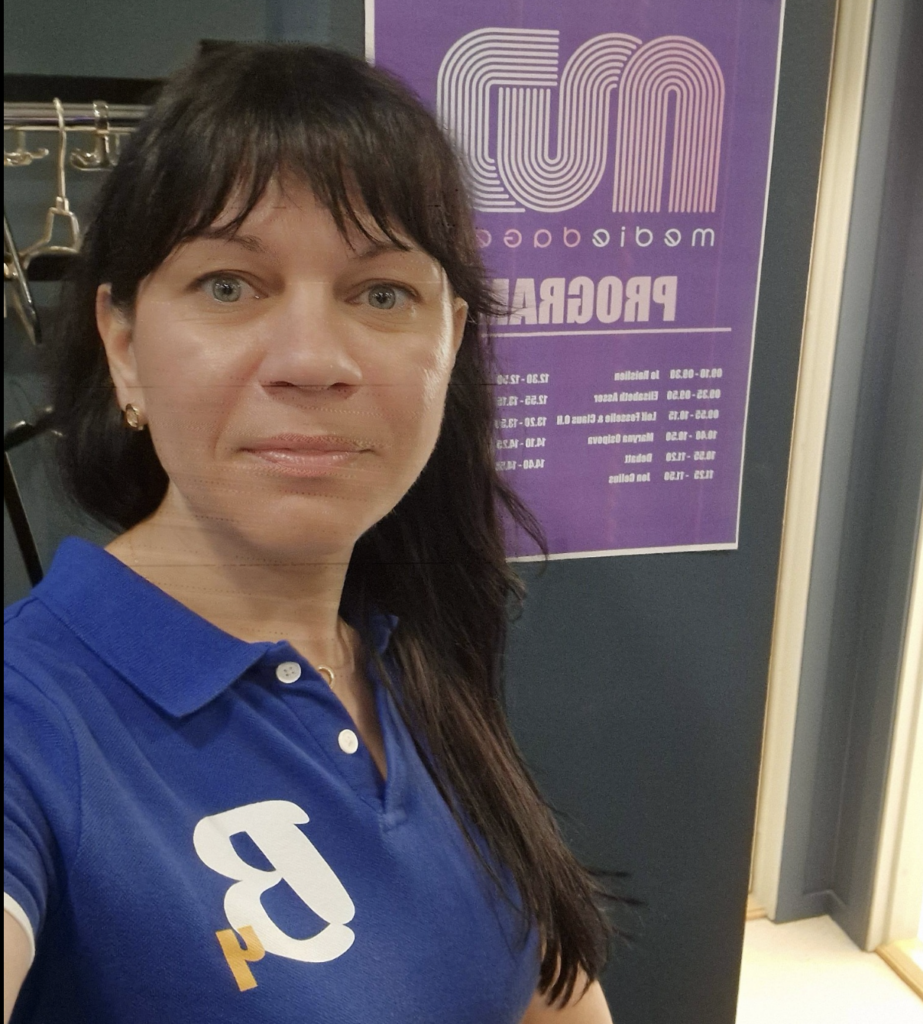
Maryna Osipova, Digital Editor at «Visnyk Ch», partner media of Agderposten:
— There were many meetings with the team and a very valuable exchange of experience, particularly in working with social media. We also had the opportunity to talk about Ukrainian media and the war during a journalism festival in Arendal. What impressed us most was how quickly they design their print newspaper. Now we are thinking about how to implement this experience in our own work.
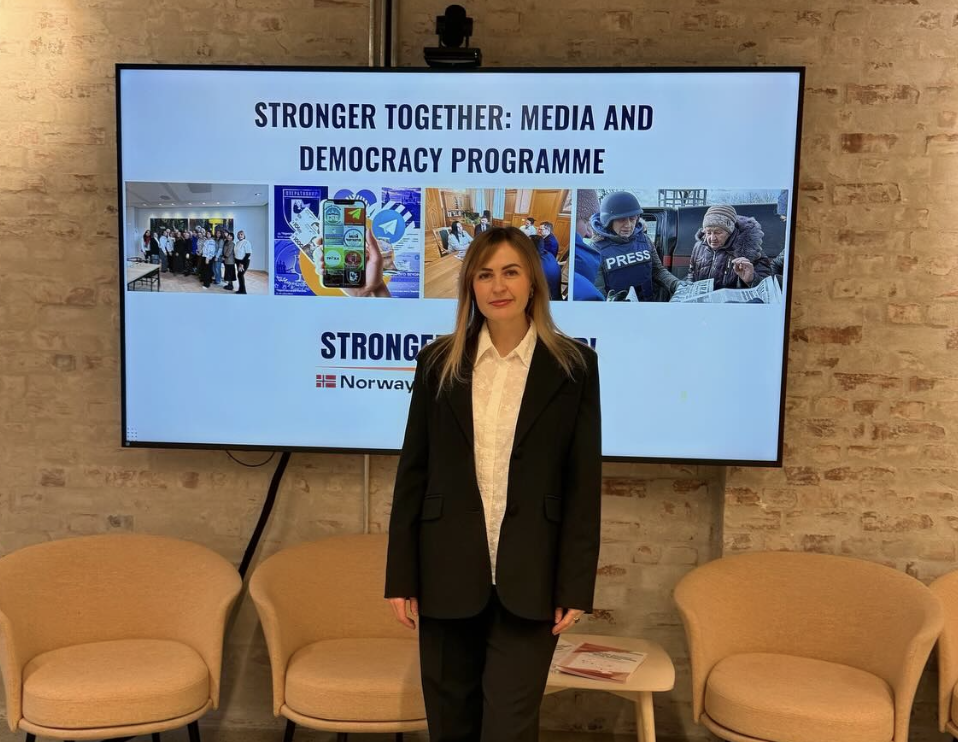
Nataliya Burlaku, Editor-in-Chief of the Ternopil branch of RIA Media, partner media of Bergensavisen:
— The Norwegian media outlet BA feels very close to us: it is not just about news, but a platform where the audience lives together with the content — from service journalism to human stories and entertainment. What resonated most was the strong focus on local relevance, a data-driven approach, and the systematic use of AI in editorial workflows. For us, this is also about the next steps: we are considering bringing back the paywall, strengthening video formats, and integrating them more deeply into the newsroom’s work. There are also new ideas around additional monetization and better organization of daily processes. This is an experience that not only inspires, but gives a clear understanding of where to move next.
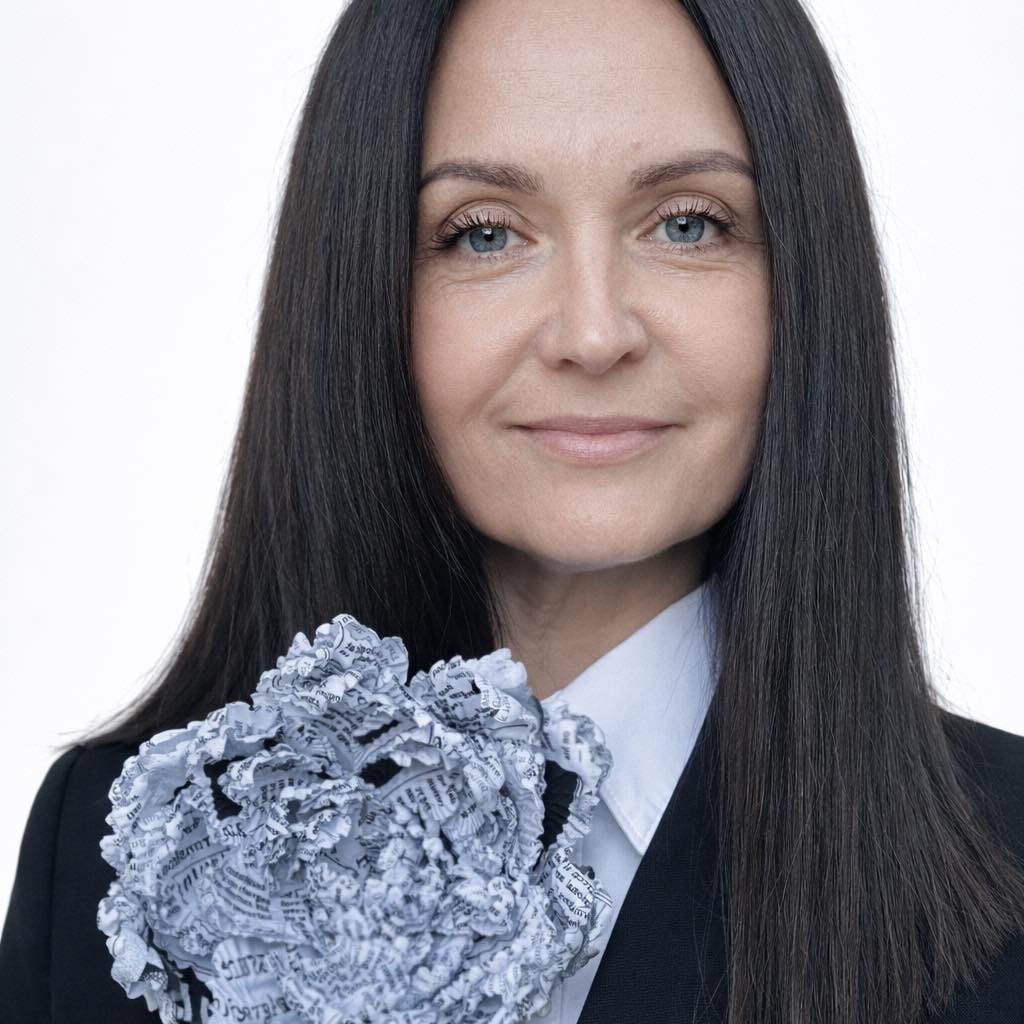
Lesia Lazorenko, Managing Editor of «Kremenchutskyi Telegraf», partner media of Altinget:
— Altinget stands out for how it turns expertise into its core asset — not just informing, but shaping the agenda through narrow specialization. Their subscription model is built on unique value: readers pay for deep, niche expertise that becomes a practical working tool. At the same time, the newsroom integrates debates as part of its journalism, positioning itself as a platform for public dialogue. This is a clear example of a “quality over algorithms” strategy, where reputation drives a sustainable business model. This is exactly the kind of approach — focused on niche expertise, investigative journalism, and community engagement — that we aim to adapt in our own work.

Oleksandra Ilchenko, journalist at «Dostup Media», partner media of Fædrelandsvennen:
— We worked every day, getting to know different departments within the team — and it was truly inspiring. We documented many ideas — there are so many of them, and many are вполне realistic to implement in our newsroom. We are already planning to work on these areas, particularly the development of social media and event-based formats. We are also thinking about how to adapt this experience in our work, especially in strengthening subscriptions as a foundation for media independence.
Follow our pages so you don’t miss anything important. We will continue sharing updates on the progress, ideas, and results of this collaboration within the Norwegian Partnerships Programme.
***
As a reminder, the programme «Stronger Together: Media and Democracy» is implemented by the Association of Independent Regional Press Publishers of Ukraine (AIRPPU) in partnership with WAN-IFRA and the Norwegian Media Businesses’ Association (MBL), with the support of Norway.