


During the 11th safety training in Lviv, participants received first-aid kits—what they contain, how to use them, and why a tourniquet must always be nearby.
Over two days, participants of the safety training, which took place on March 5–6, learned to provide first aid in critical conditions—when breathing and heartbeat stop, as well as in cases of massive bleeding. The training was conducted by certified instructors from the All‑Ukrainian Resuscitation Council.
This is not the first safety training within the program of the International Fund for the Insurance of Journalists. Earlier, we collected for you the first feedback from participants—their impressions of the BLS/AED and Stop the Bleed courses and of the organisation overall.
Read more: Safety Training in Lviv: Journalists Practiced Resuscitation and Stopping Bleeding
What is inside the first‑aid kit
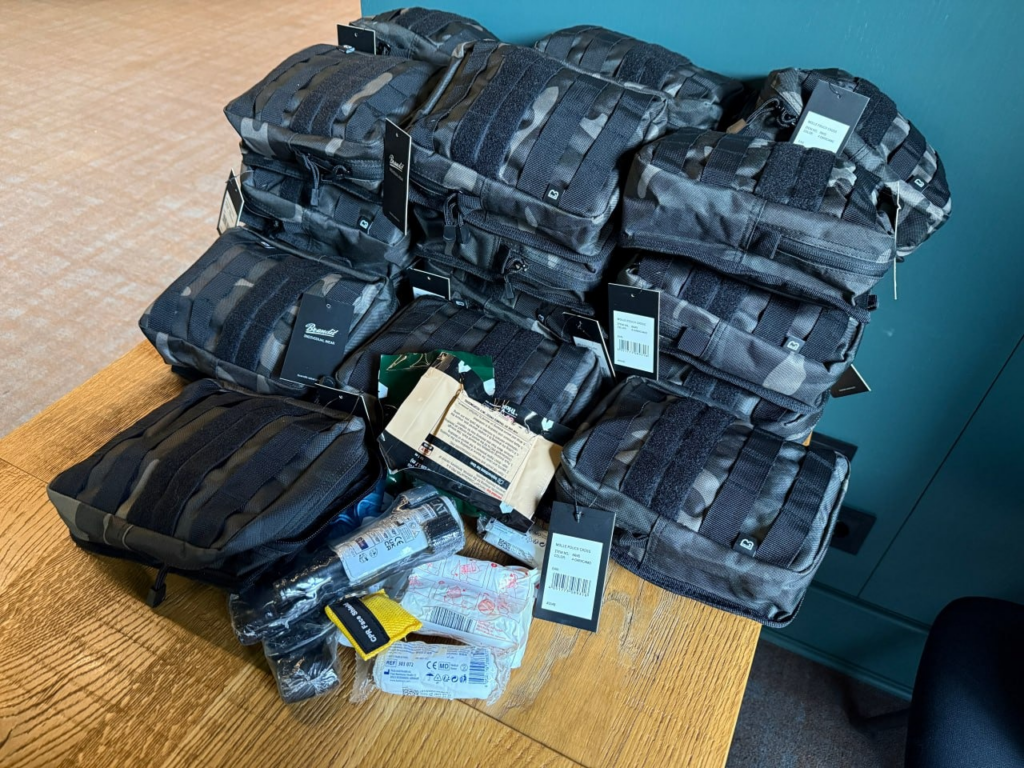
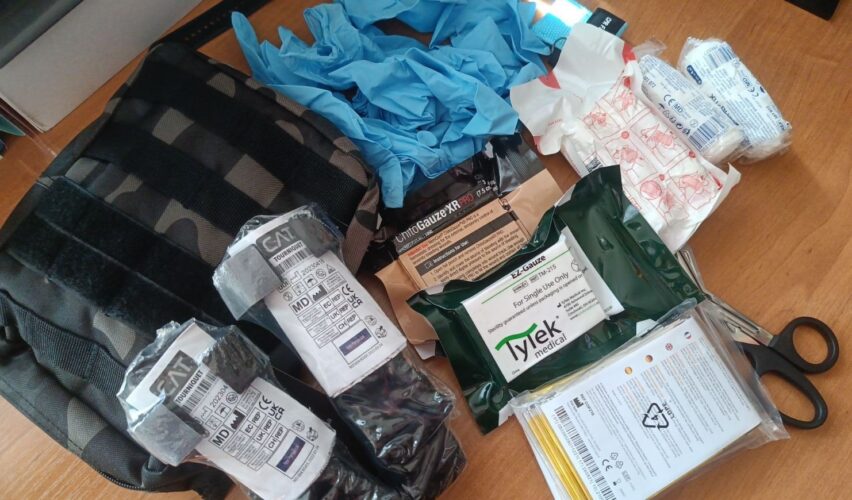
The first‑aid kits received by participants are equipped according to modern standards:
- Tourniquet: CAT Gen 7
- Hemostatic gauze: ChitoGauze XR Pro
- Sterile gauze for wound packing: EZ Gauze (TyTek Medical)
- Emergency bandage (Israeli bandage): PerSys
- Medical Elastic (compression) bandages
- Trauma shears
- Thermal blanket
- Latex gloves
- Pocket mask for CPR (on a keychain)
- Pouch
The instructors explain: each element has its own purpose, and it is important not only to have a first‑aid kit but also to know how to use its components.
The Tourniquet Always Nearby
The main rule, the instructors say, is that the tourniquet must always be at hand, especially for journalists working in dangerous conditions. It is a tool that can quickly and effectively stop bleeding, even on one’s own.
In the distributed first‑aid kits, there are certified CAT‑type tourniquets, two in each kit, recognized as among the best in the world.
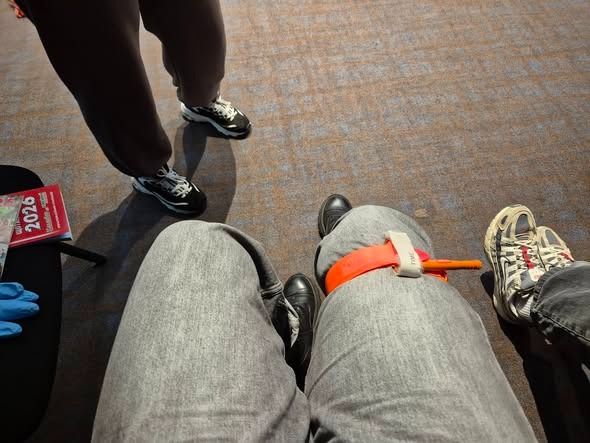
In their feedback, participants note that it is precisely the practical training in using the tourniquet and wound tamponade that gives confidence in their actions. Just as important is the reminder about one’s own safety when providing aid: during the training, it was emphasized that working with wounds must only be done while wearing gloves.
Working with wounds must only be done while wearing gloves.
Bandages and Bleeding Control Tools
The instructors explain: in cases of non‑massive bleeding, pressure on the wound or a tight bandage is sufficient. If the hands are occupied or the bandage needs to be secured, bandages or special dressings are used. Hemostatic bandages and gauze help stop severe bleeding, while the Israeli bandage secures the tamponade and allows quick action even in field conditions.
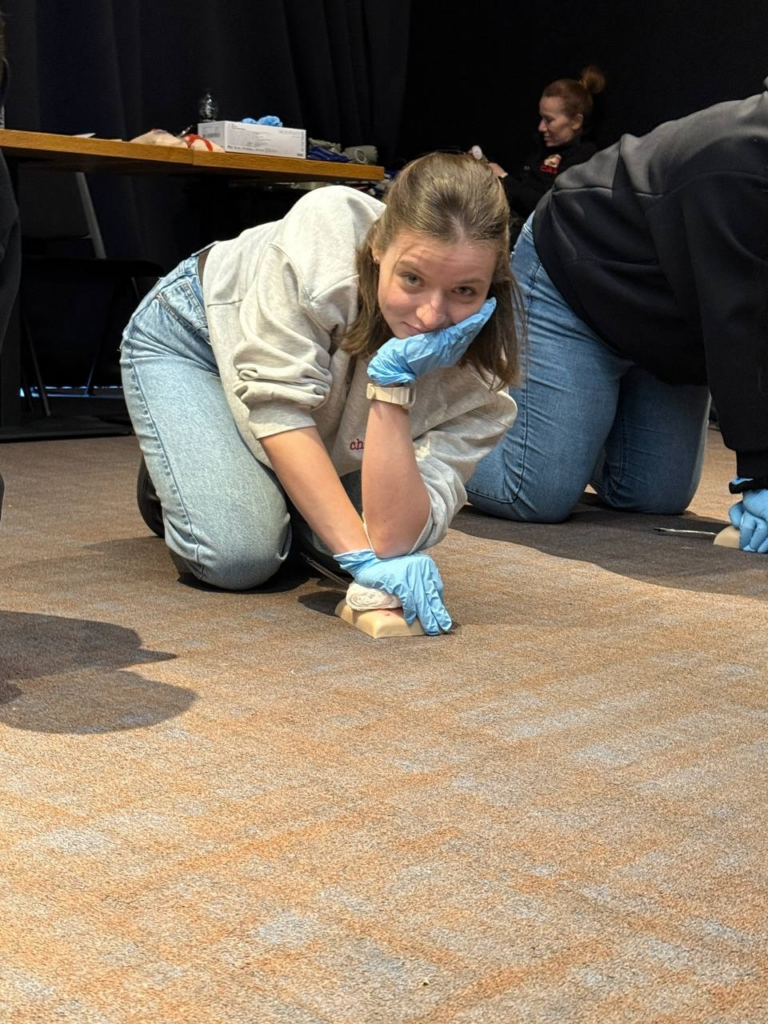
Participants practised not only the use of the tourniquet but also the skills of wound tamponade, direct pressure, and pressure bandaging. They refreshed their knowledge about the signs of massive bleeding, the algorithm of actions in such a situation, and the rules for the safe use of bleeding‑control tools.
Natalia Shutko, editor of the Nash Krai newspaper, shares the knowledge gained:
“From the neck, a person can ‘bleed out’ in 40 seconds, from a limb—in 3 minutes. That is why we practised wound tamponade on models and the use of tourniquets.”
Resuscitation and Protective Tools
The first‑aid kits include a protective mask‑keychain for cardiopulmonary resuscitation. The trainers remind: “Mouth‑to‑mouth” breaths for strangers must be given only through special protective valves or a resuscitation bag.
In addition, the kits contain tactical scissors for quickly cutting clothing and a thermal blanket. After stopping bleeding, it is crucial to prevent hypothermia. Even in warm weather, a wounded person can quickly lose heat due to blood loss, so they must be wrapped and not left lying on cold ground. This helps avoid dangerous processes when, due to hypothermia, blood ceases to clot properly.
Olena Smolina, editor‑in‑chief of the online media Pershyi Kryvorizkyi, says:
“For journalists who work during the war and regularly go to the sites of missile strikes, such training is extremely important. I refreshed my skills and understanding of how to act if someone nearby needs help. This can save lives, and it is good that we have the opportunity to receive knowledge and the necessary equipment.”
Viktoriia Shatylo, editor‑in‑chief of Thebuchacity, also emphasised the practical aspect of the training:
“What was especially valuable was the large amount of practice—you could not only hear the theory but also work out the skill on training equipment or with a colleague. In today’s living conditions, during the war, such knowledge and skills are needed by every person.”
***
The safety training for media professionals was organised by the Association of Independent Regional Press Publishers of Ukraine (AIRPPU) as part of the International Insurance Fund for Journalists project. The project is part of the Voices of Ukraine program, which is included in the SAFE programme coordinated by the European Centre for Press and Media Freedom. Voices of Ukraine is implemented within the Hannah Arendt Initiative.

The 11th safety training was held with the support of The European Centre for Press and Media Freedom (ECPMF) and Stichting Hulpacties DVHN, FrD and LC.