


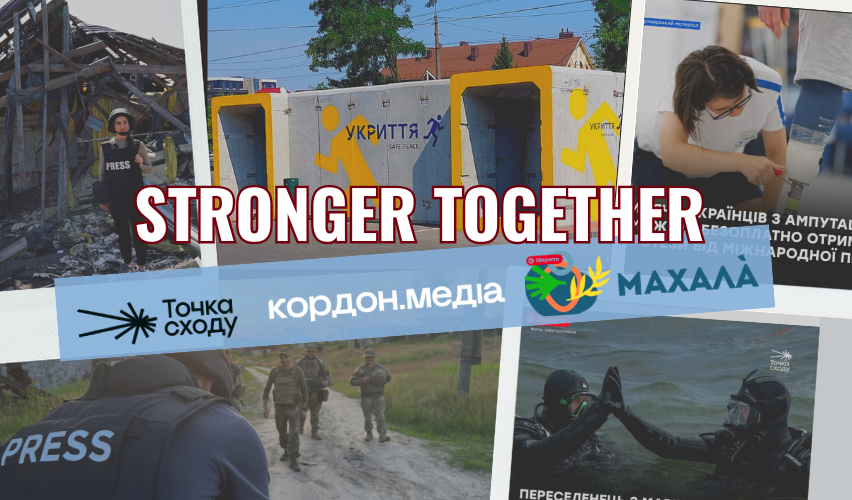
Audience growth, new formats, and team stability are among the results these newsrooms achieved thanks to institutional support. “Makhala,” “Kordon.Media,” and “Tochka Skhodu” show how the trust of readers and partners can become a foundation for development.
Despite the war and daily challenges, Ukrainian regional newsrooms are looking for ways to remain resilient and useful to their communities. Institutional support from the Association of Independent Regional Press Publishers of Ukraine (AIRPPU) has given them the opportunity to maintain core operations and invest in development — from preserving print editions to launching TikTok channels and commercial multimedia products.
This material continues a series of publications about participants of the program “Stronger Together: Financial and Organizational Sustainability” — one of the directions of the project “Stronger Together: Media and Democracy,” implemented by the Association of Independent Regional Press Publishers of Ukraine in partnership with the World Association of News Publishers (WAN-IFRA) and the Norwegian Media Association with the support of Norway.
Earlier, we already told about the experience of “Pershyi Zaporizkyi,” “Berezan,” and “Trudova slava,” about the work of media “Objektyv media,” “Accent,” and “Visnyk Ch”, and also presented the stories of media “MYH,” “Slovianski vidomosti,” and “Berdyansk 24.” Today we’re sharing new examples — the editorial teams of “Tochka Skhodu,” “Makhala,” and “Kordon.Media” talk about their experiences.
“Tochka Skhodu”: From Crisis Response to Strategic Development
Thanks to institutional support, the newsroom of “Tochka Skhodu” was able to move from a mode of constant response to challenges to more systematic, planned, and strategic work. While previously most resources were spent on maintaining basic operations, participation in the project made it possible to invest time and attention in development — rethinking formats, experimenting with products, and searching for new models of sustainability.
At the content level, the newsroom preserved all key formats, updated their presentation and visual design, and also prepared to launch a new video format, the first episode of which was released at the beginning of 2026:
Another important step was the launch of a fundamentally new product — a commercial direction focused on PR support and multimedia production. The pilot case for this direction was the project “Zhovtyi Avtobus.” Here, the newsroom for the first time acted not only as a media outlet covering an event, but also as a team providing full communication support: from developing a PR strategy to producing photo, video, and text content and distributing it.
The project achieved high reach, strong audience engagement, and positive feedback from partners.
As a result of implementing this case, the newsroom received an offer to continue the cooperation, several new requests for commercial projects, and built a portfolio for potential clients and donors.
Thanks to the support, “Tochka Skhodu” was able to stabilize the newsroom’s work and focus on the quality of materials and the regularity of publications, which directly contributed to the growth of its reach. The total audience increased by 55.12%, the number of article views by 415.34%, and the total number of content views on social media over the year reached 35.5 million, with about 98% of the traffic being organic.
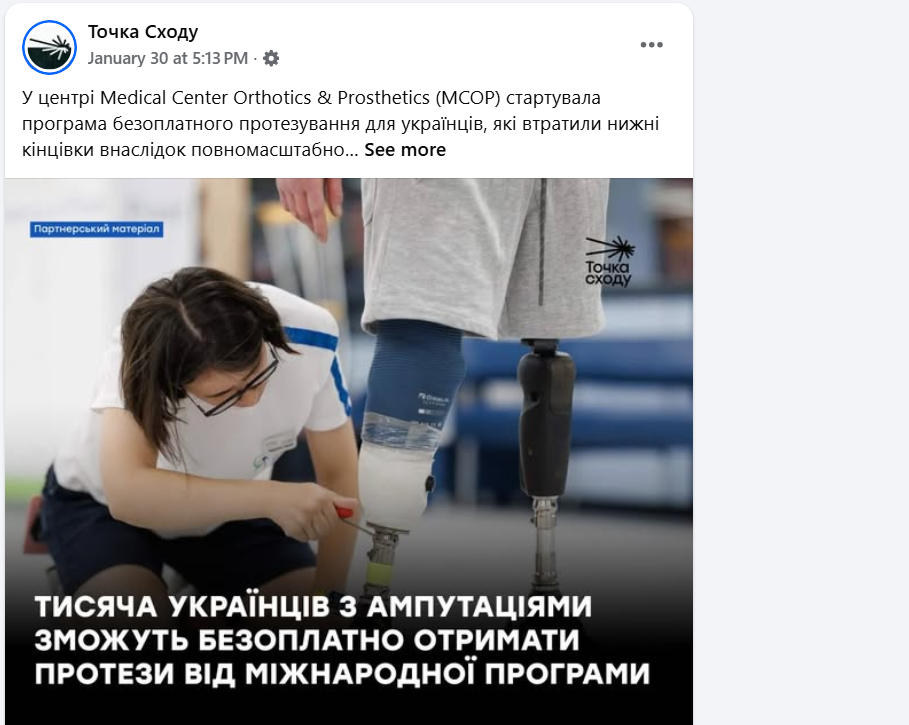
The quality of interaction with the audience has also improved: the number of comments, private messages, and reader inquiries has noticeably increased. People are more frequently asking the newsroom to cover specific topics or share their stories. Residents of eastern Ukraine, now living in different regions of the country or abroad, have started reaching out to “Tochka Skhodu.” For the newsroom, this means it is gradually becoming a hub for a community of people united by their shared experiences of war, loss, and the search for ways to recover.
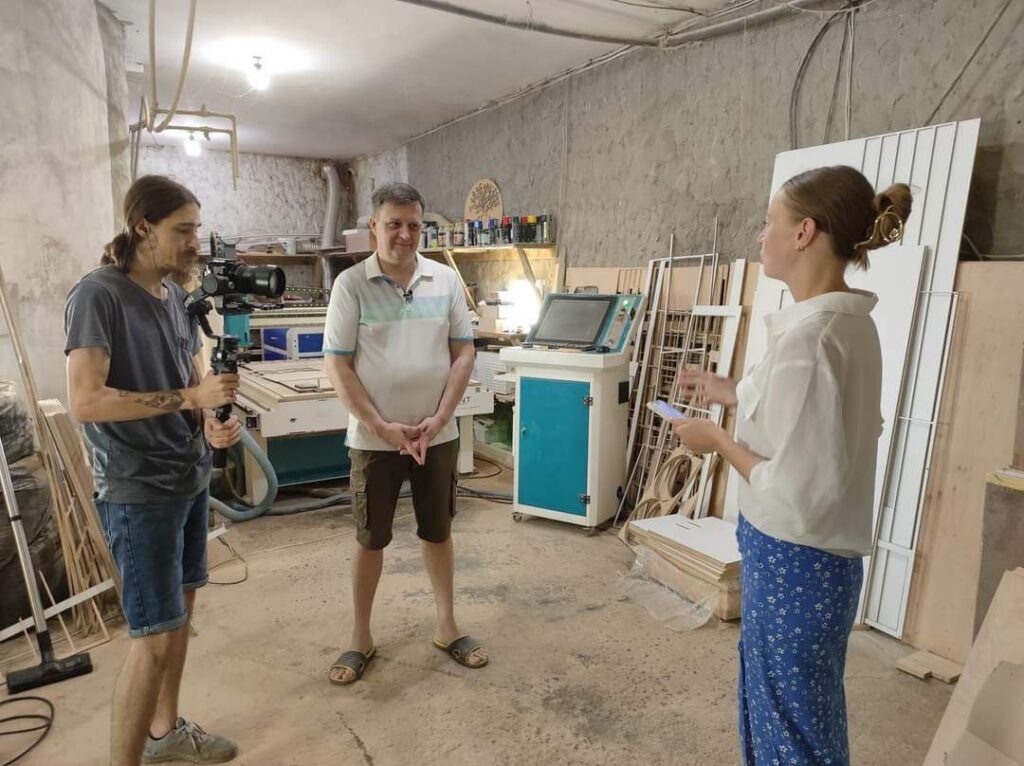
“We saw how important institutional support is,” says Anna Ovcharenko, executive director of the NGO “Tochka Skhodu.” “Not only as a financial resource, but also as an opportunity to pause, look at the organization strategically, and make decisions with a horizon of several years.”
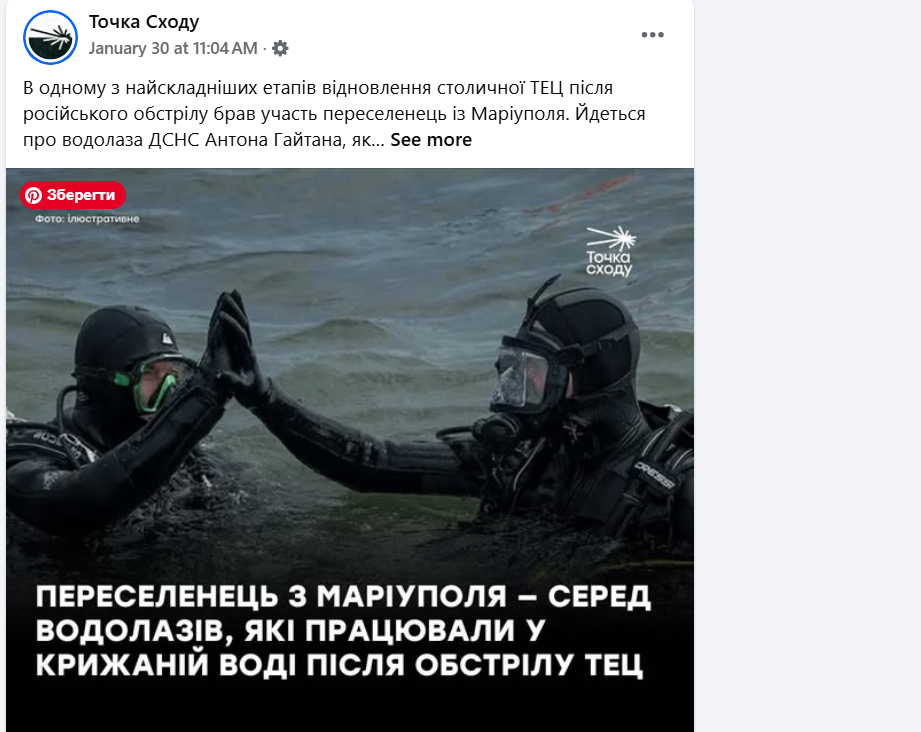
A key realization for the “Tochka Skhodu” team was that they have enough expertise to operate beyond traditional journalism — creating multimedia products, supporting social initiatives, and developing partnership communications.
“We also came to see that audience trust directly translates into growth: when a media outlet is stable, consistent, and honest with its community, people support it, return, and recommend it to others.”
“Makhala”: Preserving the Print Edition and Expanding to New Platforms
The media “Makhala” from the south of Odesa region, which covers the lives of national minority communities, entered the program already as a multimedia platform but was facing serious financial difficulties. The situation with its print edition was particularly challenging: due to constant shelling of infrastructure and a drop in purchasing power, both circulation and advertising revenues fell sharply.
“We received support from the Association ‘Independent Regional Press Publishers of Ukraine,’ which became a real lifeline,” says CEO Tetiana Terzi.
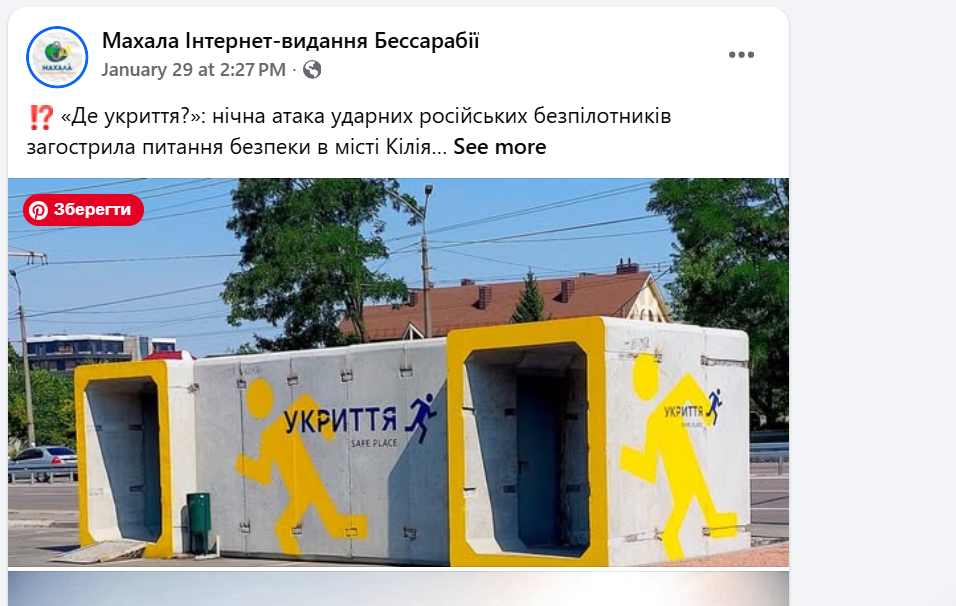
Thanks to the project, the print edition and the team were preserved, and an advertising manager was brought on board, who increased commercial income by 7% in just two months.
In addition, the media expanded its team by adding another journalist and an SMM manager, launched a TikTok page, and increased the production of original content by 22%. Inspired by the Newsroom Summit in Copenhagen (a trip organized through the project), the newsroom developed internal documents, including an AI usage policy, and began working on an advertising strategy.
The results for the audience speak for themselves: the number of active website readers increased by 45%, reaching nearly 100,000 views over six months. On YouTube, views grew by 53.1% to 107,000, 334 new subscribers were added, and since November 2025 the channel has started generating revenue.
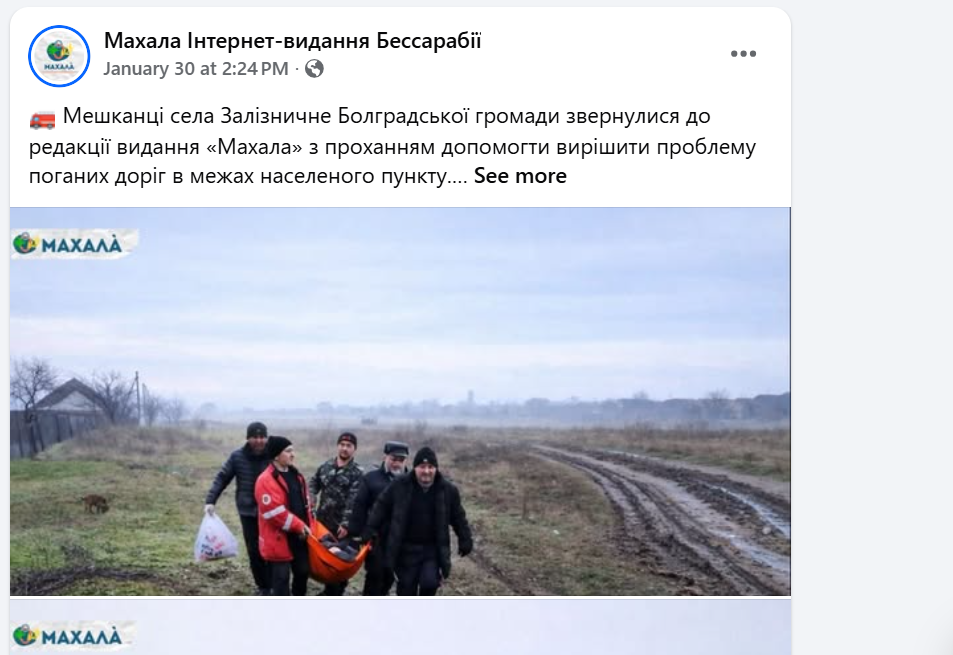
On Instagram, reach grew by 159%, reaching over 1.7 million, while on Facebook it increased by 39.5%, with total page views exceeding 23 million. During the project, TikTok gained 4,114 followers, 1.6 million views, and 105,000 interactions.
However, the newsroom considers its greatest achievement to be the opportunity to continue the video project “Spravzhnie” in national minority languages, covering life in the villages of Ukrainian Bessarabia. For example, the story “Here They Speak an Endangered Language” focuses on the village of Dmytrivka in the Hrodnenska community, where Turkic-speaking Orthodox Gagauz live and preserve their endangered language, traditions, and culture:
“Kordon.Media”: Team Stability as a Key Achievement
For the border region, the most important achievement was not so much the launch of new formats (although there were certainly some), but the preservation of operational stability. While other media outlets reduced staff or closed, “Kordon.Media” managed to keep its team intact and continue content production without interruption. Project support allowed the newsroom to focus on its work rather than constant crisis management and ensured the sustainability of its existing initiatives.
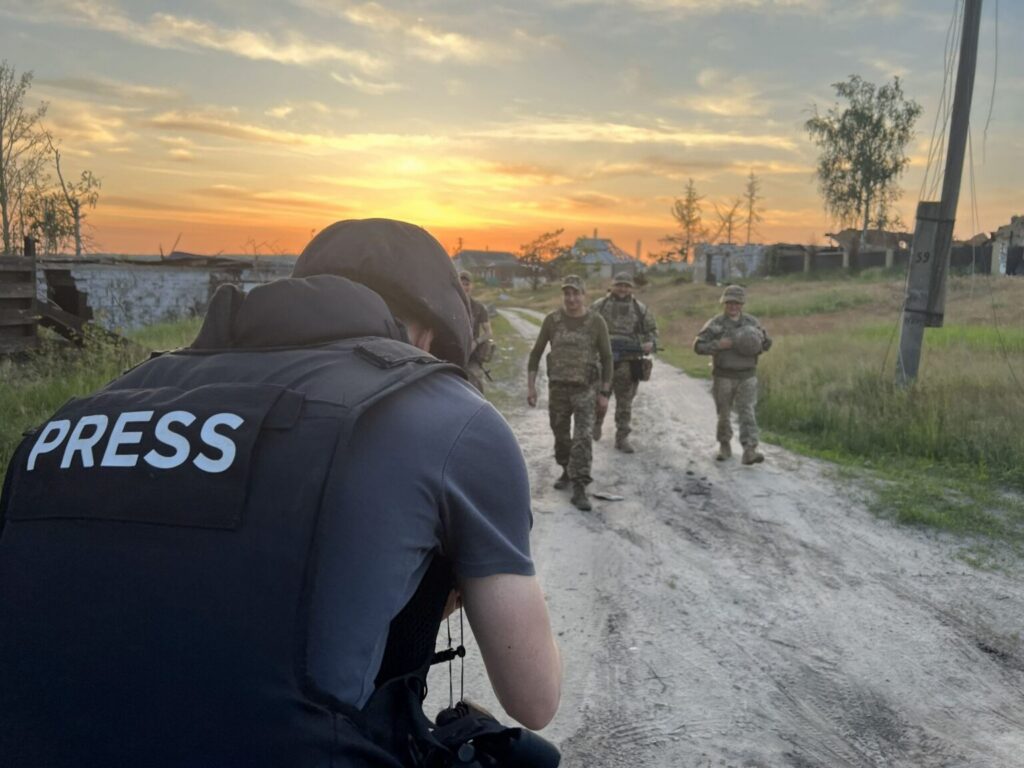
Another important achievement is the launch of a podcast format as an additional channel for communicating with the audience. “In our podcasts, we invite a variety of speakers and discuss topics that are important and relevant to our community: from security and social issues to broader societal trends,” the newsroom explains.
For example, they discuss the situation in communities across Sumy region (as in the episode featuring Olena Sharkova, acting head of the Myropillia community), the lives of internally displaced persons in the region (as in the episode with Nataliia Yesina, head of a human rights NGO, chair of the IDP council at the city council, and adviser to the head of the Sumy Regional Military Administration on IDP issues), and share stories of fellow countrymen defending the country (as in the episode with Bohdan, a UAV operator from Sumy), among others.
For the audience, this means that despite the difficult security situation, the media remains connected, publishes content regularly, and stays visible in the information space. This is especially important for a region living under constant threat, where access to reliable, verified information is critical.
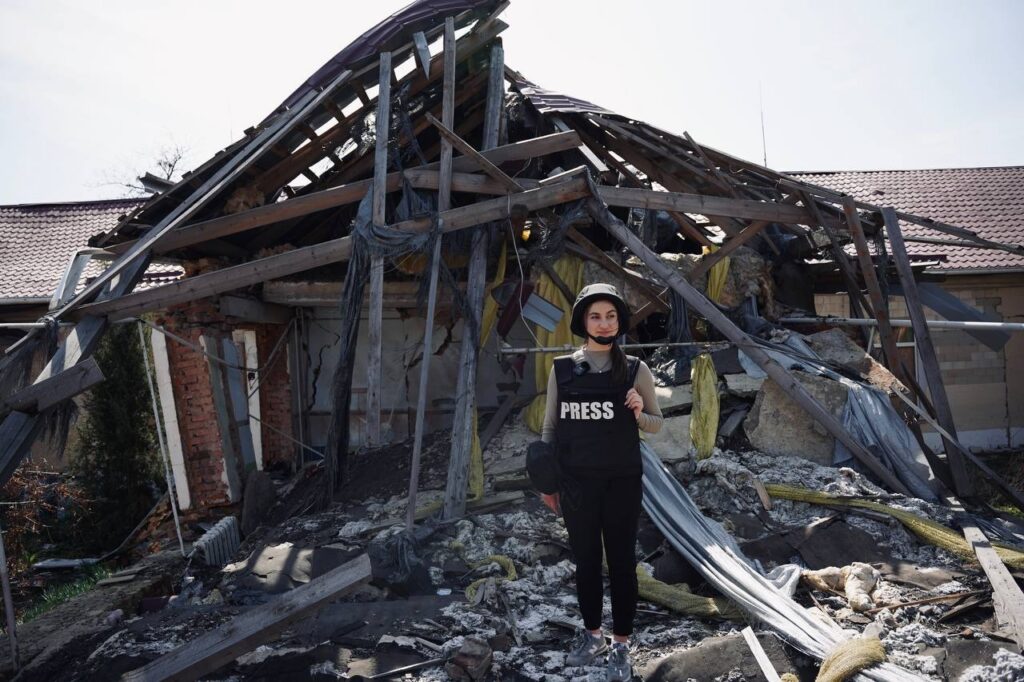
Stability has had a direct impact on the level of trust: the community turns to the newsroom not only for news, but also for explanations of complex processes and guidance. Even with a smaller volume of content, the newsroom maintains a strong focus on context, quality, and responsible presentation of information.
Thanks to the support, social media reach increased, particularly on Instagram, which grew by 8.33%. The project helped the newsroom approach financial sustainability more systematically, diversify its sources of support, and gradually move toward brand commercialization. Participation in the program also strengthened the newsroom’s institutional capacity and confirmed its reliability, contributing to the development of contacts with both international and Ukrainian organizations beyond the program itself. The greatest achievement is the ability to work consistently, maintain high standards, and stay connected with the audience even during periods of combined security, financial, and psychological challenges.
“The project demonstrated that even in extremely difficult conditions, preserving the team, maintaining established communication, and having clear working rules is just as important as launching new initiatives. It also highlighted the value of support in building a more resilient and predictable model of work focused on the long-term presence of media in the life of the community.”
***
The program “Stronger Together: Media and Democracy” is implemented by the World Association of News Publishers (WAN-IFRA) in partnership with the Association of Independent Regional Press Publishers of Ukraine (AIRPPU) and the Norwegian Media Association (MBL) with the support of Norway.